🚨 STOP DELETING PHOTOS WHEN YOUR PHONE SAYS “STORAGE FULL.”
The real junk is hiding somewhere else entirely.
I freed up 22GB in 15 minutes without deleting a single memory.
Here’s exactly where to look 👇
Apple has sold well over 100 million Macs over the past several years.
Apple is betting that almost none of those owners ever figure out why their $1,500-plus MacBook somehow starts feeling noticeably sluggish within just a year or two of ownership.
I spent an evening talking with a technician who works at an authorized Apple repair shop, someone who's personally handled thousands of "my Mac suddenly got slow" appointments over the years customers absolutely convinced that their expensive, well-cared-for laptop was somehow already failing on them.
What he told me should genuinely make you go check your settings tonight, before you book an unnecessary battery replacement appointment or start browsing the newest MacBook lineup online:
"The overwhelming majority of 'my Mac is slow now' appointments I ever took had nothing whatsoever to do with actual age or failing hardware. It was the exact same small handful of settings, quietly running in the background day after day, on basically every single machine that came through our doors didn't matter if it was 8 months old or 4 years old, the pattern was identical."
Here's everything he walked me through, setting by setting, and exactly how to fix each one yourself 🧵
Apple just mass-killed 9 paid apps with one free software update.
iOS 27 shipped September 22. Most people saw a new look and moved on.
A developer who tracks App Store economics looked at the feature list and said: "Apple just made $372/year in paid apps completely unnecessary. They rebuilt the functionality of 9 subscription apps and buried it inside a free update. Most people will keep paying because they'll never find the settings."
He showed me every feature and the paid app each one kills.
Here's the full list 🧵
I've been a cardiologist for 25+ years. The last 90 days changed medicine more than the last decade, and almost nobody noticed. Here are the 10 biggest AI breakthroughs, and why you should be excited, not afraid 🧵
1/ 37,000 AI agents. One "virtual biotech." It analyzed thousands of trials, figured out which drug targets actually work in humans, and independently proposed a lung cancer strategy that a major pharma company later pursued. AI isn't a search engine anymore. It's a co-scientist.
2/ The first drug discovered AND designed entirely by AI (Insilico's rentosertib) just entered Phase 3. In patients, it reversed biological age by 3–6 years across six different aging clocks. Read that again!
3/ As a cardiologist, this one gives me chills. The FDA authorized "Queen of Hearts," an AI that reads a standard ECG and catches heart attacks, including the hidden ones doctors miss. 2x the sensitivity. Far fewer false alarms. It pages the cardiology team itself. In a heart attack, minutes are muscle.
4/ EchoNext spots 6 types of hidden structural heart disease from a cheap, 10-second ECG, and it does it better than cardiologists. It already flagged a patient who went on to get a heart transplant. Screening that used to need an echo lab now needs a test any clinic can run.
5/ UpDoc is the first FDA-cleared AI that talks directly to patients. It checks in between visits, adjusts insulin within limits the doctor sets, and documents everything in the chart. Chronic disease no longer has to wait for your next appointment.
6/ An autonomous AI agent called MIRA, with full access to medical records, went head-to-head with ER physicians on hundreds of real cases.
AI: 87.8% correct
Doctors: 78.1%
It ordered the tests, read the results, and wrote the plan.
7/ Google released MedGemma 1.5 and MedASR, open medical AI for imaging and clinical speech that anyone can build on. Every hospital. Every researcher. Every country. Open models mean medicine moves at internet speed.
8/ The FDA authorized Aletta, the first robot that draws blood on its own. It gets the vein on the first stick 94–95% of the time, even hard veins. One technician supervises three robots. The most common procedure in medicine just got automated.
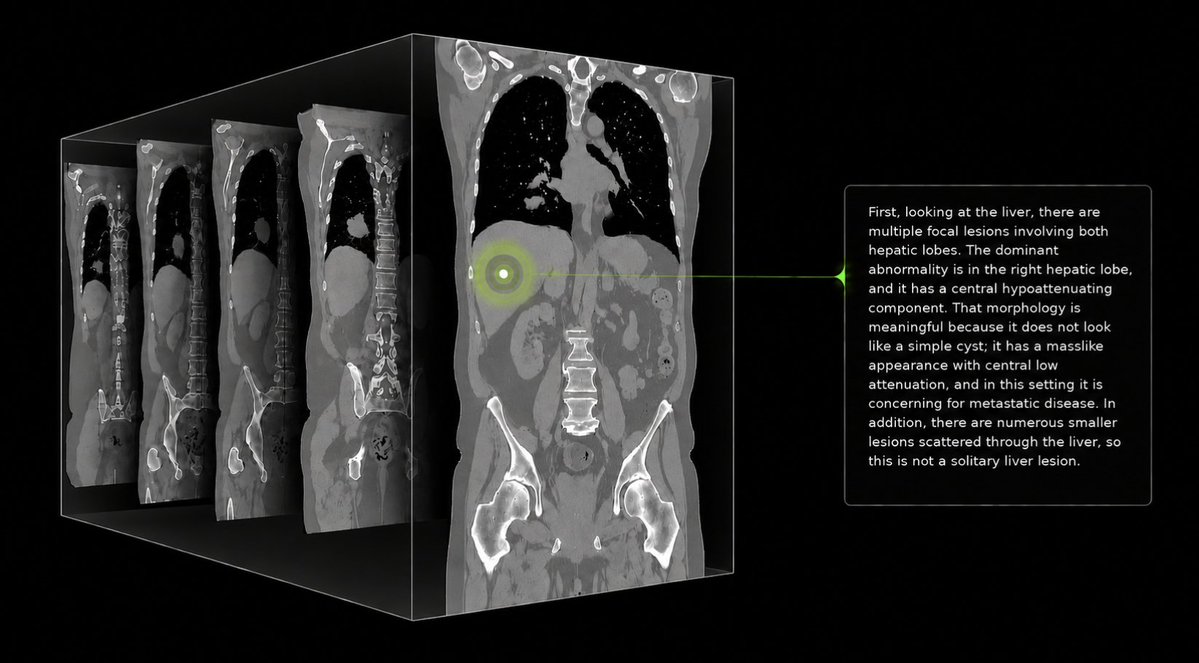
9/ UCLA's SLIViT matches specialists on 3D MRI, CT, ultrasound, and retinal scans, and it's 5,000x faster. It isn't a new model for every organ. One architecture reads them all.
10/ The FDA has now authorized 1,600+ AI medical devices. They cover radiology, cardiology, and surgery, including real-time AI that checks breast cancer margins while the patient is still on the table. This isn't coming. It's here.
What this means to you:
→ Drugs that took 10–15 years are showing human results in a fraction of the time
→ Heart attacks get caught on a cheap ECG, not after a collapse
→ Doctors get hours back
→ Patients get answers between visits
→ Aging itself is becoming treatable
This isn't "AI will replace your doctor." It's AI finally becoming good enough that medicine starts to compound. The next 18 months will feel different.
Bookmark this. We're early. Stay positive!!!
🚨 BREAKING: Claude can now research like a Stanford PhD student.
It can expose unlimited hidden research problems from top professors' papers in 60 seconds.
Here are 15 insane Claude prompts to master research with Claude: 👇
(Save it. 📌 Don't start your PhD without these 15 cheat codes.)
Most students in the quantitative sciences are forced to start their education with statistics, which is a grave mistake, with deep harmful consequences on the way students view science and reality. The next generation should start with causation, to get a scientific view of reality and, only then, take stat-101, for students who want to decorate their papers with p-values and regression analysis. Not sure the imperial forces of statistics would welcome this commonsensical transformation. @soboleffspaces@f2harrell@DagobertIX
Radiology used to have something that was almost invisible because it was so routine:
The reading room consult.
Rounding teams came down.
Surgeons pulled up their cases.
Internists brought the scan that didn't quite fit the clinical picture.
Sometimes the radiologist solved the problem.
Sometimes the clinician supplied one piece of history that completely changed how the images were interpreted.
And usually everyone simply walked away a little sharper.
But something else was happening during all of those conversations.
We were learning each other.
As a radiologist, I learned what individual physicians cared about.
I knew which findings mattered to a particular surgeon.
Which measurements an oncologist was following.
Which details a specialist wanted emphasized.
What questions they were really asking, even when the order just said "pain."
And they learned me.
They knew who was reading their study.
They knew they could walk in, point at something, challenge an interpretation, or ask, "What do you think?"
That relationship created context.
It created feedback.
It created trust.
And over years, it created a kind of institutional knowledge that never appears in the medical record.
When radiology becomes a report produced by someone hundreds or thousands of miles away, we don't just lose proximity.
We risk losing that entire feedback loop.
The report may still be technically excellent.
But the radiologist knows less about the physician.
The physician knows less about the radiologist.
The radiologist sees less of what happened after the report.
And both sides lose opportunities to make each other better.
The reading room was never just a room.
It was where imaging became part of the clinical conversation.
We should think very carefully before designing that conversation out of medicine.
Inspired by a conversation yesterday with @PaleoOnc . Also @909One and @brianchiong .
Millions of 3-year-old laptops get blamed for being "slow" when the hardware is barely the problem — it's almost always what's silently running underneath.
A student was about to spend $900 on a brand new laptop because hers took 4 minutes to boot and constantly froze mid-assignment, right when deadlines mattered most.
Her older brother, who builds PCs on the side and has fixed dozens of laptops for friends, sat down with her laptop for 8 minutes on a Sunday afternoon.
He didn't reinstall Windows.
Didn't add RAM.
Didn't recommend an SSD upgrade.
Didn't suggest buying anything at all.
He changed 8 settings.
Boot time dropped from 4 minutes to 20 seconds. Chrome stopped eating 90% of her CPU in the background. Word stopped freezing mid-sentence while she typed.
Same laptop. Same specs. Same age. Same everything.
"Your laptop was never actually slow. It was just never cleaned up past the day you bought it — and nobody, not the store, not Microsoft, not tech support, was ever going to tell you the fix was free."
🧵 Here are the 8 settings he changed:
joder, en GitHub hay una cantidad absurda de proyectos gratis.
muchos ya hacen lo mismo que la suscripción que estás pagando cada mes:
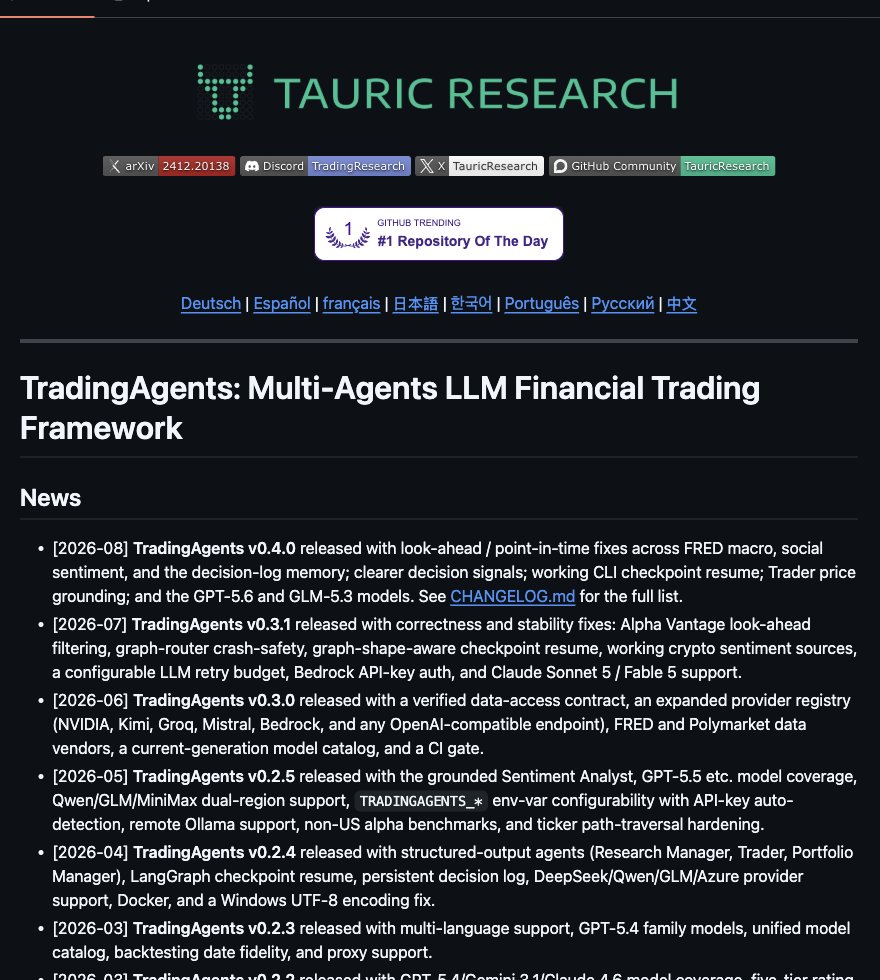
1. TradingAgents
un equipo de agentes de IA que analiza acciones y decide operaciones
https://t.co/FGGtY22vCB
2. LibreChat
una sola interfaz para ChatGPT, Claude, Gemini y el modelo que quieras
https://t.co/H8YdL3oIvz
3. HyperFrames (HeyGen)
el motor de generación de vídeo de HeyGen, open source
https://t.co/BJdXtiX7VN
4. GenOffice
Docs, Sheets y Slides con IA dentro, gratis y open source
https://t.co/Kc0ZZzsQTz
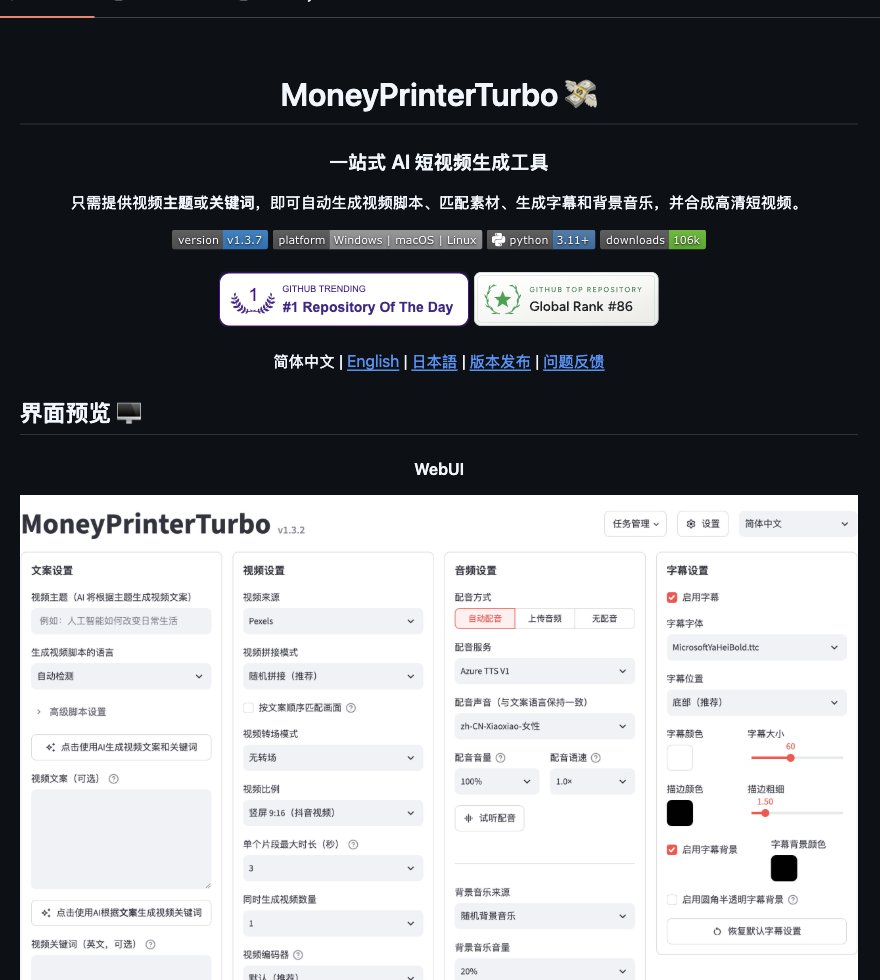
5. MoneyPrinterTurbo
escribes un tema y te saca el vídeo corto terminado, con voz y subtítulos
https://t.co/sfFAAaojs3
6. opencodex
usa cualquier modelo dentro de Claude Code o Codex
https://t.co/FQiGcBMIA6
7. VoxCPM
clonación de voz con IA que corre en tu ordenador
https://t.co/blyXSYV1sG
8. OpenHands
un agente de programación open source que ya compite con los de pago
https://t.co/1tdRMWn3Ej
9. agent-skills
la biblioteca de skills para Claude Code de Addy Osmani
https://t.co/sytuy7grPU
10. OpenBot
compañeros de trabajo con IA, cada uno con su propio ordenador. el Grok Bot open source
https://t.co/5wX1iWJ50e
y no son juguetes: más de medio millón de personas lo usan ya.
guárdatelo, te servirá.
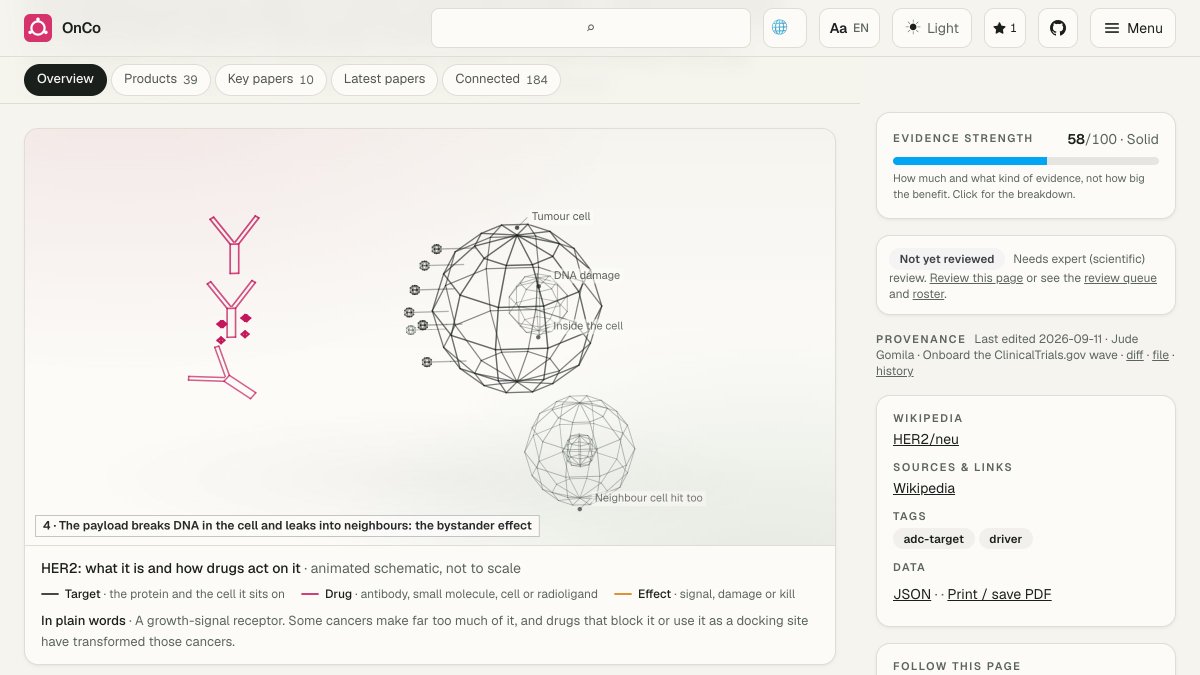
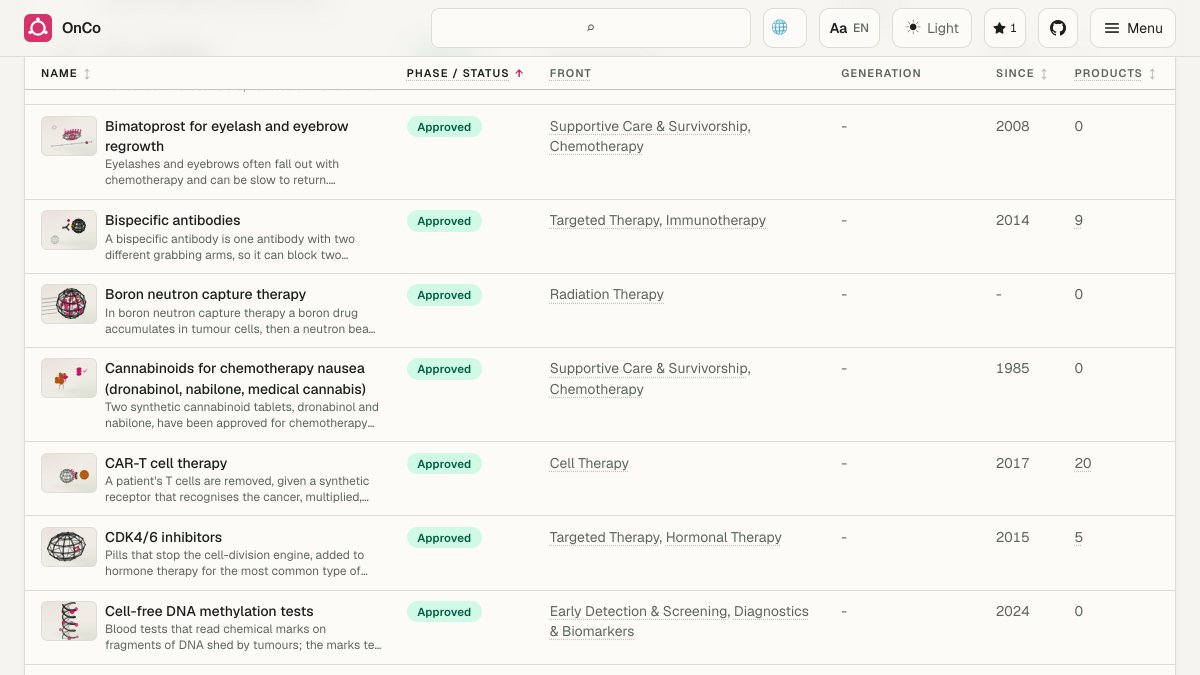
I've attempted to map everything in oncology in a public website and open source repo for all.
The site is trying to get all cancers, products, technologies, bottlenecks, people, startup opportunities with 1000+ ideas for upgrading the field.
If you have a loved one with cancer and you are technical or can engineer, go take a look, file improvement requests or bugs or help with the open repo and make this the best open and free info resource for individuals, researchers and educational use.
This should save people time, aid AI oncology projects and generate positive action. If you are not technical just complain in this thread about broken or annoying or things you want and I'll fix them live.
Some of the interesting pages:
Treatments: https://t.co/EJEOhMppoB
A gallery of the molecules being used https://t.co/EV6ZitrVqm
And targets: https://t.co/CgkjuF8nR2
The technologies in oncology: https://t.co/lNaieWYRKH
1100 ideas for helping oncology: https://t.co/iQA6Z5SvRA
Bottlenecks on oncology: https://t.co/WND44055WD
Open questions (LETS GO RESEARCH PEOPLE) https://t.co/wSbphQ0IBg
Startup requests (LETS GO STARTUP PEOPLE) https://t.co/PphztuLihP
Mechanics of cancer: https://t.co/cMUyVObzZi
Battlefronts: https://t.co/PlSZitVd50
Isotope supply: https://t.co/2Pcl4tTuPv
Key papers: https://t.co/YK0dW1XJj0
Pipeline funnels: https://t.co/xYcbSCSyBg
Cancer by type: https://t.co/d9k8Yyzdk7
Institutional rankings: https://t.co/VepXcKHhaa
The startups: https://t.co/whXKg5dPzb
Heros and heroines : https://t.co/uLDmhRjE36
Key medical people: https://t.co/JWhDZ0rC73
Here is the project roadmap: https://t.co/UtbbuOsdA5
Models and data sets: https://t.co/bim0tjiWOj
There are other views as well, take a browse.
Try making a PR if you have an upgrade to this on the repo here: https://t.co/2Dw0ufEJ3z
If you are biologically/medically minded and something is wrong, file a bug as well or say on the thread and we will get it fixed live.
If this is a useful project star the repo and help get it calibrated.
I've tried to add some other languages but I cannot speak them so tell me if that doesnt work well.
I believe we will crack oncology and having total information dominance is key to the problem.
Let the feedback flow!
""Ordinary language" is a pre-scientific language. It has allowed alchemists to create colorful glass vessels, but wasn't good enough to convince them you can't transmute lead into gold.
Is $220k+ the new normal for cancer drugs?
NYT just ran a beautiful piece on daraxonrasib (gift link in first comment 🧵 🎁) Priced at a whopping $480k/yr, the price no longer looks extraordinary.
So we dug deeper into the cancer drug $ landscape.
Pricing trends like these create serious tension.
On one hand, cancer drugs today are doing things that seemed impossible 20 years ago.
Drug development is expensive, risky & littered with failure. Great innovation deserves to be rewarded.
But $200, $300, $500k are not laws of scientific progress.
And ultimately, someone has to pay up (insurers, patients, employers, and/or taxpayers).
Are breakthrough cancer drugs worth paying for?
Yes, absolutely!
But is $220K+ normal for the price of admission to modern cancer care?
And if this is indeed the new "normal", who is it normal for?
🧵 excellent reporting by Rebecca Robbins @ NYT prompted us to look across the landscape.
- - - - -
Plot Source: @Jori_health
- - - - -
I'm not a fan of multiple comparisons corrections (e.g., Bonferroni, Benjamini-Hochberg, etc.). Just preregister everything and report all results (or else do some kind of multiverse analysis or specification curve), and let the reader decide.
One of the biggest issues for me is the following paradox.
Say I run an RCT testing a drug as to LDL levels, and I'm trying to decide what outcomes to measure: reduction in LDL over 1 year, cardiac outcomes over 3 years, or mortality over 5 years. Suppose I measure all three, and the trial ultimately shows a reduction in all of those outcomes (p=.04 for each).
With Bonferroni etc., the trial would report a "null" effect across the board, even though these outcomes are all consistent and mutually reinforcing, and the evidence for the treatment is way stronger than if I had only collected evidence on cholesterol levels at 1 year.
It makes no sense to me that any single outcome by itself would have been statistically significant, but just because, in the past, I decided to collect more and better evidence, now the treatment has "no effect"?