@shae_mcl And not necessarily a good thing imo. The main roadblock is that lab work needs institutions. Don’t you think it’s wonderful that 4 dudes from undergrad can start Cursor?
@jxmnop This makes it sound like learning cuda is a big overhead — it really is not, especially if you’re using language like Julia (ie CUDA.jl). I don’t write cuda kernel code everyday, but it’s extremely handy when I need it
The Inaugural Gary D. Stormo Computational & Systems Biology Lectureship was hosted at the Department of Genetics on October 3rd, 2024 with Dr. Michael Brent delivering a talk. Congrats to the 2024 Stormo Fellow, Reilly Sample @ReillyAlexS!!
https://t.co/hBN87OTzci
Today is my last day as a Professor. Tomorrow I become Professor Emeritus. The 50+ years I've been in the field has seen revolutionary advances in both biology and computer science and it has been a joy to in the midst of that.
@jmschreiber91 For nucleotide motifs one can use sparse representations. Interpretable and far less parameters needed than NN that use attention. Reveals cooperative binding patterns of TFs. https://t.co/CZDEdX1Jwn
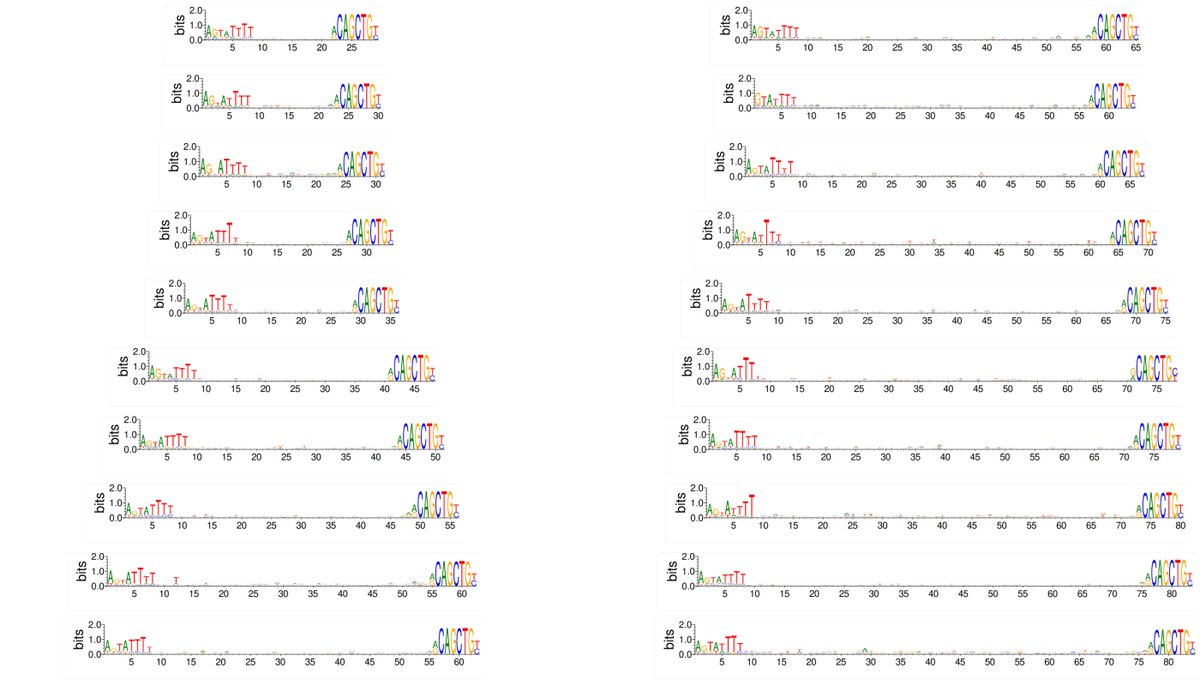
@jmschreiber91 I think so. It can capture the gapped motifs, eg. MYOD1 co-occurs with MEF2A that characterized by a large number of spacers. This image is a result from https://t.co/8sEybjhp6K. Usually, there are lots of patterns like this in a typical ChIP-Seq dataset.
@OfficialLoganK@eliascarvdev@JuliaLanguage Lots of disciplines require the ease of creating compiled executables (eg bioinformatics). Julia is much less mature in that regard.