I see five fundamental issues when it comes to street conditions in San Francisco. These negative street conditions are largely driven by a relatively small group of regular public drug users (1,000–4,000 people out of 17,000–30,000 fentanyl users in the city).
These public drug users should be strictly distinguished from the homeless, the vast majority of whom are neither visible on the street nor active drug users.
First, drug treatment has extremely low success rates and, even with tons of investment, is not significantly decreasing the amount of drugs being consumed in the city. Treating drug addiction is hard. Treating drug addiction in a place with cheap and readily available drugs is harder.
Second, there is a public policy disagreement about the role of the police in the fight against public drug use. As a result, we have almost no tools to disincentivize public drug use. We have effectively decriminalized drug use in California by making it a misdemeanor. The vast majority of the time, the only thing police can do is tell users to move along or give them a ticket. The RESET Center allows police to arrest users and remove them from the street, but it’s only available in a tiny part of the city. Outreach workers have no power to compel public drug users to stop using.
Third, we have widely available drugs that are cheaper than in almost any other city in America. The cheap drugs draw users from cities and towns across the region and the country. Drug users don’t come to San Francisco for our services. They come here for our cheap drugs.
Fourth, there are no good tools for reducing supply or increasing cost in our city. Fentanyl is manufactured at scale from industrial chemicals that are cheap and easily available. It’s so potent that San Francisco is estimated to consume only 200–400 pounds of pure fentanyl a year. That is too easy to smuggle in. The labor supply of dealers is effectively infinite: they make $3–4 a day where they come from and $400–700 a day here. Arresting dealers doesn’t reduce the availability of drugs or increase the price. We’ve had more than 3,000 dealer arrests in the past three years. It’s changed how dealers deal, but drug consumption is actually up, not down.
Fifth, we have a Housing First policy that provides temporary and permanent housing to thousands of active drug users in very concentrated parts of the city. As a result, we create the high-drug-use areas that dealers target. Residents of those neighborhoods are held hostage by the drug trade and rampant public drug use. Your tax dollars create high drug use neighborhoods.
San Francisco city government understands all of these facts. All of this information is public and findable. Nothing will be done unless you understand these facts and demand real solutions.
Every time you ask for ineffective solutions based on a lack of knowledge, you give your elected officials license to spend your money on programs/policies that will never work.
We just got off a call with the National Oceanic and Atmospheric Administration and National Weather Service.
We went through the forecast for next week, and we are anticipating high tides and rain that this city has never seen before. This is extremely serious, and we are acting accordingly at the city level. We are going to encourage every resident and business owner to take this extremely seriously.
We are standing up our Emergency Operations Center late this weekend. Our crews are out now and will be every single day going forward.
I know there's a lot of travel for many of you as you head into the Thanksgiving holiday, but I'm going to ask you all to consider not travelling unless it is absolutely essential, starting Monday afternoon and into Wednesday.
We are expecting tides that the National Weather Service told us they have never seen before in recorded history here in San Francisco.
Take this weekend to get yourself ready, please stock up on supplies, get your shopping done, and know that the city will be out all weekend doing everything possible to protect our residents and our small businesses.
Please take this warning seriously. I will keep you up to date in the coming days.
I was 24 when I started my company & I had no idea wtf I was doing. But man I had a blast. First Round found 3 young founders who DO know what theyre doing, and did a cool profile w/ them. Heard of them? @ypatil125 @ Applied Compute, @aditabrm @ Reducto, & @MaxBrodeurUrbas @ Gumloop.. Check it out ➡️ https://t.co/2oFGxyw5aC
I was very impressed with @slush. It might seem a crazy idea to invite people to Finland in November, but it worked. I had a great conversation with @antonosika about the present and future of AI.
A little Sunday sermon: Preach what you Practice
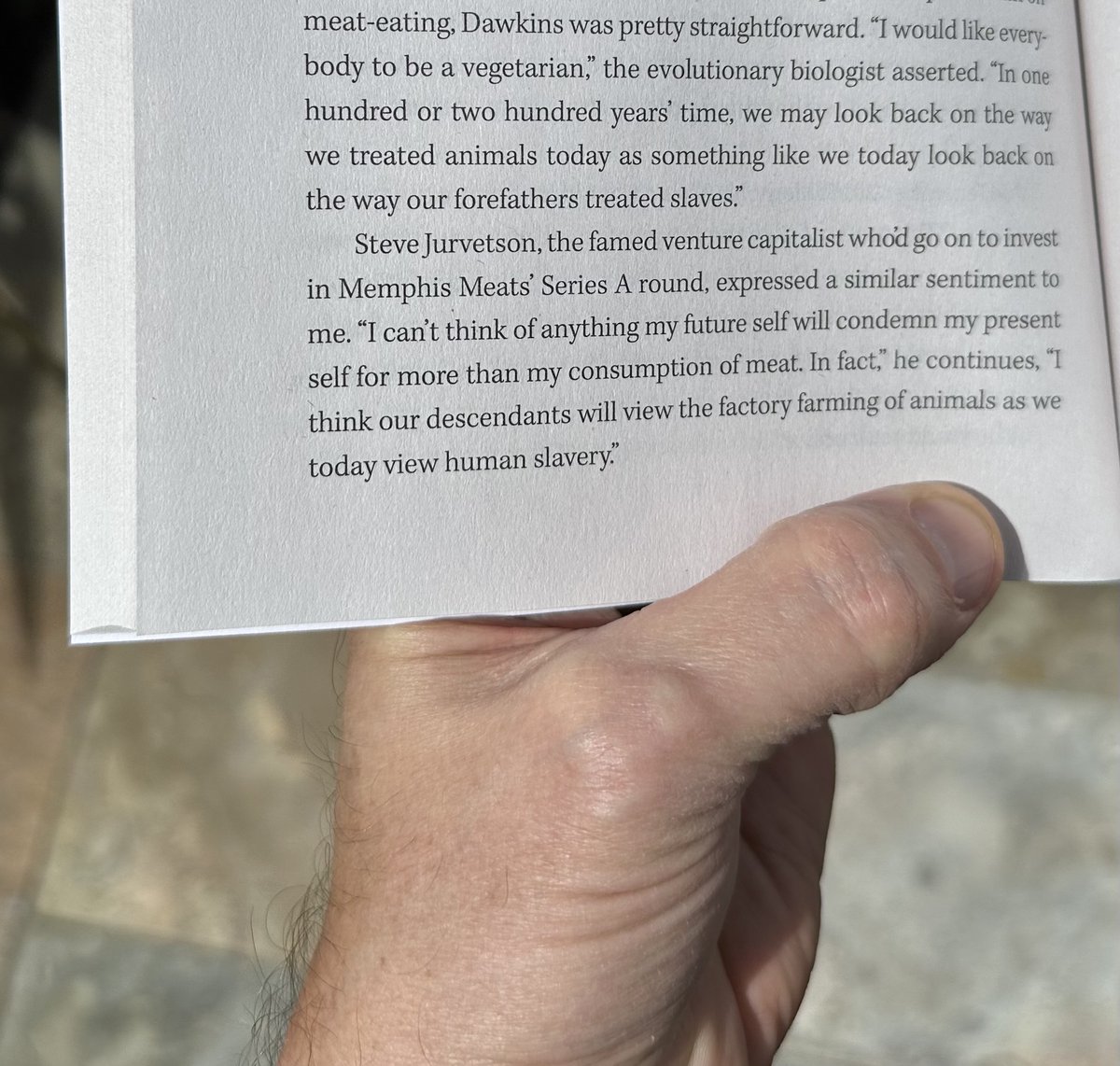
The paperback edition of Clean Meat comes out on Tuesday, and as a recidivist meat-eater, I have wrestled with the psychology of meat consumption for 12 years now.
Change in meat manufacturing will come — first in our behaviors, and then in our morality, within an ever-expanding circle of empathy. Ironically, the timing will coincide with AGI’s corrosion of our entitled sense of supremacy, itself a cultural accumulation from our evolutionary perch at the top of the intellectual food chain, as it were.
I found the closing chapter on the psychology of meat consumption the most fascinating. It explains why vegetarians have been roughly the same percentage of the population for 30 years now, and why we should not expect continued evangelism and “education” to start converting the unconverted, unless something else changes. I think the availability of economically superior meat without animal suffering will be that change.
We rationalize the cognitive dissonance of how we generally empathize with animal welfare in most cases (wild animals, pets, lab animals) versus that special subset of animals we regard as food. For those animals we eat — wherever we draw the line, be it fish, chicken, red meat or octopus — global surveys show that we discount the intelligence of what we eat and imagine that they do not suffer in their growth and harvesting. For those who draw the line elsewhere on the karmic hierarchy of neuron counts, their perception follows. We only eat the dumb and numb, as if by magical self-delusion. Ref: https://t.co/rvsLPRAfaM
We can change where we draw the line. I have done so and experienced the shift of perception that follows. First with octopus, becoming fascinated by their intelligence after we stopped eating them. Then on a dare, I went without meat for six months. I first noticed how my deeply-held beliefs of how hard this would be were dead wrong. Food tastes great. There’s plenty of variety. I feel full between meals and have plenty of energy. It did not matter that vegetarian friends have been saying this for years; I could not internalize the logic or their happy existence proofs — I assumed giving up meat for 6 months was going to be the toughest thing I ever did.
And then a more subtle realization dawned on me — I was receptive to the social media rants of vegan friends and articles on animal welfare. In the past, I would look past them. I would not lean in, and I certainly did not internalize the message.
Most of us ignore the vegan prophets. The annoyance of their strident messages should be a clue as it triggers something we do not like in ourselves, that we want to shelter from scrutiny. Ignorance is our bliss.
I know that I will give up slaughtered chicken next when Upside Foods and the cellular ag startups grow clean meat without the animal. And then fish. Invertebrates like crabs and lobster will be the last to go. (P.S. when other groups adjudicated on animal welfare and their capacity to suffer, it is interesting that both the lab research laws and the NAR rules for living payloads in hobby rockets draw the line at invertebrates — you can do whatever you want with them).
My thoughts and beliefs followed my actions, not the other way around.
This reminded me of a recent podcast with @AdamMGrant: “there’s all this research on behavioral integrity, which says that you’re basically supposed to practice what you preach. And I have been wondering lately if we’ve got that backward. And if, instead, what we should be doing is only preaching things that we already practice?” (https://t.co/cILnIyndt4)
The morality of animal welfare will likely lag the economic shift, just as it did with slavery and whale-hunting for blubber. After kerosene provided an economic alternative, we advanced our morality and outlawed whale hunting. The fifth-largest industry in America was quickly decimated, and our moral outrage followed.
This is why clean meat will be so catalytic to change. In 2012, I blogged about my investment thesis and the search for a cellular ag company that can scale (long before the founding of Memphis Meats (renamed @UPSIDEfoods) or my investment in them), writing:
“I believe that in a few years we will look back and marvel at the barbarism and stunning environmental waste of meat harvesting today. Our circle of empathy generally expands over time, but sometimes as a retrospective rationalization. We don’t typically discuss the meat industry in polite conversations because we don’t want to face the inevitable cognitive dissonance. We don’t really want to know why USDA meat inspectors become vegetarian. I think all of that will change when viable meat products are grown from cell cultures, not in the field. We will switch, and marvel at our former selves.” More on Upside: https://t.co/tuYmHkGHBl
The vegan preachers tried, stridently, for 30 years now. Once we change our practices, we can finally hear their pleas and join them, preaching what we practice.
-> @PaulHShapiro's book: https://t.co/5StbK9JScs
P.S. Change usually faces opposition. The Florida legislature is currently trying to kill this inevitable future of meat manufacturing, a textbook example of regulatory capture in action. What better way to protect a legacy business than to criminalize sales before they commence? Please do right for FL and the world @GovRonDeSantis. Veto insanity!
Cultivated meats produced in steel tanks represent the future of meat. Costs still need to drop, but they will. And then, as @Lewis_Bollard says, we'll have real meat without the pathogens or the cruelty. @UPSIDEfoods is a pioneer.
I ate cultivated chicken last night. Before dinner, we toured the @UPSIDEFoods facility — what critics call the "lab" where "lab meat" is made.
What struck me most was how clean it was. Every chicken and pig factory I’ve entered has been filthy, with the pungent smell of manure the animals live on top of.
The Upside facility was spotless. The plant manager told me that in two years of operating they haven’t had a single case of Salmonella or Campylobacter.
By contrast, the most recent USDA testing found Salmonella in 35% of ground chicken and Campylobacter in 25% of whole chicken carcasses from factory farms.
This won’t be for everyone. If you only want "natural" meat, eat pasture-raised meat instead.
But for the majority already eating factory chicken daily, this could be a major upgrade: the same product, minus the pathogens and the cruelty.
@AnthropicAI goes public today with $900bn+ committed to compute. Will it get built?
@lato_ai raised $4.7M to answer questions like this and make thorough research the standard.
In 5 days, LATO's agents interviewed 29 people across the data centre supply chain and read 261 publications. The answer is in our first public report, Ear to the Ground, now on our website (link in the comments).
LATO is a research system. Its agents find and interview the right people, read everything published on the subject, and simulate what happens next, around the clock and in any language.
Since our first study at the end of July, we’ve run 1,000+ expert interviews in 35+ countries for funds managing nearly $500bn, and passed $1M in annualised run-rate revenue in under 100 days.
The world spends more than $150 billion a year researching how people will behave. We believe agents will do that work, and LATO intends to be the company whose system runs it. We’re starting with institutional investors, and the same approach works for enterprises, scale-ups and consulting firms.
The seed round is co-led by @airstreet and @axiom_vc.
We’re also happy to be backed by @ycombinator, @inceptionfundvc, Montis VC, @smokvc, and amazing angels including the co-founders of @ElevenLabs , @vercel , @Snowflake and @RogoAI , as well as @paulg, @kirbyman01, @reecechowdhry, @annbordetsky, Tomasz Trzcinski, and @barticz
Halfway through W27 interviews. Intense weeks for us and for the founders applying, and a privilege to hear how they plan to change the world. Many are still in school or just graduated.
There is one school that consistently stands out this cycle: UC Berkeley.
Elon Musk says 100x100 miles of solar is enough to power the entire US.
That sounds crazy, right?
But at the World Economic Forum, Musk explained something fascinating.
A solar installation covering just 10,000 square miles could theoretically generate enough electricity to meet America's needs.
That's a relatively SMALL fraction of the country's total land area.
And Musk says similar potential exists in Europe.
So why aren't we doing this?
According to Musk, one major obstacle in the US is the high tariffs on imported solar equipment.
China manufactures enormous quantities of inexpensive solar panels, but trade barriers make them more expensive to deploy in America.
— Elon Musk (@elonmusk) at the World Economic Forum (.@wef) 9 months ago
I did YC in W20 and I'm back for F26. The software YC has built since then is wild.
In 2020 I was dragging SAFEs into DocuSign and placing signature boxes by hand. Now it's one click: the SAFE gets signed and wire details go out automatically. Investor CRM, investor calendar, Granola integration, live pitch feedback, all built in-house.
But the best part is warm intro paths. YC has turned its community into a real network, and some days it feels like the best (only?) way to build a startup.
I never studied at a US university. It's one of my life regrets but I didn't have anyone around me telling me it was a possibility. First time I visited the Bay Area was in 2005. I took BART to Berkeley and snapped these photos.
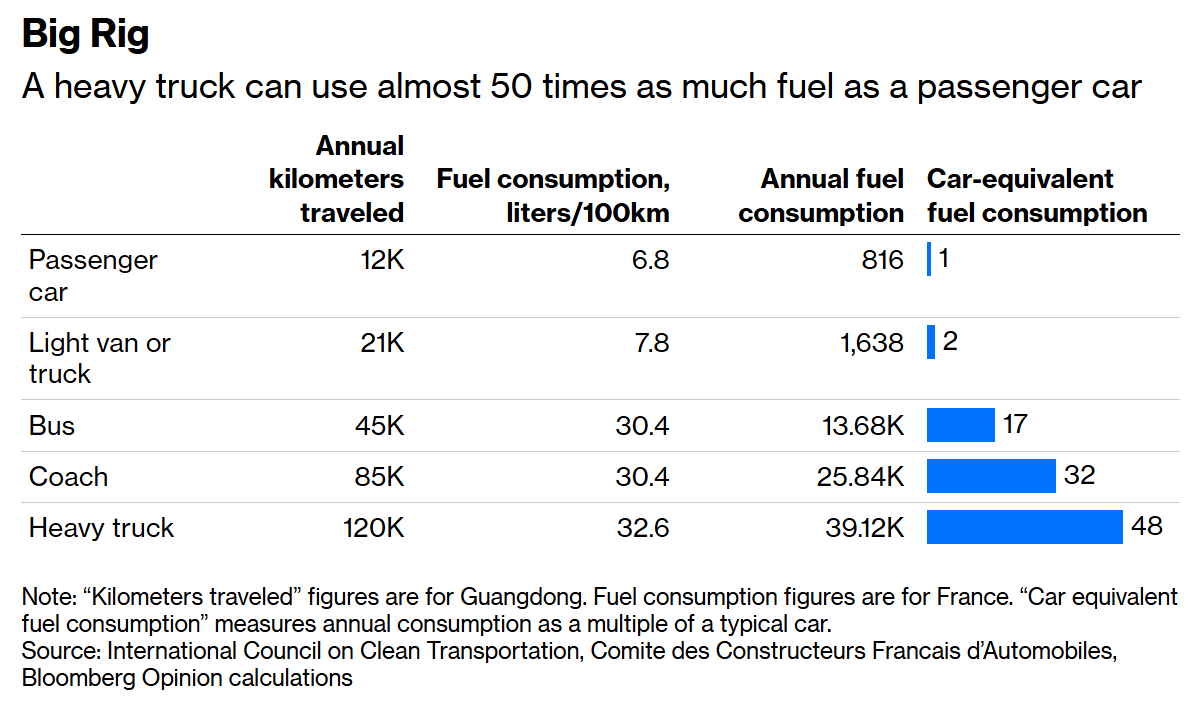
A heavy-duty truck consumes between 10 and 50 times as much diesel as a car does in a year. So every electric truck sold avoids the oil consumption of 10 to 50 cars. With China alone registering more than 200,000 trucks this year, oil cos should be worried https://t.co/fWnTpU0jeW
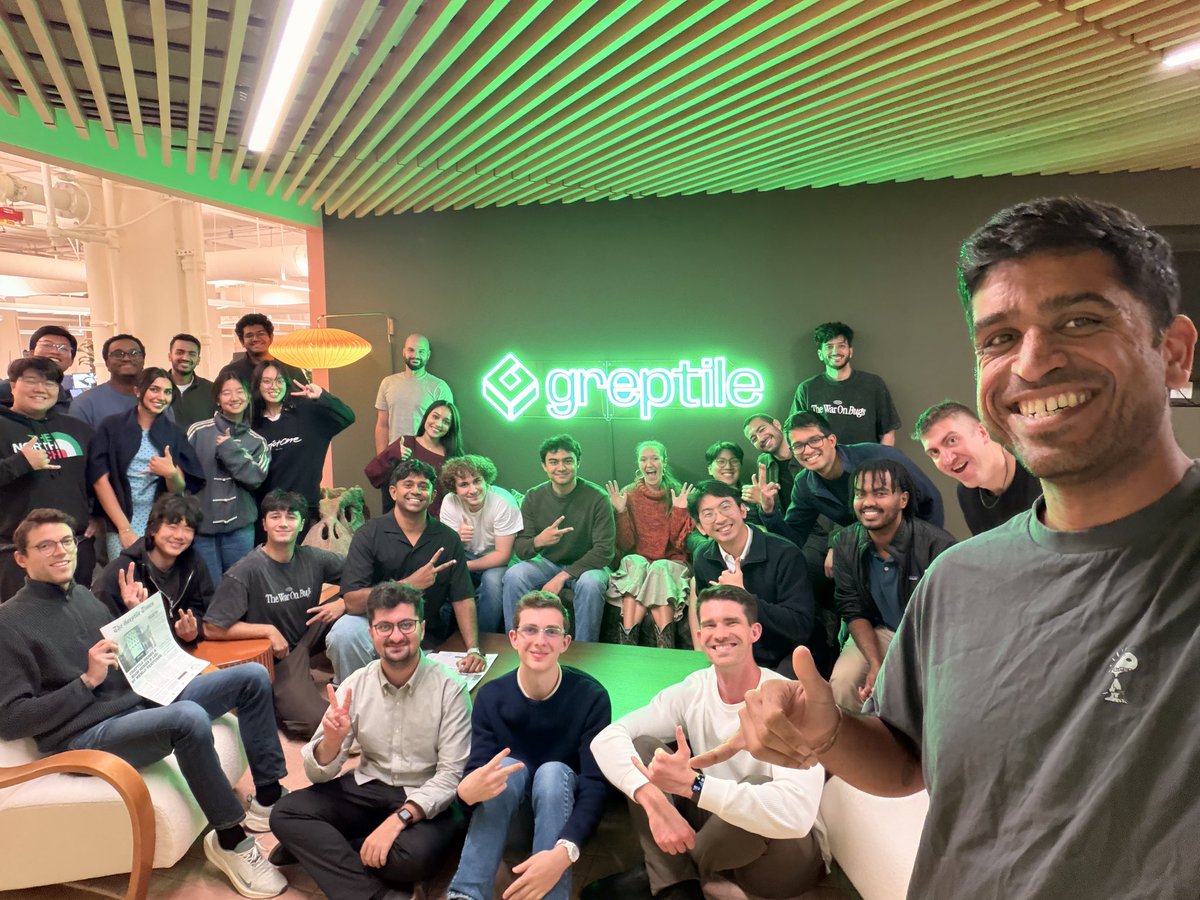
I’m excited to share that I’ve joined Greptile as their Head of Product!
Over the last year, it’s become clear that automating software creation is possible. It’s also clear that we’re nowhere near finished.
There’s a lot of talk about software factories. But software isn’t built on an assembly line. It’s built with this messy, creative, collaborative process that results in world-changing innovation.
The vision that excites me is a Software Studio: a place where humans and agents collaborate to build useful, powerful, and inspiring tools.
Greptile has focused on one of the hardest parts of that vision: validation. Reviewing, testing, and securing code becomes even more important as code generation gets truly automated.
With validation as our starting point, we have much, much more we want to build.
I first met Daksh when we launched Bugbot at Cursor. Since then, we’ve become friends, and I’ve watched the Greptile team keep improving the product, shipping useful features, and growing the business. I’m excited to join them and help shape what comes next.
The last time I went up to North Beach to join an AI coding startup, things seemed to work out pretty well. I have a good feeling about this one too 👀
If you’re excited to help build this future, we’re hiring across all roles. Please reach out!