Jupyter is the most powerful tool Python developers have.
But most people don’t know the hidden features.
Need a quick web app?
Or create REST APIs?
Here are the 6 ways to use Jupyter you never knew existed:
This article is literally wow.
i read it 2 years ago, and coming back to it today, it still feels new.
few tutorials teach computers in a way that permanently changes how you think. this is one of them.
If you've never built a VM before, you're missing one of the biggest "aha" moments in computer science.
This formula relates the value of π to various physical constants, such as the speed of light (c), Planck’s constant (h)...
Underwood Dudley’s Mathematical Cranks
(1992, Mathematical Association of America, Washington, D.C.).
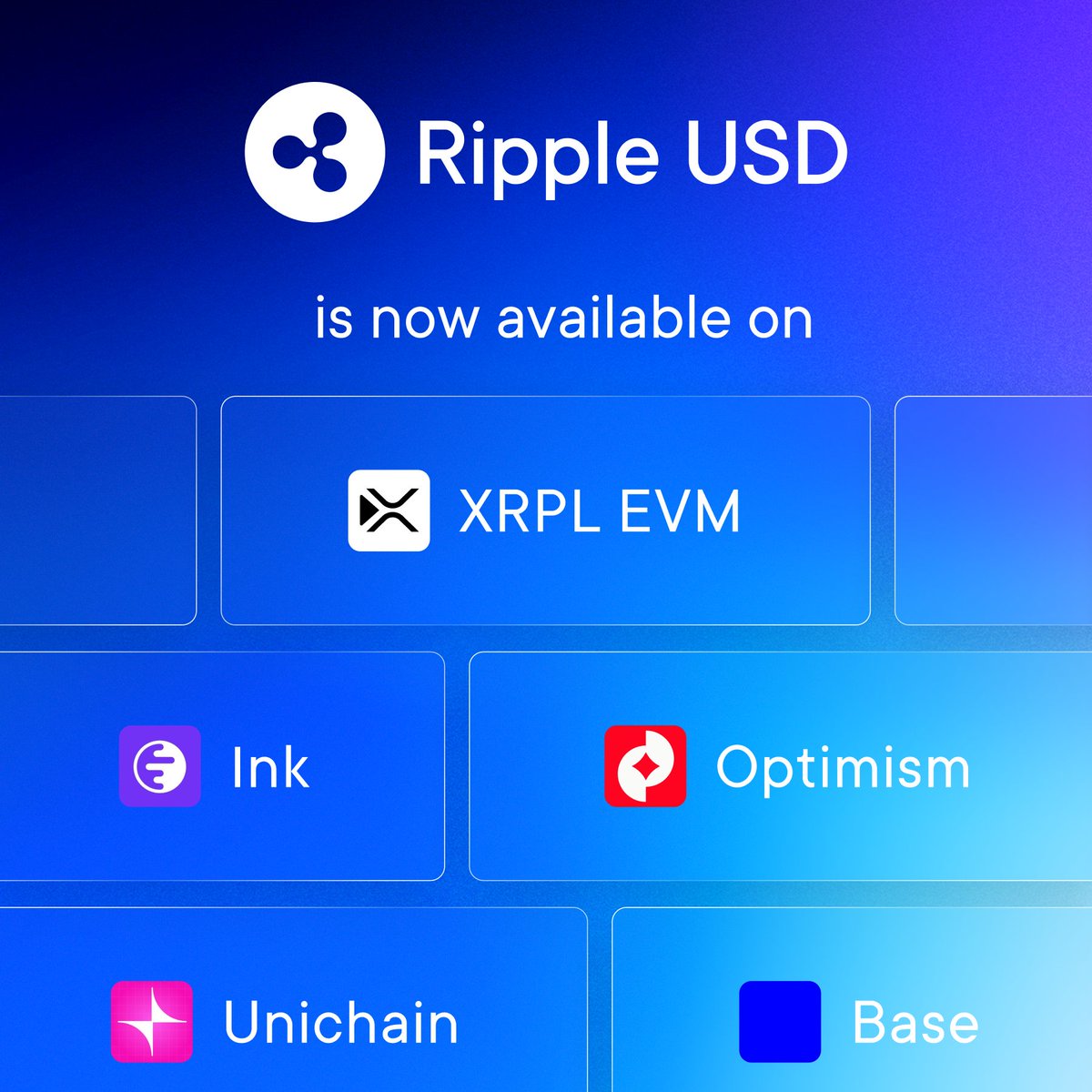
The XRPL EVM Sidechain is now live with Ripple USD $RLUSD.
A key part of RLUSD's multichain expansion, the XRPL EVM Sidechain combines compatibility with existing EVM developer tooling while remaining closely connected to the XRP Ledger, helping meet growing demand from developers looking to build with XRP.
RLUSD has seen growing adoption across smart contract-based ecosystems, highlighting demand for regulated stablecoins within DeFi and multichain finance.
As $RLUSD becomes available across these environments, $XRP can increasingly serve as a complementary asset for liquidity, settlement, swaps, collateral, and payments, thereby strengthening the utility of XRP and RLUSD across supported chains.
This expansion is powered by @wormhole's NTT standard, enabling RLUSD to move natively across chains.
A better way to study Deep Learning with PyTorch Live Course: follow the full YouTube course arc, not scattered clips.
Good save when you want the path, not a one-off video: Tensors, Gradient Descent & Linear Regression (Part 1 of 6) → GANs for Image Generation (Part 6 of 6).
𝗖𝗼𝗺𝗽𝘂𝘁𝗲𝗿 𝗩𝗶𝘀𝗶𝗼𝗻:
↳ Deep Learning with PyTorch Live Course - Working with Images & Logistic Regression (Part 2 of 6)
↳ Deep Learning with PyTorch Live Course - Image Classification with CNNs (Part 4 of 6)
↳ Deep Learning with PyTorch Live Course - GANs for Image Generation (Part 6 of 6)
𝗠𝗼𝗿𝗲 𝘁𝗼𝗽𝗶𝗰𝘀:
↳ Deep Learning with PyTorch Live Course - Tensors, Gradient Descent & Linear Regression (Part 1 of 6)
↳ Deep Learning with PyTorch Live Course - Training Deep Neural Networks on GPUs (Part 3 of 6)
↳ Deep Learning with PyTorch Live Course - ResNet, Regularization and Data Augmentation (Part 5 of 6)
Best use: treat it as a map of the field. Watch once for the arc, then revisit the parts where you need implementation depth.
Link is in the first comment 👇
♻️ Share this with your network if you found it useful or insightful.
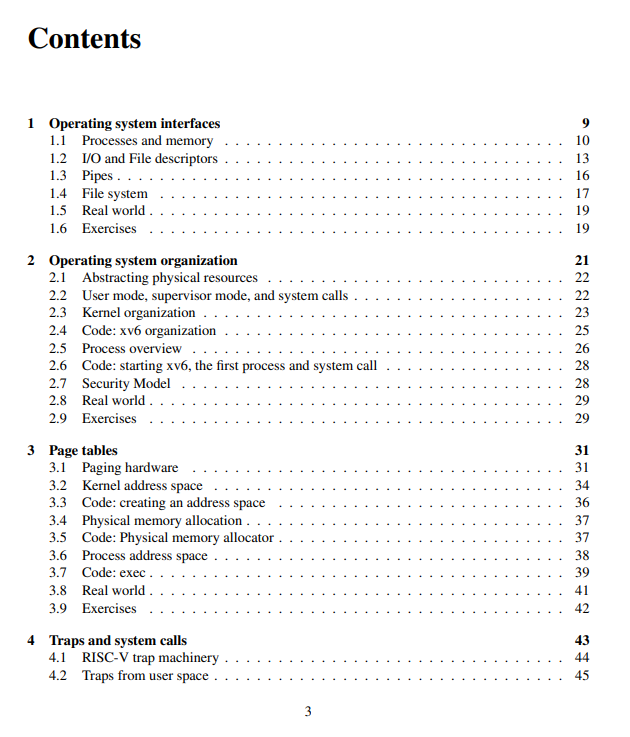
MIT teaches operating systems by giving students a working Unix like kernel and asking them to modify it
it is called xv6 a reimplementation of Unix Version 6 from 1975 rewritten in modern C for RISC V multiprocessors
the whole kernel is only around 6000 lines
processes system calls virtual memory file descriptors pipes and the scheduler are all there to read and experiment with
this is what you study when you want to understand how an operating system actually works not just how it is explained at a high level
Robotics has no GitHub. That's genuinely insane in 2026.
Every team rebuilds the same parts from scratch. Same grippers. Same servo protocols. Same 2am debugging loops.
Software solved this 15 years ago. You don't rewrite a web server, you fork one.
Robotics never got that moment. So we're building it at @tnkrdotai.
GitHub for robots: 3D models, build guides, and full assemblies. Forkable, versioned, reusable.
👇 watch what that looks like
Claude Agent SDK is easier to learn when you stop jumping between random snippets
Claude Agent SDK: Step-by-Step Tutorial is a hands-on GitHub repo for builders who want to learn how to build custom AI agent systems with Claude Code as the core agent.
It helps you move from basic queries to multi-agent workflows by walking through ordered Python modules, each focused on one part of the SDK.
Key features:
• Querying basics – compare query() with ClaudeSDKClient for one-off tasks vs continuous conversations
• Message handling – parse different SDK message types and display them with a cleaner Rich CLI
• Custom tools – build a product-search tool, wrap it in an MCP server, and configure the agent to use it
• Agent configuration – practice system prompts, model choices, tool permissions, and file-access controls
• Advanced modules – add conversation loops, Playwright MCP browser automation, and specialized subagents
Free public GitHub repo.
Link in the reply 👇
A LINUX KERNEL DEVELOPER PROVED THE THING YOU PUSH CODE TO IS SECRETLY A DATABASE THAT CAN VERSION ALMOST ANYTHING AND THAT MOST DEVS HAVE ONLY EVER TOUCHED A TENTH OF IT
42 minutes from Josh Triplett -- a longtime Linux kernel and Debian developer -- showing that Git is a general-purpose, tamper-evident versioning engine that just happens to be famous for code.
-> The moment it clicks, Git stops being "Where my code lives" and becomes what it really is underneath: a content-addressable store that can version almost anything -- your configs, your notes, your servers' state, entire datasets.
People run whole wikis on it. They version their entire machine's configuration with it. They ship websites by pushing to it. They track data too big to email. None of it is a hack -- it's the same handful of objects you already use for code, pointed somewhere new.
Treating Git as a code-only tool was never the ceiling -> it's a versioning engine for anything, and the people who see that automate what the rest of the team still does by hand. And as AI agents start spitting out not just code but configs, docs and data, the one system that can version and audit all of it at once is already sitting on your machine.
You learned five commands to survive. This is the talk that shows you were standing on top of a database the whole time.
It changes what you think the tool is even for.
Bookmark & Watch it today ↓
Yazıcıdan çıkması ile uçması arası yarım saat.
Bataryasız 50 gram, batarya ile 92 gram
Bu Li-ion pilli dronlara Long Range deniyor çünkü li-ion pillerin enerji yoğunluğu li-po pillerden çok daha yüksek. Zorlamadan daha uzun süre havada kalabiliyorlar.
study mechatronics.
not because it's a degree.
because it's one of the few fields that forces you to think across disciplines.
you'll touch:
• mechanical design and CAD
• electronics and embedded systems
• control systems and dynamics
• sensors and signal processing
• programming and software architecture
• robotics and automation
most people stay inside one box.
mechatronics teaches you how the boxes connect.
the future belongs to engineers who can design a mechanism, build the electronics, write the software, and understand the system as a whole.
every robot,
every drone,
every autonomous vehicle,
every automated factory,
is mechatronics in disguise.
don't just learn components.
learn systems.
HERMES AGENT HIT 140,000 GITHUB STARS AND TOPPED OPENROUTER IN 3 MONTHS. ONE GUY BUILT A 50 MAC MINI FARM TO RUN IT LOCALLY FOR $0
hermes is the first agent that writes its own skills from experience. complete a task once and it saves the procedure as a markdown file for next time
agents with 20+ self-created skills complete similar tasks 40% faster than fresh instances. less time and less tokens to get the same result
qwen 3.6 35b outperforms last year's 120b models and runs on 20gb of memory. the intelligence that needed a data center now fits on your desk
setup takes 30 minutes. install lm studio, pull qwen 3.6, install hermes, point it at localhost. zero api fees, zero data leaving your machine
most people pay $200 a month for cloud agents that forget everything between sessions. the ones running hermes locally in 2026 will look very far ahead in 2028
bookmark this and read the article below
Kimchi has been found to fine-tune immunity at the cellular level.
In a groundbreaking human clinical trial, researchers employed cutting-edge single-cell genetic analysis to explore kimchi's impact on the immune system. Over 12 weeks, overweight adults received either a placebo or powder from two varieties of kimchi. The findings show that kimchi not only enhances immune defenses but also promotes their regulation.
Scientists from the World Institute of Kimchi observed that participants consuming kimchi exhibited heightened activity in antigen-presenting cells (APCs), which play a key role in identifying pathogens such as bacteria and viruses. Simultaneously, CD4+ T cells developed a more balanced profile, incorporating both effector cells for fighting threats and regulatory cells to prevent overreactions. This dual effect equips the immune system to mount effective responses while avoiding harmful inflammation.
The trial utilized single-cell RNA sequencing (scRNA-seq), a precise technique that examines gene expression in individual immune cells, uncovering nuanced changes undetectable by standard blood tests.
Fermentation method influenced outcomes: both spontaneous and starter-culture kimchi yielded benefits, but the starter version demonstrated superior effects, including enhanced antigen detection and reduced extraneous immune signaling.
This represents the world's first clinical demonstration of kimchi's immunomodulatory action at the genetic level, highlighting its promise for managing hyperactive immune conditions.
["Single-cell RNA sequencing reveals that kimchi dietary intervention modulates human antigen-presenting and CD4⁺ T cells." npj Science of Food, 2025]
In 2011, Jensen Huang explained how to build a company that outlasts every competitor.
His ideas:
- Perspective beats vision every time
- Tolerating failure leads to innovation
- Reinventing yourself is the only way to survive
12 lessons on building a company that lasts:
Huygens' Principle made simple.⚡
A single wavefront can explain reflection, refraction, diffraction, and the very nature of light propagation. Master this concept once, and a huge part of wave optics starts making sense.🚀✨
One page. Quick revision. Maximum clarity.🔥
Save it.
Stop learning ML from random tabs and half-finished playlists
Machine Learning Course Notes is a public collection of lecture notes for machine learning, NLP, and AI courses.
It helps you build a cleaner study path by grouping courses, lectures, videos, notes, descriptions, and authors in one scan-friendly table format.
Key features:
• Course-based map – sections for Machine Learning Specialization, MIT 6.S191, CMU Neural Nets for NLP, CS224N, CS25, and more
• Lecture-level entries – each row shows the lecture name, description, video, notes, and author
• Notes + video pairing – jump from course context to the original lecture video and written notes when available
• WIP markers – incomplete notes are clearly labeled so you know what is ready and what is still being filled in
• Contribution path – README explains how to pick a lecture, avoid duplicate work through issues, revise notes, and open a PR
Free public GitHub repo; notes are licensed under CC BY-NC-SA 4.0.
Link in the reply 👇
Most people think AI runs on GPUs.
That's like saying the internet runs on browsers.
Modern AI is powered by an entire ecosystem of processors:
🧠 CPU → Coordinates everything
⚡ GPU → Trains massive models
🔷 TPU → Accelerates tensor operations
📱 NPU → Brings AI to phones & laptops
🚀 LPU → Delivers ultra-fast LLM responses
🌐 DPU → Handles networking, security & data movement
The interesting part?
Every AI breakthrough depends on ALL of them working together.
A trillion-parameter model is useless if:
• Data can't reach it fast enough
• Inference is too expensive
• Edge devices can't run it
• Infrastructure can't scale
The next AI race won't be won by the best model.
It'll be won by whoever builds the best compute stack.
Models get the headlines.
Chips run the world.
Which processor category do you think will see the biggest growth over the next 5 years? 👇
You can now run 70B LLMs on a 4GB GPU.
AirLLM uses "layer-wise inference." instead of loading the whole model, it loads, computes, and flushes one layer at a time.
100% open source.








![Rainmaker1973's tweet photo. Kimchi has been found to fine-tune immunity at the cellular level.
In a groundbreaking human clinical trial, researchers employed cutting-edge single-cell genetic analysis to explore kimchi's impact on the immune system. Over 12 weeks, overweight adults received either a placebo or powder from two varieties of kimchi. The findings show that kimchi not only enhances immune defenses but also promotes their regulation.
Scientists from the World Institute of Kimchi observed that participants consuming kimchi exhibited heightened activity in antigen-presenting cells (APCs), which play a key role in identifying pathogens such as bacteria and viruses. Simultaneously, CD4+ T cells developed a more balanced profile, incorporating both effector cells for fighting threats and regulatory cells to prevent overreactions. This dual effect equips the immune system to mount effective responses while avoiding harmful inflammation.
The trial utilized single-cell RNA sequencing (scRNA-seq), a precise technique that examines gene expression in individual immune cells, uncovering nuanced changes undetectable by standard blood tests.
Fermentation method influenced outcomes: both spontaneous and starter-culture kimchi yielded benefits, but the starter version demonstrated superior effects, including enhanced antigen detection and reduced extraneous immune signaling.
This represents the world's first clinical demonstration of kimchi's immunomodulatory action at the genetic level, highlighting its promise for managing hyperactive immune conditions.
["Single-cell RNA sequencing reveals that kimchi dietary intervention modulates human antigen-presenting and CD4⁺ T cells." npj Science of Food, 2025]](https://pbs.twimg.com/media/HJy7RrxWwAAcI0T.png)





