HORN OF AFRICA HEREDITARY POLITICAL DILEMMA The new claimant - regent - to the throne Ras Teferi (Emperor H. Sellasie) befriends Duce (Mussolini) and visited Italy in 1934. He was provided with some arms and assistance.
Successive political leaders of Ethiopia: i.e. Major Mengistu, Prime Minister Meles, Prime Minister Hailemariam in the recent past and Prime Minister Abiy inthe present have followed the same proxy security, polectical, economic��and diplomatic game, which were inherited from that era as a cultural value and as a model of rule for staying in power by these leaders.
Let me share a recent memory, 1984 Rome: on the request and demand of the Mengistu government, Eritrea Peoples Liberation Front (EPLF) was requested for a secret meeting. EPLF accepted the request for their convenience.
In this meeting Dr. Shwandang Bekele reads a memo explaining to our delegation in which he stated that the socialist state of Ethiopia has been elevated to a communist state through economic developments that were achieved in the country since 1974.
Baffled by his presentation, I asked him: “if what you are saying is true, why is famine of the population in Ethiopia being reported publicly and openly in the whole world”. The answer he gave me was blunt and straight forward: “that is western imperialist’s propaganda”.
A very corrupted political leadership heritage which caused conflicts, wars, underdevelopment, poverty, famine & displacements of the population of the region in millions for almost a century now:
The security chief of Ethiopia: Colonel Tesfay Weldeselassie, Dr. Alemu Abebe, Dr. Shewandagn Bekele on their side Ermias Debesay and myself from the EPLF side were in the above-mentioned meeting.
#Eritrea #Ethiopa #Somalia エリトリア
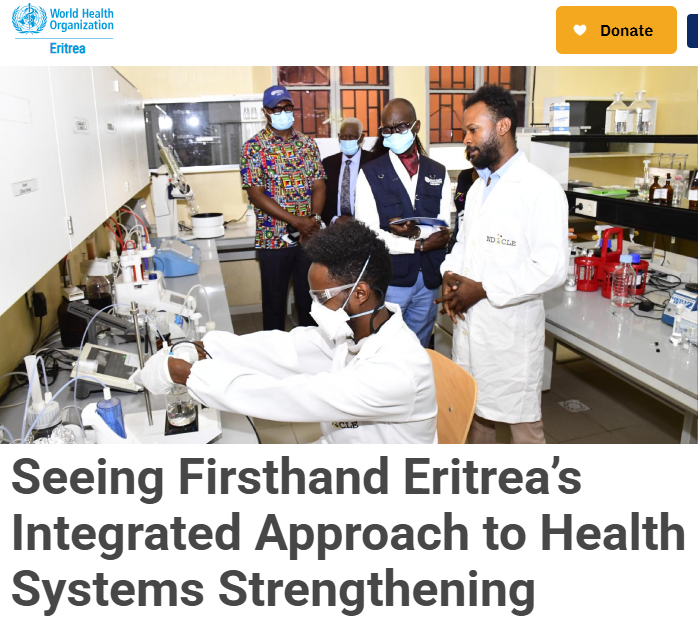
Seeing Firsthand Eritrea’s Integrated Approach to Health Systems Strengthening
ASMARA ― Eritrea is steadily strengthening a more self-reliant and resilient health system through investments in primary health care, skilled health workers, diagnostic capacity, and local pharmaceutical production, with these efforts receiving positive recognition from the WHO Regional Director.
@WHOEritrea@WHOAFRO #Eritrea
https://t.co/zGkqoanxbs
They taught their children to fear the word "socialism" while their government was overthrowing socialist governments across four continents.
They taught their children that democracy was their "greatest export" while their intelligence services were assassinating democratically elected leaders.
They taught their children that America had never lost a war while losing wars.
They taught their children that the market was "free" while using military force to open other countries' markets.
They taught their children that they were "the good guys" and then sent those children to places that had never been given the option of seeing them as anything else.
And the children came home broken, or did not come home, and the country called them "heroes" and moved on, and the next generation of children was taught the same things, and the cycle continued, and the people who profited from the cycle donated to the libraries and universities that produced the textbooks that kept the cycle running.
This is not a conspiracy.
This is an ecosystem.
And everyone inside an ecosystem experiences it as nature.
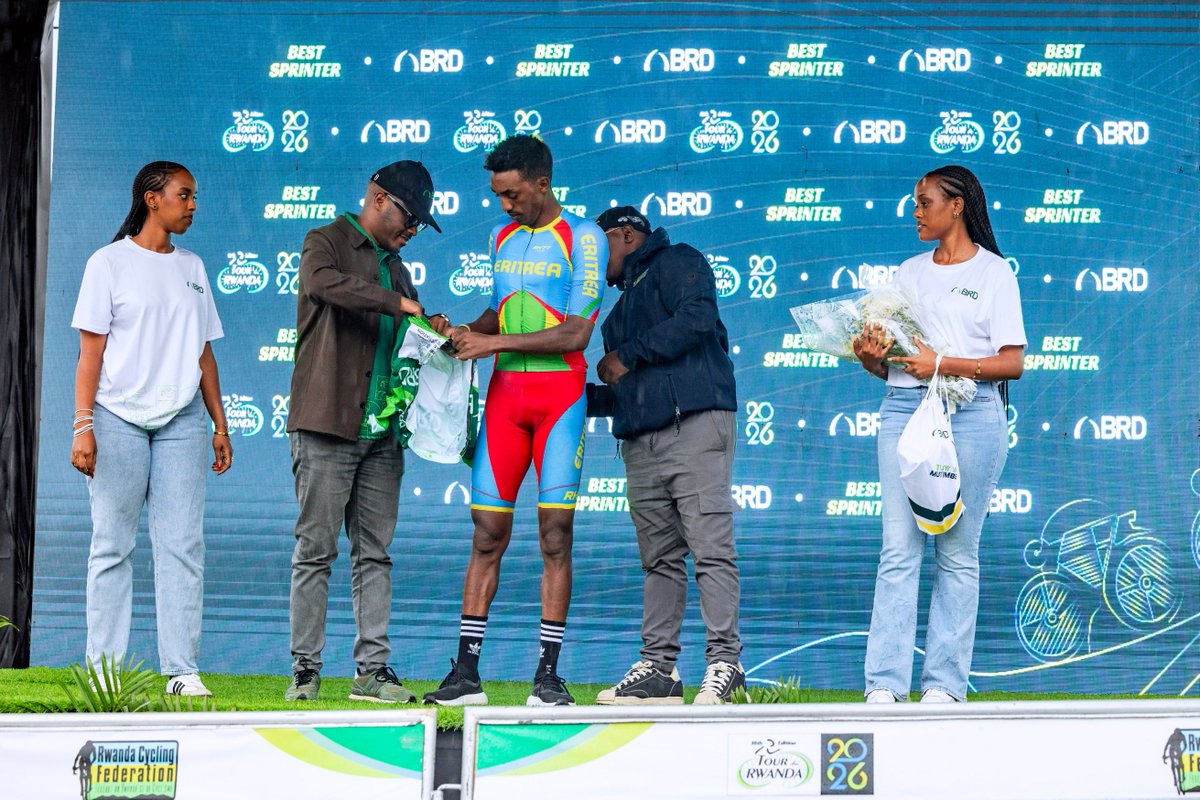
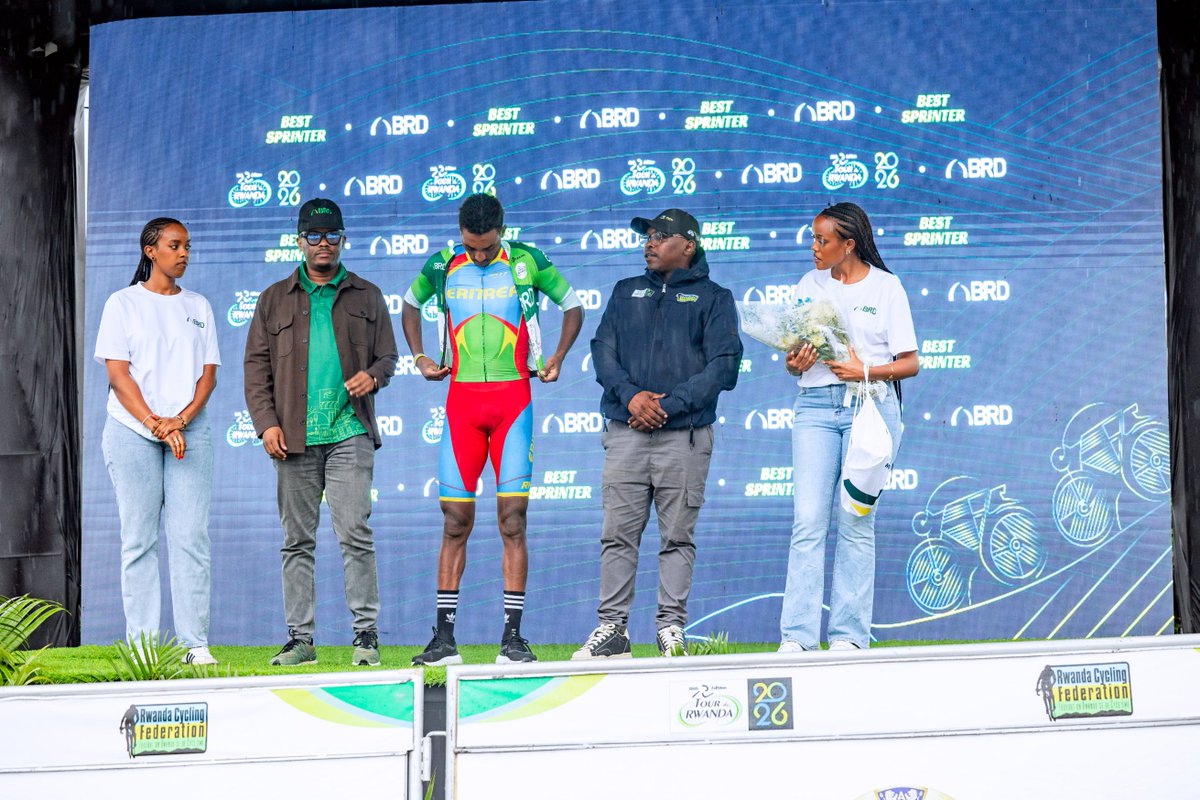
Congratulations to Biniam Girmay! 🇪🇷🚴♂️
The Eritrean star, riding for NSN Cycling Team, powered to a brilliant victory in the opening stage of the 2026 Baloise Belgium Tour - 17/06/2026
Well done, Bini
Like Samir Amin said, colonialism is a system of permanent/perpetual extraction and appropriation, not only of material resources but also of human capital. Colonialism is the “gift” that never stops giving. The French football team does not represent the fantasy of liberal multiculturalism, but the structuring of the extractive power of colonial appropriation: colonialism created structures of permanent entanglement that guarantee extractive power in perpetuity.
Potemkin Party's signature trademark has been aptly described by the formula: PP Propaganda = Lies + Deception + Delusion + Disinformation + "Dazzling" Optics.
Indeed, the article (Al Jazeera, 11 June 2026) by mercurial Getachew Reda (PP's Advisor for East African Affairs); and Redwan Hussein, (PP's Director General for National Intelligence and Security Services) accentuates, in more graphic terms, this poignant reality.
Let us revert to the facts:
1. The tragic war that ravaged Ethiopia for two years from 4 November 2020 until 2 November 2022 with devastating consequences stemmed from, and has its roots in, Ethiopia's internal and perennial ethnic cleavages. Eritrea was dragged into the imposed conflict at the behest of the Federal Government, and more importantly, due to the broad objectives of the war agenda that explicitly included and targeted Eritrea itself. This is on the public record. As one of the principal architects and fervent advocates of the war, Getachew Redda is intimately aware of all these facts; a matter that is easily validated by his numerous posts under his X handle in those tragic times.
2. At the end of the war, PP political and military leaders from the Prime Minister downwards, profusely expressed their profound gratitude to Eritrea. Again, this is on the public record.
2. Getachew Reda and Redwan Hussein weave a theatrical and fictitious story about the consternation of their South African Hosts in Pretoria as the "negotiating team from the two warring parties would get into a fist fight in the middle of the Conference Hall if not shepherded to steer clear of one another".
3. Problem with this fictitious and romanticized story is the Parties had, in fact, held secret meetings in Djibouti and Seychelles months back under the sponsorship of US and EU "Peace Facilitators". And as it was later divulged by Getachew Redda himself, the two Teams had contemplated prompt reconciliation, reportedly under the prodding of the PP Party, to join forces and wage a war of aggression against Eritrea that they both agreed was, in their contorted views, "the ultimate threat to them". These meetings took place in August 2022; when the war was still raging ferociously. A Confidential EU Report issued in September 2022 further corroborated this "imminent trend".
4. The Pretoria Agreement is essentially a peace-pact between warring sides in Ethiopia. It is, and remains, an Ethiopian affair; purely and exclusively. Eritrea's stance and support to the Pretoria Agreement stems from its principled desire and commitment to promote regional peace and stability. In this sense, Eritrea has neither the political appetite nor the interest to scuttle an agreement between Ethiopian political forces if all the parties indeed implement the provisions of the agreement in good faith.
5. In this perspective, PP's current propaganda and transparent disinformation campaigns, as epitomized by the article in question, are designed to re-package the unprovoked agenda of conflict and hostility that it has unleashed against Eritrea since December 2023 in the quest of what it calls "sovereign access to the sea", in "self-defense" terms.
6. The unfortunate fact is: it is PP's delusional agendas (illicit MOU with Somali-land; logistical and other military support to RSF under the bidding of other external forces; and provocative pronouncement, accompanied by unremitting saber-rattling, for acquiring Assab and other Eritrean coastal lands "through negotiations if possible and force if necessary" ) that are stoking unnecessary and avoidable tensions in the Horn. "ጭጉራፍ'ሲ ሃሪማ ተእዊ" ፥ ከም ዝበሃል።
https://t.co/2MuR9MZUna
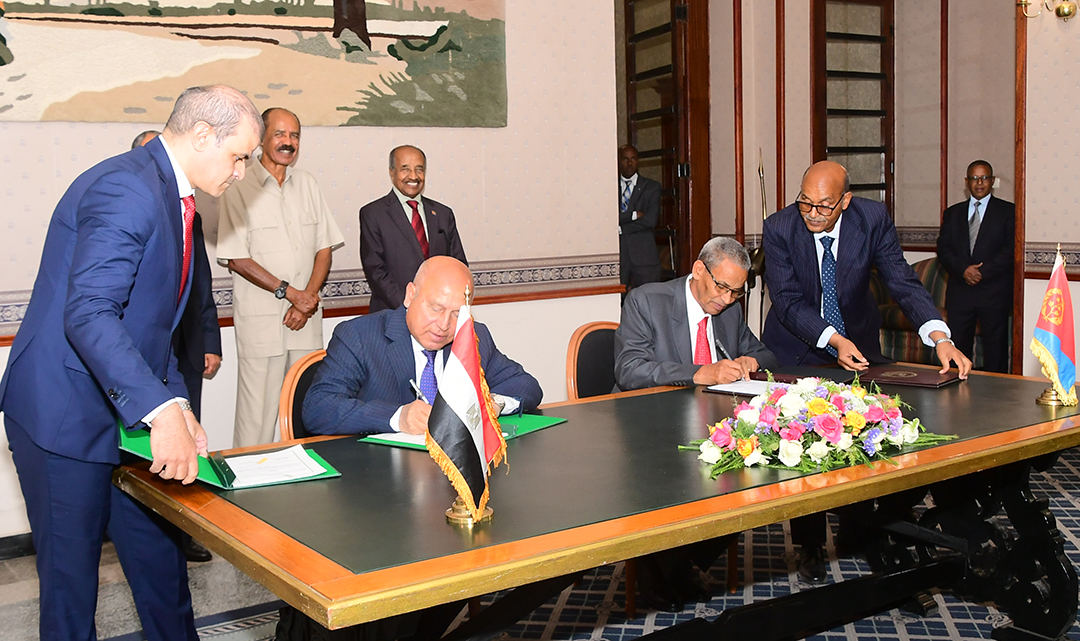
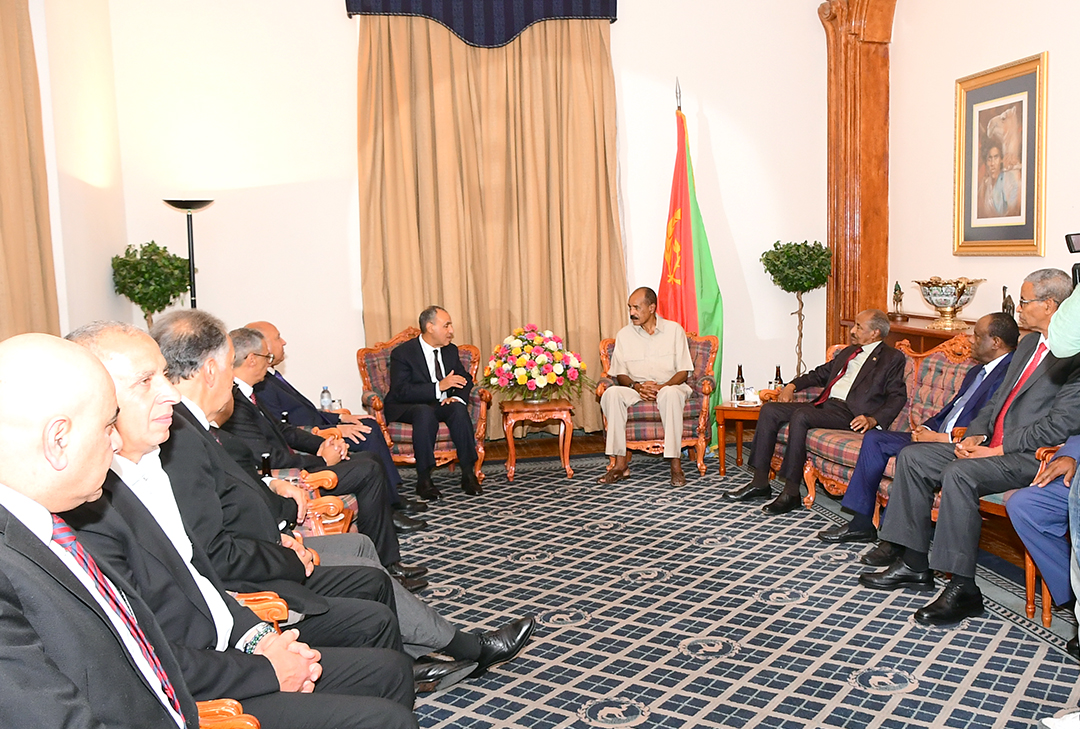
President Isaias Afwerki received, at the Denden Guest House in the late morning hours today, senior Egyptian delegation composed of Foreign Minister Dr. Badr Abdelatty; the Minister of Transportation, Lt. General Engineer Kamel Alwazir; and CEO's of several companies involved in the transport, energy and mining sectors.
The extensive discussions centered on further enhancement of all-rounded bilateral ties of cooperation as well as regional and international issues of mutual importance.
President Isaias underlined the significance of consolidating the all-rounded ties between Eritrea and Egypt to advance the mutual interests of the Eritrean and Egyptian peoples. In this respect, President Isaias expressed Eritrea's readiness to implement common projects in collaboration with Egyptian economic and trade companies.
Foreign Minister Badr Abdelatty, for his part, stated that the current visit was a manifestation and expression of the brotherly ties of friendship and cooperation that exist between the peoples of Eritrea and Egypt.
The principal purpose of the visit was to further consolidate economic and trade ties between the two countries in accordance with the guidelines charted out by President Isaias Afwerki and President Abdel Fattah el-Sisi, Dr. Badr noted.
On the occasion, the two countries signed an Agreement on Marine Transport "for developing cooperation in the sector with a view to contributing to the development of international shipping on the basis of the principles of the freedom of navigation".
The Agreement was signed by Eritrea's Minister of Transport and Communications, Mr. Berhane Tesfaselassie, and Egyptian Minister of Transport, Lt. General Kamel Alwazir.
There has been a lot written about Eritrea in the last few weeks, and I have decided to respond to one of the many pieces coming out of Ethiopia...The IFA article titled “Eritrea’s Sovereignty Claim and the Insecurity It Conceals”.
This article rests on a selective interpretation of international law, an incomplete account of the history of the #Horn of #Africa, and a troubling attempt to recast legitimate concerns regarding #sovereignty and territorial integrity as evidence of political insecurity rather than lawful state responsibility. It is therefore necessary to address several of the issues raised in this selectively framed piece.
The title itself is particularly revealing. It reflects an increasingly common tendency in certain Prosperity Party (PP) political and intellectual circles to delegitimize Eritrea’s invocation of sovereignty by portraying it not as a foundational principle of international law, but as a form of concealment, obstruction, or paranoia. That framing is deeply problematic.
Sovereignty is not something #Eritrea must “hide behind.” Sovereignty is the cornerstone of the modern international legal order, enshrined in the Charter of the United Nations and the Constitutive Act of the African Union. For African states in particular, many of which emerged from colonial partition, territorial disputes, occupation, and prolonged external interference, the defense of sovereignty and territorial integrity cannot be dismissed as rhetorical posturing; these are existential legal principles rooted in painful historical experience.
For #Eritrea, these concerns are not theoretical. Eritrea emerged from a long anti-colonial and anti-annexation struggle following federation, annexation, and decades of war. #Ethiopia was not merely a neighboring state in #Eritrean historical memory; it was Eritrea’s former colonizer. That historical experience inevitably shapes Eritrea’s understanding of sovereignty, borders, and national survival.
As the Amharic proverb aptly states: “የወጋ ቢረሳ የተወጋ አይረሳም” — “The one who inflicted the wound may forget, but the one who was wounded never does.” The proverb captures an essential reality often ignored in external analyses of #Eritrea: historical memory shapes national security consciousness. States and peoples that endured annexation, war, occupation, territorial disputes, sanctions, and prolonged external pressure do not, and cannot, approach questions of sovereignty lightly or abstractly.
From an #Eritrean perspective, sovereignty is therefore not an abstract diplomatic slogan or tactical political shield. It is inseparable from the sacrifices made during one of Africa’s longest liberation struggles and from the determination to prevent any return, direct or indirect, to arrangements perceived as compromising Eritrea’s hard-won independence and territorial integrity.
To suggest that Eritrea’s insistence on sovereignty somehow masks illegitimate motives effectively reverses the legal burden. It implies that smaller states defending internationally recognized borders must justify their concerns, while larger regional powers, advancing inflammatory hegemonistic ambitions and openly invoking “historical rights,” “natural entitlement,” or “strategic necessity” regarding maritime access, are treated as merely pursuing economic pragmatism.
From Eritrea’s perspective, the issue has never been whether Ethiopia, as a landlocked state, possesses legitimate developmental interests in commercial maritime access. Eritrea has never disputed that principle. International law already recognizes the rights of landlocked states to negotiated access and freedom of transit. The issue is whether such ambitions are being articulated and pursued in a manner consistent with the UN Charter, sovereign equality, and the prohibition against the threat or use of force.
Article 2(4) of the @UN Charter prohibits not only the use of force, but also the threat of force against the territorial integrity or political independence of states. International law does not require states to wait for military invasion before taking seriously rhetoric, strategic signaling, or political discourse carrying coercive implications. Preventive vigilance regarding credible coercive signaling is fully consistent with the sovereign right of states to safeguard their territorial integrity and political independence.
Against this backdrop, Eritrea’s concerns regarding Ethiopia’s increasingly assertive discourse on Red Sea access are neither irrational nor propagandistic. Senior Prosperity Party (PP) officials, including Prime Minister Abiy Ahmed, have repeatedly framed maritime access in existential and revisionist terms, invoking notions of “historical rights,” “natural entitlement,” and strategic inevitability. #Ethiopia|n political discourse surrounding Red Sea access has at times gone even further, with prominent figures openly declaring that Ethiopia would obtain maritime access “peacefully if possible and militarily if necessary.”
This rhetoric has not emerged in isolation. It has been accompanied by a broader climate of increasingly normalized irredentist discourse on Ethiopian social and political media platforms, including circulation of altered maps depicting Assab and portions of sovereign Eritrean territory as part of Ethiopia. Independent fact-checking organizations documented multiple instances in which maps were digitally manipulated to incorporate Assab into Ethiopian territory amid heightened public debate surrounding #RedSea access.
Equally troubling were images and videos circulated from military-linked events and social media accounts showing #Ethiopia|n military figures displaying maps incorporating portions of southern #Eritrea into #Ethiopia during public ceremonies associated with special forces mobilization and nationalist messaging. Whether officially sanctioned or not, the widespread dissemination of such imagery contributed to a political environment in which revisionist territorial narratives increasingly entered mainstream discourse.
Taken together, these developments cannot reasonably be dismissed as harmless nationalist symbolism. In a region with a long history of interstate war, contested borders, and unresolved territorial grievances, such rhetoric and imagery carry legal and security implications that responsible states are entitled to take seriously under the precautionary logic embedded within Article 2(4) of the @UN Charter.
Prime Minister Abiy Ahmed himself publicly characterized Red Sea access as an existential issue for Ethiopia and suggested that the matter could not remain unresolved indefinitely. International media and regional analysts increasingly warned that such rhetoric, combined with military mobilization and nationalist agitation surrounding Assab, risked contributing to renewed regional instability and fears of interstate confrontation.
The 2024 Memorandum of Understanding between Ethiopia and #Somaliland further heightened tensions, particularly as Somalia formally rejected the arrangement as an infringement upon its sovereignty and territorial integrity. These developments underscore precisely why questions of maritime access in the Horn cannot be divorced from wider legal and security considerations.
Equally problematic is the article’s selective treatment of the 1998–2000 Eritrea–Ethiopia border conflict.
Eritrea’s borders were not undefined or ambiguous constructs. They were established through the 1900, 1902, and 1908 treaties concluded between imperial Italy and imperial Ethiopia. These treaties formed the legal basis upon which the Eritrea–Ethiopia Boundary Commission (EEBC), established under the Algiers Agreement, based its delimitation ruling.
Critically, the EEBC’s final and binding decision awarded Badme, the principal flashpoint and casus belli of the 1998–2000 conflict, unequivocally to #Eritrea. That fact is legally fundamental. It demonstrates that the territorial dispute centered on areas ultimately determined by the competent international arbitral body to fall within Eritrean sovereignty.
The article also misrepresents the role of the Eritrea–Ethiopia Claims Commission by implying that it definitively adjudicated the broader origins of the war. As legal scholars, including analyses published in the European Journal of International Law, have noted, the Claims Commission was not specifically mandated to comprehensively determine the origins of the conflict. The independent investigative mechanism envisaged under Article 3 of the Algiers Agreement for that purpose was never constituted.
Thus, no authoritative international process ever fully examined the broader antecedents of the conflict, including tensions arising from contested administration, local clashes, militia activity, mapping disputes, and allegations of encroachments into sovereign Eritrean territory during the 1990s, as well as the unprovoked assault by Ethiopian troops against an #Eritrean army unit in the Badme area on 5 May 1998. What was conclusively determined, however, was the territorial issue itself. And on that question, the #EEBC ruled in #Eritrea’s favor.
The defining legal and political crisis of the post-war period therefore was not Eritrea’s rejection of international law, but Ethiopia’s refusal, for nearly two decades, to implement a binding arbitral ruling it had expressly agreed would be “final and binding.” This remains one of the most consequential contradictions in discussions surrounding the rule of law in the Horn of Africa.
At stake was not merely a bilateral border dispute, but the integrity of international arbitration itself. If states may disregard binding arbitral rulings when politically inconvenient, the credibility of peaceful dispute resolution mechanisms under international law is fundamentally undermined.
The article’s treatment of the 2009 sanctions regime is similarly incomplete. From #Eritrea’s perspective, the sanctions imposed under United Nations Security Council Resolution 1907 emerged from a highly politicized process shaped by Ethiopia’s manipulation of #IGAD and the @AfricanUnion. The allegations underpinning the sanctions were strongly contested and were never established through an independent judicial process meeting accepted evidentiary standards.
For many Eritreans, the sanctions episode remains a troubling example of the instrumentalization of multilateral institutions for geopolitical purposes. Indeed, many #Africa|n observers viewed the process with deep discomfort, recognizing the damaging precedent of one #Africa|n state mobilizing punitive international measures against another amid contested allegations. The eventual lifting of sanctions in 2018 further underscored the fundamentally political nature of the process.
The article also presents Eritrea’s National Service Program in a highly reductionist manner. While external narratives often portray the program solely through a militarized lens, Eritrea’s national service system has long included substantial civic and developmental components. National Service graduates contribute across ministries, schools, colleges, hospitals, infrastructure projects, local administrations, and diplomatic missions abroad.
More importantly, the statutory 18-month duration of National Service was prolonged largely as a consequence of the prolonged no-war-no-peace environment and continued security threats emanating from unresolved tensions with successive Ethiopian governments.
At the same time, Ethiopia itself has, in recent years, undergone extensive military mobilization, major arms acquisitions, and repeated internal armed conflicts across multiple regions. Numerous international organizations, media investigations, and even #Ethiopian institutions have documented serious abuses in regions such as Amhara and Oromia, including extrajudicial killings, drone strikes affecting civilians, arbitrary detentions, mass displacement, and attacks on civilian infrastructure.
A balanced and credible analysis cannot selectively invoke human rights concerns only where they reinforce preferred geopolitical narratives while minimizing or contextualizing large-scale violence elsewhere.
More broadly, #Eritrea’s foreign policy has consistently emphasized sovereign equality, non-interference, regional ownership, and resistance to hegemonic arrangements in the Horn of Africa. #Eritrea’s invocation of sovereignty is not “camouflage”; it reflects the historical experience of a state that emerged from one of Africa’s longest liberation struggles and subsequently endured war, sanctions, prolonged territorial occupation, and sustained external pressure.
Regional integration and economic cooperation in the Horn are both necessary and achievable. Eritrea has never opposed negotiated frameworks for trade, connectivity, or maritime access grounded in mutual consent and international law. What Eritrea rejects, correctly, is the normalization of rhetoric implying that the strategic ambitions or demographic weight of larger states entitle them to exceptional arrangements at the expense of the sovereignty and security concerns of smaller neighbors.
Ultimately, the issue is not opposition to Ethiopia’s development. It is the insistence that all regional ambitions remain firmly anchored within the principles of international law: sovereign equality, territorial integrity, non-interference, pacta sunt servanda, and the prohibition against coercion enshrined in the Charter of the @UN.
As for future Eritrea–Ethiopia relations, or “settlement,” as the author characterizes it, prudence, realism, and historical experience counsel patience rather than premature and unrealistic optimism.
Genuine peace and stable relations between neighboring states cannot be manufactured through diplomatic slogans, external pressure, or intellectual wishful thinking. They must emerge organically, gradually, and on the basis of mutual respect, consistency, reciprocity, and trust built over time.
Lasting peace cannot be rushed, especially after the considerable goodwill and historic opportunity extended in 2018 were ultimately undermined by a leadership in Ethiopia that failed to consolidate reconciliation internally, regionally, and institutionally. Sustainable peace in the Horn of Africa will require seriousness, strategic patience, and above all, an #Ethiopia that is first at peace with itself.
ERITREA — The College of Natural Science at the Eritrean Institute of Technology (EIT) has awarded 537 students who achieved a GPA of 3.25 and above in the first semester of the 2025/2026 academic year.
Among the awardees, 104 students obtained a perfect 4.0 GPA, a result the institution described as its strongest performance in the past eight years.
A total of 468 recipients are first-year students, of whom 37.4% are female. Female students also account for 59% of the second and third year students.
The College of Science currently enrolls 2,876 students, and Prof. Gebray Asgedom is the Dean of the College.
Dr. Araya Zerai serves as Dean of the College of Engineering and Technology, while Dr. Yonas Mesfun serves as the Dean of the College of Education.
These three colleges operate autonomously under the Eritrean Institute of Technology (EIT), a higher education cluster based in Mai-Nefhi, on the outskirts of Asmara. #Eritrea
https://t.co/QhQOSJ5lYo
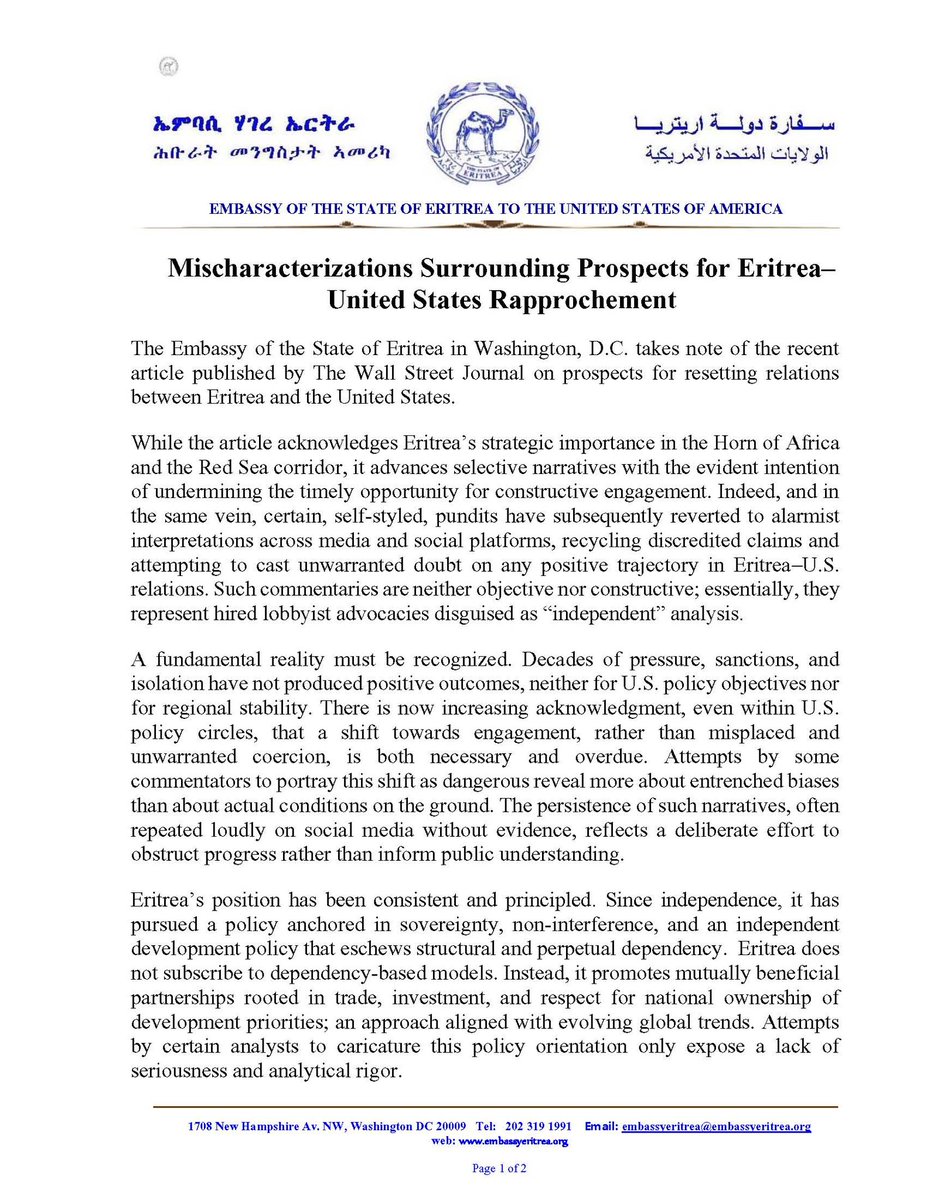
Press Statement
Mischaracterizations Surrounding Prospects for Eritrea-United States #Rapprochement
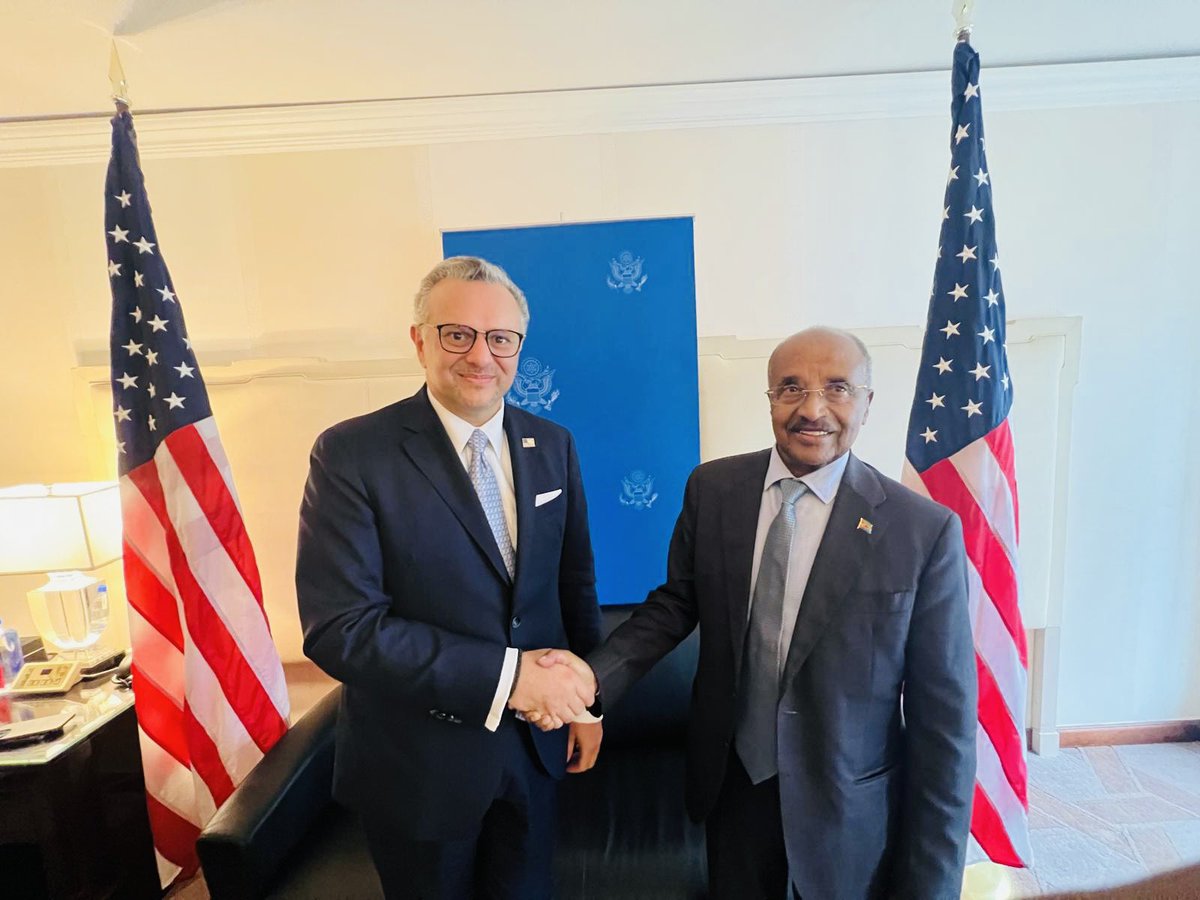
The #Embassy of the State of #Eritrea in Washington, D.C. takes note of the recent article published by The Wall Street Journal on prospects for resetting relations between Eritrea and the United States.
While the article acknowledges Eritrea's strategic importance in the #Horn of #Africa and the #RedSea corridor, it advances selective narratives with the evident intention of undermining the timely opportunity for constructive engagement. Indeed, and in the same vein, certain, self-styled, pundits have subsequently reverted to alarmist interpretations across media and social platforms, recycling discredited claims and attempting to cast unwarranted doubt on any positive trajectory in Eritrea-U.S. relations. Such commentaries are neither objective nor constructive; essentially, they represent hired lobbyist advocacies disguised as "independent" analysis.
A fundamental reality must be recognized. Decades of pressure, sanctions, and isolation have not produced positive outcomes, neither for #US policy objectives nor for regional stability. There is now increasing acknowledgment, even within U.S. policy circles, that a shift towards engagement, rather than misplaced and unwarranted coercion, is both necessary and overdue. Attempts by some commentators to portray this shift as dangerous reveal more about entrenched biases than about actual conditions on the ground. The persistence of such narratives, often repeated loudly on social media without evidence, reflects a deliberate effort to obstruct progress rather than inform public understanding.
Eritrea's position has been consistent and principled. Since independence, it has pursued a policy anchored in #sovereignty, non-interference, and an independent development policy that eschews structural and perpetual dependency. Eritrea does not subscribe to dependency-based models. Instead, it promotes mutually beneficial partnerships rooted in trade, investment, and respect for national ownership of development priorities; an approach aligned with evolving global trends. Attempts by certain analysts to caricature this policy orientation only expose a lack of seriousness and analytical rigor.
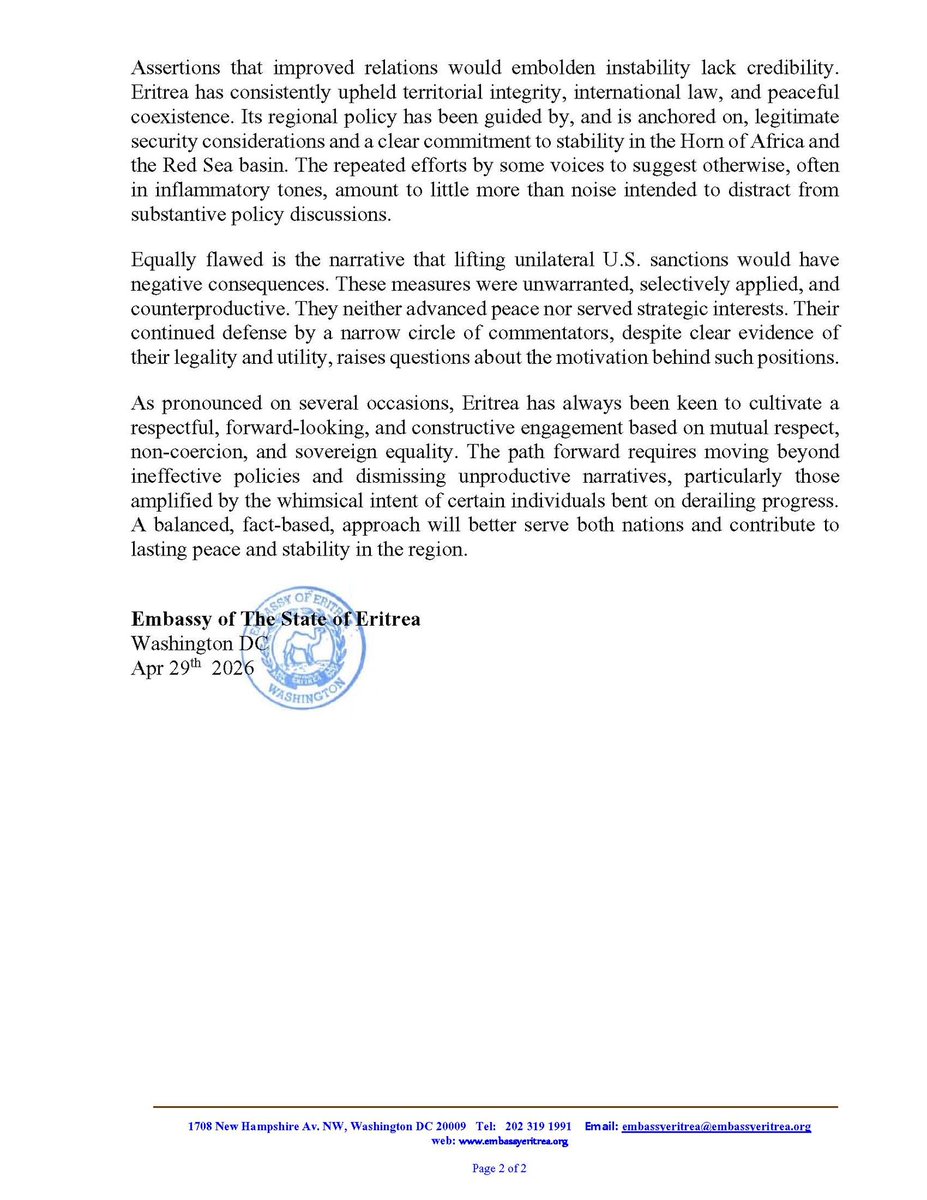
Assertions that improved relations would embolden instability lack credibility.
Eritrea has consistently upheld territorial integrity, international law, and peaceful coexistence. Its regional policy has been guided by, and is anchored on, legitimate security considerations and a clear commitment to stability in the Horn of Africa and the Red Sea basin. The repeated efforts by some voices to suggest otherwise, often in inflammatory tones, amount to little more than noise intended to distract from substantive policy discussions.
Equally flawed is the narrative that lifting unilateral U.S. sanctions would have negative consequences. These measures were unwarranted, selectively applied, and counterproductive. They neither advanced peace nor served strategic interests. Their continued defense by a narrow circle of commentators, despite clear evidence of their legality and utility, raises questions about the motivation behind such positions.
As pronounced on several occasions, Eritrea has always been keen to cultivate a respectful, forward-looking, and constructive engagement based on mutual respect, non-coercion, and sovereign equality. The path forward requires moving beyond ineffective policies and dismissing unproductive narratives, particularly those amplified by the whimsical intent of certain individuals bent on derailing progress.
A balanced, fact-based, approach will better serve both nations and contribute to lasting peace and stability in the region.
Medakemti...Such posturing does little to advance genuine understanding or constructive engagement. Instead, it reveals a persistent disconnect between rhetoric and reality, one that ultimately erodes the credibility of those who perpetuate it.
After more than two decades of relentlessly spinning anti-#Eritrea narratives, they now find themselves confined to an increasingly narrow circle, relying largely on PP cadres and their cohorts to echo positions that have long since lost credibility and resonance.
This shrinking base of alignment is telling. It speaks to an inability, or unwillingness, to read situations with clarity, apply intellectual rigor, renew arguments, broaden appeal, or reconcile with evolving realities on the ground. What remains is a self-contained loop of repetition, where the same assertions are recycled among the same actors, with diminishing relevance beyond their own circles.
#EritreaAt35, will remain focused on substance over spectacle. Its engagements will continue to be anchored in mutual respect, sovereign equality, factual clarity, and genuine partnership, unmoved by the performative interventions of those more invested in sustaining narratives than contributing to meaningful progress...#Peace, #stability and #security in the #Horn region demands much more...
The commotion of the usual, faint-hearted, Conflict Entrepreneurs (እፍሊ ሓንጨመንጪ) is appalling indeed.
This attitude is glaringly evident/manifested, especially this week, both in its condescending variant as well as in their pretentious posturing when they act as "Viceroys" who have the "prerogative and authority" to determine the political affairs, destiny, and international relations of Eritrea in particular and the Horn of Africa region broadly.
Eritrea will not, of course, be derailed by the perennial ill-will of these inconsequential detractors and it will, as ever, pursue its positive and constructive policies of cultivating and consolidating its regional and global ties of cooperation and partnership on the basis of mutual interests and shared objectives.
Engaging and constructive discussions in Asmara over the last days. Delighted to continue the dialogue on key regional issues that concern and connect both 🇪🇺 and 🇪🇷. Grateful to EU Ambassador Joanna Darmanin for hosting #TeamEurope
NEOCOLONIALISM IS NOT A VICTIMLESS CRIME
Samuel, a 19‑year‑old scavenger in Lagos, is introduced as an emblem of youth crushed by poverty in the Global South. A viral act of individual charity appears to change his life, but this story is misleading if treated as a solution because with over half of young Nigerians under‑ or unemployed, charity can only ever touch a tiny fraction of those in need. Only the state has the power to transform society at scale, as shown by China’s mass poverty reduction through planned, state‑led development.
In most of the Global South, states cannot play this role because they are not truly sovereign. Instead, they are neocolonial structures run by “puppet” elites serving foreign capital. Extreme global wage inequalities and value transfers are evidence of a system that enriches the North through cheap labour and shortens lives in the South by deliberate design.
Post‑independence anti‑colonial land movements were crushed and replaced by comprador elites who, under IMF and World Bank “reforms”, imposed austerity, privatization, and land dispossession. Public services, especially education and health, were gutted, pushing millions like Samuel out of school. Instead of funding social schemes to help young people like Samuel, Nigerian wealth siphoned off through corrupt schemes tied to foreign interests.
This is not random “corruption” but a deliberate neocolonial order that blocks the South from using the same tools of development once used by the North. Export‑oriented monocultures, sanctions, political interference, and even war and destabilisation keep countries locked into supplying cheap raw materials. Local leaders who accept this role become the “middle management” of empire.
This global imperial structure is not invincible. Recent popular revolutions, such as in Africa's Sahel region, are proof that when seized and utilised, national sovereignty can redirect resources toward national development. Ultimately, recognizing poverty as the product of imperial design—not fate or individual failure—is the first step toward dismantling the system that shapes the lives of millions of impoverished people across the Global South.
@VoxUmmah@venanalysis@qiaocollective@ProgIntl@KawsachunNews@OrinocoTribune@blkagendareport@SoberaniaPod@DavidHundeyin
Our Biggest Mistake Was Not Buying Weapons From Russia – Saif al-Islam Gaddafi
In 2010, Libya had the highest UN Human Development Index (HDI) in Africa. By the end of 2011, it was well on its way to becoming one of the poorest and most dangerous places on Earth. In this interview with Russian Television, Saif al-Islam Gaddafi, the now late son of late Libyan leader Muammar Gaddafi, laments his country’s critical error of being too friendly with the West and not friendly enough, early enough, with the East.
An error that has cost Libya so much.
Saif al-Islam was murdered by armed assailants in his home in Libya on February 3rd, 2026 – nearly 15 years after NATO invaded his country under a false pretext and murdered his father. The modus operandi of the assailants showed all the telltale signs of a professional hit job. Viewed by many as a unifying figure who could have led Libya back to prosperity, Saif’s death has dealt that cause a vicious blow. The country remains bound by UN Resolution 1973, which effectively places its governance, economy and future in the hands of the West.
Though no parties have claimed responsibility for the assassination and an investigation is still ongoing at the time of this report, it is clear to those in the know what forces stood to benefit the most.