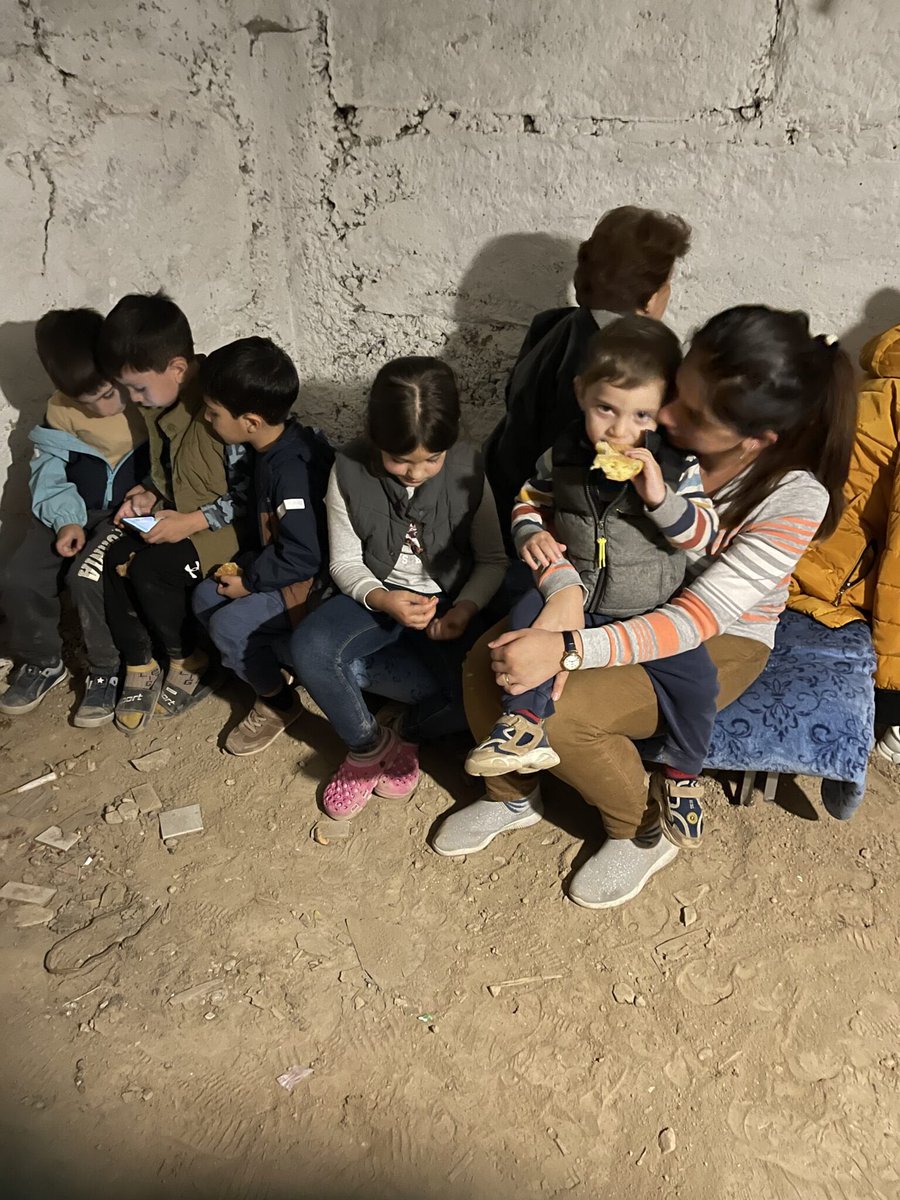
Armine Mosiyan, with her son on her lap, shelters from Azerbaijani rocket fire in a basement on September 19, 2023.
The photo was featured in The @ArmenianWeekly article, “First, I lost my father, then I lost my homeland…,” by Asha Darbinyan, published in September 2024.
This is the woman that Pashinyan insulted and disrespected today in the metro.
Pashinyan has disgraced Armenia on the world stage by reducing our nation to a stage prop in service of U.S. imperialism.
Just this month, Azerbaijan sentenced 16 Armenian hostages to spend the rest of their lives in prison.
Azerbaijan continues to destroy ancient Armenian churches, occupy sovereign Armenian territory, and deny displaced Armenians the right to return to their homes in Artsakh.
By divorcing peace from justice & accountability, the “Board of Peace” has reduced peace to little more than a euphemism for the pursuit of geopolitical ends; to “peace wash” some of the most odious regimes on earth for the sake of financial return.
By participating in this farce, Pashinyan has not only consented to Armenia’s own subjugation & dismemberment.
He has shamefully legitimized a process designed to circumvent & undermine international law, human rights, and transitional justice – where the victims of oppression are expected to suffer, while their tormentors are rewarded.
The "PEACE Act" is a red-herring – a redundant & toothless consolation prize for Armenia.
What is being sold as 'unprecedented sanctions against Azerbaijan' is designed to be unenforceable, and would close the door on real accountability for Azerbaijan's aggression.
Breakdown:
• While Congress can authorize the use of sanctions, it is extremely limited in its capacity to enforce sanctions. Sanctions enforcement is almost entirely left to the discretion of the President – and this has, thus far, been the main political obstacle to real accountability for Azerbaijan's aggression.
• Most sanction legislation, like the PEACE Act, includes an extensive list of exceptions & waivers to grant the President discretion not to enforce sanctions even if the target country/person meets the criteria for sanctions.
• A common example of this is the notorious "national security waiver" (included in the PEACE Act), which would grant the President sweeping authority to waive sanctions when determined to be "in the national security interests of the U.S." – the same reason successive Administrations have used to waive statutory prohibitions on U.S. military assistance to Azerbaijan for the last two decades (including under Trump, during the White House summit in August).
• There are already sanctions mechanisms that the President could enforce against Azerbaijan, but has refused to – including Global Magnitsky Sanctions, which would restrict the travel & financial access of individuals responsible for war crimes & human rights violations.
• While the PEACE Act seeks to target Azerbaijan's energy institutions – the President already has sanctions tools at his disposal that could target Azerbaijan's energy industry, especially over its role in circumventing sanctions on Russia & Iran's energy industries – as other governments have, but the U.S. hasn't despite the recent fervor in cracking down on third-party sanctions violations.
• There is a reason the Administration has not used its existing authority to sanction Azerbaijan – despite considerable bipartisan Congressional pressure – and it boils down to geopolitical expediency.
• Washington's only incentive to involve itself in the Armenia-Azerbaijan peace process is to secure uninhibited access to Azerbaijan's oil & gas fields.
• Evidence of this includes the Trump Corridor (TRIPP), to secure exclusive U.S. development rights of the corridor connecting Azerbaijan & Turkey, a bilateral MoU between the U.S. & Azerbaijan prioritizing defense & energy cooperation, and an MoU between ExxonMobil & SOCAR to expand U.S. investment in Azerbaijan's gas infrastructure.
• The suggestion that the Administration would have any interest in sanctioning the very energy industry it has just recently expanded U.S. investment in – and has refused to enforce existing sanctions against – is naive at best, and deliberately misleading at worst.
• Above all, the bill's sole focus on deterring "renewed aggression" comes at the expense of addressing the ongoing human rights & security issues left unresolved in the bilateral peace process.
• The "PEACE Act" says nothing about Armenian POWs, the protection of Armenian heritage & property in Artsakh, or the long-term status of Artsakh's forcibly displaced population. The deliberate exclusion of these issues is made more irrational when you consider that the Administration has – in response to significant bipartisan Congressional pressure – affirmed its support for the release of Armenian POWs, return of Armenian refugees, and protection of Armenian heritage.
• More revealing is the complete absence of any reference to Azerbaijan's ongoing occupation of close to 100 square miles of Armenian sovereign territory – despite this representing the most immediate risk to Armenia's security (and the durability of a peace agreement).
• In only targeting "renewed aggression", the PEACE Act doesn't just ignore ongoing aggression – it normalizes it. By refusing to address Azerbaijan's current occupation of Armenian territory, or abuse of POWs, the bill would establish a dangerous new status-quo that would legitimize & vindicate occupation & ethnic cleansing.
• The arbitrary distinction between ongoing and renewed aggression is designed to make the sanctions outlined in this bill unenforceable. Instead of addressing real & ongoing aggression, it sets the bar at an ambiguously defined future prospect of "renewed aggression" – granting Azerbaijan an "out" for its current occupation of sovereign Armenian territory, and establishing plausible deniability for any escalation that may result from what Azerbaijan defines as a "border delimitation issue".
• In a practical sense, it would be easy for Azerbaijan to not cross this tripwire and refrain from ambiguously defined "renewed aggression" – avoiding sanctions while continuing unabated in consolidating its entrenched presence within Armenia's territory.
Unanswered Questions:
• Why would these sanctions only apply to "renewed aggression" and not the ongoing occupation of Armenian territory? How can you hope to deter "renewed aggression" while excusing ongoing aggression?
• Why draw an arbitrary line between current & ongoing aggression and "renewed aggression" – unless the intention is to never actually enforce those sanctions?
• Given the fact that the Trump Administration has refused to use its existing sanctions authorities against Azerbaijan over its abuse of POWs, and energy ties with Russia & Iran – what authority does this bill grant the President that he doesn't already have, and has simply refused to enforce?
• Why would the President enforce sanctions that target Azerbaijan's energy industry when the Administration has taken unprecedented steps to deepen U.S. energy ties with Azerbaijan? This isn't to make a case against sanctions per se – but against a narrowly-defined & one-dimensional approach to sanctions deliberately designed to indefinitely sideline human rights concerns, and sold as a 'magic bullet' without consideration of the structural reasons existing sanctions have not as of yet been enforced.
• In light of these obstacles, why would the bill's authors not focus sanctions on the immediate and unresolved human rights and security issues that pose the most direct threat to Armenia's security and the prospects of a just, durable, and dignified peace in the region – particularly when these issues (Armenian POWs, occupation of territory, heritage protection) are non-controversial?
• Is sanctioning Azerbaijan for its abuse and torture of POWs, or occupation of Armenian territory, really less feasible than targeting its energy industry? Or is the goal to give Azerbaijan a symbolic 'slap on the wrist' without the intention of ever enforcing those sanctions?
• Why has the Armenian Government and its proxies so vociferously opposed any reference to the release of POWs, the protection of Armenian heritage, and the return of Armenian refugees – especially given the Administration's support on these issues?
• Why hasn't the Armenian Government tried to leverage Washington's role in the peace process to apply meaningful pressure on Azerbaijan to release POWs?
Solutions:
Instead of creating a new, superfluous sanctions regime that is designed to be unenforceable and distract from tangible accountability measures – efforts to hold Azerbaijan accountable should focus on leveraging & strengthening existing sanctions and accountability tools against Azerbaijan.
This could include:
• Strengthening the enforcement of Section 907 of the FREEDOM Support Act to require Azerbaijan to release Armenian POWs, protect Armenian heritage, and withdraw its forces from Armenian territory as a precondition for any future assistance. Efforts to strengthen the enforcement of Section 907 have received significant bipartisan support – including the unanimous passage of the Armenian Protection Act (S.3000) last year.
• Leveraging the authority of Congress to force the Administration to review the applicability of Global Magnitsky Sanctions against Azerbaijani officials responsible for war crimes – including through the Azerbaijan Sanctions Review Act of 2025, and the Congressional trigger mechanism provided under Section 1263(d) of the Global Magnitsky Act.
• Pressuring the U.S. to enforce existing secondary sanctions against Azerbaijan for its widely documented collusion with Russia & Iran's energy and security sectors – a far more realistic, tangible, and politically potent way to target Azerbaijan's energy industry.
• Enforcing Congress's oversight powers to force a review of U.S. assistance to Azerbaijan – including through privileged mechanisms like Section 502B(c) of the Foreign Assistance Act.
All of these options – or some variation thereof – were offered by the ANCA to the authors of the "PEACE Act" to ensure this bill actually applied meaningful pressure on Azerbaijan to cease its aggression.
I'll leave it to others to figure out why these commonsense proposals were left out of the bill – and who was responsible for that.
Despite the attempts to derail & distract from meaningful accountability measures – all of these avenues are being actively pursued by those who understand that you can't deter aggression by rewarding aggression, and can't have true peace without real justice.
H.R.5632 fails to address Armenian hostages, Artsakh refugees, Christian churches, or Azerbaijani occupation.
The rationale behind the ANCA's principled opposition to H.R.5632 – the "PEACE Act" introduced by Rep. Issa (R-CA) is set forth below:
H.R.5632, a measure narrowly aiming at deterring renewed acts of aggression by Azerbaijan against Armenia, manifestly fails to address Azerbaijan's genocide of Artsakh, ongoing human rights abuses, and continued occupation of sovereign Armenian territory.
The ANCA maintains that the U.S. has a central role to play in resolving critical humanitarian and security concerns left unaddressed in the bilateral Armenia-Azerbaijan peace process. This must begin by holding Azerbaijan accountable to the spirit and intent of the peace process by taking meaningful steps to 1) compel Azerbaijan to release unlawfully detained Armenian prisoners, 2) protect Armenian cultural heritage and civilian property, 3) support the right of Armenians to return to their homes, and 4) ensure the immediate withdrawal of Azerbaijani forces from Armenian territory.
Unfortunately, H.R.5632 – the PEACE Act – neglects these critical, unresolved human rights and security concerns by narrowly defining the scope of sanctions to apply only to "renewed acts of aggression", despite Azerbaijan's ongoing and unabated aggression against sovereign Armenia to this day.
In failing to address Azerbaijan's ongoing human rights violations, and refusing to hold Azerbaijan accountable for its years-long occupation of sovereign Armenian land, H.R.5632 risks closing the door on justice for Azerbaijan's human rights violations – and establishing a new status-quo that normalizes Azerbaijan's current and ongoing occupation of sovereign Armenian territory.
The Armenian American community has long maintained that peace in the South Caucasus must be predicated on justice, accountability, and upholding the fundamental rights of Nagorno-Karabakh's forcibly displaced Armenian population.
As such, the ANCA cannot in good conscience support an effort that neglects the concerns of the Armenian American community, and fails to address what we believe are the most pressing threats to a just, durable and dignified peace in the region.
Specifically, H.R.5632 does not address:
1) Azerbaijan's unlawful detention, abuse, and torture of Armenian prisoners of war and civilian captives; who currently face illegal sham trials in Azerbaijan, have been denied legal due process, and denied access to international humanitarian organizations including the ICRC.
2) Azerbaijan's widespread destruction of Armenian Christian cultural heritage and civilian property.
3) The right of Armenian refugees to safely return to their homes in Nagorno-Karabakh, as guaranteed under international law.
4) Azerbaijan's ongoing military occupation of sovereign Armenian territory – where Azerbaijani forces have been entrenched since cross-border incursions in May 2021 and September 2022.
We believe that Azerbaijan's ongoing human rights violations and aggression against Armenia represents a significant obstacle to a just, durable, and dignified peace in the region.
The imperative for the U.S. to address these ongoing human rights concerns was made clear following the publication of the terms of the initialed peace agreement between Armenia and Azerbaijan – where it was confirmed that the agreement includes no provisions to ensure the immediate and unconditional release of POWs, protection of at-risk Armenian heritage, or the return of forcibly displaced Armenian refugees.
In addition to the exclusion of humanitarian concerns – Azerbaijan has imposed terms that would require Armenia to:
1) Withdraw all legal complaints before the international courts; despite the International Court of Justice (ICJ) having ruled in Armenia's favor on a number of issues – including the abuse of POWs, destruction of heritage, and right of return. By forcing Armenia to withdraw legal cases, Azerbaijan is seeking to close the door on accountability for human rights abuses.
2) Remove any third-party ceasefire monitors from Armenia's borders; including the European Union's monitoring presence on the border, removing a critical deterrent against Azerbaijan without any replacement monitoring presence to hold Azerbaijan accountable during the implementation of a peace agreement.
3) Force the dissolution of the OSCE Minsk Group; the multilateral body mandated to find a peaceful resolution to the conflict that ensured mutual respect for territorial integrity, and the right to self-determination for Nagorno-Karabakh's Armenians. This was a symbolic blow to multilateral diplomacy at a time when greater international involvement is imperative to hold Azerbaijan accountable to this peace process.
4) Demand changes to Armenia's constitution; to expunge any reference to Nagorno-Karabakh's Armenian heritage – a brazen violation of Armenia's sovereignty, and a tactic designed to delay the ratification of an agreement.
Azerbaijan has routinely engaged in the threat and use of force, and hostage diplomacy, to coerce Armenia into accepting increasingly unfavorable terms – at the barrel of a gun.
As such, we believe the role of the U.S. should be to explicitly address those issues excluded from the peace process – and ensure Azerbaijan is not given license to continue grave human rights abuses against Armenian POWs and its unabated aggression against sovereign Armenian territory.
Since the 2020 Nagorno-Karabakh War and the 2023 ethnic cleansing of Artsakh, the Armenian American community and the bipartisan Congressional Armenian Caucus have relentlessly advocated for the U.S. to hold Azerbaijan accountable for aggression and human rights violations. To that end, we recently received a constructive response from the State Department to a letter led by the Armenian Caucus – and signed by 87 members – urging the Administration to prioritize the release of Armenian POWs, the protection of heritage and civilian property, and the safe return of Armenians to Nagorno-Karabakh.
The State Department's response affirmed U.S. support for:
1) The return of Armenians to Nagorno-Karabakh as part of a sustainable peace.
2) The protection of at-risk Christian Armenian cultural heritage sites.
3) The release of Armenian POWs, and the right to a fair trial for detainees – indicating U.S. officials have sought to monitor ongoing trials.
In light of the policy stands taken by the Administration, we believe that the Congress should both encourage and empower the President to advance each of these three U.S. priorities.
Unfortunately, by narrowly defining the scope of the bill to "renewed acts of aggression", H.R.5632 risks legitimizing Azerbaijan's aggressive conduct by turning a blind eye to past and ongoing abuses.
Another day in Turkey: “Armenian” used as an insult.
A man calls Ataturk an Armenian, gets beaten by the mob.
Reporter: “He’s the founder of our country.”
Man: “What did he do?”
Reporter: “He prevented you from becoming Armenian.”
Man: “He himself is Armenian.”
DON'T ABANDON ARMENIAN CHRISTIANS:
Any White House accord must require:
- Return of Armenians to Artsakh
- Accountability for Aliyev's crimes
- Protection of Christian holy sites
- Robust international monitoring
- Release of Armenian hostages
- Roll-back of Azeri occupation
We oppose war with Iran.
The regime isn't suffering – Iranian people are.
A nation home to 100,000+ Armenians who, like my family, have preserved their culture in peace for centuries.
And every day the risk Azerbaijan uses the chaos to attack Armenia rises.
De-escalation now.
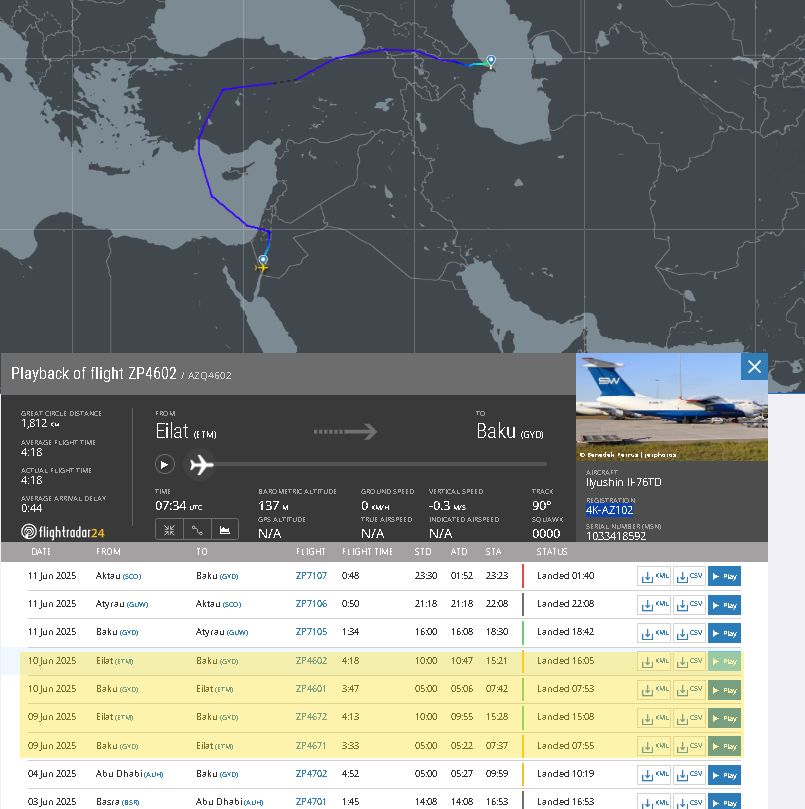
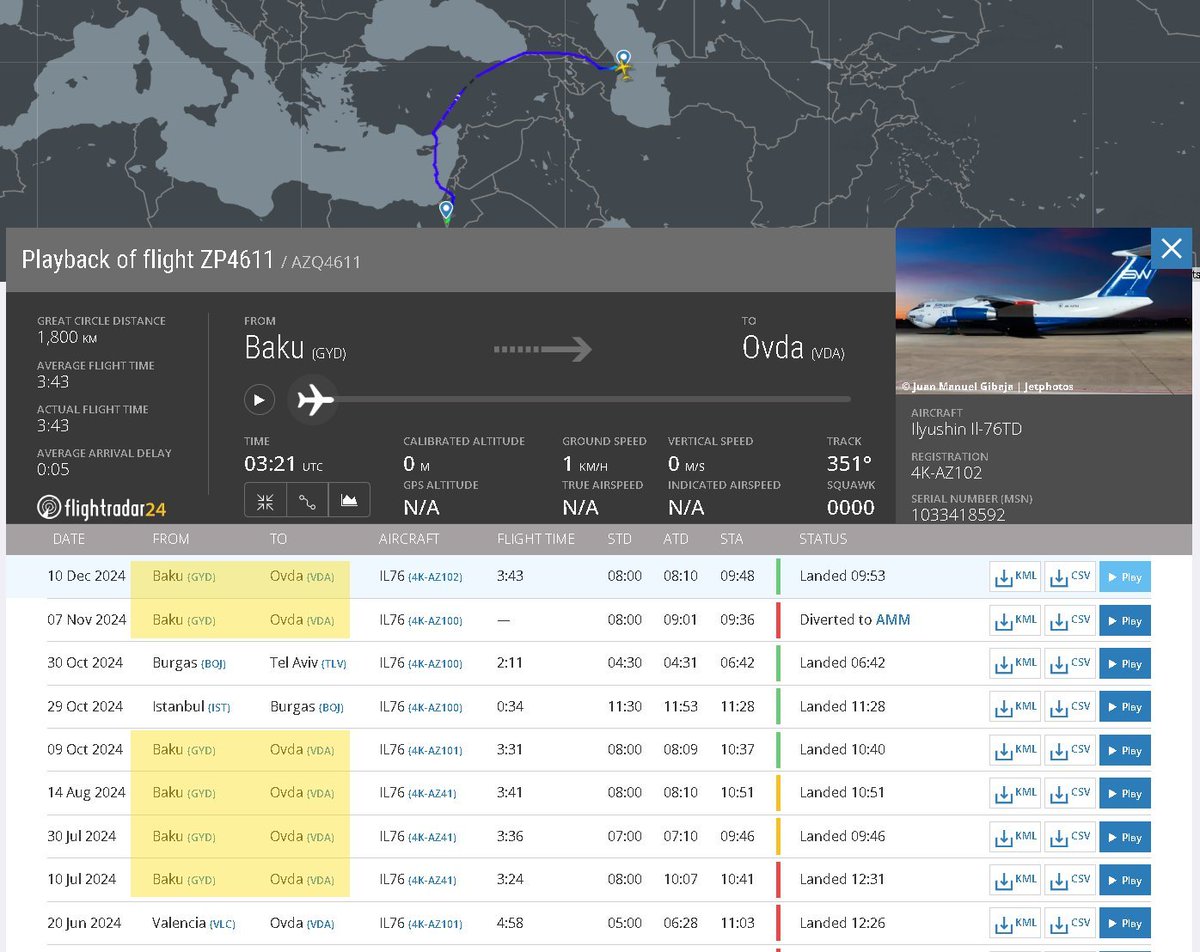
Another puzzling thing amid the ongoing #Israel-#Iran conflict are the scores of continuing cargo flights from Israel to #Azerbaijan, often from Ovda airbase, the only one in Israel authorised to export explosive material. The latest flights were from Eliat to Baku International with an Il-76 (reg. 4K-AZ102) between 9 and 10 June. Previously from Tel Aviv and Ovda in March.
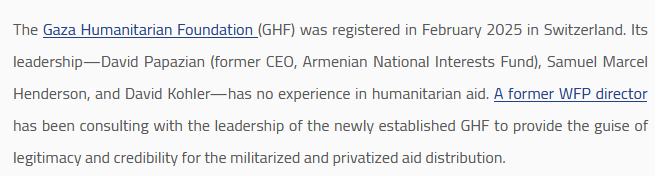
David Papazian is one of the 3 members of the Board of Directors of the US-Israeli "Gaza Humanitarian Fund," after directing the corrupt, disastrous Armenian National Investment Fund (ANIF). Failing "up"
GHF is such naked occupation even a US military vet couldn't stomach it.
Since 1934, The Armenian Weekly has provided pertinent news while informing, educating, and raising awareness of critical Armenian issues.
Give them a follow.
Support a 91-year-old Diasporan institution.
For the people, by the people.
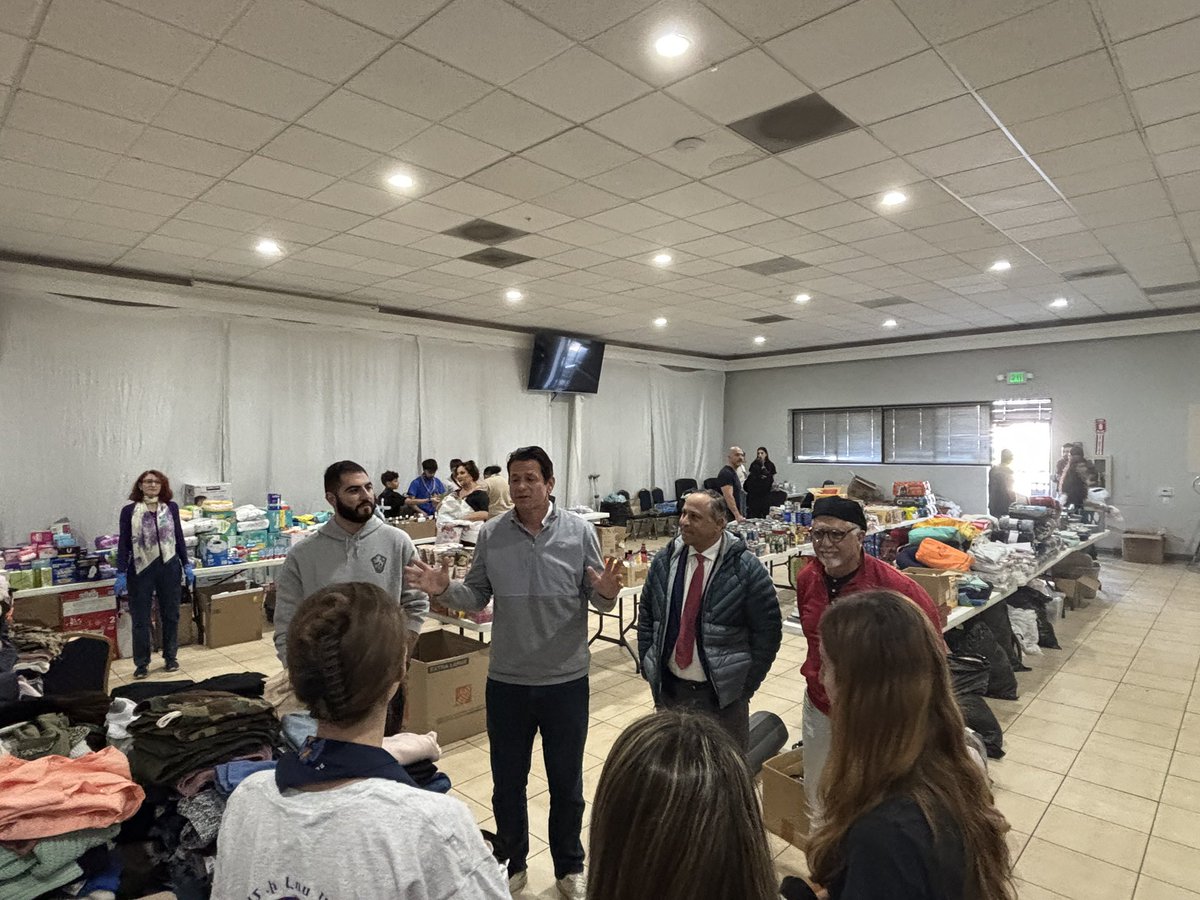
Resources at Jivalagian Youth Center 📢
Need shelter, food, or support? The center is open 24/7 with rest for first responders.
📍 2242 E Foothill Blvd, Pasadena, CA 91107
📞 Questions? Call: (818) 396-7005
Thanks to @ANCA_WR, @ANCA_Pasadena, & @ayfwest#EatonFire#AD41
How to kill a state and get away with it.
The death of Nagorno-Karabakh a year ago raises many important questions about the weaknesses of rules-based international order.
Piece by Dr Andrew Forde @DrAndrewForde of @LawGovDCU for @RTEBrainstorm.
Read here: https://t.co/AZbuQlTIcA
It should be a bigger deal that the COP is being held in a nation committing human rights violations against its neighbor. The fact that Azerbaijan is a huge producer of fossil fuels pales in comparison to the atrocities they are committing. @ANCA_DC@ANCA_WR
💔 BREAKING
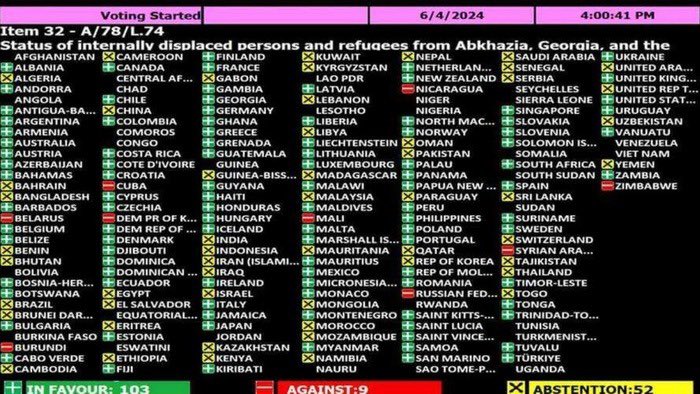
#Armenia 🇦🇲 voted ✅ for the resolution on return of Georgian refugees for the first time ever in the #UN.
It is probably connected to situation with #Artsakh
Here in #Abkhazia ethnic Armenians represent almost third of the population tho.
The Democratic Republic of Congo's (DRC) armed forces repelled an attempted coup d'etat involving Congolese and foreign fighters on Sunday morning, a DRC army spokesperson said in a televised address..The army announces the arrest of American mercenaries.