Want to learn more about Chrome exploitation?
In our latest article, we break down two critical Android GPU driver vulnerabilities that enabled Chrome sandbox escape from a compromised renderer and were used in full device exploit chains. Read the full technical analysis here: https://t.co/3kIHg9f9xm
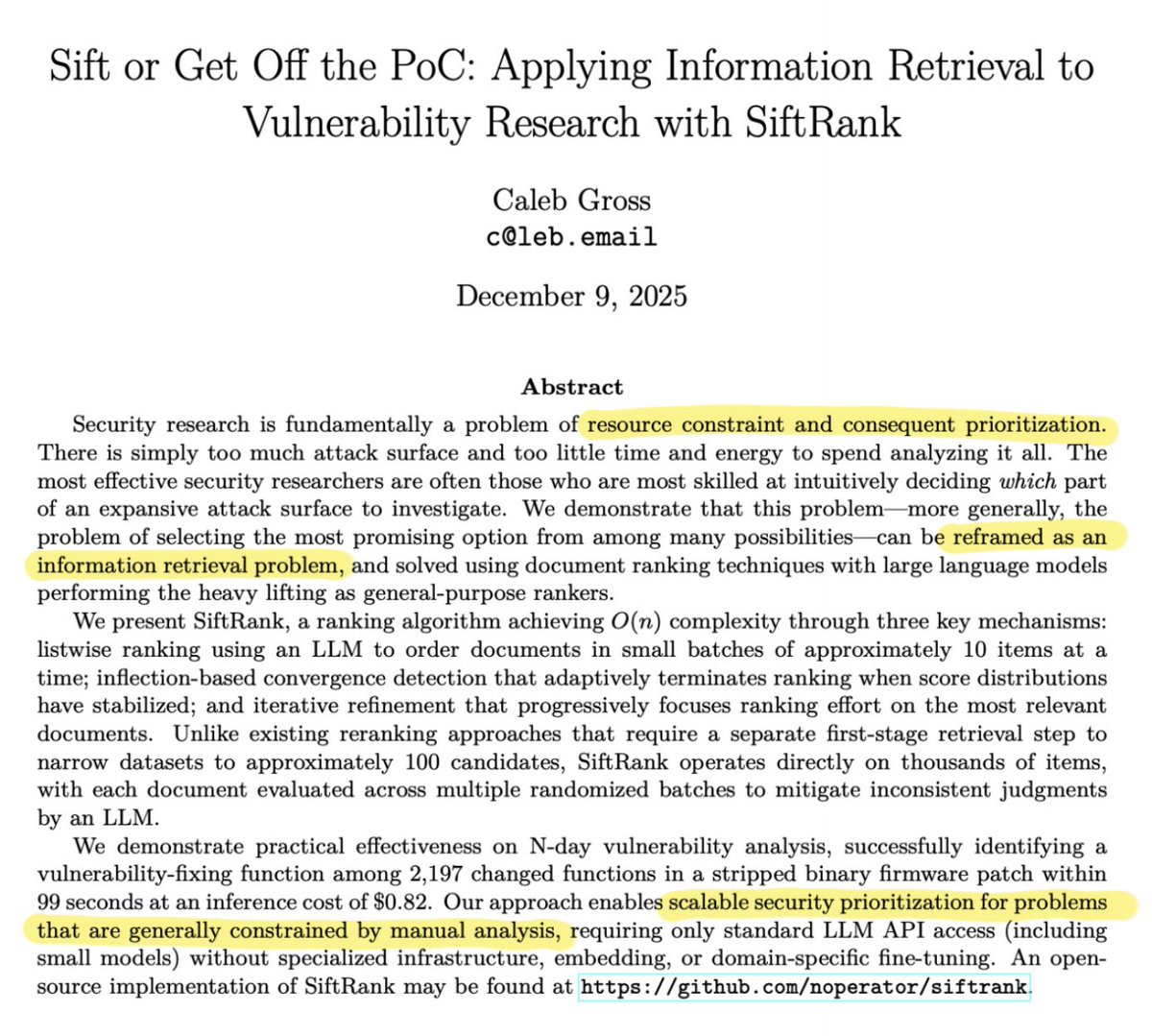
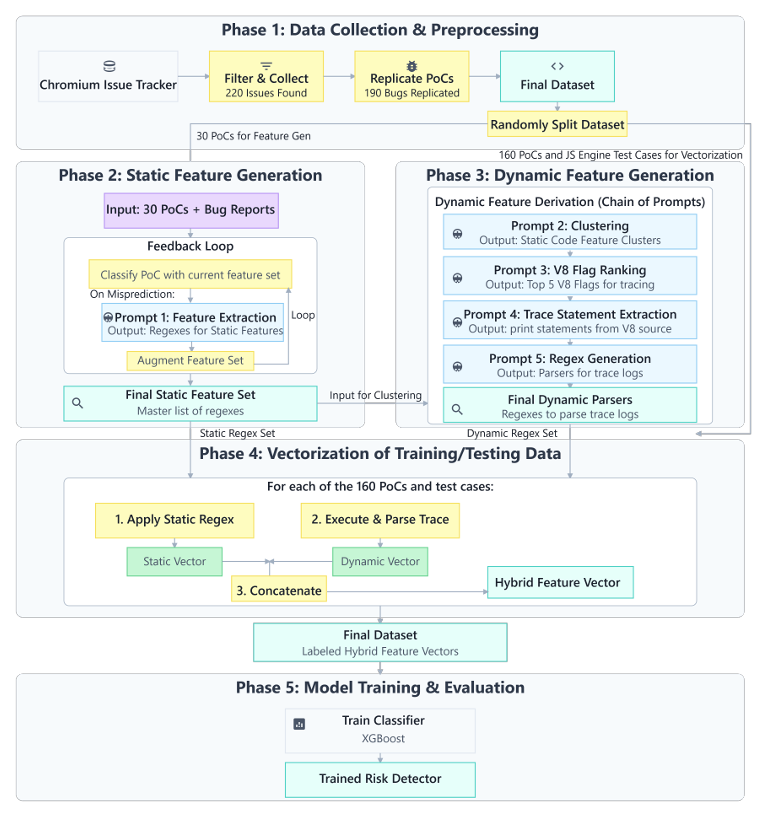
1/ Agentic LLMs can automate vuln detection. Very exciting, but doesn't address the hardest part (imo) of vuln research: prioritization. Can we reliably explore the search space and separate signal from noise? I wrote a paper (and OSS tool) to solve this. https://t.co/HDzm4SvSX1
At #Pwn2Own Berlin 2025, a full exploit chain against VMware Workstation was demonstrated via a heap overflow in the PVSCSI controller.
Despite Windows 11 LFH mitigations, advanced heap shaping and side-channel techniques enabled a reliable exploit.
🔍 Full technical write-up 👇
https://t.co/R0E5Uqql1E
I found a use-after-free in CPython!
In this blogpost I also discuss interesting patterns such as refcount changes during callbacks.
Read more here: https://t.co/a1WhJBJnyc
.@xorpse has been building program analysis tools his entire career, and we’ve been iterating our @binarly_io vision on Fugue by applying a lot of industry practical knowledge on RE of complex software and vulnerability REsearch.
Fugue is fully open btw:
https://t.co/OQDAu8dIkm
✨AI-generated code is accelerating development, but it's also introducing unmaintainable, vulnerable dependencies.
Today, we introduce VulHunt: A new framework for semantic binary vulnerability detection.
https://t.co/mn7lo4Soj1
Blog post: On the Coming Industrialisation of Exploit Generation with LLMs https://t.co/aK4pysY1wD
TL;DR: I ran an experiment with GPT-5.2 and Opus 4.5 based agents to generate exploits for a zeroday QuickJS bug. They're pretty good at it.
Code: https://t.co/47xHRObhRy
Let's begin the new year with some V8 exploitation!
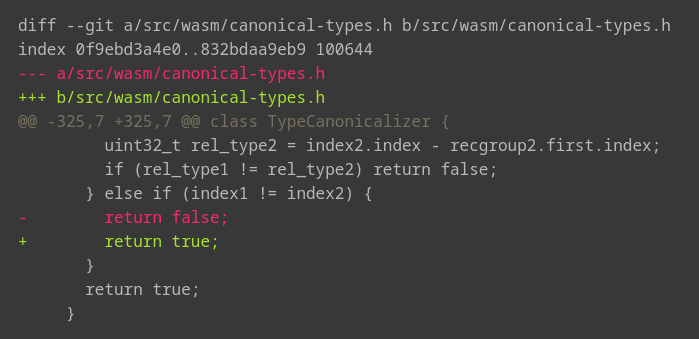
Learn how to turn a broken CanonicalEquality check into arbitrary Wasm type confusion in this ASIS CTF Finals writeup by @Erge!
Read it here: https://t.co/OMofRaV0l5
A decade is an eternity in security. 🛡️
Ten years ago, we released the Clang Hardening Cheat Sheet. Today, the landscape has changed.
@0xTRIKKSS & @bcreusillet break down the latest mitigations to keep your code secure.
🔗Read the update: https://t.co/ZVC2h5yNMw
What better way to get into x'mas vibes than @flyingpassword dropping a BFS n-day (CVE-2025-29970) blog post! (Santa would approve :)) Merry X-mas!
https://t.co/Skmuu5rsU1
Slides from @n0psledbyte, @st424204 & @Peterpan980927 at @codeblue_jp talk are also up:
“Dancing with Exynos Coprocessor: Pwning Samsung for fun and ‘profit’”
https://t.co/FaeX6SkoFc
Shout-out to @rainbowpigeon_ for contributing a lot in this research during his internship.
Déjà Vu in Linux io_uring
Talk by @u1f383 about exploiting CVE-2025-21836 — a race condition that leads to a use-after-free in the io_uring subsystem.
Slides: https://t.co/IsW8Nx8kyA
Video: https://t.co/kZ21botEkB
I wrote a blog post on CVE-2025-48593, an issue patched in Android's November Security Bulletin that only affected devices which act as Bluetooth headphones, such as smartwatches, smart glasses, and cars.
I examined the patch and wrote a proof-of-concept:
https://t.co/bBhoMUGXn6