MRI scans of awake, trained dogs have revealed something remarkable about the bond they share with humans.
When dogs smell the scent of their owners or another familiar person, the caudate nucleus, a region of the brain associated with reward, pleasure, and positive expectations, becomes more active than when they smell unfamiliar people, other dogs, or even their own scent.
The original study involved 12 dogs that were specially trained to remain still during functional MRI scans.
Researchers found that a familiar human's scent triggered the strongest response in this reward center, suggesting that dogs place exceptional emotional value on the people they know and love.
Later studies have also shown that, for many dogs, praise and attention from their favorite humans can be just as rewarding as food and sometimes even more so.
Scientists caution that brain scans cannot prove dogs think of humans exactly as "family" in the same way people do.
However, the evidence strongly suggests that dogs view their owners as deeply important social companions who provide comfort, security, and happiness, helping explain why the bond between dogs and humans is one of the strongest relationships in the animal kingdom.
On December 27, 1968, Apollo 8 needed to fire its engine to leave lunar orbit and return to Earth.
If the burn was wrong, the crew would never come home.
In Mission Control, a 25-year-old mathematician named Frances Northcutt, known as Poppy, had prepared the return-to-Earth calculations.
She was the first woman to work in Mission Control in a technical role.
When the burn data came back, something was off.
The numbers didn't match the expected trajectory.
She had 4 minutes to determine whether the deviation was within tolerance or whether Apollo 8 was in danger.
She ran the calculations by hand.
They were within tolerance.
She gave the go.
The crew came home.
She later went to law school and became a prominent civil rights attorney.
When asked about her time at NASA she said:
"We were just doing our jobs. Nobody thought it was unusual except the reporters."
The people who kept the astronauts alive were largely anonymous.
Most of them were young women with slide rules.
That mirrored gazing ball in your garden might have a bird wearing itself ragged against an enemy that doesn't exist.
Male cardinals, robins, mockingbirds, and towhees defend their territory hard, wired to drive off any rival male they see. A reflective ornament hands them one that never backs down.
The bird sees itself in the curved glass, reads it as an intruder sitting in the middle of its nesting territory, and attacks. It can go for hours a day, for weeks, right when it should be feeding a mate and raising chicks. All of it burns energy the family needs, against a rival that never leaves.
Smaller birds can also collide with the sky reflected on a large mirrored surface, the same way they hit windows.
You don't have to toss it. Move it where birds don't patrol, tuck it low in dense foliage so it doesn't read as open sky, or bring it in through the spring breeding season and set it back out after.
The bird thinks it's protecting its family. It's exhausting itself against a threat that's only ever its own reflection.
That bread you're tossing to the ducks malnourishes the adults and can leave the babies unable to fly for the rest of their lives.
Bread is junk food for a duck. It fills them up so they quit foraging for the bugs, plants, and seeds that actually feed them.
In a growing duckling, a diet that heavy in empty carbs makes the wing grow too fast and twist at the joint. The feathers jut out sideways, the wing never works right, and the bird is grounded for good. It's called angel wing, and in an adult it can't be undone.
It doesn't stop at the birds. A pond where people dump bread gets crowded and aggressive, ducklings never learn to find their own food, and the soggy leftovers rot into algae blooms and draw rats.
If you want to feed them, give them food, not filler: cracked corn, oats, halved grapes, chopped lettuce, a handful of thawed peas.
Better yet, just watch them. A healthy pond already feeds its ducks. They were doing fine before the bread showed up.
Colombia has drawn a hard line: Bullfighting will be banned nationwide by 2027. Cockfighting by 2028. These public arenas will be turned into spaces for music, sports, and culture. We can move past animal cruelty as a tradition.
Happy World Oceans Day!
From the sky the ocean doesn’t feel distant. It’s the heartbeat of our world; the air we breathe, the climate we rely on, the life that sustains us. Yet too often, we treat it as out of sight, out of mind. Plastic bags drift like jellyfish, abandoned gear tangles seabirds, and single-use waste washes up on the very shores we love. Witnessing moments like this can be heartbreaking.
So let’s reimagine a different world….
A world where people truly pay attention to what’s happening around them. Where we pause before accelerating to contain our trash. Where we choose reusable over convenient. Where beachgoers, boaters, and communities see the ocean not as an endless playground but as our shared home that demands our care. Where schools teach the stories of keystone species like menhaden that feed whales, sharks, and entire ecosystems and where every one of us becomes an active guardian instead of a passive beneficiary.
Imagine generations inheriting oceans alive with wonder, not waste or toxins.
It starts with small, mindful acts: proper waste disposal, supporting strong marine protections, joining cleanups, and sharing the beauty that inspires change. My lens shows what’s possible when we look closer, now it’s time for all of us to act on what we see.
One Ocean. One Future, Together.
What’s one way you’re reimagining your relationship with the ocean today? Drop it in the comments. Let’s build momentum. 💙 @DJIGlobal@WorldOceansDay
Good language says more by saying less, communicating to the conscience of the viewer not by telling them how to perceive but allowing their very own interconnected consciousness to fill in the gaps on its own. Answers are found in the silence between sounds and what isn’t there more than what is.
On Friday, the FDA expanded its approved use of Afrezza for kids six years and older who have Type 1 diabetes or those who require insulin with Type 2 diabetes — making it the first ever needle-free insulin option for pediatric patients, according to MannKind Corporation.
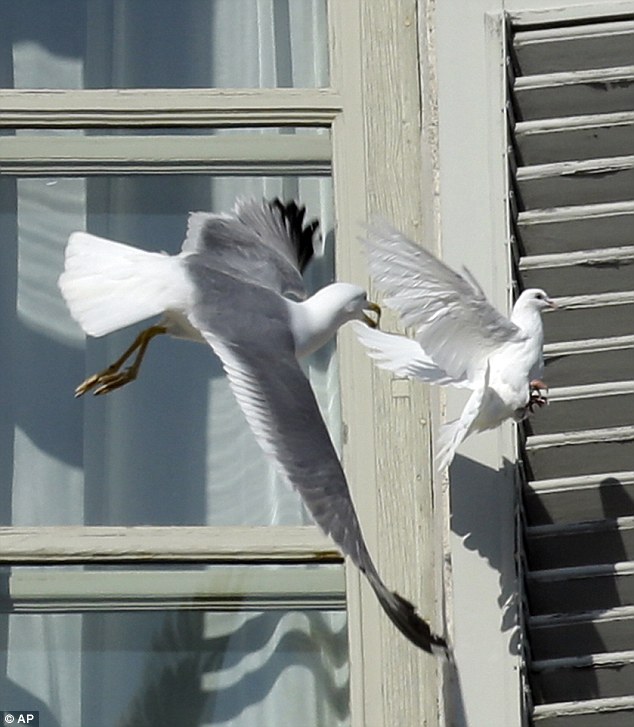
A "dove release" at a wedding or funeral is a death sentence for the birds.
The white "doves" sold for releases aren't doves. They're domestic white pigeons bred to be small and pretty, with no survival skills outside a coop.
The cheaper DIY versions (Ringneck Doves, King Pigeons) can't even find their way home. Nearly all of them die within days.
Even professional releases with trained homing pigeons lose birds every time. Hawks take them in the air. Cars hit them when they land exhausted. They collide with windows. There are lots of ways it can go sideways for them.
Rehabbers pull them in with broken wings, raging trichomoniasis, and bodies so emaciated they can't stand. One described a release pigeon whose throat infection had hardened so completely it distorted the shape of his skull.
There is no version of this where the birds "fly away and live happily ever after." That's the marketing. The reality is a domestic animal traumatized or killed for a 15-second photo.
If you are on Long Island......
My Opening Reception is today:
Sunday, May 31st 2–4 PM Hope to see you there!
The Geri Bauer Gallery will be hosting “Nature from Above” solo exhibit by Joanna Steidle at The Hampton Library 2478 Main Street, Bridgehampton, NY
Exhibition Dates:
May 31st – July 29th
Gallery Talk June 13 4pm
Beautifully curated by Ryan Prizzi Zwick
MannKind is excited to announce that the U.S. Food and Drug Administration (FDA) has approved the first needle-free treatment option for pediatric patients living with type 1 diabetes. Learn more in the Company Announcement here: https://t.co/x0TFQg3HDw
Important Safety Information: https://t.co/x0TFQg3HDw
Prescribing Information: https://t.co/2FZtyJna2E
#Press #FDA #Diabetes #T1D
So very true. I knew sales was a liabiliaty for me right from the start. I'm not a pusher that way and I get quite tired of sharing my work on a consistent level.
I have finally reach the point where my art is "good enough" to have mulitple agents selling for me (taking their own time to promote my work, simply becasue they believe in it).....one major goal in my stepping stones over the years.
IRL is more my style, I was clear I wanted people standing infront of larger scale pieces, feeling the details....and now I am in over 80 galleries world wide. It's like reaching the cream in the middle of a donut.
Keeper Misheck joined the Trust in 1998, when he was just 22 years old. Over the past two decades, he has proven himself to be an exceptionally gifted Keeper. He has a way with elephants and is the unanimous favourite of any orphan he meets.
His universal adoration can actually be a problem; it’s not uncommon for orphans to bicker over who gets Misheck’s undivided attention!
Wangalla fell fully and completely in love with Misheck, and the feeling was mutual.
He has been extraordinarily committed to this little elephant, spending nearly every minute of every day by her side, from morning cups of tea to bedtime lullabies. When asked if he might want a break or a change of scene, his answer was emphatic and immediate: “There is nowhere else I would rather be.”
If you have a bug zapper up, it's time to take that shit down.
A landmark University of Delaware study (Frick and Tallamy, 1996) counted nearly 14,000 insects killed by residential bug zappers over a single summer.
Mosquitoes were 31 of them. A mere 0.22%.
The other 99.78% were moths, beetles, midges, fireflies, and the night-shift pollinators your yard depends on.
Mosquitoes don't navigate by light. They find you by your carbon dioxide, body heat, and skin chemistry. Your bug zapper is invisible to them and lethal to almost everything else.
Harvard Medical School's Zika page specifically warns against bug zappers because they may increase mosquito populations by killing the predators that eat them.
What actually works: eliminate standing water within 100 feet of where you spend time outside.
Bug zappers are 1970s technology built on a 1970s misunderstanding of mosquitoes. It's time to take it down.
For years, the world was fascinated by the idea of the “alpha wolf”.. a powerful dominant leader controlling the pack through intimidation and force.
The concept became so popular that it spread far beyond biology, influencing movies, business culture, dating advice, and internet slang.
What many people do not know is that the scientist most responsible for popularizing the idea later spent decades explaining that it was largely misunderstood.
Wolf biologist David Mech originally based his conclusions on studies of captive wolves in the mid 1900s.
These wolves were unrelated animals confined together in artificial environments, which caused frequent competition and dominance struggles.
From those observations came terms like “alpha,” “beta,” and “omega.”
But after years of studying wolves in the wild, Mech discovered something very different.
Natural wolf packs usually operate more like families than gangs fighting for power.
The “alpha” male and female are typically just the parents, while the rest of the pack consists of their offspring.
Leadership exists, but it is less about constant dominance and more about guidance, experience, and family structure.
Mech later published papers correcting the misconception and even tried to discourage the continued printing of his earlier work.
Despite this, the “alpha wolf” myth had already become deeply rooted in popular culture and remains widely misunderstood today.
Charlie Munger was one of the most successful and respected investors of our time.
Munger was obsessed with reading and read 10-20 books a WEEK.
Here are 25 reading quotes from him:
1) “In my whole life, I have known no wise people (over a broad subject matter area) who didn’t read all the time – none, zero.”
2) “As long as I have a book in my hand, I don’t feel like I’m wasting time.”
3) “Most books I don’t read past the first chapter. I’m not burdened by bad books.”
4) “I don’t think you can get to be a really good investor over a broad range without doing a massive amount of reading. I don’t think any one book will do it for you.”
5) "Develop into a lifelong self-learner through voracious reading; cultivate curiosity and strive to become a little wiser every day.”
6) "It's been my experience in life if you just keep thinking and reading you don't have to work."
7) “If it’s wisdom you are after, you are going to spend a lot of time sitting on your ass and reading.”
8) “If you get into the mental habit of relating what you’re reading to the basic structure of the underlying ideas being demonstrated, you gradually accumulate some wisdom.”
9) “Warren and I do more reading and thinking and less doing than most people in business. We do that because we like that kind of a life. But we’ve turned that quirk into a positive outcome for ourselves. We both insist on a lot of time being available almost every day to just sit and think. That is very uncommon in American business. We read and think.”
10) "I have always loved to sit and read. And I never knew anything that was really worth a damn that wasn’t learned in that fashion.”
11) "If you take Warren Buffett and watched him with a time clock, I would say half of all the time he spends is sitting on his ass and reading."
12) “We read a lot. I don’t know anyone who’s wise who doesn’t read a lot. But that’s not enough: You have to have a temperament to grab ideas and do sensible things. Most people don’t grab the right ideas or don’t know what to do with them.”
12) “I met the towering intellectuals in books, not in the classroom, which is natural. I can’t remember when I first read Ben Franklin. I had Thomas Jefferson over my bed at seven or eight. My family was into all that stuff, getting ahead through discipline, knowledge, and self-control.”
13) "I am a biography nut myself. And I think when you're trying to teach the great concepts that work, it helps to tie them into the lives and personalities of the people who developed them."
14) “Obviously the more hard lessons you can learn vicariously, instead of from your own terrible experiences, the better off you will be. I don’t know anyone who did it with great rapidity. Warren Buffett has become one hell of a lot better investor since the day I met him, and so have I. If we had been frozen at any given stage, with the knowledge we had, the record would have been much worse than it is. So the game is to keep learning.”
15) "That sounds funny, making friends among the eminent dead, but if you go through life making friends with the eminent dead who had the right ideas, I think it will work better in life and work better in education."
16) “Look at this generation, with all of its electronic devices and multitasking. I will confidently predict less success than Warren, who just focused on reading.”
17) “It's just God's gift. If you're into self-education, there's nothing like reading. Of course, people who do a lot of it have an enormous advantage.”
18) "I don’t think you can get to be a really good investor over a broad range without doing a massive amount of reading. I don’t think there’s any one book that will do it for you."
19) “I either skim or read through 20 books a week. I get lots of books. I read a lot of biography and some history. I read almost no fiction.”
20) “I read myself to sleep every night. I read enormously. I like doing it. Not only that, what I found very early in life was that once I learned to read and handle elementary math, I really didn’t need professors or anything. I could figure out almost anything I wanted better from the written material than from having some professor tell it to me, because he’d be going too fast or too slow or telling me something I already knew or didn’t want to know.
21) "You look at [Andrew] Carnegie and [Benjamin] Franklin, they had a few years of primary school, they learned everything by themselves by reading. Whatever they needed, they just learned. It’s not that hard. Imagine educating yourself by firelight, no lamps, no electricity, after a day’s brutal work. Our ancestors had it tough.”
22) "The beauty of doing a lot of reading and thinking is that if you’re good at it, you don’t have to do much else."
23) “I think I learn a little something from everything I’ve read. I think that one of the reasons I was as economically successful as I was in life is because I read so damn much all my life, starting when I was about six years old. I don’t know how to get smart without reading a lot.”
24) “I met the towering intellectuals in books, not in the classroom, which is natural. I can't remember when I first read Ben Franklin. I had Thomas Jefferson over my bed at seven or eight. My family was into all that stuff, getting ahead through discipline, knowledge, and self-control.”
25) "But you know I spent my whole life with dead people. They’re so much better than many of the people I’m with here on earth. All the dead people in the world, you can learn a lot from them. And they’re very convenient to reach. You reach out and grab a book."
Do any of you care where Mark was hiking in 2006?
Bark is the tree's skin. It exists to keep bacteria, fungi, beetles, and pests out of the living tissue underneath. Carving it breaks the barrier and the tree spends the rest of its life trying to wall off something it can't fully heal.
Deeper cuts can hit the phloem and xylem, the layers that move water and sugar through the tree. Trees with enough carving damage can starve to death.
The next time you feel the need to leave a mark, put your hands in your pockets and keep walking.
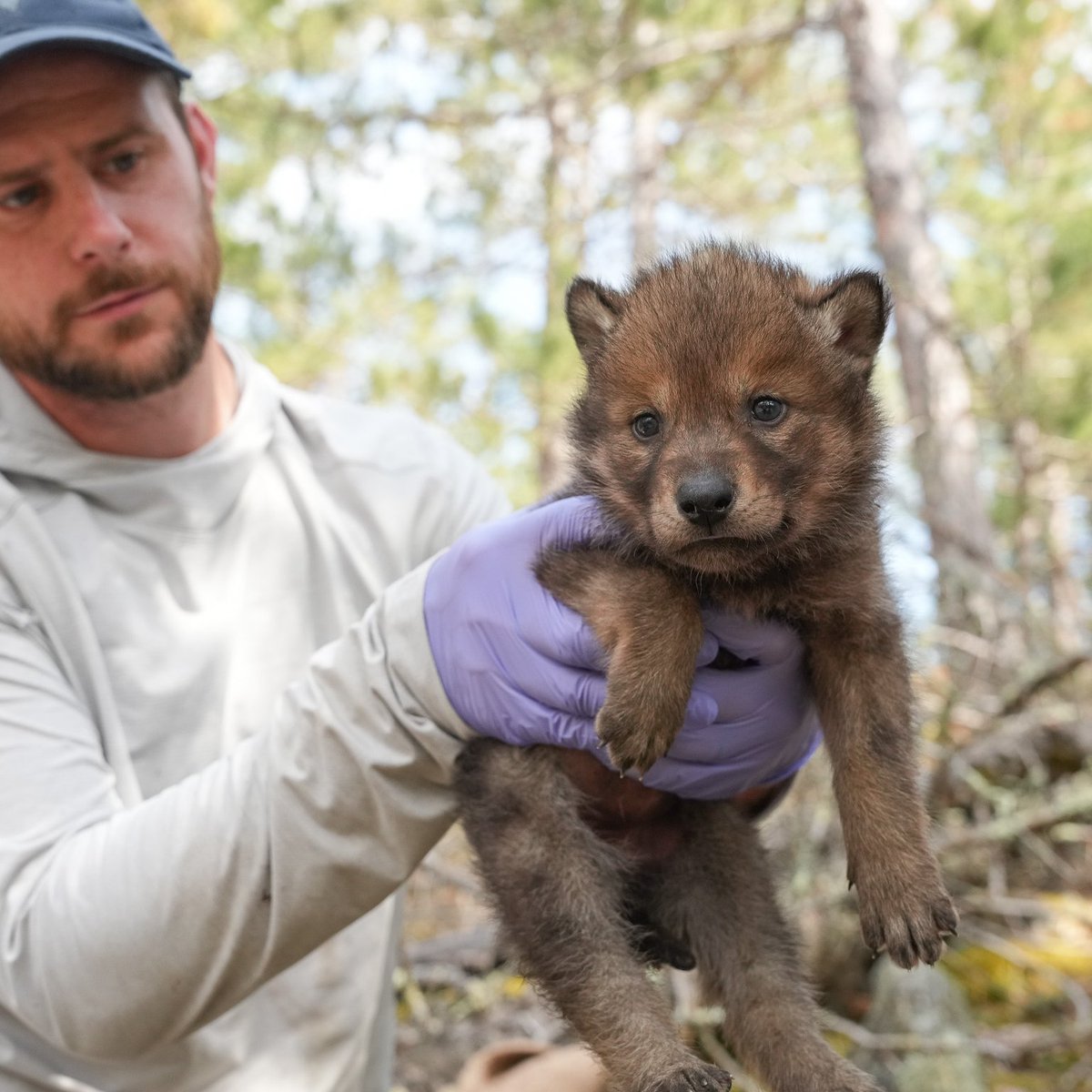
"How are you able to remove wolf pups from the den without getting attacked by their parents”?
We get this question quite often as well as general questions about how we stay safe while studying wolves. E.g., we have been asked if we carry guns for our safety from wolves more times than we can count. So we figured we would share a bit about how we view staying safe from wolves in the field.
The short answer: we are not exaggerating when we say have no concern whatsoever about wolves attacking us because wolves simply are not a threat to our safety because they really don’t want anything to do with us.
And if anyone should get attacked by wolves or concerned about being attacked, it should be us given our work. Let us elaborate.
We have visited active wolf dens and tagged pups every spring for over a decade. We often see or hear adult wolves at dens while doing this work. Yet, we have not had a single evenly remotely concerning or aggressive encounter with an adult wolf while doing this.
If there was any time an adult wolf would have a motive for attacking and killing people, it would be when visiting a den and handling their pups. Think about what would happen if you grabbed a bear cub in front of its mom?
On a similar vein, we spend much of our year studying wolf predation, hiking into recent kills by ourselves to document the kills. Sometimes, especially during winter, this means we get to kills while the carcass is very fresh, sometimes steaming and warm because it occurred an hour or two ago.
In such instances, wolves are undoubtedly somewhere very close by and well aware of our presence. If disturbing a wolf’s kill is what triggers an attack—the kind of things we read about online and see portrayed on TV— then we definitely should have been attacked by now. Yet, we have never had a wolf so much as approach us when checking out their kills (and we have documented a few thousand kills in the past 12 years).
Furthermore, we have had 6-8 people in the field most days of the year visiting areas GPS-collared wolves spend time. We know from our GPS-collar data that we are frequently close (25-200 m) to collared wolves when in the field. And we are typically spending most of our time in the very areas wolves like to spend time!
If being in close proximity to wolves on a frequent basis is what increases the odds of getting attacked, then someone on our project should have been attacked by now. This is especially true because we do almost all of our fieldwork solo because it is most efficient.
And yet, despite all of this and many years of intensive fieldwork, we have not had a single even remotely concerning encounter. This does not mean we have not had close encounters with wolves. We have had over a hundred at least.
But a close encounter where the wolf does not immediately flee does not mean the wolf is being aggressive or showing a lack of fear. Sometimes wolves, like most other animals, are just curious or inquisitive. Instead of being afraid in such moments, we just savor such rare moments and take it in.
Now, these are just our experiences but the data across North America only substantiates our assessment here. There are literally millions of people across North America who hike, camp, and live in wolf country and yet wolf attacks are almost unheard of.
Sure, there have been a few EXTREMELY rare instances where wolves have threatened or attacked people but this is also true of white-tailed deer—in fact there are far more white-tailed deer attacks on people than wolves. Interestingly, though, no one we know regards deer as a threat to human safety (outside of vehicle collisions).
NOTE: if you value this kind of educational content, please help us continue to create it by donating to our annual fundraiser at the link below. Your donations make this kind of content possible—without donor support, our project quite literally would not be able to continue. By donating you support our research and our outreach efforts!
Donate here and support our work: https://t.co/kZq9wddP8h










![AlexAndBooks_'s tweet photo. Charlie Munger was one of the most successful and respected investors of our time.
Munger was obsessed with reading and read 10-20 books a WEEK.
Here are 25 reading quotes from him:
1) “In my whole life, I have known no wise people (over a broad subject matter area) who didn’t read all the time – none, zero.”
2) “As long as I have a book in my hand, I don’t feel like I’m wasting time.”
3) “Most books I don’t read past the first chapter. I’m not burdened by bad books.”
4) “I don’t think you can get to be a really good investor over a broad range without doing a massive amount of reading. I don’t think any one book will do it for you.”
5) "Develop into a lifelong self-learner through voracious reading; cultivate curiosity and strive to become a little wiser every day.”
6) "It's been my experience in life if you just keep thinking and reading you don't have to work."
7) “If it’s wisdom you are after, you are going to spend a lot of time sitting on your ass and reading.”
8) “If you get into the mental habit of relating what you’re reading to the basic structure of the underlying ideas being demonstrated, you gradually accumulate some wisdom.”
9) “Warren and I do more reading and thinking and less doing than most people in business. We do that because we like that kind of a life. But we’ve turned that quirk into a positive outcome for ourselves. We both insist on a lot of time being available almost every day to just sit and think. That is very uncommon in American business. We read and think.”
10) "I have always loved to sit and read. And I never knew anything that was really worth a damn that wasn’t learned in that fashion.”
11) "If you take Warren Buffett and watched him with a time clock, I would say half of all the time he spends is sitting on his ass and reading."
12) “We read a lot. I don’t know anyone who’s wise who doesn’t read a lot. But that’s not enough: You have to have a temperament to grab ideas and do sensible things. Most people don’t grab the right ideas or don’t know what to do with them.”
12) “I met the towering intellectuals in books, not in the classroom, which is natural. I can’t remember when I first read Ben Franklin. I had Thomas Jefferson over my bed at seven or eight. My family was into all that stuff, getting ahead through discipline, knowledge, and self-control.”
13) "I am a biography nut myself. And I think when you're trying to teach the great concepts that work, it helps to tie them into the lives and personalities of the people who developed them."
14) “Obviously the more hard lessons you can learn vicariously, instead of from your own terrible experiences, the better off you will be. I don’t know anyone who did it with great rapidity. Warren Buffett has become one hell of a lot better investor since the day I met him, and so have I. If we had been frozen at any given stage, with the knowledge we had, the record would have been much worse than it is. So the game is to keep learning.”
15) "That sounds funny, making friends among the eminent dead, but if you go through life making friends with the eminent dead who had the right ideas, I think it will work better in life and work better in education."
16) “Look at this generation, with all of its electronic devices and multitasking. I will confidently predict less success than Warren, who just focused on reading.”
17) “It's just God's gift. If you're into self-education, there's nothing like reading. Of course, people who do a lot of it have an enormous advantage.”
18) "I don’t think you can get to be a really good investor over a broad range without doing a massive amount of reading. I don’t think there’s any one book that will do it for you."
19) “I either skim or read through 20 books a week. I get lots of books. I read a lot of biography and some history. I read almost no fiction.”
20) “I read myself to sleep every night. I read enormously. I like doing it. Not only that, what I found very early in life was that once I learned to read and handle elementary math, I really didn’t need professors or anything. I could figure out almost anything I wanted better from the written material than from having some professor tell it to me, because he’d be going too fast or too slow or telling me something I already knew or didn’t want to know.
21) "You look at [Andrew] Carnegie and [Benjamin] Franklin, they had a few years of primary school, they learned everything by themselves by reading. Whatever they needed, they just learned. It’s not that hard. Imagine educating yourself by firelight, no lamps, no electricity, after a day’s brutal work. Our ancestors had it tough.”
22) "The beauty of doing a lot of reading and thinking is that if you’re good at it, you don’t have to do much else."
23) “I think I learn a little something from everything I’ve read. I think that one of the reasons I was as economically successful as I was in life is because I read so damn much all my life, starting when I was about six years old. I don’t know how to get smart without reading a lot.”
24) “I met the towering intellectuals in books, not in the classroom, which is natural. I can't remember when I first read Ben Franklin. I had Thomas Jefferson over my bed at seven or eight. My family was into all that stuff, getting ahead through discipline, knowledge, and self-control.”
25) "But you know I spent my whole life with dead people. They’re so much better than many of the people I’m with here on earth. All the dead people in the world, you can learn a lot from them. And they’re very convenient to reach. You reach out and grab a book."](https://pbs.twimg.com/media/HJGd6aQaQAA30Xq.png)