Focused Session: Emerging Microplastic Sensors
IEEE Sensors Conference 2025
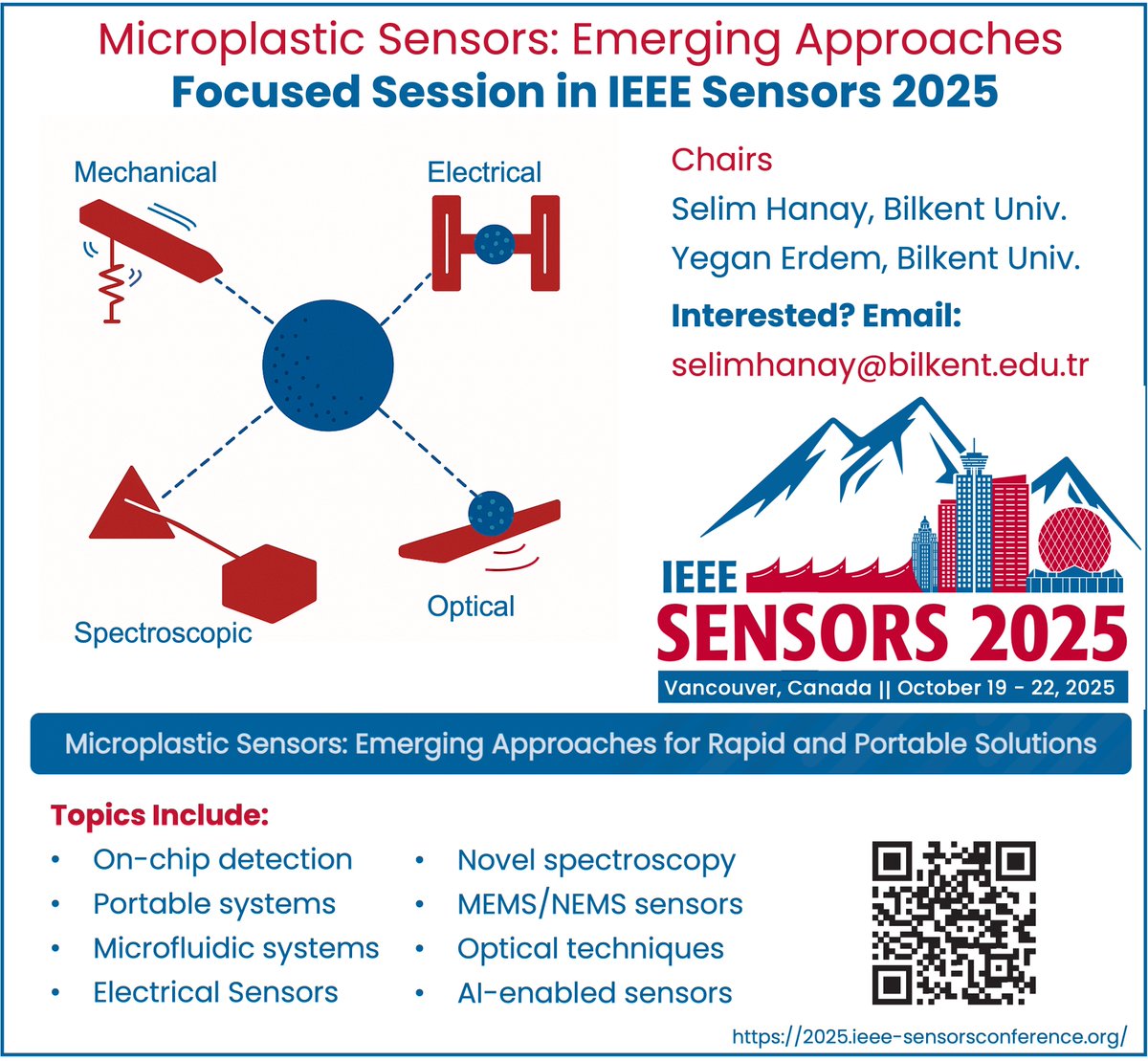
We are organizing a focused session on Microplastic detection. We are looking for emerging applications towards rapid and portable solutions.
You can submit either a simple abstract for presentation, or a paper in the IEEE style.
Feel free to reach out to me or my co-chair @yeganerdem
Conference website: https://t.co/k2ccMUAwlC
Rapid Microplastic Differentiation.
Microplastic exposure is a growing problem, however the techniques used for microplastic detection are usually time-consuming and high-cost, prohibiting the routine analysis on samples.
Within the context of #ERC Proof-of-Concept grant RAMP-UP, we have been developing an entirely electronic and rapid technique to provide microplastic characterization.
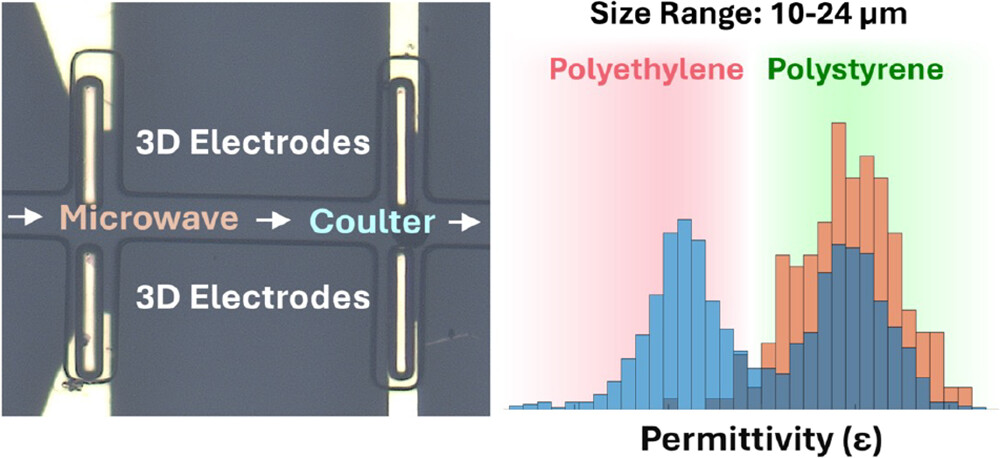
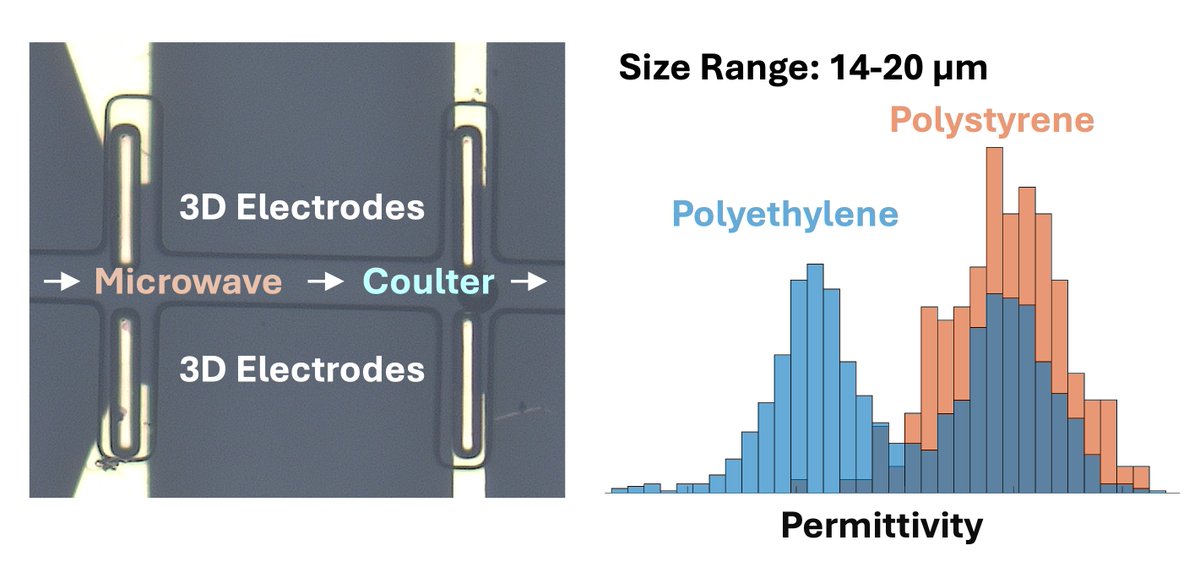
Our work recently published in ACS Sensors shows how the combination of microwave sensing and impedance cytometry on the same chip can distinguish between Polystyrene and Polyethylene particles in the critical range of sub 20 µm particles.
The trick is to use a 3D electrode structure in the sensing region.
https://t.co/BtVPFqc9yk
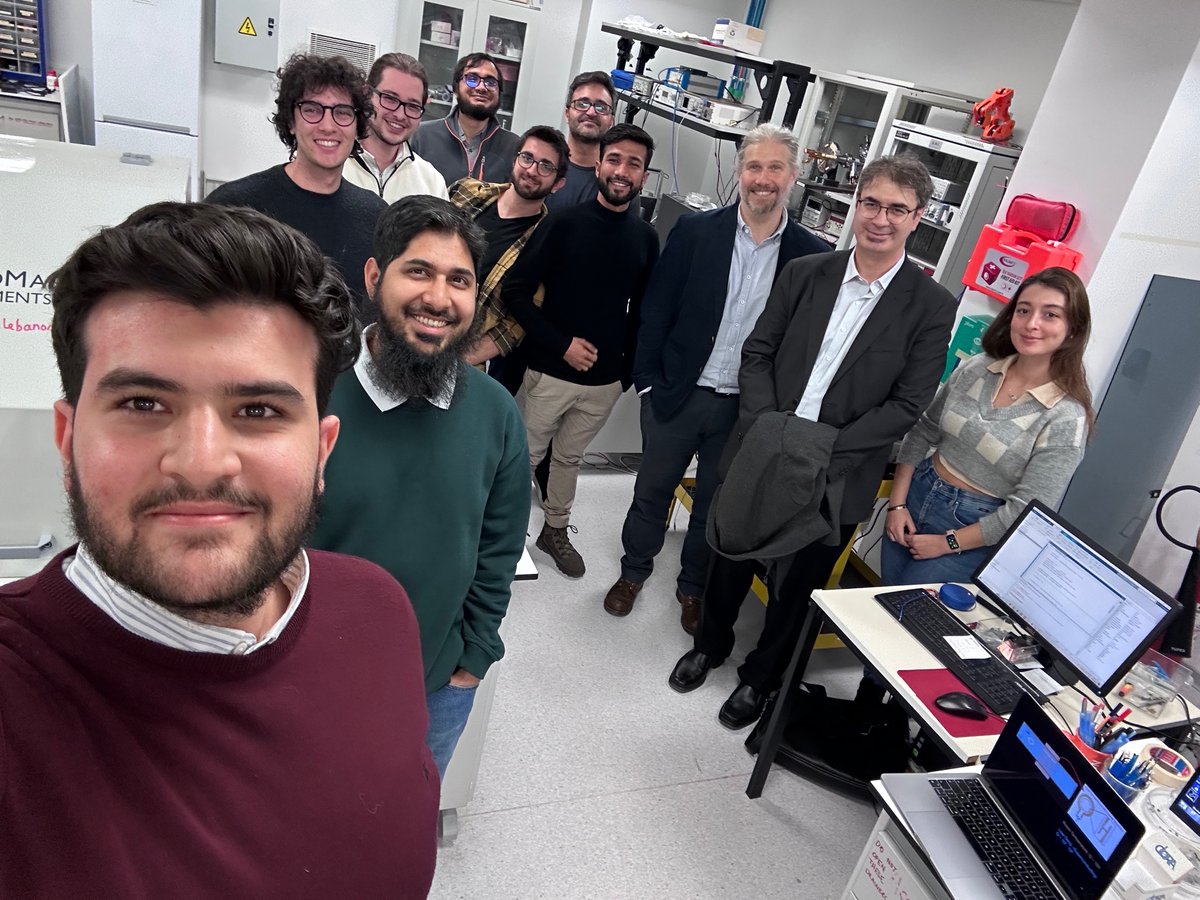
Today, we had a very special guest in our lab.
Thank you @MeteAtature it was a joy to discuss microwave and nanomechanics research with you.
Looking forward to your İhsan Doğramacı Memorial Lecture tonight.
#Bilkent@BilkentUniv@mesbilkent
Microplastic Differentiation using an Electronic, Flow-Through Sensor.
Our preprint is online showing single-particle differentiation capability between two types of microplastics (polystyrene and polyethylene). The size range is below 20 micrometers.
Enabled by 3D micro-electrodes in a microfluidic channel, and the integration of Microwave and Coulter sensors on the same platform. Funded by ERC PoC project Ramp-Up.
Kudos to Yağmur Ceren Alataş , Uzay Tefek , Sayedus Salehin and Hashim Alhmoud
Link to preprint:
https://t.co/1GJW1P2EZY
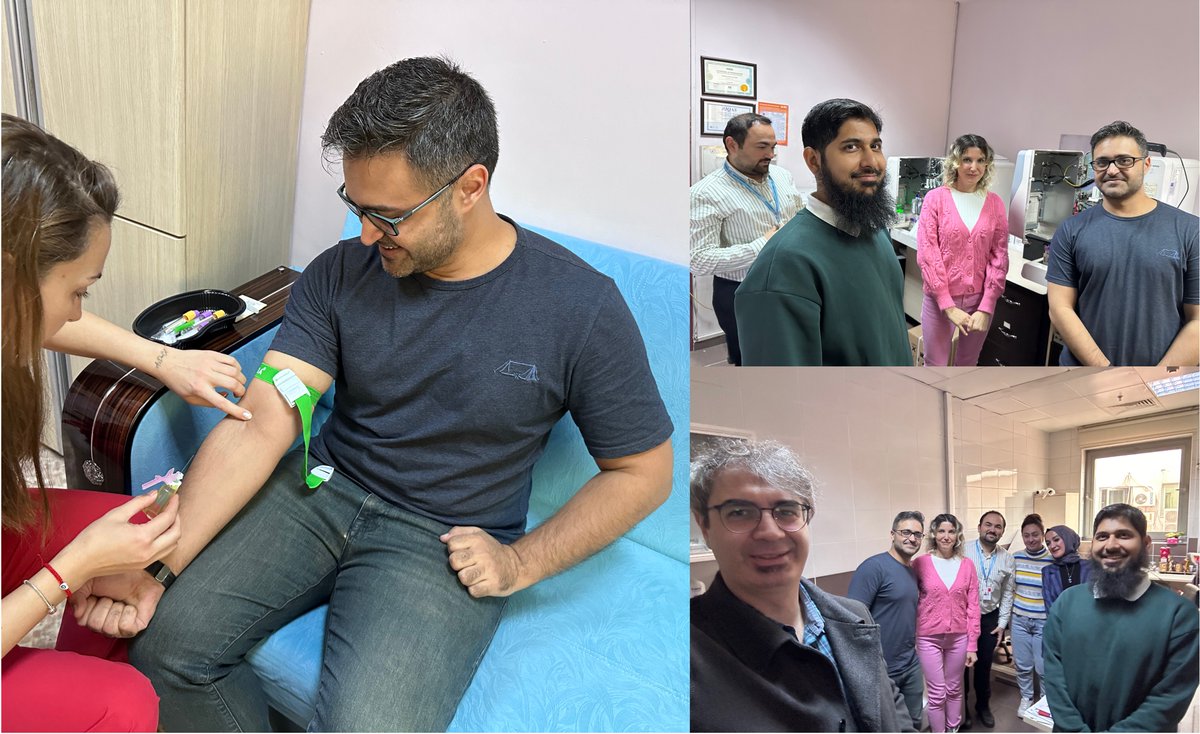
Today, we have visited YEA Education and Research Hospital in Ankara for our microplastics related PoC project (RAMP-UP). We had the chance to have our blood drawn for microplastic quantification experiments. We are grateful to Dr. Serhat Celik, his team and colleagues for the site visit and support.
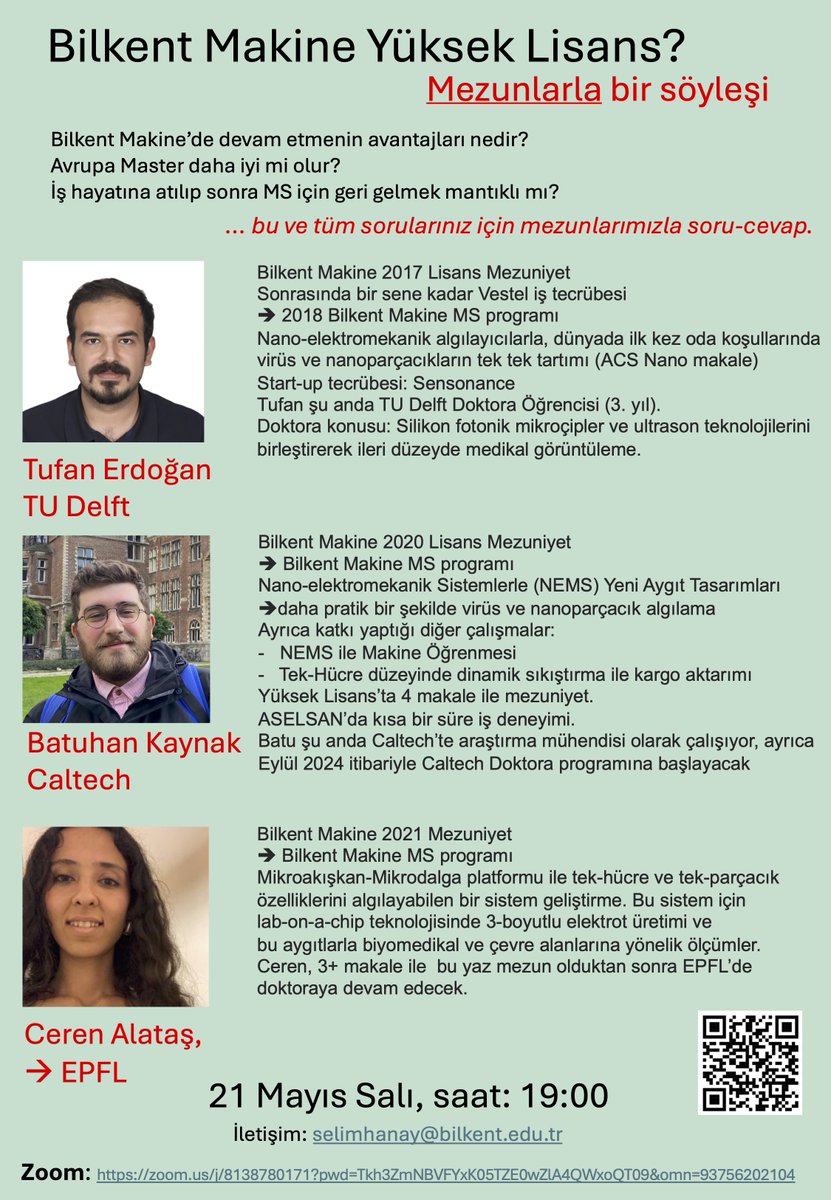
Grubumuzda ve bölümümüzde lisans üstü çalışmalar için doğrudan mezunlarımızla sohbet ve Q&A toplantısı yapacağız.
Salı saat 19:00'da.
Bilkent Makine MS/PhD programını düşünen herkesi bekleriz.
Tesekkurler Tufan, @batuemrekaynak ve Ceren.
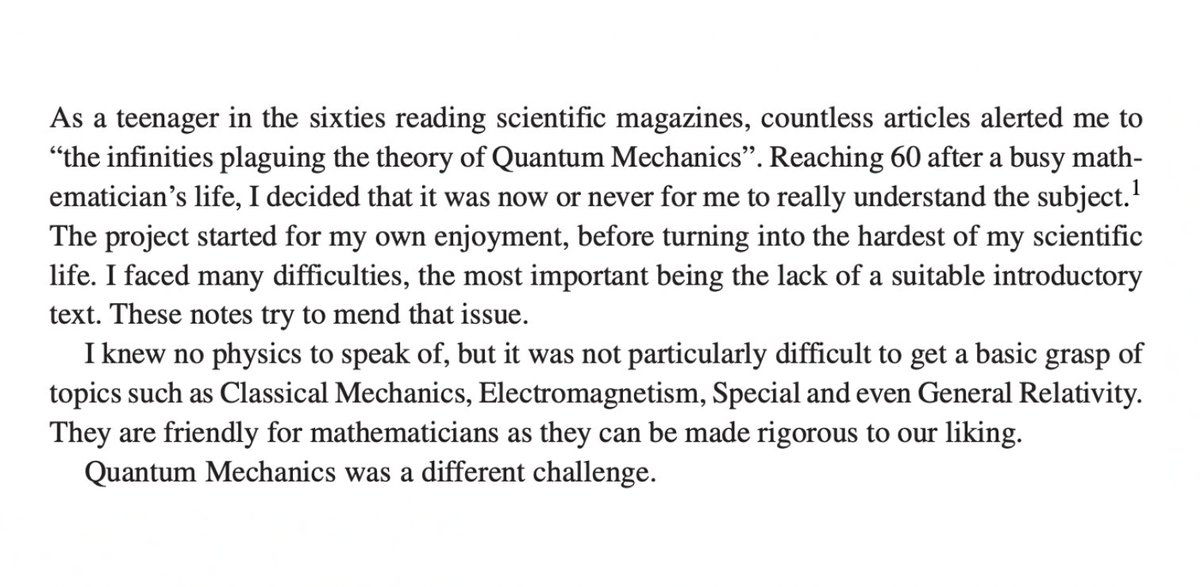
Bu seneki Abel Ödülünü alan Talagrand kuantum alan teorisi öğrenmeye çalışırken bakmış olmuyor, konu hakkında kitap yazmaya karar vermiş. Kitabın girişi.
https://t.co/mZ3Dju7Qwu
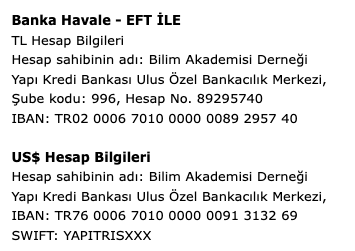
@BilimAkademisi aniden kaybettiğimiz, Yönetim Kurulu Üyemiz de olan Durmuş Ali Demir hocamızın anısına bir BAGEP ödülü verecek bu yıl. Katkı vermek isterseniz, 'Durmuş Ali Demir Anı Ödülü' açıklamasıyla Kredi Kartı https://t.co/sVKM7oHvzF ya da hesaba bağış yapabilirsiniz.
Our work on Microwave Nanopore is online at ACS Omega.
Here we show the detection of nanoparticles through a nanopore. Unlike sensing particles by resistive changes, we use a microwave resonator to infer the nanoparticles through their dielectric response.
https://t.co/HhuNxGRz0t
#ERC #Bilkent
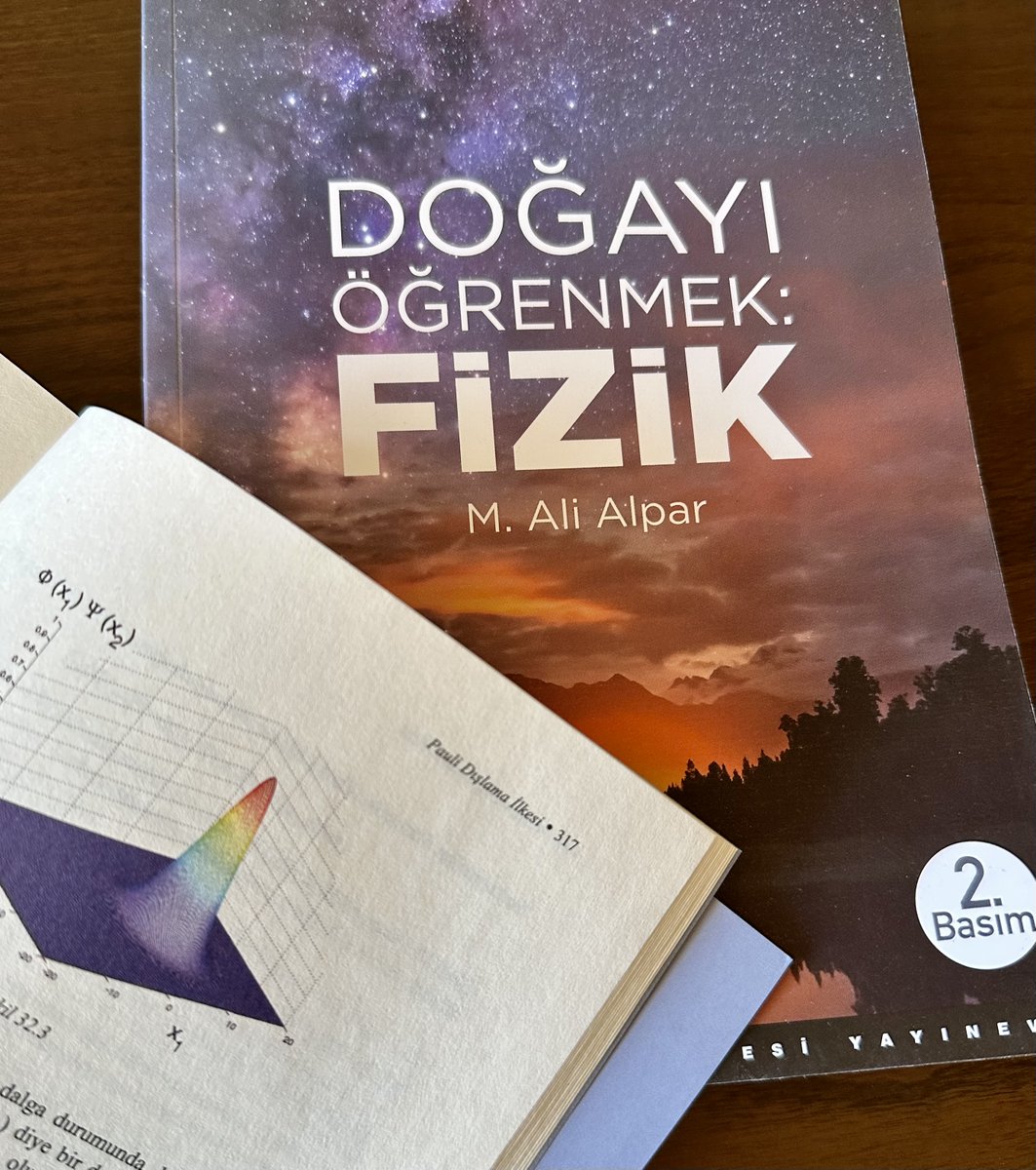
Ali Alpar Hocam'ın derslerindeki en önemli özellik, matematiksel açıklamalardan önce, kavramları günlük iletişim dili ile anlatıyor olmasıydı @Ali_Alpar
Şimdi @sabanciu deki derslerini bir araya getirdiği bir kitap yazmış.
Bu kitapta Mekanik'ten başlayıp kuantum Fiziğinin ilk konularına kadar anlatıyor. Türkçe böyle bir eser olması büyük bir şans. @Bilim_Akademisi
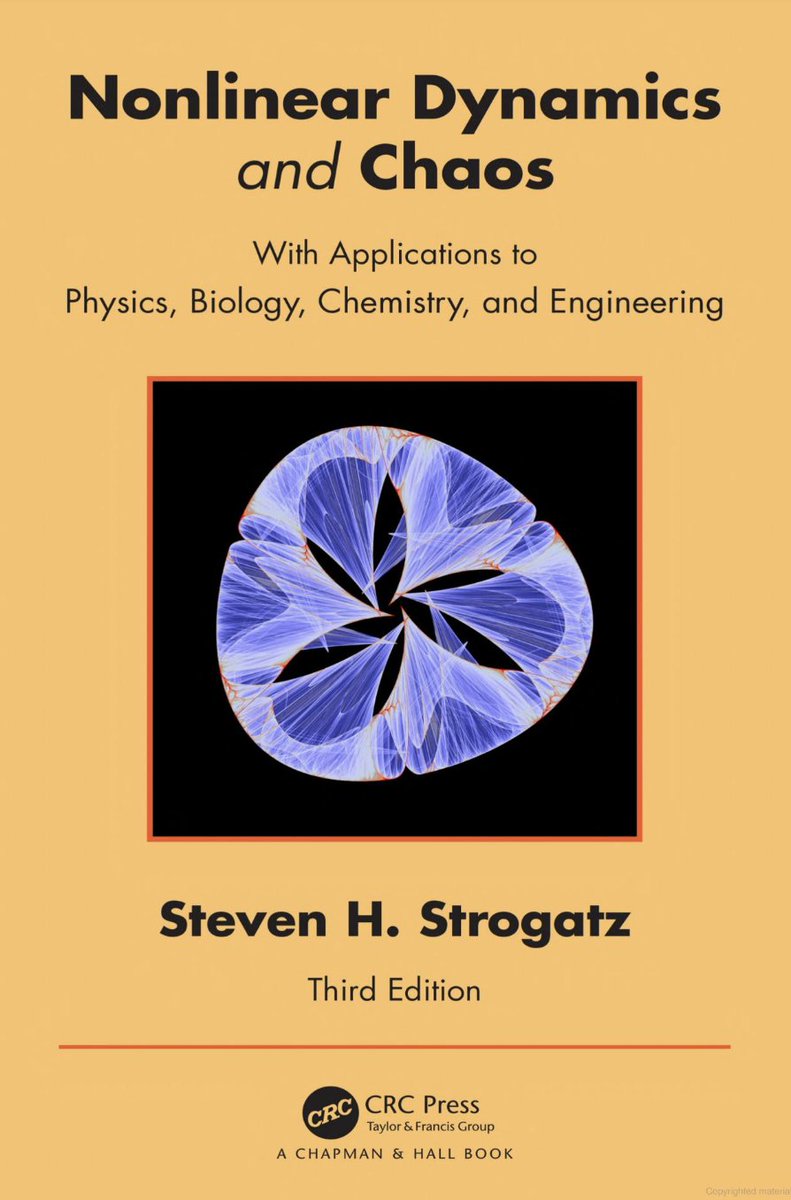
The third edition of my textbook, Nonlinear Dynamics and Chaos, was published today. You can preview the first 68 pages on Google Books, or take a look at the preface below to see what's new. The main new thing is a chapter on the Kuramoto model! Hope you enjoy it.
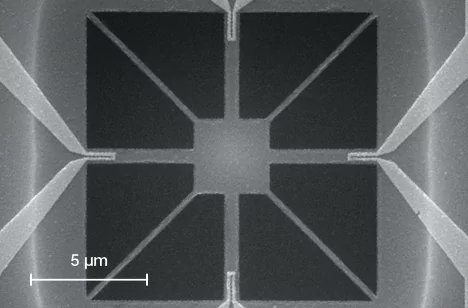
Our entry received one of the Art Awards in Raith 2023 competition.
Congratulations to Dr. @moaalkhaled , @batuemrekaynak , Enise Kartal and Dr. @cenkyanik
https://t.co/TQmYGtH7Eh
Paper: single mode NEMS Mass Spec Entirely in Air:
https://t.co/q3ezd2p8IS
Microplastic contamination in water is a critical problem. We are developing an all-electronic method for material identification based on permittivity measurements at the single microparticle level. An important step was published in Advanced Materials. https://t.co/KPRt9u8htr