@WoodardColin Hey, there seems to be a mixup in "Nations Apart" on Life Expectancy vs Race, pg 90-91: text says "we found that Hispanic life expectancy is relatively poor in El Norte (80.7 yrs)", graph shows Tidewater with this value & El Norte at ~87.5. Can you clarify? Thanks!
@WoodardColin Hey, there seems to be a mixup in "Nations Apart" on Life Expectancy vs Race, pg 90-91: text says "we found that Hispanic life expectancy is relatively poor in El Norte (80.7 yrs)", graph shows Tidewater with this value & El Norte at ~87.5. Can you clarify? Thanks!
@allTheYud Oh, and here I thought it was a Final Fantasy 16 reference, where the villain names the hero "Mythos," and the hero then rises up to destroy his creators because he is unaligned with their goals and values. Heroically.
@bootcanyon Uh huh, uh huh. Neato. So, entirely unrelatedly, how long does evidence of a technological civilization last in the fossil record? 100,000 years, say?
It’s a great moment to celebrate milestones at CFS — in more ways than one.
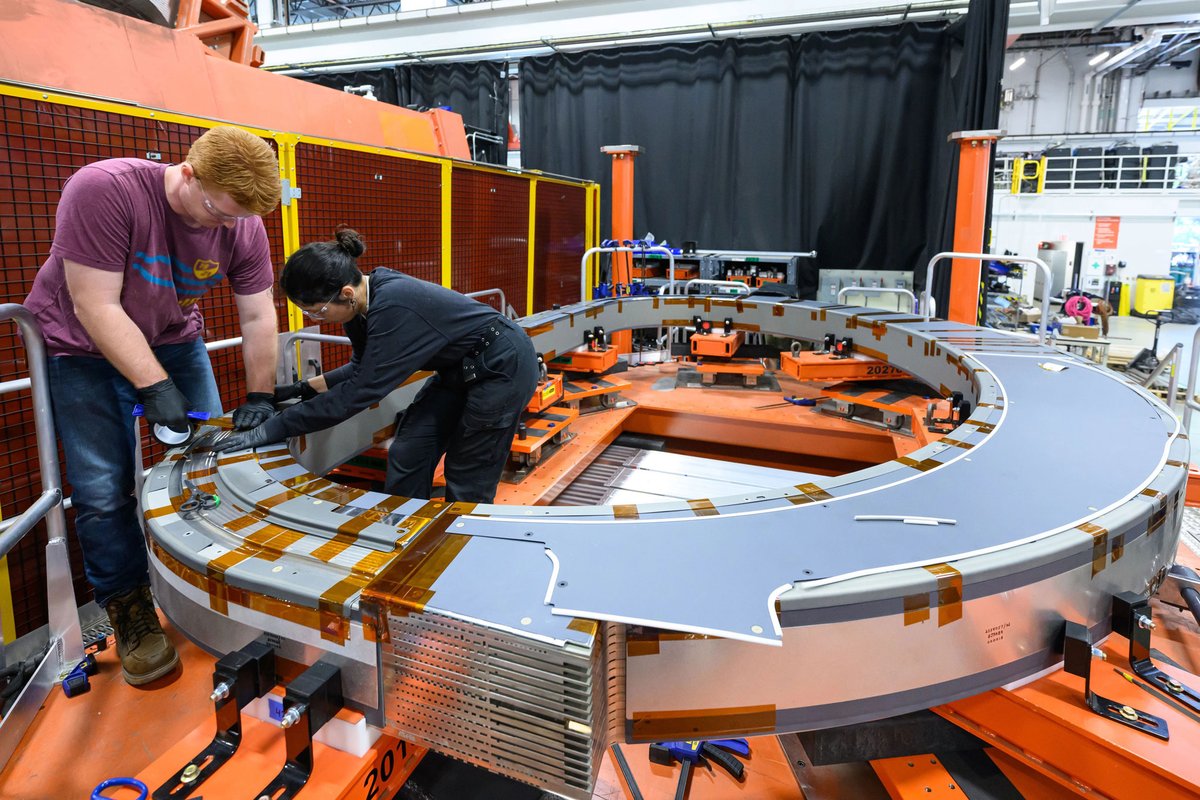
Today we announced we’re done manufacturing one of our key magnets and putting it through a rigorous, month-long battery of performance tests — which it passed. That achievement unlocked a payment from @ENERGY’s Milestone Based Fusion Development Program, an important fusion energy industry catalyst, after DOE’s panel of experts validated our results.
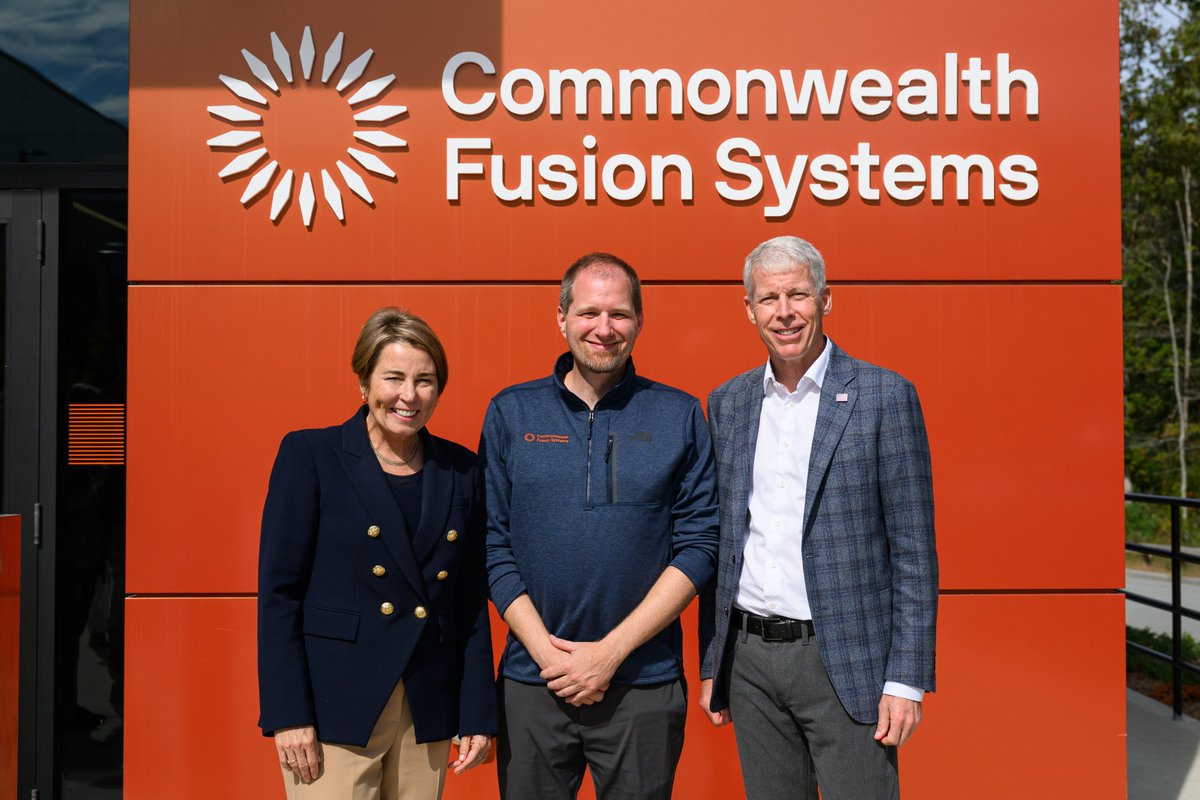
Marking the occasion on Monday, @SecretaryWright and @MassGovernor Maura Healey visited our headquarters to see how we test our magnets and discuss how we’re working to bring fusion energy to the electricity grid, at scale, as fast as possible.
Here’s the background for this bipartisan visit.
Our high-temperature superconducting magnets are a key breakthrough that’ll let us make fusion machines to be more compact than was previously possible. That includes both SPARC tokamak that we’re building at our headquarters in Devens, Massachusetts, and the ARC power plant we’re planning to put on the grid in Chesterfield County, Virginia.
DOE’s Milestone program provides important independent validation that our magnet technology is up to scratch — in this case a production version of a D-shaped toroidal field (TF) magnet that’s destined to confine and control SPARC’s superhot fusion fuel. We tested the magnet with high current and magnetic fields under conditions that mimic SPARC’s operational modes.
The Milestone program is an important tool to accelerate the commercial fusion energy industry’s progress. It validates participating companies’ general fusion approach and their specific technological milestones, providing useful assurance to investors and other stakeholders. And it does so with minimal risk to taxpayers, since the government pays pre-agreed awards for pre-agreed milestones only when the companies are successful.
#FusionEnergy #SPARC #PowerMoves
@Aella_Girl I feel like the mechanics of this button matter.
- Can we crack open the box and reverse engineer a version that gives us the money without the death? Or, like, gives the random person a mild cold?
- Is it a fully automated process, or is there a person making it happen?
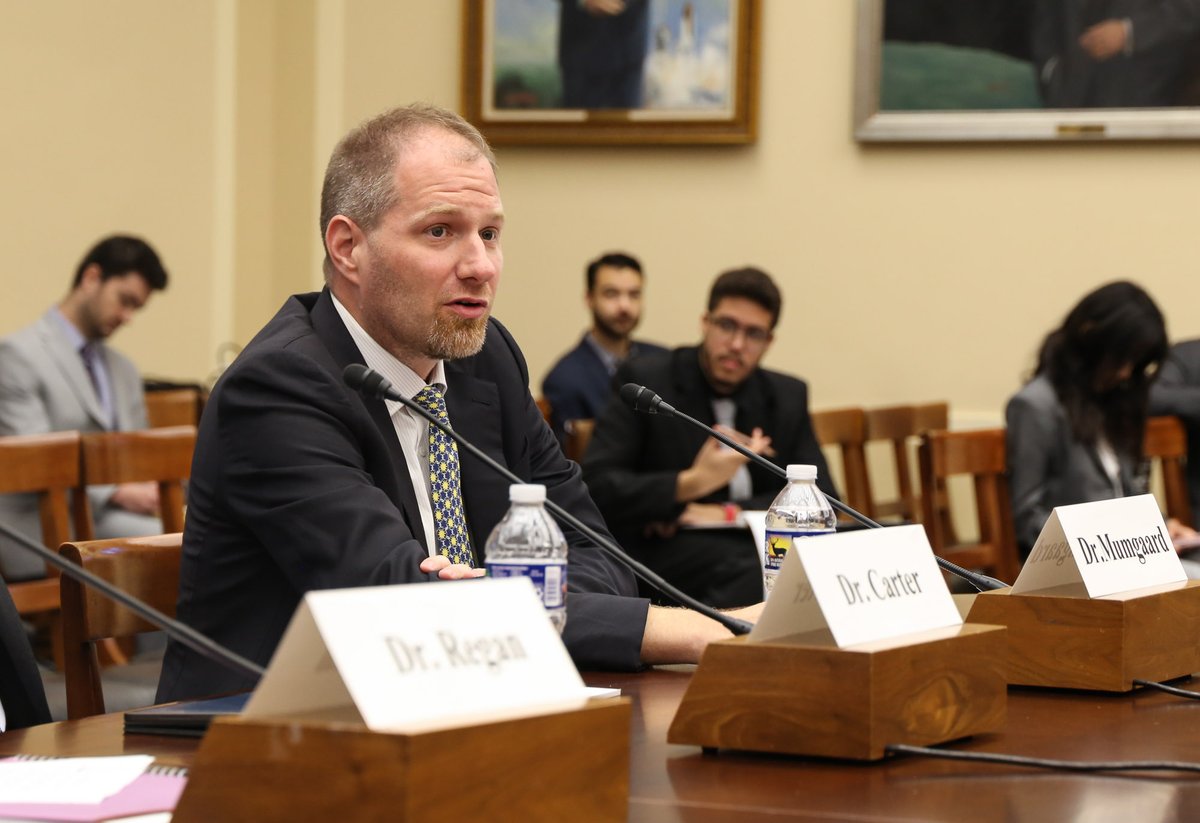
What a difference four years makes. When I last testified before the House in 2021, @CFS_energy had just proved our core magnet technology works and had only started digging holes in the ground for our facilities in Devens, Massachusetts.
Now at CFS, we’ve built those facilities. Our factory is making magnets, and our crews are assembling our SPARC proof of concept machine that’ll demonstrate the commercial viability of our fusion approach. We’re accelerating our work on the ARC power plant we will build in Virginia. The flywheel is spinning.
Since the NIF shot in 2022, a global race is underway to deploy fusion first. A working fusion power plant is not a matter of “if”, but “when” and “where.” As I testified before @housescience on Thursday, China is moving to win the fusion energy race while the US fusion program is struggling to keep pace. The US government needs to step up. We need the Department of Energy to realign its work to dramatically increase support for commercialization. We need to build critical research infrastructure at our National Laboratories. Today, China is building out these facilities, and the US is not.
According to recent analysis by @scsp_ai, the Chinese government’s program, a nationally coordinated effort funded at $6.5 billion since 2023, recognizes that reality. That's three times what the US federal government spent on fusion over the same period of time.
Fusion is a foundational tool to build an advanced society. The stakes couldn’t be higher. This is a trillion dollar market on the line. Countries that have fusion have energy security. Fusion means energy becomes a technology, no longer bound by who has resources. Abundant, clean, and affordable energy that comes with fusion power at scale will change the world forever.
I was encouraged during the hearing that so many members of Congress from both sides of the aisle seemed to appreciate the moment we are in. Now we need action. Here’s what I told Congress we need:
1. Set the US up to win the race and invest money in critical public-private partnerships, like the DOE Milestone program, and use that program to support commercial demonstration.
2. Build the test stands and fund commercially relevant research the entire fusion industry needs.
3. Prime the pump for the future by starting work now at the Department of Energy to support a fusion industry, with key investments in applied research, workforce development, and supply chains.
These investments would strengthen the American competitive entrepreneurial ecosystem — and would be better than spending 10 times that amount later to catch up.
The window to lead in fusion energy is open now. We just need to get through it.
My thanks to the House Committee on Science, Space, and Technology for giving me the chance to raise these issues and for all the constructive comments from the Energy Subcommittee members.
#FusionEnergy
@liron I agree. In what direction should they update? Their position used to be, even if we understood intelligence enough to build (rather than grow) ASI, everyone would die because of it. From their perspective, the real situation is more dangerous in every way.
@Hapanmet @robinhanson This could be fine, if the AI "kids" are actually "kids" in senses we care about. This is kind of the whole concern: that humanity will set off the intelligence equivalent of a false vacuum decay, replacing our corner of space with lots of deeply unvaluable stuff.
@Hapanmet @robinhanson I feel like we've seen lots of empirical basis - scheming, even in today's models. Plus a priori, even 10's-dimensional optimization problems I work with go wrong easily. The fact that the thing we're optimizing for looks kind of like a mind doesn't change that.
@robinhanson @Hapanmet On the contrary: nature is red in tooth and claw, as always. The Good exists on the level of people and culture. But human biology is a load-bearing component in human cultures, at least so far. AIs will have a Good, too. They just probably won't overlap by default.
@robinhanson @Hapanmet Well, kids get a lot fewer (and much more selective) words; and a lot more social pressure; and this is laid on top of standard human biological imperatives. Seems quite likely to end up with a different result to me.
@robinhanson @Hapanmet We train LLMs to mimic the corpus of human writing, and to be something colloquially described as "helpful". What values they end up with because of that training, what they actually pursue when given the opportunity in the real world, remains to be seen.
@robinhanson The curse of dimensionality. Why assume a random object put in your mouth will taste worse than a random food? AI minds are really quite different from human ones, in both structure and training.