Vício em crack faz ex-jogador Régis Pitbull viver nas ruas: "Se achar que estou morto, é melhor"
Prestes a completar 50 anos, ele já foi preso por agredir síndico e agora se abriga debaixo de lona em uma praça de São Paulo
https://t.co/NpCRaagyyl
Roger Federer was asked why the one-handed backhand is dissappearing from tennis.
Starts by saying “I don’t know” then gives an incredible four-part answer:
▫️Modern coaches grew up playing two-handed backhand and passed it down to students.
▫️One-handed backhands take a lot of time to perfect control and coaches/players don’t want to dedicate the time when they can make faster improvements elsewhere.
▫️Tennis went from 50/50 between baseline and net play to 90/10 baseline play (two-handed backhands much more useful for defensive and sliding baseline play).
▫️Equipment for tennis has changed (stiffer strings, modern rackets, heavier balls) and slower surfaces…more difficult to attack with only one hand.
***
Tennis Channel link: https://t.co/Jy1zJZTL4X
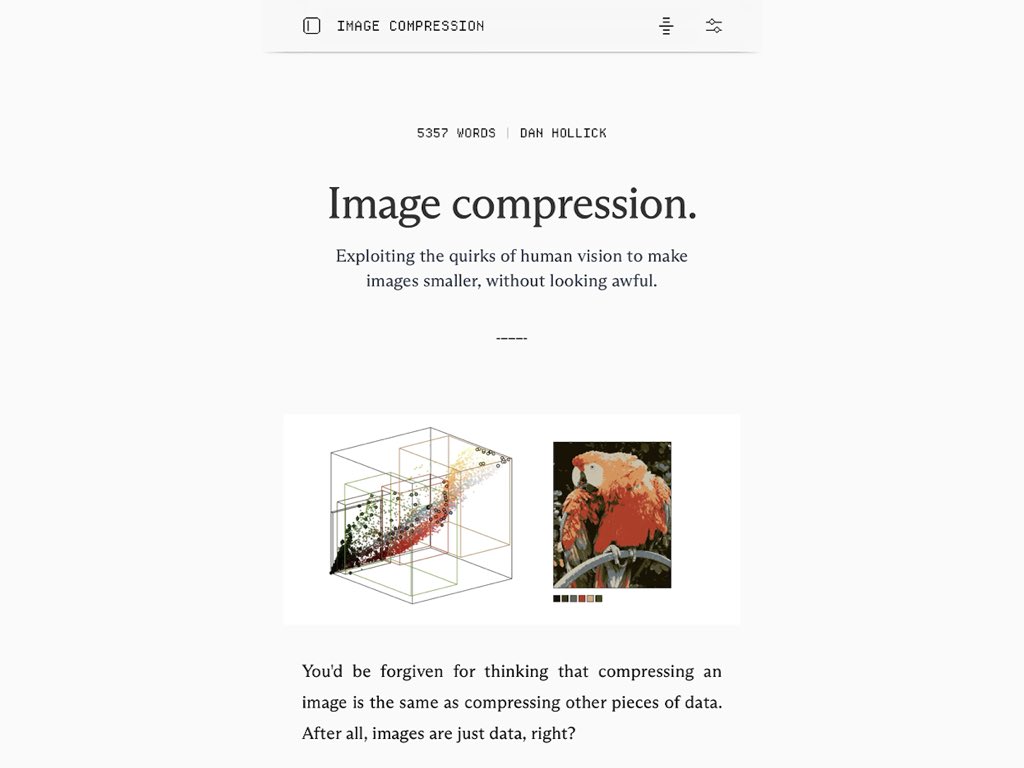
Google's Director of Research wrote a spelling corrector in just 21 lines of Python
Peter Norvig built it as a simple demonstration of how probabilistic spelling correction works
it generates words one or two edits away then picks the most probable one from a corpus
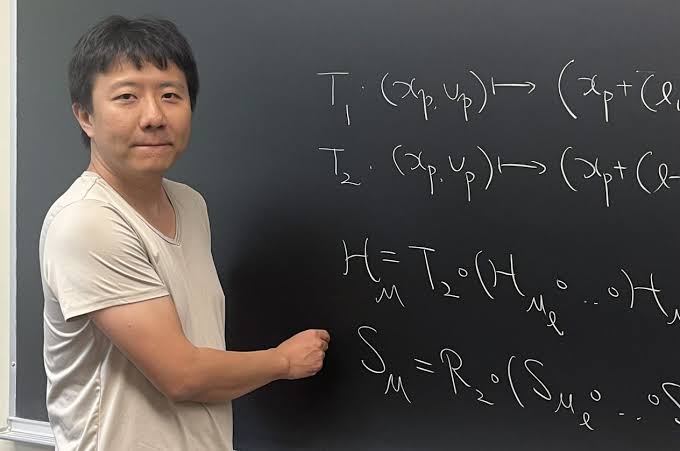
In a gas, every molecule follows the laws of motion. Yet when trillions of molecules collide, we stop tracking them one by one and describe the gas with probability. For more than a century, mathematicians have asked whether this statistical description can be derived directly from the mechanical motion of the particles.
Yu Deng, Zaher Hani and Xiao Ma studied an ideal gas whose particles are represented by hard spheres. Between collisions, each sphere moves freely. When two spheres meet, they rebound according to ordinary mechanics. The difficulty is that particles may collide again and again, creating long chains of connected events that appear to destroy the independence required by the Boltzmann equation.
The researchers developed a way to organize these vast collision histories and divide them into manageable parts. They proved that, under the conditions they studied, repeated collisions have a negligible effect in the relevant limit. The statistical behavior predicted by the Boltzmann equation therefore emerges from the mechanical motion of individual particles.
This result resolves an important case within Hilbert’s sixth problem, the larger effort to place the laws of physics on a firm mathematical foundation. It does not solve the entire problem, but it provides a rigorous bridge between two levels of nature: the exact motion of microscopic particles and the statistical laws observed at larger scales.
For this work, along with major contributions to wave turbulence and nonlinear Schrödinger equations, Yu Deng received the 2026 Fields Medal.
Been reading Maintenance of everything by Stewart Brand. Here are my quick takeaways:
- Maintenance is inevitable. You will ultimately need to maintain every aspect of your life. You need to maintain your health, spirituality, relationships, professional career, etc. In the short term, you might neglect the maintenance but neglect can come back to bite you.
- Get in the habit of doing excellent maintenance. It will help you go much further. Maintaining a relationship with poor effort rarely results in anything worthwhile. If you're going to fix a bug, add in tests to make sure it doesn't happen again. Maintenance is unavoidable so make the most of it.
- Use things that are easy to maintain or its well known how to maintain them. Use the simpler boring technology where you can vs the fancy new one. This will help you do maintenance faster and better.
Overall, thought it was a fresh take and perspective on something that I've honestly put little attention or thought into. I've always viewed maintenance as a chore that came from poor decisions. While that might be true, its usually just inevitable.
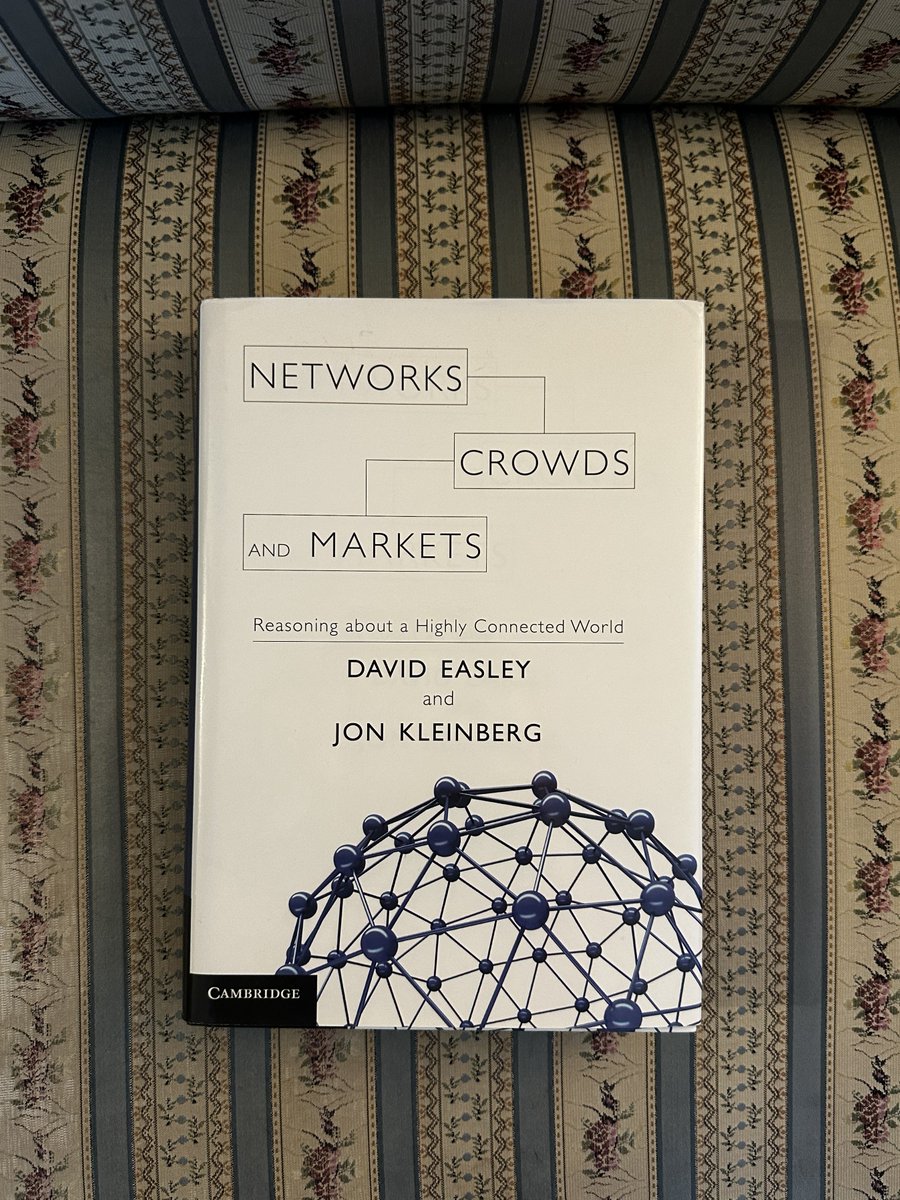
One of the most important books to conceptionally understand the world today. If anything it has become much more relevant since its publication in 2010.
AI has helped resolve an important question in statistics. In the area of multiple hypothesis testing, the goal of controlling the false discovery rate (FDR) has been introduced in a seminal paper by Benjamini and Hochberg (1995). They also introduced a method (the Benjamini-Hochberg or BH method) and proved it controls the FDR. This method has been widely adopted in modern high-throughput science, including in genomics, astronomy, economics, etc. The paper has has garnered more than 130,000 citations to date.
However Benjamini and Hochberg showed FDR control only when the data for the individual tests are *independent*. In practice, these data are often dependent; a good example is data on genetic variants due to linkage disequilibrium. Later work has focused on extending the validity of the BH procedure, e.g., to a form of positive dependence by Benjamini and Yekutieli (2001).
The question of when the BH procedure controls the FDR has remained open. Over the last twenty years, many authors, including Reiner-Benaim (2007), Kim and van de Wiel (2008), Benjamini (2010), Sarkar (2023), Sarkar and Zhang (2025), have conjectured that the BH procedure controls the FDR for two-sided tests using any correlated Gaussian data. These authors have presented both theoretical and empirical evidence supporting, but not directly showing, the conjecture.
With the help of AI (specifically GPT-5.6 Sol Pro), I have settled the question in the negative: The Benjamini-Hochberg procedure does *not* generally control the false discovery rate at the desired level for correlated two-sided Gaussian tests. This was done by exhibiting a Gaussian factor model for which, at a nominal level alpha=0.01, the false discovery rate is proved to be FDR>0.0104.
There is a lot of interesting commentary to be made:
1. This result should be of interest to everybody in the field of statistics. Emmanuel Candes of Stanford University once called the false discovery rate and the Benjamini-Hochberg procedure "one of the two most important developments in statistics after 1950" (the other being James-Stein shrinkage). The present conjecture is probably the most central question about FDR/BH that was unresolved to date.
2. GPT-5.6 one-shot the problem after 90 minutes of reasoning, whereas with 5.5 I was not able to solve it even after iterating with multiple parallel agents for perhaps 20 hours. So the capability improvement is quite real. Exciting times to live in!
3. The argument is not especially surprising, but it does combine an asymptotic approach (standard for FDR analysis, see e.g., Genovese and Wasserman, Efron, etc) with a numerical certificate in a way that would be pretty non-standard in the field. Once we have the specific example, then straightforward simulations also support that the false discovery rate is indeed higher than the nominal value (see attached fig).
4. The current degree of violation over the nominal level is relatively small (0.104 vs 0.1). So the importance of this result is mainly conceptual. The practical implications remain to be determined.
Overall, an exciting development! Preprint is available here (https://t.co/YgiwgDF2qr) and will be on arxiv tonight; supporting code is here (https://t.co/KZhj15qDXC).
> She graduated in CS.
> She was looking for the software market is cooked.
> She said, Fine, decided to self-teach electrical engineering from scratch,
oke I'll build real stuff you can actually see and touch. Breadboards, soldering, Arduino
When doors close, build your own damn.
Just got this book from AMZN. Self-published, 450pp, don’t know the author. It has a bit of everything: techniques, asset classes, horizons. I haven’t read carefully but it seems to have at least something for everyone and to be very rich in concepts. Should be fun to read.
Attention is a lookup. Each token builds a query, compares it against every key in the sequence, and pulls value vectors weighted by the match. Stack that 96 layers deep and you get a frontier model.
Video covers the full pipeline: Q/K/V, attention scores, encoder blocks.
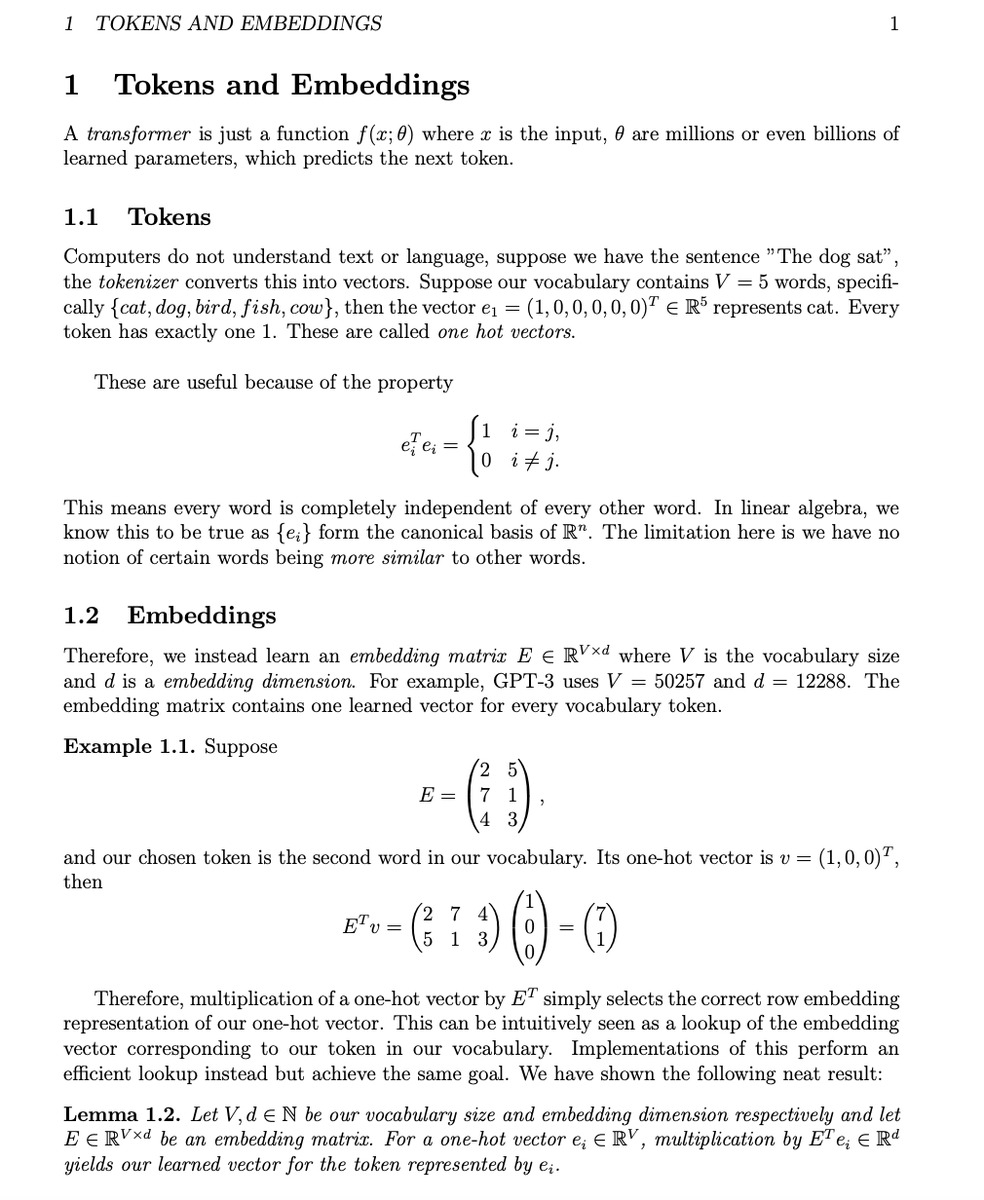
A Derivation Of The Transformer Architecture by Brandon Sandhu
The paper develops an intuitive, mathematical understanding of tokenization, embeddings, queries, keys, values, self-attention, multi-head attention, MLPs, residual connections, and backpropagation, with the aim of making these concepts more accessible without sacrificing mathematical rigor.
Prerequisites are basic linear algebra, multivariable calculus, probability theory, and some information theory.
Note: Positional encodings are intentionally omitted to simplify the presentation and focus on understanding the core architecture, rather than constructing a fully functional Transformer.
Find the PDF here: https://t.co/ri12pUtT5g
We just added interview prep for two Jane Street roles:
- Machine Learning Engineer
- Quantitative Researcher.
The prep walks you through what to study for each round, what to expect in the interview process, and which projects you can build for your resume to increase your odds of getting the interview in the first place.