SITUATION EXPLAINED: United's CEO says Starlink is the biggest competitive advantage the airline has had in 100 years.
• Kirby says Wi-Fi is now the No. 1 reason people pick an airline flight
• Over half of United's flights already have Starlink, and the whole fleet should have it by the end of 2027
• It's free for MileagePlus members in every class
• More than 5.4M United customers used it in September alone
• United says customer scores on Starlink planes are nearly double those on planes with other Wi-Fi
@sophiadew: "A flight with @Starlink is a complete game changer. And now, when I'm on a flight that doesn't have Starlink, I'm annoyed. I feel like I'm in the old ages."
Watch the U.S. skies clear out in a 34 second timelapse in God's Eye View.
Pulls together public ADS-B, geostationary satellite imagery, FAA advisories and ATC audio.
- Blue = planes in the air
- Orange = planes on the ground
- Rings = aircraft piling up at each airport, with the count beside it
What we know based on advisories and tonight's White House briefing:
- This is the longest nationwide ground stop since 9/11.
- Started at Chicago O'Hare at ~3:10 PM ET with "comms issues"
- Soon after radar & radio instability spread to air traffic control centers nationwide
- Wasn't a complete blackout. Sec. Duffy says old analog switches and routers got overloaded, leaving controllers with intermittent radio and radar, so the FAA stopped departures.
- DHS Sec. Mullin says patches installed during an equipment upgrade are the primary suspect. Essentially "the new technology… was overwhelming the older system."
- No evidence yet of a cyberattack, though DHS hasn't ruled out either yet. Notably, Sec. Duffy says the FAA's new AI routing tool (SMART) didn't cause it.
- More than 3.5K planes were in the air, and every departure nationwide was stopped at 3:54 PM ET
- The stop was lifted at 8:19 PM ET after about 4.5 hours, with 6.6K+ flights canceled and 8.6K delayed (per Flightradar24).
This is a wild 4D reconstruction to see. Much respect to the controllers and pilots who kept everyone safe while working with degraded capabilities.
We gave AI one week to build a giant drone
It helped design it, order the parts, and do final assembly
Then we delivered its first payload to @jimbelosic
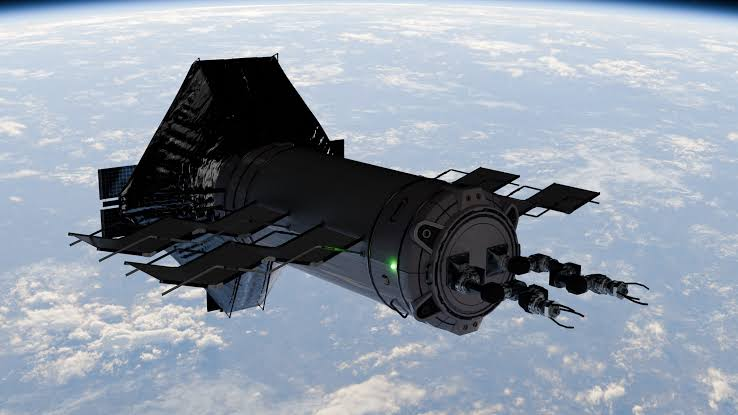
JUST IN: An American space startup is offering satellite manufacturers access to its orbital refueling technology for just $1, aiming to establish the infrastructure needed for gas stations in space.
Spaceium has opened licensing for OpenPort, a spacecraft refueling interface designed to allow satellites to receive additional propellant after launch.
Unlike conventional satellite fueling ports, which are typically used only before launch, OpenPort is designed to support repeated in-orbit refueling.
The system has several unusual features:
> Propellant can flow in either direction, allowing spacecraft to transfer or receive fuel.
> The interface replaces a conventional fueling port rather than requiring an entirely separate attachment.
> The hardware is designed to accommodate different propellants.
Spaceium intends to make money supplying fuel rather than selling the port itself.
The company recently launched a robotic arm for future refueling operations and plans to demonstrate xenon transfer outside the International Space Station during the first half of 2027.
If successful, orbital refueling could extend satellite lifetimes and allow spacecraft to maneuver without relying entirely on their original fuel reserves.
Run big policies on a remote GPU ⚡🤖
Your robot keeps moving while the GPU thinks.
New in LeRobot 0.7: the robot computer runs cameras, motors and recording, and a policy server on a GPU machine predicts the next chunk of actions. An action buffer asks for the next chunk early, so the robot doesn't stop between chunks.
Two commands:
lerobot-policy-server --config_path=server.yaml
lerobot-rollout --inference.type=remote ...
Same machine, LAN or routed networks over Zenoh, with TLS and access control. Interactive sessions, episode recording and RTC come along, and it's tested on real robots with ACT, SmolVLA, XVLA, EVO1 and LaWAM.
Docs in the comments 👇
Gentle Monster just opened preorders for its first smart glasses, built with Google and Samsung.
No display. Ask Gemini about what you see, get directions in your ear, shoot 3K video. Works with iPhone too.
Up to 9 hrs of battery. From $449, ships Dec. 9.
An Indian AI startup just achieved SOTA with their music model.
Taan v1-preview is the world's most controllable foundation music model ever. It's 3x better with instructions than Suno.
As someone who has spent HOURS playing with Suno, rolling and re-rolling the same prompt to try and get the sound I'm after (to no avail - I usually just end up settling with whatever Suno spits out, even if it's not what I wanted), it's crazy to me that you can tell Taan "start the violin at exactly the 11th second" or "first 8s tense, pause for 2s, and then the beat drops at 10s" and it will execute your instructions to a T.
This is the way generative music models always should have been.
Oh, and it's trained on 100% licensed music + you get perpetual rights to use the music you generate commercially.
60 conversations in SF later, here is everything I learned, and the hot takes most of the people I talked to would argue with.
Data, models, deployment, hardware, money, and where the bottleneck goes next. https://t.co/sDjjpNC3h5
i think AI and robot submarines are about to set off the biggest tsunami of deep-ocean discoveries ever
they've already helped find 1,121 new species this year, and some of the other finds are even crazier:
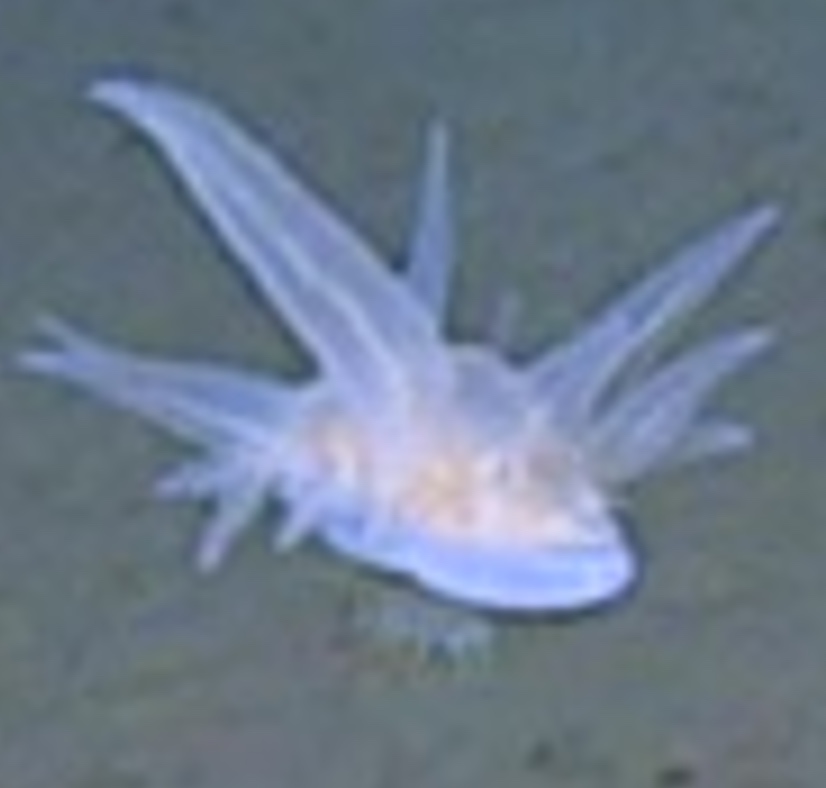
> a robot lander 8 km down in the Japan Trench filmed a ghostly animal covered in stiff spikes that's so strange, scientists still can't agree which branch of the animal kingdom it belongs to
> a robot camera dropped into the Tonga Trench caught the first footage ever of a goblin shark alive in the deep, almost 700 meters deeper than anyone thought it could live. its family of sharks goes back nearly 125 million years
> a self-driving robot sub found Pan Am Flight 526A on its very first sonar sweep, 74 years after it went down off Puerto Rico. that crash is part of why airlines started giving pre-flight safety briefings
> AI and laser scanners helped scientists find more than two dozen new species off Brazil in just two weeks. many were see-through creatures so fragile that hauling them to the surface would have destroyed them
> AI is now combing through 30,000 hours of deep-sea footage shot since 1987, so animals scientists swam right past decades ago could finally get noticed
right now humans have only ever seen less than 0.001% of the deep seafloor
i think over the next few decades AI is going to push that number way up
and we'll find out what's actually living in most of our own planet
this guy built a programmable computer with 10,000 digitally recreated neurons
it can control hands, RC cars, drones without any training or data
what could it do with 1M neurons?
We've developed a system to transmit any smell in real time.
Imagine taking a photo of a freshly brewed coffee and sending its smell to someone on the other side of the world, or describing a location and having someone smell it instantly.
Introducing AromaGen: general-purpose, real-time smell transmission, powered by AI and a wearable device.
In blind, three-way forced-choice tests across 50 common foods and beverages, participants identified the correct AI-generated smell 71% of the time, compared to 33% random guessing.
Participants described deeply emotional experiences, with one brought to tears by a generated smell of a honeymoon beach.
Paper, details, and code are all open-source here: https://t.co/xTbweAQWlg
https://t.co/HlM2NcEbaX
A lab in Bengaluru is building brain-inspired chips from molecules, designed to be nearly 100x more energy-efficient than today's GPUs.
Led by Prof. Sreetosh Goswami this team of ~30 chemists, physicists and engineers is based out of the Centre for Nano Science and Engineering (CeNSE), IISc.
Here's the problem they're solving. The computers we use today (GPUs included) were never designed with AI in mind. They keep data in one place and do the calculations in another, so every step means sending data back and forth between the two. Engineers call this the von Neumann bottleneck. Everyday software barely notices it, but AI does, and that's because a neural network multiplies millions of numbers at once. Even the most advanced AI hardware spends a remarkable share of its energy simply moving data around.
Now imagine a chip where memory and computing happen in the very same place. Not just side by side on one chip, as in modern phones and laptops, but with the calculation taking place inside the memory itself. That is how the human brain works, and it's also what this team is building.
The MoNC-AI research group (Molecular Neuromorphic Computing for Artificial Intelligence) designs tiny molecular devices called memristors. A silicon transistor stores a simple 0 or 1. Each of these molecular devices can hold more than 16,000 distinct levels. That richness enables them to carry out the central operation of AI in a single step, instead of thousands.
Because these chips need only a fraction of the energy, they could bring powerful AI to phones and laptops, without relying on the vast power and cooling of data centres.
The technology born in this lab is now being taken to market by MBrain AI, a company co-founded by Prof. Goswami with IISc colleagues and semiconductor industry veterans. Alongside the chips, MBrain AI is building the software that lets everyday applications run on them, and is working towards its first fully packaged chips for customers over the next couple of years.
🇺🇦 ARMOLAB’s ROBONOSH tracked UGV tested carrying 170 kg (above its 120 kg rating) over rough terrain. Built for casualty evacuation, ~20 km range, refined from Kupiansk medic feedback. Video via @Drone_Wars_#Ukraine#DefenseTech