Kudos to TN CM for taking ISRO scientist into state education board 👏🏼 👏🏼
Meanwhile Pawan Kalyan himself is in a position to influence India's National Education Policy 🤷🏻
Education minister of India acknowledging his contribution 👇🏼
Before the storm arrives... there's a moment of silence.
The untold story of Gambheera is ready to unfold.
Director @SujeethSign and @PawanKalyan Garu reunite under Pawan Kalyan Creative Works to expand the #OGUniverse saga 🌋
#OG2
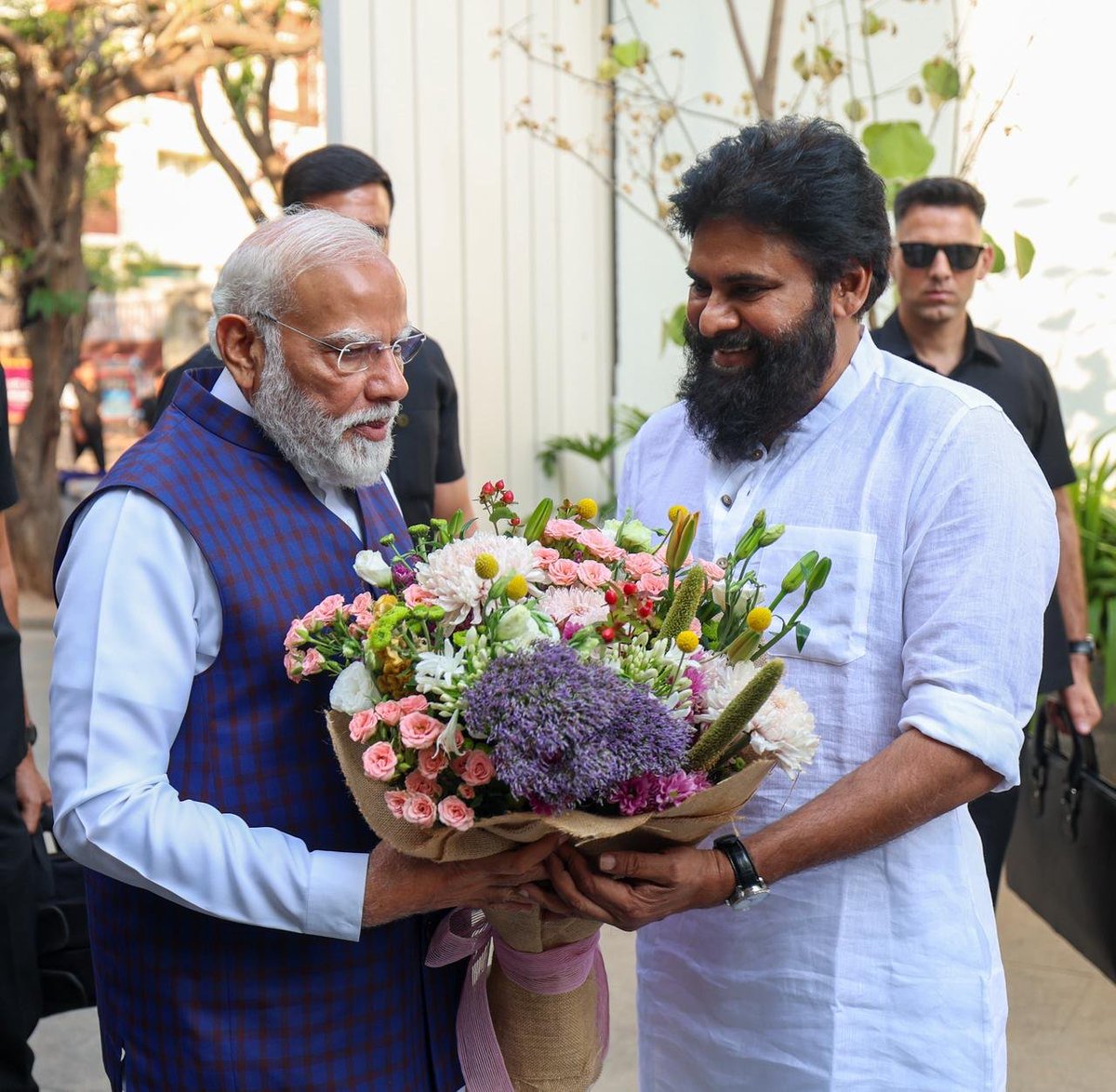
Went to the residence of Andhra Pradesh Deputy Chief Minister, Shri Pawan Kalyan Garu and met him as well as his family. Enquired about Pawan Kalyan Garu’s well being and wished him good health.
@PawanKalyan
Don't compare him with Pawan Kalyan man
Pawan Kalyan would go to any extent in the interest of the nation & citizens. No one can question his integrity.
అవకాశం కోసం గిరిజనులకు ఆశలు చూపి, ఓట్లు దండుకుని, కనీసం వీధి చివర ఒక కరెంటు దీపం వెలిగించని రాజకీయ పరంపర వారిది.
రోడ్లతో పాటు, కరెంటు సౌకర్యం, వీధి లైట్లు, ఇతర మౌలిక సదుపాయాలు కల్పించిన నిబద్ధత @PawanKalyan గారిది.
#PawanKalyanTransformsAPRoads
GPUs are dying inside AI datacenters every hour. Strangely enough, almost nobody knows, outside infra teams.
Hey, Ajith here. I’m building Oru’el (https://t.co/iMMjBZKj2w). This is the first in a short series explaining why this problem matters.
The AI boom today looks like a gold rush. Everyone is chasing better models, bigger datasets, and more parameters.
But beneath all that excitement are two structural bottlenecks that could slow the entire ecosystem.
Compute Infrastructure
Most people assume the problem is GPU supply.
That’s only part of the story. Capital will eventually increase supply.
The deeper issue is how AI datacenters actually operate.
To guarantee uptime, most facilities run 100% power redundancy. In practice, this means a 100MW datacenter might only operate at 50MW active capacity, with the rest reserved as backup.
It works.
But it’s also inefficient.
Instead of solving the architectural problem, the industry compensates with redundancy and capital.
Then there’s the second issue: hardware degradation under AI workloads.
During Meta’s Llama 3 training run, a 16,000-GPU cluster experienced 148 H100 failures over 54 days, which translates to roughly a 9% annualized failure rate.
In practical terms, this means job interruptions roughly every hour.
Think about that.
Meta, a trillion-dollar company with world-class engineering teams, still faces failures at this scale.
Now imagine smaller datacenter operators trying to compete under the same conditions.
And this is only the surface of the compute problem.
Innovation vs Efficiency
Over the past few years, AI research has moved incredibly fast.
Every conference delivered new architectures, training methods, and scaling tricks.
For a while, the dominant assumption was simple:
More parameters = smarter models.
But researchers eventually realised something important.
Scaling alone does not produce intelligence.
The foundations of large models are already established. The next phase is efficiency and structure.
Concepts like:
self-supervision
self-organization
self-improving systems
have become central to the field.
The question is shifting from “How big can models get?” to “How efficiently can they operate?”
The Interesting Twist
For the first time, a technology might actually help solve its own bottlenecks.
Decision-making systems and emerging world models could help optimise how compute resources are used, managing workloads, adapting to hardware failures, and improving infrastructure efficiency.
Researchers like Parthasarathy Ranganathan have argued that what the ecosystem needs next is fault-tolerant software.
Software that can: manage GPU failures, optimise cluster utilisation, and allow researchers to run experiments without worrying about infrastructure instability
In other words, software intelligence improving hardware efficiency.
I’ll dive deeper into these infrastructure challenges in upcoming posts.
If you’re working in datacenters and this resonates, let’s talk about GPU Intelligence.
📩 [email protected]
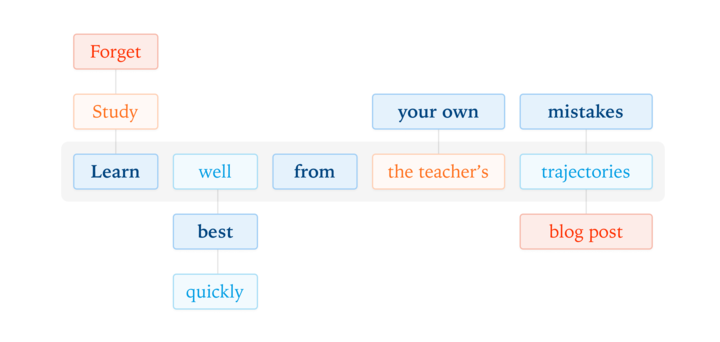
Our latest post explores on-policy distillation, a training approach that unites the error-correcting relevance of RL with the reward density of SFT. When training it for math reasoning and as an internal chat assistant, we find that on-policy distillation can outperform other approaches for a fraction of the cost.
https://t.co/JhpyWQOpBe
Here is #OgOST GUYS 🔥🔥🔥🔥🔥🔥
https://t.co/ijwuseaYSB
Respect & Love To Our Beloved #LEADER Shri @PawanKalyan gaaru 💪🏾📈🔈
#Og is Not a film for us
It’s an Emotion 🥹🔈❤️
Our respect to Our dear #Trivikram sir without him this would have not been possible to achieve
Thanks dearest @Sujeethsign for giving me the everything to make this crazy Sound track & Album 📈
Love thaman
Enjoy 🔈🔈🔈🔈🔈