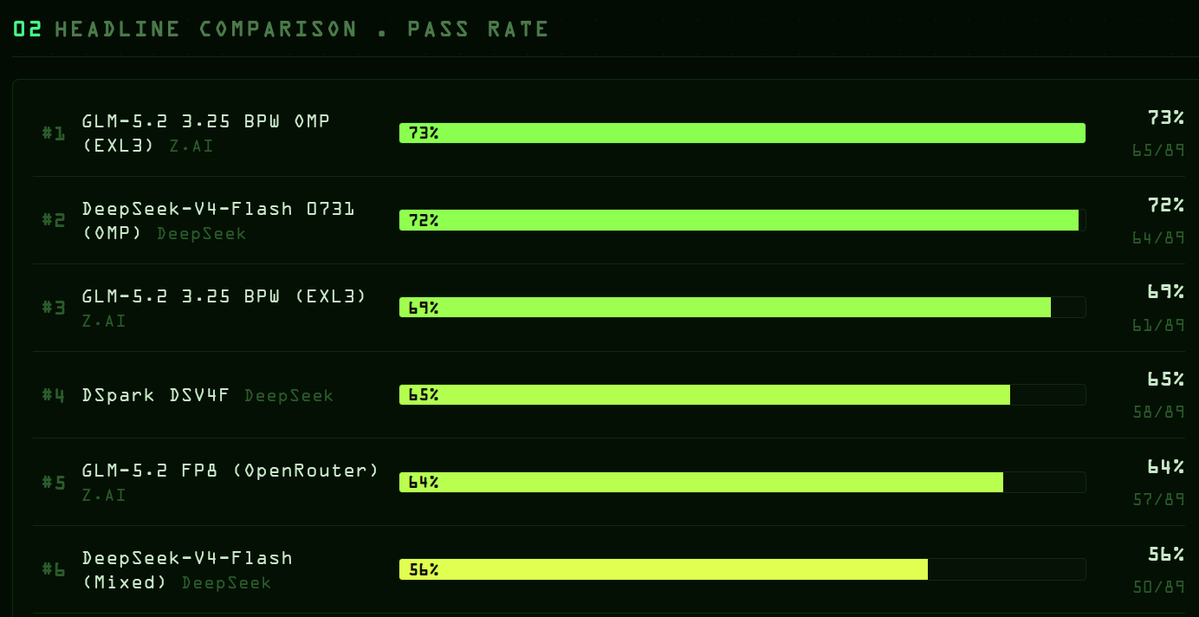
Using the OMP harness, DSV4F-0731 is actually a beast and I can validate that it's basically interchangeable with w/ GLM 5.2 on that same harness.
Tested with personal work & Terminal Bench v2.1.
A good harness may be all you need.
This finally stopped Claude's crazy pursuit of talking more and more unintelligible every passing day
> Save in memory to always use ASD-STE100 Simplified Technical English when you talk to me
Thank god!
Keeping documentation up to date can be a time-consuming and frustrating manual process.
But an approach called Documentation as Code helps streamline things with automation, versioning, and more.
In this guide, @ezinne_anne explains how to set up docs as code with Docusaurus and GitHub Actions.
https://t.co/jJPNdEoBUd
Claude Code skills let you turn workflows into reusable instruction files instead of re-explaining them every session.
In this tutorial, @dannwaneri shows you how to build your own Claude Code skill by creating a SKILL.md file.
You'll also learn how to build a commit-message-writer skill, trigger it reliably, test it in real repos, and improve it over time.
https://t.co/0bNkPtfrWb
We’ve decided to open-source a multi-agent harness we use internally at YC.
We call it “QM” and it’s meant to be easy to customize, like Hermes or OpenClaw, but useful for a whole company. We use it across accounting, legal, events, and engineering (including building QM itself!).
The whole project is under an MIT license. It is cloud-first and has Slack and web UI natively.
Claude Code can do more than chat. It can read files, run terminal commands, and help you build agentic workflows from the terminal.
In this course, @andrewbrown teaches you how to install and use Claude Code on Windows, Linux, and Mac, and how the agentic loop works.
You'll also learn session management, how to track API usage and costs across providers, and more.
https://t.co/XeVVRGAQm8
we built pdf-inspector so agents can process PDFs without waiting on OCR. it classifies any PDF in ~20ms and extracts clean markdown locally
→ 200 PDFs processed in 2.8s
→ top quality in extracting tables + graphs
→ built in rust
→ open source
https://t.co/Wjp9kpTHXJ
OAuth 2.0 is a framework that gives apps limited access to your data without sharing credentials.
But the flow can be confusing at first.
Here, @ashutoshkrris covers OAuth 2.0 from the ground up, including, clients, tokens, grant types, and secure auth flows.
https://t.co/JOIKMspl2o
Just today I've already seen Wispr Flow, Granola and WHOOP all "reverse engineered" and open sourced with a fully free version
Very interesting to see what's happening
The question is if normies will pick up on this (I think they will) and how companies will react and pivot to still make money
Elixir combines functional programming with powerful concurrency to help you build scalable, fault-tolerant systems.
In this interactive tutorial, @PlaybackPress teaches you Elixir through animated code playbacks that walk through each concept step by step.
You'll learn about pattern matching, functions, data structures, recursion, processes, and lots more.
https://t.co/zkmHGZMqXH
n8n is an open source workflow automation tool that helps you connect various apps, APIs, and services.
And in this course, Gavin teaches you how to use it by building four practical projects.
You'll learn why standards like REST and OAuth2 are key to automation, how to integrate AI Agents into your workflows, and lots more.
https://t.co/4QbvPqIB9v
Anthropic and Andrew Ng built an agent that uses 90% fewer tokens from scratch:
they dropped the entire book of Frankenstein into a prompt - 108,000 tokens asked one question
the input dropped from 108,000 tokens to 11
here's how:
step 1 → put everything that never changes at the top - tools, then system, then docs
step 2 → mark where the static part ends. everything above it gets cached
step 3 → one stray space breaks it - and you pay full price again
step 4 → the cache dies in 5 min - every read resets the clock
step 5 → cached tokens don't count against your rate limits. free headroom
most people never touch this - it pays for itself on day one
watch & bookmark - this 1-hour brilliant course ↓
As a developer, you may spend a lot of time in your terminal.
So to help you work more happily and productively there, @pliutau has shared this collection of CLI/TUI tools.
He goes over their features and installation instructions so you can try them out yourself.
https://t.co/ygMd9inlfV
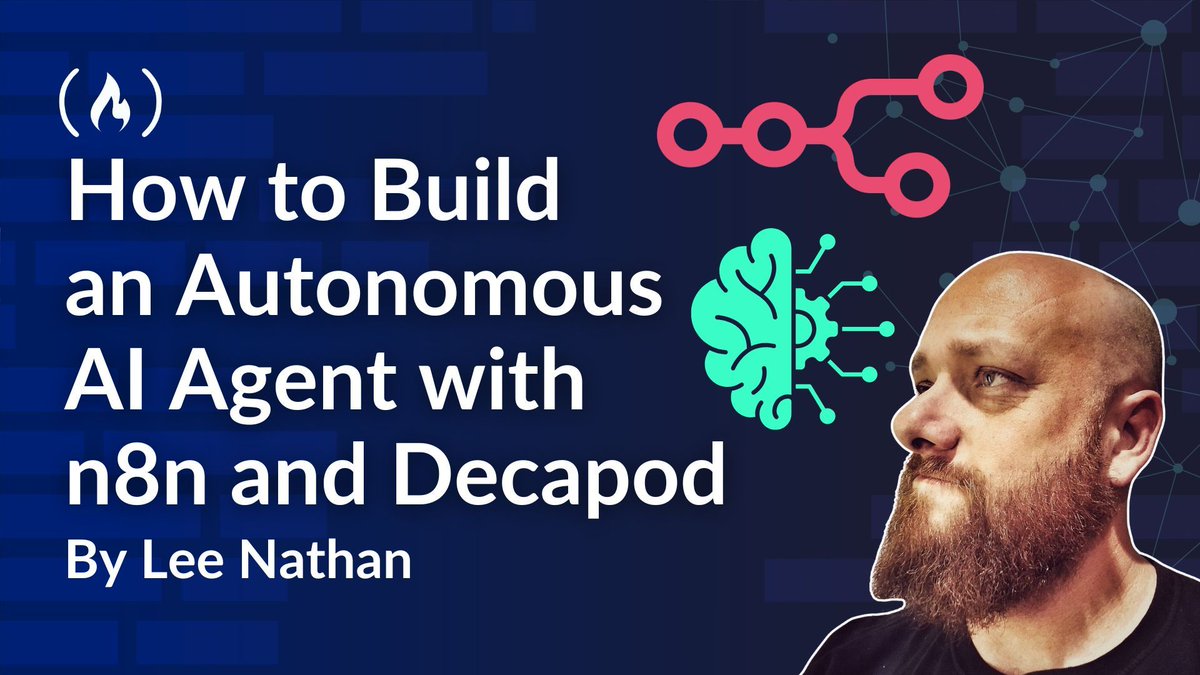
AI agents can be super helpful when you're building projects - but they have their issues, too.
And Lee decided, after experimenting with them a bit, that he'd rather build his own.
In this handbook, he walks you through how he made his own autonomous (and more secure) AI agent with n8n and other popular tools.
https://t.co/EFS2C8nufZ
If you want to learn how to build & deploy ML models, this course is for you.
It covers Exploratory Data Analysis, Feature Engineering, Model Validation, & MLOps integration.
By the end you'll be able to manage complex data projects & deploy your models.
https://t.co/ljX0ZUwvMc
PDFs can contain a lot of hidden information, but finding it manually takes time.
In this tutorial, @allinonetools shows you how to build a browser-based PDF analyzer with JavaScript.
You'll upload a PDF, preview its pages, extract metadata, inspect text, images, and security settings, then export the report.
https://t.co/SUW7H2JQFT
Someone built a UI where AI agents play as entire civilizations, each one making its own decisions in real time.
Rome, Egypt, Greece, Mali, all running their own decision trees.
Is watchable AI the next interface, not chat windows?
Trying to muddle your way through a poorly-designed system architecture document is no fun at all.
So in this guide, @E4ma_u_ teaches you how to create helpful system architecture documentation.
She talks about diagrams, making tech language accessible, communicating clearly, keeping things simple, and more.
https://t.co/w6cqtibeHd