Here is my algorithm:
1) Vasodilator therapy (if hemodynamic allow and pull)
2) Pull Rotawire. This works very effectively, 90% of times. It is frequently overlooked. The 0.014 tip works as a great way to bring back the stuck burr. Make sure wire is free with brake off for maximal efficiency. Pulling the driveshaft is less effective, as it is made of 3 coiled wires which gives some elasticity to the driveshaft.
3) If burr is free beyond lesion, can use short dynaglide runs and then pull. Prinicple is that dynamic friction is lower. Don’t overdo this and also with skipping rope technique, there is risk of driveshaft breakage and burr loss due to torsional forces with a fix s immobile burr!
4) Cut driveshaft and remove teflon sheath
5) Deliver GE over driveshaft to the burr and pull.
6) Intimal/subintimal wire and ballooning to dislodge burr and pull.
7) Re-deliver GE over driveshaft and pull.
8) Obtain second access and adding a ping-pong guide. Remember a ping-pong guide is not required in most cases. Once Teflon sheath is removed, a 6F guide can accommodate: Driveshaft + coronary wire, Driveshaft + Caravel microcatheter, Driveshaft + Corsair/Turnpike LP microcatheters, Driveshaft + 2.5-4mm balloons
9) Combine subintimal ballooning and GE over driveshaft and pull. Only these maneuvers requires ping-pong guides.
10) Call surgeons.
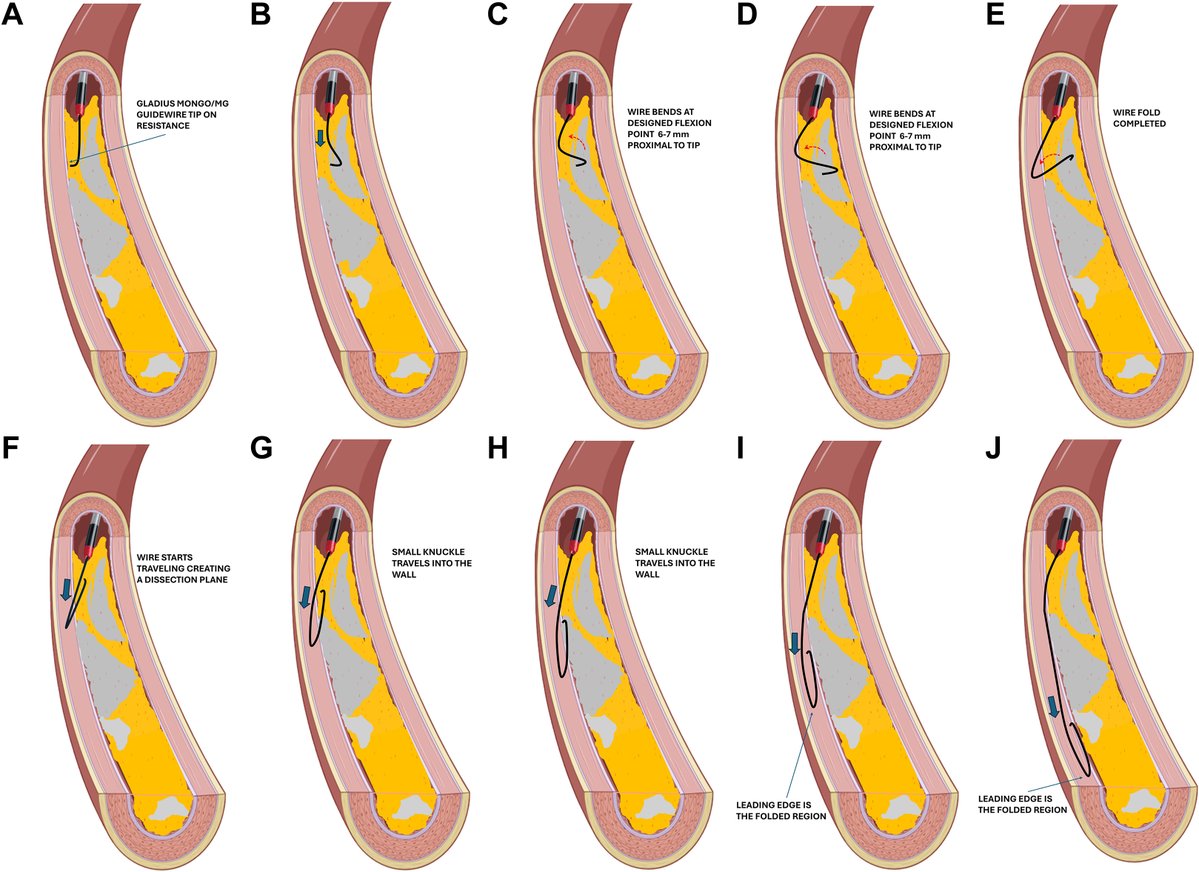
They also create 2 different knuckles. Rolling knuckle = catch, coil, and roll. Best starter. Stronger (overcome initial hardness). It opens a larger dissection plane though. Traveling knuckle = catch, fold, and travel. Best finisher. It keeps a smaller, more controlled fold for distal tracking and re-entry. As a practical rule, the heavier the polymeric wire, the stronger and larger the knuckle it tends to create. A larger loop usually means a more powerful rolling knuckle, with more dissection force and less tendency to dive into small side branches. Know all polymeric wires (table below), there are some interesting new ones with 6g and 12g tip load, cant imagine the power!! @RinfretStephane dissected the type of knuckle and its characteristic in his phenomenous article: https://t.co/Fw1WXm6q1X
For doctors not so good at statistics (most of us 😂)
👇
#medtwitter
Intention-to-Treat (ITT) vs Per-Protocol (PP) — this is where RCTs quietly change meaning. 📊👀
Same trial. Same patients. Different analysis. Different story.
👉 ITT = analyze everyone as randomized.
Stopped the drug? Included.
Crossed over? Included.
Never took a dose? Included.
Preserves randomization. Reflects real-world effectiveness 🌍
👉 PP = analyze only those who adhered and completed treatment.
The “ideal” patients.
Shows efficacy under perfect conditions 🧪
Example 🫀
1000 high-risk patients randomized to a statin.
20% stop due to myalgia.
ITT → benefit looks modest.
PP → benefit looks stronger 📈
But PP breaks randomization.
Adherent patients are often healthier, more compliant, lower baseline risk.
That’s selection bias entering quietly.
Rheumatology 💉
Biologic trial. Patients stop due to infection.
Included in ITT. Often excluded in PP.
If benefit appears dramatic only in PP? 🚩 Pause.
Here’s the heavier truth:
If you’ve ever felt confused reading an RCT…
If you’ve ever wondered why effect sizes look different in the same paper…
If you’ve ever quoted a result without checking the analysis population…
You’re not alone. But this is the moment to level up.
Before you read the abstract conclusion.
Before you tweet the hazard ratio.
Before you change your practice.
Go to the Methods section.
Find the analysis population.
Ask: ITT or PP? Or both?
That one habit separates passive readers from critical clinicians.
MedTwitter — let’s stop being impressed by p-values and start being impressed by design. 🔍🔥
#MedTwitter #EvidenceBasedMedicine #Statistics
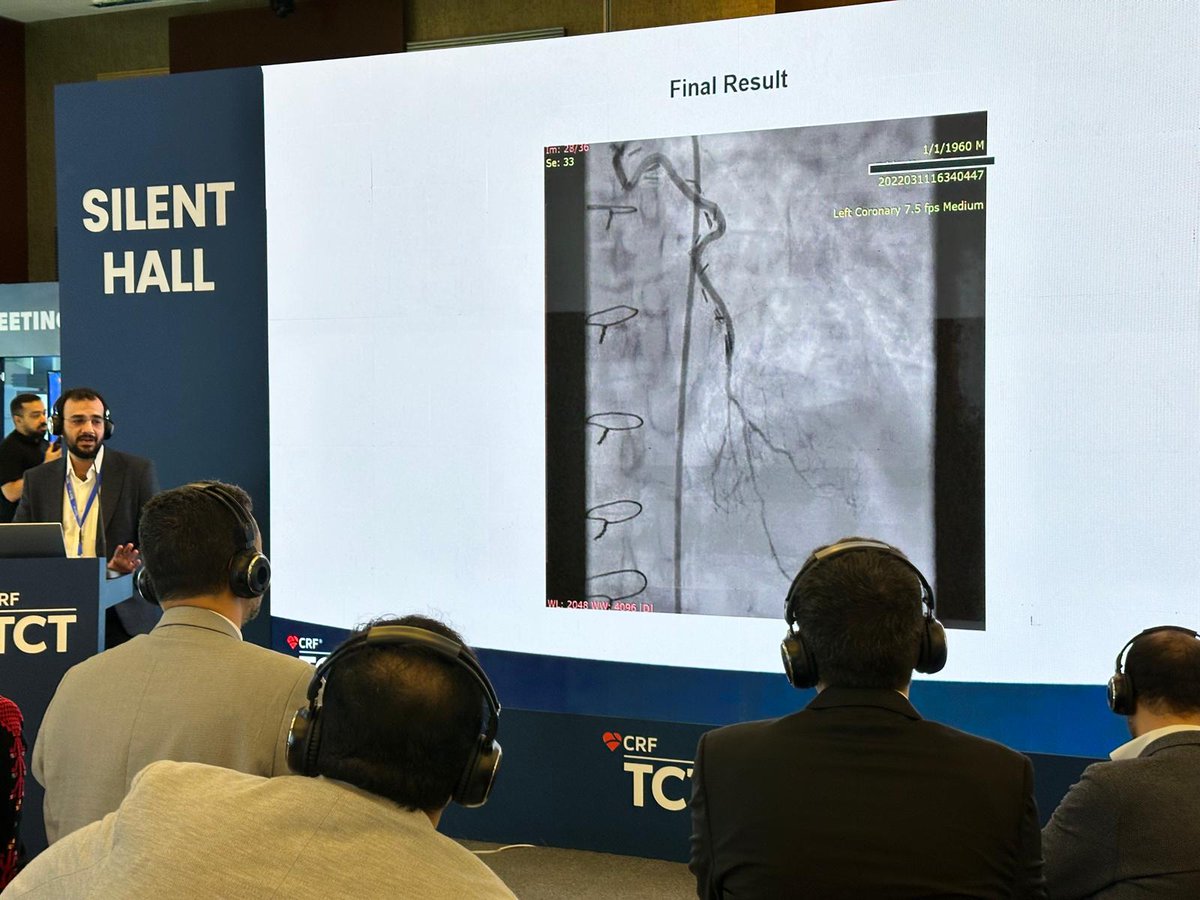
What an amazing session by @ColletCarlos on CT guided PCI @TCT_ME_#TCTMiddleEast2025
The imaging expert won't let CT take IVUS/OCT 's place so easily 😃 Thank you @ziadalinyc for making the picture complete
Huge congratulations to the winners of the Scholarship Award @MYFegy 💫
This award was generously donated by #SerafiCharity & selection committee members went thru >70 applications this year..thank u for ur commitment to make #TCTPlusMiddleEast a unique educational experience
(5/x) Mistake #3: Intubating patients placed on NIV for hypercapnic respiratory failure after some arbitrary time amount because the blood gas isn't improving.
If a patient has a good mask seal, is tolerating well, looks comfortable, and has an adequate minute ventilation (look at the BIPAP machine), don't intubate them because the blood gas at X hours (4,6 etc.) hasn't normalized. Give it time!
Remember, the difference between NIV/invasive ventilation is an ETT and sedation. There is no additional benefit to intubating them with respect to minute ventilation if they are comfortable and can toilet still.