

Top Tweets for #AlmaLinux

AlmaLinux just let users certify the hardware they already own.
Public catalog.
The box on your desk, not a vendor SKU list.
That is the useful version of “works on bare metal.”
If the OS is a bootc image, you certify one artifact and boot it on the iron you actually bought.

@AlmaLinux lol not AlmaLunux jesus.

Website is now fully upgraded and running on sovereign bare-metal infrastructure.
roningram.me
We bypassed the usual hosting layers and went straight to machine-level control — spinning up a dedicated AlmaLinux 9 server for maximum sovereignty, quantum resilience, and true long-term future-proofing.
In the last 24 hours we:
Fair-launched $POCK on Pump.fun
Released the complete litepaper
Locked 13% of total supply in a 2-year Streamflow contract
Built and deployed a clean, hardened website from the ground up
We launch and learn fast. This project is about building real agentic infrastructure with proper foundations — not shortcuts.
The Spreadsheet phase begins now.
— Ronald Ingram

Linux: Operating System Evolution (1991–2026) 🐧
🐧 1991: Linux 0.01 (First kernel release by Linus Torvalds)
🐧 1992: Linux 0.96 (First version with X Window System)
🐧 1993: Slackware 1.0 (One of the oldest surviving distros)
🐧 1993: Debian 0.01 (Foundation release)
🐧 1994: Red Hat Linux 1.0
🐧 1996: Linux 2.0 kernel (Multi-processor support)
🐧 1998: GNOME 1.0 & KDE 1.0 (Desktop environments)
🐧 2001: Linux 2.4 kernel (USB & Bluetooth support)
🐧 2003: Fedora Core 1 (Community-driven Red Hat successor)
🐧 2004: Ubuntu 4.10 "Warty Warthog" (Revolutionized desktop Linux)
🐧 2006: Linux 2.6 kernel becomes mainstream
🐧 2011: Linux 3.0 kernel
🐧 2012: Arch Linux gains popularity among enthusiasts
🐧 2015: Windows includes WSL (Windows Subsystem for Linux)
🐧 2015: Linux 4.0 kernel
🐧 2019: Linux 5.0 kernel
🐧 2020: CentOS 8 shifts to CentOS Stream
🐧 2021: Rocky Linux & AlmaLinux emerge (CentOS replacements)
🐧 2022: Linux 6.0 kernel (Rust language support added)
🐧 2024: Ubuntu 24.04 LTS "Noble Numbat"
🐧 2025: Fedora 42 & Debian 13 "Trixie"
🐧 2026: Linux 6.12+ kernel continues evolution 🚀

「VibeCoding 实战032」服务器开好了,装什么系统?
Hetzner 给了一堆选择,看着眼花。简单介绍一下。
**Ubuntu**
最主流的选择。社区大,教程多,遇到问题一搜就有答案。大部分软件都优先支持 Ubuntu。
**Debian**
Ubuntu 的爹。更稳定,更轻量,但软件版本比较老。适合追求稳定不折腾的人。
**Fedora**
Red Hat 系的,喜欢上新功能。软件版本很新,但更新太快,有时候会踩坑。
**CentOS / Rocky Linux / AlmaLinux**
这三个都是 Red Hat 系的。CentOS 以前很火,后来 Red Hat 把它砍了,Rocky 和 Alma 是社区做的替代品。企业用得多,个人项目没必要。
**openSUSE**
德国人做的,Hetzner 也是德国公司,所以有这个选项。用的人少,遇到问题不好找答案。
**我的推荐:Ubuntu 22.04**
注意是 22.04,不是最新的 24.04。
为什么?22.04 是 LTS(长期支持版),已经稳定运行两年多了,各种坑都被踩过了。
24.04 虽然也是 LTS,但太新了,有些库和工具可能还没适配好。跑着跑着发现某个东西装不上,很烦。
选系统的原则:不追新,求稳。服务器不是你的 Mac,不需要最新最酷的功能,能跑就行。

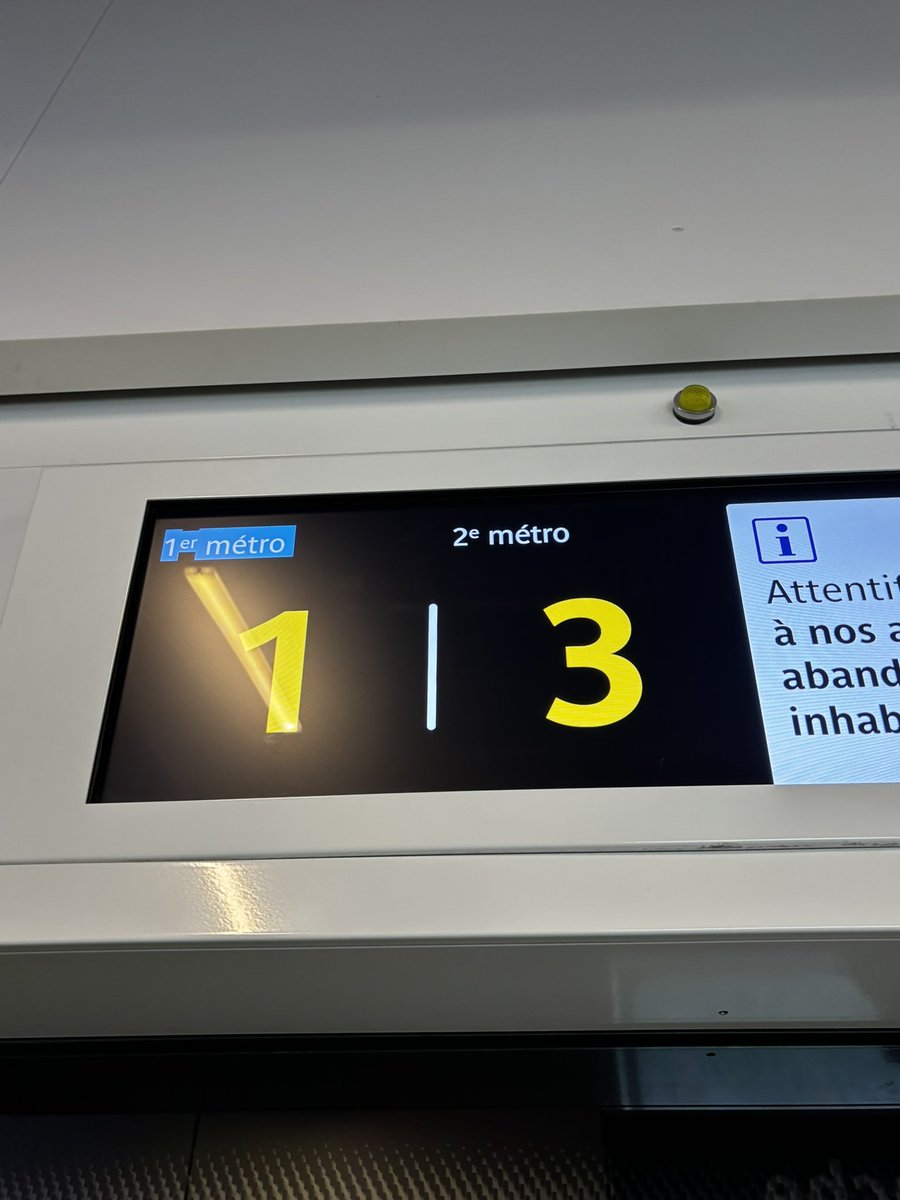
Je vais essayer d'apporter quelque chose de plus de les 10k cités qui se répètent mais la RATP utilise depuis quelques années maintenant AlmaLinux avec Gnome qui font tourner une web app Firefox pour l'information voyageurs RER/Metro.

VOUS POUVEZ DÉSELECTIONNER LE TEXTE SUR VOTRE WINDOWS MERCI

The @zama HPU project is an open-source implementation of a Homomorphic Processing Unit on the AMD Alveo V80 FPGA, designed to speed up Fully Homomorphic Encryption (FHE), especially optimized for the TFHE-rs library.
The project provides a complete toolchain, including SystemVerilog RTL code, RPU firmware, FPGA bitstream workflows, Python models, and simulation and synthesis tools.
Key Benefits:
1. Fully open-source with RTL, firmware, drivers (AMI, QDMA), and APIs, enabling easy customization, deployment, and experimentation.
2. Architecture specifically optimized for high-performance homomorphic operations based on TFHE-rs.
3. Covers the entire FPGA development process from design and simulation to synthesis, bitstream creation, programming, and debugging.
4. Embedded firmware runs on a dual-core ARM Cortex-R5F inside the FPGA for real-time acceleration.
5. Comprehensive installation guides covering system requirements, building, and simulation for easier user onboarding.
Limitations and Requirements:
1. High technical complexity requiring FPGA expertise, Linux kernel knowledge (Ubuntu 5.15 / AlmaLinux 5.14), and skills with Vivado/Vitis 2024.2 tools.
2. Long build times, with bitstream generation taking over 10 hours and demanding powerful hardware.
3. Currently limited to supporting only the AMD Alveo V80 FPGA board.
4. Requires dedicated software stack including AMI/QDMA drivers for stable operation.
Applications and Potential:
1. Among the first fully open-source hardware solutions for accelerating FHE, advancing homomorphic encryption research.
2. Applicable in fields such as AI privacy, blockchain, secure multi-party computation, and other privacy-focused services.
#ZamaCreatorProgram


Các bạn có đoán được đây là gì không ? Đúng , nó là máy tính nhưng nó không như các máy tính mà các bạn thường thấy , nó có tên là FROG Mark I không phải là một máy tính thông thường (như PC hay laptop), mà là một bộ xử lý phần cứng chuyên dụng (Homomorphic Processing Unit - HPU) dựa trên FPGA (Field-Programmable Gate Array).
=>Tính năng chính của FROG Mark I
FROG Mark I là bộ xử lý Homomorphic Processing Unit (HPU) đầu tiên mã nguồn mở, được thiết kế để tăng tốc các hoạt động tính toán đồng hình (Fully Homomorphic Encryption - FHE) trên dữ liệu mã hóa, đặc biệt là workload từ thư viện TFHE-rs của Zama. Dưới đây là các tính năng nổi bật:
• Phần cứng và triển khai: Sử dụng FPGA AMD Alveo V80 (cấu hình 8x bo mạch), viết bằng SystemVerilog. Hỗ trợ tính toán trực tiếp trên dữ liệu mã hóa mà không cần giải mã, bao gồm blind rotation với 32, 64 hoặc 128 hệ số đa thức mỗi chu kỳ.
• Công cụ hỗ trợ: Bao gồm mã nguồn RTL, thiết kế block cho AMD Versal FPGA, quy trình tạo bitstream, testbench mô phỏng (hỗ trợ xsim của AMD và vcs của Synopsys), và firmware cho Real-Time Processing Unit (RPU) với lõi Arm Cortex-R5F kép.
• Tích hợp và tùy chỉnh: Dễ dàng điều chỉnh tham số qua script (ví dụ: run_syn_hpu_3parts_psi64.sh cho 64 hệ số), hỗ trợ mô phỏng firmware bằng microblaze để tăng tốc quá trình phát triển.
• Mã nguồn mở: 100% open-source dưới giấy phép BSD-3-Clause-Clear, khuyến khích cộng đồng đóng góp qua GitHub.
=> Giới hạn
Dự án tập trung vào nghiên cứu và phát triển, nên có một số hạn chế cần lưu ý:
• Yêu cầu hệ thống: Chỉ hỗ trợ kernel Linux cụ thể (Ubuntu 5.15.0-139-generic hoặc Almalinux 5.14-*), có thể gặp lỗi khi lập trình FPGA trên phiên bản Ubuntu đã patch. Cần kinh nghiệm với bo mạch V80 và flash programming.
• Phụ thuộc driver: Yêu cầu driver AMI từ fork AVED của Zama; sử dụng driver gốc có thể gây crash trên máy không hỗ trợ hot plug PCIe.
• Thời gian xây dựng: Quy trình compile bitstream dài (hơn 10 giờ cho config psi64), và có thể gây reboot server hoặc mất thiết bị PCIe.
• Sử dụng thương mại: Miễn phí cho nghiên cứu/phát triển, nhưng cần giấy phép patent riêng từ Zama cho mục đích thương mại.
=> Hiệu suất
FROG Mark I được tối ưu hóa cho tốc độ xử lý FHE, nhưng benchmarks chi tiết chưa được công bố chính thức (theo bài đăng, sẽ chia sẻ sớm). Dựa trên thông tin hiện có:
• Công suất xử lý: Hỗ trợ blind rotation lên đến 128 hệ số đa thức/chu kỳ, giúp tăng tốc workload TFHE-rs so với CPU/GPU thông thường. Các config psi32/psi64/psi128 cho phép cân bằng giữa tốc độ và tài nguyên.
• Mô phỏng và test: Testbench cho kết quả SUCCEED/FAILURE nhanh chóng, với output chi tiết về tham số HDL. Trong FHE chung của Zama, công nghệ đã cải thiện 100x tốc độ so với thời kỳ đầu.
• So sánh chung: Không có số liệu cụ thể cho FROG, nhưng TFHE-rs trên phần cứng tương tự đạt timings thấp cho phép toán 64-bit (ví dụ: hàng ms cho phép cộng/trừ trên dữ liệu mã hóa). Benchmarks đầy đủ dự kiến sẽ tập trung vào so sánh với các thư viện FHE khác.
=> Lợi ích
FROG Mark I mang lại giá trị lớn cho lĩnh vực bảo mật dữ liệu và AI riêng tư:
• Bảo mật cao: Cho phép tính toán trên dữ liệu mã hóa, bảo vệ quyền riêng tư mà không cần giải mã, lý tưởng cho blockchain, ML và ứng dụng đám mây.
• Tăng tốc hiệu quả: Giảm thời gian xử lý FHE từ hàng giờ xuống giây/phút, làm FHE khả thi cho ứng dụng thực tế.
• Cộng đồng và linh hoạt: Mã nguồn mở thúc đẩy sáng tạo, với tài liệu chi tiết (hpu_parameters.md) và hỗ trợ cộng đồng . Dễ mở rộng cho các FPGA AMD Versal khác.
• Tác động rộng: Là bước tiến trong hệ sinh thái FHE, giúp Zama dẫn đầu trong việc tích hợp mã hóa end-to-end vào blockchain và AI.
@zama #ZamaCreatorprogram #FROGMarkI


📊 Most Used Linux Families
1. Debian Family
🔸Ubuntu dominates cloud, servers, and desktops.
🔸Widely used by developers.
🔸Examples: Debian, Ubuntu, Linux Mint, Pop!_OS.
2.Red Hat Family
🔸Big in enterprises and data centers.
🔸RHEL, CentOS (now CentOS Stream), Rocky Linux, AlmaLinux.
🔸Fedora for developers.


Even something as simple as mentioning nix for dev setup would improve the community's quality. I prefer my almalinux devcontainer, but nix is great if an expert sets everything up for you.

I reached out to shopify about a job 5 years relating to nix, wonder what would have happened if I had followed up. I still really enjoyed my time at IOHK/IOG. Oh well, glad to see Nix still slowly becoming more mainstream.

Yea! I run the entire vivado stack on AlmaLinux 8.10. It just works.

For those who use Linux, what is your favorite or go to Linux distribution?
So far I only have experience with these distributions : Centos 7 and 8, Almalinux, and Debian ( for raspberry pi 4 ).
Personally I'm looking for which distro I should use for a laptop with linux. 🙂

AlmaLinux 9 (RHEL 9)

Currently I roll with:
• Ubuntu
• AlmaLinux
• Kali Linux
I was fond of Parrot Linux when I had a different job.
Recreationally I tried all of the staples. I would probably like Arch better now that ChatGPT could help with the drivers and learning curves.
I was a fan of ElementaryOS for a long time.
Mint is likely still the best for beginners.
Manjaro is good for those who want Arch experience, but not the frustrations.
CentOS used to run all of my servers, but it is EOL.
Fedora is for the smart and wise. I never graduated to Fedora status.
PopOS, Tails, Pure, Deepin, Raspian and some others hit my radar at some point, but the I listed first are the ones I have stuck with.

Nextjs, Vercel, Tailwind, Prisma, Auth.js

Where to start: @rails @nextjs pure @rubylangorg for @asteriskpbx PBX SaaS development, also use @AlmaLinux on the server and would love to use @haikuOS when there's support for that. And you?

Just out of curiosity, what distro is your favorite? I was growing frustrated with the Ubuntu 22.10 on my cloud box, I use Fedora 40 KDE at home so I went looking. Few hosting offer it, so I tried Almalinux and oh gawd what a kludge, finally found Cloudzy has Fedora 40..

AlmaLinux9 で、ssh接続のchroot設定をQiitaに載せました。
qiita.com/FUKUTAKA7938/items…


I’m a fan of good bags. I have three Ogio in my collection and love them.
It's pretty damn good. Most of my homelab is Alma.

What you’re saying is I need to load Alma up in a VM and check it out. This is going to be a switch after all the RHEL I’ve been doing recently.
Ohh! And Alma Linux branded flash drives loaded with the best distro of all time, ofc!
I'd kill someone for an Alma Linux backpack. I went to CloudCon and grabbed this from the Arista guys:


Is that even lighter than Debian?

Depends on the kind of development you do and the specific tools youll be using. ALL distros are good for development, but if your workflow uses a lot of Red Hat tools (for example), Almalinux or Fedora might work best for you.
Most Popular Users

Elon Musk 
@elonmusk
240.3M followers

Barack Obama
@barackobama
118.6M followers

Cristiano Ronaldo
@cristiano
114.4M followers

Donald J. Trump
@realdonaldtrump
111.8M followers

Narendra Modi
@narendramodi
106.9M followers

Rihanna
@rihanna
98.7M followers

NASA
@nasa
92.2M followers

Justin Bieber
@justinbieber
91.7M followers

KATY PERRY
@katyperry
89.9M followers

Taylor Swift
@taylorswift13
83.9M followers

Lady Gaga
@ladygaga
75.4M followers

Virat Kohli
@imvkohli
73.3M followers

Kim Kardashian
@kimkardashian
70.8M followers

YouTube
@youtube
68.6M followers

Neymar Jr
@neymarjr
66.3M followers

Bill Gates
@billgates
65.2M followers

Selena Gomez
@selenagomez
63M followers

The Ellen Show
@theellenshow
62.1M followers

CNN
@cnn
61.7M followers

X
@x
60.6M followers