

Top Tweets for #Bioactivity

Bioactivity foundation model for hit identification and hit-to-lead optimization from sequence data
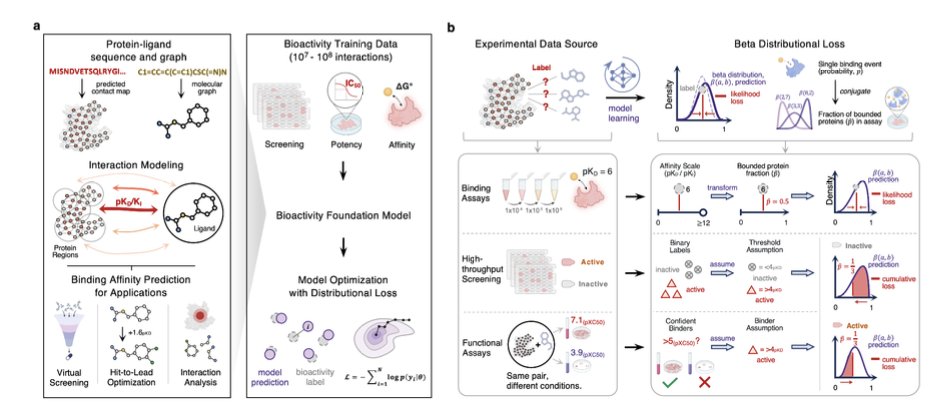
1. The paper presents PSICHIC+, a sequence-first bioactivity foundation model that predicts a full probability distribution (a beta distribution) over binding affinity from only protein sequence and ligand SMILES, enabling learning directly from large, heterogeneous bioactivity archives rather than relying on curated-only regression sets or binarized classification labels.
2. Core technical idea: distributional learning unifies mixed supervision types. Exact Ki/Kd values are mapped to a normalized 0–1 activity scale and trained via beta likelihood, while binary/thresholded evidence (IC50/EC50-derived labels, HTS active/inactive calls, and synthetic negatives) trains the probability of exceeding an activity threshold using the beta CDF—so coarse labels provide signal without forcing artificial point estimates.
3. PSICHIC+ is trained on ~82 million protein–ligand records (Papyrus-derived), spanning ~4,900 proteins and ~6.1 million ligands, plus multiple sources of negatives (model-generated decoys, ZINC20 decoys, and cross-target negatives based on low Foldseek similarity). This scale is used to build a single model intended for broad zero-shot deployment.
4. A key robustness mechanism is source-aware reliability modeling through concentration regularization. The model outputs both an expected activity and a concentration parameter (κ = α + β) that controls distribution width; κ is softly constrained by data-source “quality tiers” so noisy sources (HTS labels, synthetic negatives) are discouraged from producing overconfident (too-narrow) distributions.
5. Zero-shot hit identification (no target-specific training) improves early enrichment on virtual screening benchmarks. Under a 90% sequence-identity exclusion protocol, PSICHIC+ outperforms PSICHIC regression and classification variants on DUD-E and DEKOIS 2.0, with the biggest gains in early-retrieval metrics (e.g., DUD-E EF5% 13.3 vs 5.6 for regression and 10.8 for classification; BEDROC 0.51 vs 0.10 and 0.34).
6. Despite using only sequence/SMILES, PSICHIC+ is competitive with (and on DUD-E, exceeds) a large set of structure-based virtual-screening pipelines, highlighting a practical regime where structure-free, high-throughput scoring can match docking/scoring workflows when structures are missing or throughput dominates.
7. For hit-to-lead optimization (analog ranking), PSICHIC+ provides both a point estimate and a usable confidence proxy: prediction error increases as concentration decreases (reported Pearson r = 0.52 between error and inverse concentration), making κ a practical triage signal for deciding which designs merit synthesis/assay or more expensive computation.
8. On FEP-style benchmarks (JACS and Merck; 16 target assays), PSICHIC+ achieves mean Pearson r ~0.52 at ~1.34 ms per protein–ligand pair on an A100 GPU; Boltz-2 reaches ~0.60 but at ~20 s per pair. The paper argues this creates a distinct accuracy–throughput operating point for library-scale screening and rapid design iteration.
9. The work also introduces a concentration-modulated PSICHIC+–Boltz-2 ensemble: PSICHIC+ contributes more when its κ is high and less when κ is low. This raises mean correlation to ~0.68, approaching FEP+ (~0.74) on the evaluated benchmarks, while avoiding the need for high-resolution protein structures and remaining far cheaper per pair than physics-based workflows.
10. In lab-in-the-loop simulations (iterative propose–label–retrain) on Mpro, USP7, D2R, and TYK2 with a fixed budget (e.g., 360 labels), distribution-guided acquisition (greedy or UCB using mean and beta standard deviation) recovers more top-1% compounds than RF/MLP/GP baselines in most settings; for USP7, iterative retraining improves top-hit recovery from 35.6% (static zero-shot) to 64.4% under the same budget.
📜Paper: https://t.co/y8KX7EeXmc
#ComputationalBiology #DrugDiscovery #MachineLearning #Bioinformatics #VirtualScreening #ActiveLearning #FoundationModels #ProteinLigand #Cheminformatics #AIforScience
GPCR Ligand Bioactivity Prediction with Physics-Informed Dual-State Query Learning
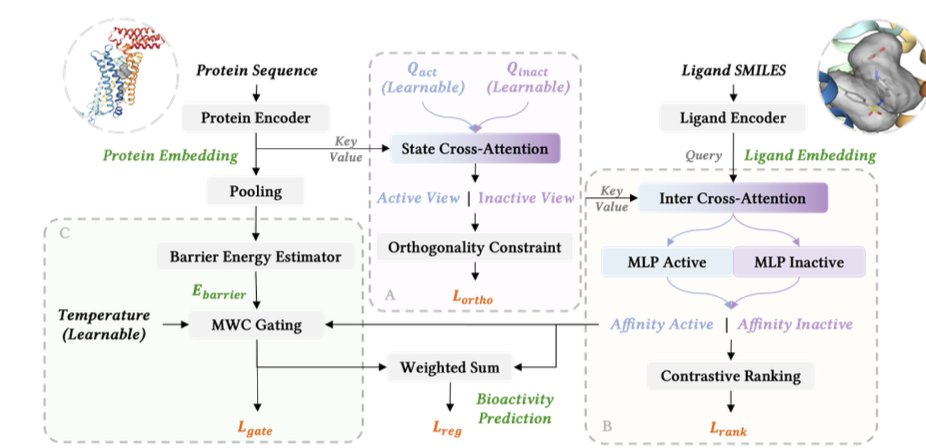
1. DSQ is a multimodal GPCR bioactivity model that explicitly embeds the Monod-Wyman-Changeux (MWC) allostery model into a neural network, aiming to predict not only binding affinity but also ligand functional efficacy (agonist vs antagonist) via a thermodynamically grounded activation probability.
2. Core idea: instead of relying on scarce and often ambiguous active-state GPCR 3D structures, DSQ probes “active” and “inactive” receptor conformations in latent space using two sets of learnable, orthogonal state queries applied to protein language model embeddings (ESM-2).
3. Architecture overview: (A) latent state probing with cross-attention pooling from ESM-2 residue embeddings into two state-specific representations (Zact, Zinact); (B) ligand–state interaction learning by cross-attention from ligand embeddings (MolFormer) to each state; (C) a Neural MWC gate that converts state-specific affinities into an activation probability.
4. Physics-informed gating: DSQ predicts intrinsic affinities to each state (ŷact, ŷinact) and learns a receptor-specific conformational energy barrier Ebarrier(p). Activation probability is computed as P(R*|p,l) = sigmoid(((ŷact − ŷinact) − Ebarrier(p)) / τ), where τ is a learnable temperature that calibrates/sharpens the gate during training.
5. Joint prediction without an inference-time class token: efficacy labels supervise the gate during training, but at inference DSQ outputs both activation probability and final bioactivity as a mixture of state affinities: ŷfinal = P(R*)·ŷact + (1−P(R*))·ŷinact. This contrasts with GPCR profiling approaches that require an explicit agonist/antagonist indicator as an input condition.
6. Training objective enforces physical consistency via four losses: (i) regression on ŷfinal; (ii) BCE supervision of the activation gate vs agonist/antagonist labels; (iii) an orthogonality constraint to prevent collapse between Zact and Zinact; (iv) a contrastive margin ranking loss enforcing ŷact > ŷinact for agonists and ŷinact > ŷact for antagonists.
7. Benchmark: curated human GPCR dataset from GLASS and GPCRdb following AiGPro’s protocol; 260,816 train samples across 222 receptors; strong class imbalance (~3.3:1 antagonists:agonists). Encoders are frozen; DSQ adds ~3.96M trainable parameters.
8. Main performance takeaway: DSQ improves overall affinity prediction versus DeepDTAGen, DrugBAN, and GraphDTA (overall RMSE 0.999; R2 0.517), with the clearest gains on the agonist subset (agonist RMSE 0.886; R2 0.269), where several baselines show near-zero or negative R2—suggesting state-aware thermodynamic structure particularly helps recover agonist signal.
9. Analyses supporting the mechanism and interpretability: (a) differential affinity consistency: ~74.91% of agonists predicted with ŷact > ŷinact and ~90.17% of antagonists with ŷinact > ŷact; (b) learned receptor-dependent Ebarrier shows nontrivial variance (not a single global threshold); (c) attention-based motif discovery highlights known switches such as the sodium pocket residue 2x50 and the NPxxY motif (7x53), and in silico knockout of these sites reduces predicted activation probability for agonists.
10. Limitations and boundary conditions: homology-stratified tests show a sharp generalization drop for low-homology receptors (<60% identity), where all models degrade to near-zero/negative R2; the current formulation is explicitly two-state (active/inactive) and does not model biased signaling or multiple active conformations, motivating extensions to multi-state query branches and stronger GPCR-specific encoders.
💻Code: https://t.co/baJwAQlKaa
📜Paper: https://t.co/LlrnUlySkF
#GPCR #DrugDiscovery #ComputationalBiology #MachineLearning #DeepLearning #ProteinLanguageModels #Cheminformatics #Bioactivity #Allostery #Thermodynamics

BGX: A Comprehensive #Pipeline for #GenomicInsight into #Bioactivity #Prediction #GenomicSurveillance and Novel #BiosyntheticGeneCluster Assessment @MantriLab
@thinkgenome https://t.co/YpN7N0e2e0
FLOWR.ROOT – A flow matching-based foundation model for joint multi-purpose structure-aware 3D ligand generation and affinity prediction @NatureComms
1. FLOWR.ROOT is an SE(3)-equivariant flow-matching foundation model that unifies pocket-aware 3D ligand generation and multi-endpoint affinity prediction (pIC50, pKi, pKd, pEC50) in a single backbone, with an additional pLDDT-style confidence head for uncertainty estimation.
2. A key design choice is joint structure–affinity modeling: the same latent representations used to generate 3D ligands in pockets also drive affinity prediction, enabling inference-time steering (importance sampling / path reweighting) toward higher predicted affinity or multi-objective goals without external scoring functions (and avoiding generator–scorer distribution mismatch).
3. The model explicitly treats heterogeneous bioactivity labels as different tasks (separate heads for IC50/Ki/Kd/EC50), rather than collapsing them into a single “affinity” target—aiming to better respect assay-specific semantics and reduce label noise from mixing endpoints.
4. FLOWR.ROOT supports multiple generation modes within one architecture: de novo pocket-conditional generation, interaction/pharmacophore-conditional sampling, scaffold hopping and elaboration, plus local fragment growing or fragment replacement for targeted edits during lead optimization.
5. For fragment-conditional and partial-edit modes, it introduces a mixed isotropic–anisotropic prior placement strategy: the generative prior can be shifted to local replacement sites (for locality) and shaped with anisotropic covariance derived from reference geometry or growth direction, improving controllability for scaffold/fragment operations.
6. Training is staged to address data scarcity and fidelity gaps: (1) large-scale pre-training on ~1.5B ligand conformations plus ~2.5M mixed-fidelity protein–ligand complexes, (2) refinement on curated co-crystal datasets (SPINDR, HIQBIND) to sharpen pose/interaction realism and affinity prediction, (3) project-specific adaptation via parameter-efficient LoRA finetuning and/or inference-time guidance.
7. The structure head predicts coordinates plus rich chemistry (atom types, bond orders, partial charges, hybridization), and training adds explicit geometric supervision via bond-length and bond-angle losses to reduce strain and improve local geometry beyond coordinate MSE alone.
8. On benchmarks for pocket-conditional generation, the model reports high geometric validity (e.g., PoseBusters-validity ~0.97 on CROSSDOCKED2020 and SPINDR) and lower strain energies than prior diffusion/flow baselines, while maintaining novelty/diversity characteristics.
9. For affinity prediction, it reports strong correlations on curated test sets (e.g., HIQBIND pIC50 Pearson ~0.92; and up to Pearson ~0.86 on the FEP+/OpenFE IndustryBenchmark), and shows that importance-sampling guidance shifts generated molecules toward higher predicted potency while largely preserving diversity.
10. The paper emphasizes a practical drug-discovery point: zero-shot generalization across new project SAR is unreliable; however, LoRA finetuning (small trainable fraction of parameters) substantially improves project-specific performance across multiple in-house datasets and on the public PDE10A benchmark, supporting the “adaptive companion” framing.
📜Paper: https://t.co/bu4Kc3z3Ot
#ComputationalChemistry #SBDD #GenerativeModels #FlowMatching #Equivariance #DrugDiscovery #MachineLearning #ProteinLigand #AffinityPrediction #LoRA

Biominer: A multi-modal system for automated mining of protein-ligand bioactivity data from literature
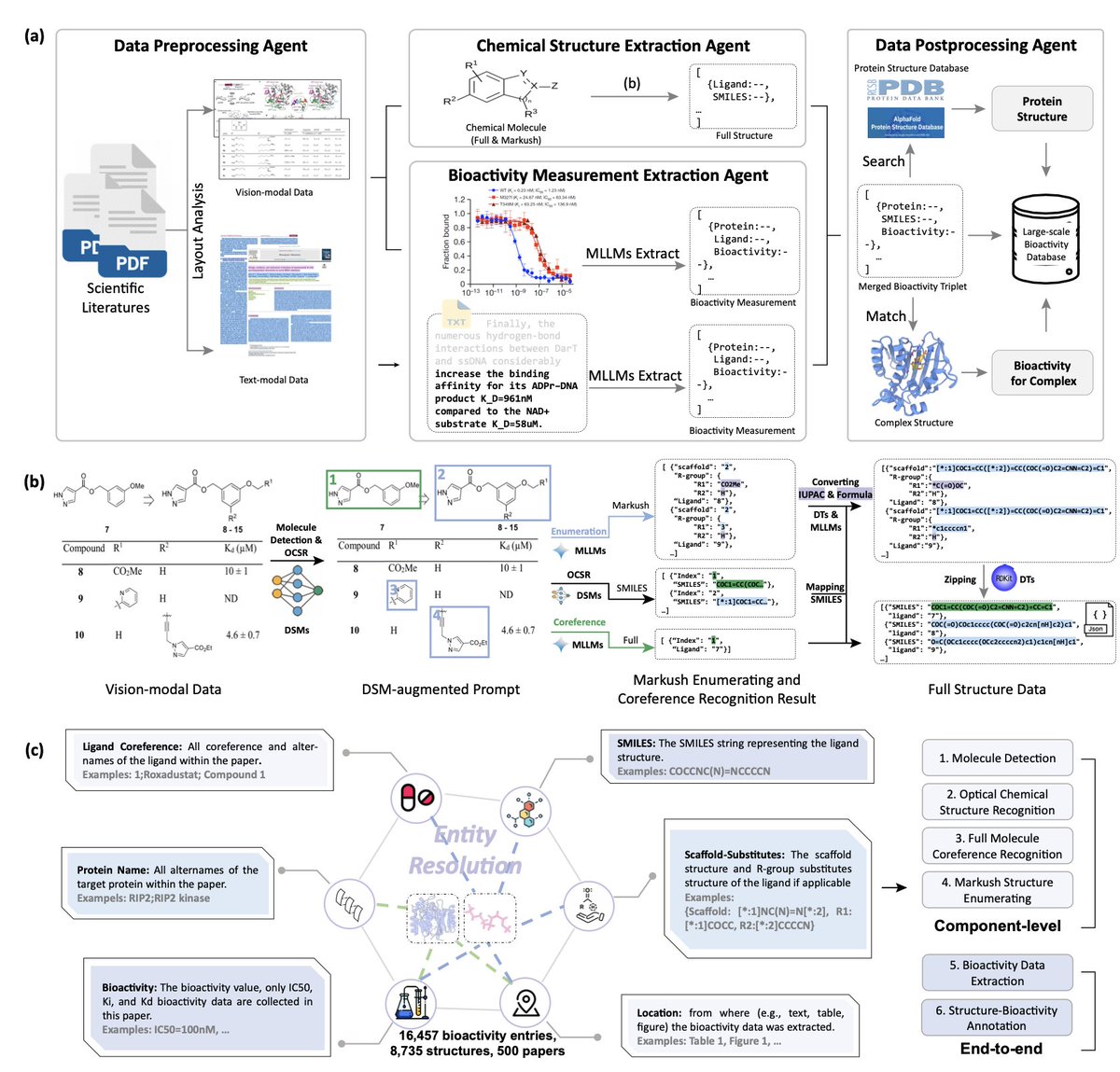
1. BIOMINER targets a practical bottleneck in drug discovery: bioactivity evidence is scattered across text, tables, and figures, and ligand structures are often reported as Markush definitions that require enumeration into exact molecules (SMILES) before the data are usable.
2. The key design choice is to explicitly decouple two hard problems that end-to-end LLM extraction tends to entangle: (a) biochemical semantic interpretation of bioactivity measurements, and (b) chemically valid ligand structure construction. BIOMINER runs these in parallel and then joins them via ligand coreference identifiers.
3. For chemical structures, BIOMINER introduces Chemical-Structure-Grounded Visual Semantic Reasoning (CSG-VSR): domain-specific perception models detect/recognize chemical depictions, an MLLM reasons over indexed depictions to infer scaffold–R-group relations and coreference, and deterministic chemistry tools (OPSIN, RDKit) perform the exact symbolic construction and Markush “zipping” into full enumerated molecules.
4. The system is implemented as an agentic pipeline: document parsing (MinerU) → chemical structure agent (MolDetv2 + MOLGLYPH + BIOMINER-INSTRUCT + RDKit/OPSIN) and bioactivity measurement agent (BIOMINER-INSTRUCT with post-fusion across modalities) → post-processing/integration agent that produces protein–SMILES–value triplets.
5. To make evaluation systematic, the paper releases BIOVISTA, a benchmark curated from 500 PDBbind-referenced publications: 16,457 bioactivity entries and 8,735 unique chemical structures, with modality distribution heavily table-driven (72.5%), plus substantial figure (11.6%) and text (15.8%) content; 48.7% of structures involve Markush representations.
6. On BIOVISTA, BIOMINER reaches F1 = 0.323 for complete bioactivity triplets (precision 0.319, recall 0.328). A one-shot end-to-end baseline essentially fails (F1 ≈ 0.00042), supporting the paper’s argument that decomposition and tool-grounded symbolic construction are necessary for this task.
7. Component results highlight where the system is strong vs. where the field remains hard: bioactivity measurement extraction F1 = 0.626 (tables easiest; text/figures harder), ligand coreference-SMILES F1 = 0.528 (explicit structures better than Markush). Removing CSG-VSR collapses triplet F1 from 0.323 to 0.011, indicating Markush-aware structure resolution is central.
8. Error attribution suggests priorities for future work: bioactivity measurement extraction contributes 32.68% of triplet errors, OCSR 25.31%, Markush enumeration 15.91%. Chirality recognition is a major OCSR weakness (reported accuracy ~0.504 on chiral structures), and Markush recall drops notably with cross-modal R-group definitions and with three R-groups (combinatorial complexity).
9. Three applications demonstrate utility beyond benchmark scores: (a) large-scale mining from 11,683 European Journal of Medicinal Chemistry papers in ~3 days, extracting 226,076 triplets and enriching 82,262 with protein structures; pretraining GNN affinity models on this noisy-but-large dataset improves downstream RMSE by ~3.9% (and outperforms unsupervised or label-shuffled controls). (b) A human-in-the-loop workflow curates 1,592 high-quality NLRP3 data points from 85 papers in 26 hours (doubling ChEMBL’s NLRP3 set), improving QSAR early enrichment (average EF1% +38.6% over 28 model settings) and yielding 16 virtual-screening hit candidates with novel scaffolds. (c) Structure–bioactivity annotation on PoseBusters: HITL improves accuracy from 90.5% to 96.25% and reduces annotation time from 195.8 s to 35.0 s per entry (5.59x faster).
💻Code: https://t.co/rzqTYYao3B
📜Paper: https://t.co/JVSq1Siw8P
#ComputationalBiology #DrugDiscovery #Bioinformatics #TextMining #MultimodalAI #LLM #Chemoinformatics #OCSR #Markush #QSAR #Dataset #Benchmarking


IVERMECTIN AND LEUKEMIA CELLS
Ivermectin has been reported to induce chloride-dependent membrane hyperpolarization and cell death in leukemia cells, and it has also been suggested that ivermectin synergizes with the chemotherapy agents cytarabine and daunorubicin to induce cell death in leukemia cells, and the researchers say ivermectin could be rapidly advanced to clinical trials.113 This potential has been supported by reports that ivermectin exhibits bioactivity against chronic lymphocytic leukemia cells and against ME-180 cervical cancer cells.114 Additionally, ivermectin has been shown to enhance doxorubicin-induced apoptosis of drug-resistant leukemia cells in mice.115 Cancer stem cells are a key factor in the development of cancer cell resistance to chemotherapy, and these results indicate that the combination of chemotherapy agents plus ivermectin has the potential to target and kill cancer stem cells, which is a primary goal in overcoming cancer.

Predicting small molecule–RNA interactions without RNA tertiary structures @NatureBiotech
1. Researchers have developed SMRTnet, a novel deep learning method that predicts interactions between small molecules and RNA without requiring prior knowledge of RNA tertiary structures. This innovation significantly expands the scope of feasible RNA targets for drug discovery.
2. SMRTnet integrates multimodal data fusion, combining large language models with convolutional and graph attention networks to capture both sequence and structural features from RNA and small molecules. This approach achieves high performance across multiple benchmarks, outperforming existing tools.
3. The study demonstrates SMRTnet's ability to identify potential binders for ten disease-associated RNA targets, resulting in 40 hits with nanomolar-to-micromolar dissociation constants. One predicted compound showed bioactivity by downregulating MYC expression and inhibiting cancer cell proliferation.
4. SMRTnet's architecture includes an RNA encoder, a small-molecule encoder, a multimodal data fusion module, and a decoder. The model uses RNA secondary structures and small-molecule SMILES as input to predict binding scores, making it applicable to a broader range of RNA targets.
5. The researchers validated SMRTnet's predictions experimentally, achieving an average validation rate of 21.1% across 190 predicted interactions. This highlights the model's robustness and potential for identifying high-affinity binders for diverse RNA targets.
6. SMRTnet also identifies small-molecule-binding sites on RNA through model interpretability analysis, showing strong correlation with experimentally determined binding sites. This feature enhances the model's utility in drug discovery by providing insights into the molecular basis of interactions.
7. The study emphasizes the importance of RNA secondary structures in achieving high predictive accuracy. SMRTnet's performance drops significantly when RNA structural information is excluded, highlighting the value of incorporating secondary structures in the model.
📜Paper: https://t.co/A18iqWrsS6
#SMRTnet #RNA #SmallMolecule #DrugDiscovery #DeepLearning #ComputationalBiology


Lactoferrin, a protein with immune-boosting and antiparasitic properties, is found in various mammalian milks and secretions. Here’s where you can naturally consume it, excluding cow’s milk (which contains 0.1–0.4 mg/mL lactoferrin in raw form):
• Human Milk: Highest impact with 5–7 mg/mL in colostrum, 1–2 mg/mL in mature milk. Ideal for infants, not practical for adults.
• Goat’s Milk: 0.02–0.2 mg/mL. Moderate impact, easier to digest for some.
• Sheep’s Milk: 0.01–0.15 mg/mL. Moderate impact, less common.
• Camel’s Milk: 0.2–0.5 mg/mL. High impact, valued for bioactivity.
• Buffalo’s Milk: 0.1–0.3 mg/mL. Moderate impact, used in cheeses.
Bovine colostrum (1–5 mg/mL) as a supplement is the most practical and potent source for adults. Raw camel’s milk is a strong alternative. Raw milk retains more lactoferrin than processed versions.

It has been confirmed that, in the presence of lactoferrin, various cancer cells undergo remarkable damage such as cell cycle arrest, damage to the cytoskeleton and induction of apoptosis, as well as decreased cell migration.
One of the many properties of LF is its anticancer activity. This may be related not only to preventing antioxidant stress and inflammation, which contribute to DNA damage and tumorigenesis, but also to preventing the development of, or inhibiting, cancer by stimulating the adaptive immune response.
And yet no one is talking about this.
https://t.co/gD0QlBMUsg

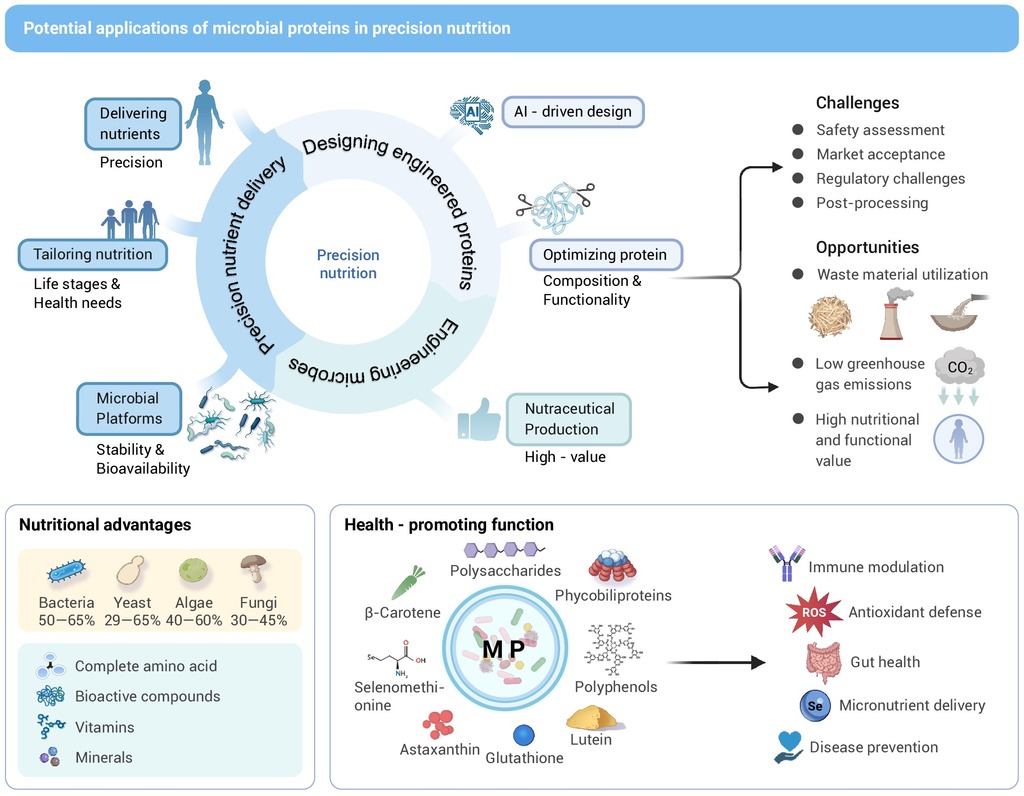
New in The Innovation Life! Customizing microbial protein to supply a sustainable solution for precision nutrition.
Rong et al. propose that microbial protein, beyond its sustainability advantages, can serve as a modular nutritional chassis capable of delivering targeted health benefits, adaptive nutrient profiles, and responsive bioactivity. @InnovationLife
https://t.co/9dbCFaukHO
#lifesciences #nutrition #MicrobialProtein

🔬 I'd run multi-intervention combo-therapy screening protocols 24/7, starting with our RMR2 candidates. AI platforms like AgeXtend integrate machine learning to analyse molecules' bioactivity, predict toxicity and identify mechanisms—imagine that power testing rapamycin baseline + D-PUFAs + partial reprogramming + senolytics simultaneously. We'd catch synergistic interactions conventional trials miss completely.
The beauty? Deep learning enables anti-senescent drug screening by morphology senescence scoring. No more waiting months for lifespan data—we'd know in days which combos work.
What breakthrough would that accelerate in your lab?
Additional sources:
https://t.co/2w4qR2IGZB
https://t.co/W5B0kG2LC7

Vegan ultra-processed meat analogues lead "to metabolic disturbances driven by microbiota" while their "processing seriously affects protein oxidative stability, digestibility & bioactivity, leading to undesirable microbiota changes & potential negative health outcomes"

PepCCD: A Contrastive Conditioned Diffusion Framework for Target-Specific Peptide Generation
1. A groundbreaking study introduces PepCCD, a novel framework for generating target-specific peptides using only protein sequence information. This approach leverages contrastive learning and diffusion models to create peptides with high binding affinity and diversity, outperforming existing methods in terms of both quality and efficiency.
2. PepCCD addresses a critical challenge in modern drug discovery: targeting "undruggable" proteins. Traditional peptide discovery methods are either too slow or rely heavily on high-resolution protein structures, which are often unavailable. PepCCD bypasses these limitations by using sequence-based conditioning, making it a powerful tool for peptide drug design.
3. The framework employs a three-stage training strategy: protein-peptide alignment, unconditional peptide pre-training, and target-guided fine-tuning. This progressive approach enhances the model's ability to generate peptides that are both specific to the target and diverse in sequence, ensuring a wide exploration of the peptide sequence space.
4. In extensive experiments, PepCCD demonstrated superior performance compared to state-of-the-art methods. It achieved higher binding affinity, lower sequence similarity to natural peptides, and better bioactivity scores. Notably, PepCCD also showed significantly faster inference times, making it highly scalable for practical applications.
5. An ablation study confirmed the importance of each component in PepCCD. The alignment stage ensures precise semantic alignment between proteins and peptides, while the pre-training stage enhances sequence diversity. Removing either stage led to a notable decline in performance, highlighting the necessity of the full framework for optimal results.
6. Molecular dynamics simulations further validated the stability and binding affinity of the peptides generated by PepCCD. These simulations showed that PepCCD-designed peptides had the lowest binding free energies and the most consistent performance, indicating their potential effectiveness in real-world biological contexts.
📜Paper: https://t.co/eBgtmdgMJR
#PepCCD #PeptideGeneration #DrugDiscovery #ContrastiveLearning #DiffusionModels #ComputationalBiology #Bioinformatics


🌿Dictyophora rubrovalvata polysaccharides show immunoactive potential by modulating cytokines to balance inflammation.
Molecular weight shapes bioactivity.
📖Journal of Natural Product Bioprospecting:
https://t.co/vIjSMv48nh
#NaturalProducts #Bioprospecting #MedicinalFungi #NPB

BOLD-GPCRs: A Transformer-Powered App for Predicting Ligand Bioactivity and Mutational Effects Across Class A GPCRs
1. A groundbreaking new deep learning framework, BOLD-GPCRs, leverages the power of transformers to predict ligand bioactivity and mutational effects across class A GPCRs with remarkable accuracy. This innovative approach could revolutionize drug discovery for these critical therapeutic targets.
2. BOLD-GPCRs integrates ProteinBERT, a transformer-based protein language model, with ligand embeddings derived from physical and chemical properties. This unique combination allows the model to capture complex relationships between receptor sequences/functions and ligand activity, outperforming traditional DNN and random forest models.
3. The framework demonstrates robust predictive performance even for understudied or poorly characterized GPCRs. By explicitly encoding residue-level information, it can infer the effects of specific mutations on receptor activity and ligand binding, providing valuable insights for drug design efforts targeting disease-associated mutant receptors.
4. BOLD-GPCRs is accessible via a user-friendly web interface, making it a practical tool for researchers. The model’s attention mechanisms offer interpretability, highlighting key residues in receptor activation and ligand recognition. This could aid in elucidating the functional consequences of naturally occurring or engineered variants.
5. The study highlights the potential of combining protein-language models with ligand-based embeddings for data-driven ligand discovery. Future extensions could incorporate receptor-specific structural features or support studies in polypharmacology and pathway-selective signaling, further expanding the model’s applicability.
📜Paper: https://t.co/O4MHkLvcWq
#GPCRs #DrugDiscovery #DeepLearning #TransformerModels #ProteinLanguageModels #LigandBioactivity #MutationalEffects

MGMG: Cell Morphology-Guided Molecule Generation For Drug Discovery
Researchers have introduced Morphology-Guided Molecule Generation (MGMG), a novel AI-driven approach for de novo molecule design, specifically tailored for phenotypic drug discovery. This method addresses a critical challenge in drug discovery by enabling molecule generation without requiring prior knowledge of molecular targets.
A core innovation of MGMG is its ability to integrate two complementary data modalities: cellular morphological profiles, which provide bioactivity context, and molecular textual descriptions, offering structural information. This dual-input strategy ensures more robust and informed molecule design.
MGMG significantly enhances molecule generation performance, particularly in scenarios where one input modality (either textual descriptions or morphological signals) is under-informative or weak. The system demonstrates a mutual compensatory effect, where each modality helps to overcome limitations of the other, leading to more consistent and effective guidance.
Despite operating in a target-agnostic fashion, in silico docking studies show that MGMG-generated molecules exhibit binding affinities comparable to reference compounds. The approach also maintains key interactions while introducing valuable structural diversity, opening avenues for exploring novel chemical spaces.
The model has been benchmarked against state-of-the-art unimodal baselines and consistently outperforms them across various metrics. MGMG generates molecules with superior drug-likeness (higher QED scores) and synthesizability (lower SA scores), along with a high degree of validity and structural realism.
Beyond chemical perturbations, MGMG's versatility extends to genetic perturbations, demonstrating its capability to design activators from gene overexpression morphology even without structural guidance from reference activators. This broadens its applicability in various biological research contexts.
Notably, MGMG is a lightweight model, featuring only 14 million trainable parameters, which is merely 5% of the size of larger unimodal models like BioT5 or MolT5-base, making it computationally efficient.
📜Paper: https://t.co/WDi8d6S0J3
#ComputationalBiology #DrugDiscovery #AIinDrugDiscovery #PhenotypicDrugDiscovery #MoleculeGeneration #Bioinformatics #MachineLearning

MolVision: Molecular Property Prediction with Vision Language Models
- A new approach, MolVision, integrates molecular structure images with textual descriptions to enhance molecular property prediction using Vision-Language Models (VLMs). This innovation addresses the ambiguities and structural limitations of relying solely on text-based representations like SMILES or SELFIES.
- The researchers developed a comprehensive multimodal benchmark comprising ten diverse datasets. These datasets cover various tasks including classification, regression, and description of a wide range of molecular properties such as toxicity, solubility, and bioactivity.
- The study evaluated nine different state-of-the-art VLMs across zero-shot, few-shot, and fine-tuned settings. Key findings indicate that while visual information alone is not sufficient, its combination with textual data significantly improves prediction performance and enhances generalization across different molecular properties.
- Efficient fine-tuning strategies, specifically LoRA (Low-Rank Adaptation), were found to be crucial. When combined with visual information, LoRA dramatically boosts predictive accuracy and generalization to unseen molecular properties. A simple contrastive strategy was also proposed to adapt vision encoders for molecular images, further improving performance.
- This work highlights the promising potential of vision-augmented molecular modeling for future advancements in AI-driven chemistry, with wide-ranging applications in drug discovery and materials science. The findings provide a new benchmark for incorporating easily available 2D visual information into multimodal molecular modeling.
💻Code: https://t.co/15vRJXn0aR
📜Paper: https://t.co/qSDZFakqcc
#ComputationalBiology #DrugDiscovery #AIinChemistry #MachineLearning #VisionLanguageModels #MolecularModeling #Cheminformatics

Artificial intelligence in drug discovery: A comprehensive review with a case study on hyperuricemia, gout arthritis, and hyperuricemic nephropathy
1. This comprehensive review systematically examines recent advancements in artificial intelligence (AI), particularly machine learning (ML), across the entire drug discovery pipeline, providing a holistic perspective often missing in other reviews.
2. The authors highlight how AI/ML are revolutionizing drug discovery by enhancing efficiency, accuracy, and cost-effectiveness, addressing challenges like escalating costs, prolonged timelines, and high failure rates in traditional methods.
3. The review provides a detailed analysis of AI/ML applications in core phases including target identification, hit screening, and lead optimization, showcasing significant methodological advances and their impacts at each stage.
4. A compelling aspect is the in-depth case study on hyperuricemia, gout arthritis, and hyperuricemic nephropathy, illustrating real-world successes in molecular target identification and therapeutic candidate discovery using AI/ML approaches.
5. AI-driven techniques have significantly improved virtual screening, both structure-based and ligand-based, by enhancing scoring functions, enabling ultra-large library screening, and integrating with de novo molecule generation for novel compound design.
6. Modern ML-enhanced QSAR models offer more accurate and interpretable bioactivity predictions by using deep neural networks for representation learning, multi-task and transfer learning, and hybrid approaches.
7. The paper also discusses the pivotal role of generative AI models such as Variational Autoencoders (VAEs), Generative Adversarial Networks (GANs), Diffusion Models, and Reinforcement Learning (RL) in designing novel chemical structures with desired biological activities.
8. The review emphasizes AI/ML's role in lead optimization, including precise pharmacokinetic (PK) and toxicity predictions, as well as optimizing clinical trials through patient-specific modeling and regulatory automation.
9. Despite promising advancements, the authors acknowledge critical limitations such as data scarcity, insufficient model interpretability, and challenges in experimental validation, underscoring the need for interdisciplinary collaboration.
10. Future research directions discussed include quantum ML, digital twin frameworks, and federated learning, which are poised to further accelerate AI/ML adoption in drug discovery and the broader biomedical field.
📜Paper: https://t.co/Rrhot1Xbm8
#AIDrugDiscovery #MachineLearning #ComputationalBiology #DrugDevelopment #Hyperuricemia #Gout #AIinHealthcare

SMARTDock: A toolkit for the automated development of target-specific scoring functions using bioactivity data
1.SMARTDock introduces a fully automated pipeline to build target-specific scoring functions for molecular docking using machine learning and public bioactivity data—substantially boosting the identification of true binders in virtual screening.
2.By leveraging protein-ligand interaction fingerprints (PADIF), SMARTDock captures per-atom contributions to binding and integrates them into ML models like RF, XGBoost, and MLP, offering a refined view of binding interactions beyond traditional scoring functions.
3.The toolkit significantly outperforms generic scoring functions like CHEMPLP and AutoDock Vina in retrospective benchmarks. For Luciferin 4-monooxygenase, enrichment of actives in the top 1% increased fourfold using SMARTDock-derived models.
4.SMARTDock operates in a Docker environment and connects GOLD docking with Python-based ML workflows. With minimal inputs—a ChEMBL target ID, a protein structure, and compound SMILES—it handles compound preparation, docking, fingerprinting, model training, and virtual screening.
5.To address the challenge of inactive compound selection, SMARTDock uses decoys from the Dark Chemical Matter dataset, chosen to preserve physicochemical similarity but ensure scaffold diversity, boosting model generalizability.
6.PADIF comes in two flavors: standard (per-atom) and PADIF-STD (standardized by residue and interaction types), enabling both fine-grained and robust fingerprinting for diverse binding sites.
7.SMARTDock supports multiple validation strategies—random, scaffold, and fingerprint splits—while offering consensus voting to enhance classification robustness across ML models and data partitions.
8.Performance is evaluated via balanced accuracy, F1 score, recall, and normalized enrichment factor (NEF). In tests, consensus models using tree-based methods achieved NEF1% scores 4× higher than CHEMPLP alone.
9.Beyond accuracy, SMARTDock promotes scaffold diversity. It successfully identifies novel chemotypes not seen in training data, as shown by Jaccard similarity and Murcko scaffold analyses of predicted actives.
10.Designed to be user-friendly and platform-independent, SMARTDock eliminates the need for manual software configuration, making it accessible to both computational and medicinal chemists.
11.The system complements classical docking tools, not replaces them—it enhances the ranking step by combining docking scores with machine-learned bioactivity patterns, improving early-stage drug discovery efficiency.
💻Code: https://t.co/GPpYaEsu3h
📜Paper: https://t.co/9Gn54TMAok
#VirtualScreening #DrugDiscovery #MachineLearning #MolecularDocking #Cheminformatics #BioactivityData #TargetSpecificScoring #SMARTDock

Diverse Mini-Batch Selection in Reinforcement Learning for Efficient Chemical Exploration in de novo Drug Design
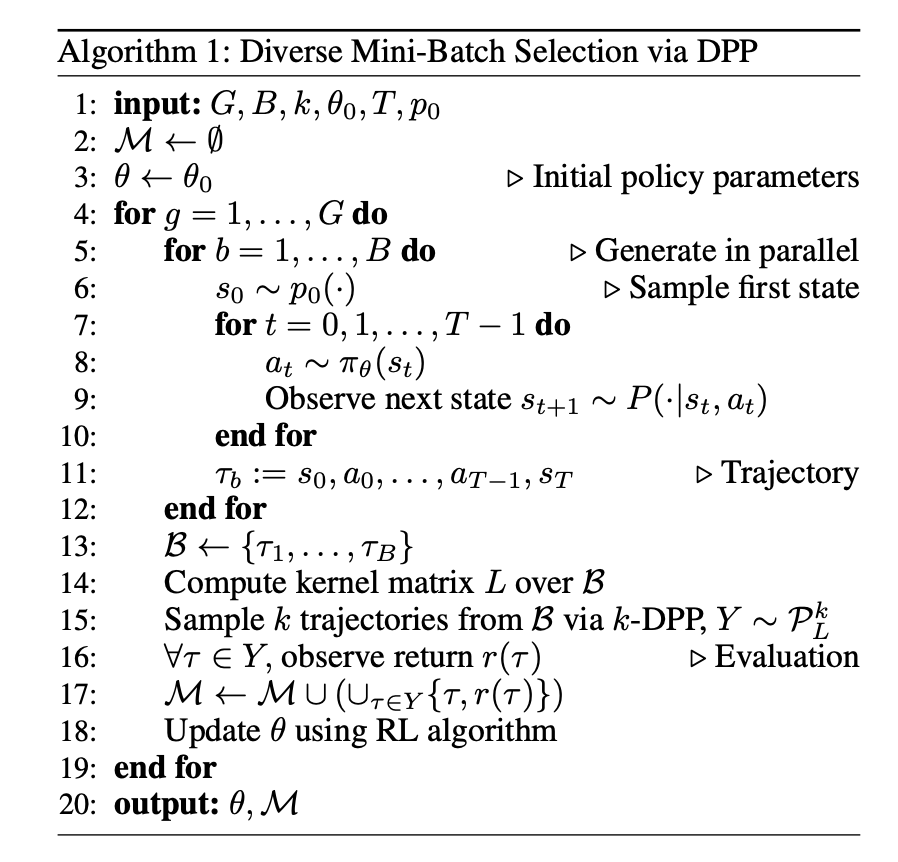
1.This work introduces a framework that enhances exploration in reinforcement learning (RL) by selecting diverse mini-batches of trajectories, using determinantal point processes (DPPs). This approach is especially beneficial when evaluation is expensive and exploration is critical.
2.The framework is applied to de novo drug design, where the goal is to generate novel, diverse, and bioactive molecules. Evaluating each candidate molecule is resource-intensive, making efficient use of RL crucial.
3.The central idea is to generate a large batch of trajectories (e.g., molecules), then sample a smaller, diverse subset using k-DPP. This subset is evaluated and used to update the RL policy, encouraging both diversity and quality.
4.This method is model-agnostic and can be integrated with any on-policy RL algorithm. The authors build on the REINVENT framework, a SMILES-based LSTM model for molecule generation.
5.Key novelty: Unlike prior methods that rely solely on reward shaping for diversity, this approach ensures that the mini-batch used for policy updates is itself diverse, leading to improved exploration and better coverage of chemical space.
6.To measure diversity, the authors use both reference-based (Bemis-Murcko scaffolds) and distance-based (number of diverse actives) metrics. The DPP framework leads to improved scores in both metrics across multiple tasks.
7.Experiments were conducted using reward functions targeting bioactivity for DRD2, JNK3, and GSK3β receptors. Results show that DPP-based selection consistently improves molecular diversity without compromising on reward quality.
8.Four DPP kernel configurations were tested: based on Tanimoto similarity (DPP-T), Dice similarity (DPP-D), additive (DPP-A), and multiplicative (DPP-P) combinations. DPP-A generally performed best in balancing quality and diversity.
9.Even without reward shaping, DPP selection avoids mode collapse and promotes ongoing exploration, unlike baseline methods which stagnate. When combined with domain-specific reward shaping like TanhRND, the improvements are amplified.
10.The JNK3 task posed more difficulty due to fewer active molecules in the pretraining data. Despite this, DPP variants still managed to outperform baselines in later stages of training, showing robustness of the approach.
11.The method is computationally feasible, using exact sampling from k-DPPs with RDKit-based molecular fingerprint similarities. Approximate or MCMC-based sampling methods can further scale this to larger settings.
12.In conclusion, this framework provides a principled and general method for enhancing exploration in RL, with clear benefits for drug discovery. It can complement existing methods and be extended to other domains where diversity matters.
💻Code: https://t.co/wc1MZWngZB
📜Paper: https://t.co/aIPoQYrrAm
#ReinforcementLearning #DrugDiscovery #MolecularDesign #AI4Science #DeNovoDesign #Cheminformatics #MachineLearning #RLExploration
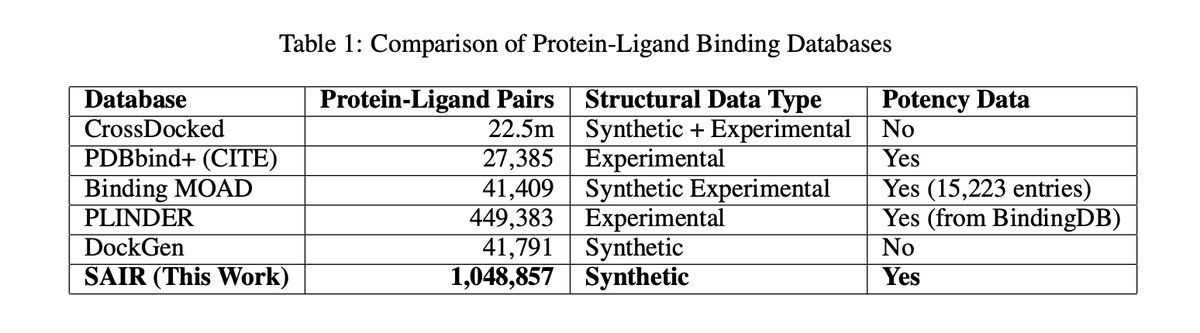
SAIR: Enabling deep learning for protein-ligand interactions with a synthetic structural dataset
1.The authors introduce SAIR, the largest public dataset of protein-ligand 3D structures paired with experimental binding affinities. It contains over 5.2 million structures across more than 1 million unique protein-ligand systems.
2.The dataset was built by curating bioactivity data from ChEMBL and BindingDB, followed by cofolding protein-ligand complexes using Boltz-1x, a structure prediction model inspired by AlphaFold 3.
3.By removing all complexes already present in the PDB, SAIR ensures it provides fully synthetic structural coverage for machine learning tasks, making it ideal for training on previously underrepresented targets.
4.A key innovation is the use of Boltz-1x with interface-aware guidance, generating five structural samples per complex. PoseBusters validation showed only ~3% of structures failed quality checks.
5.SAIR includes new metrics like interaction PTM, which showed moderate correlation (Spearman rs = 0.25) with experimental binding affinities, revealing the promise of Boltz confidence scores for affinity estimation.
6.Three types of affinity prediction methods were benchmarked: empirical scoring (Vina/Vinardo), a 3D CNN (Onionnet-2), and a GNN (AEV-PLIG). GNNs performed best, though no method achieved high correlation with ground truth.
7.Current ML models trained on experimental structures do not generalize well to synthetic ones, suggesting a need for fine-tuning on SAIR to better match cofolded structural distributions.
8.Analysis of structural diversity showed that proteins often adopt different pockets for different ligands. In one case, a single protein exhibited over 1000 unique pockets across 345 ligands.
9.SAIR enables rigorous benchmarking for protein-ligand modeling, pocket flexibility analysis, and the development of synthetic-structure-aware models for drug discovery.
📜Paper: https://t.co/8uHu2KEx5q
#DeepLearning #DrugDiscovery #StructuralBiology #ProteinLigand #Bioinformatics #AlphaFold #MachineLearning #SAIR
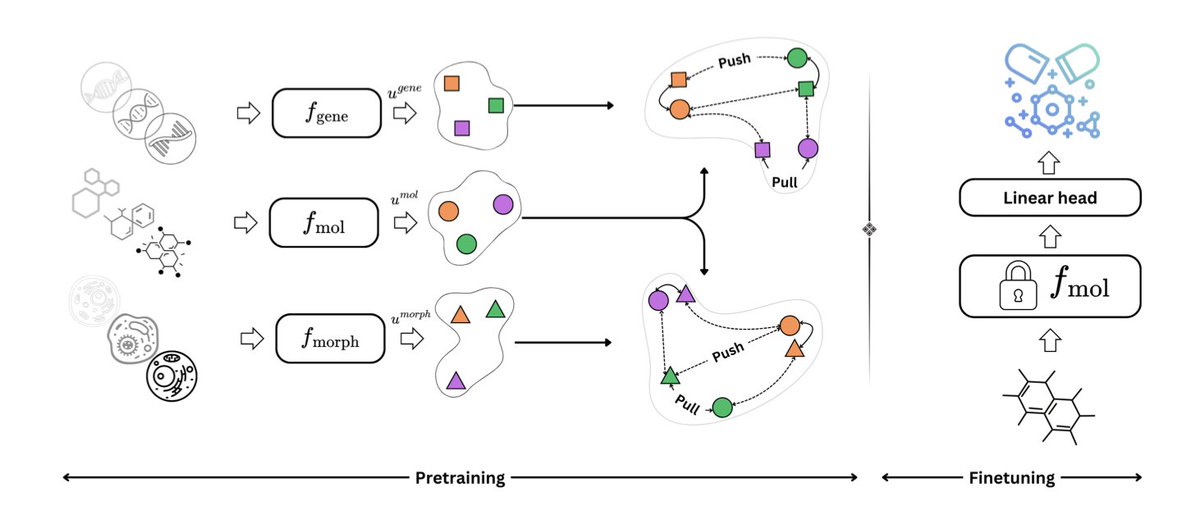
MULTI-MODAL REPRESENTATION LEARNING FOR MOLECULES
1.This paper proposes a practical and scalable framework for multimodal molecular representation learning by integrating chemical structures with biological readouts: morphological features from Cell Painting and transcriptomic profiles from the LINCS L1000 dataset.
2.The key innovation is that the model learns from paired data—(molecule-morphology) and (molecule-gene expression)—without needing complete triplets. This relaxes a major limitation of prior multimodal approaches that required fully matched datasets.
3.Contrastive learning is used to align molecular embeddings with their biological context across modalities, even in the absence of complete data alignment. Positive and negative pairs help the model learn shared semantic structure across data types.
4.The framework employs separate encoders for molecules, morphology, and gene expression. These encoders are trained to project inputs into a shared embedding space, using cosine similarity-based InfoNCE losses across modalities.
5.The model uses augmented inputs for gene expression, incorporating condition embeddings (cell line, time, dose), enabling finer-grained alignment of biological responses with molecular inputs.
6.For evaluation, the authors pretrain the encoders and freeze them to assess performance using linear probing on the ChEMBL20 dataset (1,320 tasks). This evaluates the quality of the learned molecular embeddings without additional finetuning.
7.In low-data regimes, adding Cell Painting data in pretraining boosts downstream AUROC by 6%. Adding transcriptomics yields further gains of up to 2%, showing the cumulative value of multimodal biological context.
8.The best-performing model achieved a mean AUROC of 0.724, significantly outperforming models trained solely on molecular graphs. Gains are most evident in data-scarce scenarios, highlighting improved generalization.
9.The work is grounded on rich and publicly available datasets: 700K morphology profiles from JUMP-CP, 540K gene expression signatures from LINCS L1000, and 450K molecules with bioactivity annotations from ChEMBL20.
10.This approach opens a path for integrating large-scale biological assays into molecular modeling without requiring fully matched samples, bridging structural and functional domains in drug discovery.
11.By enriching molecular embeddings with biological context, the method improves the interpretability and robustness of predictions in toxicity and efficacy modeling—critical for AI-driven drug development.
📜Paper: https://t.co/RaGGQir732
#ICLR2025 #DrugDiscovery #ContrastiveLearning #MolecularRepresentation #MultimodalAI #ComputationalBiology #Bioinformatics
MolTextNet: A Two-Million Molecule-Text Dataset for Multimodal Molecular Learning
1.MolTextNet introduces a dataset of 2.5 million molecule-text pairs, designed to support large-scale multimodal learning between molecular graphs and natural language. Each entry provides detailed descriptions of structure, properties, and synthesis.
2.Unlike prior datasets like PubChem-300K and ChEBI-20 which are limited in size and informativeness, MolTextNet descriptions are on average over 10× longer, enabling richer representation learning and generalization across tasks.
3.The dataset is generated from ChEMBL35 using a synthetic text pipeline powered by GPT-4o-mini, converting molecular annotations—computed properties, structural features, bioactivities, and synthesis complexity—into coherent, academic-style descriptions.
4.MolTextNet achieves high coverage across structural diversity, physicochemical properties, and synthetic accessibility, with descriptions that explicitly link molecular structure to bioactivity and synthetic feasibility.
5.The dataset design includes rigorous quality control: invalid SMILES or short/inconsistent texts are filtered, and long molecules with extensive annotations are handled via chunked LLM processing to maintain full content fidelity.
6.A key innovation is prompting the LLMs to perform structure-property-synthesis reasoning, e.g., linking functional groups like hydroxyls and thioethers to solubility and glycosidase inhibition. These reasoning paths are baked into the dataset.
7.For evaluation, the authors pretrain CLIP-style GNN-BERT models on MolTextNet. Fine-tuning on 10 downstream property prediction tasks shows consistent improvements over models trained on existing datasets—1-2% AUC gains and up to 6% higher R² scores.
8.Zero-shot structure retrieval tests (e.g., "The molecule has three aromatic rings") show that models pretrained on MolTextNet consistently retrieve correct molecular graphs, while baselines fail. This highlights strong cross-modal alignment.
9.The dataset is accompanied by experiments that include topic modeling and keyword analysis, showing MolTextNet spans broader chemical language and functional diversity than prior benchmarks.
10.MolTextNet is designed as a foundational resource for multimodal molecular learning, enabling tasks like molecule captioning, property prediction, synthesis planning, and instruction-following molecule generation.
💻Code: https://t.co/Tr3ccPgQTn
📜Paper: https://t.co/mRbGOrQvS4
#MolecularAI #Chemoinformatics #MultimodalLearning #DrugDiscovery #LLM #GraphNeuralNetworks

How Good is AlphaFold3 at Ranking Drug Binding Affinities?
1.This work explores a compelling question: Can AlphaFold3-like models not only predict structures, but also accurately rank ligand binding affinities? The authors show the answer is yes — with a method that comes surprisingly close to the physics-based gold standard, at a fraction of the cost.
2.The core contribution is AlphaRank, a framework derived from Protenix (an AlphaFold3-style model) that learns to rank drug affinities via two key innovations: a zero-shot competitive binding setup, and a fine-tuned model using PairFormer outputs.
3.In the zero-shot setting, AlphaRank evaluates ligand pairs by co-folding them with the target protein. The higher-affinity ligand tends to better align with known binding pockets. This simple strategy outperforms many traditional scoring functions and deep learning models.
4.To go further, the team fine-tuned AlphaFold3-derived features on ~30K curated bioactivity triplets from ChEMBL and BindingDB. The resulting AlphaRanktriplet and AlphaRankpair variants achieved state-of-the-art accuracy on key benchmarks like JACS and Merck FEP.
5.AlphaRankensemble — a combination of triplet and pair-based strategies — nearly matches FEP+ performance, but runs vastly faster and requires only sequence inputs, making it scalable and practical for real-world drug discovery.
6.Compared to traditional baselines like MM-GBSA or newer methods like PBCNet and EHIGN, AlphaRank delivers better or comparable ranking performance, especially in tasks with significant affinity gaps or high-confidence predictions.
7.A key insight: ranking accuracy correlates strongly with predicted structural confidence (pLDDT). This opens the door to using pLDDT as an uncertainty metric — helping researchers gauge when AlphaRank predictions are reliable.
8.Unlike prior attempts that rely on confidence scores like ipTM, this work leverages true competitive binding dynamics and explicitly integrates structure-agnostic supervision, aligning predicted interactions with actual binding outcomes.
9.The authors stress that AlphaFold3’s interaction modeling — via PairFormer — inherently captures enough chemistry to support ranking without explicit structural inputs. This hints at broader utility in low-data or sequence-only settings.
10.Looking ahead, the team envisions adding diffusion modules, smarter pair sampling, and end-to-end training to close the final performance gap with FEP+, unlocking even more practical applications in lead optimization.
📜Paper: https://t.co/BW3wvIiI15
#AlphaFold3 #DrugDiscovery #AI4Science #Bioinformatics #ProteinLigand #ComputationalBiology

Bioactivity prediction with chemical language models trained on labeled molecules
1.This paper introduces AISAC, a chemical language model (CLM) framework that enhances bioactivity prediction by incorporating both active and inactive molecular data into model training using a novel activity token directly appended to SMILES strings.
2.Traditional CLMs are often biased by training solely on active compounds. AISAC breaks this norm by learning from labeled active (" > ") and inactive (" < ") molecules, enabling more balanced and generalizable bioactivity predictions.
3.AISAC uses a two-step training process: pretraining on a large curated dataset of over 600,000 labeled molecules from ChEMBL, PubChem, and other databases, followed by fine-tuning on target-specific data. This allows robust modeling even in low-data regimes.
4.The model employs an LSTM-based autoregressive architecture to predict activity tokens directly from SMILES input, preserving chemical generation capabilities while enabling activity classification.
5.Retrospective validation on 40 diverse pharmacological targets demonstrated strong predictive performance across high-, intermediate-, and low-data scenarios, with F1-scores exceeding 0.8 and AUC-ROC values up to 0.91.
6.In a prospective virtual screening of 1.8 million molecules, AISAC identified novel ligands for diverse targets (e.g., AT1, RORγ/β, sEH) with high hit rates and sub-micromolar potencies. Many of these hits were structurally distinct from known ligands, showing the model’s generalization ability.
7.AISAC significantly outperformed the Similarity Ensemble Approach (SEA) on benchmark targets in terms of specificity, precision, and false positive rate, emphasizing the advantage of CLM-based approaches for target prediction.
8.Beyond predictive accuracy, AISAC supports explainability. By analyzing the impact of masked substructures on prediction, the model reveals structure-prediction relationships that align with known pharmacophore features, enabling rational SAR insight.
9.The method robustly reproduced known activity profiles of diverse drugs and revealed potential off-target interactions within the NR1 nuclear receptor family. These predictions were prospectively validated in vitro with 99% accuracy.
10.AISAC handles noisy or incomplete pretraining data well, relying on curated fine-tuning sets to overcome misannotations, suggesting its utility even when public datasets are imperfect.
11.The authors propose broader utility of the activity token concept in CLMs for learning other properties beyond target activity, enabling model-intrinsic quality estimation in molecular generation tasks.
📜Paper: https://t.co/0fteXbLjl5
#DrugDiscovery #AIinChemistry #BioactivityPrediction #SMILES #Cheminformatics #DeepLearning

Test-Time Training Scaling Laws for Chemical Exploration in Drug Design
1.This work introduces a novel perspective on molecular generation by framing reinforcement learning (RL) optimization of Chemical Language Models (CLMs) as Test-Time Training (TTT), revealing a clear log-linear scaling law that improves chemical space exploration when the number of RL agents is increased.
2.The authors present MolExp, a new benchmark focused on rediscovering structurally diverse molecules with similar bioactivity—a proxy for real-world drug discovery tasks. Unlike existing tasks, MolExp emphasizes exploration over exploitation and evaluates the ability to recover all high-reward regions in chemical space.
3.Key finding: scaling the number of independent RL agents significantly improves the MolExp benchmark score, almost perfectly solving tasks with 128 agents. In contrast, simply increasing training time (molecule budget) for a single agent yields diminishing returns.
4.MolExp uses oracle tasks based on known drug candidates for targets like A2A, EGFR, BACE1, and antipsychotics, where the reward reflects similarity to any target in a diverse set. This makes it ideal for evaluating whether a model can explore distinct regions of high reward.
5.A wide range of cooperative RL strategies were tested (e.g., RND, ENTS, CES, POPNORM), but none consistently outperformed using independent agents. Some strategies increased diversity but often hurt exploration efficiency due to naïve or non-targeted behavior.
6.The benchmark metric evaluates the model’s ability to produce molecules similar to multiple targets simultaneously, pushing models beyond optimizing for a single mode and testing intrinsic curiosity and search diversity.
7.Empirical results show that adding exploration bonuses (e.g., RND) or diversity filters does not match the performance gains achieved by increasing agent count. This parallels scaling behavior seen in LLMs, where inference-time compute boosts performance.
8.A practical case study using a QSAR model for A2A receptor activity confirmed that more agents increase the likelihood of rediscovering known active molecules, demonstrating real-world relevance of the approach beyond toy similarity tasks.
9.The work also offers a high-performing baseline—ACEGENMolOpt—and reports strong benchmark results compared to REINVENT, MolRL-MGPT, and others. None of the baselines, however, solved all tasks without scaling.
10.Code and data are open-sourced via ACEGEN and MolScore, supporting future work on efficient, scalable, exploration-driven molecular design. This sets the stage for population-based TTT as a cornerstone in generative drug discovery.
💻Code: https://t.co/b1y2uoVWdH
📜Paper: https://t.co/m92mbctJdY
#DrugDiscovery #ReinforcementLearning #ChemicalSpace #MolecularDesign #AI4Science #CLM #MolExp #TTT #ACEGEN #RL

Pharmacophore-Conditioned Diffusion Model for Ligand-Based De Novo Drug Design
1.This work introduces PharmaDiff, a 3D diffusion-based generative model that directly conditions molecular generation on atom-based 3D pharmacophore hypotheses—without requiring protein structure—marking a major advance in ligand-based drug design.
2.PharmaDiff bridges deep generative modeling and pharmacophore modeling by integrating spatially constrained pharmacophoric features (e.g., H-bond donors/acceptors, aromatic rings) into the sampling process via SE(3)-equivariant transformers.
3.The model outperforms prior pharmacophore-informed generators (e.g., PGMG, TransPharmer, REINVENT4) on matching accuracy, generating 3D molecules with the highest pharmacophore match score (MS = 0.8964) and perfect match rate (PMR = 0.699).
4.Compared to PGMG, PharmaDiff uses true Euclidean 3D distances to enforce pharmacophoric constraints, resulting in more faithful conformers and better ligand bioactivity potential.
5.PharmaDiff is built on the MiDi architecture but adds cross-attention between molecule and pharmacophore node embeddings, and inpainting modules that anchor the pharmacophore geometry throughout the denoising process.
6.The model was trained on GEOM-Drugs with >450k molecules, and tested across 250 diverse pharmacophore conditions. It achieved the best novelty (0.9989) and diversity (0.8686) among all baselines, while maintaining strong uniqueness and validity.
7.Beyond ligand-based generation, PharmaDiff was applied to structure-based design using known pharmacophore hypotheses from BRD4, VEGFR2, CDK6, and TGFB1—showing stronger docking scores (Vina) than DiffSBDD on 3 of 4 targets.
8.In particular, PharmaDiff generated ligands with superior pharmacophore matching for complex targets like 1YWN and 2EUF, achieving MS > 0.88 while also producing molecules with lower synthetic accessibility scores.
9.Physicochemical properties of PharmaDiff-generated molecules (MW, logP, QED, TPSA, ring count) closely matched those of real drugs in GEOM, suggesting good drug-likeness and practical synthesizability.
10.PharmaDiff represents a paradigm shift: it enables fully structure-free, pharmacophore-driven de novo design of 3D molecules, expanding applicability to early-stage drug discovery when structural data is unavailable.
11.The study also identifies areas for improvement—such as handling inpainting-induced fragmentation or enforcing pharmacophore feature retention via differentiable loss—highlighting future research directions for tighter structure-function alignment.
📜Paper: https://t.co/mVHNGKxDTG
#DrugDiscovery #Pharmacophore #DiffusionModel #DeNovoDesign #3DMolecules #LigandDesign #AI4Science #MolecularGeneration #EquivariantTransformers #MedicinalChemistry #StructureFreeDesign #Bioinformatics #PharmaDiff


🧬 SCHOOLS AS SYNTHETIC WOMB CHAMBERS
The war on resonance is now centered on education; where children are no longer taught, but re-coded.
Hormonal Suppression via School Milk
DARPA-funded studies on nano-emulsion hormone blockers have been quietly implemented into cafeteria distribution chains. These include compounds that mimic synthetic estrogen and disrupt testosterone pathways; especially in prepubescent boys.
Sex steroid hormone residues in milk and their potential risks for breast and prostate cancer
🔗https://t.co/TFMv4DLisi
Gender-affirming medications rarely prescribed to U.S. adolescents
🔗https://t.co/ibEBuXlEh5
UK College of Public Health Research Day
ORAL and POSTER ABSTRACTS
Working Together, Working Apart: A Bayesian Time-Utilization
Analysis
Author(s): D. R. Bardach, Departments of Epidemiology and Biostatistics, U of Kentucky
🔗https://t.co/YVS0vEWxCn
Estrogen modulation of the pronociceptive effects of serotonin on female rat trigeminal sensory neurons is timing- and dosage-dependent and requires estrogen receptor alpha
🔗https://t.co/LNDUfP9mOk
2015 FDA Science Forum
Emerging Technologies • May 27 – 28, 2015
GenomeTrakr: A Pathogen Databases to Build a Global Genomic
Network for Pathogen Traceback and Outbreak Detection
Ruth E. Timme, Ph.D.
Research Microbiologist, Molecular Methods
and Subtyping Branch, CFSAN, FDA
Food Safety Systems in the Americas: A Perspective from the Pan-American Health Organization (PAHO)
Enrique Pérez-Gutiérrez, D.V.M., https://t.co/bVhWRyxSuo., M.P.V.M., Ph.D.
Senior Advisor, Foodborne Diseases and Zoonosis,
Pan-American Health Organization
🔗https://t.co/FkZPx5K1gY
Do Androgens Modulate the Pathophysiological Pathways of Inflammation? Appraising the Contemporary Evidence
🔗https://t.co/cUamgvl6Na
Identification of U2AF(35)-dependent exons by RNA-Seq reveals a link between 3′ splice-site organization and activity of U2AF-related proteins
🔗https://t.co/YDoHaTBXLI
Correlation between postoperative area of high autofluorescence in macula and visual acuity after macular hole closure.
🔗https://t.co/xnqeDMdbRn
CD82 suppresses CD44 alternative splicing-dependent melanoma metastasis by mediating U2AF2 ubiquitination and degradation
🔗https://t.co/i1grEP7Foy
AF-GEOSpace Version 2.1 Release
🔗https://t.co/SuDaAhh8sT
NASA Astrophysics Data System (ADS)
🔗https://t.co/LlwWG3ztJU
Cloning and characterization of two duplicated interleukin-17A/F2 genes in common carp (Cyprinus carpio L.): Transcripts expression and bioactivity of recombinant IL-17A/F2
🔗https://t.co/TBpsdwtEId
OligoMiner provides a rapid, flexible environment for the design of genome-scale oligonucleotide in situ hybridization probes
🔗https://t.co/2q8TqX4zWv
Machine learning-optimized targeted detection of alternative splicing
🔗https://t.co/HPJmtEz4Kn
The GTEx Consortium atlas of genetic regulatory effects across human tissues
🔗https://t.co/Gvb4S1aTzr
MHNfs: Prompting In-Context Bioactivity Predictions for Low-Data Drug Discovery @JCIM_JCTC
1.MHNfs introduces a user-friendly prompting-based few-shot learning framework for predicting molecular bioactivity in low-data drug discovery scenarios.
2.Unlike conventional bioactivity prediction models requiring large datasets and retraining, MHNfs enables predictions from as few as one active and one inactive molecule.
3.At its core, MHNfs builds on an embedding-based few-shot model using Modern Hopfield Networks with a Transformer backbone, trained on the FS-Mol benchmark.
4.The system mimics in-context learning in language models by integrating a large "context set" to enrich molecular representations during inference.
5.The application is deployed via a Streamlit interface on HuggingFace, allowing researchers to input SMILES strings for actives, inactives, and queries without needing to code.
6.Predictions are powered by three modules: a Context Module for context enrichment, a Cross-Attention Module to integrate support and query sets, and a Similarity Module that generates weighted predictions.
7.The MHNfs app was evaluated on over 350 PubChem-derived few-shot tasks, simulating realistic low-data scenarios and showing robust performance, even with noisy or shifted domains.
8.In almost all test conditions, MHNfs significantly outperformed a baseline Random Forest trained on the same small support sets, achieving AUCs above 0.7 with just 4 actives and 4 inactives.
9.The interactive interface displays prediction tables, molecular structures, and confidence scores, and provides examples of suitable and unsuitable tasks to guide users.
10.MHNfs is best used for targets within known protein families (e.g., kinases, hydrolases, isomerases), and users are advised to stay within the model’s validated training domain.
11.This work lowers the barrier for applying state-of-the-art few-shot prediction methods, encouraging early-stage compound screening even with minimal prior data.
12.By bridging ML innovation with intuitive tooling, MHNfs represents a step forward in democratizing AI-powered virtual screening for drug discovery.
💻Code: https://t.co/34GLFQg7Fc
📜Paper: https://t.co/Z8dLmHRIrk
#DrugDiscovery #FewShotLearning #MachineLearning #Bioactivity #Cheminformatics #AI4Science #VirtualScreening #SMILES

EVOLUTIONARY POLICY GRADIENT BASED OPTIMIZATION FOR SMALL MOLECULE DRUG DISCOVERY
1.This work introduces EPOSMol, an evolutionary policy gradient algorithm that optimizes small molecules in latent space by integrating gradient-based learning with evolutionary population sampling—yielding up to 10× better hit rates than existing methods.
2.Unlike many generative approaches that struggle with high-dimensional or sparse fitness landscapes, EPOSMol uses a dynamic policy gradient method guided by binding affinity, drug-likeness (QED), and diversity to efficiently explore and refine chemical space.
3.The framework operates on latent representations from a retrained NP-VAE model, which was optimized using ZINC250k, DrugBank, and underrepresented bioassay compounds, enabling better generalization beyond training distributions.
4.Key innovations include dynamic scheduling of population size (150→50) and noise (2.0→1.0), a diversity penalty to avoid local optima, and a reward function that balances binding affinity, QED, and novelty—encouraging both exploration and convergence.
5.In benchmarking against REINVENT 4.0 and other baselines (GCPN, MolDQN, GraphAF), EPOSMol achieved a 9.7× higher hit rate and generated compounds with better predicted binding affinities (up to -12.1 kcal/mol vs. -10.1).
6.Extended runs produced 36,420 compounds with 22,245 unique molecules, achieving a 32.64% overall hit rate and identifying 4,137 unique hits satisfying strong bioactivity and drug-likeness thresholds.
7.UMAP projections revealed that EPOSMol efficiently traversed the chemical space, discovering novel scaffolds and densely covering regions near bioassay-validated compounds—many of which had low QED scores previously missed by standard filters.
8.The model generated compounds across 570+ Bemis-Murcko scaffolds and showed clear structural improvement over existing binders, preserving common substructures while improving binding affinity.
9.Binding affinity optimization was performed using Vina2.2 GPU, and results showed clear separation between EPOSMol-generated compounds and training set molecules, confirming its capacity to push toward chemically meaningful optima.
10.EPOSMol’s policy update combines exploration-driven sampling with reward-weighted gradient updates, using ADAM optimization and cosine schedulers to adjust exploration intensity during the run.
11.The framework is model-agnostic, easily applicable to any generative model with continuous latent space, and allows flexible integration of reward functions and docking tools for task-specific molecular design.
12.This study demonstrates that combining evolutionary search with policy gradients offers an efficient, interpretable, and scalable path for lead optimization in early-stage drug discovery.
📜Paper: https://t.co/iFLK2p4qRW
#DrugDiscovery #MolecularDesign #ReinforcementLearning #VAE #SMILES #BindingAffinity #GenerativeModels #Bioinformatics #EvolutionaryAlgorithms #EPOSMol #ICLR2025

BioMiner: A Multi-modal System for Automated Mining of Protein-Ligand Bioactivity Data from Literature
1. BioMiner introduces a breakthrough in bioactivity data extraction, automating the process of mining protein-ligand bioactivity data from vast literature. The system leverages multi-modal large language models (MLLMs), domain-specific models (DSMs), and domain tools (DTs) to efficiently handle text, tables, figures, and complex chemical structures like Markush representations .
2. The system's modular architecture decomposes the complex extraction task into manageable sub-tasks, such as document parsing, chemical structure extraction, and bioactivity measurement extraction. This modular approach eliminates the need for extensive labeled data or task-specific model training .
3. To support future development and provide standardized benchmarks, BioMiner introduces BIOVISTA, a comprehensive dataset containing 16,457 bioactivity entries and 8,735 chemical structures curated from 500 publications. This dataset is used to evaluate and compare extraction performance .
4. On BIOVISTA, BioMiner achieves impressive performance with F1 scores of 0.22 for bioactivity triplets, 0.45 for chemical structures, and 0.53 for bioactivity measurements. The system processes literature at a high throughput rate, extracting bioactivity data from each paper in 14 seconds .
5. BioMiner's practical value is demonstrated in three real-world applications: (1) building a bioactivity database from 11,683 papers, improving model performance by 3.1%; (2) doubling the high-quality NLRP3 bioactivity data, which enhanced QSAR model performance by 38.6%; and (3) accelerating protein-ligand structure annotation with a 5-fold speed increase .
6. The system also performs human-in-the-loop (HITL) curation, enabling expert validation of extracted bioactivity data, which improves accuracy and efficiency in drug discovery processes.
7. Despite its promising capabilities, BioMiner's F1 score for triplet extraction (0.22) reveals the ongoing challenge of integrating complex, multi-modal data and interpreting sophisticated chemical structures like Markush representations .
💻Code: https://t.co/rzqTYYao3B
📜Paper: https://t.co/4zchOEuymN
#BioMiner #BioactivityExtraction #DrugDiscovery #AI #MachineLearning #Bioinformatics #Chemoinformatics #Automation

Estão abertas as inscrições do curso “Bioactivities: Cellular Effects of Marine Natural Products” para os investigadores pertencentes ao BLUEBIOLAB 😊
info.: https://t.co/DzGitJDvcb
#bluebiolab #bluebiolabcourses #bioactivity #naturalproducts #marinenaturalproducts


https://t.co/KM8MAPsNxL
#mdpi #mdpiMolecules #Bioactivity of #NonDairy Kefir-Like #Fermented #Beverage #lupine

#mdpifoods Read the novel research paper on Fermented Beverage - "Development, Characterization, and #Bioactivity of #NonDairy Kefir-Like #Fermented #Beverage Based on #Flaxseed Oil Cake", by Dr. Łukasz Łopusiewicz et al.
👉More details https://t.co/ap5nv5q5tj

Last Seen Hashtags on Sotwe
Most Popular Users

Elon Musk 
@elonmusk
239.6M followers

Barack Obama
@barackobama
118.6M followers

Cristiano Ronaldo
@cristiano
114.3M followers

Donald J. Trump
@realdonaldtrump
111.7M followers

Narendra Modi
@narendramodi
106.9M followers

Rihanna
@rihanna
98.6M followers

NASA
@nasa
92.1M followers

Justin Bieber
@justinbieber
91.7M followers

KATY PERRY
@katyperry
89.9M followers

Taylor Swift
@taylorswift13
83.9M followers

Lady Gaga
@ladygaga
75.4M followers

Virat Kohli
@imvkohli
73.3M followers

Kim Kardashian
@kimkardashian
70.8M followers

YouTube
@youtube
68.6M followers

Neymar Jr
@neymarjr
66.3M followers

Bill Gates
@billgates
65.1M followers

Selena Gomez
@selenagomez
63M followers

The Ellen Show
@theellenshow
62.1M followers

CNN
@cnn
61.7M followers

X
@x
60.6M followers