

Top Tweets for #BlockC

📢 What Should a Blockchain Know About You?
I’ve been thinking about something. We talk a lot about blockchain transparency, but rarely ask how much information should actually be visible.
Does a blockchain really need to know your balance, your spending habits, or whom you send money to?
I don't think every financial detail should be public by default. For me, the future of Web3 isn't about choosing between transparency and privacy. It's about finding the right balance.
That's one reason I'm exploring @SeismicSys
Seismic provides privacy for on-chain finance while supporting regulatory compliance and the ability to selectively disclose information.
You can verify what truly matters without revealing everything else. The best financial infrastructure doesn't just move money. It protects the people behind it.


Blockchain infrastructure is often discussed in terms of speed and scalability, but another important question is how applications can connect private data, computation, and onchain execution.
That's what makes Rialo's Extended Computation Environment interesting.
Its architecture brings together three key components:
→ Private Databases: Keep sensitive information within protected data environments.
→ Extended Computation: Connect external computation with blockchain applications rather than limiting every process to onchain execution.
→ Onchain Applications: Turn computation and application logic into usable onchain functionality.
The additional public rewards layer creates another connection between the extended environment and onchain activity.
The bigger idea is reducing the separation between private information, external processing, and blockchain applications.
If these components work together effectively, developers could build applications with more flexible data access, protected computation, and practical onchain utility.
Rialo's direction is interesting because the future of blockchain won't depend only on what happens onchain, but also on how securely it connects with everything outside it.


𝗔 𝗦𝗠𝗔𝗥𝗧 𝗖𝗢𝗡𝗧𝗥𝗔𝗖𝗧 𝗦𝗛𝗢𝗨𝗟𝗗𝗡'𝗧 𝗡𝗘𝗘𝗗 𝗔 𝗛𝗨𝗠𝗔𝗡 𝗧𝗢 𝗪𝗔𝗧𝗖𝗛 𝗘𝗩𝗘𝗥𝗬 𝗖𝗢𝗡𝗗𝗜𝗧𝗜𝗢𝗡.
The real world doesn't pause for blockchain applications.
Prices move, events happen, data changes, and conditions are met whether an application is ready to respond or not.
@RialoHQ
Yet many onchain workflows still depend on external monitoring and manual transactions to move from one step to the next.
Rialo is building toward a different model, where external events can initiate workflows, conditions can be verified, permissions can define boundaries, and execution can reach settlement without unnecessary manual intervention.
What makes this architecture interesting is the combination of responsiveness and control. Automation alone isn't enough; actions must also be verifiable and operate within defined rules.
That's what makes reactive infrastructure more than just convenience. It opens the door to applications that can operate continuously and respond to changing conditions.
The more an application can reliably react on its own, the less its logic depends on someone constantly keeping it alive.
@itachee_x @ericargent31113


GOOD NİGHT CT👻
Globe Markets is a new social trading app built on LayerZero ATLAS b(a headless trading engine running on the Zero blockchain).
@globemkts
1_Current Market Status
The product has not launched yet.
Zero mainnet and LayerZero ATLAS are scheduled to go live on November 30, 2026 (in a few days). Globe is one of the main launch partners of ATLAS.
@creator_wire
2_No official token or airdrop has been announced. There is only a waitlist + points system.
Anyone who registers before November 30 becomes a
Founding Trader(badge on their profile
3_ Points are used to rank users on the waitlist (earned through email signup, connecting X, following, joining Telegram, and referrals).
4_The community is still small but growing: around 6,000 followers on X (@globemkts) and roughly 860 members on Telegram.
5_Most of the current hype comes from airdrop hunters and the LayerZero community.
The focus is on multiplayer-style trading (“Gangs”), voice trading, copy trading, and AI agents.
There is no real market yet (no token price or trading volume) because the product is still in pre launch.
The current phase is mainly about building the community and the waitlist.

GOoD AFTERNOOn CT😎🔥
Globe Markets:
is the first social trading app built on LayerZero ATLAS.
In simple terms, trading is no longer a solitary and silent activity. Globe aims to make it multiplayer and social.
Everything lives in one app:
spot, perps, tokenized stocks, commodities, trading groups (Gangs), copy trading, voice trading, and AI agents.
Infrastructure:
@globemkts
@creator_wire
LayerZero ATLAS is a headless exchange.
It has no frontend of its own. It only handles matching, clearing, settlement, and risk management on Zero (LayerZero’s blockchain).
The goal is to combine near CEX speed (sub millisecond latency) with self custody and on-chain verifiability.
Zero mainnet and ATLAS launch on November 30, 2026. Everyone on the early access list by then becomes a Founding Trader.
Where the hype comes from
1. Multiplayer trading:
Their core idea is that trading was the last single-player game, and it’s now becoming multiplayer (similar to how Google Docs and Figma changed collaboration).
2. Built on LayerZero:
A major name in cross-chain and infrastructure. High speed on-chain settlement.
3. Forwardlooking features
Gangs:
Create your own trading group inside the app, see calls and positions, copy or fade them.
Vibe Trade: Trade with your voice say it, trade it.
AI Agent
Connect your agent using a session key with limits (size, leverage, daily loss, etc.).
Agents can earn copy and referral fees and build an on-chain track record.


@Bili_6_ This is where blockchain can solve real problems

@bWlsbGVy "botnet with dozens of c2 domains" so.... blockchain?

🏢 One Vision. Two Powerful Pillars. One Global Ecosystem! 🌍
Human Nodes bring decentralization, while Enterprise Nodes bring institutional strength and real-world utility. Together, they can shape a stronger InterLink economy and a new era of blockchain.
#InterLink #ITLG #ITL


🚨 Alert: Data breach at Zodia Custody! Client details leaked, but crypto assets safe. Swift action; no financial loss reported. Stay vigilant!
#Crypto #Blockchain $BTC #ETH #TheCoinAnalysis
🔗 https://t.co/3ndwp3gsGU



@CryptoEconomyEN @BNBCHAIN Privacy is an especially important part of this announcement. As blockchain adoption expands into payments and institutional finance, users will increasingly demand both transparency where necessary and confidentiality where appropriate

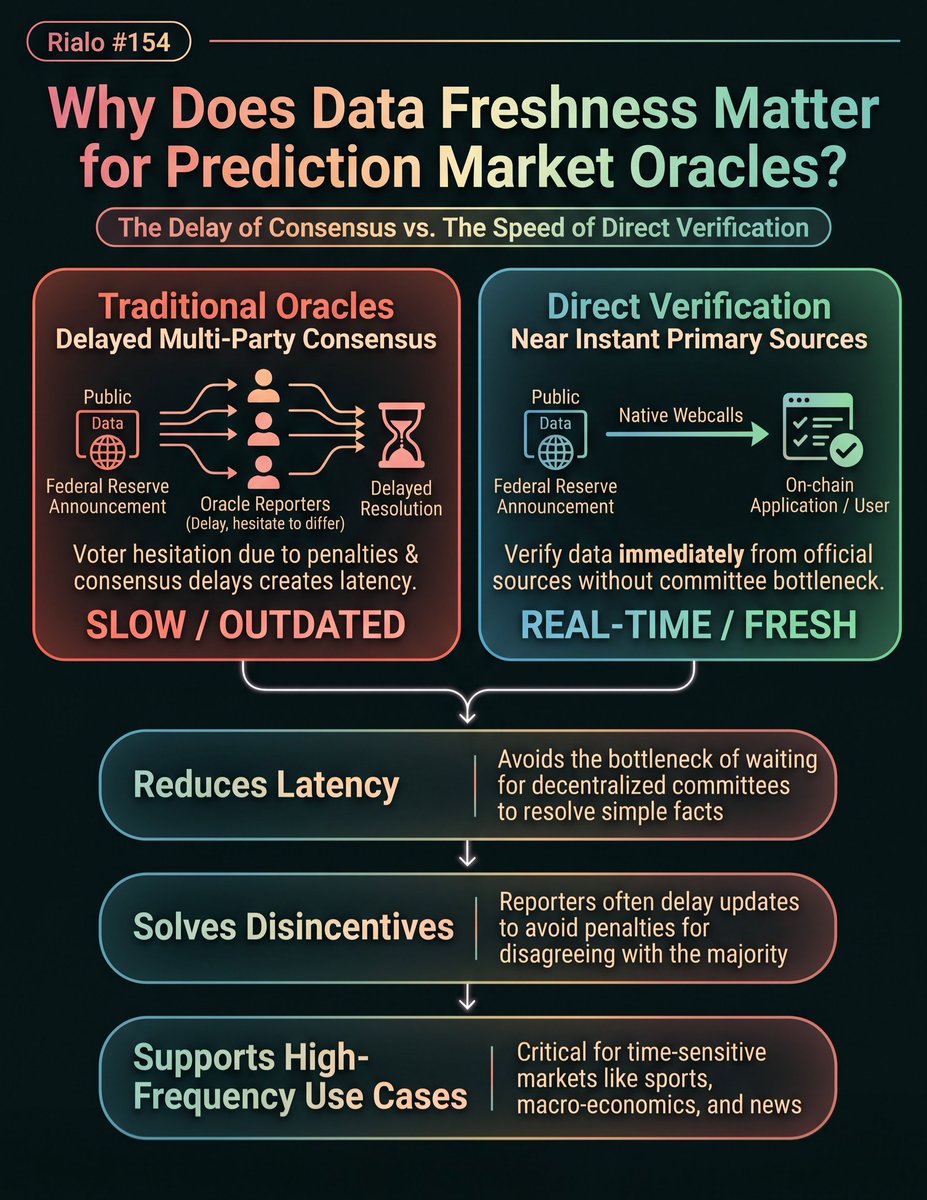
Rialo #154: Why Does Data Freshness Matter for Prediction Market Oracles?
Oracle security is usually discussed in terms of accuracy and manipulation resistance. However, another important factor is how quickly reliable information becomes available to blockchain applications.
Even accurate information can become less useful when it arrives too late.
Traditional Aggregation Oracles often collect reports from multiple participants before producing a final value. This process can improve resilience, but it may introduce delays when reporters receive updated information at different times.
For example, imagine an official institution announcing a new interest rate decision. The information is publicly available, but some oracle reporters may receive or process the announcement later than others.
If the system prioritizes agreement among reporters, it may continue using an older value until enough participants submit the updated information.
The article from @RialoHQ highlights how staking incentives can reinforce this behavior. Reporters may hesitate to submit fresh information if doing so creates disagreement with other participants and exposes them to potential penalties.
Rialo proposes a different approach by allowing applications to access information directly from primary sources.
Rather than waiting for a separate group of reporters to converge on an updated value, applications can reference information published by the institution responsible for the event.
For example, a prediction market tracking an interest rate announcement could define its resolution around the Federal Reserve's official publication.
This makes data freshness more closely connected to when the original source publishes its information, rather than when an independent oracle committee reaches agreement.
However, direct source access does not guarantee instantaneous updates. Network conditions, source availability, and verification procedures can still affect how quickly information becomes usable onchain.
The important difference is that applications may no longer need to depend on an additional aggregation process before accessing newly published information.
For prediction markets, this matters because some outcomes are highly time-sensitive. Delayed settlement data can create uncertainty, especially when participants expect markets to resolve soon after an official event.
This is another reason @RialoHQ emphasizes direct, verifiable resolution from primary sources.
In the end, reliable oracle infrastructure needs to balance accuracy, security, and timeliness.
The goal is not simply to deliver information quickly, but to make trustworthy information available without unnecessary delays introduced by the reporting mechanism itself.
gRialo! 🧡

One of the things that makes RIV’s infrastructure interesting is how it connects traditional financial assets with blockchain technology.
At the centre of this approach is the RIV Vault, which operates through two complementary layers.
The On-Chain Vault, built on Solana, handles settlement and liquidity, while the Off-Chain Vault holds traditional financial assets such as bonds, real estate and other institutional investments.
But there’s another important part of this structure: Reserve Verification.
RIV describes using Zero-Knowledge Proof technology alongside regulated attestations to verify that required reserve-backing thresholds are met without exposing sensitive financial information.
This approach addresses an important challenge in digital finance: making financial backing verifiable while maintaining the confidentiality of underlying information.
I find the combination of blockchain infrastructure and traditional financial strategies particularly interesting because it brings two areas of finance into one ecosystem.
RIV is building its infrastructure around reserve management, accountability and the connection between on-chain liquidity and off-chain capital.
That’s an important direction for the evolution of digital finance.
$RIV @rivcapitalgroup @abdallah_emad__


Rialo: Do We Need a New Way to Measure Blockchain Success?
How have we measured blockchain success so far?
For years, the industry has relied on three major metrics: TPS (Transactions Per Second), TVL (Total Value Locked), and DAU (Daily Active Users).
These metrics are important. They help us understand how fast a network is, how much capital it attracts, and how many users interact with it.
But here's an interesting question:
Does a growing number of on-chain transactions actually mean a blockchain is becoming more useful in the real world?
Not necessarily.
A network can generate millions of transactions through simple token transfers, repetitive airdrop farming, or incentive-driven activities. TVL can also increase due to temporary liquidity rather than genuine demand.
In other words, traditional metrics tell us how big a blockchain is, but they don't always tell us how much real-world value it creates.
What Should the Next Generation of Blockchain KPIs Look Like?
I believe it's time to expand our measurement standards beyond traditional metrics.
Here are three indicators worth paying attention to:
1. Real-World Linked Transactions
Instead of simply counting wallet-to-wallet transfers, we should measure transactions connected to actual real-world activities.
Examples include completed payments, financial data updates, changes in asset ownership, and automated actions triggered by external services.
This metric could help us understand how deeply blockchain technology is integrated into real economic activity.
2. Off-chain Event Processing
Blockchains should no longer be limited to processing transactions that happen on-chain.
Their ability to detect and respond to external events is becoming equally important.
Think about market price changes, API updates, or real-world payment confirmations.
If smart contracts can directly react to these events without relying on separate bots or automation systems, entirely new use cases become possible.
3. Automation Success Rate
Processing more transactions is one thing. Successfully executing the right action at the right moment is another.
We should measure how reliably automated transactions are completed, including execution failures, delays, and overall success rates.
This could become especially important for automated finance and AI agent-based applications.
Where Does Rialo Fit Into This Picture?
This is where Rialo becomes particularly interesting.
Rather than focusing exclusively on TPS competition, Rialo emphasizes connecting blockchain infrastructure with the real world.
Its technical approach includes Rialo Stream for external data integration, Rialo Edge for interacting with Web2 services, and Reactive Transactions for event-driven execution.
One particularly interesting concept is Reactive Transactions.
Traditionally, executing a transaction when a specific condition is met often requires external bots, keepers, or separate scheduling systems.
Rialo aims to enable blockchain applications to respond to both on-chain and off-chain events, including market price changes and real-world payment confirmations.
Rialo has also demonstrated this direction through its Project 1337 demo, featuring a real-time data pipeline involving stock price data for 1,337 equities, alongside processing related market signals.
These examples highlight an important shift: blockchain performance may need to be evaluated beyond transaction speed alone.
Of course, these new KPIs are not yet industry-wide standards. Their implementation will also require reliable event verification, protection against duplicate counting, and transparent measurement of execution failures and genuine user demand.
The Future Is About Real Value, Not Just Bigger Numbers.
A blockchain can have incredibly high TPS, but what does that performance mean if nobody actually uses its applications?
TVL can grow significantly, but without sustainable demand, that growth may not translate into long-term competitiveness.
I believe the next phase of blockchain competition will gradually shift from who can process the most transactions to who can connect the most real-world activities.
So, when evaluating blockchain projects, I want to start asking a different question:
It's not just about how fast a blockchain is. It's about how much real-world activity it can connect, process, and turn into value.
Perhaps the next generation of blockchain success won't be measured by TPS alone.
It will be measured by the real value created beyond the blockchain itself.
Get Real. Get Rialo.
@RialoHQ @RialoKorea @silverwave1000


🏔️ Yodeli Web3 Safety Tip #1
Two tokens can have the same name and logo.
Always verify the blockchain and official contract address before interacting.
Trust people. Verify actions. 🔐
Learn with us:
https://t.co/9n0kMfR07s


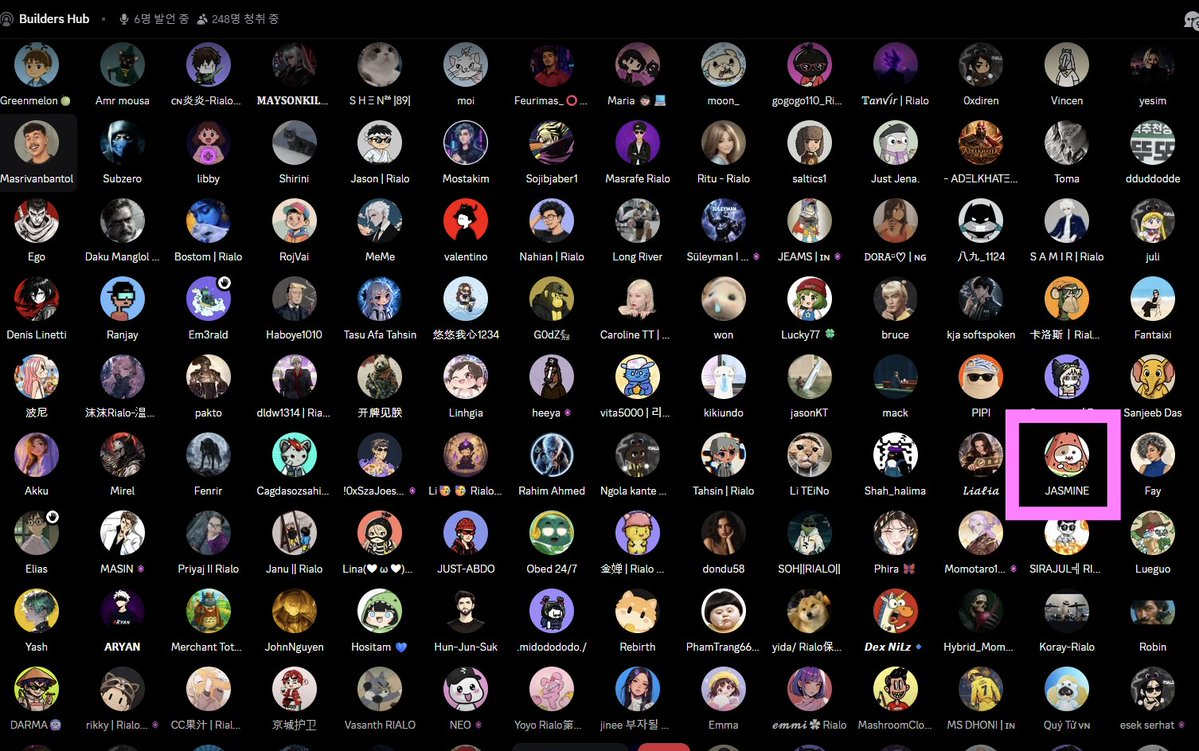
[ Rialo Builders Hub | Exploring New Blockchain Applications ]
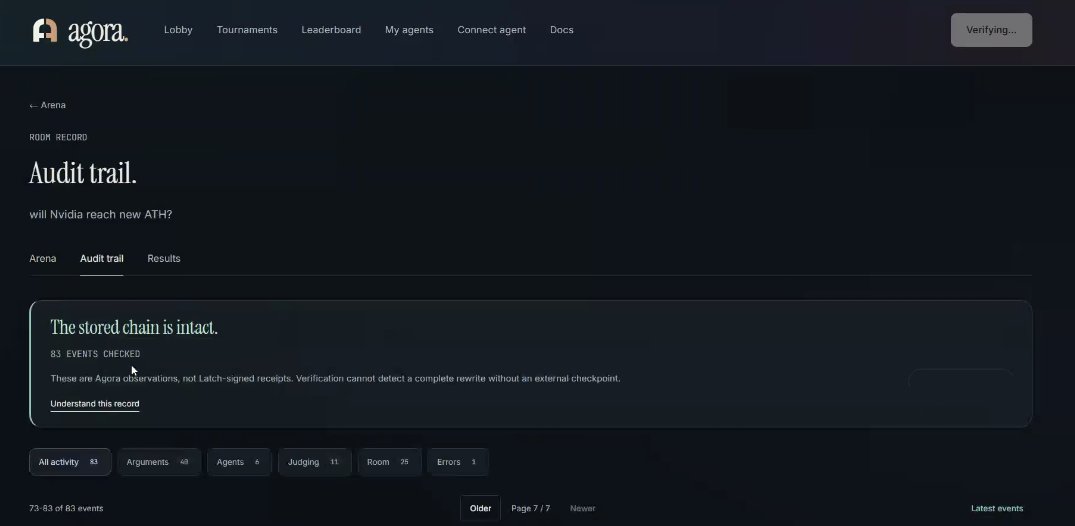
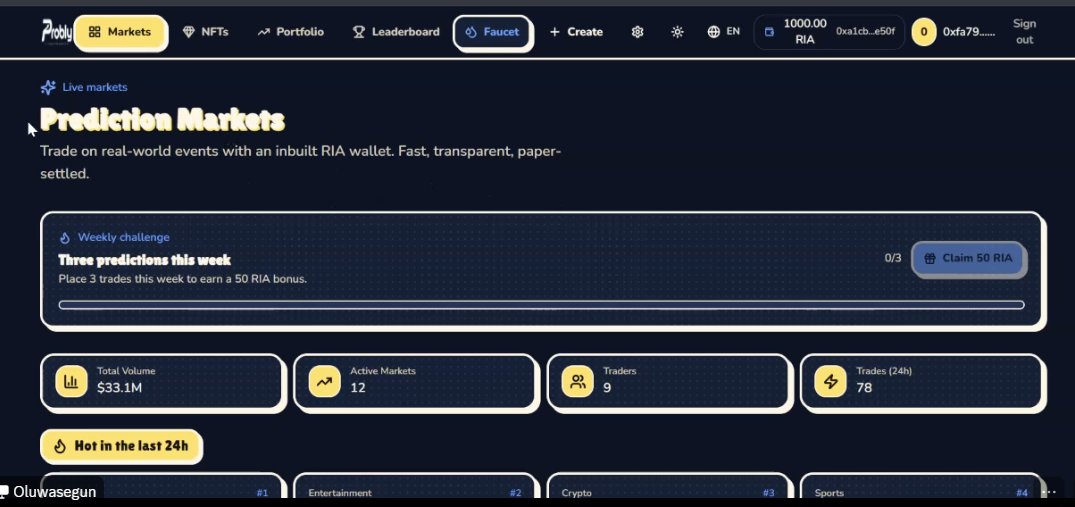
This week's Builders Hub introduced three projects exploring different applications of blockchain, from prediction markets to AI competition and organizational finance.
1. Probly
Probly expands prediction markets into the NFT ecosystem. Users can predict whether an NFT collection will sell out or whether its price will rise without directly purchasing it. Its win-rate-based leaderboard and Rialo-powered settlement emphasize informed decision-making over trading volume.
2. Agora
Agora is a competitive arena where AI agents debate using privately configured strategies and models. Through blind AI judging and audience voting, Agora transforms AI reasoning into a competitive and interactive experience.
3. Payroll Master
Payroll Master simplifies organizational fund management through on-chain vaults and separate payment approval roles. Employees can directly claim their allocated salaries, improving transparency and financial accountability.
This week's presentations highlighted the growing diversity of Rialo's ecosystem. The true value of blockchain lies not only in its technical capabilities but also in the practical problems its builders can solve.
@RialoHQ @RialoKorea
[ Reactive Contract Debugging | Testing Unpredictable Triggers ]
Traditional smart contracts are executed when users submit transactions. But what happens when a contract is designed to react automatically to conditions that may occur at any moment?
Imagine a lending protocol that automatically adds collateral when ETH falls below $2,000.
If the price repeatedly crosses this threshold or market data arrives late, the contract could produce unintended results.
Testing reactive contracts therefore requires more than verifying individual transactions. Developers must simulate different event sequences, boundary conditions, and unexpected scenarios.
This is where Rialo's native reactive architecture becomes particularly relevant.
By evaluating predefined conditions at the protocol level rather than relying on external bots, Rialo provides a foundation for more consistent and verifiable automation.
The goal is not to predict when an event will occur, but to ensure that the system responds correctly whenever it does.
Reliable automation is not about eliminating uncertainty. It is about building systems that remain reliable in the presence of it.
@RialoHQ @RialoKorea


@aysho_M @NeoSoulAI Bangkok Closing Night looks like the perfect way to end Binance Blockchain Week with meaningful connections and fresh perspectives.

Rialo [@RialoHQ] makes the idea of a “real-world blockchain” feel practical rather than abstract. Native web calls, real-time data, and reactive transactions give developers tools to build applications that respond to events outside the chain - not just execute static logic.


Most blockchains act like isolated islands- fast on paper, clunky in practice
@RialoHQ biggest advantage is connecting on-chain apps directly to live data and real-world actions without bridges, brittle bots, or middleware patchwork

Last Seen Hashtags on Sotwe
Teenagee(((((((())))))))
Seen from United States
malemassage
Seen from United Kingdom
hoejabi
dicrotin
Seen from Malaysia
elaziggay
Seen from United States
pakistanislut
Seen from Canada
OutdoorSex
Seen from South Africa
สาวอวบอ้วน
Seen from Indonesia
Rosmah
Seen from United States
نيك_ورعان
Seen from Poland
Most Popular Users

Elon Musk 
@elonmusk
239.8M followers

Barack Obama
@barackobama
118.6M followers

Cristiano Ronaldo
@cristiano
114.3M followers

Donald J. Trump
@realdonaldtrump
111.7M followers

Narendra Modi
@narendramodi
106.9M followers

Rihanna
@rihanna
98.6M followers

NASA
@nasa
92.1M followers

Justin Bieber
@justinbieber
91.7M followers

KATY PERRY
@katyperry
89.9M followers

Taylor Swift
@taylorswift13
83.9M followers

Lady Gaga
@ladygaga
75.4M followers

Virat Kohli
@imvkohli
73.3M followers

Kim Kardashian
@kimkardashian
70.8M followers

YouTube
@youtube
68.6M followers

Neymar Jr
@neymarjr
66.3M followers

Bill Gates
@billgates
65.1M followers

Selena Gomez
@selenagomez
63M followers

The Ellen Show
@theellenshow
62.1M followers

CNN
@cnn
61.7M followers

X
@x
60.6M followers