

Top Tweets for #ClimateGyan

Today's #climategyan in one image! #53
More than a third of the world’s river basins ran drier than normal in 2025!!
What happens when the world’s rivers begin behaving differently? The WMO’s latest findings offer a worrying glimpse. In 2025, 36% of the world’s river-basin areas experienced below- or well-below-normal river flows, with large parts of North and South America, Europe, Africa, Central Asia and the Middle East affected.
At the same time, 21% of river-basin areas experienced above- or much-above-normal flows. In other words, the problem is not simply that the world is becoming drier - it is that the water cycle is becoming increasingly erratic and less predictable. The picture becomes even more concerning when we look beyond rivers: global terrestrial water storage was 42% below normal, while all 19 major glacial regions lost ice for the fourth consecutive year.
These changes are not confined to the environment. Rivers and water storage underpin agriculture, energy generation, transport, industry and drinking-water supplies. When the water cycle becomes unstable, the foundations of our economies and communities become unstable too. Climate change is not only changing the weather; it is increasingly reshaping the way water moves, stays and disappears across the planet.
~ Ranjan Panda
19 September 2026
#ClimateGyan #ClimateChange #Water #WaterCrisis #ClimateResilience #WMO #RanjanPanda #riverflow #Youth4WaterIndia #WaterInitiatives #MahanadiRiverWaterkeeper

Today's #ClimateGyan in one image! #52
A quick lesson from Nepal! 🇳🇵
Remember this:
Nature is not living under our charity; we are living at her mercy.
The devastation shown in Nepal is a stark reminder that environmentalism cannot begin and end with planting saplings. Planting trees is important - but it is only one small part of the larger ecological responsibility.
We must also ask:
🌿 Are we protecting mountains from reckless construction and destabilisation?
🌳 Are we conserving forests and their natural drainage systems?
🏔️ Are our roads, buildings and settlements being planned according to the ecological carrying capacity of the landscape?
🌊 Are we respecting rivers, streams, floodplains and natural water channels instead of encroaching upon them?
🏘️ Are our habitats being planned with disaster risks and changing climate realities in mind?
🌱 Are we protecting ecosystems that quietly protect us from floods, landslides, heat and water insecurity?
A sapling cannot compensate for a destroyed mountain. A plantation cannot replace a lost forest. And concrete development cannot replace a functioning ecosystem.
True environmentalism is not merely about planting nature; it is about protecting the conditions that allow nature—and consequently us—to survive.
Nature does not need us to save her out of charity.
We need to protect nature because our own survival depends on it.
~ Ranjan Panda
27 August 2026
#nepal #nepalifood #Environment #ClimateResilience #Nature #EcologicalPlanning #Mountains #Forests #DisasterRiskReduction #ClimateChange #NatureBasedSolutions

Today's #ClimateGyan in one image! #51
Gen Z, Environmental & Climate Awareness Cannot Stop at Planting Trees! The Khao Gali experience...
A message for youth, others and the Sambalpur Municipal Corporation!
The country has seen recently how Gen Z has raised its voice on issues that matter to democracy and society. Many young people are also increasingly aware of environmental challenges. Through our own campaigns, we have had the privilege of working with thousands of young people and witnessing their energy, creativity and commitment.
But a visit to Sambalpur’s Khao Gali recently compelled me to ask a slightly uncomfortable question:
Can our concern for the environment remain limited to the issues we campaign for, the saplings we plant, or the programmes we attend?
Khao Gali - the city's popular eateries street - has been designed largely with young people in mind, although people like me visit it occasionally too. I don't visit very often, but every time I do, I come away disturbed by what I see.
This time around, as on previous occasions, I saw people casually throwing used single-use plastic plates, water bottles and other waste onto the road, even though almost every thela/eatery had placed at least one dustbin.
Even people simply passing through the street on bikes and in cars were throwing plastic waste onto the road.
I spoke to around five people and requested them not to do so. Only two responded politely.
But the bigger problem lies just beyond the eating area.
Open spaces around Khao Gali are being used as open urinals and informal dumping grounds. The result is predictable: a foul, stinking environment right next to a place where people come to eat, socialise and spend time.
And frankly, almost nobody seems to care.
What makes this even more ironic is that I recognised some of the people I saw there from plantation programmes. We often proudly participate in tree-planting drives and celebrate them as environmental action.
But as I have said several times:
Environment is not just about planting saplings.
It is also about what we do with the plastic bottle after drinking from it.
It is about where we throw our food plates.
It is about whether we keep public spaces clean.
It is about whether we use toilets instead of turning open spaces into urinals.
It is about hygiene, civic responsibility and respect for the spaces that belong to all of us.
Interestingly, I encountered the same stinky smell and poor sanitation near the eateries around the Samaleswari Temple yesterday as well.
So, perhaps, the conversation we need with Gen Z - and with all of us - is not merely about climate awareness. It is about everyday environmental behaviour.
Our love for the environment cannot be selective.
It cannot be restricted to our homes, our gardens, our social-media posts or the programmes we participate in.
It must travel with us - to every street, market, riverbank, temple, picnic spot, eatery, road and public space that we use.
Because the environment doesn't belong to a programme.
It belongs to all of us.
And cleanliness isn't somebody else's job.
The moment we create the waste, it becomes our responsibility.
Perhaps it is time for Gen Z - and every generation - to make one small but fundamental shift in mindset:
Don't just plant a tree.
Don't just post about climate change.
Don't just attend a cleanliness drive.
Live the environmental values you claim to believe in.
Our public spaces are a reflection of our collective mindset. Let us make that reflection a little less embarrassing.
~ Ranjan Panda
26 August 2026
#GenZ #EnvironmentalResponsibility #PlasticFree #CleanSambalpur #CivicSense #Cleanliness #PublicSpaces #Hygiene #WasteManagement #ClimateAction #Youth4WaterIndia #RanjanPanda #Environment #SMC #Sambalpur

Today's #ClimateGyan in one image! #50
The rains may be flooding our homes today, but they should not flood out our preparations for tomorrow.
We are all dealing with the immediate impacts of floods - disrupted lives, damaged homes and livelihoods, displacement, and immense pressure on communities and relief systems. Our first responsibility is, of course, to stand with those affected and support relief, rescue and rehabilitation.
But even as we respond to today's crisis, we cannot afford to postpone the climate resilience agenda.
Because once the floodwaters recede, the heat will return.
Heat is already gripping our lives in its jaws. Rising temperatures, longer heatwaves, erratic rainfall, intense storms, sea-level rise and changing ecosystems are no longer distant warnings. They are shaping our everyday realities.
This is why the rainy season itself must become a season of preparation.
A time to assess what failed during the floods.
A time to restore wetlands, water bodies and drainage systems.
A time to strengthen our homes, schools and health systems against extreme heat.
A time to protect forests, rivers, mangroves and other natural ecosystems.
A time to prepare heat action plans, early-warning systems and community response mechanisms.
A time to strengthen livelihoods and social protection for those who are most vulnerable.
Mitigation and adaptation cannot wait for the next disaster.
While adaptation helps us cope with the climate impacts we can no longer avoid, mitigation determines how severe those impacts will become in the years ahead. We need both - and we need them now.
Let the floods teach us what we need to change before the next heatwave arrives.
Relief is necessary. Resilience is essential. And preparation cannot have a season.
~ Ranjan Panda
21 August, 2026
(Image: @WorldBankGroup )
#ClimateResilience #ClimateAction #ClimateAdaptation #ClimateMitigation #HeatAction #Floods #DisasterResilience #NatureBasedSolutions #ClimateJustice #Youth4WaterIndia #WaterInitiatives #CombatClimateChangeIndia #RanjanPanda #MahanadiRiverWaterkeeper

Today's #ClimateGyan in one image! #49
Coastal Highways & Climate Resilience
Incessant rains have devastated several parts of Odisha, affecting more than half a million people and already displacing nearly a quarter of a million.
Odisha has long been a pioneer in disaster preparedness, rescue and relief, and has steadily been building its capacities to move from disaster management towards a more resilient future.
For some policymakers, thinkers and civil society leaders, infrastructure such as coastal highways is seen as an important part of strengthening that resilience. But we must also ask: can infrastructure designed to protect us from climate extremes sometimes create new vulnerabilities by destroying the very ecosystems that naturally protect us?
Coastal ecosystems - mangroves, wetlands, dunes, estuaries and other natural buffers - are our first lines of defence. When these are damaged or fragmented, we may inadvertently replace living, adaptive protection with rigid structures that themselves remain vulnerable to extreme weather, poor planning, corruption, weak maintenance and construction failures.
The picture here - of a stretch of coastal highway caving in even before its completion - is a stark reminder that grey infrastructure alone cannot be equated with resilience.
As climate extremes intensify, building our defences requires us to look beyond concrete and engineering. We need to understand the cumulative impacts on ecosystems, livelihoods and communities, and recognise the limits and vulnerabilities of every intervention.
True resilience is possible only when people and ecology are treated as equal stakeholders - with the right to participate, the right to survive and the right to a sustainable future.
Our resilience must not destroy the very natural systems that make us resilient.
~ Ranjan Panda
17 August 2026
#ClimateResilience #Odisha #DisasterPreparedness #CoastalResilience #NatureBasedSolutions #ClimateJustice #EcosystemBasedAdaptation #JustTransition #CombatClimateChangeNetwork #WaterInitiatives #Youth4WaterIndia #MahanadiRiverWaterkeeper

Today’s #climategyan in one image! #48
From Ego to Eco: The Change That Truly Matters
Some time ago, while addressing college students at a district-level function near Talcher, a young girl asked me a question:
"Sir, why do you keep asking us to use our brains?"
It was a simple question, but it opened the door to a much deeper conversation - not just about intelligence, but about the responsibility that comes with being human.
I told her that our greatest strength is not merely our ability to think, but our ability to think differently, question our habits, and consciously choose better ways of living. Unfortunately, what often holds us back is not a lack of knowledge, but an excess of ego.
I explained this through the idea of "Ego vs Eco."
The real transformation humanity needs is not another technological breakthrough. It is a shift in perspective.
For far too long, we have behaved as though nature exists solely for our benefit - as though forests, rivers, oceans, wildlife and every natural resource are meant to serve human ambition. That is the worldview shaped by ego, where we place ourselves above everything else. Nature, however, tells a completely different story.
Every living organism is connected to another in countless visible and invisible ways. A bee supports agriculture through pollination. Predators help maintain ecological balance. Wetlands cleanse water naturally. Forests regulate climate, nurture biodiversity and sustain livelihoods. Even the smallest organisms play roles that keep the web of life intact.
Human beings are not standing outside this web - we are one of its countless threads.
When one part of nature is damaged, the consequences eventually reach us. Likewise, when ecosystems are restored, communities become healthier, economies become stronger, and future generations inherit a more secure world.
The challenge before us is therefore not how to conquer nature, but how to work in harmony with it. Whether we are planning our cities, shaping public policy, running businesses or making choices in our daily lives, lasting success will come only when we align ourselves with natural systems instead of constantly trying to overpower them.
Perhaps the biggest reason we resist change is that changing our mindset is harder than changing our technology. But remember, the future will belong to those who replace Ego with Eco - because protecting nature is, in the end, nothing more than protecting ourselves.
That conversation near Talcher reminded me that today's youth are asking the right questions. Our responsibility is to offer them perspectives that inspire action, not just answers.
The question is no longer whether we depend on nature. The question is whether we are ready to live as if we truly belong to it.
~ Ranjan Panda
7 August 2026
#EgoVsEco #sustainability #environment #YouthPower #leadership #ClimateAction #nature #Talcher #thinkdifferent #FutureGeneration #RanjanPanda #Youth4WaterIndia #WaterInitiatives #CombatClimateChangeNetwork #MahanadiRiverWaterkeeper
(Image: Social Media)

Today's #ClimateGyan in one image! #47
Can Climate-Smart Farming Feed More People?
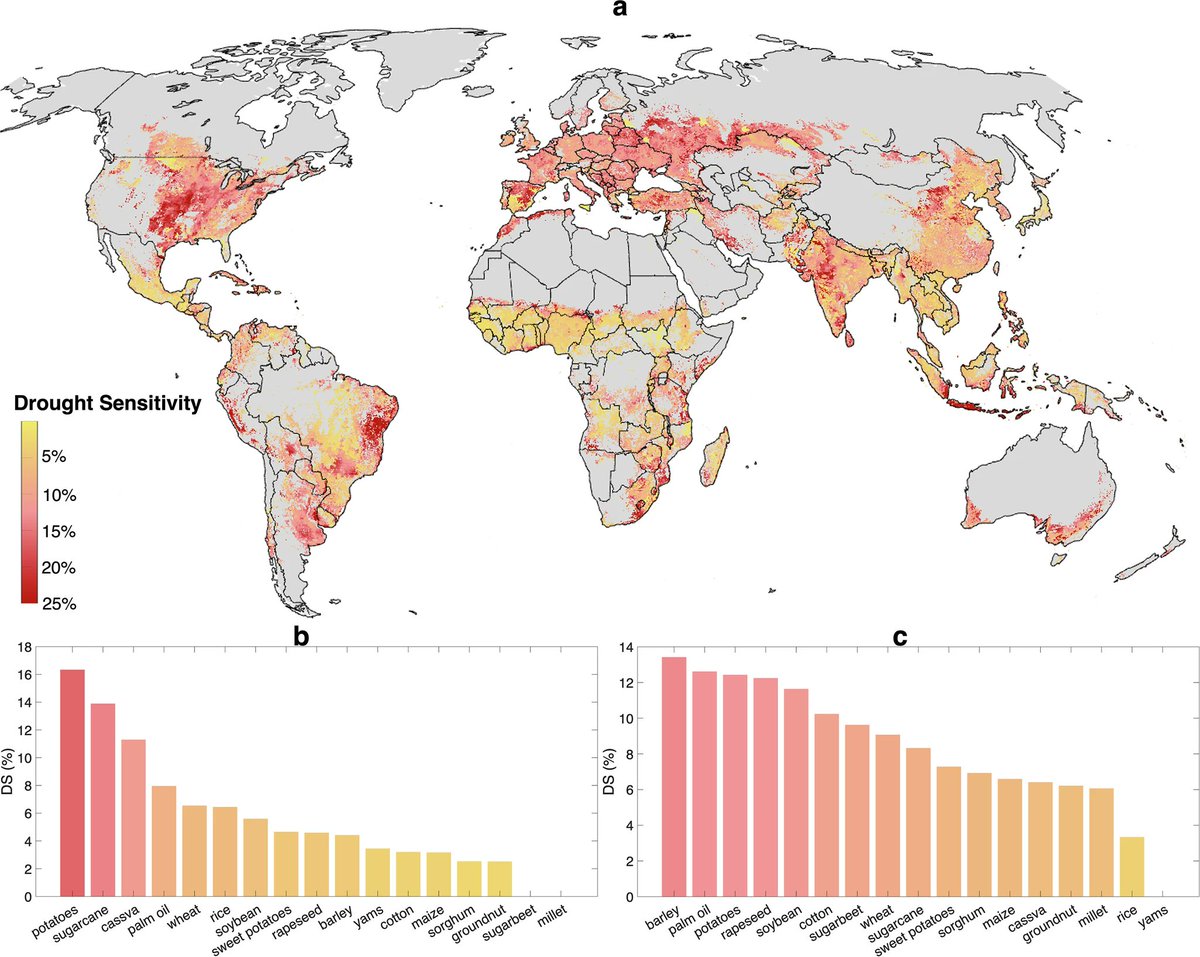
As climate change intensifies, one of the biggest challenges facing humanity is not just growing more food- but growing it reliably. A new study published in Nature Communications examined 17 of the world's major crops, representing nearly 75% of global food production, to understand how vulnerable they are to drought. The researchers found that under extreme hydroclimatic conditions, rainfed agriculture loses around 10% of its median production, while even irrigated farming loses nearly 7%. Together, these losses represent enough food calories to feed more than two billion people, highlighting how climate variability has become a major threat to global food security.
The study identifies "drought sensitivity" as a useful way to pinpoint where crops are most vulnerable to climate-related water stress. Instead of treating all crops the same, it shows that different crops respond very differently to drought. Crops like soybean and potatoes are highly sensitive, whereas millet and groundnut are much more resilient. Importantly, the research suggests that strategic decisions - such as expanding irrigation only where water resources are sustainably available and encouraging farmers to grow crops better suited to local climate conditions - could reduce drought-related losses by more than 60% while simultaneously increasing food production.
For India, the findings carry particular significance. South Asia, including much of India, emerges as one of the global hotspots of drought sensitivity. With nearly half of India's cultivated land still dependent on monsoon rainfall, increasing variability in rainfall patterns, delayed monsoons, prolonged dry spells, and rising temperatures are making food production increasingly uncertain. The study's focus on monsoon cereals - rice, maize, millet, and sorghum - is especially relevant because these crops are central to India's food security and rural livelihoods. Encouragingly, the research reinforces the value of promoting climate-resilient crops such as millets, improving irrigation efficiency rather than indiscriminately expanding irrigation, and supporting location-specific cropping decisions based on local water availability.
The message is clear: climate adaptation in agriculture is no longer optional - it is essential. Building resilience means moving beyond simply producing more food to producing food more sustainably and consistently, even under increasingly unpredictable weather. For India, this means investing in better water management, diversified cropping systems, climate-informed agricultural planning, and empowering farmers with the knowledge and tools to adapt. As climate risks continue to grow, the future of food security will depend not only on how much we produce, but on how resilient our farming systems become.
~ Ranjan Panda
30 July 2026
#drought #ClimateSmartAgriculture #ClimateSmartFarming #RainFedFarming #monsoon #irrigation #climatechange #ClimateAction
#CombatClimateChangeNetworkIndia #WaterInitiatives #MahanadiRiverWaterkeeper #Youth4WaterIndia
Image: Hotspots of drought sensitivity for global rainfed crop production (Nature Communications)
Today's #ClimateGyan in one image! #46
Treating Symptoms Won't Save the System
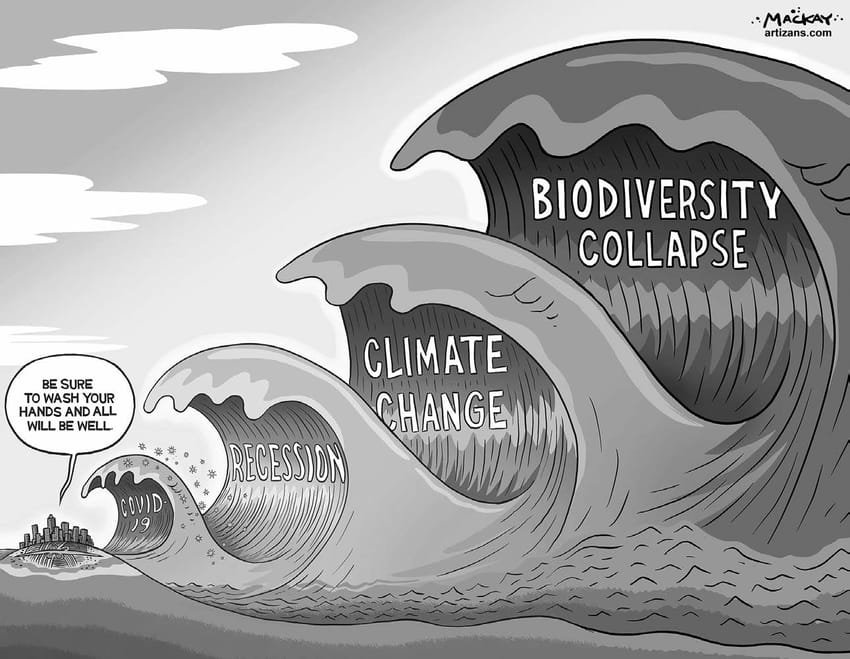
The cartoon says more than a thousand reports ever could.
When COVID-19 struck, the world rushed to treat the immediate crisis. Soon after came the economic recession. But looming behind them, far larger and far more consequential, are the twin emergencies of climate change and biodiversity collapse. These are not isolated crises. They are deeply interconnected symptoms of a larger systemic failure in the way we govern, produce, consume, and coexist with nature.
Whenever we seek to strengthen a societal, institutional, or ecological system - or prevent it from becoming corrupt, ineffective, or collapsing altogether - we must first understand the system as a whole.
Real solutions demand a whole-of-society, whole-of-government, and whole-of-ecosystems approach. They require breaking down silos, integrating science with policy, empowering communities, and recognizing that human well-being, economic stability, and ecological integrity are inseparable.
We often spend enormous time and resources treating symptoms:
* Floods? Build higher embankments.
* Heatwaves? Install more air-conditioners.
* Water scarcity? Drill deeper borewells.
* Disease outbreaks? Strengthen hospitals.
Necessary? Yes. Sufficient? No.
Unless we address the root causes - unsustainable development, ecosystem degradation, poor governance, pollution, and our relentless extraction of nature - we will keep chasing one crisis after another, each larger than the last.
A resilient future cannot be built by reacting to emergencies alone. It must be built by understanding the interconnectedness of our challenges and acting on them with systems thinking.
If we continue treating only the symptoms, we may survive today's crisis - but we will inherit tomorrow's collapse.
~ Ranjan Panda
25 July, 2026
#SystemsThinking #ClimateChange #Biodiversity #Resilience #NatureBasedSolutions #Sustainability #WholeOfSociety #WholeOfGovernment #WholeOfEcosystems #RanjanPanda #CombatClimateChangeNetwork #WaterInitiatives #MahanadiRiverWaterkeeper #Youth4WaterIndia
@WaterInitiativ1 @Youth4WaterIn @MahanadiRiver @Waterkeeper
Today's #climategyan in one image! #45
Nearly half of India's lakes and ponds are shrinking. And droughts are hitting them harder than we thought.
A new study published in iScience tracked 10,476 lakes, ponds and reservoirs across India using nearly three decades of Landsat satellite observations (1990–2017). The picture is worrying. Almost 45% of India's water bodies are shrinking, while only 29% are expanding. The rest have remained largely stable. The study shows that it's not just one bad monsoon that matters. It's droughts that come one after another. A dry summer monsoon reduces the average water area by about 5%. A dry winter causes another 2.7% decline. But when both seasons are dry, the loss nearly doubles to around 10%. Even a wet winter after a failed monsoon is usually not enough to restore the lost water.
What is important to notice is that not all water bodies respond the same way. Small ponds and lakes (less than 1 km²) are the most vulnerable. During drought years, they lose around 14% of their surface area, compared with 12% for medium-sized and 10% for large water bodies. Their shallow depth and limited inflows leave them with little buffer when rainfall fails.
In this context, two important aspects deserve greater attention. First, shrinking surface water bodies reduce the ability of local ecosystems to adapt to increasing climate variability. Second, communities that depend on these ecosystems often face declining livelihood opportunities, forcing many to migrate in search of work elsewhere.
The findings of this study reinforce the need to strengthen ongoing water restoration initiatives such as the Jal Shakti Abhiyan, MGNREGA pond restoration, and various state lake conservation programmes. At the same time, these efforts should be better integrated with other local ecosystem restoration and natural resource rejuvenation programmes. A more connected, landscape-based approach can enhance ecological resilience, support local livelihoods, and help communities respond more effectively to the growing impacts of climate change.
Ranjan Panda
24 July, 2026
#climatecrisis #freshwater #Surfacewater #ecosystems #NatureBasedSolutions #climatemigration #ClimateDisplacement #CombatClimateChangeNetwork #WaterInitiativesIndia #Youth4WaterIndia #MahanadiRiverWaterkeeper @UNFCCC @IPCC_CH @nidmmhaindia @ndmaindia @DDisplacement @WHH_India @Welthungerhilfe @iScience_CP @moefcc @UNDRR_AsiaPac @UNDRR

Today's #climategyan in one image! #44
Nearly 50 Years of El Niño Tell a Story We Can't Ignore
At first glance, the graphic looks like a colorful wheel. But it's actually a timeline of one of Earth's most influential climate rhythms.
Every ring represents a year since 1979, showing whether the tropical Pacific Ocean was in La Niña (cool phase), Neutral, or El Niño (warm phase). Together, these shifts form the El Niño–Southern Oscillation (ENSO) - a natural cycle that quietly shapes weather across the globe.
What's remarkable is how little the ocean has to change.
A warming of just 0.5°C above average marks the beginning of El Niño conditions. When sea surface temperatures rise by more than 2°C, scientists classify it as a very strong El Niño. Those seemingly small temperature differences are enough to redirect rainfall, influence monsoons, alter hurricane activity, and affect agriculture, fisheries, and water supplies across continents.
The image also reminds us that the tropical Pacific region where ENSO develops is enormous - roughly the size of the contiguous United States. Changes across such a vast stretch of ocean send atmospheric ripples around the world.
History shows why scientists monitor this cycle so closely.
1982–83: One of the strongest El Niño events on record brought severe drought to Australia and Indonesia, widespread flooding across parts of the Americas, and contributed to Hawaii experiencing its strongest hurricane on record at the time.
1997–98: Another "super El Niño" triggered floods, droughts, and wildfires across multiple continents. Exceptionally warm oceans also caused one of the worst coral bleaching events ever recorded, killing an estimated 16% of the world's coral reefs.
2015–16: El Niño coincided with record global temperatures, devastating Indonesian peat fires, prolonged drought in parts of Ethiopia and the Caribbean, active North Pacific hurricane seasons, and what was then the largest annual increase in atmospheric CO₂ ever measured.
Now, the cycle is turning once again.
According to the @WMO , El Niño conditions developed in June 2026 and are expected to strengthen through the 2026–27 Northern Hemisphere winter.
The difference this time is the backdrop.
Every previous El Niño formed in a cooler climate than today. Now, the world's oceans are already experiencing exceptional warmth after consecutive years of marine heatwaves. Since oceans absorb more than 90% of the excess heat trapped by greenhouse gases, El Niño is no longer acting on a stable climate - it is amplifying a system that has already been significantly warmed by human activity.
That is why ENSO is more than just an ocean phenomenon.
It influences: Crop production and food prices; Water storage and hydropower; Electricity demand during heatwaves; Tropical cyclone patterns; and; Marine ecosystems and fisheries.
The Pacific is sending one of its strongest climate signals again!
The science can tell us months in advance that conditions are changing. The real question is whether governments, businesses, and communities use that lead time to prepare - or wait until the impacts arrive.
Finally: El Niño doesn't cause climate change, but it can magnify its consequences. Nearly five decades of observations show the same lesson again and again: the earlier we read the signal, the better we can reduce the risks.
In my opinion, this El Niño period will also drive millions more to far away places in search of jobs and food. Climate migrants and displaced people will increase in large numbers. Our ground level preparations must consider all these.
~ Ranjan Panda
6th July, 2026
#ElNino #climatemigration #ClimateDisplacement #climatechange #climatecrisis #SuperElNino #WaterSecurity #FreshwaterConservation #droughts #CombatClimateChangeNetwork #WaterInitiatives #Youth4WaterIndia #MahanadiRiverWaterkeeper
Sources: NOAA Climate Prediction Center, National Centers for Environmental Information (NCEI), World Meteorological Organization (WMO), IPCC Sixth Assessment Report.
@IPCC_CH @FAO @IOMAsiaPacific @IOMatEU @DDisplacement @WHH_India @Refugees @RefugeesIntl

Today's #ClimateGyan in one image! #43
Urban Heat: Of loss of trees, ecological poverty and social injustice -
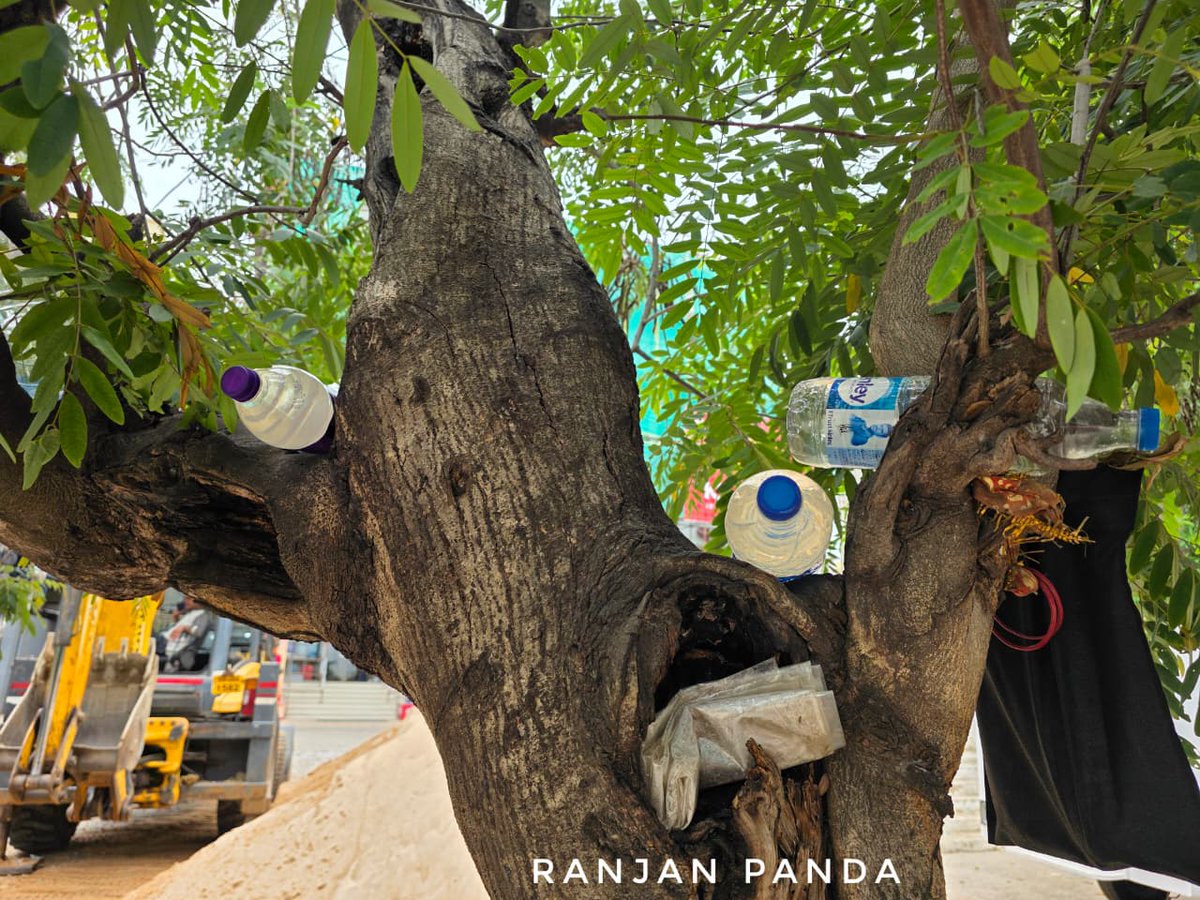
Just a couple of days ago, while walking through one of the busy market areas of Bhubaneswar, I stumbled upon this image. This reminded me, as many cities race to remove their last remaining trees in the name of development, those living and working in the informal economy are left with fewer places to find relief from intensifying heat. This photograph captures a quiet yet powerful reality: a parking lot security guard using the branches of one of the few surviving trees to store his drinking water and keep it relatively cool.
It is a stark reminder that the climate crisis is not only widening income inequalities; it is also deepening ecological poverty. Access to shade, clean air, cooler surroundings, and other basic ecological services is increasingly becoming a privilege rather than a right. As these natural buffers disappear, the burden falls disproportionately on those who have contributed the least to the crisis and have the fewest resources to adapt.
The loss of trees is not merely an environmental issue—it is a social justice issue. Every tree felled in our cities makes the unequal impacts of heat a little more unequal.
~ Ranjan K Panda
23 June, 2026
#CombatClimateChangeNetwork #WaterInitiatives #MahanadiRiverWaterkeeper #Youth4WaterIndia #UrbanHeat #ClimateJustice #BeatTheHeat #HeatIsOn #EcologicalPoverty #InformalCities @IPCC_CH @Cities_IPCC @UNFCCC @a2rinitiative @C3_NIUA @CityClimFin @Cities4Forests @CitiesWNature @Live_Cities @CitiesForum @CitiesForum_org @CitiesQuestion @NIUA_India @Cities_Today @citiescontest @CitiesPodcast @AIILSG_Official @MoHUA_India @UResilienceHub @Urb_Resilience @ResilienceURNet @URBProject @urplat @WUF_UNHabitat @WorldUrbanForum @urbanupdatemgzn @BloombergCities @bloombergcities @Waterkeeper @MahanadiRiver @rdmodisha @Youth4WaterIn @WaterInitiativ1
Today's #climategyan in one image! #42
Small Reservoirs, Big Warning: The Sedimentation Threat
There have long been concerns about sediment accumulation behind large dams, but a new global study shows that small reservoirs face an equally serious challenge. Covering more than 550,000 reservoirs worldwide, over 95% of which are smaller than 1 km², the study reveals that nearly one in five reservoirs is already facing high sedimentation risk. This growing problem threatens water supplies for more than 2 billion people and affects about 26% of the world's irrigated farmland.
The study estimates that reservoirs globally are losing storage capacity at an average rate of 7.3% per decade due to sedimentation. Small reservoirs, especially in dryland regions, are particularly vulnerable despite being critical for local water security, food production, and climate adaptation.
The findings also remind us that climate resilience is not just about building new infrastructure. While tree-planting drives are important, conserving existing forests and promoting soil-friendly, agroecological farming practices in catchments can help reduce erosion and sediment flow into rivers and reservoirs. Protecting these natural systems is essential for safeguarding both water security and healthy river ecosystems in a warming world.
~ @ranjanpanda
7 June, 2026
#CombatClimateChangeIndia #WaterInitiatives #Youth4WaterIndia #MahanadiRiverWaterkeeper #SmallReservoirs #Sedimentation #DAMS #river #riverecosystem #ClimateGyan #RanjanPanda #FoodSecurity #WaterSecurity #DroughtManagement #LocallyLedAdaptation @Youth4WaterIn @WaterInitiativ1 @MahanadiRiver @Adapt_Alliance @theGEF @theGCF @NABARDOnline
Note: Climate Gyan posters are designed as a "crispy" way to talk about massive climate challenges. Because condensing complex phenomena sometimes requires using general global statistics, they may not capture all the local complexities and vastness of these issues. I advise readers to explore the subject further before referencing them in their own works.

Today's #ClimateGyan in one image! #5
Mangroves are found in 123 countries and cover an estimated 15.2 million hectares; and quietly help us fight climate change by several services they provide on a daily basis...
~ Ranjan Panda
#mangroveforest #MangroveMagic #Ecosystems

Today's #ClimateGyan in one Image! #3
Your climate actions can help meet all the #SDGgoals
#CombatClimateChangeNetworkIndia #WaterInitiatives #MahanadiRiverWaterkeeper #Youth4WaterIndia #ClimateAction #ClimateActionNow

Last Seen Hashtags on Sotwe
MASAJ
Seen from Turkey
รับงานกําแพงเพชร
Seen from United States
虐腹
Seen from United States
nsfw #radiostatic
Seen from Turkey
Ankaragay
Seen from Turkey
น้ำหีแตก
Seen from Thailand
SeARCH
Seen from United States
candid(((())))* filter:native_video
straight
Seen from United States
incest sister bathroom
Seen from Switzerland
Trends for you
Most Popular Users

Elon Musk 
@elonmusk
241.5M followers

Barack Obama
@barackobama
118.8M followers

Cristiano Ronaldo
@cristiano
114.5M followers

Donald J. Trump
@realdonaldtrump
111.9M followers

Narendra Modi
@narendramodi
107.1M followers

Rihanna
@rihanna
98.7M followers

NASA
@nasa
92.3M followers

Justin Bieber
@justinbieber
91.8M followers

KATY PERRY
@katyperry
90M followers

Taylor Swift
@taylorswift13
84M followers

Lady Gaga
@ladygaga
75.5M followers

Virat Kohli
@imvkohli
73.4M followers

Kim Kardashian
@kimkardashian
70.8M followers

YouTube
@youtube
68.8M followers

Neymar Jr
@neymarjr
66.4M followers

Bill Gates
@billgates
65.2M followers

Selena Gomez
@selenagomez
63.1M followers

The Ellen Show
@theellenshow
62.2M followers

CNN
@cnn
61.7M followers

X
@x
60.7M followers