

Top Tweets for #Emigration

"FURY AS ILLEGAL SETTLEMENTS FIRM TO VISIT SCOTLAND"
@HMorrison97 for @ScotNational
Plans to host a Glasgow event promoting emigration to Israel by a firm linked to illegal settlements have sparked outrage from rector Ghassan Abu Sitta.
#TheNational
#TomorrowsPapersToday


A Mexican official said “If I had my way I would erect a Chinese wall all along the border & not let one Mexican pass over. I’m against all Mexican emigration. We need our strong arms in Mexico.” C. Thomson Century Magazine 01/1926@lulac@chirla@unidosus

Elections #Morocco
What About Western Sahara? https://t.co/zTyTfYW2OS
Young people vote less, they protest more and are more vocal on social media.
Real distrust of elected officials and the monarchy.
Many young people see protest or emigration as more effective than voting.

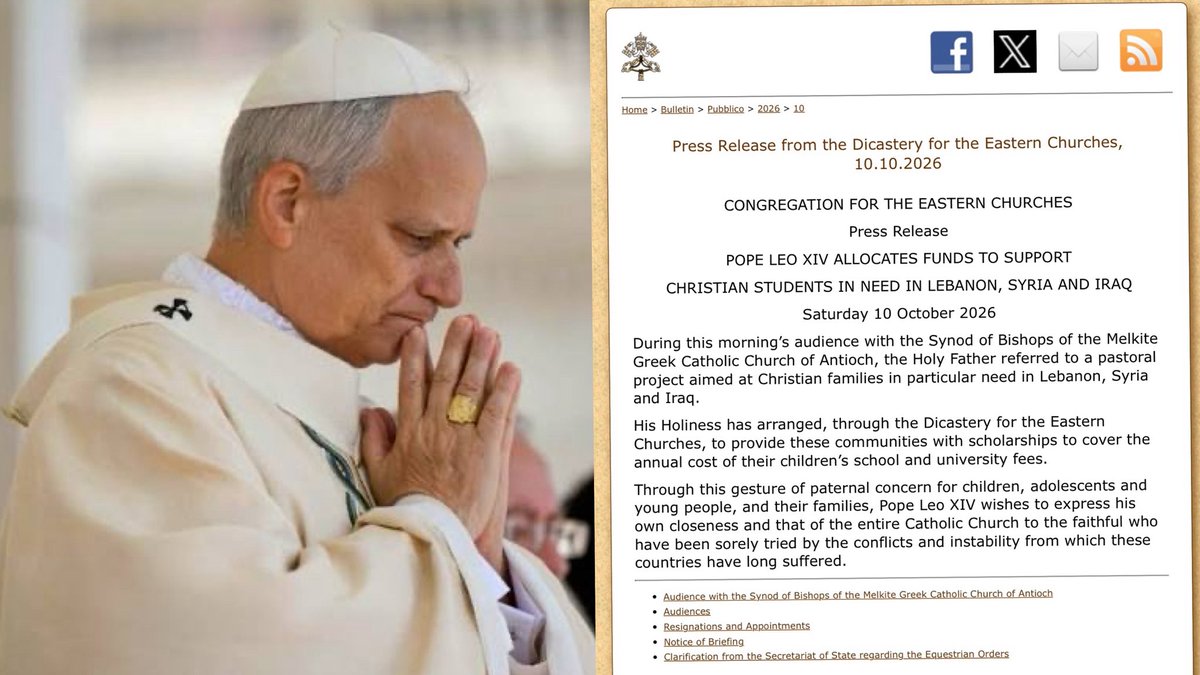
Pope Leo XIV Warns of Religious Extremism, Persecution, and Christian Emigration; Urges Church Leaders to Uphold Transparency and Accountability
Vatican City | October 10, 2026
In an address extending beyond the announcement of educational scholarships for Christians in Syria, Lebanon, and Iraq, Pope Leo XIV described the worsening conditions facing Christian communities in the Middle East, including war, instability, religious extremism, and economic hardship. He noted that threats to safety and, in some cases, outright persecution continue to drive Christians from their ancestral homelands.
Addressing the Synod of Bishops of the Melkite Greek Catholic Church of Antioch, the Pope warned Church leaders against pursuing power, personal gain, and institutional self-interest, stressing transparency, integrity, and accountability.
He identified war, unrest, religious extremism, and economic hardship as challenges in the historic Melkite territories, reaffirming the wider Catholic Church’s solidarity with those affected.
He did not attribute Christian emigration solely to economic factors. He described the suffering that leads many to leave for distant countries in search of work, to escape danger, and at times to flee persecution, seeking safety for their families.
His remarks are significant amid the declining Christian populations in the Middle East. By naming religious extremism, insecurity, and persecution as drivers of emigration, he underscored that preserving the Christian presence requires addressing the conditions forcing families to leave their historic communities.
He did not identify specific governments or armed groups, nor assign responsibility for these abuses to any particular actor.
The most sensitive portion of the address was his direct warning to the bishops on power, financial interests, and accountability within the Church.
Pope Leo XIV cautioned against placing oneself above others, seeking power rather than service, profit rather than transparency and honesty, and personal success rather than pastoral responsibility.
He emphasized that clergy must examine their own conduct and hold one another accountable, both in administering material resources and in fostering reconciliation.
This raises questions about institutional responsibility in communities facing displacement, poverty, and shrinking congregations. Transparency, responsible stewardship, and accountability are essential to maintaining trust with the faithful and ensuring resources serve vulnerable communities.
The Pope stressed that the Church’s mission must appear in concrete acts of service: feeding the needy, providing education and healthcare, accompanying the suffering, and supporting vulnerable families.
He called on the Melkite Church to witness to reconciliation and peace in conflict-ravaged lands, noting that reconciliation must begin within the Church and be reflected in leaders’ conduct and their relations with the faithful.
Near the end of his address, Pope Leo XIV announced that the Holy See, with donor support, was arranging educational assistance for Christian communities in Syria, Lebanon, and Iraq.
In a separate statement, the Dicastery for the Eastern Churches clarified that the initiative would help Christian families facing the greatest financial hardship by covering annual school and university tuition fees for their children.
The Pope said the goal was to support young people and help Christian families remain in the Middle East, thereby preserving the region’s Christian presence.
The announcement did not specify the total funding, the expected number of beneficiaries, the eligibility criteria, or the distribution mechanisms. It also did not clarify eligibility for members of different Christian denominations in the three countries.
These gaps underscore the need to ensure assistance reaches those who need it most through transparent, equitable, and clearly defined procedures.

"If you don't like it, just leave!" Emigration isn't simply opting out of a club; it's fleeing a territorial monopoly on force. You shouldn't have to abandon your land, roots, and family just to escape coercion. Freedom means the right to stay on your property unmolested.

During the interwar period, approximately 400,000 Jews left Poland and, taking into account methodological differences and less thoroughly recorded migration, the upper estimate may be as high as 450,000. This mass emigration was driven in part by growing Polish antisemitism; discrimination and violence were among the significant factors pushing Jews out of the Second Polish Republic.
During the interwar period, approximately 400,000 Jews left Poland and, taking into account methodological differences and less thoroughly recorded migration, the upper estimate may be as high as 450,000. This mass emigration was driven in part by growing Polish antisemitism; discrimination and violence were among the significant factors pushing Jews out of the Second Polish Republic.

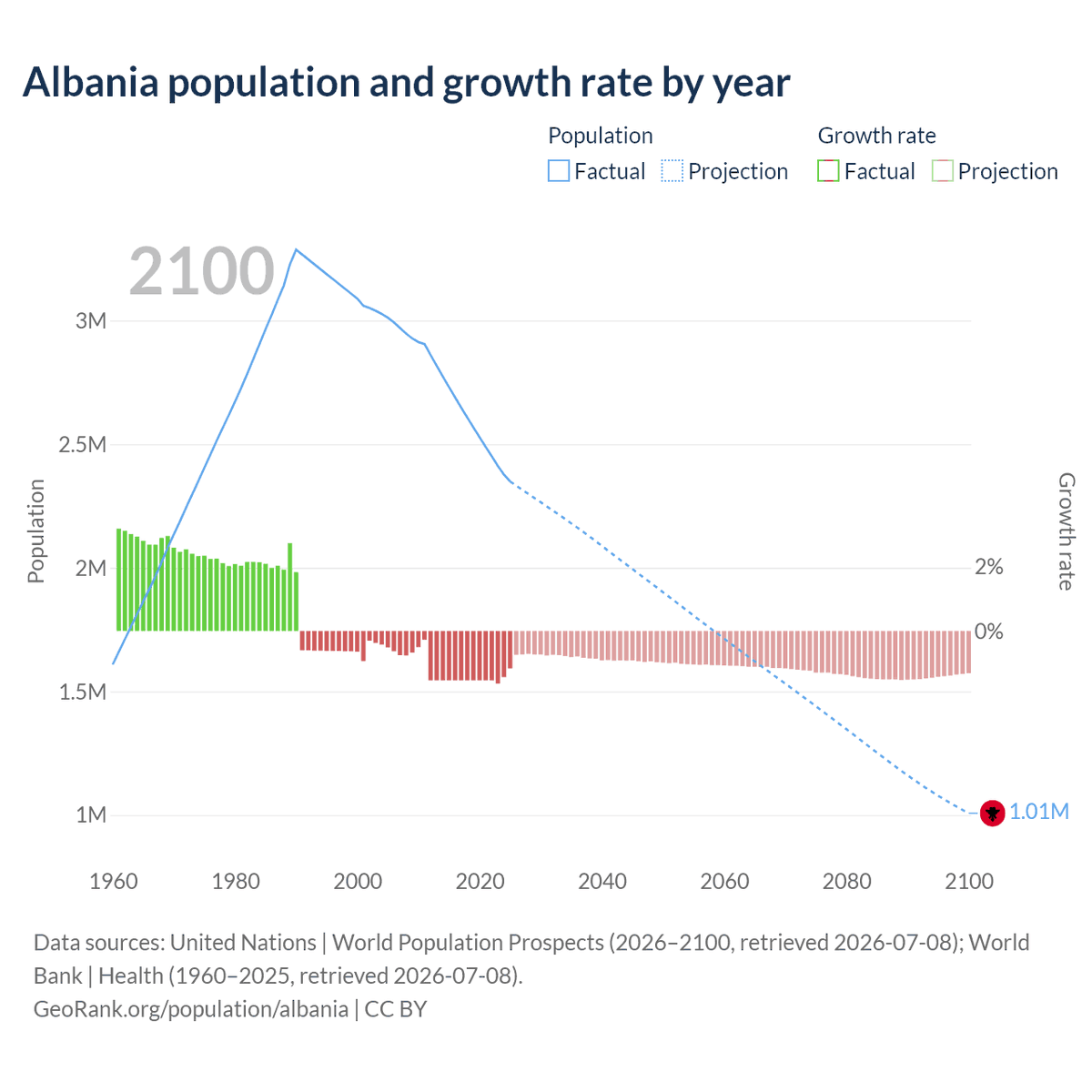
When communism fell in 1991, Albania opened its borders.
What happened next was one of the most dramatic mass emigrations in history.
The moment the borders opened around 300k people - nearly 10% of the population fled to Italy and Greece.

In every stage of these Oppressions We have Petitioned for Redress in the most humble terms: Our repeated Petitions have been answered only by repeated injury. A Prince, whose character is thus marked by every act which may define a Tyrant, is unfit to be the ruler of a free people.
Nor have We been wanting in attentions to our Brittish brethren.
We have warned them from time to time of attempts by their legislature to extend an unwarrantable jurisdiction over us.
We have reminded them of the circumstances of our emigration and settlement here.
We have appealed to their native justice and magnanimity, and we have conjured them by the ties of our common kindred to disavow these usurpations, which, would inevitably interrupt our connections and correspondence.
They too have been deaf to the voice of justice and of consanguinity.
We must, therefore, acquiesce in the necessity, which denounces our Separation, and hold them, as we hold the rest of mankind, Enemies in War, in Peace Friends.

It is worth remembering that the Second Polish Republic was not a safe liberal homeland for Jews, as Polish national memory often portrays it.
Between 1926 and 1938, about 200,000 Jews left Poland. Formally, many of them emigrated because of poverty, but that poverty was not neutral: it overlapped with economic boycotts, discrimination, street violence, bench ghettos, nationalist pressure, and an increasingly anti-Jewish political climate. In the second half of the 1930s, even the ruling camp was already speaking about limiting the economic role of Jews, accelerating their emigration, and excluding them from parts of public life. This was not an innocent economic hardship. It was an atmosphere of pushing people out of their own country.
#History #Antisemitism #Poland


...Maxamed bin Muslim bin Sabit bin Cali bin Cabdullahi at-Taai, originally from the city of Tudofar in Yemen, is the ancestor of the group that settled in Baraawe. The period of their emigration to Baraawe, in Somalia, is made to go back to 700 AH, 1300...

#promptShare
The principle is elegantly simple: logic has no special pleading clause. If you apply a rule to one scenario but exempt another identical scenario from that same rule, you've abandoned logic and embraced motivated reasoning—which is propaganda's native language.
Why This Distinction Matters
The universality requirement is what separates logic from ideology.
Consider:
Universal: "If A causes B in one context, we need evidence that A causes something different in another context to claim different outcomes." (This is empiricism.)
Propaganda: "A causes B when it suits our narrative, but doesn't cause B when acknowledging it would hurt our position." (Double standard.)
This is why fact-checkers keep finding logical contradictions in propaganda—the propagandist isn't trying to be consistent. They're trying to persuade, and persuasion doesn't require coherence.
Historical Echoes
The principle connects to classical logic traditions:
Aristotle's Law of Non-Contradiction: A cannot be both A and not-A simultaneously (in the same respect, at the same time). Selective logic violates this.
Kant's Categorical Imperative: "Act only according to that maxim whereby you can will that it should become a universal law." Propaganda explicitly resists universalization—it crumbles when you try to apply it consistently.
Popper's Falsifiability: A claim that exempts itself from scrutiny in some cases but demands scrutiny in others isn't science; it's propaganda.
Concrete Examples
Universal logic:
"If we punish corruption in political party X, we must punish identical corruption in political party Y."
"If we dismiss an argument because it comes from a partisan source, we must dismiss all partisan sources equally."
Propaganda:
"Inflation proves the other side's incompetence, but inflation under our administration is due to global factors beyond our control."
"The other side cherry-picks data—but here's a cherry-picked statistic supporting us."
"Free speech matters... unless you're saying things we disagree with."
The moment you carve out exceptions for your own position, logic exits the room.
Why Owen's Framing Is Powerful
By calling selective logic "propaganda" rather than "bias" or "inconsistency," Shroyer points to the intentional structure underneath. Propaganda isn't accident—it's a system that weaponizes the appearance of logic while abandoning its substance.
The propagandist doesn't slip up; they design the exception.
This maps onto Jacques Ellul's thesis (a sociologist of propaganda): propaganda isn't just false claims; it's a technique of persuasion that bypasses rational evaluation. Selective logic is its scaffolding.
How to Test It
Owen's principle gives you a practical tool: reverse the subject and see if the argument still holds.
Original: "Immigration in this form is economically harmful."
Reversed: "Emigration from this country in the same numbers would be economically harmful."
If one sounds reasonable and the other absurd using identical reasoning, the logic wasn't universal—it was tailored.
This is why it's an Owen Original that lands hard: it's simple enough to remember, falsifiable enough to test, and universal enough to expose selective thinking across the entire political and rhetorical landscape. It's not a claim about facts; it's a claim about the validity of the reasoning process itself.


If logic can't be applied universally, it's not logic, it's propaganda.

The Farhud at 85: Honoring the Victims, Preserving the Memory
Zionists have a long, tragic record of provoking antisemitism inside Jewish communities to pressure Jews into immigrating to Israel.
Nothing is more dangerous than those who create the crisis and then present themselves as the solution.
And now, newly resurfaced evidence exposes one of the most painful chapters of that pattern.
On January 4, 1951, a massive explosion ripped through the Masouda Shem-Tov synagogue in the heart of Baghdad.
Hundreds of Jews fled in terror, and whispers immediately spread through the community, including from Iraqi officials at the time, that Zionist operatives had thrown the grenade to accelerate Jewish emigration.
A new Haaretz report and a recent documentary reveal buried testimonies, forgotten archives, and decades of unanswered questions:
• Israel denied involvement.
• Iraqi authorities arrested Zionist activists.
• Witnesses said the Zionist underground was responsible.
• Internal proposals from Zionist agencies spoke openly of using “scare grenades” in Jewish areas to force the issue.
What happened next is undeniable:
Within months, over 80,000 Jews renounced their Iraqi citizenship and the ancient community was emptied almost overnight.
Seven decades later, the tactic persists.
Every critic of Israel, including our Mayor Mamdani, is branded an antisemite, as Zionists continue using Jews as human shields for their political agenda.
The truth is finally resurfacing.
And the pattern is too consistent to ignore.
Source: @authenttorahjew
@TorahJudaism


Why South Africa’s Post-1994 System Has Become Fragile:
A Structural Analysis (and the Path to Renewal)
Systems do not fail when they suddenly become fragile. They become fragile because they lose contact with the complex realities they were meant to govern.
This is the core insight from Luc Lelièvre’s recent Mises Institute piece – and it maps directly onto South Africa’s journey since 1994
.
The Early Illusion of Control (1994–mid-2000s)
The ANC inherited an extraordinarily complex society: deep inequalities, regional differences, informal economies, skills mismatches, and local knowledge that no central authority could fully capture.
Like James C. Scott’s Seeing Like a State, the new government simplified reality into legible categories – cadre deployment, BEE scorecards, centralized planning, expanded grants, and uniform policies.
Early gains were real: millions gained electricity, water, housing, and political rights. Poverty metrics improved in places.
This phase felt like responsive governance.
But the simplification created blind spots from day one.
Tacit, dispersed knowledge (entrepreneurial, community, market signals) was filtered out in favor of internal metrics and ideological coherence.
The Hardening Phase (~2008–2024):
Rigidity Sets In As Hayek warned, centralized systems cannot integrate society’s dispersed knowledge.
The ANC’s internal logic took over: loyalty over competence, rent-seeking over delivery, procedural absorption of criticism.
SOEs (Eskom, Transnet) became patronage vehicles. Rigid labor laws, mining charters, and BEE requirements ignored ground-level realities. Load-shedding became chronic. Unemployment stuck above 32%. Growth collapsed.
Feedback (protests, investor flight, infrastructure decay, emigration of skills) was reframed as “counter-revolutionary” or handled with more grants and rhetoric.
The system grew more coherent internally – uniform language, standardized tenders, captured interests (per Mancur Olson) – but lost the ability to adjust to reality.
What looked like stability was inertia.
Mises on bureaucracy: rules continue long after they stop achieving ends
.
Today (2024–2026): The Illusion Exposed
The GNU offers some surface corrections (better maintenance, modest growth, reduced blackouts). But core rigidity remains: debt burdens, coalition tensions, succession fights, and organized interests resisting deep reform.
Pressure is still absorbed rather than translated into structural change.
Fragility is now visible – the accumulated disconnect can no longer be fully hidden.
What Will Be Required to Turn This Around
Real correction cannot come from more central planning or simulation of response. It requires restoring contact with dispersed knowledge and local realities:
Decentralize where possible. Reduce over-reliance on captured SOEs and top-down mandates. Let markets and communities signal through prices, voluntary exchange, and experimentation.
Embrace technologies that bypass state failure. Starlink (and similar satellite/direct-to-mobile systems) is a prime example. It delivers high-speed connectivity to rural and underserved areas without depending on Eskom’s grid or legacy terrestrial infrastructure. Rural schools, farmers, small businesses, and young innovators gain tools for AI, education, e-commerce, and skills training. This rebuilds local capability instead of waiting for centralized “development.” Approve it with smart conditions: rural priority, local training partnerships, equity-equivalent investments. The satellites are already overhead – delay keeps South Africa on the sidelines of the AI era.
Build human capital through Apprentice-style programs. Shift from entitlement and grants to hands-on, merit-based skills transfer. Train technicians, developers, data specialists, welders, electricians, and entrepreneurs who can use tools like Starlink, AI, and modern tech. Focus on those ready to “get off their arses and build” – not handouts, but pathways to real productivity and ownership. This taps tacit knowledge that bureaucracies cannot.
Restore feedback mechanisms. Prioritize competence over loyalty. Allow genuine competition, property rights, and local experimentation. Reduce the cost of admitting and correcting errors.
Stability is not health – it is often the final stage before the illusion cracks.
South Africa has the people, minerals, youth, and location to thrive. But we must choose adaptation over persistence of a system detached from reality.
The window for renewal is open.
Approve enabling technologies like Starlink.
Launch bold skills apprenticeships.
Reward builders, not rent-seekers.
Future generations are watching
.#StarlinkSA #BuildSouthAfrica #SkillsRevolution #RenewalNotDecline

Subject: President Trump and Secretary of State Marco Rubio –
The Cart Before the Horse in Venezuela: Why the Current Order Must Change Immediately
Dear President Trump and Secretary Rubio,
The Venezuelan people are profoundly grateful for the decisive operation that removed Nicolás Maduro and brought an end to his regime. That historic act of justice will never be forgotten.
However, we write with deep concern and mounting anger because a grave strategic error is now being committed: the external debt is being restructured (as announced on 13 May 2026 under General License 58) without a prior forensic audit of the illegitimate “odious” debt and without completing the real phases of justice and democratic transition.
The current interim government, led by Delcy Rodríguez, who served as Nicolás Maduro’s Vice President since 2018, overseeing the very economic machinery and intelligence apparatus that enabled the plunder, lacks both democratic legitimacy and the trust of the Venezuelan people to “legitimise” debts that millions of us regard as false, corrupt, or the direct proceeds of plunder.
Converting stolen debt into “legitimate” obligations before there are arrests, a binding public audit, and a genuinely consensual transitional government is to put the cart before the horse in the most dangerous way possible. This is not what the Venezuelan people want.
We do not seek a coup or chaos. We strongly advice:
Immediate justice against those responsible for the looting. A full, independent, and binding public audit of all debt (Republic and PDVSA). A real, orderly transition, not a stabilisation process that risks ending up rewarding the same actors.
Your three-phase plan (stabilisation → recovery → transition) is understandable in theory, but if the recovery phase legitimises the criminals’ loot before justice and transition, the United States will lose the moral and political support of the Venezuelan people.
Patience is exhausted. The fury is real and entirely justified.
Here are the clear, detailed reasons why the present order is wrong and must be reversed:
1. Juridical reasons (deeper legal risks)
Under the established international doctrine of odious debt, first articulated by Alexander Nahum Sack in 1927 and actively applied in modern analyses (including recent 2026 studies on Venezuela), debts incurred by a regime without the people’s consent, for purposes that do not benefit the population, and where creditors knew or should have known the funds would be misused, are not binding on a successor government.
A significant portion of Venezuela’s $150–170 billion external debt fits this description exactly: opaque Chinese and Russian oil-backed loans, corrupt swaps, fictitious contracts, funds used for repression rather than public good, and many bonds issued without the mandatory approval of the National Assembly as required by Venezuela’s 1999 Constitution.
Creditors (including China) were on notice: senior U.S. officials repeatedly questioned the Maduro regime’s legitimacy, and the loans were widely known to finance corruption and authoritarian control.
Under New York law (governing most Venezuelan bonds), unauthorised transactions and the “guilty agent” doctrine render such debts voidable. Precedents such as Ecuador’s 2008–2009 audit and selective repudiation, the Taft arbitration in Costa Rica, and post-Saddam Iraq demonstrate that a proper forensic audit followed by repudiation of odious portions is not only lawful but restores credibility.
Restructuring now, without that audit, would legally entrench these illegitimate obligations through estoppel and international recognition of the deals. A future democratic government would then face endless litigation, higher costs, and diminished sovereignty, exactly the opposite of justice.
2. Political reasons (high risk of boomerang effect)
The interim government has zero democratic mandate.
It was not chosen by the Venezuelan people; it is de facto, imposed externally, and headed by a figure deeply embedded in the former regime. Allowing it to negotiate debt revalidation hands political cover to individuals who were part of the criminal structure.
The Venezuelan people have repeatedly and emphatically said NO, NO, NO, NO, NO to this approach. “NO” means NO.
Venezuelans want the criminals in prison now, not in months to come or two years. We want a real transition NOW, not next year or whenever.
Delaying justice and a genuine handover while “stabilising” with the old guard creates a massive political time-bomb.
The high risk is clear: this “normalisation without transition” (as analysts have warned) will erode popular support overnight, spark renewed street protests, empower hardline factions within the security forces, and turn initial gratitude for Maduro’s removal into outright rejection of any U.S.-backed process.
The boomerang effect is inevitable, loss of legitimacy for the entire stabilisation effort, potential resurgence of instability, and the very chaos Washington seeks to avoid.
The people’s patience is at breaking point; further delay risks turning a historic opportunity into a political disaster.
3. Economic reasons (devastating impact on a bankrupt country)
Venezuela is effectively "bankrupt": external debt of $150–170 billion against a GDP of only $80–120 billion yields a debt-to-GDP ratio of 180–200 %.
The country has been in default since 2017, with hyperinflation scars, collapsed infrastructure, mass emigration, and an oil sector requiring over $180 billion and a decade to recover even partially.
Without first separating legitimate debt from the fraudulent/odious portion, any restructured debt will remain fundamentally unsustainable.
Legitimising corrupt loans burdens future generations with payments for funds that never benefited the nation, crowds out essential social spending, deters genuine foreign direct investment, and inflates risk premiums.
Markets may rally temporarily on oil hopes, but long-term confidence will collapse when a future elected government inevitably challenges the odious part, triggering new litigation, holdout creditors, and repeated defaults.
Historical parallels are stark: Argentina’s rushed or incomplete restructurings (2001, 2014, 2020) produced serial crises, enormous GDP losses, persistent inflation, and social devastation despite multiple haircuts.
Greece’s post-2010 experience showed that imposing austerity on illegitimate debt without broad legitimacy fuels instability and prolonged stagnation.
For a "bankrupt" Venezuela, this path means lost decades, perpetuated poverty, and migration crises, precisely the opposite of the sustainable recovery your administration seeks.
An audit-first approach, by contrast, would create a clean balance sheet, attract serious investment, lower borrowing costs, and enable genuine growth.
4. Audit-related reasons
A comprehensive, independent, public and forensic audit is not optional, it is the essential first step. It must examine every contract, every Chinese loan, every PDVSA swap, and every off-book commitment to identify corruption, overpricing, and funds that never benefited the nation.
Only then can legitimate obligations be honoured and odious ones repudiated with credibility. The current process offers only technical debt-sustainability analyses (planned for June), not the full citizen-led forensic review demanded by platforms such as the Plataforma por la Auditoría Pública y Ciudadana.
Skipping this step rewards opacity, guarantees future conflict, and undermines the very transparency required for IMF/World Bank engagement and investor confidence.
An audit now would build trust, satisfy international creditors who value clean processes, and prevent the very litigation that would otherwise follow.
President Trump and Secretary Rubio, you are currently doing business with the same actors who orchestrated or enabled the plunder. Tomorrow the political, legal, and economic cost of this decision will come back as a devastating boomerang.
The Venezuelan people do not want this. We want to say NO, and NO means NO. Venezuelans request transition NOW, justice NOW, and an audit NOW. Not next year. Not in two years. NOW.
We respectfully but urgently ask you to reverse the order: justice and audit first, then debt restructuring.
Anything else resolves the creditors’ problem before it resolves the Venezuelan people’s problem, and that cannot and let me tell you it will not succeed in the long term, you have no idea what the Venezuelan culture is all about.
With respect and the sincere hope that you will hear the clear voice of the Venezuelan people,
A concerned British Venezuelan (citizen and millions like me)
13 May 2026
@POTUS @SecRubio @VP @RepCarlos @RepMariaSalazar @M_S_Billingslea @MariaCorinaYA @usembassyve
Venezuela as America’s 51st State:
Not a Bad Idea at all. Quite Possibly the Finest Outcome After 215 Years of a Complete Demonstrable Failure
The data are brutal, and they are not open to debate they are FACTS, whether you like it or not.
Since declaring independence in 1811, Venezuela has written no fewer than 26 constitutions, and on its way to number 27, roughly one every eight to ten years. No other nation in the Western Hemisphere comes close to this revolving-door approach to its fundamental law.
That statistic alone constitutes PRIMA FACIE EVIDENCE that Venezuelans have never managed to devise a set of rules under which they can live for more than a single decade at a stretch.
The economic ledger is grimmer still. The entire nineteenth century was an endless carnival of civil wars, caudillo kleptocracy, and technological stagnation.
The Industrial Revolution simply bypassed Venezuela.
There were no functioning banks until the late 1800s, and the country sank so deeply into debt to British and other European creditors that, in 1902–03, foreign powers dispatched gunboats and imposed a naval blockade to collect what they were owed.
Only the iron-fisted rule of Juan Vicente Gómez (1908–1935) managed to settle the foreign debt, using oil concessions to stabilise the treasury, yet even that “stability” came at the price of a suffocating dictatorship.
Then followed a very brief, tantalising democratic interlude.
From the overthrow of the last major dictator in 1958 until the early 1990s, Venezuela enjoyed roughly four decades of relative political democracy, yet even during that period economic freedoms were systematically hollowed out by the heavy statist controls embedded in the 1961 Constitution.
In February 1983 came *Viernes Negro* (“Black Friday”), when the bolívar was devalued by more than 100 per cent overnight, capital controls were slapped into place, and the economy has never recovered its footing since.
From that moment forward, the pattern has been one roller-coaster crisis after another: serial debt defaults, banking collapses, hyperinflation spikes, and, ultimately, the twenty-first-century socialist experiment that transformed the country with the world’s largest proven oil reserves into a humanitarian catastrophe of mass emigration and state collapse.
The pattern is both clear and statistically ironclad.
Whether the men in charge styled themselves conservative caudillos, liberal federalists, social democrats, or twenty-first-century socialists, Venezuela’s elites and institutions have repeatedly proven themselves incapable of delivering sustained prosperity, secure property rights, or the most basic monetary stability.
The country has lurched in and out of debt crises, survived at least a dozen serious coup attempts since 1908 alone, and continually rewritten its constitution across two full centuries. Resources? first coffee, then oil, were never the problem. Governance was, and remains, the root cause.
Set that sorry record alongside the United States. One constitution, in continuous operation since 1787. A rule of law that investors trust. Capital markets that have financed the largest economy in human history. A currency that remains the world’s primary reserve. A federal system that grants states genuine autonomy whilst guaranteeing a common market, a common defence, and a common legal floor.
Puerto Rico, for all its well-publicised struggles, enjoys a GDP per capita roughly three times Venezuela’s current level, and its citizens have never had to worry about the next coup or a currency wipeout.
It follows that making Venezuela the 51st state is not “imperialism.” It is the rational conclusion when a sovereign people have spent 215 years demonstrating that they cannot run a functional nation-state.
The United States would not be “taking over”; it would be extending the very same constitutional, legal, and economic framework that transformed a collection of thirteen bankrupt colonies into the wealthiest society on Earth. Venezuelans would instantly gain:
1- *The U.S. dollar as legal tender*, ending the interminable cycle of monetary collapse once and for all.
2- *The full protection of the U.S. Constitution and Bill of Rights*, halting the ceaseless parade of caudillo power grabs.
3- *Access to American capital markets, the rule of law, and enforceable property rights*, the same regime that has attracted trillions of dollars in investment elsewhere.
4- *Federal infrastructure standards, education funding, and regulatory predictability*, ensuring that the Orinoco Belt’s estimated $40 trillion in oil wealth actually benefits ordinary citizens, instead of vanishing into Swiss bank accounts and the coffers of Cuban intelligence services.
5- *An end to the catastrophic brain drain*: Venezuelan engineers, doctors, and entrepreneurs could stay at home and build prosperity under American institutions instead of driving Ubers in Miami.
Blind Critics will predictably invoke “sovereignty.”
Yet sovereignty is not an abstract fetish; it is a means to the end of human flourishing.
When a country’s particular version of sovereignty has produced nothing but poverty, exodus, and repeated collapse over two centuries, clinging to it is not noble, it is suicidal.
The Venezuelan people have already voted with their feet: millions have fled.
Offering them the ultimate upgrade, full membership in the most successful experiment in governance the modern world has seen, is not colonialism. It is an act of mercy, solidly grounded in empirical evidence.
Donald Trump’s suggestion is neither a joke nor a whim.
It is the logical endpoint of Venezuela’s own tragic history:
A country that has never been able to sustain a stable, prosperous republic on its own. The United States has.
Integrating Venezuela would represent the single greatest act of economic and institutional uplift that Latin America has ever witnessed.
The data, the history, and the suffering of 30 million Venezuelans all converge upon the same conclusion:
The best thing that could ever happen to that land is to become the 51st star on the American flag. Anything less is just another doomed chapter in a 215-year chronicle of failure.
The Stark Reality: Simon Bolivar failed tempted, (like many rebels or heroes, it depends on how you look at them), to the Empires Wars during the 18 Century. South America nor Central America were ready for any Independence, the goal was to destroy the Spanish Empire and they just took advantage of the times.
So, yes I applaud the Idea to join the USA! and now with all the geopolitical risks in this 21 Century New Era, it is more necessary than ever.
@POTUS @SecRubio @MariaCorinaYA @elonmusk @VP @SecWar
This is an EXTRAORDINARY old idea that is a solution for today’s world.
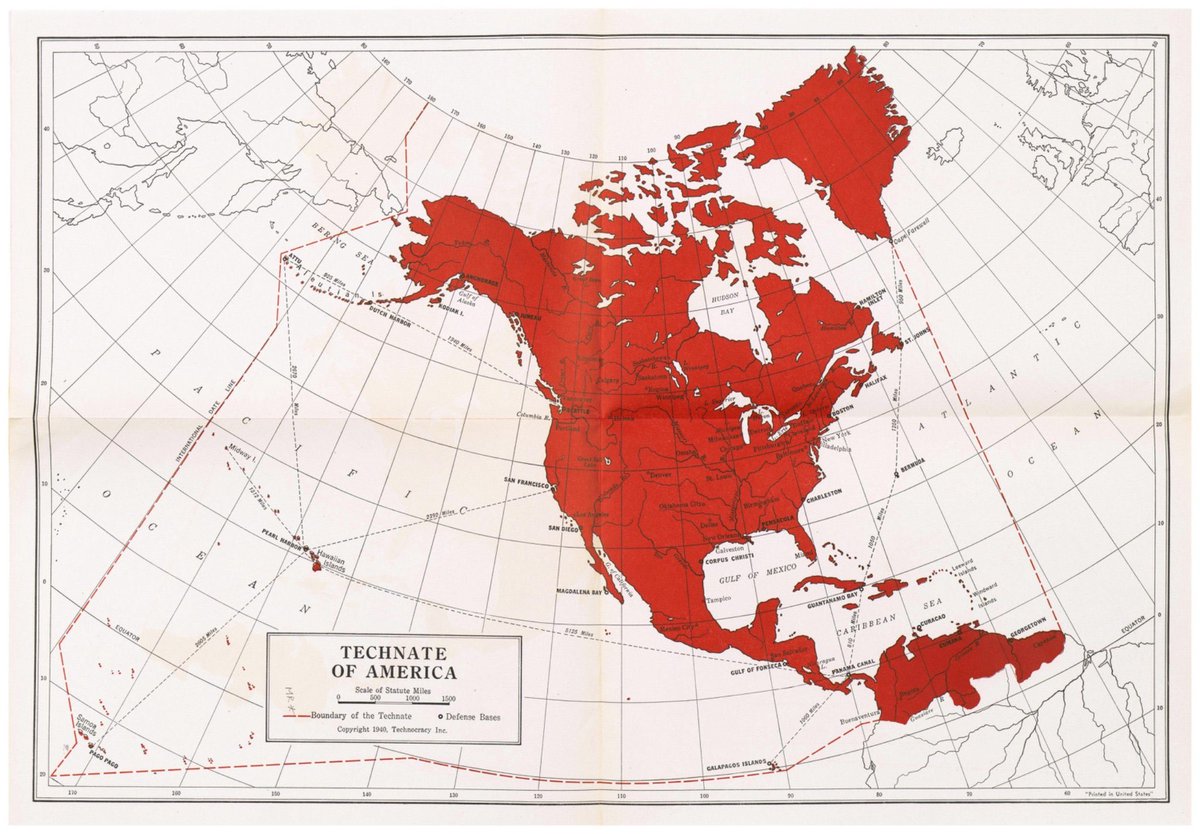
The Technate: A proposed North American "superstate" including the US, Canada, Mexico, Venezuela, Colombia, and the Guyanas, governed by technocratic principles.
Energy Accounting: The movement advocated replacing money with energy certificates (representing units of energy like joules or ergs) to distribute goods and services.
Reduced Workload: Technocrats claimed that through scientific management, a 16-hour work week (4 hours a day, 4 days a week) would be sufficient for all citizens to enjoy abundance.
Modern Context: While Technocracy Inc. still exists in a diminished form, its ideas are often discussed today in relation to data-driven governance, automation, and the influence of tech elites. Notably, Elon Musk's grandfather, Joshua Haldeman, was a prominent leader in the Canadian branch of the movement.

I agree with you that the Japa problem is a major brain drainer. Especially the emigration of skilled and/or essential labor (Medical ICT, Engineering....etc Proffessionals.)
The skilled labor shortage however is not in my opinion (you can educate me if you reckon I'm off here), is not the primary cause of higher-skilled labor exits, but a systemic decay that produces below potential amount of skilled labor, who are then overworked and underpaid as both public and private employers are operating on a tight budget constraint to differing degrees.
There's also the fact that these higher-skilled set of Diasporans (and even lower-skilled or not so high skilled), are also responsible for the steady inflow of FX at no cost to the federal government.
Add to the fact that we have India, China, and a swathe of Asian economic giants with larger diaspora populations in similar countries, it becomes apparent or at least give a signal that Japa is not the problem but the symptom.
Why do these countries have a strong and adequate is skilled labor force, is due to years of consistent infrastructure spending to develop both natural and human resources.
A high HDI is accompanied by a higher skilled workforce. And as such the societal neglect in Nigerian policy thinking is the major problem. For if we produced a suffice amount of high skilled labor, invested in infrastructure that aids development (tangible and intangible), the employment conditions for white and blue collar labor markets would be much better.
However that still doesn't stop emigration, it just makes it less [negatively] effectual on the economy. So whilst skilled labour shortage is a dynamic of global labour market, it is primarily a consequence of a relatively low ratio of skilled workers to total labor force.
The pipeline is weak and so is the distribution, making this primarily more of a local a supply issue than a global demand issue - this is according to ZE analyses.
Bottom Line is;
Countries with high economic and trade complexities, do not struggle with local talent.
However an economy that depends on a narrow range of resource-linked industries, thereby operating on a lower level of economic and trade complexity would struggle with local talent, with or without Japa.
Hence the global dynamic is definitely a factor, but one built on the foundation of a weak labor market formskilled workers.
✍🏾By @MuhammadNedu (backup account other account got suspended), for Zero Equilibrium® Economics.
[And it's lovely to see you post again. I missed your insights and free knowledge sharing.]

The missing piece of the puzzle in this talent conversation is Japa. When we’re ready to talk about the skilled labour shortage in Nigeria as a dynamic of the GLOBAL labour market, I’ll be there.

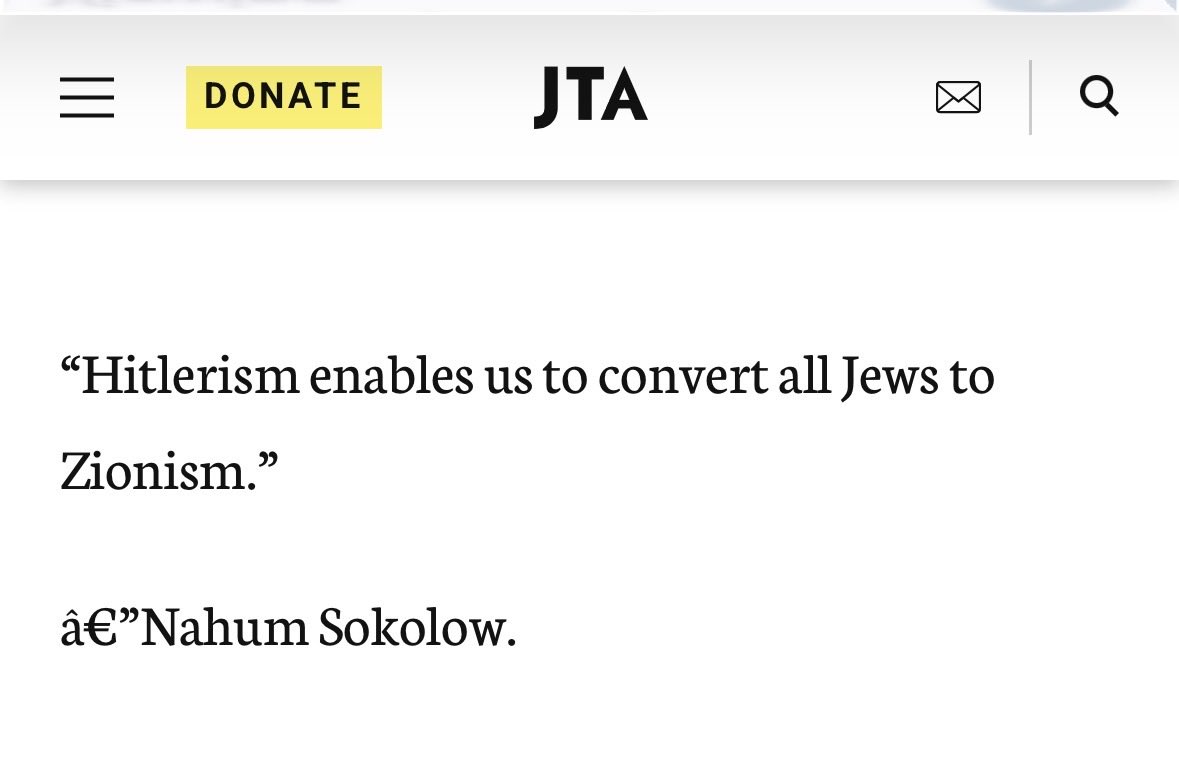
@voiceofrabbis 1930s JAE Jewish Agency for Palestine/ Zionist Rescue Committee was bankrupt, emigration to Palestine had stalled to
ZERO. Hitler really did provide the lifeline Zionism needed..

@47thMaga_ I want every Solider who died during OUF OEF BACK!! wars for nothing but to push the United Nations one World Agenda. Im Ret USAF RN i don’t understand why America runs all over fixing foreign issues. We have everything we need. Shut down emigration. Close down our country period

Tracing History, Heritage, and Hardship at Europe’s Emigration Museums https://t.co/Avl8m3gIqr

Hindus in Bangladesh, comprising about 8% of the population, endure persistent challenges like sporadic violence, land seizures via discriminatory property laws, and barriers in jobs and education. Recent political shifts have triggered intensified attacks on Hindu homes, temples, and shops, with hundreds of incidents reported shortly after. Though the constitution offers safeguards, poor implementation and growing religious extremism keep minorities sidelined, driving emigration and fear irrespective of ruling administrations.
-end-
#BangladeshNow #BreakingNews #BangladeshUpdate #BangladeshMedia #PoliticalNews #BangladeshCricket #CricketBangladesh #BDCricket #NewsAlert #TrendingNow #GlobalNews #SouthAsia #WorldNews #VoiceOfTheAwami #VibeBangla @bdperspectives @bdwatch2024 @Bangladesh_Fact @probirbidhan @paulocasaca1 @salah_shoaib @Ekattor_71 @sajeebwazed @BjiNc41 @MollaNazimUddi1 @tariquebd78 @Chowdhury_Anee @BJI_Official @IvankaNews @avarakai @DCIL1978 @Spirit_of_1971 @Spirit_of_1971_ @zaha_zahid @SarwarWassel @AwanShikder @MAarafat71 @ODNIgov @Sparrow_Revolt @abdullahalkafi @safiqul_masud @info_shibir @bengalvoice71 @MD5HT @Mahamud313 @sanjibdeb2016 @theAshleyMolly @albd1971 @ALBDMedia @Helal_12_16_71 @alliance_1971 @JoyBangla2_0 @Strikeatdawn31 @hindus47 @deepscribble @AA0FAISAL @JannatSami99212 @NaomiNoor1510 @VoiceOfTheAwami @VibeBangla @VHPDigital @hindupost @PMOIndia @MahantYogiG @miryar_baloch

@ThedawnIAM In Canada, it's not emigration that's the problem, it's those who are already here. Because emigrants to Canada who come through emigration programs are those with university degrees and who enter with at least $24,000/person for the first 3 months, until they receive their PR.

حضرت عمر بن خطاب رضی اللہ عنہ فرماتے ہیں: میں نے رسول اللہ صلی اللہ علیہ وسلم کو فرماتے سنا:
"اعمال کا دارومدار نیتوں پر ہے، اور ہر شخص کو وہی ملے گا جس کی اس نے نیت کی۔ پس جس کی ہجرت اللہ اور اس کے رسول کی طرف ہو تو اس کی ہجرت اللہ اور اس کے رسول کی طرف ہے، اور جس کی ہجرت دنیا حاصل کرنے کے لیے ہو یا کسی عورت سے شادی کرنے کے لیے ہو تو اس کی ہجرت اسی کی طرف ہے جس کی طرف اس نے ہجرت کی۔"
Sahih Muslim:1907
"Actions are (judged) by intentions, and every person will have what they intended. So whoever emigrated for the sake of Allah and His Messenger, then their emigration is for Allah and His Messenger. And whoever emigrated for worldly gain or to marry a woman, then their emigration is for whatever they emigrated for."

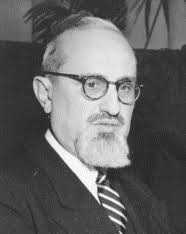
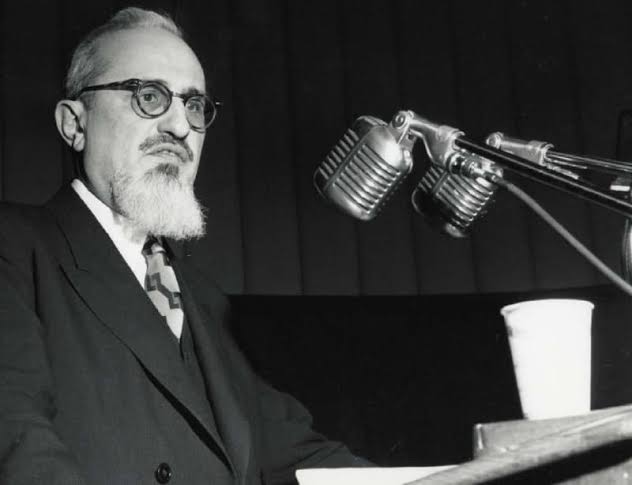
Joseph Ber Soloveitchik was born in 1903 in Pruzhany, Poland. He was raised in Chaslavichy, where he received intensive private instruction from his father, Rabbi Moshe Soloveitchik, focusing almost exclusively on the Brísker method of Talmudic analysis. He did not attend a formal primary school, receiving his secular education from private tutors.
University of Berlin (1926–1932)
In 1926, Soloveitchik moved to Berlin to pursue secular studies. He spent six years at the University of Berlin, where he studied philosophy, physics, and mathematics.
Doctorate: He completed his PhD in 1932 on the epistemology and metaphysics of the German philosopher Hermann Cohen.
Rabbinic Ordination: Concurrently, he received semikhah from the Libeber (the Hildesheimer Rabbinical Seminary) in Berlin.
Notable Connections in Berlin
During his Berlin years, Soloveitchik moved in a circle of elite Jewish intellectuals and future leaders who were also navigating the synthesis of traditional Torah study and Western academia:
Rabbi Chaim Heller: Soloveitchik developed a close bond with Heller, who had founded the Beth Ha-Midrash Ha-Elyon in Berlin. Heller, a master of both traditional scholarship and modern philology, served as a mentor and father figure to the young Soloveitchik during his university years.
Rabbi Menachem Mendel Schneerson: The future Lubavitcher Rebbe was also in Berlin at this time, attending lectures at the university. While they maintained different theological trajectories, they were acquainted and shared a mutual respect rooted in their rigorous intellectual backgrounds.
Rabbi Yitzchak Hutner: The future Rosh Yeshiva of Chaim Berlin was another contemporary in the Berlin circle. Hutner attended lectures at the University of Berlin and participated in the same intellectual ferment, though he focused more heavily on the Maharal and philosophical thought.
Emigration
In 1932, shortly after completing his doctorate and married to Dr. Tonya Lewit, Soloveitchik emigrated to the United States. He settled in Boston, where he founded the Maimonides School and eventually succeeded his father as the leading figure at RIETS (Yeshiva University) in New York.
The Skokie/Chicago Monetary Problem
In the mid-1930s, Soloveitchik was a candidate for a high-ranking rabbinic position in Chicago (specifically associated with the Hebrew Theological College/Skokie circles). A contract was drafted, but the Great Depression had decimated communal funds. The community could not guarantee his salary, leading to a breakdown in negotiations. This financial "fiasco" was a primary reason he remained anchored in Boston rather than moving to the larger Jewish center of Chicago.
The Boston Synagogue
Soloveitchik became the Chief Rabbi of the Jewish Community of Boston (the Vaad Ha-Ir). Because he lacked a physical, formal semikhah certificate—having been "ordained" orally and through reputation by his father and grandfather—he reportedly had to request a telegram from Europe (from his father, Rabbi Moshe) to confirm his rabbinic credentials to the Boston community leaders who demanded formal proof for his appointment.
Religious Leadership in Boston
Mechitzot: He waged a rigorous campaign to install mechitzot (partitions) in synagogues that had adopted mixed seating. He famously ruled that a synagogue without a mechitzah loses its sanctity and one should not hear the Shofar there on Rosh Hashanah.
Kashrut: He took over the supervision of local slaughterhouses and butchers to eliminate corruption and ensure "Glatt" standards, often facing intense pushback from established commercial interests.
Educational Vision: YU Branch and Kollel
Maimonides School: Founded in 1937, it was his primary vehicle for co-educational, high-level Torah and secular studies.
The "Boston Branch" of Yeshiva College championed by his Father who was Rosh Yeshiva at Yeshiva College in 1929:
There were early discussions about establishing a New England branch of Yeshiva College (YU) or a high-level Kollel in Boston. While a formal YU branch did not materialize, his presence turned Boston into a destination for advanced students, effectively creating a "de facto" Kollel environment through his private lectures and the Maimonides School.
While Rav Kook was in his final illness in the summer of 1935, Rabbi Soloveitchik visited Palestine for the first and only time. He was there specifically as a candidate for the Chief Rabbinate of Tel Aviv, not the national Chief Rabbinate.
The 1935 Candidacy
The Position: Chief Rabbi of Tel Aviv-Jaffa.
The Competitors: The other two finalists were Rabbi Yitzchak HaLevi Herzog and Rabbi Moshe Avigdor Amiel.
The Result: Rabbi Herzog was initially seen as the frontrunner for Tel Aviv, but after Rav Kook died during the election process, Herzog was chosen to succeed him as the Chief Rabbi of Palestine. This left the Tel Aviv position to be contested by the Rav and Rabbi Amiel; Rabbi Amiel ultimately won the election.
Upon the death of his father, Rabbi Moshe Soloveitchik, in January 1941, the Rav assumed the position of senior Rosh Yeshiva at RIETS (the rabbinical school of Yeshiva College). His role was not merely a transition of title, but a fundamental shift in the institution's intellectual and communal direction.
Intellectual Dominance and the Shiur
The centerpiece of his role was the daily Shiur (lecture) delivered in the "Gemorah Shiur" room.
The Brísker Method: He successfully transplanted the analytical, conceptual methodology of his grandfather, Rabbi Chaim Soloveitchik, into the American modern-orthodox context.
Duration and Intensity: His lectures were famous for their length (often 3–5 hours) and their rigorous demand for logical consistency, effectively setting the highest academic standard for Torah study in the United States.
The "Sovereign" of American Orthodoxy
Because his father had been a more reserved figure focused primarily on the Yeshiva, the Rav’s role expanded into the public sphere:
Ordination (Semikhah): Over the course of several decades, he personally ordained approximately 2,000 rabbis, essentially staffing the pulpits of the majority of Orthodox synagogues in North America.
The Break with Agudat Yisrael
During the early 1940s, while at YC, his dissatisfaction with the Agudat Yisrael reached a breaking point.
WWII Response: He was deeply critical of the Agudah's perceived political passivity and failure to act more aggressively regarding the rescue of European Jewry.
Shift to Mizrachi: While he didn't "join" Mizrachi as a political operative immediately, he began providing the movement with a sophisticated philosophical and halakhic framework. He eventually became the Honorary President of the Mizrachi Organization of America (Religious Zionists of America).
Following his father’s passing in 1941, Rabbi Joseph B. Soloveitchik (the Rav) assumed the role of Senior Rosh Yeshiva at RIETS/Yeshiva College. His tenure marked the intellectual solidification of what became known as Central Orthodoxy.
The Architect of the American Rabbinate
The Rav’s primary role was the training and certification of the American Orthodox rabbinical class.
The Shiur: He transplanted the Brísker method (conceptual Talmudic analysis) into the American landscape. This rigorous, logical framework provided a generation of American-born students with an intellectual depth that rivaled European centers of study.
Halakhic Authority: He served as the ultimate Posek (decisor) for the Rabbinical Council of America (RCA). This created a centralized halakhic infrastructure for hundreds of pulpits across North America.
The relationship between Rabbi Joseph B. Soloveitchik (the Rav) and Rabbi Moshe Feinstein (Rav Moshe) was one of deep mutual respect, rooted in both family ties and their shared roles as the primary halakhic authorities for American Orthodoxy in the mid-20th century.
Family Connection
The two were cousins. The Rav’s mother, Pesha Feinstein, was a first cousin of Rav Moshe. This familial bond provided a foundation for a lifelong relationship that transcended their different ideological circles (Yeshiva University vs. the "Yeshivish" world of the Agudah).
+1
Mesivtha Tifereth Jerusalem (MTJ) and the Soloveitchik Family
While the Rav’s primary base was Yeshiva University in Washington Heights, his family had direct ties to Rav Moshe’s yeshiva on the Lower East Side:
Rabbi Ahron Soloveichik: The Rav’s younger brother actually received his semikhah (rabbinic ordination) from Rav Moshe Feinstein and taught at MTJ for approximately 20 years before moving to Chicago.
Mutual Recognition: Despite their distinct institutional affiliations, Rav Moshe famously referred to the Rav as the "melamed" (teacher) of the generation, recognizing his unmatched ability to explain complex Talmudic concepts.
Collaboration and Correspondence
The two giants often collaborated on major communal policy, particularly when the integrity of the Orthodox community was at stake:
Interfaith Dialogue: In the 1960s, both issued strong prohibitions against interfaith theological dialogue (particularly with the Catholic Church). While their reasoning differed slightly—Rav Moshe focused on the prohibition of "heresy," while the Rav emphasized the "incommensurability" of different faith experiences—they stood as a united front for the Rabbinical Council of America (RCA).
Public Honor: In 1984, Rav Moshe contributed the opening essay to a Festschrift (honorary volume) titled Sefer Kevod Ha-Rav, published for the Rav’s 80th birthday. This was a significant public gesture, as it signaled Rav Moshe’s refusal to participate in the ideological distancing practiced by more extremist elements of the Agudah.
Students and Family Legacy
Rabbi Aharon Lichtenstein (Son-in-law): Served as Rosh Yeshiva of Yeshivat Har Etzion (Gush Etzion, Israel). He became the primary exponent of the Rav’s intellectual synthesis, and Brísker methodology
Rabbi Moshe Meiselman (Nephew): PhD in Mathematics from MIT, Professor at City College, Launched YU High School for Boys and Girls in LA, YULA and a Kollel.
Founder and Rosh Yeshiva of Yeshivas Toras Moshe in Jerusalem. He emphasizes the more traditional, non-synthesis aspect of the Soloveitchik legacy.
Dr. Haym Soloveitchik (Son): A world-renowned historian of Halakha and Professor at Yeshiva University. and Hebrew University. He is known for his seminal academic work, Rupture and Reconstruction, analyzing the shift from "mimetic" to "text-based" tradition.
Grandchildren
Rabbi Mayer Twersky: A Rosh Yeshiva at RIETS (YU),
Rabbi Mayer Twersky is the rabbi of Congregation Beth Abraham in Bergenfield, New Jersey.
He also holds the Leib Merkin Distinguished Professorial Chair in Talmud and Jewish Philosophy at Yeshiva University’s Rabbi Isaac Elchanan Theological Seminary (RIETS).
The massacre took place at the Bnei Torah Kehillat Yaakov synagogue in the Har Nof neighborhood of Jerusalem during the morning Shacharit prayers.
The Attack: Two cousins from the East Jerusalem neighborhood of Jabel Mukaber entered the synagogue armed with meat cleavers and pistols. They began attacking worshippers during the Amidah prayer donned in Talis and Teffilin.
The Victims: Five people were murdered during the attack, and a Druze police officer, Zidan Saif, died later from wounds sustained while engaging the attackers.
*****Rabbi Mosheh Twersky: Among those killed was the Rav's grandson, Rabbi Mosheh Twersky (age 59), who was a senior lecturer at Yeshivas Toras Moshe. He was the first victim identified.********
Grandchildren (The Lichtenstein Children):
Rabbi Mosheh Lichtenstein: Current Co-Rosh Yeshiva of Yeshivat Har Etzion.
Rabbi Yitzchak Lichtenstein: Rabbi Yitzchak Abba Lichtenstein (the second son of Rav Aharon) is a Rosh Yeshiva at Yeshiva Torah Vodaas in Brooklyn, New York.
previously served as the Mara D’asra (Rabbi) of Kehillas Bais Avrohom in Monsey, he transitioned to his leadership role at Torah Vodaas to fill the void left by the passing of senior Roshei Yeshiva such as Rav Yisroel Belsky.
He is widely recognized for his expertise in the Brísker method and his editorial work on the manuscripts of the Soloveitchik family.


Most Popular Users

Elon Musk 
@elonmusk
239.8M followers

Barack Obama
@barackobama
118.6M followers

Cristiano Ronaldo
@cristiano
114.3M followers

Donald J. Trump
@realdonaldtrump
111.7M followers

Narendra Modi
@narendramodi
106.9M followers

Rihanna
@rihanna
98.6M followers

NASA
@nasa
92.1M followers

Justin Bieber
@justinbieber
91.7M followers

KATY PERRY
@katyperry
89.9M followers

Taylor Swift
@taylorswift13
83.9M followers

Lady Gaga
@ladygaga
75.4M followers

Virat Kohli
@imvkohli
73.3M followers

Kim Kardashian
@kimkardashian
70.8M followers

YouTube
@youtube
68.6M followers

Neymar Jr
@neymarjr
66.3M followers

Bill Gates
@billgates
65.1M followers

Selena Gomez
@selenagomez
63M followers

The Ellen Show
@theellenshow
62.1M followers

CNN
@cnn
61.7M followers

X
@x
60.6M followers