

Top Tweets for #FullStatehood

Rahul Gandhi Leads Opposition MPs In Parliament March Demanding Full Statehood For Jammu & Kashmir
#RahulGandhi #JammuKashmir #JammuKashmirStatehood #FullStatehood #Parliament
https://t.co/qm8vPpWQh7

@DrewTForNV Could Nevada’s 41M acres of federal land become a homestead haven? Hemp, hardy grasses, and mining could unlock 24-33M acres, reshaping the Silver State’s future. #FullStatehood Now!
https://t.co/G4iQhvsz3L
Reimagining Nevada’s Federal Lands: Could Homesteading Work in the Silver State?
Nevada and Nebraska joined the Union in 1867, but their destinies diverged sharply. Nebraska’s fertile plains welcomed homesteaders under the 1862 Homestead Act, turning federal land into private farms until just 1% remains public today. Nevada, with its rugged deserts and scant rainfall, saw little of that transformation—83% of its 70.7 million acres, or about 48 million, still sit under federal control, mostly managed by the Bureau of Land Management (BLM). This disparity fuels a Western grievance: why do states like Nevada bear such heavy federal oversight while eastern counterparts govern their own soil? Utah’s recent lawsuit against the feds—filed in 2024 and rebuffed by the Supreme Court in January 2025—sought to reclaim 18.5 million acres of unappropriated land, spotlighting a question Nevada might soon echo: could homesteading finally unlock its vast BLM holdings?
The Historical Misfire
Nevada’s federal land burden isn’t a conspiracy—it’s geography. The Homestead Act offered 160 acres to anyone who’d farm it for five years, but Nevada’s 7–10 inches of annual rain and rocky soils deterred settlers. Only 2% of its land was claimed, leaving the feds in charge when statehood terms forced Nevada to “forever disclaim” unappropriated tracts. Today, the BLM stewards 41 million acres of this legacy, dwarfing Nebraska’s privatized plains. The effects ripple through Nevada’s economy and identity: limited taxable land, sluggish development approvals, and a sense of disenfranchisement as Washington, D.C., calls the shots. Yet suitability, not sentiment, determines what’s possible. Could modern homesteading—tuned to Nevada’s arid reality—recast this story?
Farming: Hemp as a Desert Lifeline
Traditional farming flops in Nevada’s dry expanse. Just 1% of the state (700,000 acres) grows crops, mostly alfalfa guzzling 40–50 inches of irrigated water yearly. BLM lands, often remote and parched, offer little hope for corn or wheat. Enter industrial hemp, a drought-tolerant marvel needing only 10–15 inches of water. Legal since 2018 and tested in arid states like Colorado, hemp yields 500–1,000 pounds per acre for fiber, seed, or CBD, fetching $500–$2,000 per acre versus alfalfa’s $200–$300. Nevada’s semi-arid valleys—think Elko or White Pine counties, with 8–10 inches of rain—could sustain it with modest irrigation from shallow aquifers or seasonal streams.
Without hemp, viable BLM farmland tops out at 500,000–1 million acres (1.2%–2.4% of its 41 million). With it, that jumps to 2–3 million acres, supporting 6,250–18,750 homesteads of 160–320 acres each. Water remains the rub—Nevada’s over-allocated rivers and shrinking aquifers cap scale—but hemp’s thriftiness could add $1–$6 billion annually to the state’s economy, dwarfing traditional agriculture’s $300 million. It’s not Nebraska’s breadbasket, but a niche homestead revival.
Ranching: Hardy Grasses to the Rescue
Ranching already leans on BLM land, with 18 million acres leased for grazing at low rates—10–50 acres per animal unit month (AUM) due to sparse sagebrush and thin rains. Drought-resistant grasses like crested wheatgrass or bluebunch wheatgrass, thriving on 6–12 inches of water, could change that. Reseeding degraded BLM tracts—500,000 acres burn yearly in Nevada wildfires—boosts forage to 5–20 acres per AUM, doubling or tripling capacity. Models from Utah and Australia show sustainability with rotational grazing and solar-powered wells.
Originally pegged at 15–20 million acres (36.6%–48.8% of BLM land), ranching could claim 20–25 million acres with hardy grasses, hosting 31,000–39,000 homesteads of 640 acres each (a nod to the 1916 Stock-Raising Homestead Act). This lifts grazing revenue from $150 million to $200–$300 million annually, though seeding costs ($20–$50/acre) and wild horse herds (40,000-plus in Nevada) demand upfront investment and management. It’s a rugged, viable upgrade to Nevada’s cowboy roots.
Mining: The Evergreen Ace
Mining needs no coaxing. Nevada leads U.S. gold production and eyes lithium for the clean-energy boom. BLM lands hold 2 million active mining acres, with exploration suggesting 5 million more (4.9%–12.2%) could fuel thousands of claims under the 1872 Mining Law. Homesteading wouldn’t reinvent this wheel—federal leases already work—but state control might speed permits. Economic stakes are sky-high: mining pumps $9 billion yearly into Nevada, untouched by hemp or grass innovations.
A New Homestead Map
Blend these uses, and 24–33 million BLM acres (58.5%–80.5%) could homestead: 2–3 million for hemp farming, 20–25 million for ranching, and 2–5 million for mining. The rest—8–17 million acres—stays public for conservation, recreation, or tribal needs, honoring Nevada’s ecological limits. That’s 37,250–62,750 homesteads total, a far cry from 1867’s bust. Water, infrastructure (wells, processing plants), and funding (seeding, subsidies) are hurdles, but the math holds: Nevada’s arid strengths, not its weaknesses, drive this vision.
Why It Matters
Nevada’s federal land lock—83% versus Nebraska’s 1%—chafes locals. The state can’t tax or fully exploit 48 million acres, stunting growth while federal rules bottleneck projects like Las Vegas sprawl. Utah’s 2024 suit, backed by Nevada and 11 other states, argued this violates state sovereignty under the Constitution’s Property Clause. The Supreme Court’s January 2025 dodge keeps the fight alive, likely headed to lower courts. Success could cede Nevada’s 41 million BLM acres to state hands, amplifying homesteading’s odds.
Yet trade-offs loom. State control risks privatization—selling to developers or corporations—eroding public access cherished by hikers and hunters. Environmentalists warn of overgrazing, water depletion, and habitat loss (think sage grouse), though hemp and grasses mitigate some strain. Feds counter that these lands belong to all Americans, not just Nevadans. A homestead push would test that balance.
Looking Ahead
Nevada’s BLM lands aren’t Nebraska’s loamy fields, but they’re not barren either. Hemp farming, grass-fed ranching, and mining could homestead 24–33 million acres, blending economic punch with desert reality. It’s no 1867 redo—water and will limit scale—but a tailored fix for a state long sidelined by its own terrain. As Utah’s legal saga unfolds, Nevada might seize this moment, proving arid lands can yield more than dust and dreams. Congress, take note: the Silver State’s next chapter could rewrite the West’s federal legacy.

You can't build affordable housing on federal land.
Federal lands must be transferred to the People of Nevada!
Unappropriated federal lands should not be "sold" to Nevadans. That land is our land. Congress should homestead Nevada instead.
#FullStatehood NOW!
https://t.co/IrEAg1NUEZ
Reimagining Nevada’s Federal Lands: Could Homesteading Work in the Silver State?
Nevada and Nebraska joined the Union in 1867, but their destinies diverged sharply. Nebraska’s fertile plains welcomed homesteaders under the 1862 Homestead Act, turning federal land into private farms until just 1% remains public today. Nevada, with its rugged deserts and scant rainfall, saw little of that transformation—83% of its 70.7 million acres, or about 48 million, still sit under federal control, mostly managed by the Bureau of Land Management (BLM). This disparity fuels a Western grievance: why do states like Nevada bear such heavy federal oversight while eastern counterparts govern their own soil? Utah’s recent lawsuit against the feds—filed in 2024 and rebuffed by the Supreme Court in January 2025—sought to reclaim 18.5 million acres of unappropriated land, spotlighting a question Nevada might soon echo: could homesteading finally unlock its vast BLM holdings?
The Historical Misfire
Nevada’s federal land burden isn’t a conspiracy—it’s geography. The Homestead Act offered 160 acres to anyone who’d farm it for five years, but Nevada’s 7–10 inches of annual rain and rocky soils deterred settlers. Only 2% of its land was claimed, leaving the feds in charge when statehood terms forced Nevada to “forever disclaim” unappropriated tracts. Today, the BLM stewards 41 million acres of this legacy, dwarfing Nebraska’s privatized plains. The effects ripple through Nevada’s economy and identity: limited taxable land, sluggish development approvals, and a sense of disenfranchisement as Washington, D.C., calls the shots. Yet suitability, not sentiment, determines what’s possible. Could modern homesteading—tuned to Nevada’s arid reality—recast this story?
Farming: Hemp as a Desert Lifeline
Traditional farming flops in Nevada’s dry expanse. Just 1% of the state (700,000 acres) grows crops, mostly alfalfa guzzling 40–50 inches of irrigated water yearly. BLM lands, often remote and parched, offer little hope for corn or wheat. Enter industrial hemp, a drought-tolerant marvel needing only 10–15 inches of water. Legal since 2018 and tested in arid states like Colorado, hemp yields 500–1,000 pounds per acre for fiber, seed, or CBD, fetching $500–$2,000 per acre versus alfalfa’s $200–$300. Nevada’s semi-arid valleys—think Elko or White Pine counties, with 8–10 inches of rain—could sustain it with modest irrigation from shallow aquifers or seasonal streams.
Without hemp, viable BLM farmland tops out at 500,000–1 million acres (1.2%–2.4% of its 41 million). With it, that jumps to 2–3 million acres, supporting 6,250–18,750 homesteads of 160–320 acres each. Water remains the rub—Nevada’s over-allocated rivers and shrinking aquifers cap scale—but hemp’s thriftiness could add $1–$6 billion annually to the state’s economy, dwarfing traditional agriculture’s $300 million. It’s not Nebraska’s breadbasket, but a niche homestead revival.
Ranching: Hardy Grasses to the Rescue
Ranching already leans on BLM land, with 18 million acres leased for grazing at low rates—10–50 acres per animal unit month (AUM) due to sparse sagebrush and thin rains. Drought-resistant grasses like crested wheatgrass or bluebunch wheatgrass, thriving on 6–12 inches of water, could change that. Reseeding degraded BLM tracts—500,000 acres burn yearly in Nevada wildfires—boosts forage to 5–20 acres per AUM, doubling or tripling capacity. Models from Utah and Australia show sustainability with rotational grazing and solar-powered wells.
Originally pegged at 15–20 million acres (36.6%–48.8% of BLM land), ranching could claim 20–25 million acres with hardy grasses, hosting 31,000–39,000 homesteads of 640 acres each (a nod to the 1916 Stock-Raising Homestead Act). This lifts grazing revenue from $150 million to $200–$300 million annually, though seeding costs ($20–$50/acre) and wild horse herds (40,000-plus in Nevada) demand upfront investment and management. It’s a rugged, viable upgrade to Nevada’s cowboy roots.
Mining: The Evergreen Ace
Mining needs no coaxing. Nevada leads U.S. gold production and eyes lithium for the clean-energy boom. BLM lands hold 2 million active mining acres, with exploration suggesting 5 million more (4.9%–12.2%) could fuel thousands of claims under the 1872 Mining Law. Homesteading wouldn’t reinvent this wheel—federal leases already work—but state control might speed permits. Economic stakes are sky-high: mining pumps $9 billion yearly into Nevada, untouched by hemp or grass innovations.
A New Homestead Map
Blend these uses, and 24–33 million BLM acres (58.5%–80.5%) could homestead: 2–3 million for hemp farming, 20–25 million for ranching, and 2–5 million for mining. The rest—8–17 million acres—stays public for conservation, recreation, or tribal needs, honoring Nevada’s ecological limits. That’s 37,250–62,750 homesteads total, a far cry from 1867’s bust. Water, infrastructure (wells, processing plants), and funding (seeding, subsidies) are hurdles, but the math holds: Nevada’s arid strengths, not its weaknesses, drive this vision.
Why It Matters
Nevada’s federal land lock—83% versus Nebraska’s 1%—chafes locals. The state can’t tax or fully exploit 48 million acres, stunting growth while federal rules bottleneck projects like Las Vegas sprawl. Utah’s 2024 suit, backed by Nevada and 11 other states, argued this violates state sovereignty under the Constitution’s Property Clause. The Supreme Court’s January 2025 dodge keeps the fight alive, likely headed to lower courts. Success could cede Nevada’s 41 million BLM acres to state hands, amplifying homesteading’s odds.
Yet trade-offs loom. State control risks privatization—selling to developers or corporations—eroding public access cherished by hikers and hunters. Environmentalists warn of overgrazing, water depletion, and habitat loss (think sage grouse), though hemp and grasses mitigate some strain. Feds counter that these lands belong to all Americans, not just Nevadans. A homestead push would test that balance.
Looking Ahead
Nevada’s BLM lands aren’t Nebraska’s loamy fields, but they’re not barren either. Hemp farming, grass-fed ranching, and mining could homestead 24–33 million acres, blending economic punch with desert reality. It’s no 1867 redo—water and will limit scale—but a tailored fix for a state long sidelined by its own terrain. As Utah’s legal saga unfolds, Nevada might seize this moment, proving arid lands can yield more than dust and dreams. Congress, take note: the Silver State’s next chapter could rewrite the West’s federal legacy.
@JoeLombardoNV Could Nevada’s 41M acres of federal land become a homestead haven?
Hemp, hardy grasses, and mining could unlock 24-33M acres, reshaping the Silver State’s future.
#FullStatehood Now!
https://t.co/Ylo3gfhIr5
Could Nevada’s 41M acres of federal land become a homestead haven? Hemp, hardy grasses, and mining could unlock 24-33M acres, reshaping the Silver State’s future. #FullStatehood Now!

Congress Leader Pargat Singh Arrested in Jammu & Kashmir During Parties 'Save MGNREGA' Protest https://t.co/oo2hrqHAqG
#PargatSingh #SaveMGNREGA #JammuAndKashmir #CongressProtest #FullStatehood #ManmohanSingh #RajBhavan #JewelChowk #Democracy #EmploymentRights #PoliticalNews #IndiaNews
@PargatSOfficial

Congress Leader Pargat Singh Arrested in Jammu & Kashmir During Parties 'Save MGNREGA' Protest https://t.co/kdDAtWyBmq
#PargatSingh #SaveMGNREGA #JammuAndKashmir #CongressProtest #FullStatehood #ManmohanSingh #RajBhavan #JewelChowk #Democracy #EmploymentRights #PoliticalNews #IndiaNews
@PargatSOfficial

Harsh Dev Singh Interview: जम्मू-कश्मीर के पूर्व शिक्षा मंत्री ने की पूर्ण राज्य का दर्जा की मांग #HarshDevSingh #जम्मू_कश्मीर #FullStatehood #JammuKashmirPolitics #StatehoodDemand #PoliticalInterview #BreakingNews #IndiaPolitics #FormerEducationMinister

Breaking: @Wangchuk66 ends hunger strike, appeals to youth to shun violence.
The activist had been fasting demanding #FullStatehood & inclusion of Ladakh under the 6th Schedule.
@ANI
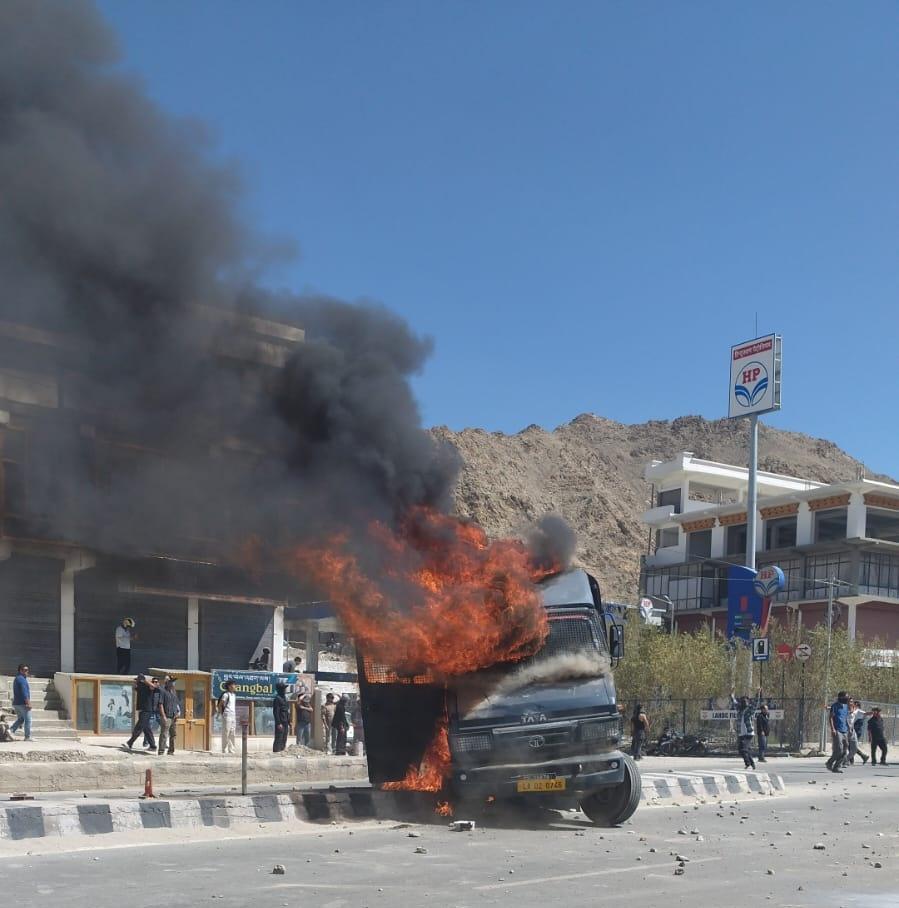
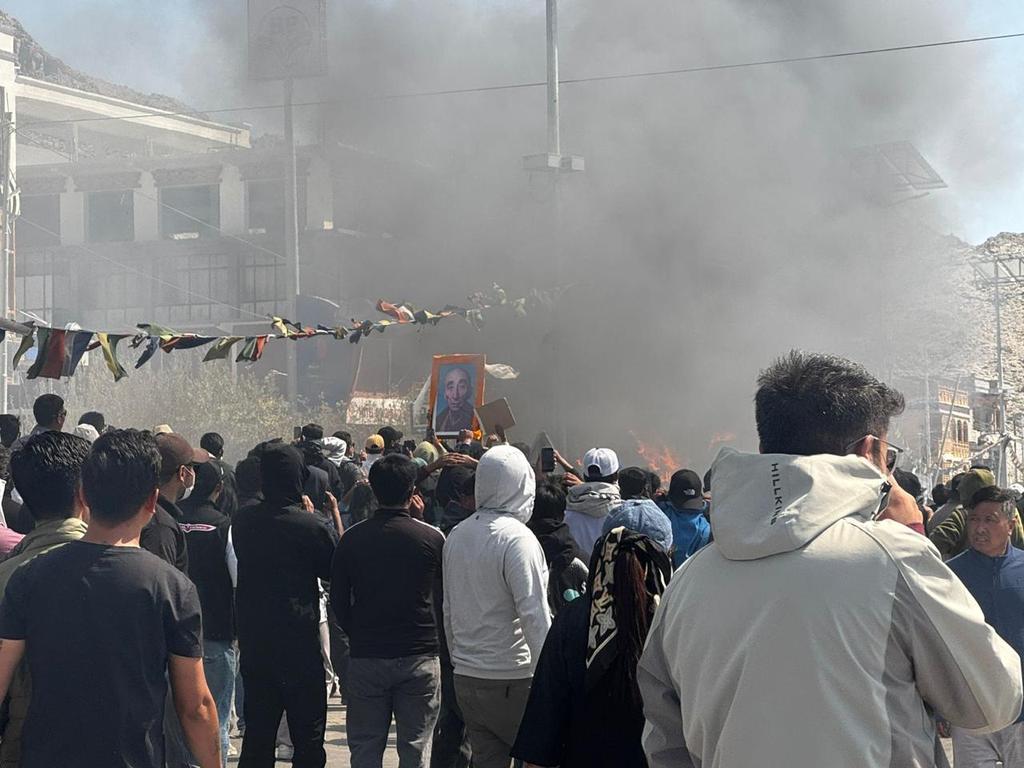
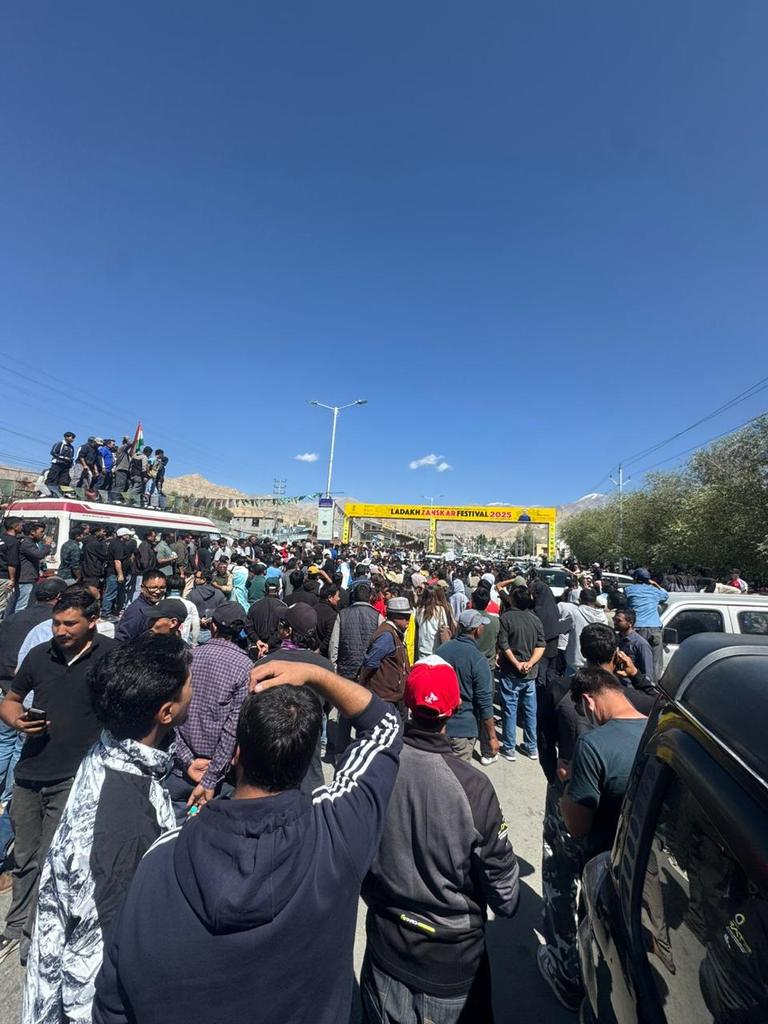

Youth take to streets in Leh, Ladakh! 🔥
BJP office & some vehicles set on fire over full statehood demand.
Led by Sonam Wangchuk, the voice is growing—Govt, listen now!
#Ladakh #FullStatehood #sonamwangchuk पूर्ण राज्य


#JammuAndKashmir కు #FullStatehood రాష్ట్ర హక్కు
ఇతర అనుకూల సంస్థల మాదిరిగా, మోదీ రాష్ట్ర పోలీసులను ఉపయోగించి, జమ్మూ కాశ్మీర్ ప్రజల పూర్తి రాష్ట్ర హోదా డిమాండ్ను అణచివేయడానికి ప్రయత్నిస్తోంది.

#Shameful - श्रीनगर की सड़कों पर "पूर्ण राज्य के हक" की मांग को लेकर किये जा रहे प्रदर्शन के दौरान मोदी की पुलिस द्वारा बेइज्जत किया जा रहा ये व्यक्ति कोई साधारण कार्यकर्ता नही बल्कि J&K विधानसभा में कांग्रेस के चुने हुए विधायक भाई @Iftkar_Ahmed_ है।
शायद यही वजह है कि प्रधानमंत्री जम्मूकश्मीर की आवाम को उनकी रियासत का हक नही देना चाहते ताकि चुने हुए जनप्रतिनिधियों को भी "लट्ठ-तंत्र" की नोंक पर रखा जा सके।
जब विधायक की ये हालत है, तो आम आदमी के अधिकारों की कल्पना करना ही बेमानी है।

#JammuAndKashmir deserves #FullStatehood
Like any other lapdog agencies, modi govt using state police to suppress full statehood demand of Jammu and Kashmiri people.
#Shameful - श्रीनगर की सड़कों पर "पूर्ण राज्य के हक" की मांग को लेकर किये जा रहे प्रदर्शन के दौरान मोदी की पुलिस द्वारा बेइज्जत किया जा रहा ये व्यक्ति कोई साधारण कार्यकर्ता नही बल्कि J&K विधानसभा में कांग्रेस के चुने हुए विधायक भाई @Iftkar_Ahmed_ है।
शायद यही वजह है कि प्रधानमंत्री जम्मूकश्मीर की आवाम को उनकी रियासत का हक नही देना चाहते ताकि चुने हुए जनप्रतिनिधियों को भी "लट्ठ-तंत्र" की नोंक पर रखा जा सके।
जब विधायक की ये हालत है, तो आम आदमी के अधिकारों की कल्पना करना ही बेमानी है।
@tsegerblom Don't sell it--Homestead it!
Could Nevada’s 41M acres of federal land become a homestead haven? Hemp, hardy grasses, and mining could unlock 24-33M acres, reshaping the Silver State’s future. #FullStatehood Now!
https://t.co/UBRrEYAHuT

Could Nevada’s 41M acres of federal land become a homestead haven? Hemp, hardy grasses, and mining could unlock 24-33M acres, reshaping the Silver State’s future. #FullStatehood Now!
@News3LV Don't sell the land, homestead it instead!
Could Nevada’s 41M acres of federal land become a homestead haven? Hemp, hardy grasses, and mining could unlock 24-33M acres, reshaping the Silver State’s future. #FullStatehood Now!
https://t.co/UBRrEYAHuT

Could Nevada’s 41M acres of federal land become a homestead haven? Hemp, hardy grasses, and mining could unlock 24-33M acres, reshaping the Silver State’s future. #FullStatehood Now!
@JosephMLombardo Not enough.
Not nearly enough.
All unappropriated federal lands must be ceded to Nevadans!
#FullStatehood Now!
https://t.co/UBRrEYAHuT
Could Nevada’s 41M acres of federal land become a homestead haven? Hemp, hardy grasses, and mining could unlock 24-33M acres, reshaping the Silver State’s future. #FullStatehood Now!
@KOLO8 Not enough.
Not nearly enough.
All unappropriated federal lands must be ceded to Nevadans!
#FullStatehood Now!
https://t.co/Vvg90W8Rl3
Could Nevada’s 41M acres of federal land become a homestead haven? Hemp, hardy grasses, and mining could unlock 24-33M acres, reshaping the Silver State’s future. #FullStatehood Now!
Could Nevada’s 41M acres of federal land become a homestead haven? Hemp, hardy grasses, and mining could unlock 24-33M acres, reshaping the Silver State’s future. #FullStatehood Now!
Reimagining Nevada’s Federal Lands: Could Homesteading Work in the Silver State?
Nevada and Nebraska joined the Union in 1867, but their destinies diverged sharply. Nebraska’s fertile plains welcomed homesteaders under the 1862 Homestead Act, turning federal land into private farms until just 1% remains public today. Nevada, with its rugged deserts and scant rainfall, saw little of that transformation—83% of its 70.7 million acres, or about 48 million, still sit under federal control, mostly managed by the Bureau of Land Management (BLM). This disparity fuels a Western grievance: why do states like Nevada bear such heavy federal oversight while eastern counterparts govern their own soil? Utah’s recent lawsuit against the feds—filed in 2024 and rebuffed by the Supreme Court in January 2025—sought to reclaim 18.5 million acres of unappropriated land, spotlighting a question Nevada might soon echo: could homesteading finally unlock its vast BLM holdings?
The Historical Misfire
Nevada’s federal land burden isn’t a conspiracy—it’s geography. The Homestead Act offered 160 acres to anyone who’d farm it for five years, but Nevada’s 7–10 inches of annual rain and rocky soils deterred settlers. Only 2% of its land was claimed, leaving the feds in charge when statehood terms forced Nevada to “forever disclaim” unappropriated tracts. Today, the BLM stewards 41 million acres of this legacy, dwarfing Nebraska’s privatized plains. The effects ripple through Nevada’s economy and identity: limited taxable land, sluggish development approvals, and a sense of disenfranchisement as Washington, D.C., calls the shots. Yet suitability, not sentiment, determines what’s possible. Could modern homesteading—tuned to Nevada’s arid reality—recast this story?
Farming: Hemp as a Desert Lifeline
Traditional farming flops in Nevada’s dry expanse. Just 1% of the state (700,000 acres) grows crops, mostly alfalfa guzzling 40–50 inches of irrigated water yearly. BLM lands, often remote and parched, offer little hope for corn or wheat. Enter industrial hemp, a drought-tolerant marvel needing only 10–15 inches of water. Legal since 2018 and tested in arid states like Colorado, hemp yields 500–1,000 pounds per acre for fiber, seed, or CBD, fetching $500–$2,000 per acre versus alfalfa’s $200–$300. Nevada’s semi-arid valleys—think Elko or White Pine counties, with 8–10 inches of rain—could sustain it with modest irrigation from shallow aquifers or seasonal streams.
Without hemp, viable BLM farmland tops out at 500,000–1 million acres (1.2%–2.4% of its 41 million). With it, that jumps to 2–3 million acres, supporting 6,250–18,750 homesteads of 160–320 acres each. Water remains the rub—Nevada’s over-allocated rivers and shrinking aquifers cap scale—but hemp’s thriftiness could add $1–$6 billion annually to the state’s economy, dwarfing traditional agriculture’s $300 million. It’s not Nebraska’s breadbasket, but a niche homestead revival.
Ranching: Hardy Grasses to the Rescue
Ranching already leans on BLM land, with 18 million acres leased for grazing at low rates—10–50 acres per animal unit month (AUM) due to sparse sagebrush and thin rains. Drought-resistant grasses like crested wheatgrass or bluebunch wheatgrass, thriving on 6–12 inches of water, could change that. Reseeding degraded BLM tracts—500,000 acres burn yearly in Nevada wildfires—boosts forage to 5–20 acres per AUM, doubling or tripling capacity. Models from Utah and Australia show sustainability with rotational grazing and solar-powered wells.
Originally pegged at 15–20 million acres (36.6%–48.8% of BLM land), ranching could claim 20–25 million acres with hardy grasses, hosting 31,000–39,000 homesteads of 640 acres each (a nod to the 1916 Stock-Raising Homestead Act). This lifts grazing revenue from $150 million to $200–$300 million annually, though seeding costs ($20–$50/acre) and wild horse herds (40,000-plus in Nevada) demand upfront investment and management. It’s a rugged, viable upgrade to Nevada’s cowboy roots.
Mining: The Evergreen Ace
Mining needs no coaxing. Nevada leads U.S. gold production and eyes lithium for the clean-energy boom. BLM lands hold 2 million active mining acres, with exploration suggesting 5 million more (4.9%–12.2%) could fuel thousands of claims under the 1872 Mining Law. Homesteading wouldn’t reinvent this wheel—federal leases already work—but state control might speed permits. Economic stakes are sky-high: mining pumps $9 billion yearly into Nevada, untouched by hemp or grass innovations.
A New Homestead Map
Blend these uses, and 24–33 million BLM acres (58.5%–80.5%) could homestead: 2–3 million for hemp farming, 20–25 million for ranching, and 2–5 million for mining. The rest—8–17 million acres—stays public for conservation, recreation, or tribal needs, honoring Nevada’s ecological limits. That’s 37,250–62,750 homesteads total, a far cry from 1867’s bust. Water, infrastructure (wells, processing plants), and funding (seeding, subsidies) are hurdles, but the math holds: Nevada’s arid strengths, not its weaknesses, drive this vision.
Why It Matters
Nevada’s federal land lock—83% versus Nebraska’s 1%—chafes locals. The state can’t tax or fully exploit 48 million acres, stunting growth while federal rules bottleneck projects like Las Vegas sprawl. Utah’s 2024 suit, backed by Nevada and 11 other states, argued this violates state sovereignty under the Constitution’s Property Clause. The Supreme Court’s January 2025 dodge keeps the fight alive, likely headed to lower courts. Success could cede Nevada’s 41 million BLM acres to state hands, amplifying homesteading’s odds.
Yet trade-offs loom. State control risks privatization—selling to developers or corporations—eroding public access cherished by hikers and hunters. Environmentalists warn of overgrazing, water depletion, and habitat loss (think sage grouse), though hemp and grasses mitigate some strain. Feds counter that these lands belong to all Americans, not just Nevadans. A homestead push would test that balance.
Looking Ahead
Nevada’s BLM lands aren’t Nebraska’s loamy fields, but they’re not barren either. Hemp farming, grass-fed ranching, and mining could homestead 24–33 million acres, blending economic punch with desert reality. It’s no 1867 redo—water and will limit scale—but a tailored fix for a state long sidelined by its own terrain. As Utah’s legal saga unfolds, Nevada might seize this moment, proving arid lands can yield more than dust and dreams. Congress, take note: the Silver State’s next chapter could rewrite the West’s federal legacy.
@AaronDFordNV Remove 500k illegal aliens from Nevada and you will reduce the stress on the housing market.
Sue the feds to turn over unappropriated federal lands and you will reduce the stress on the housing market.
Nevada #FullStatehood!


जम्मू-कश्मीर का राज्य का दर्जा बहाल किया जाना चाहिए, अखिलेश यादव ने उठाई मांग
Read At:
https://t.co/JwwBIzMr13
#Jammukashmir #AkhileshYadav #fullstatehood
| @yadavakhilesh | @samajwadiparty

‘केंद्र का काम complete statehood दिलाने का है। अगर नहीं हुआ तो फिर कोर्ट का दरवाज़ा खटखटाना होगा’। - @OmarAbdullah
@Saurabh_Unmute
#JammuKashmirElection #FullStatehood #JammuKashmirElection2024
Full Video link
https://t.co/ss8FRIMzdA

Amit Shah : Jammu Kashmirની ચૂંટણીમાં ભાજપનો સંકલ્પ પત્ર જાહેર | Gujarat First
@amitshah
#JammuKashmirElections #BJPManifesto #AmitShah #Article370 #BJPPromises #JKPolls #FullStatehood #EmploymentInJK #NationalConference #CongressAttacked #TourismDevelopment #EducationForAll #Gfcard #Gujaratfirst
Last Seen Hashtags on Sotwe
Trends for you
Most Popular Users

Elon Musk 
@elonmusk
241.2M followers

Barack Obama
@barackobama
119.1M followers

Cristiano Ronaldo
@cristiano
112.7M followers

Donald J. Trump
@realdonaldtrump
111.8M followers

Narendra Modi
@narendramodi
107.1M followers

Rihanna
@rihanna
98.2M followers

NASA
@nasa
92.2M followers

Justin Bieber
@justinbieber
91.4M followers

KATY PERRY
@katyperry
88.9M followers

Taylor Swift
@taylorswift13
82.8M followers

Lady Gaga
@ladygaga
74.3M followers

Virat Kohli
@imvkohli
71.8M followers

Kim Kardashian
@kimkardashian
70.4M followers

YouTube
@youtube
68.8M followers

Neymar Jr
@neymarjr
64.7M followers

Bill Gates
@billgates
64.6M followers

The Ellen Show
@theellenshow
62.4M followers

Selena Gomez
@selenagomez
62M followers

CNN
@cnn
61.8M followers

X
@x
60.8M followers