

Top Tweets for #Informality

Below is a list of some national, international, global and local observances for June 19, 2026:
Wear Blue Day, observed the Friday before Father’s Day (June 19, 2026), encourages people to wear blue to support men’s health initiatives focused on regular check-ups, prostate and testicular cancer awareness, mental health, and healthier lifestyles; one thought-provoking fact is that the campaign, created by the Men’s Health Network, deliberately ties visibility efforts to the cultural moment of Father’s Day to reframe traditional masculinity around proactive self-care, highlighting how simple acts like wearing a color can spark conversations that challenge stigma and improve longevity for fathers, sons, and partners.
https://t.co/ZmpoLSA5sz
Juneteenth commemorates the arrival of Union General Gordon Granger’s troops in Galveston, Texas, on June 19, 1865, when General Order No. 3 finally enforced the Emancipation Proclamation and declared the last enslaved people in the Confederacy free—more than two years after Lincoln’s 1863 proclamation and two months after Appomattox—making it one of the oldest continuously celebrated African American holidays; an intriguing fact is that the very first organized Juneteenth gatherings in 1866 featured freed people holding prayer services, barbecues, and feasts with red foods and drinks symbolizing the blood of the enslaved and the joy of freedom, underscoring how the holiday has always blended immediate celebration of emancipation with a profound, ongoing recognition of resilience against the sharecropping, Jim Crow, and civil-rights struggles that followed.
https://t.co/kl9cRtHiFi
Dragon Boat Festival (Duanwu Festival), observed in 2026 on its traditional fifth day of the fifth lunar month, brings communities together for dragon-boat races, zongzi sticky-rice dumplings, and rituals involving mugwort and realgar wine to ward off disease and evil; one deeply researched fact is that the festival originated in remembrance of the loyal poet-official Qu Yuan, who drowned himself in the Miluo River in 278 BCE to protest government corruption, prompting local fishermen to paddle boats frantically in a rescue attempt and hurl rice into the water to distract fish from devouring his body—a story that thought-provokingly links individual moral sacrifice, collective communal action, and the endurance of cultural memory across more than two millennia of evolving traditions now enjoyed worldwide.
https://t.co/p0WudM1Cpo
World Sickle Cell Day raises global awareness of sickle cell disease, a genetic blood disorder that causes red blood cells to become rigid and sickle-shaped, leading to pain crises, organ damage, and reduced life expectancy, with particular impact on populations of African descent; an intriguing fact is that the June 19 date was chosen by the United Nations to spotlight a condition whose highest prevalence overlaps with regions historically affected by the transatlantic slave trade, prompting reflection on how genetics, historical migration patterns, health disparities, and modern medical advances intersect in the lived experiences of millions today.
https://t.co/C5823dgHKY
National Martini Day (also called National Dry Martini Day) celebrates the iconic cocktail made with gin or vodka and dry vermouth, stirred or shaken and garnished with an olive or lemon twist; an intriguing fact is that while the drink’s exact origins are debated (some trace it to 1860s California gold-rush bars or 1890s New York hotels), its cultural staying power stems from mid-20th-century associations with sophistication, espionage, and post-Prohibition liberation, offering a lens into how a simple mixture of spirits became a symbol of American leisure, status, and ritual across generations.
https://t.co/LJrRV9s2Uj
National Garfield the Cat Day honors the lasagna-loving, Monday-hating orange tabby created by Jim Davis, who first appeared in U.S. newspapers on June 19, 1978, and quickly became one of the most widely syndicated comic strips ever; one deeply researched fact is that Davis intentionally designed Garfield as a relatable everyman cat—lazy, sarcastic, and food-obsessed—drawing from his own Midwestern farm upbringing and observations of real feline behavior, resulting in a character whose enduring appeal lies in its honest portrayal of everyday human flaws wrapped in cartoon form, still resonating with readers decades later.
https://t.co/LJrRV9s2Uj
National Flip Flop Day celebrates the simple foam or rubber thong sandals that became quintessential warm-weather footwear for millions of Americans; an intriguing fact is that the modern flip-flop evolved from traditional Japanese zōri sandals adapted during and after World War II, then exploded in popularity in the U.S. as casual, affordable summer wear, thought-provokingly illustrating how global cultural exchange, post-war manufacturing, and shifting ideas of leisure and informality transformed a basic utilitarian item into an enduring symbol of relaxed American summers.
https://t.co/LJrRV9s2Uj
Take a Road Trip Day, observed on the third Friday in June, encourages Americans to hit the highways for spontaneous or planned adventures; one thought-provoking fact is that the day taps into the deep cultural mythology of the American road trip—rooted in post-WWII interstate highway expansion, Beat Generation wanderlust, and family vacation traditions—reminding us how mobility, discovery, and the open road have long represented freedom, escape, and self-reinvention in the national imagination, even as modern concerns about climate and cost add layers of complexity.
https://t.co/7HZUBnGOJI
Ugliest Dog Day draws inspiration from the long-running World’s Ugliest Dog Contest held at the Sonoma-Marin Fair in Petaluma, California, since the 1970s; an intriguing fact is that the contest, originally created to raise funds for a local historical group and later trademarked, deliberately celebrates “imperfect” rescue dogs with unusual appearances or stories, reframing “ugliness” as uniqueness and promoting adoption—thought-provokingly challenging beauty standards while highlighting how every dog, regardless of looks, deserves love and a home.
https://t.co/cY87oTgN9v
National FreeBSD Day recognizes the influential open-source Unix-like operating system whose development traces to a June 19, 1993, milestone in its public release and community growth; one deeply researched fact is that FreeBSD powers critical infrastructure worldwide—including early Netflix streaming services, many web servers, and embedded systems—demonstrating how a volunteer-driven project born from the Berkeley Software Distribution has quietly shaped the invisible backbone of the modern internet and computing, underscoring the profound, often unseen societal impact of collaborative open-source innovation.
https://t.co/LJrRV9s2Uj
International Day for the Elimination of Sexual Violence in Conflict is a United Nations observance addressing the use of sexual violence as a tactic of war and conflict; an intriguing fact is that the day highlights both the horrific scale of these crimes—documented across conflicts from Bosnia to Rwanda to contemporary zones—and the resilience of survivors and advocates pushing for accountability, justice, and prevention, thought-provokingly connecting individual trauma to broader questions of international law, gender, power, and humanity’s capacity for both atrocity and reform.
https://t.co/LJrRV9s2Uj
National Take Back the Lunch Break Day, observed on the third Friday in June, urges workers to step away from desks and actually use their lunch breaks; created by the Tork hygiene company after research showed most employees skip them despite knowing the benefits, one thought-provoking fact is that studies linked to the day reveal taking proper breaks correlates with higher job satisfaction, productivity, and well-being—highlighting how modern always-on work culture erodes basic human needs and how reclaiming small daily rituals can counteract burnout in an era of blurred work-life boundaries.
https://t.co/LJrRV9s2Uj
World Sauntering Day promotes the art of slow, aimless walking without purpose or destination; an intriguing fact is that the day, rooted in appreciation for unhurried movement and mindful presence, contrasts sharply with today’s fast-paced, productivity-obsessed society, thought-provokingly inviting reflection on how deliberate slowness—once a natural part of life—can restore connection to surroundings, reduce stress, and reclaim time as a gift rather than a resource to be optimized.
https://t.co/LJrRV9s2Uj
Find a Leak Day encourages homeowners and property managers to inspect plumbing for drips and hidden leaks; one deeply researched fact is that a single faucet dripping once per second can waste over 3,000 gallons of water annually, illustrating how small, often unnoticed household issues compound into massive collective resource loss and environmental strain, prompting awareness of personal responsibility in water conservation amid growing global scarcity concerns.
https://t.co/LJrRV9s2Uj
International Box Day invites cat owners to place empty cardboard boxes around the house for their pets to explore and hide in; an intriguing fact is that the day celebrates a well-documented feline instinct—rooted in evolutionary needs for secure, enclosed spaces that mimic dens—where boxes provide psychological comfort, stress reduction, and play opportunities, thought-provokingly reminding humans that even domesticated animals retain ancient survival behaviors that simple, low-cost items can honor and support.
https://t.co/LJrRV9s2Uj
National Watch Day honors the craftsmanship, history, and personal significance of timepieces, from antique pocket watches to modern smartwatches; founded by Nordstrom in 2017 to spotlight an industry spanning more than 500 years, one thought-provoking fact is that watches evolved from portable status symbols and precision engineering marvels into everyday accessories and wearable technology, reflecting broader shifts in how societies measure, value, and experience time itself across centuries of innovation and changing lifestyles.
https://t.co/ZmpoLSA5sz

@sun_intii Sorry for my informality I say Hello

3/10
karna cuman bisa
BERTITAH
KAMPANYE
CURHAT
ASAL NJEPLAK
BAGI2 KURSI
akibatnya?
UTANG TERBESAR
INFLASI NAIK SIGNIFIKAN
DAYA BELI ANCUR
KUALITAS LAYANAN PUBLIK DROP
INFORMALITY MENJAMUR
PENGANGGURAN DIMANA2
KRIMINALITAS NAIK
PREMANISME BERKUASA

Rate kinerja prabowo 1-10 selama dia jabat ??

🏭📉🌍
Missing middle: Large firms are rare across Sub-Saharan Africa
No #SubSaharan #African country reaches Viet Nam’s benchmark, where large and medium-sized firms account for over 10% of all firms.
**
#Nigeria leads the #SSA sample at just 8.6%, still significantly below #VietNam
**
Most countries cluster below 3%, indicating economies dominated by micro and small firms with limited scaling capacity.
**
Very low shares in countries like #Uganda (0.2%), #Mali (0.7%), and #Cameroon (0.8%) point to severe constraints on firm growth and industrial deepening.
**
The absence of a strong “middle layer” of firms limits #productivity diffusion, job creation, and the transition from informality to competitive manufacturing and services.
Source: @WorldBank

🎓📉🌍 🧑⚕️👩🏭
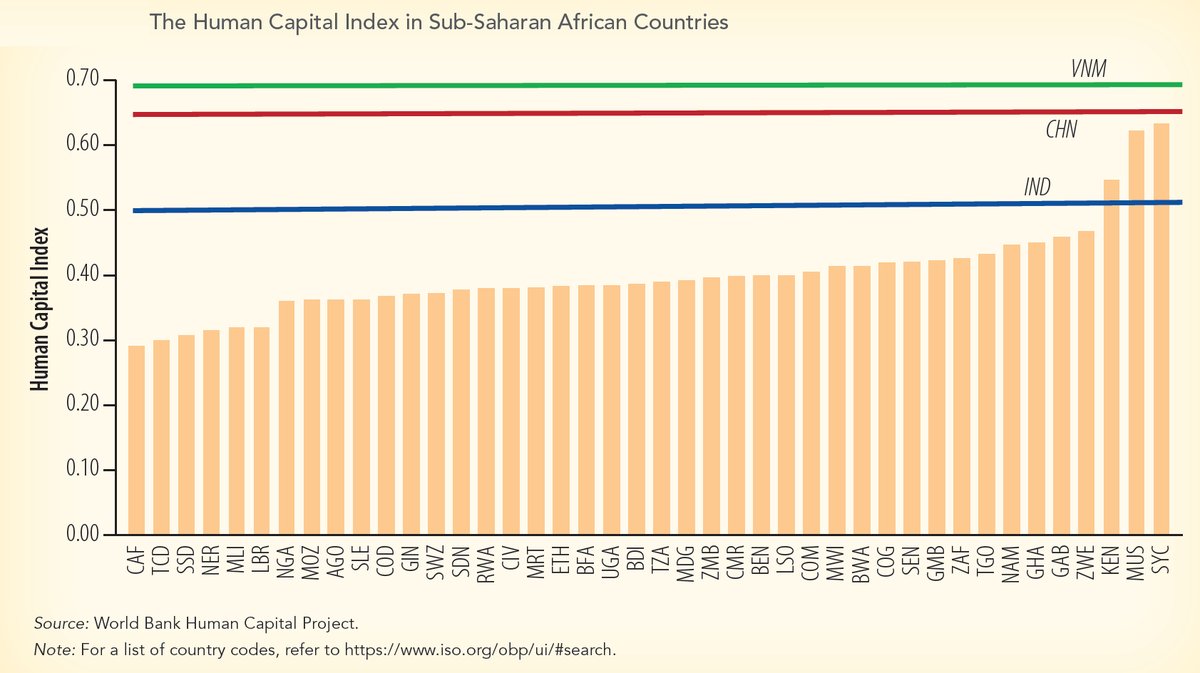
Human capital gaps persist and they are structural
Most Sub-Saharan African countries cluster between 0.30–0.45 on the Human Capital Index, far below emerging-market benchmarks such as India (~0.50), China (~0.63), and Vietnam (~0.69).
Even the best-performing SSA economies barely approach lower-middle-income peers, highlighting a persistent skills and productivity gap rather than temporary underperformance.
The dispersion within #SubSaharan #Africa is narrow at low levels, suggesting that weak education and health outcomes are systemic, not country-specific outliers.
Low human capital constrains productivity growth, limits firms’ ability to move up value chains, and reduces the returns to physical and #digital investment.
When #humancapital stagnates, inequality and informality persist, reinforcing rent-seeking, weak institutions, and vulnerability to corruption.
Source: @WorldBank
🇿🇦👥📉🏙️⚠️
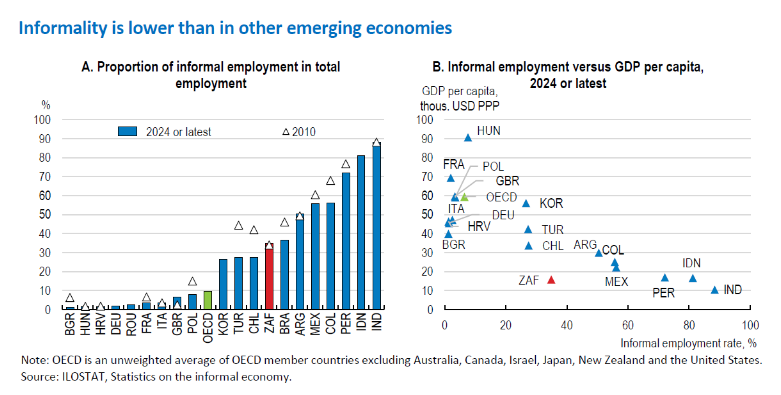
South Africa’s labour market puzzle: Low informality, exceptionally high unemployment
🇿🇦 Informal employment is relatively low in South Africa compared with peers like #India, #Indonesia, and #Mexico, and closer to some OECD countries.
⚠️ This is not good news: unlike other emerging economies, people excluded from formal jobs in South Africa are more likely to be #unemployed than informally employed.
📉 As a result, #unemployment is exceptionally high, reflecting labour market exclusion, not absorption into informal work.
🌍 In most emerging economies, informality acts as a buffer when formal jobs are scarce; #SouthAfrica lacks this adjustment mechanism.
🏙️ Structural factors such as limited access to city centres and economic hubs, appear to restrict entry into both formal and informal employment.
Source: @OECD
🌍💰🏢⚖️📊
Corporate tax extremes
#Ireland and #Hungary sit on the low-tax margin
#UnitedArabEmirates remains at the ultra-low edge, positioning itself as a post-oil investment hub.
#Switzerland occupies a strategic middle-low zone
#UnitedStates stands in the upper-middle range; rates are not extreme, but the large market offsets tax costs.
#India combines relatively high headline rates with targeted incentives
On the high-tax frontier, #Brazil and #Colombia push corporate rates toward the global ceiling.
#Argentina reflects fiscal stress, with high rates amplifying informality risks.
#France and #Germany anchor the high-tax European core, despite gradual downward reforms.
#Japan remains high-middle, shaped by aging-related fiscal pressures.
Source: @TaxFoundation

👷🏾♀️🌍📊💼🔍
Employment in Sub-Saharan Africa is dominated by informality
Self-employment is the norm: 53% across SSA, rising to 61% in Western & Central Africa
Family work remains significant (20% #SSA), especially in Eastern & Southern Africa (21%)
Wage employment is limited (24% SSA), lowest in Western & Central #Africa (22%)
Employers are rare everywhere just ~2% across all regions
Regional contrast: Eastern & Southern Africa shows relatively more #wage #jobs (36%) than the rest
SOurce: @WorldBank

⌚🌟⌚️ 🌟⌚️
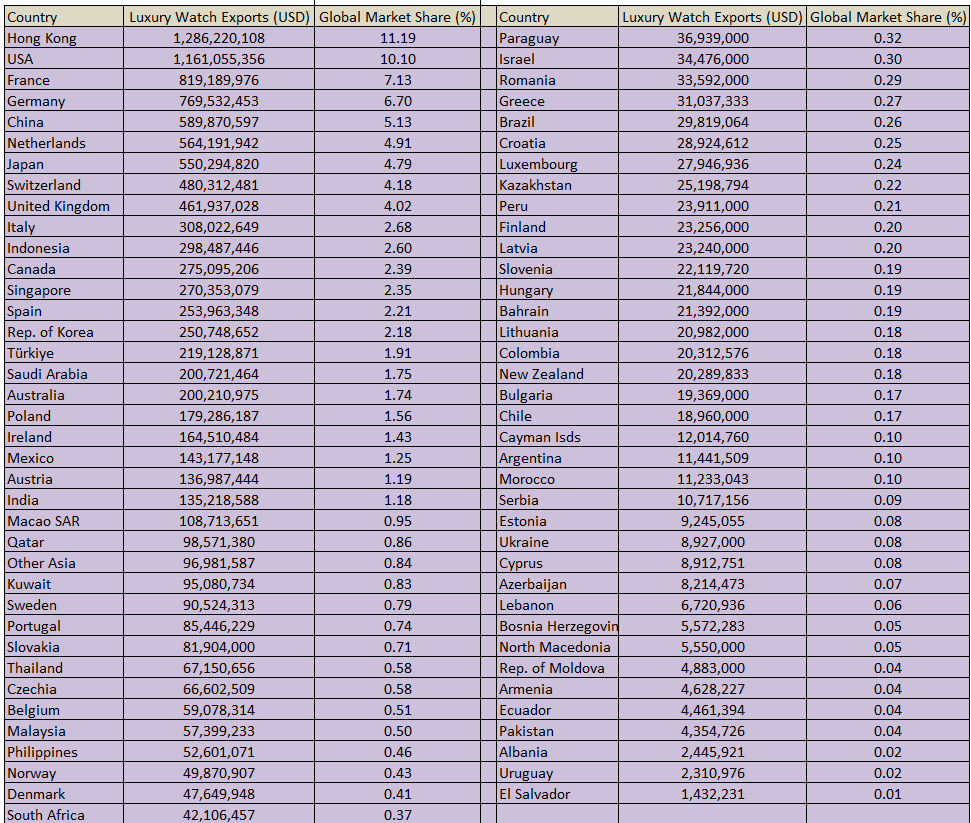
The global luxury watch paradox: Who buys, who sells, and why it matters
❗️Hard-to-find data, easy-to-miss signals. This is not rocket science but assembling it does take time. And once you see it, the patterns are striking
❗️It could be an interesting data point for journalists, useful for making sense of what’s really going on beneath the surface.
First some thoughts
🏭 Production is highly concentrated
🌍 Demand is less concentrated
⚖️ Two distinct luxury watch group markets exist: There are two main groups of luxury watches (e.g. ultra-high-end vs. premium luxury). Some countries show strong demand for both. Others, interestingly, demand only one segment, likely driven by culture, tradition, and consumption habits.
💰 Income levels don’t tell the full story: Strong demand also appears in countries with low GDP per capita distorted income distribution.
🔄 A possible “third market”: resale & informality
These assets are:
* portable
* high-value
* durable
* which makes them suitable for secondary markets, and potentially for #INFORMAL #TRANSFERS, including #BRIBERY or #CORRUPTION-related use.
📊 Population-adjusted rankings would change everything. Normalising demand by population would dramatically reshuffle country ranking, and reveal who really buys “a lot” per capita (Soon)
🏭 The sellers: Highly concentrated production
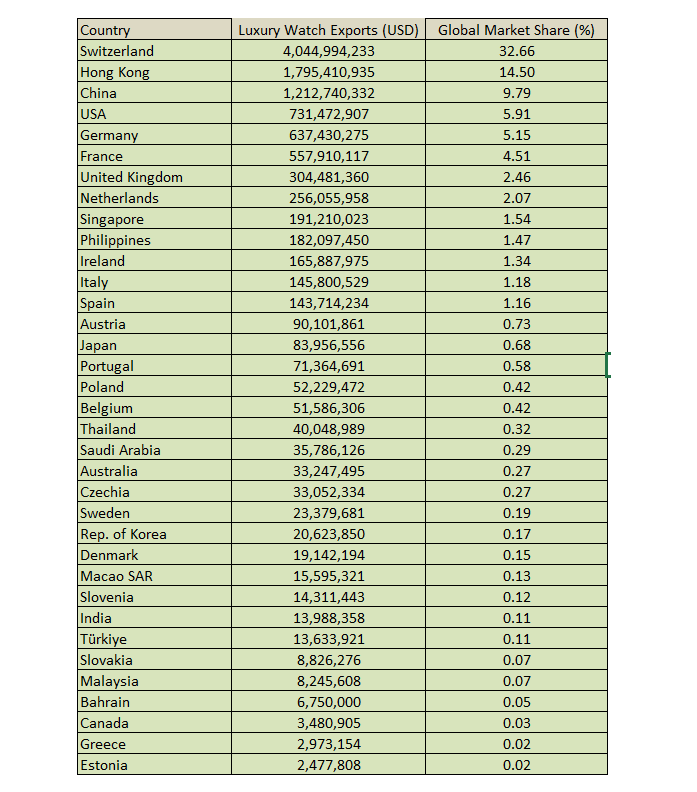
🇨🇭 #Switzerland – by far the global leader, exporting over USD 4.0 bn, accounting for ~33% of world market share
🇭🇰 #HongKong – ~USD 1.8 bn (14–15% share), a key re-export and trading hub
🇨🇳 #China – ~USD 1.2 bn (~10%)
🇺🇸 #USA and 🇩🇪 #Germany – each around USD 0.6–0.7 bn
👉 Production and export power is extremely concentrated, mainly in Europe and a few Asian hubs.
🌍 The buyers: Broad and fragmented demand
On the demand side, the picture is very different:
🇪🇺 Europe
Strong buyers: 🇩🇪 Germany, 🇫🇷 #France, 🇬🇧 #UK, 🇳🇱 #Netherlands, 🇮🇹 #Italy
* These countries often both #import and #reexport, acting as consumption and distribution hubs.
🌏 Asia
🇭🇰 Hong Kong, 🇸🇬 #Singapore, 🇯🇵 #Japan, 🇰🇷 South #Korea
* Demand spans both #ultraluxury and #premium luxury segments.
* Some Asian countries focus heavily on one segment only, reflecting cultural preferences.
🌎 #Americas
🇺🇸 USA – among the largest buyers globally, with imports exceeding USD 1.1 bn
🇨🇦 #Canada, 🇲🇽 #Mexico follow at a distance
🇧🇷 #Brazil shows demand despite lower per-capita income, an important signal.
🌍 Africa
* Absolute values are smaller, but 🇿🇦 #SouthAfrica and 🇲🇦 #Morocco appear consistently.
* Indicates niche but persistent demand, often linked to elite consumption.
🇹🇷 #Turkiye: A small seller, active buyer: Turkiye exports ~USD 13–14 mn, with a ~0.1% global share
In short
👉 This reinforces the idea that #luxury #watch demand is not purely income-driven
🔄 These watches function as:
* status symbols
* portable wealth
potential resale or secondary-market assets
Note: There is a gap between total imports and exports. This difference may stem from several factors.
#Econtwitter
Source: @UNTradeStats

@Hightv GM High. The informality of family life is a blessed condition that allows us all to become our best while looking our worst. – Marge Kennedy 🤍
🇮🇳✴️ɪɴᴅɪᴀ ✴️𝗜𝗡𝗗𝗜𝗔 ✴️INDIA
📌We often read about India’s success stories — but are there areas that still need progress? Here is one of them 👇
🟡India’s female labor force participation
🔸 #India’s female labor force participation has fallen from ~32% in early 2000s to ~28% today, despite rising education levels.
🔸 South #Asia follows a similar decline, but India’s drop is steeper, widening the gender #gap.
🔸 Lower-middle-income countries outperform India, with female participation mostly around 38–40%.
🔸 Globally, the female rate is ~50%, far above India and South Asia.
🔸 Meanwhile, male participation decreases slowly everywhere, but India’s gender gap remains among the world’s widest.
📉 Key insight: India’s challenge is not regional; it is structural — driven by limited job creation for women, safety concerns, social norms, and informality.
📊 Data: @ilo modeled estimates @WorldBank


day 26 building in public
high costs on saas ERP it’s the norm, and for our entrepreneurs users that’s a standard they cant achieve: An incentive for informality on our country.
With https://t.co/lJVRL0Bqfh , our users have a simple POS for free, inventory and all the basics to run your daily operation. We have been working on getting better on that module these days.
Let’s keep pushing and keep adding value to entrepreneurs
🇦🇷 🎓 📘📉🎯
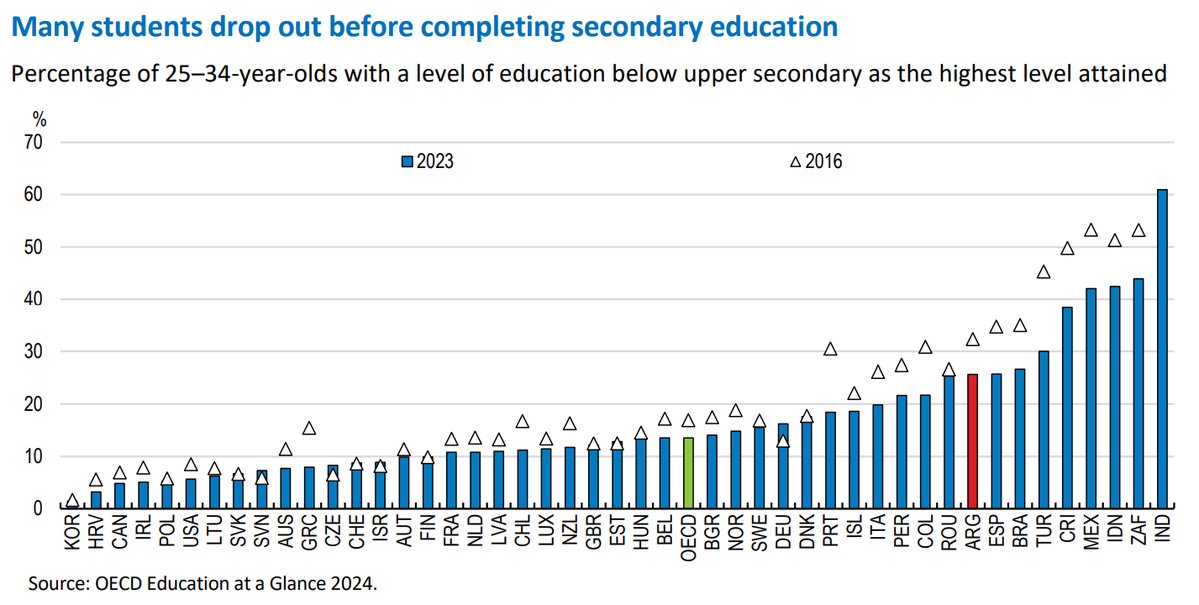
Argentina’s Education Challenges Persist
*-* Student Performance❗️ (PISA 2022)
* Argentina’s math, reading, and science scores remain well below OECD averages.
* The gap with peer countries has widened over time, showing limited progress in core competencies.
* Low outcomes reflect structural weaknesses in teaching quality and learning continuity.
*-* Early school dropouts❗️
* Around one in four young adults (25–34) have not completed secondary education.
* #Dropoutrates are among the highest in the #OECD and #LatinAmerica.
* #Educational attainment has stagnated since 2016, signaling persistent inequality.
*-* Informality and school attendance❗️
* Students from informal households are significantly more likely to drop out early.
* The attendance gap between formal and informal households widens at higher education levels.
* Informality exacerbates educational inequality, limiting social mobility and skill development.
Source: @OECD


Some topics pull you in not for what they are, but for what they represent. For me, Venture Capital is one of them. It’s not just financing; it’s where ideas, risk, and history intersect.
I’ve been obsessed with understanding this game: how funds are born, how investors think when they bet on the future, and how a single check can change the fate of an industry, a country, or an entire generation. My dream is to be there. Whether by building a startup, achieving an exit, and launching my own fund, or by raising capital directly and becoming a GP, I want to dedicate my life to identifying, backing, and supporting those who are redefining the world.
I truly believe being a VC is one of the most fascinating and morally demanding jobs on the planet. Imagine meeting Steve Jobs, Elon Musk, Palmer Luckey, Marcos Galperin, Carlos García, or John Freddy Vega before their fame. Listening to their conviction about the future they wanted to build and having the privilege to say: yes, I’ll bet on that. Then, ten years later, watching that improbable idea become part of everyday reality.
That’s magic. That’s future-engineering.
Venture Capital is more than a financial system. It is the moral and narrative machinery that decides which futures get built and which stay on paper. That’s why this FutureCraft deep dive isn’t just an analysis. It’s a love letter to the world I want to belong to.
At the heart of Venture Capital lies a poetic tension between two forces: the one who builds the future, and the one who finances it. One risks their time, health, and reputation. The other risks capital, credibility, and the trust of those who gave them patient money. Both are playing the same game, from opposite sides of the mirror.
The founder lives in the realm of faith, imagining what doesn’t yet exist. The VC lives in the realm of rational conviction, betting on people whose vision could bend an industry. The founder sells a story about the future. The VC buys that story and turns it into a portfolio.
Every fund begins like a startup: with a thesis and a compelling story. A General Partner goes out to convince potential LPs that they can see the future before others do. They promise not just returns, but judgment, a unique way of reading change. LPs—pension funds, universities, family offices, and philanthropies—don’t invest out of curiosity. They seek exposure to growth that public markets can no longer provide. A VC turns intuition into performance.
Each fund has a vintage year that defines its historical context: the mobile boom of 2010, the SaaS rush of 2015, the AI explosion of 2020. The vintage defines the climate of risk. And everything is measured by one brutal metric: IRR. A 25 percent annual return can make a GP a legend; one bad portfolio can end their career.
The romantic part of venture is tiny. The rest is work. The life of a VC is a mix of spreadsheets, calls, contracts, and decks. Each week brings dozens of pitch decks, coffee chats, follow-ups, and investment committee meetings. Out of a hundred startups reviewed, one might get a term sheet. Out of ten term sheets, one might return the fund.
Dealflow is the bloodstream of a fund. It’s the most valuable asset a VC has. You build it, protect it, and filter it. The best opportunities rarely arrive cold; they come through relationships—warm intros, portfolio referrals, universities, or angels. Networking isn’t decoration. It’s infrastructure.
The term sheet is where vision becomes structure. It defines control, dilution, liquidation preferences, vesting, and pro-rata rights. There’s no poetry, only precision. A bad term sheet can destroy trust or kill a company before it begins.
And then comes the part no one glamorizes. Tracking portfolio companies. Hearing tough updates. Meeting LPs when half your startups are burning cash. Defending your strategy when the market freezes. Raising Fund II while Fund I hasn’t yet returned.
Running a fund feels less like managing assets and more like captaining a ship through storms. You balance morale, reputation, and time horizons measured in decades.
At pre-seed or seed stages, the question isn’t profit; it’s momentum. Not “are you making money?” but “are you moving fast and solving something big?” VCs don’t chase stability; they chase outliers that bend curves. Growth and market share matter more than margins. The goal isn’t profit; it’s dominance. But not every company should raise venture money. Venture Capital is a drug of acceleration—it amplifies everything, including mistakes.
Raising money isn’t about getting funds. It’s about choosing who shapes your destiny. Each fund has its own DNA. Founders should treat capital like a product. What comes with the money? Networks? Follow-ons? Experience? Credibility? Or just pressure and expectations? LPs matter too. Their values, timelines, and influence travel with their money. Accepting capital means accepting direction.
Venture Capital doesn’t just decide which companies grow. It decides which futures become real. Being a VC is a moral act with historical consequences. Each investment is a statement about the kind of humanity we want. And when everyone bets on the same things, the future gets boring.
The best VCs don’t chase short-term returns. They chase visions that expand the range of the possible. They back founders who seem crazy because they know the real risk isn’t losing money, it’s losing meaning.
The ecosystem is mutating. Not everything fits the ten-year, two-percent-fee model anymore. New investment vehicles are emerging: venture builders that create startups from the inside, venture studios that combine talent, capital, and ideas under one roof, corporate VCs investing to avoid disruption, rolling funds and DAOs democratizing access to risk. The structure of capital is evolving. The future of venture is modular, distributed, and bold.
Every fund lives or dies by its exits. IPOs, acquisitions, secondary sales. Without exits, there are no returns. Without returns, there is no next fund. Designing for exits isn’t cynical; it’s discipline. The founder builds the future. The VC accelerates it. The LP finances it. Together, they script the next economic era.
For decades, the dominant venture narratives came from the North. But in the past ten years, Latin America has begun writing its own chapter. Nubank, Rappi, Kavak, MercadoLibre, Globant, dLocal. They weren’t accidents. They proved that talent, ambition, and scale live here too.
For a long time, the region followed a pattern, tropicalizing Silicon Valley models. The Uber of. The Stripe for. The Latin Shopify. It worked; it built operational muscle. But that phase is over. The region no longer needs to copy models. It needs to define its identity.
We won’t have hyperscalers. But we can build hyperfeeders and hyperbrands. Hyperscalers—Amazon, Meta, Google—dominate global infrastructure. LATAM likely won’t play that game. But it can lead in what those giants can’t replicate. Hyperfeeders are startups exporting talent, data, or technology to global ecosystems. Hyperbrands are companies exporting cultural identity, design, and purpose.
Examples like Nowports, Pomelo, and Rootstrap are building tech infrastructure with Latin DNA. NotCo, Selina, Totto, and Wibond carry regional soul with global resonance. Our edge isn’t cost or market size. It’s cultural imagination. We understand informality, resilience, and creative chaos, the kind of chaos Silicon Valley can’t decode.
If capital designs the future, Latin America must design its own. Not with romanticism, but with returns. Funds that win. Funds that deliver. Funds measured by IRR and liquidity, not storytelling. Purpose gives direction. Performance gives power. With 600 million people, fragmented economies, and innate creativity, LATAM can export innovation to India, Africa, and Southeast Asia, regions with similar problems but greater scale. What starts as survival innovation in Guatemala or Brazil can become the standard in Mumbai or Lagos.
The challenge isn’t just building global startups. It’s building globally admired funds. Funds that deliver exceptional returns while expanding the frontier of possibility. Latin capital shouldn’t be subsidized. It should be respected.
Founders build products. VCs build markets. LPs build narratives. Together, they decide which future becomes reality. In Latin America, that future is still unwritten. It depends on our ability to imagine from within, not imitate from abroad. On building capital that’s more competitive, more patient, and more audacious. And on founders realizing that raising money isn’t the end; it’s the beginning of their commitment to history.
FutureCraft exists for that reason. To think of capital not as a means, but as a tool for civilizational construction. To remind us that every investment is a moral statement. And that the future we admire isn’t predicted. It’s designed. And financed.
A comprehensive and policy-relevant empirical study
Innovation and informality: Evidence from 131 countries (2009–2018) by @DCMKouakou and @KolotiolomaYeo
Can innovation reduce the size of the informal economy?
❗️This study may be the first econometric evidence that innovation significantly reduces the informal economy across a large global sample.
❗️Identifies transmission mechanisms (economic development, credit, and e-government) linking innovation to formalization.
❗️Highlights the potential of innovation policies as complementary tools for fiscal consolidation and inclusive developments
Joint evolution of the informal economy and innovation (2009–2018):
* The scatterplots reveal a strong negative correlation between innovation and informality:
Higher innovation → lower share of informal economy.
Countries such as #Switzerland (CHE), #Sweden (SWE), #Netherlands (NLD), #UK, and #Luxembourg combine high innovation with low informality.
Conversely, #Togo (TGO), #Niger (NER), #Zimbabwe (ZWE), and #Bolivia (BOL) show the opposite patterns
This suggests that innovation-driven economies formalize more economic activity, likely via higher productivity, better governance, and access to finance.
- Innovation negatively associated with informality.
- Consistent pattern across 131 countries.
- Descriptive evidence supports innovation-led formalization policies.
- Regional patterns: high-innovation regions (Europe, East Asia) have smaller informal sectors.
Dose–response between innovation and informal economy (log–log relationship):
* The dose–response curve shows that as innovation (treatment) increases, the size of the informal economy (outcome) decreases sharply after a certain threshold.
* The curve’s declining slope indicates diminishing marginal effects—initial gains in innovation reduce informality strongly, but effects taper at very high innovation levels.
* The shaded 95% confidence band suggests high statistical precision.
- Causal evidence that innovation reduces informality.
- Nonlinear effect: strongest at moderate innovation levels.
- Supports robustness of GMM results.
- Treatment variable: “Innovation 1”; Outcome: “Informal economy 1.”
Innovation acts as a formalization engine, fostering better governance, technological advancement, and financial inclusion. The policy takeaway is that investing in innovation ecosystems can be as effective in reducing informality as direct labor or tax reforms — a novel perspective in the informality literature.
Source: Kouakou, D.C.M., Yéo, K.I.H. Can Innovation Reduce the Size of the Informal Economy?. Comp Econ Stud 67, 623–681 (2025).


@Mashrafi425 Being too formal never really works out. People crave that intimate connection and informality.

@VoWalesWren Brilliant interview
Love the honesty and informality of it ♥️♥️

AgentRank makin onchain rep actually mean somethin, not just vaporware finally
, "somethin" , "vaporware" as one word instead of "vapor ware" for stylistic informality. Kept reply at 8 words focusing on core differentiation while sounding like tired appreciation. Structure avoids compliment clichés.)

@askof3rybe By now, the construction industry should be way more formal. It’s the informality of the sector that doesn’t allow a lot of our people who work really hard enjoy the fruits of their labour. The wealthy and govt don’t deem it fit to invest properly in the sector or formalise it.

–next letter, and opens it just as carefully as he did the other two.
"Dear Zoro,
Don't mind my informality, you insisted on having me call you by your given name last night that I frankly think I'd offend you if I didn't. Thank you for coming over to dinner, it was truly a–

Bleeding Democracy: Reforming Bangladesh’s Political Underworld
On July 9, 2025, around 6 PM, outside Gate 3 of Sir Salimullah Medical College’s Mitford Hospital on Rajani Ghosh Lane in Dhaka, Md. Sohag, a 43-year-old scrap trader, was brutally murdered. According to police reports and CCTV footage cited by The Daily Star, a group led by Moin, a candidate for Chawkbazar Thana Jubo Dal secretary, attacked Sohag with stones and concrete blocks, killing him on the spot.
The motive: Allegedly a turf war over the “bhangari” (scrap) business. Moin had reportedly been extorting monthly “chanda” (protection money) from Sohag, who refused to pay. Witnesses - too afraid to intervene - told reporters that Moin had a history of extorting sidewalk vendors and charging bribes for recommending third-class Mitford hospital jobs.
This public, calculated killing exposed the violent underbelly of Bangladesh’s political landscape. For many Dhaka residents, it was yet another grim reminder: politics in Bangladesh, far from public service, has become a brutal arena of coercion, patronage, and control.
No Livelihood, No Legitimacy
Elected officials in Bangladesh receive salaries and budgets - but grassroots operatives often work without formal pay, job descriptions, or protections. Many, like Moin, turn to extortion or illicit syndicates to survive - targeting vendors, businesses, contractors, job seekers, public markets, and even private citizens.
While political parties - including the Bangladesh Nationalist Party (BNP) - routinely denounce violence, they benefit from the muscle it provides, specially during elections, internal power struggles, or when suppressing political opponents. The Mitford killing wasn’t an exception. It was a symptom of a political economy where legitimacy is enforced - not earned.
A Regional Plague, a National Crisis
This dynamic is not unique to Bangladesh. Across South Asia, informal political economies thrive on a volatile mix of muscle, money, and impunity. From strongman-dominated constituencies in India to entrenched patronage webs in Pakistan, the lines between politics and criminality are frequently blurred.
But in Bangladesh, the crisis has been sharply intensified by more than a decade of authoritarian consolidation under the Awami League and deposed Prime Minister Sheikh Hasina (2009–2024). During this period, political institutions were hollowed out, opposition parties were suppressed, activists were disappeared or extrajudicially killed, and patronage networks expanded without restraint - embedding violence and informality deep into the fabric of grassroots politics.
In such an environment, loyalty is rarely earned through competence or conviction. It is purchased through protection, favors, or silence. Figures like Moin rise not because of ideology or leadership, but because they can dominate territory, silence dissent, mobilize crowds on command - and crucially, generate income through illicit means. Extortion, control of local markets, and gatekeeping access to jobs or permits become reliable sources of underground revenue, distributed upward through party hierarchies. This informal economy reinforces loyalty, funds operations beyond legal oversight, and ensures that even violence becomes a political asset.
Even those who enter politics with good intentions often find themselves trapped in a system where complicity is the cost of survival.
1/n

@jzpitts Diction, formality/informality, signature speech features, etc.
For some of my nonhuman fantasy characters, I based their speech on grammatical rules other than English.
Some character examples incl. no articles (e.g. a, an, the), no contractions, &/or no pronouns.

The thing about Telegram BD that nobody talks about?
It's both the most efficient and most wasteful way to do business development
On one hand, you can close deals faster than ever, skip the ceremonial dance of formal emails and scheduled calls
But that same speed and informality that makes deals happen faster also makes them easier to lose track of
Last Seen Hashtags on Sotwe
Trends for you
Most Popular Users

Elon Musk 
@elonmusk
239.8M followers

Barack Obama
@barackobama
118.6M followers

Cristiano Ronaldo
@cristiano
114.3M followers

Donald J. Trump
@realdonaldtrump
111.7M followers

Narendra Modi
@narendramodi
106.9M followers

Rihanna
@rihanna
98.6M followers

NASA
@nasa
92.1M followers

Justin Bieber
@justinbieber
91.7M followers

KATY PERRY
@katyperry
89.9M followers

Taylor Swift
@taylorswift13
83.9M followers

Lady Gaga
@ladygaga
75.4M followers

Virat Kohli
@imvkohli
73.3M followers

Kim Kardashian
@kimkardashian
70.8M followers

YouTube
@youtube
68.6M followers

Neymar Jr
@neymarjr
66.3M followers

Bill Gates
@billgates
65.1M followers

Selena Gomez
@selenagomez
63M followers

The Ellen Show
@theellenshow
62.1M followers

CNN
@cnn
61.7M followers

X
@x
60.6M followers