

Top Tweets for #Poorest

#friends @FriendsTV the most hated character overall #poorest performer with poor scenes was this #zionistpig & #loser @DSchwimmer AKA #loser #RossGellar !!! What were they thinking , casting #ugly evil man on that #sitcom ! His scenes, his mere presence- jùs eww! #Hollywood



This is a silent #war to dismantle, and not resurrect, an entire #civilisation.
Whose resonance once spread from Afghanistan to Indonesia.
Stripping the #poorest of #education shall erase #dignity from their lives.
And dim the light of #strength & #character of our citizenry.

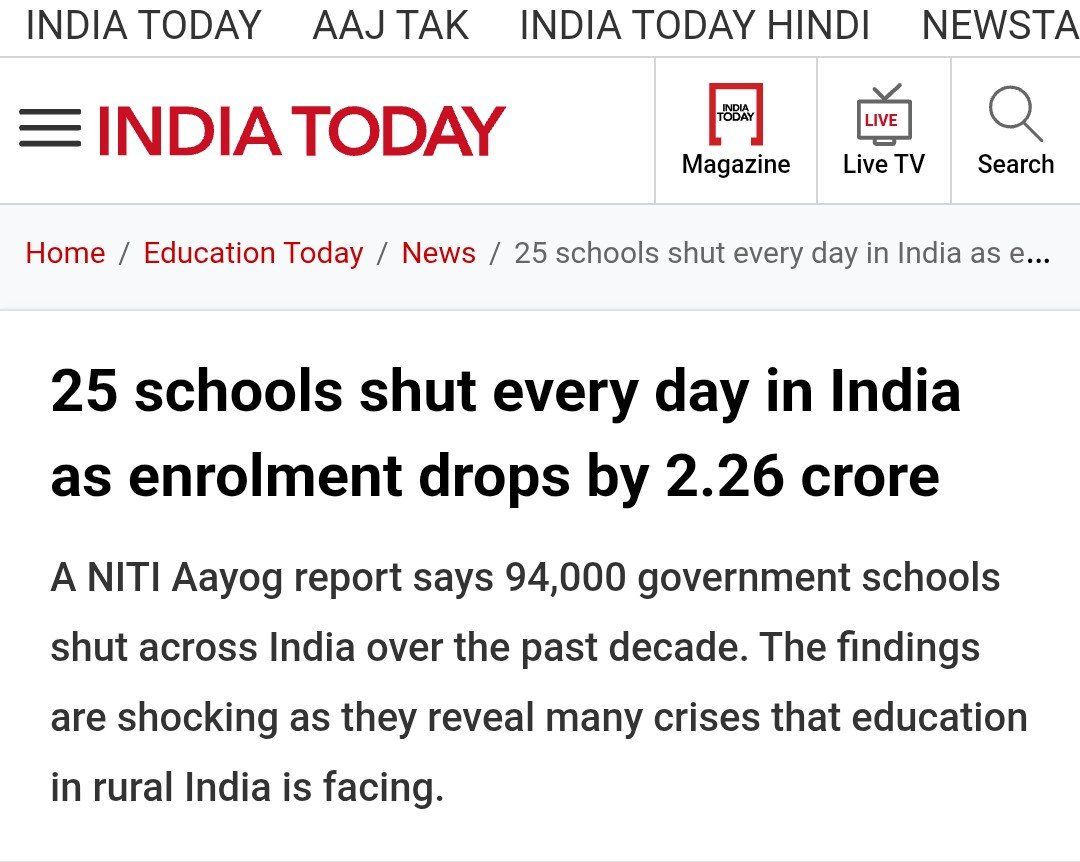
An average of 25 schools closed EVERY DAY in India over the past 10 years, while enrolment in government schools declined by 2.26 crore students.
"A total of 94,000 government schools have shut across the country over the last 10 years, according to a recent NITI Aayog report. The number of government schools declined from 11.07 lakh in 2014-15 to 10.13 lakh in 2024-25."
The number of government aided schools also dropped
One of India's achievements over the last few decades had been that nearly every child did enroll in schools. The learning outcomes were not optimal but that was a beginning.
Now while not improving on the outcomes...we are going backwards even in enrollments.
While the data was not segregated by gender, having or not having a neighborhood School is the biggest determinant of whether girls continue their education.
Let me repeat for the nth time: The most important investment a country can make is in its human capital which means investment in health and education... We are just not doing it!
@sayantanbera
@JayantKrishnaIN
@IndiaToday

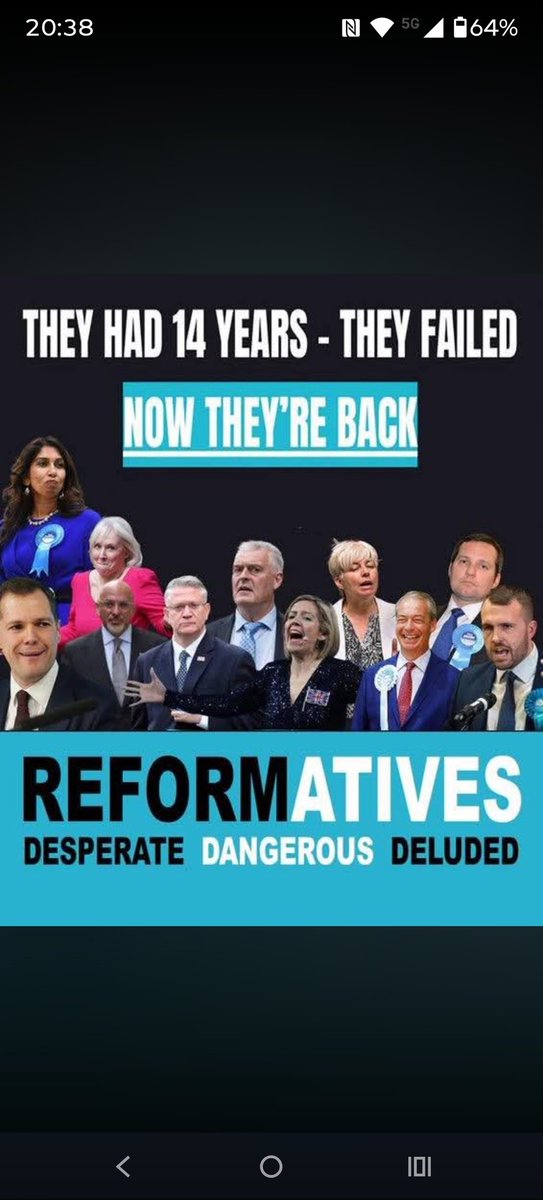
@JadenLister One day, you may need the #welfareState to pull you through desperate times. I've worked my bollocks off for 35yrs mate and NEVER have I thought the #poorest in society should foot the bill for the #wealthy. Fuck you, fuck #ReformUK and fuck #Farage.
@WillBlackWriter @qick4267_tom Where there are dumb people to exploit, hard cash to harvest, enemies come together to share the spoils. The infiltration of #ReformUK by the #NastyParty is staggering! 14 yrs of hate towards the weakest, now the weakest & #poorest say, "more please! You couldn't make it up!!






Ethiopia: Strategic Patronage, and Structural Dependency
By : - Amleset Negash G. Hiwet
Controlled Strategic Dependency
Strategic dependency theory, an evolution of classical dependency theory, posits that peripheral states maintain structural subordination within the global system primarily due to economic disparities. Neorealism further underscores the correlation between weaker states aligning with powerful states and their survival, compelling peripheral states to prioritize state survival over long-term autonomy and development. Consequently, states rely on external mechanisms for governmental functions, thereby undermining domestic capacity-building and stability.
To address these systemic challenges and the long-term implications of strategic patronage in Africa, conducting a case study of a single state in the Horn of Africa is essential. Ethiopia is selected because its foreign policy has historically been constructed around what can be termed a “strategic dependency” approach—a doctrine that implicitly sustains reliance on external powers.
Since the 1940s, Ethiopian governments have relied heavily on external support to sustain the country’s economic, social, and political systems. As a major recipient of foreign assistance, Ethiopia’s relations with global powers have increasingly developed from reciprocal state-to- state engagement to a structurally embedded donor–recipient framework. Consequently, a critical reassessment of the evolution of these relationships and their normative implications is necessary. Such an examination should evaluate policy intentions, expected outcomes, and the realities on the ground.
Over the past 80 years, Ethiopia has remained an aid-attractive state, adopting a strategic dependency paradigm within its foreign policy doctrine. This raises critical questions: Is foreign aid effective in stabilizing the political, social, and economic systems of recipient states? Does it strengthen internal cohesion and external influence, or does it instead contribute to internal fragility and external vulnerability?
United States Support for Ethiopia (1940s–1991)
From the 1940s to 1991, the United States gradually replaced the United Kingdom as Ethiopia’s primary external patron. In 1953, this donor–recipient relationship was formalized through the Mutual Defense Assistance Agreement with Emperor Haile Selassie. According to the U.S. Department of State, the United States provided approximately $250 million in economic assistance and $150 million in military aid between 1948 and 1975. However, academic estimates suggest that total U.S. aid during this period likely ranged between $400 million and
$600 million.
Soviet Support to Ethiopia: A Historical Perspective (1959–1991)
According to the Central Intelligence Agency, Soviet–Ethiopian relations began in 1959 when Emperor Haile Selassie received approximately $100 million in support. Following the Emperor’s overthrow in 1974, the Derg regime maintained the same strategic dependency logic, despite shifting its alignment from the United States to the Soviet Union. Between 1974 and 1991, the Derg received an estimated $10–17 billion in Soviet assistance, until the collapse of both the regime and the Soviet Union.
European and Multilateral Contributions (1950–1991)
In addition to U.S. and Soviet assistance, European and multilateral actors provided approximately $200–250 million between 1955 and 1970, primarily for humanitarian and development purposes. During the 1984–1986 famine, European states contributed substantial additional emergency aid, amounting to hundreds of millions of dollars. Overall, between 1950 and 1991, European contributions are estimated at $500 million to $1 billion. In total, Ethiopia received approximately $11–18 billion in external assistance between 1940 and 1991.
Strategic Patronage: U.S. Support (1991–2017)
Following the end of the Cold War and the dissolution of the Soviet Union in 1991, the United States reestablished itself as Ethiopia’s primary external supporter. The principle of strategic dependency remained embedded in Ethiopia’s foreign policy orientation. Between 1991 and 2000, the United States provided approximately $1.5–2 billion to support political stabilization, economic liberalization, and humanitarian recovery.
After the September 11 attacks, U.S. engagement intensified under the “War on Terror,” with aid increasing to approximately $6–8 billion between 2001 and 2010. From 2011 to 2017, the United States provided an additional $5–7 billion, bringing total U.S. assistance during this period to approximately $13–17 billion.
European Union and Multilateral Support (1991–2017)
During the same period, the European Union and its member states significantly expanded their support, reinforcing Ethiopia’s dependence on external assistance. Between 1991 and 2000, the EU contributed approximately $2–3 billion. This increased to $8–10 billion between 2000 and 2010, and $10–12 billion between 2010 and 2017, totaling approximately $20–25 billion.
Additionally, the World Bank and the International Monetary Fund provided approximately $15– 20 billion during this period, further embedding Ethiopia within a multilateral dependency framework.
Multilateral Expansion of External Dependence
From 1940 to 2017, Ethiopia’s reliance on external support evolved into a normalized and institutionalized foreign policy pattern. External actors engaged with Ethiopia largely through donor–recipient mechanisms aligned with their strategic interests. Since 2017, multilateral engagement has further deepened this pattern, making dependency a persistent structural feature rather than a temporary condition.
Strategic Dependency (2017–Present)
Since 2017, Ethiopia has continued to receive substantial external support. The United States has provided approximately $6–9 billion, the European Union $8–12 billion, and China $5–8 billion in new loans, with outstanding debt estimated at $13–15 billion. Additional support from the United Arab Emirates and Saudi Arabia is estimated at $3–6 billion, while the World Bank has contributed $10–15 billion, the IMF approximately $3 billion, and the African Development Bank $3–5 billion.
Over eight decades, Ethiopia has received more than $110 billion in external assistance. While some of this aid has supported humanitarian and development objectives, the overall outcome suggests a deepening structural dependency that has constrained domestic capacity and institutional confidence.
Strategic Dependency: Debt, Instability, and Poverty
From the 1940s to 2024, it is estimated about 4 million Ethiopians have died due to conflict, famine, and governance-related crises, despite sustained external assistance. Current estimates from the IMF and World Bank indicate that Ethiopia’s external debt has exceeded $35 billion.
Ethiopia’s International Standing
Ethiopia continues to rank low across multiple global indicators. According to World Bank estimates, extreme poverty affects approximately 20–30% of the population across the country, while overall poverty in Ethiopia projected to reach about 42–43% of the population in 2025. Multidimensional poverty remains extremely high at roughly 70–72%, placing the country among the most impoverished globally.
Approximately 70–75% of Ethiopians depend on agriculture for their livelihoods, exposing them to climate-sensitive risks. Meanwhile, over 20% of the population falls under severe food insecurity, with an estimated 20–30 million people in need of food assistance, including 12 million children. In 2025, about 4.5 million people are internally displaced. The World Bank’s Climate Risk Profile indicates that 90% of the country faces moderate to high climate risk, including droughts, floods, and climate variability.
Structural Governance
Fragility assessments classify Ethiopia as “highly fragile” state, reflecting weak social cohesion and institutional resilience. Internal security risks remain moderate-high, driven by ongoing conflicts. Governance indicators rank political stability among the lowest globally, while health indicators—including infants and under-five mortality, remain below global averages. Life expectancy is approximately 66–68 years.
The Human Development Index ranges from 0.49 to 0.52, placing Ethiopia between 170 and 180 out of 193 countries, indicating low human development. A weak educational system has been observed across the country. Over the past four years, only 5.1% of students have passed the college entry exam. Although access to education has expanded, disparities in quality and regional inequalities persist, and more than 1,200 public secondary schools have failed to produce a single student scoring above the passing mark of 50%.
Physicians in Ethiopia account for 0.11 per 1,000 people, far below both regional and global averages, alongside uneven infrastructure development. Food security remains highly vulnerable due to recurrent drought and state-driven conflict, while macroeconomic instability is driven by inflation and currency pressures.
Rethinking Strategic Dependency
This historical assessment presents critical questions: Does foreign aid perpetuate long-term dependency or promote sustainable development? Has Ethiopia undergone a transformation in its foreign policy approach or continues to be constrained by historical patterns of reliance? Has external assistance bolstered internal stability and national capacity?
Ultimately, the central challenge lies in whether Ethiopia can transition from a structurally dependent model to a balanced, partnership-based foreign policy framework, and whether external actors are willing to engage Ethiopia as an equal partner rather than a perpetual recipient. #Eritrea


"Shock waves of conflict fallling hardest on poorest, most vulnerable": UN chief Antonio Guterres on West Asia Conflict
Read @ANI Story | https://t.co/vKCzS3GeMW
#AntonioGuterres #UN #WestAsiaConflict #ShockWave #poorest #vulnerable


President Félix #Tshisekedi came to power promising the citizens that he would transform the Democratic Republic of Congo into the “#Germany of Africa.” However, after two terms in office, Congo remains among the #poorest countries. There is widespread #insecurity, little #electricity, no real #development, and many people still lack access to clean #water and sanitation.
The situation has become extremely concerning, with armed groups continuing to kill civilians and hate speech increasing tensions, while conflicts persist.
This reflects the weakness of the government in Kinshasa, which, instead of prioritizing the welfare of its citizens, appears to be focused on enriching itself, with corruption and the accumulation of wealth by officials becoming increasingly common.
@PresidencyDRC @PatrickMuyaya @VitalKamerhe1 @albcontact @D_Nzogera @AfrikaXtra @FabRugumire @FannyKaj1 @BrendaMonkango @WillyNG0MA @EgidieBibio @BURIKANTU_1

Stats SA’s claim that South Africa’s poorest can survive on just R855 a month has ignited debate over the true cost of living, dignity, and whether this benchmark reflects the harsh realities faced by millions.
#business #StatsSA #poorest #survival #costofliving #dignity
Read on https://t.co/FEWlhOHuvu


How can we ensure #SabkaSaathSabkaVikas in #UnionBudget? Allocations for various #SocialWelfare schemes urgently need indexing to #inflation. #Digitalization should not become an access barrier for the #poorest and most #vulnerable including #women @FinMinIndia @nsitharamanoffc
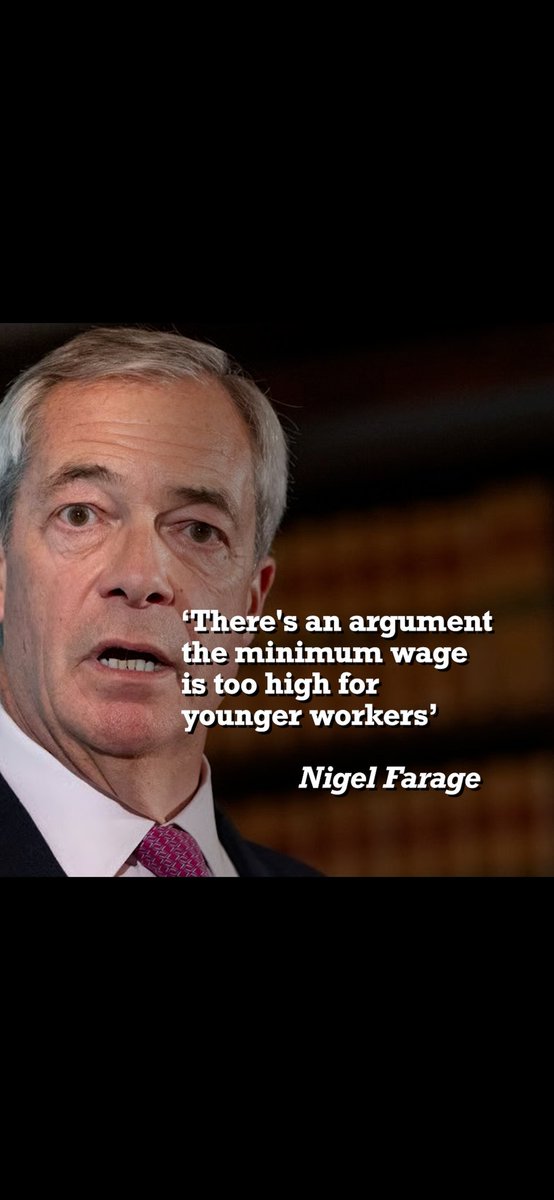
Listed are some of #ReformUK pledges, actually confirmed by #NigelFarage, not made up to discredit him. YOUR #PENSION IS NOT SAFE! Think long & hard before voting Reform, the damage would be immense for the #poorest, making #conservative #austerity look like a stroll in the park.

too much. If your #WorkingClass, #female, #Gay #Lesbian, he's coming to turn the clock back on the rights you've fought so hard for. He sees cash, cold hard cash. The #Austerity suffered by the #poorest when #GeorgeOsborne instigated it, is NOTHING compared to what Farage will do


@pritipatel Wow! You lot stole the cash, gave it to your friends and #Austerity inflicted on the #poorest was your way of paying for it. #MichelleMone the #Tory peer is the only one instructed by a court to pay it back, they need to come for the rest of you and throw you all in jail.

How much income would it take from the #richest 10% of people in the world, to match that of the #poorest 10%?
It takes less than 2 cents out of every dollar. That's less than *one-fiftieth* of their income, or one week of income in a year #inequality #TaxTheRich


ભારતના કયા રાજ્યમાં સૌથી વધુ ભિખારીઓ છે અને એક મહિનામાં કેટલી કમાણી કરે છે? તમને ખબર પડશે તો હક્કા-બક્કા રહી જશો
#Knowledge #Fact #Facts #Economy #India #Richest #Poorest #Population #Unemployment #Numbers #Survey
https://t.co/SK322OfGVQ
ભારતના કયા રાજ્યમાં સૌથી વધુ ભિખારીઓ છે અને એક મહિનામાં કેટલી કમાણી કરે છે? તમને ખબર પડશે તો હક્કા-બક્કા રહી જશો
#Knowledge #Fact #Facts #Economy #India #Richest #Poorest #Population #Unemployment #Numbers #Survey
https://t.co/SK322OfGVQ
Trends for you
Most Popular Users

Elon Musk 
@elonmusk
241.3M followers

Barack Obama
@barackobama
119.1M followers

Cristiano Ronaldo
@cristiano
113M followers

Donald J. Trump
@realdonaldtrump
111.8M followers

Narendra Modi
@narendramodi
107.1M followers

Rihanna
@rihanna
98.3M followers

NASA
@nasa
92.3M followers

Justin Bieber
@justinbieber
91.5M followers

KATY PERRY
@katyperry
89.1M followers

Taylor Swift
@taylorswift13
83M followers

Lady Gaga
@ladygaga
74.5M followers

Virat Kohli
@imvkohli
72M followers

Kim Kardashian
@kimkardashian
70.5M followers

YouTube
@youtube
68.8M followers

Neymar Jr
@neymarjr
65M followers

Bill Gates
@billgates
64.6M followers

The Ellen Show
@theellenshow
62.4M followers

Selena Gomez
@selenagomez
62.2M followers

CNN
@cnn
61.8M followers

X
@x
60.8M followers