

Top Tweets for #REGOLITH


Building on the Moon means ditching Earth-sent materials and lunar regolith is the key. Check this study by @Tsinghua_Uni that classified four regolith solidification techniques. 🌕⛰️
👉DOI: 10.1016/j.eng.2024.03.004
#ENGINEERING #Engineeringvideo #regolith

महत्त्वपूर्ण शब्दावली:
रेगोलिथ (Regolith)
https://t.co/YkuLDlST2j
#Regolith #importantterminology #importantwords #prelims #importantconcepts #India #upsc #prelimssexam #pcs #sanskritiias


#Moonbase #Regolith #RemanentMagneticFields
Part 2: Lunar Regolith Ventures - Lunar Remanent Magnetic Fields - Technical Background
Background re lunar remanent magnetic fields. This is a representative, but no means complete, summary of theories re remanent magnetic fields on the Moon.
Scientists have known for decades that the moon holds remnants of a strong magnetic field.
Samples from the surface of the moon, returned by astronauts on NASA’s Apollo missions of the 1960s and 70s, as well as global measurements of the moon taken remotely by orbiting spacecraft, show signs of remnant magnetism in surface rocks, especially on the far side of the moon.
CAUSATION AND TIMELINE: There is disagreement as to the cause (and duration) of such magnetism, ranging from ages of billions to paleo earth geology timeline to some scientists even suggesting that the astronauts themselves caused this magnetism when they discovered it!!! [Editor note: nothing is too offbeat about lunar magnetism—well maybe this is: This theory might lead one to speculate that you could fly satellites around the moon in order to magnetize it, i.e. create your own magnetic field.].
Figure 1: general representation
AGU Publications notes:
Lunar remanent magnetic fields are localized, crustal magnetic anomalies rather than a global dipole.
Satellites like Apollo 15/16 subsatellites, Lunar Prospector, and Kaguya mapped these fields using onboard magnetometers and electron reflectometers. They reveal "mini-magnetospheres" capable of deflecting solar wind.
Lunar Magnetic Field Models From Lunar Prospector and SELENE/Kaguya Along-Track Magnetic Field Gradients, JGR Planets, https://t.co/WXiPZWgD4C
Highest resolution surface magnetic fields from the global monopoles (0.66° spacing)-based models derived in this study from 84 subsets. . (No datasets are included in this note.)
Figure 2: Location of modeled remanent magnetic fields. Article contains model description and methodology.
MIT asks: Why are some rocks on the moon highly magnetic? MIT scientists may have an answer
Jennifer Chu | MIT News, Publication Date:May 23, 2025, link below, accessed May 20, 2026
MIT hypothesis: Source of lunar magnetic rocks
A large impact could have briefly amplified the moon’s weak magnetic field, creating a momentary spike that was recorded in some lunar rocks.
This combination of events could explain the presence of highly magnetic rocks detected in a region near the south pole, on the moon’s far side. As it happens, one of the largest impact basins — the Imbrium basin — is located in the exact opposite spot on the near side of the moon. The researchers suspect that whatever made that impact likely released the cloud of plasma that kicked off the scenario in their simulations.
But in MIT’s new study, the researchers took a different tack. Instead of accounting for the sun’s magnetic field, they assumed that the moon once hosted a dynamo that produced a magnetic field of its own, albeit a weak one. Given the size of its core, they estimated that such a field would have been about 1 microtesla, or 50 times weaker than the Earth’s field today.
MIT calls for more data re the remanent magnetic fields observations. “There are large parts of lunar magnetism that are still unexplained,” says lead author Isaac Narrett, a graduate student in the MIT Department of Earth, Atmospheric and Planetary Sciences (EAPS). “But the majority of the strong magnetic fields that are measured by orbiting spacecraft can be explained by this process — especially on the far side of the moon.”
From this starting point, the researchers simulated a large impact to the moon’s surface, similar to what would have created the Imbrium basin, on the moon’s near side. Using impact simulations from Katarina Miljkovic, the team then simulated the cloud of plasma that such an impact would have generated as the force of the impact vaporized the surface material. They adapted a second code, developed by collaborators at the University of Michigan, to simulate how the resulting plasma would flow and interact with the moon’s weak magnetic field.
These simulations showed that as a plasma cloud arose from the impact, some of it would have expanded into space, while the rest would stream around the moon and concentrate on the opposite side. There, the plasma would have compressed and briefly amplified the moon’s weak magnetic field. This entire process, from the moment the magnetic field was amplified to the time that it decays back to baseline, would have been incredibly fast — somewhere around 40 minutes, Narrett says.
https://t.co/LRXrbl21Qa
![c_caul's tweet photo. #Moonbase #Regolith #RemanentMagneticFields
Part 2: Lunar Regolith Ventures - Lunar Remanent Magnetic Fields - Technical Background
Background re lunar remanent magnetic fields. This is a representative, but no means complete, summary of theories re remanent magnetic fields on the Moon.
Scientists have known for decades that the moon holds remnants of a strong magnetic field.
Samples from the surface of the moon, returned by astronauts on NASA’s Apollo missions of the 1960s and 70s, as well as global measurements of the moon taken remotely by orbiting spacecraft, show signs of remnant magnetism in surface rocks, especially on the far side of the moon.
CAUSATION AND TIMELINE: There is disagreement as to the cause (and duration) of such magnetism, ranging from ages of billions to paleo earth geology timeline to some scientists even suggesting that the astronauts themselves caused this magnetism when they discovered it!!! [Editor note: nothing is too offbeat about lunar magnetism—well maybe this is: This theory might lead one to speculate that you could fly satellites around the moon in order to magnetize it, i.e. create your own magnetic field.].
Figure 1: general representation
AGU Publications notes:
Lunar remanent magnetic fields are localized, crustal magnetic anomalies rather than a global dipole.
Satellites like Apollo 15/16 subsatellites, Lunar Prospector, and Kaguya mapped these fields using onboard magnetometers and electron reflectometers. They reveal "mini-magnetospheres" capable of deflecting solar wind.
Lunar Magnetic Field Models From Lunar Prospector and SELENE/Kaguya Along-Track Magnetic Field Gradients, JGR Planets, https://t.co/WXiPZWgD4C
Highest resolution surface magnetic fields from the global monopoles (0.66° spacing)-based models derived in this study from 84 subsets. . (No datasets are included in this note.)
Figure 2: Location of modeled remanent magnetic fields. Article contains model description and methodology.
MIT asks: Why are some rocks on the moon highly magnetic? MIT scientists may have an answer
Jennifer Chu | MIT News, Publication Date:May 23, 2025, link below, accessed May 20, 2026
MIT hypothesis: Source of lunar magnetic rocks
A large impact could have briefly amplified the moon’s weak magnetic field, creating a momentary spike that was recorded in some lunar rocks.
This combination of events could explain the presence of highly magnetic rocks detected in a region near the south pole, on the moon’s far side. As it happens, one of the largest impact basins — the Imbrium basin — is located in the exact opposite spot on the near side of the moon. The researchers suspect that whatever made that impact likely released the cloud of plasma that kicked off the scenario in their simulations.
But in MIT’s new study, the researchers took a different tack. Instead of accounting for the sun’s magnetic field, they assumed that the moon once hosted a dynamo that produced a magnetic field of its own, albeit a weak one. Given the size of its core, they estimated that such a field would have been about 1 microtesla, or 50 times weaker than the Earth’s field today.
MIT calls for more data re the remanent magnetic fields observations. “There are large parts of lunar magnetism that are still unexplained,” says lead author Isaac Narrett, a graduate student in the MIT Department of Earth, Atmospheric and Planetary Sciences (EAPS). “But the majority of the strong magnetic fields that are measured by orbiting spacecraft can be explained by this process — especially on the far side of the moon.”
From this starting point, the researchers simulated a large impact to the moon’s surface, similar to what would have created the Imbrium basin, on the moon’s near side. Using impact simulations from Katarina Miljkovic, the team then simulated the cloud of plasma that such an impact would have generated as the force of the impact vaporized the surface material. They adapted a second code, developed by collaborators at the University of Michigan, to simulate how the resulting plasma would flow and interact with the moon’s weak magnetic field.
These simulations showed that as a plasma cloud arose from the impact, some of it would have expanded into space, while the rest would stream around the moon and concentrate on the opposite side. There, the plasma would have compressed and briefly amplified the moon’s weak magnetic field. This entire process, from the moment the magnetic field was amplified to the time that it decays back to baseline, would have been incredibly fast — somewhere around 40 minutes, Narrett says.
https://t.co/LRXrbl21Qa](https://pbs.twimg.com/media/HI3GJVHXQAEgTxe.png)
![c_caul's tweet photo. #Moonbase #Regolith #RemanentMagneticFields
Part 2: Lunar Regolith Ventures - Lunar Remanent Magnetic Fields - Technical Background
Background re lunar remanent magnetic fields. This is a representative, but no means complete, summary of theories re remanent magnetic fields on the Moon.
Scientists have known for decades that the moon holds remnants of a strong magnetic field.
Samples from the surface of the moon, returned by astronauts on NASA’s Apollo missions of the 1960s and 70s, as well as global measurements of the moon taken remotely by orbiting spacecraft, show signs of remnant magnetism in surface rocks, especially on the far side of the moon.
CAUSATION AND TIMELINE: There is disagreement as to the cause (and duration) of such magnetism, ranging from ages of billions to paleo earth geology timeline to some scientists even suggesting that the astronauts themselves caused this magnetism when they discovered it!!! [Editor note: nothing is too offbeat about lunar magnetism—well maybe this is: This theory might lead one to speculate that you could fly satellites around the moon in order to magnetize it, i.e. create your own magnetic field.].
Figure 1: general representation
AGU Publications notes:
Lunar remanent magnetic fields are localized, crustal magnetic anomalies rather than a global dipole.
Satellites like Apollo 15/16 subsatellites, Lunar Prospector, and Kaguya mapped these fields using onboard magnetometers and electron reflectometers. They reveal "mini-magnetospheres" capable of deflecting solar wind.
Lunar Magnetic Field Models From Lunar Prospector and SELENE/Kaguya Along-Track Magnetic Field Gradients, JGR Planets, https://t.co/WXiPZWgD4C
Highest resolution surface magnetic fields from the global monopoles (0.66° spacing)-based models derived in this study from 84 subsets. . (No datasets are included in this note.)
Figure 2: Location of modeled remanent magnetic fields. Article contains model description and methodology.
MIT asks: Why are some rocks on the moon highly magnetic? MIT scientists may have an answer
Jennifer Chu | MIT News, Publication Date:May 23, 2025, link below, accessed May 20, 2026
MIT hypothesis: Source of lunar magnetic rocks
A large impact could have briefly amplified the moon’s weak magnetic field, creating a momentary spike that was recorded in some lunar rocks.
This combination of events could explain the presence of highly magnetic rocks detected in a region near the south pole, on the moon’s far side. As it happens, one of the largest impact basins — the Imbrium basin — is located in the exact opposite spot on the near side of the moon. The researchers suspect that whatever made that impact likely released the cloud of plasma that kicked off the scenario in their simulations.
But in MIT’s new study, the researchers took a different tack. Instead of accounting for the sun’s magnetic field, they assumed that the moon once hosted a dynamo that produced a magnetic field of its own, albeit a weak one. Given the size of its core, they estimated that such a field would have been about 1 microtesla, or 50 times weaker than the Earth’s field today.
MIT calls for more data re the remanent magnetic fields observations. “There are large parts of lunar magnetism that are still unexplained,” says lead author Isaac Narrett, a graduate student in the MIT Department of Earth, Atmospheric and Planetary Sciences (EAPS). “But the majority of the strong magnetic fields that are measured by orbiting spacecraft can be explained by this process — especially on the far side of the moon.”
From this starting point, the researchers simulated a large impact to the moon’s surface, similar to what would have created the Imbrium basin, on the moon’s near side. Using impact simulations from Katarina Miljkovic, the team then simulated the cloud of plasma that such an impact would have generated as the force of the impact vaporized the surface material. They adapted a second code, developed by collaborators at the University of Michigan, to simulate how the resulting plasma would flow and interact with the moon’s weak magnetic field.
These simulations showed that as a plasma cloud arose from the impact, some of it would have expanded into space, while the rest would stream around the moon and concentrate on the opposite side. There, the plasma would have compressed and briefly amplified the moon’s weak magnetic field. This entire process, from the moment the magnetic field was amplified to the time that it decays back to baseline, would have been incredibly fast — somewhere around 40 minutes, Narrett says.
https://t.co/LRXrbl21Qa](https://pbs.twimg.com/media/HI3Fc73XUAANpiC.png)

Moon's upper surface has two distinct layers within centimeters, reveals Chandrayaan-3 'hop' experiment
:Details by Ms Anjali Marar
@LittleMurthy
#Moon #Chandrayaan3 #ChaSTE #HopExperiment
#LunarSurface #Regolith
#UPSC
Source: IE


Melt. Extract. Fuel. Repeat. 🚀
To build an affordable, sustainable presence on the Moon, we must learn to live off the land. Air Pioneer is a scalable, modular system that creates purified oxygen to reduce dependency on supplies from Earth. Using Moon-extracted oxygen for propellant, fuel cells, and breathing reduces our lunar landers’ load by many metric tons of mass. Launching less mass from Earth lowers the cost of our Moon base, fueling a future cislunar economy. 🌕


[News] Regolith unveil the official full visualizer for their new EP "The Moon Underwater"
https://t.co/JkmSL1x6x3
#PRJ #Regolith #NewRelease #Visualizer #NewEP #SpaceRock #InternationalBand #MusicNews #Music

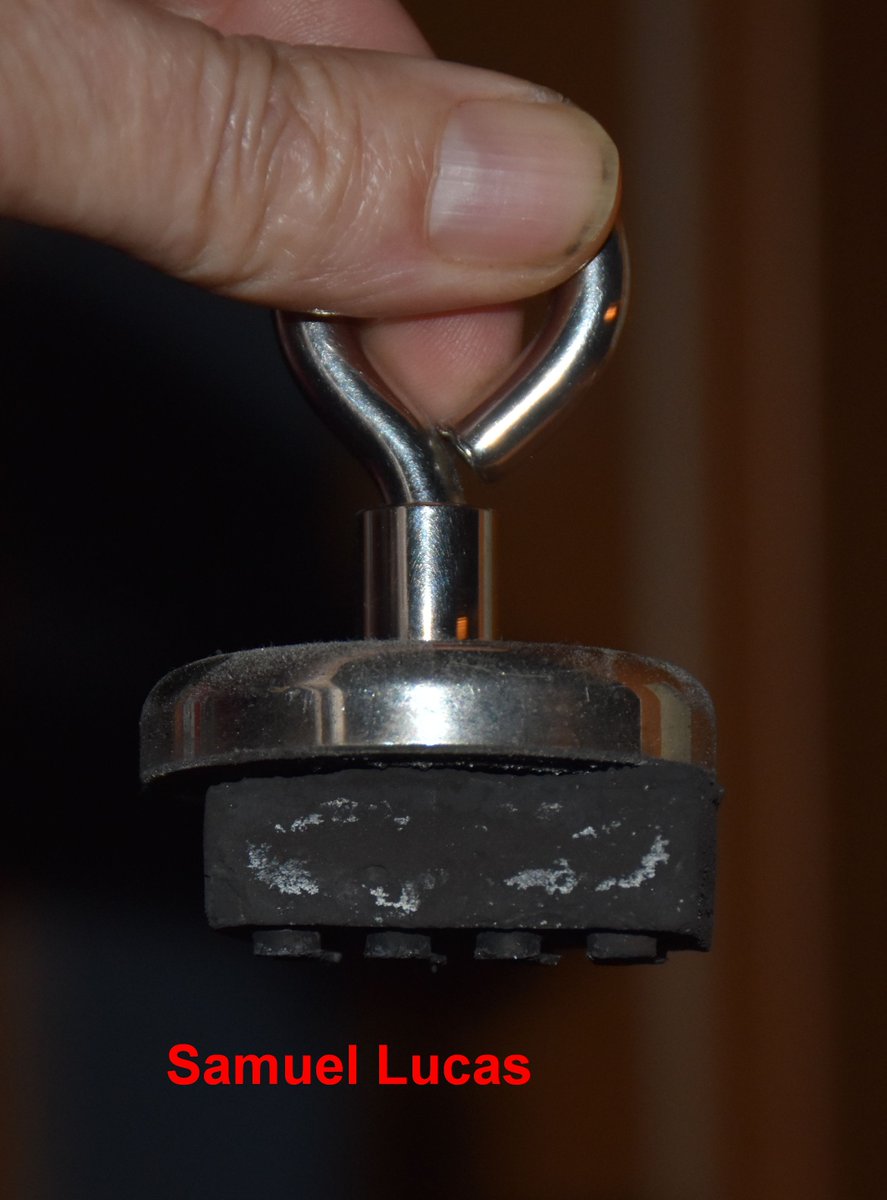
@AsteroidEnergy @JaraySzabolcs @SpacejunkieH @mikoske @danaen803 Example of a magnetic building material that I obtained in part with lunar #regolith simulant with the help of @AlaskaLawlor .

Short-term survival of #tardigrades (Ramazzottius cf. varieornatus and Hypsibius exemplaris) in #martian #regolith simulants (MGS-1 and OUCM-1): https://t.co/DBiMp1tLG4 -> ‘Water bears’ reveal potential for adapting, protecting Martian resources: https://t.co/g3nUUuBLq2


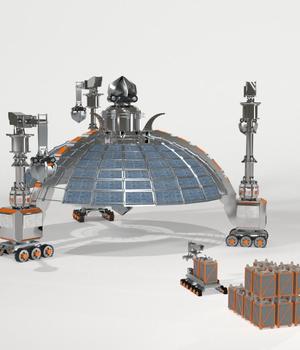

Built to withstand the extreme. Tested to endure. ⚙️
Open Positions ➡️ https://t.co/T9VTkXtU7w
#GITAI 's robotic components are engineered for the harsh realities of space.
#spacerobotics #engineering #lunar #regolith #careers

🌑☄️ Effect of #Target #Properties on #Regolith Production
✍️ Minggang Xie and Yan Li
🔗 https://t.co/jYU55PVoHM

Built to withstand the extreme. Tested to endure. ⚙️
Open Positions ➡️ https://t.co/T9VTkXtU7w
#GITAI 's robotic components are engineered for the harsh realities of space.
Want to join our mission? We're hiring!
#spacerobotics #engineering #lunar #regolith #careers
Built to withstand the extreme. Tested to endure. ⚙️
Open Positions ➡️ https://t.co/T9VTkXtU7w
#GITAI 's robotic components are engineered for the harsh realities of space.
#spacerobotics #engineering #lunar #regolith #careers


#Opinion
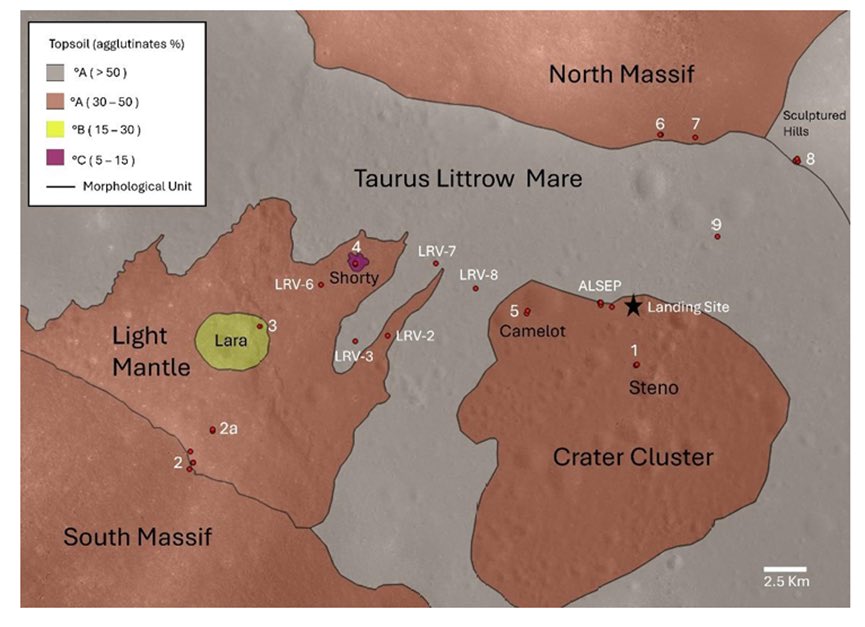
#Planetary #pedology opens new horizons for #lunar resource #mapping,
by Jérôme Juilleret @Subsolum from @LIST_Luxembourg , Dr. Calzada-Diaz from @ESRIC_lu , Dr. Scalenghe from @unipa_it and Prof. Dr. Certini from @UNI_FIRENZE
🔗 https://t.co/VO8xJI5FmE
#SoilScience



Built to withstand the extreme. Tested to endure. ⚙️
Open Positions ➡️ https://t.co/T9VTkXtU7w
#GITAI 's robotic components are engineered for the harsh realities of space.
#spacerobotics #engineering #lunar #regolith #careers
Solar wind erosion of lunar #regolith is suppressed by surface morphology and regolith properties
By Johannes Brötzner et al.
https://t.co/tpy1MKX8JX
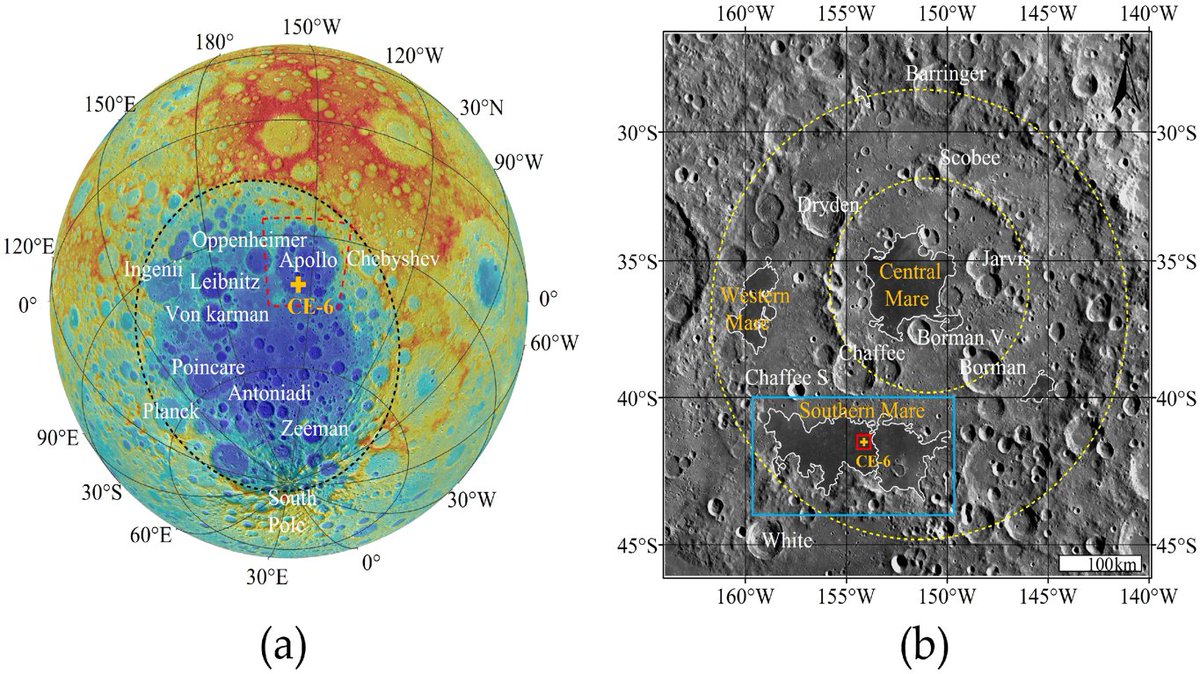
🌓🌔 The #Lunar #Regolith Thickness and Stratigraphy of the Chang’E-6 #LandingSite
✍️ Jin Li et al.
🔗 https://t.co/dN0oQWPztE
Trends for you
Most Popular Users

Elon Musk 
@elonmusk
240.7M followers

Barack Obama
@barackobama
119.2M followers

Donald J. Trump
@realdonaldtrump
111.7M followers

Cristiano Ronaldo
@cristiano
111M followers

Narendra Modi
@narendramodi
107M followers

Rihanna
@rihanna
97.7M followers

NASA
@nasa
92.2M followers

Justin Bieber
@justinbieber
91M followers

KATY PERRY
@katyperry
87.9M followers

Taylor Swift
@taylorswift13
81.7M followers

Lady Gaga
@ladygaga
73.2M followers

Virat Kohli
@imvkohli
70.2M followers

Kim Kardashian
@kimkardashian
69.9M followers

YouTube
@youtube
68.7M followers

Bill Gates
@billgates
64M followers

Neymar Jr
@neymarjr
63M followers

The Ellen Show
@theellenshow
62.4M followers

CNN
@cnn
61.9M followers

Selena Gomez
@selenagomez
60.9M followers

X
@x
60.8M followers