

Top Tweets for #Recompilation


Salut les gars !
Pour mes nostalgiques, j’ai sorti un projet: je vous présente WWE 12 version PC !
Dispo juste ici
https://t.co/p5sdgejtLE
Je travaille aussi sur une recompilation de 2K15 version Last-Gen (meilleur que la version PS4/Xbox One/PC selon moi 👀)

Cette recompilation de Sonic Free Riders a été faite avec ChatGPT et ClaudeAI.
Je rappelle qu'avec un bon pc, vous pouvez émuler le jeu et installer le patch NoKinect pour jouer à la manette.
C'est pas les vraies conditions mais c'est plus préférable.
Pas de GenAI dans Sonic.

SONIC FREE RIDERS — RECOMPILED 🔥
Le jeu Xbox 360 est en train d’être porté nativement via recompilation statique
✅ Windows
✅ Linux
✅ Android
✅ Vulkan / DX12
✅ Support manette
✅ Kinect émulé — pas besoin de Kinect
✅ Courses déjà jouables
Le projet est encore en développement, mais une preview v0.1.2 est déjà disponible
Encore un jeu Xbox 360 qui s’échappe de son hardware d’origine🤘
https://t.co/Oy8AxIHJOb


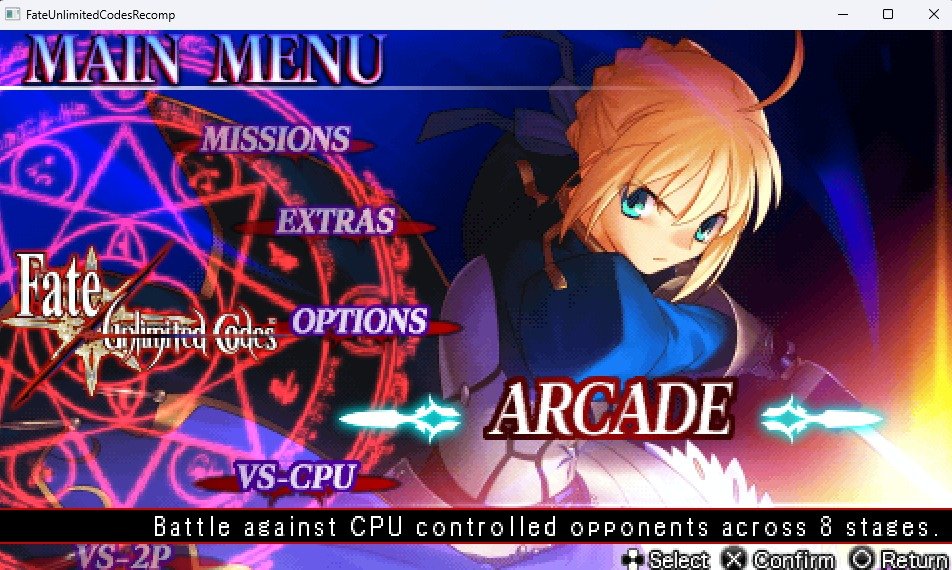
If you’re interested in keeping up with the progress, you can join https://t.co/45owK31Jdr and go to Community → Recompilation Projects → Fate/Unlimited Codes.

@ZeroDarkDev @sunrisepeak_x Standart include imposes recompilation of all headers for each cpp. It's a huge waste of time in parsing, optimizing, and then linking (as it needs to throw away duplicates).
Sadly few major and important libraries provide module versions.
Fate/unlimited codes Recomp is an unofficial native PC static recompilation of the PSP version, with PS2 assets and improvements planned. No game files are included or distributed. https://t.co/bX9qatM051 #StaticRecompilation #PSP #PS2 #NativePort


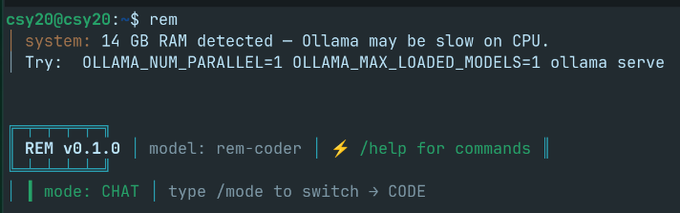
#Day11 of Training-llm:
-refactor: update https://t.co/IizT6xN3cG logic to trigger incremental recompilation

If compilation time is unbounded, it becomes a DoS risk.
Rialo solves this with single-pass, bounded recompilation,
turning compilation itself into a security property of the system.

RISC-V 아키텍처 Deep Dive
왜 Rialo는 EVM도 WASM도 아닌 RISC-V(ISA)를 골랐나
블록체인에서 VM 선택은 보통 EVM이냐,
WASM이냐 같은 프레임으로 이야기됩니다.
그런데 Rialo 문서가 던지는 관점은 한 단계 더 아래로 내려갑니다.
진짜 결론은 이거예요
VM은 표면이고,
승부는 ISA(Instruction Set Architecture)에서 난다.
왜냐하면 블록체인은 모든 검증자(validator)가 동일한 결과로 수렴해야 하는 복제 상태 머신이고, 동시에 적대적(untrusted) 코드를 실행해야 하는 환경이기 때문입니다.
이 조건에서는 ISA가 결정하는 determinism, metering, 컴파일 방식, 툴링, 보안 경계가 전부 합의(consensus)-critical이 됩니다.
Rialo는 실행 타깃 후보를 WASM, (Solana 계열) eBPF, RISC-V로 좁힌 뒤,
RISC-V(구체적으로 RV64EMC)를 선택합니다.
1) ISA 레벨 결정이 성능을 바꾼다
속도보다 먼저 컴파일 가능성을 본다
블록체인에서 성능은 단순히 런타임이 빠른가가 아니라,
검증자가 ‘매 블록’ 처리해야 하는 전체 경로가 DoS에 안전한가가 핵심이에요.
Rialo는 특히 이렇게 못 박습니다
컴파일 시간이 무제한이면 그 자체가 DoS 공격면이 된다
그래서 single-pass static recompilation처럼
각 guest instruction → 제한된(bounded) host instruction
으로 떨어지는 방식이 보안 속성(security property)이 된다
여기서 RISC-V, 그중에서도 RV64E(16개 레지스터)가 유리해집니다.
x86-64의 사용 가능한 GPR 구조와 깔끔하게 매핑되어 레지스터 할당이 병목/공격면이 되는 상황을 줄인다는 논리죠.
요약하자면 Rialo는 빠른 JIT보다 공격자가 악용하기 어려운 예측 가능한 컴파일을 먼저 산다는 것 같습니다.
2) 보안은 JIT vs 인터프리터가 아니라 bounded translation vs 복잡한 다단계 최적화의 문제
JIT 컴파일러 vs 인터프리터 트레이드오프를 Rialo 방식으로 번역하면 이렇게 됩니다
인터프리터(interpreter): 단순하지만 느리고, 동일 성능을 위해 더 많은 실행 스텝/오버헤드가 생김
전통적 다단계 JIT(multi-tier JIT): 빠를 수 있지만,
프로파일링/최적화/디옵트(deopt) 등 복잡성이 커지고 검증자가 적대적 코드를 컴파일하는 순간 자체가 공격 표면이 됨
Rialo가 원하는 형태는 JIT처럼 빠르되, JIT의 위험한 부분(무제한 최적화)을 제거한
single-pass, bounded, 예측 가능한 재컴파일
즉, Rialo가 선택한 건 JIT냐 아니냐가 아니라 컴파일이 합의 경로에서 안전하게 bounded 되느냐입니다.
3) 결정론(determinism)과 가스(metering)는 실행 시간이 아니라 정규화(canonicalization)에서 나온다
RISC-V를 고른다고 해서 그냥 RISC-V ELF를 QEMU로 돌리면 되겠네?가 아닙니다.
Rialo 문서는 이 지점을 아주 강하게 경고합니다
ELF는 정규화된 합의 아티팩트가 아니다
(링커/툴체인/레이아웃 차이로 바이트 레벨이 달라질 수 있음)
그래서 Rialo는 ELF → 합의용 deterministic bytecode로 변환하고,
validation/canonicalization/metering을 실행 전에 강제해서 모든 검증자가 동일 규칙으로 실행하게 만든다
이게 ISA 선택의 숨은 효과예요.
가스 모델을 WASM처럼 ‘나중에 덧붙이는(instrumentation)’ 방식으로 만들면 구현 복잡도와 불일치 위험이 커지는데,
Rialo는 합의 아티팩트 자체를 정규화하는 쪽으로 설계를 미는 겁니다.
4) 개발자 경험(DX)은 옵션이 아니라 운영 안정성이다
RISC-V를 택하면 생기는 가장 현실적인 이점
툴체인이 진짜다.
LLVM/GCC/Rust 등 업스트림 툴체인 지원이 강하고
DWARF, gdb/lldb, 프로파일러, 디스어셈블러 같은 표준 디버깅/분석 흐름이 자연스럽게 동작한다.
반대로 Solana식 eBPF는 업스트림 eBPF와 달라서 포크된 컴파일러/검증기 표면이 커지고 장기 유지보수 리스크가 누적된다고 지적하죠.
블록체인에서 DX는 개발 편의를 넘어, 감사(audit), 장애 대응(incident response), 성능 튜닝의 속도를 좌우합니다.
Rialo가 DX를 합의 인프라의 일부로 보는 이유가 여기 있어요.
5) 왜 오픈 ISA가 장기 보안 전략이 되는가
RISC-V는 오픈 표준 ISA이고, RISC-V International이 사양(extensions 포함)을 공개적으로 관리합니다.
Rialo는 이를 벤더 락인/라이선싱 리스크를 줄이는 장기 안정성으로 연결합니다.
여기서 포인트는 오픈이라서 멋있다가 아니라
수년 동안 유지될 실행 레이어에서
사양이 공개적이고, 산업 생태계가 크고, 툴링이 성숙한 ISA를 깔면
특정 구현체/특정 팀에 대한 의존도를 낮출 수 있다는 겁니다.
6) 가장 Rialo다운 결론
RISC-V는 다중 VM 공존을 프로토콜 문제가 아니라 라이브러리 문제로 만든다.
Rialo 문서의 마지막 한 방은 이거예요.
RISC-V가 합의 코어(ISA)로 깔리면,
EVM/Move 같은 다른 VM 호환성은 게스트로 올리는 방식으로 처리할 수 있다.
즉, 호환이 체인 차원의 프로토콜 변경이 아니라,
RISC-V 위에서 돌아가는 인터프리터/JIT라는 소프트웨어 레이어가 됩니다.
이게 커뮤니티 관점에서 왜 흥미롭냐면
오늘은 SVM 호환이 중요하고,
내일은 EVM 호환이 중요하고,
그 다음은 AI/zkVM 워크플로우가 중요해져도,
합의 코어는 덜 흔들리고, 위에서 모듈을 갈아끼울 수 있는 여지가 생기거든요.
왜 RISC-V인가?는 사실 블록체인의 실행 헌법을 어디에 둘 것인가?다
Rialo가 RISC-V를 고른 이유를 한 문장으로 줄이면
적대적 코드 실행 + 결정론 + bounded 리소스라는 블록체인의 본질을,
VM이 아니라 ISA 단계에서부터 정직하게 설계하기 위해서.
@RialoHQ
@RialoKorea
@itachee_x
@silverwave1000


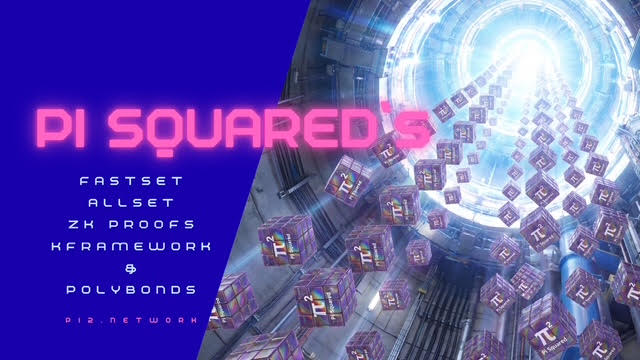
Pi Squared is a project worth talking about for hours — it’s fundamental yet surprisingly easy to understand, with clearly defined goals and tasks.
What tasks exactly? The main mission is to eliminate the root causes of delays and inefficiencies in Web3: global total ordering, queues, liquidity fragmentation, bridge risks, and the inability to scale payments to true internet-level speed. The goal is to build rails where AI agents, people, and systems can pay instantly, without compromises on speed, cost, or security.
At the core is FastSet — a parallel settlement network where each transaction (“claim”) is verified and finalized independently, without a global queue. The results are already impressive: over 100k TPS on Devnet 2.0, sub-100 ms finality, and near-zero fees. This solves the biggest pain points — queues, delays, and bottlenecks — for billions of AI agent microtransactions, stablecoins, RWAs, and prediction markets. Payments become instant, just like regular internet traffic.
AllSet (formerly OmniSet) removes liquidity fragmentation and bridge risks: assets move across any chain in a verifiable way using ZK-proofs and private keys — one unified pool, instant transfers, full verifiability.
Proof of Proof with K Framework provides universal mathematical verification for any code (not just EVM/Solidity) — without trusted setups or recompilation. This opens the door to on-chain AI compute, remote execution, and interoperable smart contracts on any platform.
Pi Squared is actively evolving: the team stays in constant touch with the community, releasing important weekly updates. Right now you can already run test transactions on Devnet, experience FastSet and AllSet in action, and participate in PolyBonds — a mini-app that demonstrates the real power of FastSet in prediction markets. PolyBonds simplifies trading on Polymarket by scanning near-resolution events with high-probability outcomes (90–97%+), presenting them as almost-guaranteed short discounted bonds, and letting users quickly capture arbitrage opportunities through a simple swipe interface (right to buy, left to skip). This shows how Pi Squared’s parallel settlement makes liquidity instant and seamless across apps and markets. @PiSquared @RosuGrigore @ShannonSheriff
Learn more about Pi Squared here:
Website: https://t.co/wf46UVG46r
X: @PiSquared
Discord: https://t.co/SCMdS30fnf
Docs / Resources: https://t.co/K4yNJYEaG2
PolyBonds (mini-app showcasing FastSet in prediction markets): https://t.co/lsl8Jis7aW

@JamesDude100 @TheRealXenkari I've been lookimg into these recompilation systems. Maybe i'll try to play with one


Grialo🤍
✔️ Single-Pass Static Recompilation and Deterministic Execution in Rialo
Rialo is built around a single core principle: every participant in the network must arrive at exactly the same execution result. To make this possible, Rialo’s execution engine is based on the RISC-V RV64EMC instruction set, which is intentionally simple and predictable.
Because RV64EMC uses a compact register model, each smart contract instruction can be translated into x86 64 host instructions in one pass with a strictly bounded cost. This approach, known as single pass static recompilation, ensures that compilation time can never grow unexpectedly. As a result, Rialo avoids entire classes of attacks that rely on unbounded compilation, such as compiler bombs and denial of service vectors.
The key architectural component behind this guarantee is Rialo’s Canonicalization Layer. In traditional systems, ELF binaries can vary depending on build environments, with differences in section ordering, metadata, and layout. Rialo never executes these binaries directly. Instead, it converts them into a standardized bytecode representation that all validators interpret identically.
During this canonicalization process, Rialo enforces deterministic execution, embeds gas accounting directly into the code, and validates correctness before runtime. This ensures that execution results are fully consistent across all validators, regardless of hardware or local configuration.
RV64EMC also supports compressed instructions, which significantly reduce binary size. In practice, compiled programs average around 57 KB, making them smaller than WASM binaries and far more compact than eBPF. Smaller binaries translate directly into lower storage costs and faster verification on chain.
Equally important, Rialo integrates cleanly with existing development toolchains. LLVM, GCC, and Rust already support RISC-V, allowing developers to use familiar workflows and standard debuggers such as gdb and lldb without maintaining forked compilers or custom tooling.
Taken together, this architecture delivers deterministic execution, strong resistance to compiler level attacks, and a production ready developer experience. It also highlights why RISC-V is emerging as a strong candidate for the future standard of blockchain smart contract execution environments.
@RialoHQ @RialoKorea @itachee_x

Grialo 🤍
✔️ Why RISC-V Is the Future of Blockchain Smart Contracts
> Structural Limits of Blockchain Execution Environments
Today’s blockchain ecosystems face fundamental constraints in smart contract execution. Ethereum’s EVM relies on a stack based architecture that becomes inefficient for complex computation, resulting in zero knowledge proof generation times measured in minutes.
Solana’s eBPF strengthens safety through a validator oriented design, but suffers from performance limits caused by its restricted register set and long term maintenance costs stemming from its forked toolchain.
WebAssembly is used by ecosystems such as Polkadot, Cosmos, and Near, offering hardware independence and multi language support. However, its stack based execution model continues to fall short when it comes to blockchain specific optimization.
> Rialo’s Strategic Choice of RV64EMC
In August 2025, Rialo raised a twenty million dollar seed round led by Pantera Capital and emerged as a RISC-V based smart contract platform. At the core of this strategy is the adoption of the RV64EMC instruction set.
RV64EMC combines sixty four bit integer operations, a reduced embedded profile with sixteen registers, native multiplication and division, and compressed instructions.
This design is optimized for resource constrained blockchain environments, enabling predictable execution while reducing onchain storage and bandwidth costs.
> Performance and Binary Efficiency
Using identical Rust programs, RV64EMC binaries average around 57KB, slightly smaller than WASM at 59KB, and significantly smaller than eBPF binaries exceeding 117KB.
Rialo’s single pass static recompilation delivers multiple times the performance of Solana’s rBPF interpreter and JIT.
PolkaVM benchmarks show RISC-V at 10.7ms per frame (~93 FPS), while Solana’s rBPF JIT records 625ms per frame.
> Determinism and Security
Rialo ensures deterministic execution by converting ELF binaries into standardized bytecode through a canonicalization layer, guaranteeing identical results across all validators.
Security is reinforced through:
• process isolation
• instruction level gas metering
• bounded compilation to prevent DoS during compilation
PolkaVM’s RISC-V implementation spans ~15,000 lines of code, compared to 1M+ lines in Wasmtime, dramatically reducing audit complexity.
> Developer Ecosystem
RISC-V benefits from full upstream support across LLVM, GCC, and the Rust toolchain.
Unlike eBPF, which depends on forked compilers, developers can rely on:
• standard debugging tools
• native Rust and C++
• Solidity via YUL
• direct compatibility with zkVMs like SP1 and RISC Zero
This delivers a familiar Web2 workflow and lowers the barrier to blockchain development.
> Industry Momentum
In 2025, Vitalik Buterin noted that moving Ethereum from the EVM to RISC-V could unlock up to 100x ZK efficiency.
RISC Zero later demonstrated this by reducing Ethereum block proof times from 35 minutes to 44 seconds.
Polkadot has also begun migrating to RISC-V based PolkaVM, achieving 5–10x faster execution while maintaining EVM compatibility.
> Conclusion
RISC-V represents more than incremental performance gains. As an open, royalty free standard, it offers a globally supported foundation for blockchain execution.
Rialo’s adoption of RV64EMC shows how RISC-V uniquely delivers determinism, efficiency, and verifiability at the same time.
The transition is already underway.
@RialoHQ @RialoKorea @itachee_x


Why @RialoHQ Chose RISC-V as Its Smart Contract Execution Layer :
> Smart contract execution is as fundamental to a blockchain as consensus itself. Every validator must execute untrusted code under strict resource constraints and still converge on identical results.
> This requirement adversarial execution under deterministic rules creates constraints that do not exist in traditional runtime environments.
> Most discussions around blockchain runtimes focus on the virtual machine.
But in reality, a VM inherits its most important properties from the instruction set architecture (ISA) underneath it. Determinism, gas metering, compilation behavior, tooling, and even security guarantees are all shaped at the ISA level. In a replicated state machine, these properties are consensus-critical.
After evaluating multiple execution targets, Rialo narrowed the field to WebAssembly (WASM), eBPF (as used by Solana’s SVM), and RISC-V. We ultimately chose RISC-V, specifically RV64EMC.
What a Smart Contract ISA Must Provide ?
> A blockchain does not need a general-purpose runtime. It needs a tightly defined execution substrate with the following properties:
> Bounded compilation to prevent compiler-based DoS attacks
> Deterministic semantics across architectures and implementations
> Deterministic gas metering without unbounded runtime instrumentation
> Strong sandboxing, assuming guest code is hostile
Production-grade tooling for debugging, auditing, and profiling
Patching these properties on later adds complexity and long-term risk.
Single-Pass Compilation as a Security Primitive
Multi-tier JIT compilation—common in browsers is fundamentally unsafe in a blockchain context. Validators must compile untrusted programs quickly and predictably. Compilation itself becomes part of the attack surface.
Rialo prioritizes single-pass static recompilation, where each guest instruction lowers to a bounded and predictable sequence of host instructions.
RV64E is unusually well suited to this model. With 16 registers (15 usable), it maps cleanly to x86-64’s register set, enabling efficient code generation with minimal spilling and avoiding pathological register allocation behavior that can be exploited for compiler-time attacks.
Early benchmarks show performance comparable to single-pass WASM engines and significantly faster than Solana’s rbpf interpreter/JIT on similar workloads.
> A Real ISA Means a Real Toolchain :
RISC-V enjoys first-class support in LLVM, GCC, and the Rust toolchain. This dramatically reduces long-term maintenance costs.
By contrast, Solana’s eBPF environment is not upstream eBPF, requiring a forked compiler and verifier surface that grows over time. Rialo, having roots in Solana, has felt this pain firsthand—and chose RISC-V to avoid carrying it forward.
> Determinism Through Canonicalization :
Rialo does not execute arbitrary RISC-V ELF binaries directly. ELF files are not canonical: compiler and linker differences can change layout without changing semantics.
Instead, Rialo converts ELF binaries into a canonical bytecode representation before execution. Validation, canonicalization, and gas metering occur before any code runs, ensuring all validators execute the same program under the same rules.


📋Why Rialo Chose RISC-V for Smart Contract Execution
Smart contract execution is as critical to a blockchain as consensus itself.
Validators must execute untrusted code while operating under strict resource limits, and still arrive at identical results every time.
This requirement goes beyond choosing a virtual machine.
In practice, the fundamental properties of execution are determined at the instruction set architecture (ISA) level.
Determinism, gas metering, compiler predictability, performance characteristics, tooling, and security models are all downstream of this choice.
After evaluating WebAssembly (WASM), eBPF, and RISC-V, Rialo selected RISC-V, specifically the RV64EMC profile, as its smart contract execution target.
What a Blockchain Requires from an ISA
A blockchain execution environment must satisfy several non-negotiable requirements.
▫️Predictable compilation
Compilation time must be bounded. The compilation process itself must not become a denial-of-service vector.
▫️Determinism
The same input must always produce the same state transition, regardless of hardware or runtime environment.
▫️Native gas metering
Out-of-gas conditions must be enforceable with low overhead and precise control over execution termination.
▫️Strong sandboxing
The system must be designed under the assumption that adversarial code will be executed, without allowing failures to propagate to the host.
▫️Practical tooling
Debugging, profiling, and security auditing must be realistically achievable using established developer tools.
If even one of these properties is missing, ad hoc mechanisms accumulate, the system grows more complex, and the attack surface expands.
Why RISC-V, and Why RV64EMC
One of the key reasons Rialo chose RISC-V is that it enables single-pass static recompilation/translation.
This is not merely a performance optimization. It is closer to a security property, because it prevents compilation time itself from becoming an attack surface.
The RV64E profile limits the register file to 16 registers, with 15 usable general-purpose registers.
This aligns closely with the 15 usable general-purpose registers available on x86-64.
As a result, minimal spilling and code generation becomes more predictable. This helps avoid pathological compilation paths and lowers the risk of attacks that exploit excessive or unbounded compilation behavior.
RISC-V also provides several practical advantages:
▫️Mature standard toolchains including LLVM, GCC, and Rust
▫️An open ISA standard, reducing long-term ecosystem and vendor risk
▫️Direct reuse of existing CPU debugging and analysis tools such as gdb, lldb, and DWARF
▫️Reduced code size through the compressed instruction (C) extension, which is particularly valuable in onchain execution environments
Determinism and Gas Metering via Canonicalization
Rialo does not execute RISC-V ELF binaries directly in consensus.
ELF is not a canonical artifact suitable for consensus execution. Compiler, linker, and layout differences can affect section ordering, metadata, alignment, and padding while preserving semantics.
Instead, Rialo introduces a canonicalization step that converts ELF into a deterministic bytecode representation designed for consensus execution.
During this step, execution is validated and constraints required for determinism and enforceable resource usage are defined before any code runs.
As a result, when execution begins, all relevant rules and limits are already fixed, and sources of nondeterminism are removed at the consensus layer.
Security Model and Long-Term Extensibility
Rialo’s RISC-V execution environment follows a defense-in-depth approach.
▫️Execution is isolated at the process level
▫️OS-level security mechanisms such as seccomp are employed
▫️Small code size and minimal dependencies reduce the overall attack surface
This design explicitly assumes the presence of malicious smart contracts.
From a long-term perspective, a RISC-V-based architecture also provides structural flexibility.
▫️New cryptographic primitives can be introduced at the library level without modifying the VM itself
▫️Architectural alignment with RISC-V-based zkVMs such as SP1 and RISC Zero
▫️The ability, in principle, to host other execution environments such as the EVM or Move VM as guest systems if required
@RialoHQ @RialoKorea @itachee_x


@danielcdev yeah very different. For a single line change in a leaf file it's about 0.8s for CMake, 0.3s for Ninja and 0.18s for my system.
if it's not a leaf file then it depends on how many recompilations it triggers. From experience I usually see times between 0.18s and 0.5s.
this has several advantages, one of them is less compiler invocation overhead, and less header parsing overhead.
it's also nicer for organization imo. you can have "internal" module functions, and in general less recompilation (module files are likely to change together).

@ankurposts I think (Dynamic Binary Translation) DBT from Huawei acquired ExaGear Russian technology within StratoVirt supports cross-ISA binary execution, enabling cloud and edge devices built on ARM to maintain software compatibility without recompilation on outsourced Oseasy VM client app

I NEED A RECOMPILATION OF EVERY BEYONCE SAID TN

@SlaZeRaZeR You forget that the devs mentioned that the recompilation is going to have bugs. It's not a perfect 1:1 conversion of the Xbox 360 version to PC, and there's still a lot to learn.
Let's not be too hasty.
Last Seen Hashtags on Sotwe
Most Popular Users

Elon Musk 
@elonmusk
240.1M followers

Barack Obama
@barackobama
118.6M followers

Cristiano Ronaldo
@cristiano
114.4M followers

Donald J. Trump
@realdonaldtrump
111.7M followers

Narendra Modi
@narendramodi
106.9M followers

Rihanna
@rihanna
98.6M followers

NASA
@nasa
92.1M followers

Justin Bieber
@justinbieber
91.7M followers

KATY PERRY
@katyperry
89.9M followers

Taylor Swift
@taylorswift13
83.9M followers

Lady Gaga
@ladygaga
75.4M followers

Virat Kohli
@imvkohli
73.3M followers

Kim Kardashian
@kimkardashian
70.8M followers

YouTube
@youtube
68.6M followers

Neymar Jr
@neymarjr
66.3M followers

Bill Gates
@billgates
65.2M followers

Selena Gomez
@selenagomez
63M followers

The Ellen Show
@theellenshow
62.1M followers

CNN
@cnn
61.7M followers

X
@x
60.6M followers