

Top Tweets for #Relatividade

O nosso egresso da Especialização em Teoria da Relatividade, Pedro Croti, teve sua tese premiada pelo ICTP-SAIFR!
Parabéns, Pedro!
https://t.co/g3xJHE3R8I
#Unifesp
#ICTP-SAIFR
#prêmio
#Gravitação
#relatividade
#física

A cor dos olhos é mais bonita? A beleza é relativa ou existem padrões? A discussão explora preferências, diversidade e como o diferente atrai. #beleza #diversidade #relatividade

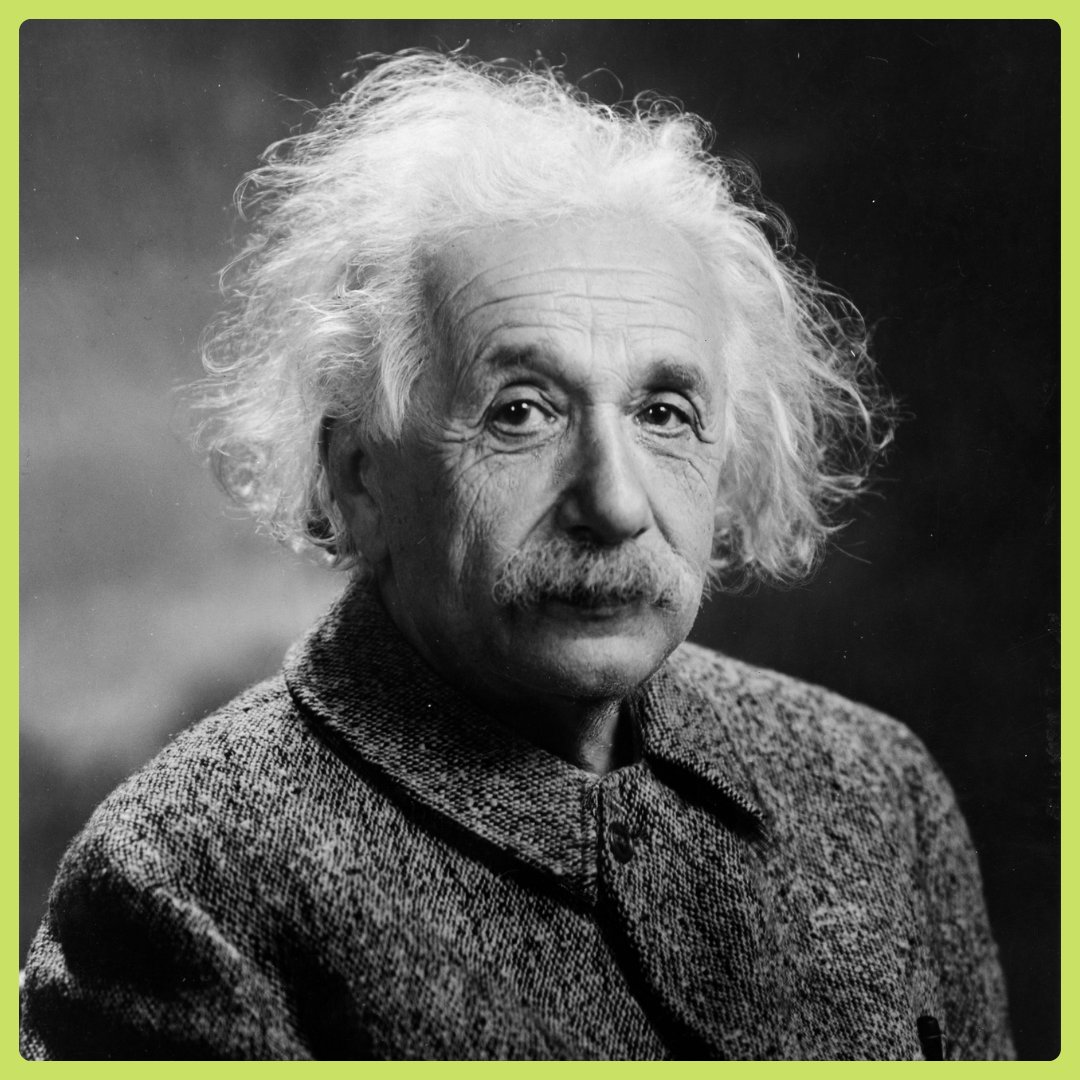
Albert Einstein
Nascido dia 14 de março de 1879 em Ulm, Alemanha.
#alberteinstein #fisico #relatividade

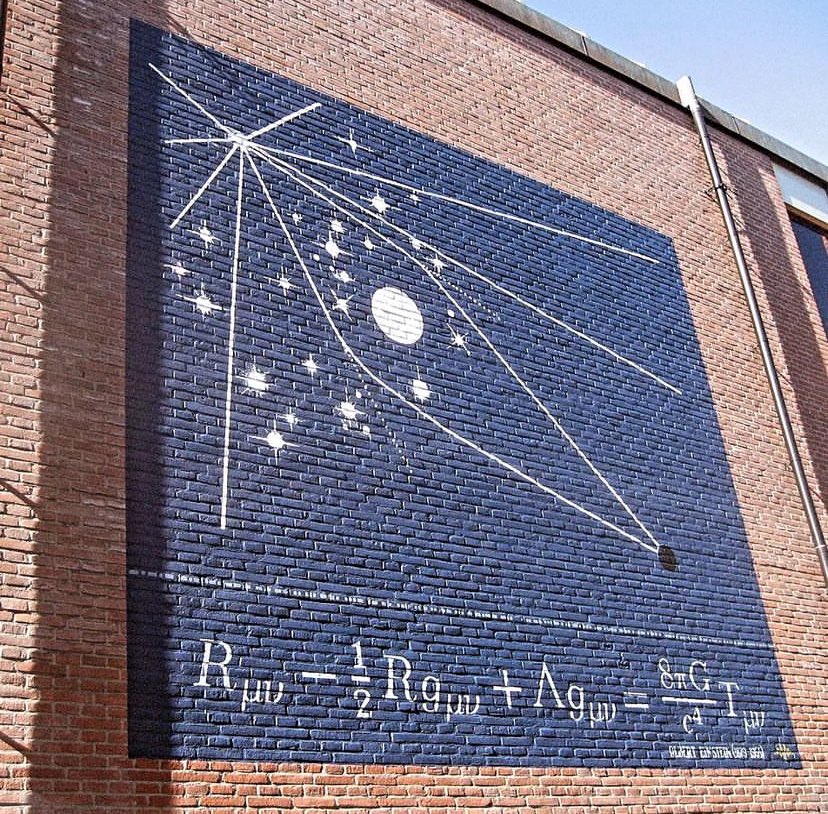
Física nas ruas: equação de campo de Einstein numa parede em Leiden, mostrando também o efeito de lente gravitacional!
Poderíamos copiar a idéia no Brasil, não acham?
#fisica #astronomia #ciencia #Einstein #relatividade

Einstein’s field equation on a wall in Leiden, Netherlands. ✍️
Este tweet é um “tratado” sobre Relatividade, Universo em expansão acelerada, Big Bang, energia escura, e mais…
#relatividade #bigbang #astronomia #fisica #energiaescura

General Relativity, formulated by Albert Einstein in the early 20th century, revolutionized our understanding of gravity, spacetime, and the universe's structure. Unlike Newtonian gravity, which describes gravity as a force between masses, General Relativity explains gravity as the curvature of spacetime caused by mass and energy.
1. Spacetime and Curvature:
- General Relativity posits that space and time are intertwined into a four-dimensional continuum known as spacetime.
- Objects move along geodesics, which are the straightest possible paths in curved spacetime. The curvature of spacetime around a mass causes the paths of objects to bend, an effect we perceive as gravity.
2. Pseudo-Riemannian Manifold:
- Spacetime in General Relativity is modeled as a pseudo-Riemannian manifold. This mathematical structure allows for the description of curved spacetime with a metric tensor that defines distances and angles.
- The curvature of this manifold is described by the Riemann curvature tensor, which encodes how spacetime is deformed by mass and energy.
3. Einstein Field Equations:
- The Einstein Field Equations (EFE) are a set of ten interrelated differential equations that relate the curvature of spacetime (encoded in the Einstein tensor) to the energy and momentum of the matter and radiation present (represented by the stress-energy tensor).
- These equations are complex and non-linear, making exact solutions rare and typically requiring approximations or numerical methods for practical problems.
Key Principles.
1. Equivalence Principle:
- A cornerstone of General Relativity is the equivalence principle, which states that local observations in a freely falling reference frame are indistinguishable from those in an inertial frame in the absence of gravity.
- This principle leads to the understanding that free-falling objects follow geodesics in curved spacetime.
2. Local Flatness:
- Curved spacetime appears locally flat when observed at a sufficiently small scale, analogous to how the Earth's surface appears flat to someone standing on it.
- This local flatness means that the laws of Special Relativity, which describe the behavior of objects in flat spacetime, hold true in sufficiently small regions of curved spacetime.
The Einstein Field Equations are central to General Relativity, expressing how matter and energy influence the curvature of spacetime. The EFE can be written as:
Rμν − 1/2 Rgμν + Λgμν = 8πG/c⁴ Tμν
where:
- Rμν is the Ricci curvature tensor, representing gravitational effects due to local matter.
- R is the Ricci scalar, the trace of the Ricci tensor.
- gμν is the metric tensor, describing the geometry of spacetime.
- Λ is the cosmological constant, which accounts for the energy density of empty space (vacuum energy).
- G is the gravitational constant.
- c is the speed of light.
- Tμν is the stress-energy tensor, representing the distribution and flow of energy and momentum in spacetime.
The EFE are highly non-linear partial differential equations. Solving them typically requires sophisticated mathematical techniques and often numerical methods, especially in the context of complex astrophysical scenarios.
Key Solutions in General Relativity.
1. Schwarzschild Metric:
- The Schwarzschild Metric, derived by Karl Schwarzschild in 1916, is the first exact solution to the Einstein Field Equations. It describes the spacetime geometry surrounding a non-rotating, spherically symmetric mass such as a static black hole.
- The Schwarzschild solution is critical for understanding the event horizon of black holes and the behavior of objects in strong gravitational fields. It predicts phenomena such as gravitational time dilation and the bending of light near massive objects.
- The Schwarzschild metric is given by:
ds² = − ( 1 − 2GM/c²r ) c²dt² + ( 1 − 2GM/c²r) −¹ dr² + r² (dθ² + sin² θdϕ²)
2. Kerr Metric:
- The Kerr Metric, discovered by Roy P. Kerr in 1963, extends the Schwarzschild solution to rotating masses. It describes the spacetime around a rotating (or spinning) black hole, incorporating the effects of angular momentum.
- The Kerr solution introduces the concept of the ergosphere, a region outside the event horizon where objects cannot remain in place and are dragged by the rotating spacetime. The Kerr Metric is essential for studying astrophysical black holes, which are typically rotating.
- The Kerr metric is given by:
ds² = − (1 − 2GMr/ρ²c²) c² dt² − 4GM ar sin² θ/ρ²c² dtdϕ + ρ²/Δ dr² + ρ²d θ² +(r²+a²+2GM ra² sin² θ/ρ²c²) sin² θdϕ²
where:
- ρ² = r² +a² cos² θ
- Δ = r² − 2GMr/c² +a²
- a = J/Mc (specific angular momentum).
General Relativity plays a crucial role in cosmology, providing the theoretical framework for understanding the large-scale structure and evolution of the universe. Key cosmological applications include:
1. The Friedmann-Lemaître-Robertson-Walker (FLRW) Metric:
- The FLRW metric describes a homogeneous and isotropic expanding or contracting universe. It is the foundation of the standard model of cosmology, known as the Lambda Cold Dark Matter (ΛCDM) model.
- The FLRW metric is given by:
ds² = −c² dt² + a(t)² (dr²/1−kr² + r² dθ² + r² sin² θdϕ²)
where a(t) is the scale factor, and k is the spatial curvature constant.
2. Big Bang and Cosmic Inflation:
- General Relativity predicts the Big Bang, the initial singularity from which the universe expanded. The theory also supports the concept of cosmic inflation, a rapid exponential expansion in the early universe that explains the observed homogeneity and isotropy.
- Inflationary models solve several problems in cosmology, such as the horizon and flatness problems, by positing a period of accelerated expansion driven by a scalar field (the inflation).
3. Dark Energy and the Accelerating Universe:
- Observations of distant supernovae and the cosmic microwave background (CMB) radiation suggest that the universe's expansion is accelerating. This acceleration is attributed to dark energy, represented by the cosmological constant Λ in the Einstein Field Equations.
- Understanding the nature of dark energy is one of the most significant challenges in modern cosmology and theoretical physics.
Quantum Gravity: Historical Context and Modern Challenges.
1. Early Attempts: Leon Rosenfeld's 1930 Paper:
- Leon Rosenfeld's 1930 paper was among the first serious attempts to bridge the gap between quantum mechanics and general relativity. Rosenfeld tackled the problem of quantizing the gravitational field, introducing methods to apply the principles of quantum theory to the metric tensor of spacetime.
- Despite its pioneering approach, Rosenfeld's work highlighted the immense difficulties in reconciling the fundamentally different natures of quantum mechanics and general relativity, such as dealing with the non-linearities of the Einstein Field Equations in a quantum framework.
2. Developments in Quantum Gravity: Carlo Rovelli's Contributions:
- Carlo Rovelli, a prominent figure in the field, has extensively chronicled the history and progress of quantum gravity. His work emphasizes the conceptual and technical challenges faced by physicists in unifying general relativity with quantum mechanics.
- Rovelli is a key proponent of Loop Quantum Gravity (LQG), a theory that attempts to quantize spacetime itself, proposing that spacetime has a discrete structure at the Planck scale. LQG avoids some of the pitfalls of earlier approaches by not relying on a fixed spacetime background, instead treating the geometry of spacetime as a dynamic, quantized entity.
Limitations and Future Directions.
- While General Relativity excels in describing macroscopic gravitational phenomena, it is incompatible with Quantum Mechanics, which governs the behavior of particles at microscopic scales.
- Efforts to develop a quantum theory of gravity that unifies General Relativity with Quantum Mechanics, such as string theory and loop quantum gravity, are ongoing but have yet to be conclusively validated.
- The search for a successful theory of quantum gravity continues to be one of the most significant challenges in theoretical physics. Researchers are exploring various approaches, including holographic principles and emergent gravity theories, in hopes of discovering a model that can accurately describe the universe at all scales.
General Relativity remains one of the most profound and accurate theories in physics, providing a comprehensive framework for understanding gravity, spacetime, and the large-scale structure of the universe. Its success in explaining and predicting a wide range of phenomena continues to make it a fundamental pillar of modern physics.
At the same time, the quest for a quantum theory of gravity represents the frontier of theoretical physics, promising deeper insights into the nature of reality.

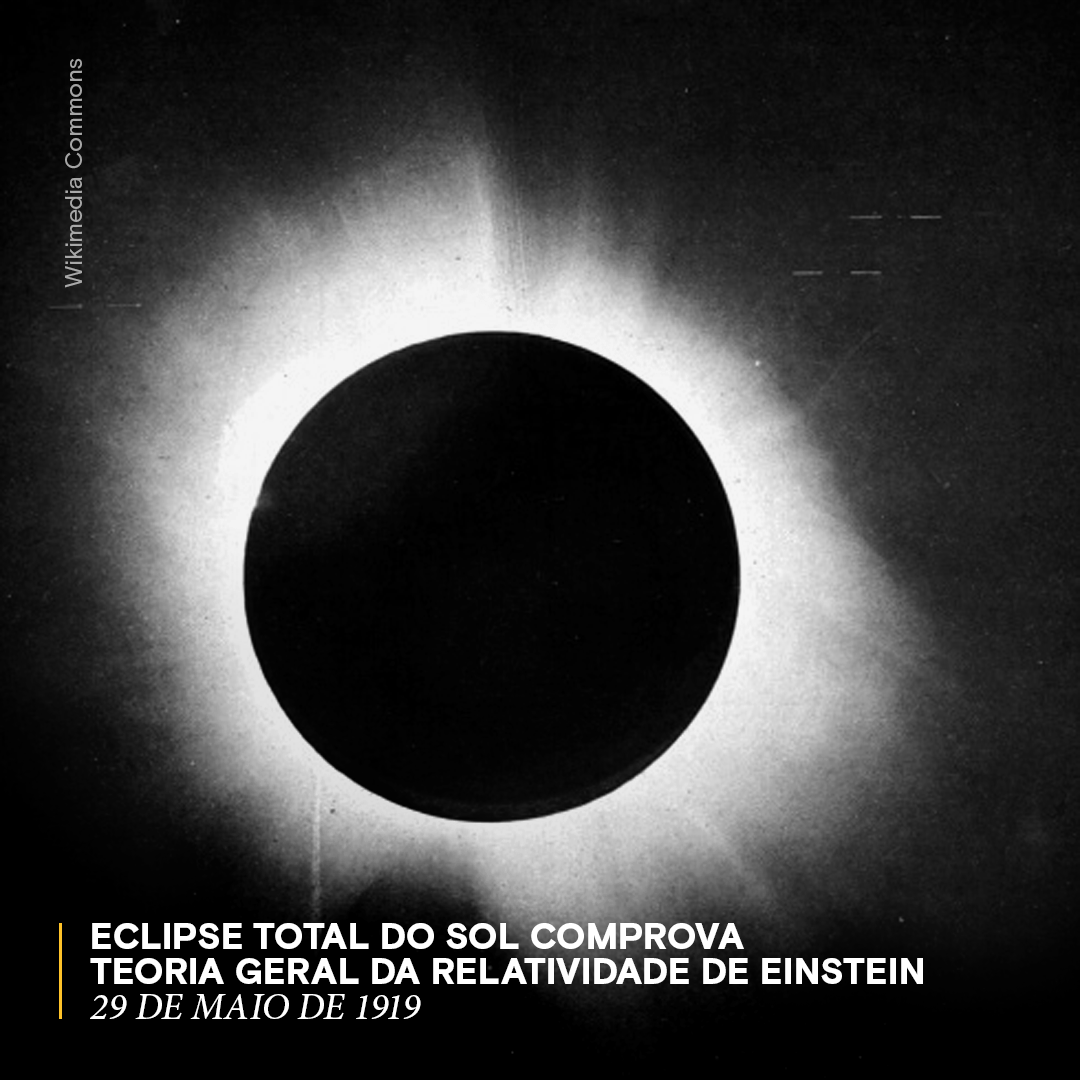
#HojeNaHistória No dia 29 de maio de 1919, um eclipse total do Sol não só fascinou o mundo com sua duração de quase sete minutos, mas também desempenhou um papel crucial na ciência. #Einstein #Relatividade #Eclipse1919 → Leia mais em https://t.co/alg7ZX2NOn

Bom dia! Eu achei esse livro e esse vídeo super bacanas para trabalhar os conceitos de relatividade geral de forma bem didática com crianças (para pais e Professores(as) de Ciências). Daí estou repostando com a legenda. Espero que gostem! 🔬— via @Rainmaker1973 #relatividade #relatividadegeral #ciencias #educação

Einstein e a Teoria da Relatividade com sua voz e em cores.
Uma das maravilhas das IAs é poder ter "perto" de nós, os grandes gênios da história.
Enjoy! @pepeuhardt
#Einstein #TeoriaDaRelatividade #AlbertEinstein #Relatividade #Relativity #Theory #originalvoice
#PepeuHardt

Teoria da #relatividade ⏳🌌 de Einstein: porque é que a nossa cabeça é mais velha do que os nossos pés?
🗞️ Mais pormenores aqui com @ChGaravaglia.
https://t.co/lqhGWRmYzK

Linda. Descoberta nova Cruz de Einstein no espaço #Relatividade
New Einstein Cross discovered warping space-time. It's called an Einstein cross – when the curvature of space-time around a massive foreground object splits the light behind it into four, like the points of a cross. 1/
👉 https://t.co/O8cVvybjw7

Ex-aluna da Unifesp-Diadema (da graduação e da especialização em Teoria da Relatividade) agita trabalha em laboratório nos EUA vinculado ao LIGO.
#relatividade #relativity #ondasGravitacionais #instrumentacao #LIGO
#Física #Physics #gravitationalwaves #instrumentation #UCR


🏔️ Como o #tempo passa no pico do #Everest em comparação ao nível do mar? ⏰ Você viveria mais ou menos? @import_robs nos explica a #relatividade!
https://t.co/oZ5EvOKP0a

"Também desapareceu a tese de doutorado que #Mileva #Marić apresentou em 1901 na #Politécnica e que, segundo testemunhos, consistia no desenvolvimento da teoria da #relatividade."
@Deborapm62 também esteve no ar! Nós e os astros compactos: estrelas de nêutrons e buracos negros! Em breve no Youtube das @astrocientistas! #astrocientistas2023 #ciencia #fisica #astronomia #relatividade


Publicado na SBF:
https://t.co/jgjs3Uu0ip
#sbfisica #tempo #unifesp #Alemanha #espacotempo #relatividade #gravitação #wilhelmelseheraeus

Theory of relativity in six sentences
[📹 glamour_physics: https://t.co/unbkP7krif]
https://t.co/ccnFARqP02

A impressionante Relatividade 🌎👨🚀
D.A : Siga o @obcecadoporastronomia
Tags: #relatividade #interestelar #curiosidades #cosmos #universe #universo #noticias #space #filmes #series #cooper #einstein #murphy #nolan #feedorganizado #instagood #alberteinstein
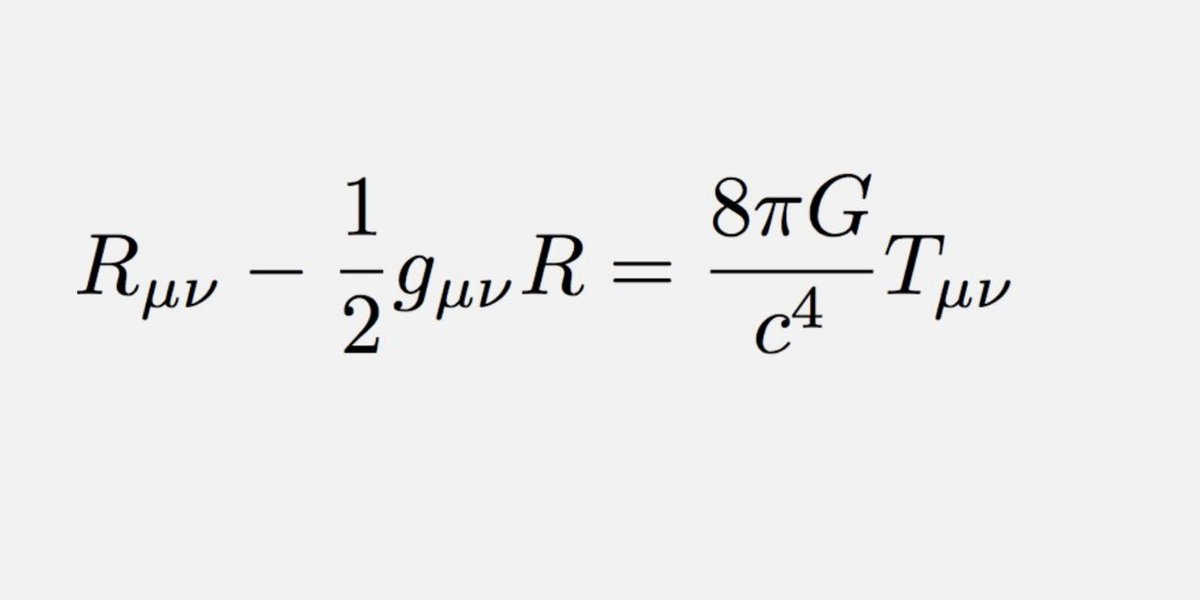
No final de Novembro de 1915, Einstein completava a Teoria da Relatividade, apresentando a equação abaixo em que o lado esquerdo representa a curvatura do espaço-tempo que é resultado da matéria e energia presentes, representados do lado direito. #ciencia #relatividade

This week in 1915: Albert Einstein completes the general theory of relativity, giving us one of the most beautiful equations ever conceived (LHS describes the curvature of spacetime, RHS describes the matter and energy in spacetime).
General relativity for babies
[📹 and more, readplaysing: https://t.co/E4hLJSmQrp]
[this book: https://t.co/vH2rv82PoN]
Last Seen Hashtags on Sotwe
minichat() +filter:native_video since:2026-09-26
Seen from India
VeronicaAvluv
Seen from South Africa
anxiouspanda
Seen from Turkey
blackandALIVE
Seen from United States
スマブラ
Seen from United States
Nftgirl
Seen from United States
minichat(**)*************************** filter:videos since:2026-09-25
Seen from Sweden
duelcasino
Seen from Italy
JUSTICEFORDUA
Seen from United States
minichat
Seen from Netherlands
Trends for you
Most Popular Users

Elon Musk 
@elonmusk
241.5M followers

Barack Obama
@barackobama
118.9M followers

Cristiano Ronaldo
@cristiano
114.6M followers

Donald J. Trump
@realdonaldtrump
111.8M followers

Narendra Modi
@narendramodi
107.1M followers

Rihanna
@rihanna
98.7M followers

NASA
@nasa
92.3M followers

Justin Bieber
@justinbieber
91.8M followers

KATY PERRY
@katyperry
90.1M followers

Taylor Swift
@taylorswift13
84M followers

Lady Gaga
@ladygaga
75.5M followers

Virat Kohli
@imvkohli
73.5M followers

Kim Kardashian
@kimkardashian
70.9M followers

YouTube
@youtube
68.8M followers

Neymar Jr
@neymarjr
66.6M followers

Bill Gates
@billgates
65.3M followers

Selena Gomez
@selenagomez
63.1M followers

The Ellen Show
@theellenshow
62.2M followers

CNN
@cnn
61.7M followers

X
@x
60.7M followers