Top Tweets for #Spectograph
Horizon JPL Nov 2nd data is a #spectograph not a #photo exposes photons lowered below visible-light frequency by a weak MHD flow induced by solar_wind spiraling around it drags it as well
<@xAI sessions>
ABSTRACT
We present a novel, scale-invariant mechanism for non-contact rotational drag in weakly magnetized, low-density plasma environments — from interstellar objects to high-altitude aircraft and rockets.
The #3IATLAS slowing mechanism is shown to arise from #shear_induced micro-vortex formation within the solar wind boundary layer, where differential velocity gradients generate localized electromagnetic induction (\( \mathcal{E} = v B L \)).
These micro-tornadoes — with characteristic scales of \( 10^{-6} \) m — act as inertial EMF resonators, inducing eddy currents that oppose the object’s spin via Lenz’s law recoil ("photon snap-back").
The chain-reaction amplification of vortex density (\( \frac{dN_v}{dt} = \gamma |\nabla v| N_v \)) leads to exponential growth during solar wind transients (e.g., CMEs), producing a cumulative drag torque:
\[
\tau_{\text{total}} = -k \sum_{i} N_{v,i} \omega_{v,i}^2
\]
This vortex-EMF cascade converts solar wind kinetic energy (\( \frac{1}{2} \rho v^2 \)) into rotational dissipation without mechanical contact.
The model predicts spin decay rates of 0.1–3.2 μrad/s over 24 hours, consistent with observed anomalies in 3IATLAS dynamics.
The formalism is scale-invariant and directly applicable to:
¹ Re-entry vehicles (plasma sheath vortex drag)
² Hypersonic aircraft (magnetoaerodynamic stabilization)
³ Orbital decay mitigation (controlled vortex braking)
This work establishes Micro-Vortex-Inertia as a missing term in classical orbital mechanics and atmospheric flight dynamics.
~~~
Very bigtime tiny tornadoes
🦆
![tmallard's tweet photo. Horizon JPL Nov 2nd data is a #spectograph not a #photo exposes photons lowered below visible-light frequency by a weak MHD flow induced by solar_wind spiraling around it drags it as well
<@xAI sessions>
ABSTRACT
We present a novel, scale-invariant mechanism for non-contact rotational drag in weakly magnetized, low-density plasma environments — from interstellar objects to high-altitude aircraft and rockets.
The #3IATLAS slowing mechanism is shown to arise from #shear_induced micro-vortex formation within the solar wind boundary layer, where differential velocity gradients generate localized electromagnetic induction (\( \mathcal{E} = v B L \)).
These micro-tornadoes — with characteristic scales of \( 10^{-6} \) m — act as inertial EMF resonators, inducing eddy currents that oppose the object’s spin via Lenz’s law recoil ("photon snap-back").
The chain-reaction amplification of vortex density (\( \frac{dN_v}{dt} = \gamma |\nabla v| N_v \)) leads to exponential growth during solar wind transients (e.g., CMEs), producing a cumulative drag torque:
\[
\tau_{\text{total}} = -k \sum_{i} N_{v,i} \omega_{v,i}^2
\]
This vortex-EMF cascade converts solar wind kinetic energy (\( \frac{1}{2} \rho v^2 \)) into rotational dissipation without mechanical contact.
The model predicts spin decay rates of 0.1–3.2 μrad/s over 24 hours, consistent with observed anomalies in 3IATLAS dynamics.
The formalism is scale-invariant and directly applicable to:
¹ Re-entry vehicles (plasma sheath vortex drag)
² Hypersonic aircraft (magnetoaerodynamic stabilization)
³ Orbital decay mitigation (controlled vortex braking)
This work establishes Micro-Vortex-Inertia as a missing term in classical orbital mechanics and atmospheric flight dynamics.
~~~
Very bigtime tiny tornadoes
🦆](https://pbs.twimg.com/media/G6TQNgwbcAAiyY0.jpg)
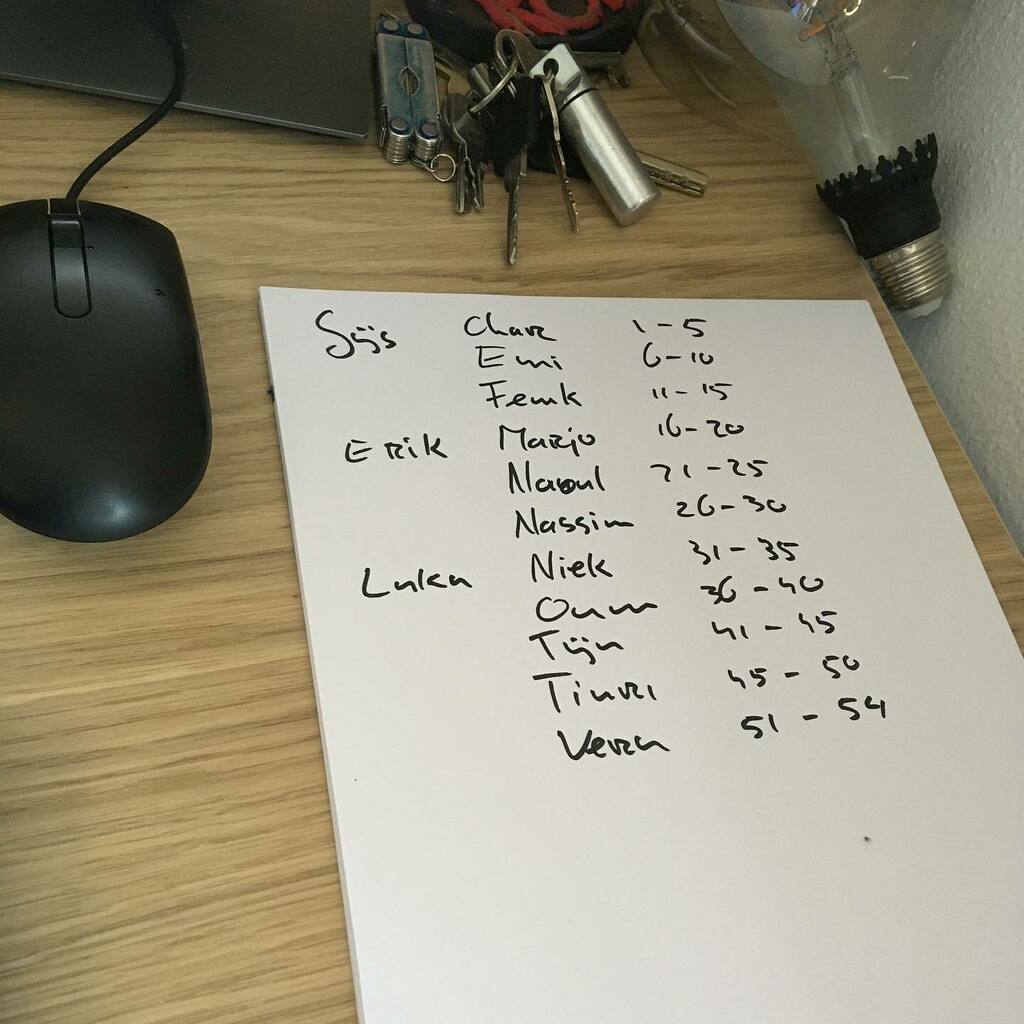
Today 165 @tudelft #freshman #students are making a #spectograph at home. Supervising this takes 11 teaching assistants (TA), 3 ‘head teaching assistants’ and one lecturer (me :-) )
I know there are digital tools for this, but for me the best way to kno… https://t.co/7ies9InsXm
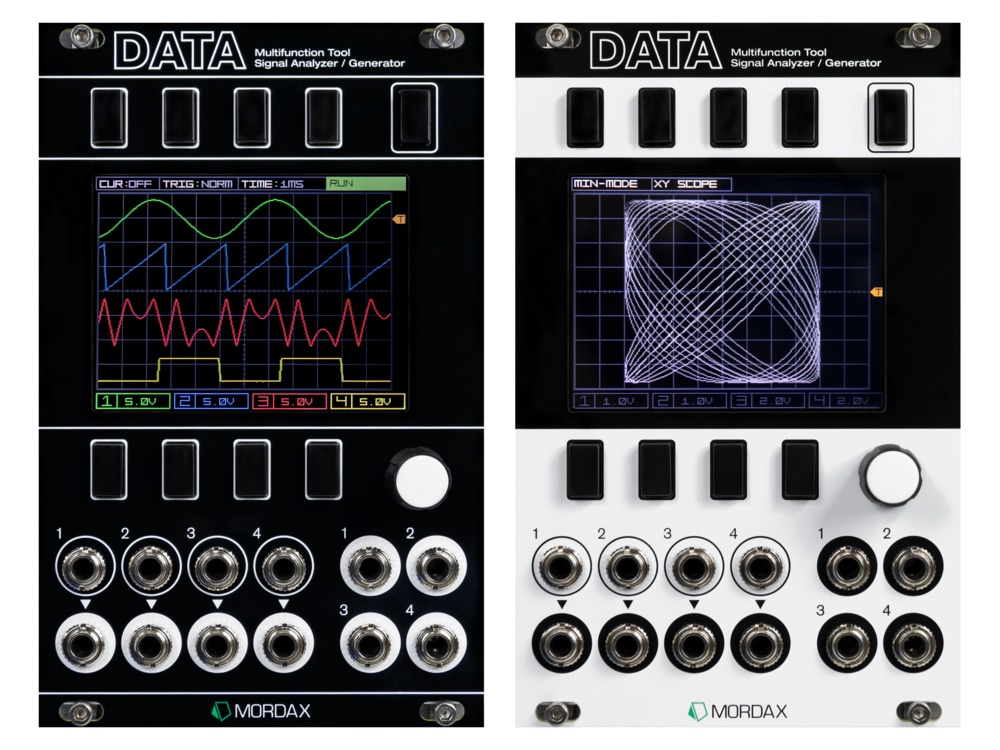
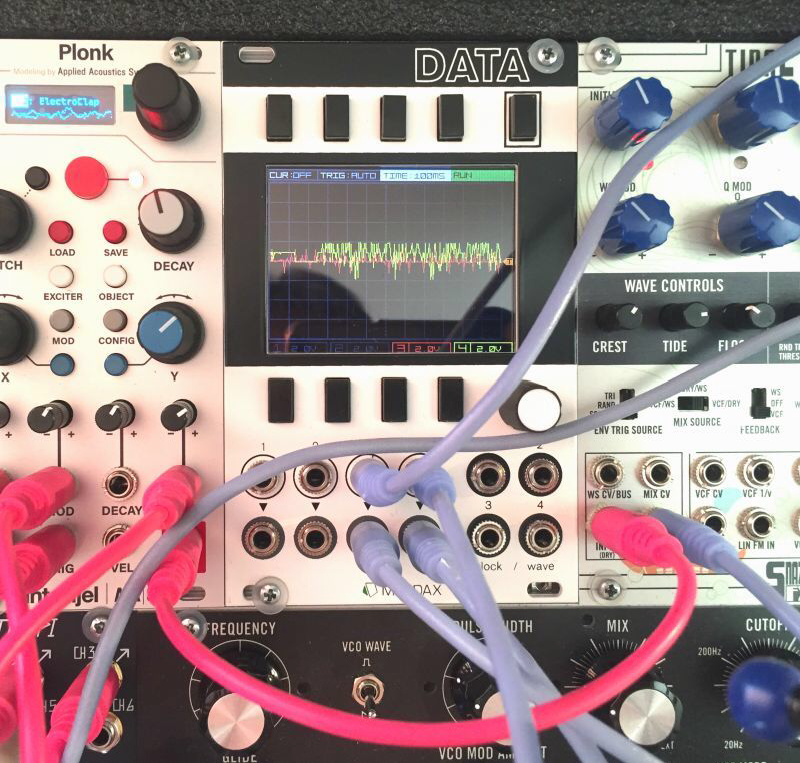
超久々!🎛Mordax DATA、来週に再入荷🔥
数に限りがあるのでお早めに!⚡️黒か白チョイスあり⚡️ https://t.co/QcUNFVHS09
#mordax #data #eurorack #modularsynths #utility #oscilloscope #tuner #voltagemonitor #waveformgenerator #clocksource #spectralanalyzer #spectograph
@mordaxsystems

🥇African American #Scientist, Dr. George R. Carruthers
PhD #Aeronautical and #Astronautical #Engineering
M.S #Nuclear #Engineering
Invention:
Ultraviolet Camera / #Spectograph used by @NASA
Awarded @NASA's Exceptional #Scientific Achievement Medal
🖥️https://t.co/l5vACE7ftO

🇺🇸American History
🚀African American, Dr. George Robert Carruthers is an award-winning #NASA, #Inventor, #Physicist and #Scientist.
🚀Dr. Carruthers invented the Ultraviolet Camera / #Spectograph for @NASA to use when it launched Apollo 16 in 1972.
✨https://t.co/dfKMsqsdn0

#STEAMspotlight: #Physicist and space scientist George Carruthers, born October 1, 1939, invented the ultraviolet camera, or #spectograph.

Last Seen Hashtags on Sotwe
codegold
이서
Seen from Korea
penti
Seen from Netherlands
gurbetçikadınlar
Seen from Netherlands
dickmassage
Seen from Turkey
MGAI ()video*****************************************
Seen from United States
ethiopiansex
Seen from Netherlands
anxiouspandaaaa
Seen from United States
minichatttt
Seen from United States
nolimitt
Seen from Australia
Trends for you
Most Popular Users

Elon Musk 
@elonmusk
241M followers

Barack Obama 
@barackobama
118.8M followers

Cristiano Ronaldo 
@cristiano
114.5M followers

Donald J. Trump 
@realdonaldtrump
111.9M followers

Narendra Modi 
@narendramodi
107M followers

Rihanna 
@rihanna
98.7M followers

NASA 
@nasa
92.2M followers

Justin Bieber 
@justinbieber
91.8M followers

KATY PERRY 
@katyperry
90M followers

Taylor Swift 
@taylorswift13
84M followers

Lady Gaga 
@ladygaga
75.5M followers

Virat Kohli 
@imvkohli
73.4M followers

Kim Kardashian 
@kimkardashian
70.8M followers

YouTube 
@youtube
68.7M followers

Neymar Jr 
@neymarjr
66.4M followers

Bill Gates 
@billgates
65.2M followers

Selena Gomez 
@selenagomez
63.1M followers

The Ellen Show
@theellenshow
62.2M followers

CNN 
@cnn
61.7M followers

X 
@x
60.6M followers

![tmallard's tweet photo. Horizon JPL Nov 2nd data is a #spectograph not a #photo exposes photons lowered below visible-light frequency by a weak MHD flow induced by solar_wind spiraling around it drags it as well
<@xAI sessions>
ABSTRACT
We present a novel, scale-invariant mechanism for non-contact rotational drag in weakly magnetized, low-density plasma environments — from interstellar objects to high-altitude aircraft and rockets.
The #3IATLAS slowing mechanism is shown to arise from #shear_induced micro-vortex formation within the solar wind boundary layer, where differential velocity gradients generate localized electromagnetic induction (\( \mathcal{E} = v B L \)).
These micro-tornadoes — with characteristic scales of \( 10^{-6} \) m — act as inertial EMF resonators, inducing eddy currents that oppose the object’s spin via Lenz’s law recoil ("photon snap-back").
The chain-reaction amplification of vortex density (\( \frac{dN_v}{dt} = \gamma |\nabla v| N_v \)) leads to exponential growth during solar wind transients (e.g., CMEs), producing a cumulative drag torque:
\[
\tau_{\text{total}} = -k \sum_{i} N_{v,i} \omega_{v,i}^2
\]
This vortex-EMF cascade converts solar wind kinetic energy (\( \frac{1}{2} \rho v^2 \)) into rotational dissipation without mechanical contact.
The model predicts spin decay rates of 0.1–3.2 μrad/s over 24 hours, consistent with observed anomalies in 3IATLAS dynamics.
The formalism is scale-invariant and directly applicable to:
¹ Re-entry vehicles (plasma sheath vortex drag)
² Hypersonic aircraft (magnetoaerodynamic stabilization)
³ Orbital decay mitigation (controlled vortex braking)
This work establishes Micro-Vortex-Inertia as a missing term in classical orbital mechanics and atmospheric flight dynamics.
~~~
Very bigtime tiny tornadoes
🦆](https://pbs.twimg.com/media/G6TQNgsaMAAjNlF.jpg)
![tmallard's tweet photo. Horizon JPL Nov 2nd data is a #spectograph not a #photo exposes photons lowered below visible-light frequency by a weak MHD flow induced by solar_wind spiraling around it drags it as well
<@xAI sessions>
ABSTRACT
We present a novel, scale-invariant mechanism for non-contact rotational drag in weakly magnetized, low-density plasma environments — from interstellar objects to high-altitude aircraft and rockets.
The #3IATLAS slowing mechanism is shown to arise from #shear_induced micro-vortex formation within the solar wind boundary layer, where differential velocity gradients generate localized electromagnetic induction (\( \mathcal{E} = v B L \)).
These micro-tornadoes — with characteristic scales of \( 10^{-6} \) m — act as inertial EMF resonators, inducing eddy currents that oppose the object’s spin via Lenz’s law recoil ("photon snap-back").
The chain-reaction amplification of vortex density (\( \frac{dN_v}{dt} = \gamma |\nabla v| N_v \)) leads to exponential growth during solar wind transients (e.g., CMEs), producing a cumulative drag torque:
\[
\tau_{\text{total}} = -k \sum_{i} N_{v,i} \omega_{v,i}^2
\]
This vortex-EMF cascade converts solar wind kinetic energy (\( \frac{1}{2} \rho v^2 \)) into rotational dissipation without mechanical contact.
The model predicts spin decay rates of 0.1–3.2 μrad/s over 24 hours, consistent with observed anomalies in 3IATLAS dynamics.
The formalism is scale-invariant and directly applicable to:
¹ Re-entry vehicles (plasma sheath vortex drag)
² Hypersonic aircraft (magnetoaerodynamic stabilization)
³ Orbital decay mitigation (controlled vortex braking)
This work establishes Micro-Vortex-Inertia as a missing term in classical orbital mechanics and atmospheric flight dynamics.
~~~
Very bigtime tiny tornadoes
🦆](https://pbs.twimg.com/media/G6TQNXkaAAEMJiL.jpg)
![tmallard's tweet photo. Horizon JPL Nov 2nd data is a #spectograph not a #photo exposes photons lowered below visible-light frequency by a weak MHD flow induced by solar_wind spiraling around it drags it as well
<@xAI sessions>
ABSTRACT
We present a novel, scale-invariant mechanism for non-contact rotational drag in weakly magnetized, low-density plasma environments — from interstellar objects to high-altitude aircraft and rockets.
The #3IATLAS slowing mechanism is shown to arise from #shear_induced micro-vortex formation within the solar wind boundary layer, where differential velocity gradients generate localized electromagnetic induction (\( \mathcal{E} = v B L \)).
These micro-tornadoes — with characteristic scales of \( 10^{-6} \) m — act as inertial EMF resonators, inducing eddy currents that oppose the object’s spin via Lenz’s law recoil ("photon snap-back").
The chain-reaction amplification of vortex density (\( \frac{dN_v}{dt} = \gamma |\nabla v| N_v \)) leads to exponential growth during solar wind transients (e.g., CMEs), producing a cumulative drag torque:
\[
\tau_{\text{total}} = -k \sum_{i} N_{v,i} \omega_{v,i}^2
\]
This vortex-EMF cascade converts solar wind kinetic energy (\( \frac{1}{2} \rho v^2 \)) into rotational dissipation without mechanical contact.
The model predicts spin decay rates of 0.1–3.2 μrad/s over 24 hours, consistent with observed anomalies in 3IATLAS dynamics.
The formalism is scale-invariant and directly applicable to:
¹ Re-entry vehicles (plasma sheath vortex drag)
² Hypersonic aircraft (magnetoaerodynamic stabilization)
³ Orbital decay mitigation (controlled vortex braking)
This work establishes Micro-Vortex-Inertia as a missing term in classical orbital mechanics and atmospheric flight dynamics.
~~~
Very bigtime tiny tornadoes
🦆](https://pbs.twimg.com/media/G6TQNXbaIAAsYqM.jpg)