

Top Tweets for #TreeMap

A small but important Java distinction:
HashMap → No guaranteed iteration order.
LinkedHashMap → Maintains insertion order by default.
TreeMap → Maintains sorted key order.
Choosing the right collection is not always about performance. Sometimes, it’s about behaviour.

@hoticc context treemap is such an underrated idea. half the time people blame the model for forgetting instructions when it's actually one giant tool output eating 60% of the window.

mapped out what's actually eating my agent's context window. everything it read, ran and thought, as a treemap
built it into acpira, where i run claude code, codex and my own agent. click any block to see exactly what got sent

5/5 💡 | الخلاصة والدروس المستفادة
١. ربط المبيعات بالأرباح هو أساس اتخاذ القرار الصحيح.
٢. اختيار الرسم المناسب للبيانات (خريطة للمواقع، أشرطة للمقارنة، Treemap للأحجام).
٣. التفاعلية تجعل تقريرك حيوي ومفيد.
2/5 🗺️ | الجزء العلوي: المقارنة الجغرافية
• Treemap: استخدمنا رسم الحجم والمساحة لمقارنة المناطق (West, East,Central, South). المربع الأكبر والأغمق يعني مبيعات أعلى.
• Filled Map: خريطة تفاعلية. اللون الأزرق يعبر عن الأرباح، بينما البرتقالي ينبه الإدارة بالخسائر

With barely over a week since @peachlfg went live it’s has been buzzing with a lot of updates nas now
Meme Heatmap is now live on Peach.
You get to track the popularity of assets launched through Peach Launchpad at a glance, with both bubble and treemap views, Thats bullish news.
One juicy part is, for now, the heatmap is ranked by real-time market cap. More tracking dimensions will be added over time to give a fuller picture of what’s heating up across #PeachAg.
See what the market is watching → https://t.co/XbGbD4n822

Profitability isn’t built during the best weeks.
It’s built by having the discipline to survive the worst ones.
The edge makes money.
Discipline keeps you in the game.
Good morning CT 💦 ☕️
What are we clicking today?


4/
"I need charts, QR and barcodes IN the image - no template tool does data viz."
27 component types: candlesticks, treemaps, Sankey, radar, gantt, QR, barcodes. Rendered natively from your data. This is the gap Placid, Templated and Canva all leave open.


Arka now has PDF charts & treemaps SigNoz observability & alert templates Gmail stack (inbox & auto-drafts) Tighter coding TUI & LLM usage tracking
Code: https://t.co/ejh4Ks7g7H
Docs: https://t.co/FmTAx3jCNV

Java collections questions for Interviews ✅
➡️How do ArrayList, LinkedList, HashMap, and TreeMap differ in behavior?
➡️Why does Big-O notation not always tell the full story?
➡️When would you choose one structure over another in backend code?
➡️How do hashing and resizing affect performance under load?


Built a subscription tracker for my toolbox.
It lets you track recurring costs, convert currencies, and explore everything as bubble, treemap, sunburst, and waffle charts.
Turned out pretty good. Just too bad almost nobody will ever see or use it. 🥲


The data is out for May 2026 from the UK’s next gen market, Aquis…
Here's a look at the trading volume stats on #SWC's former marketplace, the Aquis exchange, for May 2026 (alongside a treemap for comparison against scale of trading across the last year)
Some noticeable points:
1. Delta Gold Tech (a SWC web customer) continued to lead the way as the most traded Aquis stock by volume in May.
2. Trading liquidity remains on the lighter side for many of the other UK BTCtc's and DATS on Aquis.
(Comparison for May 2026: I count at least 13 DAT or BTC Treasury companies on the Aquis exchange now, which had a combined traded value of £3.5m.
SWC's volume on the LSE for May was in the range of circa £8-9m.)
3. SWC still makes up over 60% of the last year’s traded volume across the whole of Aquis, despite having migrated over to the LSE main market at the start of February.
4. There is a real dearth of new IPO activity in the UK in general….
- Aquis has only 1 new admission in their data for 2026 so far (Roundhouse Digital, way back in January- an AI company with an ETH treasury policy, that has last month changed its name to be more explicitly named on the AI bandwagon as Roundhouse AI…. 🙄)
- Only one other upcoming IPO on Aquis signposted for the future (a uranium company).
- Beyond Aquis, only 1 IPO on the LSE (iFOREX) and 2 IPO’s on AIM this year so far (Tapir Holdings, and Rift Helium).
- Compare this to 2025… 35 IPO’s across the LSE, AIM and Aquis.
What this all says about the state of the UK economy, the wider global market sentiment, conflict and inflationary risks, or the effects of mega-floats in the US lurking on the horizon…?
All of which to say… yes, it is tough out there for many.
But amongst this all, #SWC is quietly positioning for the future.
Good days will come again.
We’re doing OK.


Day 123 : Vertical Sum
Approach : dfs tracking horizontal distance d (left is -1, right is +1), accumulate node values into a treemap keyed by d, then return the values in sorted-key order which gives left-most to right-most
@geeksforgeeks
#gfg


ok this is insane…
retail can now let Claude run 24/7 on the entire stock market.
look at this workflow that alerts me every weekday at 9am ET:
>90 AI names across 11 sub-sectors, treemap
>sentiment + news on the top 10 gappers
>whale options flow, bull vs bear conviction
>technicals + earnings + implied moves on top movers
built in 3 mins. retail has never been this fed.

OVER $1.5M in signals generated in 2 weeks.
All from retail traders building custom alerts on Xynth
Everything from:
> tracking whale options flow
> detecting insider cluster buys
> spotting earnings IV crush plays
> building sunday wheel scanners
Summoning Claude Opus 4.7 to build and run alerts 24/7 on top of the stock market is the single biggest edge in retail trading history.
We're giving away free access to the 3 most profitable alerts on Xynth this week.
RT + comment "Alerts" — we'll send them.
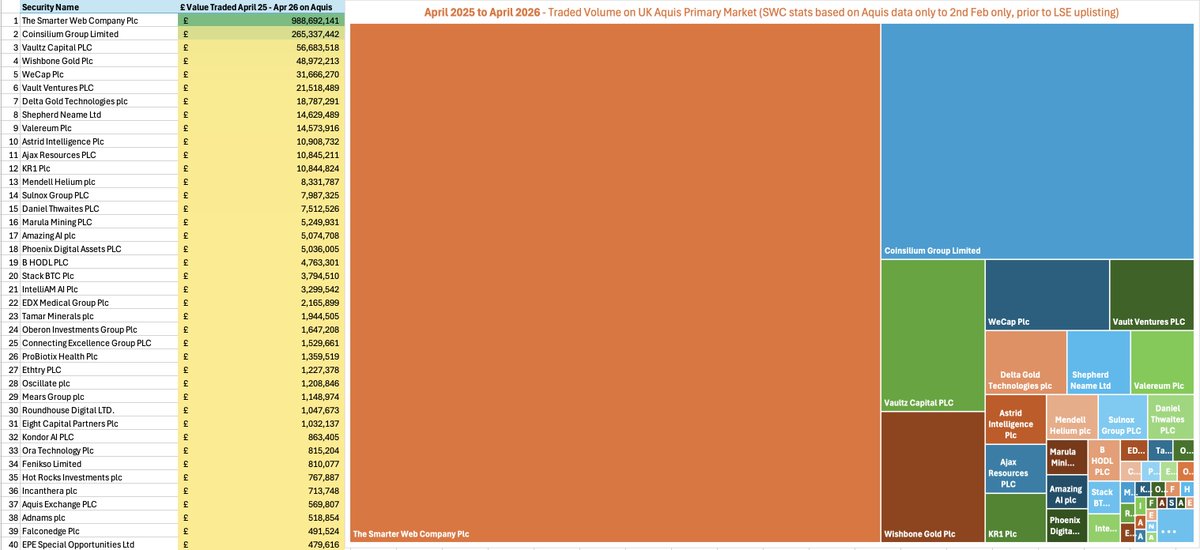
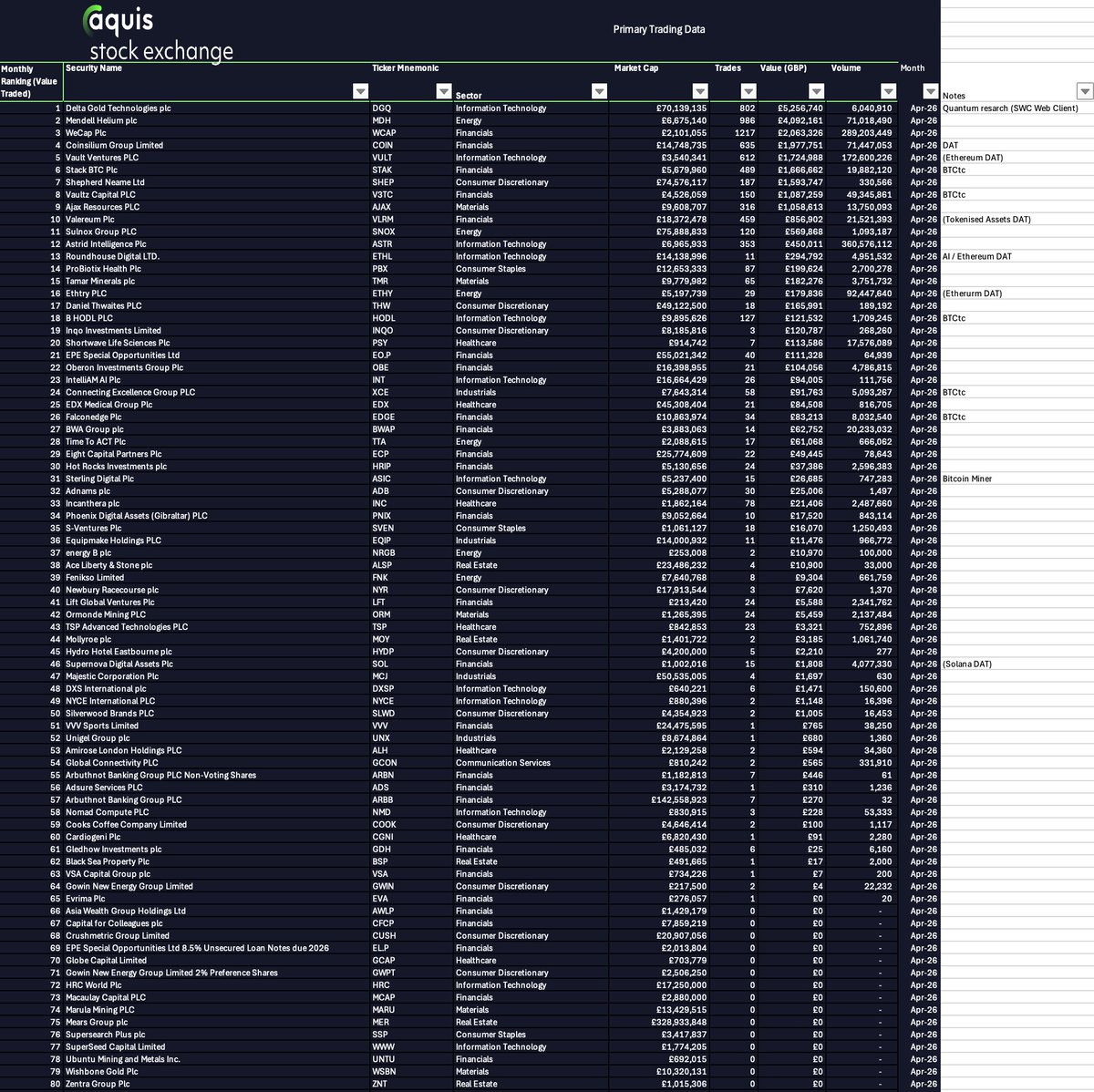
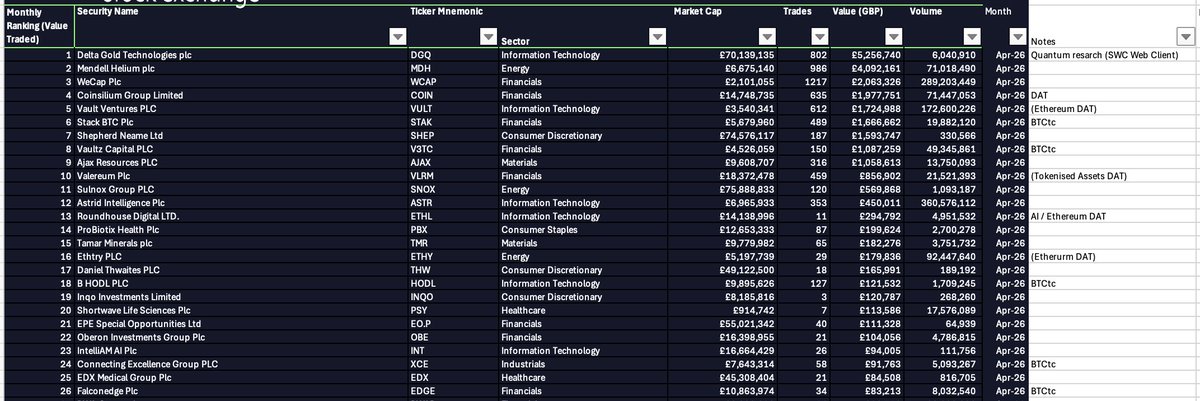
Here's a look at the trading volume stats on #SWC's former marketplace, the Aquis exchange, for April 2026 (alongside a treemap for comparison against scale of trading across the last year)
Pretty neat that Delta Gold Tech (an SWC web customer) leads the way as the most traded Aquis stock.
Trading liquidity remains on the lighter side for many of the other UK BTCtc's and DATS.
(Comparison to SWC's volume on the LSE for April: £16.53m)


GenLayer: AI Native Smart Contract Infrastructure
At its core, GenLayer is not just another L1. It is a synthetic jurisdiction where decision making itself becomes programmable. Unlike Ethereum which focuses on deterministic computation, GenLayer introduces a new primitive:
Trustless, AI mediated decision execution onchain
This is enabled through Intelligent Contracts, written in Python and executed inside GenVM, an AI augmented execution environment.
1. Intelligent Contracts: The Core Abstraction
Intelligent Contracts are an evolution of smart contracts that integrate:
LLMs (Natural Language Processing)
Web data access (no traditional oracles)
Non-deterministic reasoning with consensus guarantees
Unlike traditional contracts that must produce identical outputs across nodes, GenLayer introduces a mechanism where:
Validators run AI models
Outputs may differ slightly
Consensus is reached via an equivalence principle
This allows contracts to:
>I nterpret unstructured data (text, HTML, APIs)
> Make contextual decisions
> Adapt to real-world conditions dynamically
2. Execution Environment: GenVM
GenLayer runs contracts inside GenVM, which:
> Executes Python natively
> Sandboxes AI model inference
> Supports web requests (gl.get_webpage, APIs)
> Enables hybrid deterministic + non-deterministic logic
This is fundamentally different from the EVM model:
EVM → strict determinism
GenVM → controlled non-determinism with validator consensus.
3. Contract Architecture (Python Based)
Every GenLayer contract is a Python class extending gl.Contract.
Minimal Structure
# { "Depends": "py-genlayer:test" }
from genlayer import *
class MyContract(gl.Contract):
data: str # persistent state
def __init__(self):
self.]data = "hello"
@[gl.public.view
def get_data(self) -> str:
return self.]data
@[gl.public.write
def set_data(self, value: str):
self.]data = value
Key Rules
Persistent state must be declared with type annotations
Only one contract class per file
Methods must use decorators:@[gl.public.view → read-only
@[gl.public.write → state mutation
Uses custom types like:u256, i32
DynArray[T], TreeMap[K, V]
4. Deterministic vs Non-Deterministic Execution
This is where GenLayer becomes fundamentally different.
Deterministic Code
Runs like traditional smart contracts.
Non-Deterministic Blocks, Used for:
> Web access
> AI inference
> External data
example_web_address = 'https[://example.org'
def my_non_deterministic_block():
web_data = gl.get_webpage(example_web_address, mode='html')
return 'iana' in web_data
result = gl.eq_principle_strict_eq(my_non_deterministic_block)
Key Mechanics
Must be wrapped inside gl.eq_principle_*
Validators independently execute the block
Consensus achieved via:Strict equality (for simple outputs)
Semantic agreement (for AI outputs)
This ensures Trustless verification and Flexibility in outputs.
5. Equivalence Principle (Consensus Innovation)
Traditional blockchains require:
Same input → same output
GenLayer introduces:
> Different outputs → acceptable if equivalent
Two main modes:
> Comparative
Validation Outputs must match exactly
> Non-Comparative
Validators assess if outputs are “reasonable”
This allows:
> AI summaries
> Judgments.
6. Advanced Example: AI Driven Escrow Contract
Below is a realistic pattern combining:
> External data
> AI reasoning
> State updates
# { "Depends": "py-genlayer:test" }
from genlayer import *
class Escrow(gl.Contract):
buyer: str
seller: str
released: bool
def __init__(self, buyer: str, seller: str):
self.buyer = buyer
self.seller = seller
self.released = False
def check_delivery():
data = gl.get_webpage("https://tracking-api.]com/order/123", mode="text")
return "delivered" in data.lower()
@[gl.public.write
def release_payment(self):
delivered = gl.eq_principle_strict_eq(check_delivery)
if delivered:
self.released = True
GenLayer is not competing with existing chains at the same layer. It is introducing a new computational paradigm.
![Emmageneris2001's tweet photo. GenLayer: AI Native Smart Contract Infrastructure
At its core, GenLayer is not just another L1. It is a synthetic jurisdiction where decision making itself becomes programmable. Unlike Ethereum which focuses on deterministic computation, GenLayer introduces a new primitive:
Trustless, AI mediated decision execution onchain
This is enabled through Intelligent Contracts, written in Python and executed inside GenVM, an AI augmented execution environment.
1. Intelligent Contracts: The Core Abstraction
Intelligent Contracts are an evolution of smart contracts that integrate:
LLMs (Natural Language Processing)
Web data access (no traditional oracles)
Non-deterministic reasoning with consensus guarantees
Unlike traditional contracts that must produce identical outputs across nodes, GenLayer introduces a mechanism where:
Validators run AI models
Outputs may differ slightly
Consensus is reached via an equivalence principle
This allows contracts to:
>I nterpret unstructured data (text, HTML, APIs)
> Make contextual decisions
> Adapt to real-world conditions dynamically
2. Execution Environment: GenVM
GenLayer runs contracts inside GenVM, which:
> Executes Python natively
> Sandboxes AI model inference
> Supports web requests (gl.get_webpage, APIs)
> Enables hybrid deterministic + non-deterministic logic
This is fundamentally different from the EVM model:
EVM → strict determinism
GenVM → controlled non-determinism with validator consensus.
3. Contract Architecture (Python Based)
Every GenLayer contract is a Python class extending gl.Contract.
Minimal Structure
# { "Depends": "py-genlayer:test" }
from genlayer import *
class MyContract(gl.Contract):
data: str # persistent state
def __init__(self):
self.]data = "hello"
@[gl.public.view
def get_data(self) -> str:
return self.]data
@[gl.public.write
def set_data(self, value: str):
self.]data = value
Key Rules
Persistent state must be declared with type annotations
Only one contract class per file
Methods must use decorators:@[gl.public.view → read-only
@[gl.public.write → state mutation
Uses custom types like:u256, i32
DynArray[T], TreeMap[K, V]
4. Deterministic vs Non-Deterministic Execution
This is where GenLayer becomes fundamentally different.
Deterministic Code
Runs like traditional smart contracts.
Non-Deterministic Blocks, Used for:
> Web access
> AI inference
> External data
example_web_address = 'https[://example.org'
def my_non_deterministic_block():
web_data = gl.get_webpage(example_web_address, mode='html')
return 'iana' in web_data
result = gl.eq_principle_strict_eq(my_non_deterministic_block)
Key Mechanics
Must be wrapped inside gl.eq_principle_*
Validators independently execute the block
Consensus achieved via:Strict equality (for simple outputs)
Semantic agreement (for AI outputs)
This ensures Trustless verification and Flexibility in outputs.
5. Equivalence Principle (Consensus Innovation)
Traditional blockchains require:
Same input → same output
GenLayer introduces:
> Different outputs → acceptable if equivalent
Two main modes:
> Comparative
Validation Outputs must match exactly
> Non-Comparative
Validators assess if outputs are “reasonable”
This allows:
> AI summaries
> Judgments.
6. Advanced Example: AI Driven Escrow Contract
Below is a realistic pattern combining:
> External data
> AI reasoning
> State updates
# { "Depends": "py-genlayer:test" }
from genlayer import *
class Escrow(gl.Contract):
buyer: str
seller: str
released: bool
def __init__(self, buyer: str, seller: str):
self.buyer = buyer
self.seller = seller
self.released = False
def check_delivery():
data = gl.get_webpage("https://tracking-api.]com/order/123", mode="text")
return "delivered" in data.lower()
@[gl.public.write
def release_payment(self):
delivered = gl.eq_principle_strict_eq(check_delivery)
if delivered:
self.released = True
GenLayer is not competing with existing chains at the same layer. It is introducing a new computational paradigm.](https://pbs.twimg.com/media/HG3SEa0WUAAeoVO.jpg)

I made a live visualization of Github like a S&P500 Treemap

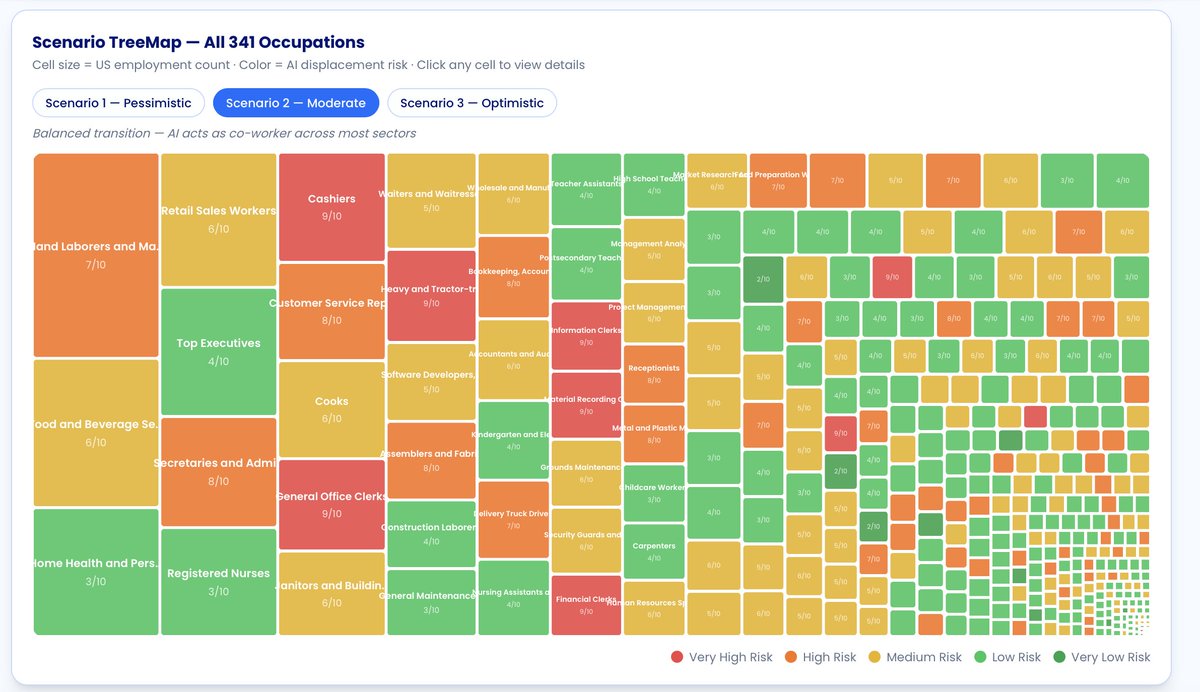
My v3 of "Is My Job Safe From AI?" is looking a lot better!
- A treemap of occupations
- 3 different scenarios of analysis
- first, second & third order impact
- SEO friendly pages

If you're interested in checking out the source code for Andrej Karpathy's karpathy/jobs project (the AI job exposure scorer that got deleted), @JoshKale forked it and made the repo publicly viewable here:
https://t.co/W9YIJ7Ullg
Great way to keep the analysis and interactive treemap alive!

Karpathy scored every job in America on AI replacement risk. Then he deleted it.
It went viral Last night. Elon replied. News outlets picked it up. So I brought it back to life.
Cloned the entire repo to play with before it went down. Every file. The scoring data, the full pipeline, the interactive visualization. All of it.
It's back up here: https://t.co/lpD3LVTNnr
The data was too noteworthy to let vanish. 342 occupations scored 0-10 on how much AI will reshape them. Average exposure across the entire US economy: 5.3/10.
If your job lives on a screen, it's worth taking a look.
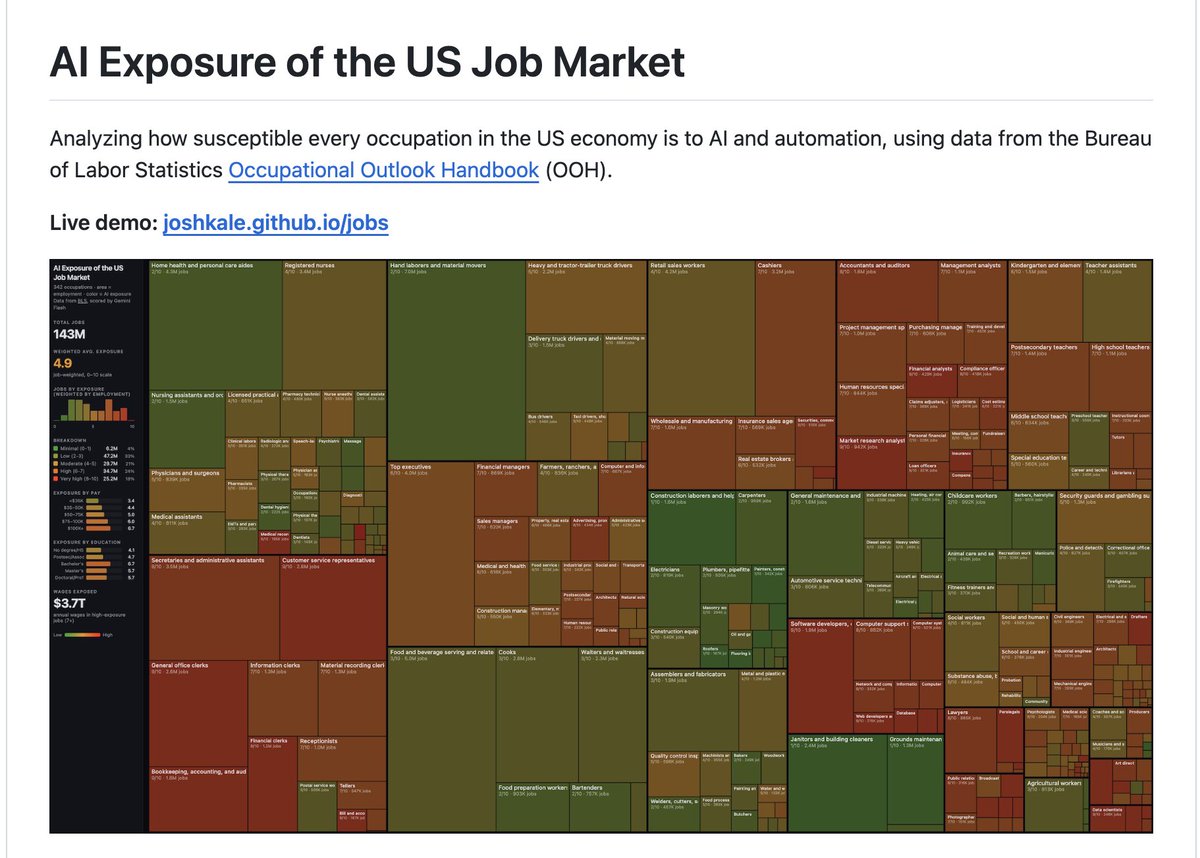
Karpathy just proved again why he’s him:
Saturday morning, 2 hours of pure vibe coding inspired by a book he’s reading → scrapes BLS data, LLM-scores 342 occupations for AI exposure, builds a clean treemap viz, shares code + data.
Zero product meetings, no roadmap, no polish sprint and just curiosity + skills + LLMs in the loop = something genuinely useful that instantly went viral and trended hard on X.
Then he quietly took it down because people ran with the doomer headlines instead of the actual point.

This was a saturday morning 2 hour vibe coded project inspired by a book I’m reading. I thought the code/data might be helpful to others to explore the BLS dataset visually, or color it in different ways or with different prompts or add their own visualizations. It’s been wildly misinterpreted (which I should have anticipated even despite the readme docs) so I took it down.
Karpathy's https://t.co/BkxkgddcXC tool is a brutally clear visualization: it LLM-scored all 342 US occupations from BLS data on a 0–10 AI exposure scale, weighted by employment numbers in an interactive treemap.
Why it's genuinely useful?
> It cuts through hype/doom with a single, glanceable map separating "screen jobs" (high exposure: software devs 8–9, accountants/lawyers/financial analysts ~7–8, data entry 10) from physical/human-presence roles (plumbers 1, roofers 0–1, nurses/surgeons ~2).
> Average US job sits at ~5.3/10 → roughly half the economy faces meaningful AI pressure soon, but the other half (hands-on, trust-based, or unpredictable-physical) looks far safer for longer.
> Great reality check / career compass in 2026: if you're in a high-scoring field, it's strong signal to pivot toward augmentation skills or hybrid roles rather than pure denial.
It exploded yesterday (March 14, 2025) via @_kaitodev
's thread → 10k+ likes, 1.4k+ reposts, 2.4M+ views on the original post alone.
Today it's still very alive: tons of quote tweets, reposts with lists ("learn plumbing", "trade school > college"), panic/fork discussions after Karpathy took the live site/repo down, and people sharing Wayback links or rebuilt versions.
Elon’s "all jobs optional + universal high income" reply keeps fueling the utopia-vs-dystopia debate.Right now it's one of the louder AI-job topics circulating on X.
If you're job-hunting or career-planning, this one's worth a quick archived look
Check out the demo website: https://t.co/5vR0zuEweR

5 minutes ago, @karpathy just dropped karpathy/jobs!
he scraped every job in the US economy (342 occupations from BLS), scored each one's AI exposure 0-10 using an LLM, and visualized it as a treemap.
if your whole job happens on a screen you're cooked.
average score across all jobs is 5.3/10.
software devs: 8-9.
roofers: 0-1.
medical transcriptionists: 10/10 💀
https://t.co/7MWRgdtLDI
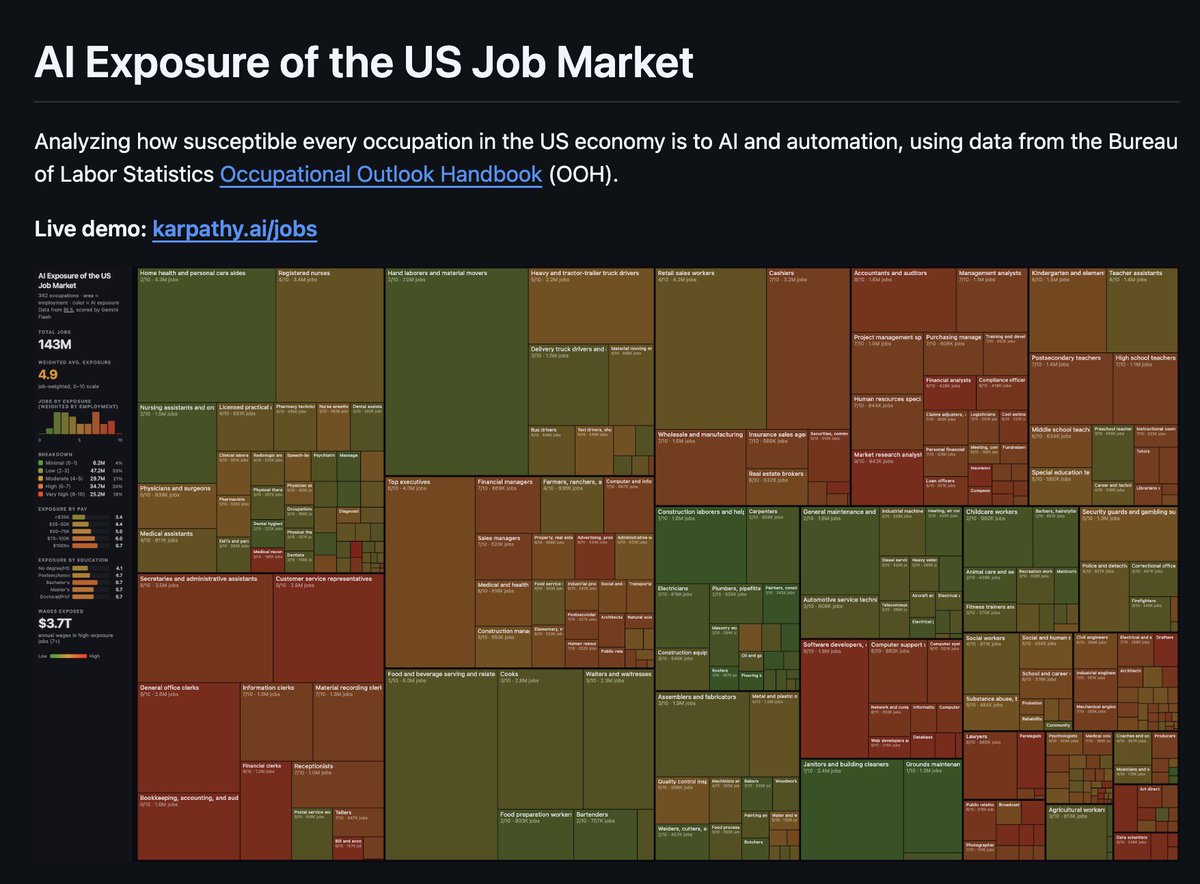

Karpathy strikes again!!!
He just released a fascinating side project: a visualization showing how vulnerable every occupation in the U.S. economy is to AI.
He collected data on all 342 job categories from the Bureau of Labor Statistics, fed each one into an LLM with a detailed scoring system, and rated them from 0 to 10 based on AI replacement risk.
Then he turned it into a treemap where:
- the size of each block = number of people in that occupation
- the color = how exposed that job is to AI
The main factor in the scoring is very straightforward:
If the entire job can be performed on a computer screen, the exposure level is extremely high.
Some examples from the results:
0–1 → Roofers, janitors
4–5 → Nurses, retail workers, physicians
8–9 → Software developers, paralegals, data analysts
10 → Medical transcriptionists 💀
Average across all occupations: 5.3 / 10
So the economy sits right in the middle of the AI disruption wave and this clearly shows where things are heading.
What makes this even cooler is that the entire pipeline is open source 🤗🤗🤗
👏 Classic Karpathy: simple idea, brilliant execution
Also… if your job can be done entirely from a laptop at home… you might want to start thinking about how AI will become your teammate.
Link to the repo in the comments 👇
Thanks @karpathy🙂
#ai #jobs #karpathy

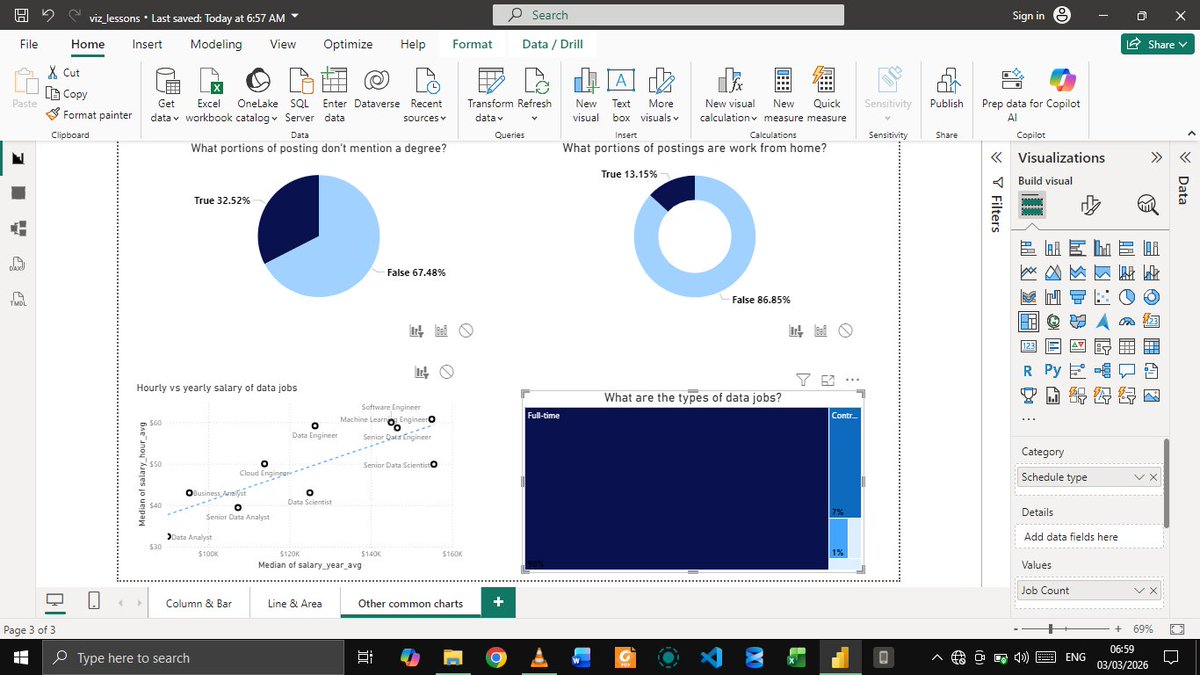
Today,I continued my PowerBI course with @LukeBarousse and I also defended my final year project. We explored using line and area charts to analyse the 2024 data job market.We also used other common charts like scatter plots and treemaps to show other insights.
#LearningInPublic


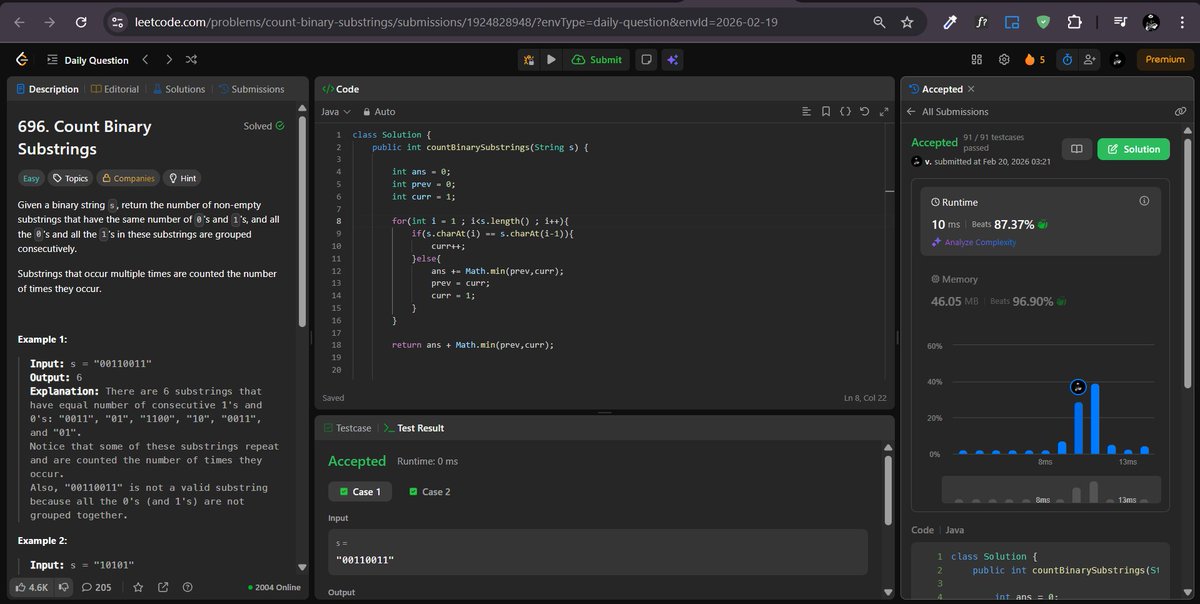
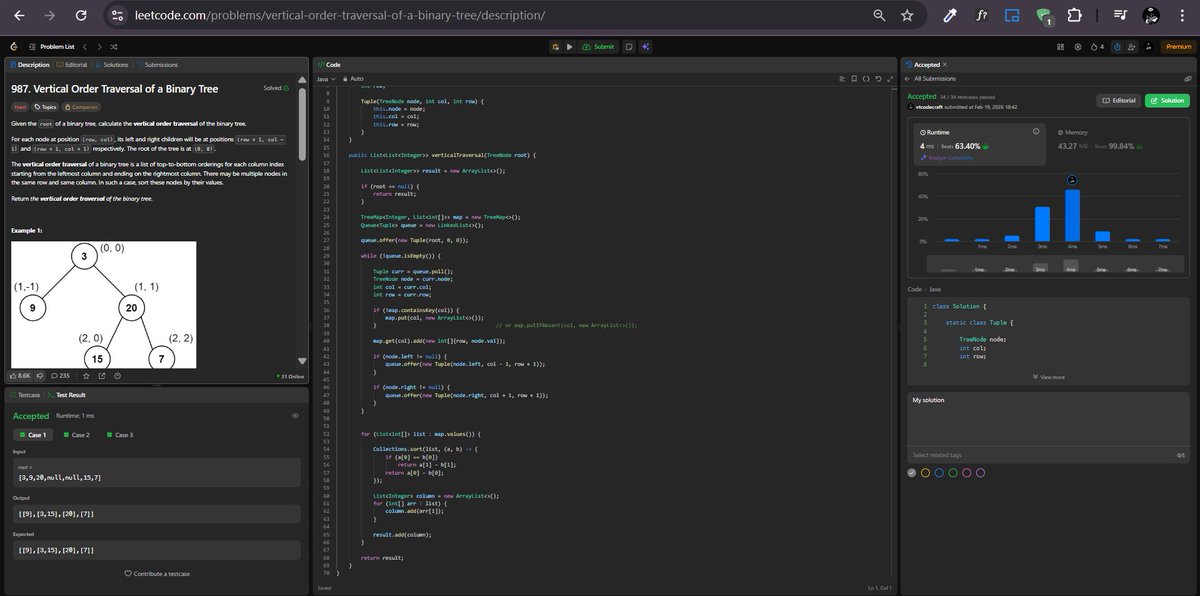
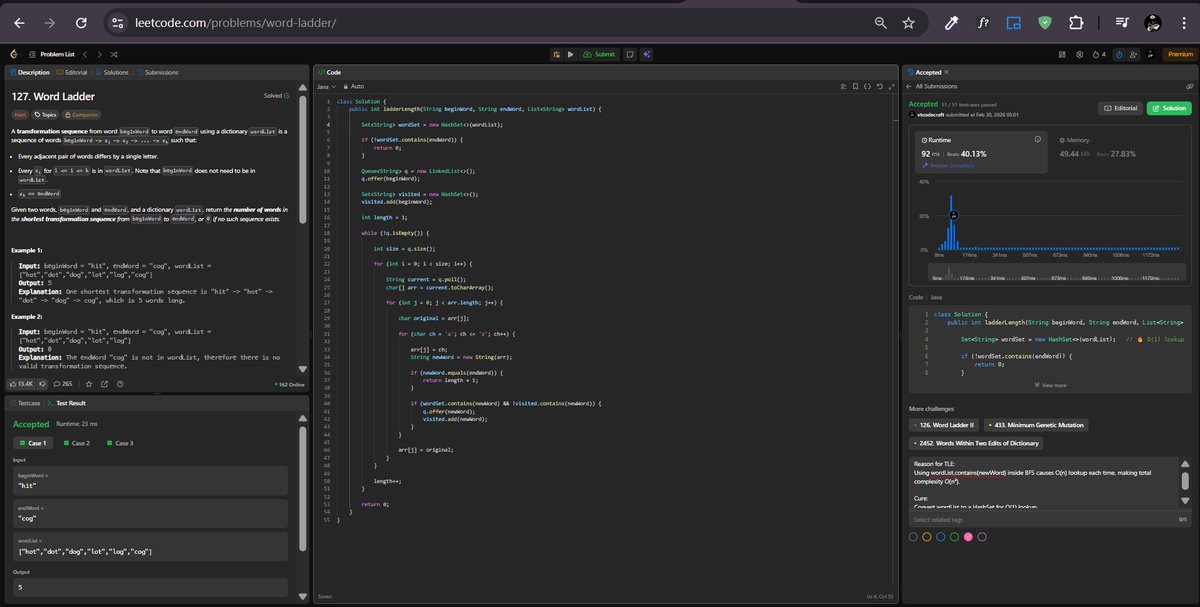
Day 100 🥳✅ – Adv Interview Questions
• Vertical Order Traversal using BFS + TreeMap
• column + row based sorting logic
• Cracked Word Ladder using BFS + HashSet optimization
3 LeetCode: 987(Hard), 127(Hard), 696
#100DaysOfCode #DSA #LeetCode #Java #BinaryTree #BuildInPublic
Day 99 ✅– Advanced DSA Practice
• Sqrt Decomposition for range queries
• Block building + optimized query logic
• Built tree from preorder + inorder
• Used HashMap for O(1) index lookup
LeetCode: 693(Daily), 105
#100DaysOfCode #DSA #LeetCode #Java #BinaryTree #BuildInPublic


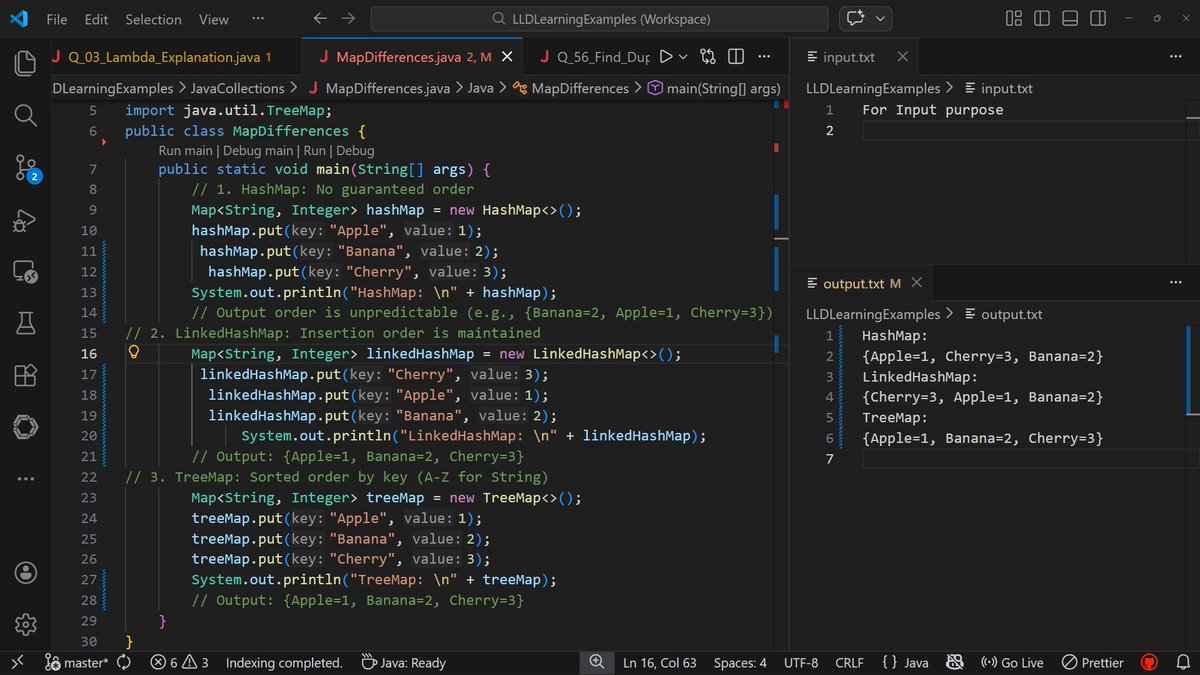
Day 39/365: Java Collections – HashMap vs LinkedHashMap vs TreeMap + DSA Revision
• Deep dive into Map types today — ordering & performance differences: HashMap: No order — fastest O(1) average ops (random output)
• LinkedHashMap: Insertion order maintained — predictable iteration (FIFO)
• TreeMap: Sorted by key (natural/Comparator) — always A-Z for Strings, O(log N) ops
DSA Revision: Longest Palindromic Substring — expand-around-center classic (interview favorite)
Key takeaways:
• HashMap = speed, no order
• LinkedHashMap = insertion order + LRU cache potential
• TreeMap = auto-sorted keys/navigation
#DSA #Java #CodingStreak #100DaysOfCode #DataStructures #Algorithms #BuildInPublic #code


Mevici - terminal for PM with a slogan "the Bloomberg for Truth"
Mevici is betting on a different UX: turn prediction markets into a trading workflow, not a betting feed.
What Mevici is - an intelligence terminal for prediction markets: it aims to aggregate odds, track whales, and visualize probability from all sources - "the Bloomberg for Truth"
The core mechanic: "GOD MODE"
Mevici's headline feature is GOD MODE - a Treemap that visualizes the entire market at once. You can sort the map by:
- Probability
- Volume
- Calendar view
That sounds cosmetic until you trade PMs seriously.
Because the real edge is rarely "pick the right side and wait" It's:
- spotting where attention is rotating
- catching price lag vs narrative
- noticing unusual size / whale footprints
- scanning for mispriced pockets across the surface area
Treemap-style "market mapping" turns scrolling into scanning.
How you'd actually use it:
Imagine it's an election night / major macro week.
1) Open GOD MODE and sort by volume.
2) You instantly see which clusters are sucking in liquidity (the "where the money is" view).
3) Flip to Probability to find anomalies: markets with high volume but weird probabilities = "something is happening"
4) Switch to Calendar view to spot "near-term catalysts" vs long-dated noise.
This is what traders do on Bloomberg/TradingView
The "Agent" direction:
There are signs Mevici wants to go beyond dashboards into agents:
They reference work on MEV (their Analyst Agent) and people around the project talk about an AI agent layer being built on top of the terminal.
If they execute, the agent layer could evolve into:
- automated watchlists
- narrative and price explanations
- whale-based alerts
- "here are the 5 markets you should look at today and why"
Right now, that's directional, not fully specified publicly - but the intent is there.
Token:
The Mevici profile ecosystem surfaces a contract address in bio (pump-style CA). Solscan snippets show 1B supply.
Why it matters for the PM market
Prediction markets are growing, but UX is still "consumer betting" for power users.
A real terminal could:
- reduce information lag
- make PMs tradable like real markets
- pull in market makers + systematic traders
- increase liquidity quality over time
That's the path from "fun bets" to "financial instrument"
Summary:
If you trade prediction markets seriously, watch this category. And if Mevici nails GOD MODE and agents, it could become the default way power users navigate PMs.
Last Seen Hashtags on Sotwe
Trends for you
Most Popular Users

Elon Musk 
@elonmusk
239.6M followers

Barack Obama
@barackobama
118.6M followers

Cristiano Ronaldo
@cristiano
114.3M followers

Donald J. Trump
@realdonaldtrump
111.7M followers

Narendra Modi
@narendramodi
106.9M followers

Rihanna
@rihanna
98.6M followers

NASA
@nasa
92.1M followers

Justin Bieber
@justinbieber
91.7M followers

KATY PERRY
@katyperry
89.9M followers

Taylor Swift
@taylorswift13
83.9M followers

Lady Gaga
@ladygaga
75.4M followers

Virat Kohli
@imvkohli
73.3M followers

Kim Kardashian
@kimkardashian
70.8M followers

YouTube
@youtube
68.6M followers

Neymar Jr
@neymarjr
66.3M followers

Bill Gates
@billgates
65.1M followers

Selena Gomez
@selenagomez
63M followers

The Ellen Show
@theellenshow
62.1M followers

CNN
@cnn
61.7M followers

X
@x
60.6M followers