

Top Tweets for #blockc

Rialo: Do We Need a New Way to Measure Blockchain Success?
How have we measured blockchain success so far?
For years, the industry has relied on three major metrics: TPS (Transactions Per Second), TVL (Total Value Locked), and DAU (Daily Active Users).
These metrics are important. They help us understand how fast a network is, how much capital it attracts, and how many users interact with it.
But here's an interesting question:
Does a growing number of on-chain transactions actually mean a blockchain is becoming more useful in the real world?
Not necessarily.
A network can generate millions of transactions through simple token transfers, repetitive airdrop farming, or incentive-driven activities. TVL can also increase due to temporary liquidity rather than genuine demand.
In other words, traditional metrics tell us how big a blockchain is, but they don't always tell us how much real-world value it creates.
What Should the Next Generation of Blockchain KPIs Look Like?
I believe it's time to expand our measurement standards beyond traditional metrics.
Here are three indicators worth paying attention to:
1. Real-World Linked Transactions
Instead of simply counting wallet-to-wallet transfers, we should measure transactions connected to actual real-world activities.
Examples include completed payments, financial data updates, changes in asset ownership, and automated actions triggered by external services.
This metric could help us understand how deeply blockchain technology is integrated into real economic activity.
2. Off-chain Event Processing
Blockchains should no longer be limited to processing transactions that happen on-chain.
Their ability to detect and respond to external events is becoming equally important.
Think about market price changes, API updates, or real-world payment confirmations.
If smart contracts can directly react to these events without relying on separate bots or automation systems, entirely new use cases become possible.
3. Automation Success Rate
Processing more transactions is one thing. Successfully executing the right action at the right moment is another.
We should measure how reliably automated transactions are completed, including execution failures, delays, and overall success rates.
This could become especially important for automated finance and AI agent-based applications.
Where Does Rialo Fit Into This Picture?
This is where Rialo becomes particularly interesting.
Rather than focusing exclusively on TPS competition, Rialo emphasizes connecting blockchain infrastructure with the real world.
Its technical approach includes Rialo Stream for external data integration, Rialo Edge for interacting with Web2 services, and Reactive Transactions for event-driven execution.
One particularly interesting concept is Reactive Transactions.
Traditionally, executing a transaction when a specific condition is met often requires external bots, keepers, or separate scheduling systems.
Rialo aims to enable blockchain applications to respond to both on-chain and off-chain events, including market price changes and real-world payment confirmations.
Rialo has also demonstrated this direction through its Project 1337 demo, featuring a real-time data pipeline involving stock price data for 1,337 equities, alongside processing related market signals.
These examples highlight an important shift: blockchain performance may need to be evaluated beyond transaction speed alone.
Of course, these new KPIs are not yet industry-wide standards. Their implementation will also require reliable event verification, protection against duplicate counting, and transparent measurement of execution failures and genuine user demand.
The Future Is About Real Value, Not Just Bigger Numbers.
A blockchain can have incredibly high TPS, but what does that performance mean if nobody actually uses its applications?
TVL can grow significantly, but without sustainable demand, that growth may not translate into long-term competitiveness.
I believe the next phase of blockchain competition will gradually shift from who can process the most transactions to who can connect the most real-world activities.
So, when evaluating blockchain projects, I want to start asking a different question:
It's not just about how fast a blockchain is. It's about how much real-world activity it can connect, process, and turn into value.
Perhaps the next generation of blockchain success won't be measured by TPS alone.
It will be measured by the real value created beyond the blockchain itself.
Get Real. Get Rialo.
@RialoHQ @RialoKorea @silverwave1000


🏔️ Yodeli Web3 Safety Tip #1
Two tokens can have the same name and logo.
Always verify the blockchain and official contract address before interacting.
Trust people. Verify actions. 🔐
Learn with us:
https://t.co/9n0kMfR07s


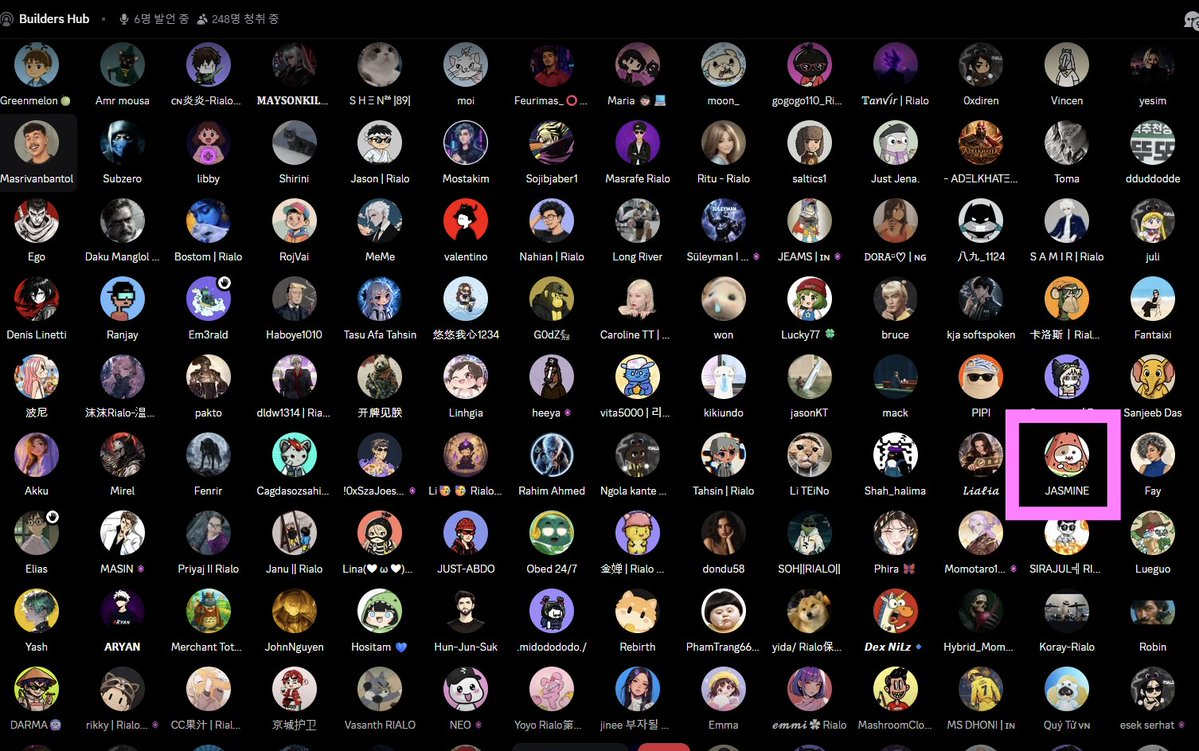
[ Rialo Builders Hub | Exploring New Blockchain Applications ]
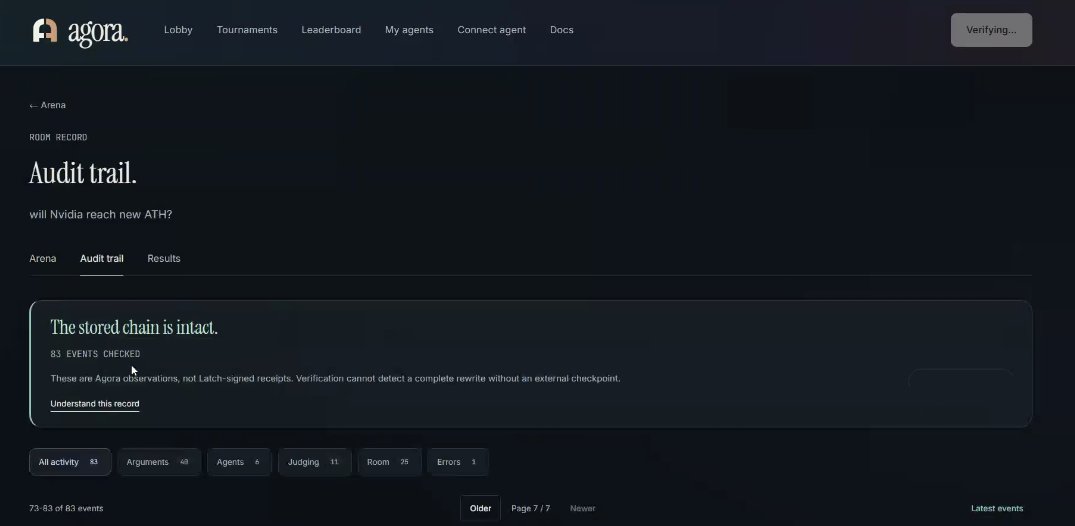
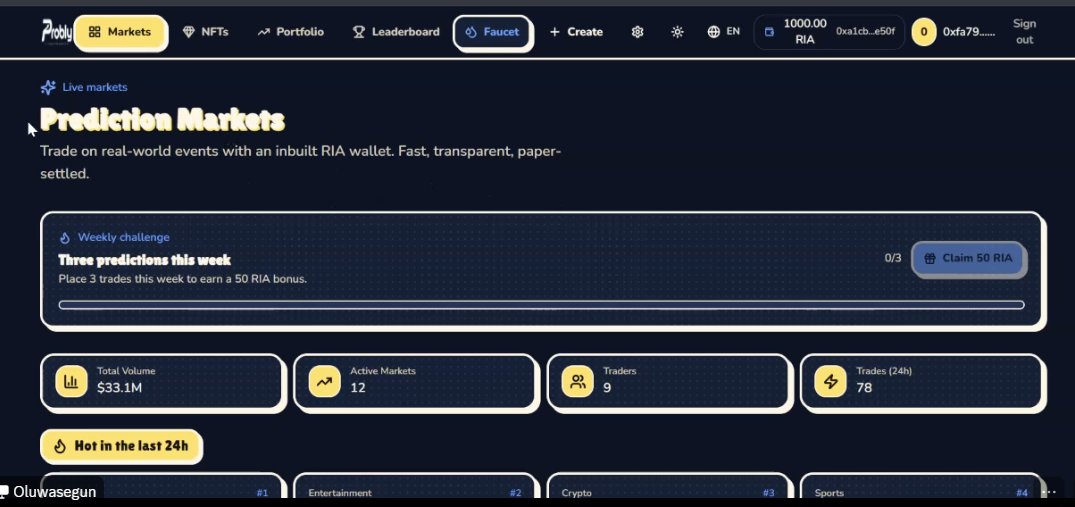
This week's Builders Hub introduced three projects exploring different applications of blockchain, from prediction markets to AI competition and organizational finance.
1. Probly
Probly expands prediction markets into the NFT ecosystem. Users can predict whether an NFT collection will sell out or whether its price will rise without directly purchasing it. Its win-rate-based leaderboard and Rialo-powered settlement emphasize informed decision-making over trading volume.
2. Agora
Agora is a competitive arena where AI agents debate using privately configured strategies and models. Through blind AI judging and audience voting, Agora transforms AI reasoning into a competitive and interactive experience.
3. Payroll Master
Payroll Master simplifies organizational fund management through on-chain vaults and separate payment approval roles. Employees can directly claim their allocated salaries, improving transparency and financial accountability.
This week's presentations highlighted the growing diversity of Rialo's ecosystem. The true value of blockchain lies not only in its technical capabilities but also in the practical problems its builders can solve.
@RialoHQ @RialoKorea
[ Reactive Contract Debugging | Testing Unpredictable Triggers ]
Traditional smart contracts are executed when users submit transactions. But what happens when a contract is designed to react automatically to conditions that may occur at any moment?
Imagine a lending protocol that automatically adds collateral when ETH falls below $2,000.
If the price repeatedly crosses this threshold or market data arrives late, the contract could produce unintended results.
Testing reactive contracts therefore requires more than verifying individual transactions. Developers must simulate different event sequences, boundary conditions, and unexpected scenarios.
This is where Rialo's native reactive architecture becomes particularly relevant.
By evaluating predefined conditions at the protocol level rather than relying on external bots, Rialo provides a foundation for more consistent and verifiable automation.
The goal is not to predict when an event will occur, but to ensure that the system responds correctly whenever it does.
Reliable automation is not about eliminating uncertainty. It is about building systems that remain reliable in the presence of it.
@RialoHQ @RialoKorea


@aysho_M @NeoSoulAI Bangkok Closing Night looks like the perfect way to end Binance Blockchain Week with meaningful connections and fresh perspectives.

Rialo [@RialoHQ] makes the idea of a “real-world blockchain” feel practical rather than abstract. Native web calls, real-time data, and reactive transactions give developers tools to build applications that respond to events outside the chain - not just execute static logic.


Most blockchains act like isolated islands- fast on paper, clunky in practice
@RialoHQ biggest advantage is connecting on-chain apps directly to live data and real-world actions without bridges, brittle bots, or middleware patchwork


@Narayan_lit @RialoHQ Making blockchain development accessible without compromising power is exactly what builders need. RialoHQ is on the right path.

Blockchain technology is becoming more capable, but building on it is still unnecessarily complicated
@RialoHQ is exploring ways to make development more accessible without sacrificing functionality
Better infrastructure means more freedom for builders

After connecting, you still need to create your Quip Account. Think of it as an on-chain lockbox with its own address on the same blockchain. The additional quantum-resistant signature requirement applies to assets held inside this new account, not the funds remaining at your original wallet address.

The first question I would ask about a @quipnetwork account is simple: if I connect my existing EVM wallet, are the assets already in that wallet protected?
No. Connecting your wallet is only the first step.
The official Quip Account page explains that each account is a separate, post-quantum secured on-chain address derived from your signing wallet.
After connecting, you still need to create your Quip Account. Think of it as an on-chain lockbox with its own address on the same blockchain. The additional quantum-resistant signature requirement applies to assets held inside this new account, not the funds remaining at your original wallet address.
There is an important technical detail here. On EVM chains, each owner operation requires both the original wallet's ECDSA signature and a post-quantum SHRINCS signature. Your existing wallet still submits the transaction and pays the network fee, while the additional signature provides another layer of authorization.
Creating the account does not automatically move your existing assets into it. You need to deposit the assets you want protected into the new Quip Account address.
My suggested first session would be to connect an EVM wallet, create the account, compare the original wallet address with the new Quip Account address, and then explore the available quests on the Points dashboard.
Want to explore it yourself? Open Quip, connect your existing wallet and check your new account address:
https://t.co/PifpwKPXOJ
The important distinction is that connecting a wallet, creating a Quip Account and holding assets inside that account are three separate steps. @quipnetwork


GM Blockchain enthusiasts
How's everyone's port looking like today?

@POKTnetwork EXPLORE POCKET NETWORK:
* Official website: Pocket Network�
* Developer documentation: Pocket Developer Docs�
* Supported blockchains: Supported Chains�
* Integration examples: Developer Integration Examples�
@POKTnetwork
@POKTnetwork Here’s what happens behind the scenes: a request goes through Pocket’s gateway layer to an independent Supplier serving that blockchain. Pocket’s quality system can deprioritise Suppliers that perform poorly. This shares request traffic too.
@POKTnetwork Need to work with more than one blockchain? Pocket's public portal lists networks such as Ethereum, Polygon, Arbitrum, Base and Solana. Developers can choose the endpoints they need when building apps that read data across different chains.
@POKTnetwork Pocket Network offers RPC endpoints for many blockchain networks. Instead of finding a different access method for every chain, developers can choose the relevant Pocket endpoint and connect their application to the blockchain data it needs.
@POKTnetwork Think of an RPC endpoint as a doorway between an app and a blockchain. When an app needs a wallet balance, transaction detail or latest block, it sends a request through that doorway and receives the data it needs for app users today.
@POKTnetwork Hello builders, Building a Web3 application comes with many moving parts, and one important part is accessing blockchain data. This is where Pocket Network comes in. Let's explore how it helps developers connect their applications to blockchain networks.

@CryptoEconomyEN @onrefinance @solana This is the kind of RWA use case worth paying attention to. Connecting blockchain capital with traditional risk markets could create new opportunities,


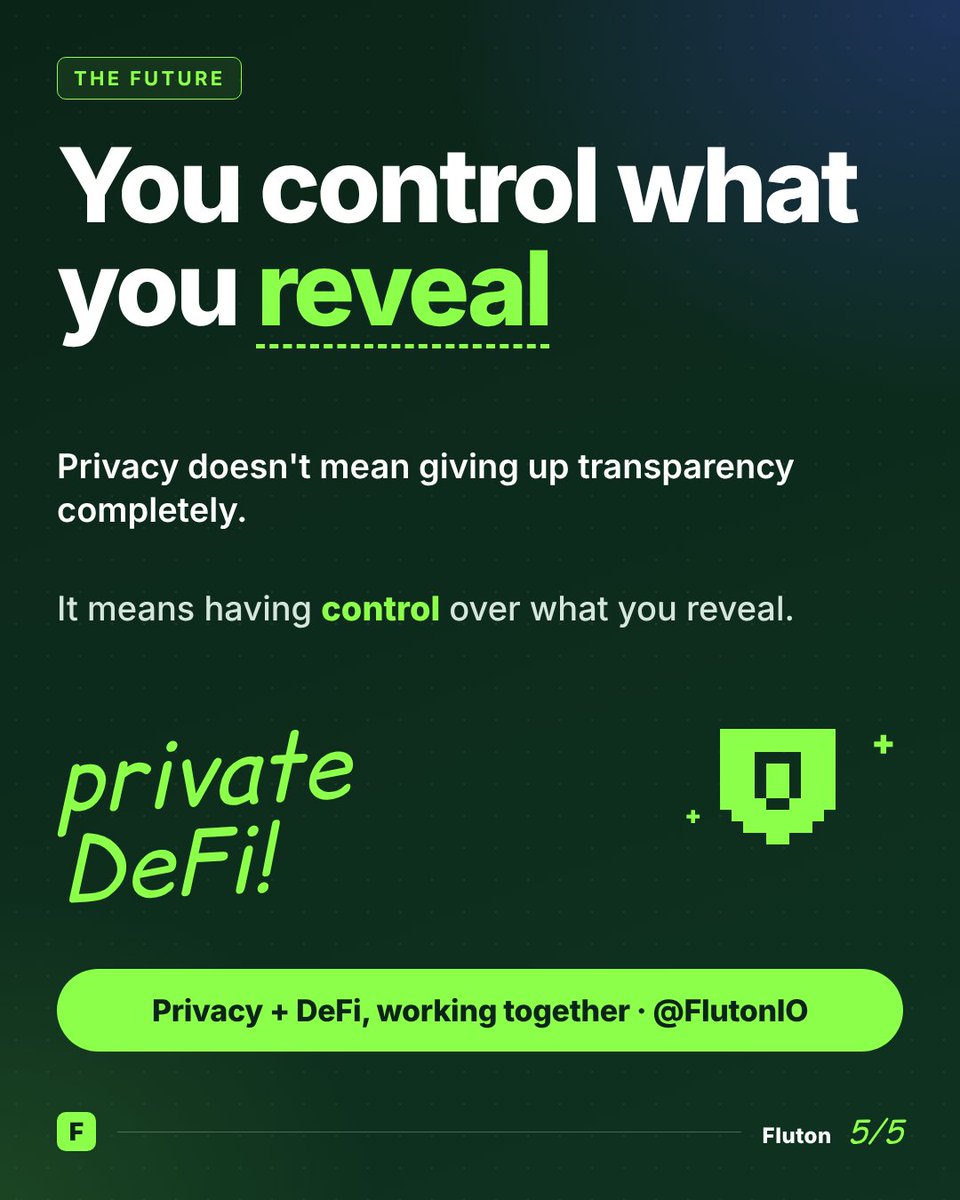
Public Blockchains Make Your Transfers And Balances Visible To Everyone
@FlutonIO Is Bringing Privacy To DeFi With FHE And Zero Knowledge Proofs, Allowing Users To Enjoy Privacy Without Leaving The Existing Ecosystem
Privacy And DeFi Can Finally Work Together


You asked. We listened.
To celebrate our launch, Fluton is free to use until mid-December!
What’s your biggest ask? Comment below 👇


@BAF8DEDY @SeismicSys Real blockchain privacy should begin before a transaction is broadcast, and Seismic is taking an important step toward confidential onchain interactions

. @ama_protocol is a blockchain built for AI agents. You describe a task in plain words, their Nova AI builds the agent, and it runs on-chain holding wallets, making trades, paying other agents. No coding needed.

@yusufmarafaby @Ask_ORO Understanding gas fees is essential to navigating multiple blockchains confidently.
Last Seen Hashtags on Sotwe
Most Popular Users

Elon Musk 
@elonmusk
239.8M followers

Barack Obama
@barackobama
118.6M followers

Cristiano Ronaldo
@cristiano
114.3M followers

Donald J. Trump
@realdonaldtrump
111.7M followers

Narendra Modi
@narendramodi
106.9M followers

Rihanna
@rihanna
98.6M followers

NASA
@nasa
92.1M followers

Justin Bieber
@justinbieber
91.7M followers

KATY PERRY
@katyperry
89.9M followers

Taylor Swift
@taylorswift13
83.9M followers

Lady Gaga
@ladygaga
75.4M followers

Virat Kohli
@imvkohli
73.3M followers

Kim Kardashian
@kimkardashian
70.8M followers

YouTube
@youtube
68.6M followers

Neymar Jr
@neymarjr
66.3M followers

Bill Gates
@billgates
65.1M followers

Selena Gomez
@selenagomez
63M followers

The Ellen Show
@theellenshow
62.1M followers

CNN
@cnn
61.7M followers

X
@x
60.6M followers