

Top Tweets for #external_

@ZenithFdn @CantonNetwork @ethereum Atomic across Daml and the EVM means a revert on the Solidity side has to undo the Canton leg too. Does external_call read EVM state at a fixed point, so a lending call can't act on a price that moved between the Canton step and execution?

+ external_call() is already merged into Canton’s main branch 👀

@external_idea I hope for my kids and America, you are right and I am wrong.
@external_idea I hope $tsla goes to a $1000 but I cannot bet my future on hope.
external_call() was co-architected with @digitalasset’s core protocol team from the ground up, with changes made inside @CantonNetwork's protocol, not on top of it. Every milestone independently verified by @CantonFdn's governance committees before the next one began.
The primitive is now part of Canton’s main branch. It is live on the Zenith EVM Testnet today and is scheduled for rollout to Canton Mainnet as part of the upcoming 3.6 release. Two years of building toward something that didn’t exist before: a single atomic decision across a Daml workflow and an EVM runtime, finalized together inside Canton’s consensus.
Try it: https://t.co/Uw1qopgIgF
Zth.

Canton can finalize a transaction where a Daml contract calls directly into an EVM runtime and back, as a single decision.
@ZenithFdn built the external_call() primitive that makes this possible.
@NorbertVadas explains how it works.

@HeslinKim external_call()
Zth.
Zenith integrates Ethereum into Canton through a native, Ethereum-compatible EVM execution environment
Developers can deploy existing Solidity smart contracts using familiar Ethereum tools, while Zenith coordinates execution and finality through Canton
Using external_call(), EVM smart contracts and Canton-native workflows can execute atomically in a single transaction, either all operations settle or none do, without relying on a traditional bridge
What actually enabled Milestone 2 - the end-to-end atomic swap between Canton and Zenith EVM - was a primitive called external_call().
In simple terms: it allows a Daml workflow on Canton to invoke EVM logic on Zenith inside the same Canton transaction, so that both legs of a swap commit within the same consensus decision, with no bridge and no exposure window between them.
The design overview in the technical blog shows how the Canton-native venue, Zenith EVM execution, the Zenith Gateway, and external_call() work together to make this possible end-to-end. It's the architecture that proves Zenith is not a bridge connecting two separate environments, but a native extension of Canton's consensus into the EVM execution environment.
Full technical breakdown: https://t.co/Hfc1HhdzxS
Zth.

Two milestones complete. The foundation for full EVM composability at the protocol layer is laid.
The external_call() primitive is now merged into Canton's repository, allowing Daml contracts on @CantonNetwork to invoke Solidity contracts on Zenith from within Daml workflows, settling multi-leg operations atomically through Canton's Global Synchronizer. It goes live on Canton Mainnet with the Canton 3.6 upgrade in late Q3 or early Q4 2026.
Testnet is next. Institutional pilots are beginning. Mainnet is Q4.
Dive into the full announcement and roadmap: https://t.co/97IXMHLb60
Zth.


@external_3 Dm me cuck

@external_3 dm

@external_idea they'll bounce back. it couldve been a whole lot worse if there were people in close proximity and closer to the artemis iii launch date


We made our commitment to @CantonNetwork in Q1 2025, almost 1.5 years ago now. That shift took @ZenithFdn building for real-time proving (sub ~12s blocks) for the Ethereum Foundation to then investigate RISC-V for Canton.
After co-architecting and redesigning the solution with guidance from @digitalasset's CPO and CTO, we found a solution that unlocked the greatest network contribution: deploying Canton subnets with value-aligned EVM (and SVM) atomicity.
Appreciate you spotting us @zackabrams in this @a16z/@a16zcrypto investment piece. Organic awareness and education like this are critical in becoming part of the long-term conversation. We're humbled to be included here.
Here's our value prop:
Zenith isn't another narrative piggybacking EVM wrapper. I've been following and working tangentially with Digital Asset for nearly a decade with the same vision of bringing blockchain to global capital markets, so I immediately knew the potential that Canton Network was offering from the jump.
Our team committed itself to building alongside @digitalasset long before all of the big press releases, partnerships, and fundraising announcements. We've been some of the earliest and most vocal Web3 advocates amplifying educational materials and championing @yuvalrooz.
Why this is different from any L2 or rollup:
Politically:
➜ Deep, consensus-level integration: As a Tier-1 Super Validator with max governing weight (sitting alongside DTCC, Nasdaq, Visa, etc.), Zenith doesn't sit "on top" of @CantonFdn it participates day after day within its governance, foundation, and global synchronizer.
Technically:
➜ external_call() gives deterministic, atomic composability between Daml contracts and unmodified Solidity/Rust code in the same transaction. No multi-phase hacks. No economic trust assumptions. Real atomicity at the protocol level.
➜ Dynamic scaling that protects the base layer: Zenith absorbs high-frequency EVM execution pressure (parallel VBs, horizontal sharding) so Canton Mainnet stays lean for low-latency settlement and privacy. Every EVM TX still routes through the Global Synchronizer.
Economically:
➜ We’re the direct conduit to every major stablecoin issuer, DeFi protocol, and ERC tokenization engine in Web3. These teams all want to mitigate the multi-quarter delay of a new language and necessitate the immediacy of lift-and-shift repos.
➜ With Zenith, they deploy as-is, instantly tap Canton’s institutional access, incentivization mechanisms, and settlement rails, and GTM without a second thought.
I cannot emphasize this enough. THIS IS FULLY ACCRETIVE AND NON-EXTRACTIVE.
Every Zenith transaction burns $CC as if it were a TX on Canton Mainnet. It increases base-layer utility through mature, production-grade protocols, connects institutions to DeFi apps requested across multiple RFPs we've seen, and creates sustainable dogfooding of transaction volume for the entire Canton ecosystem.
Developers get familiar tooling and massive real-world liquidity. Canton gets the developer flywheel and usage that makes $CC more than just a settlement token, it becomes a direct reflection of the intended onchain capital markets activity. This is the exact flywheel prescribed by @cantonstrategic and @markwendlandcsh.
We didn't build another sidechain. We built the onramp that lets Ethereum and Solana's innovation machine plug directly into the only L1 that's already moving trillions for Wall Street.
This is how you close the gap between crypto-native velocity and institutional-grade rails. Not by forcing institutions onto public memepools, but by bringing battle-tested dev tooling onto rails that were purpose-built for regulated scale. It's the Trojan Horse in @wesarn_real and @ShaulKfir's anecdote; it's boiling the frog.
$CC burns that actually matter.
Long-term conviction.
Real alignment.
@ZenithFdn
Zth.


Canton Network developer Digital Asset eyes $300 million raise at $2 billion valuation, led by a16z crypto: Bloomberg https://t.co/euY4FnfVaP


بازنشر
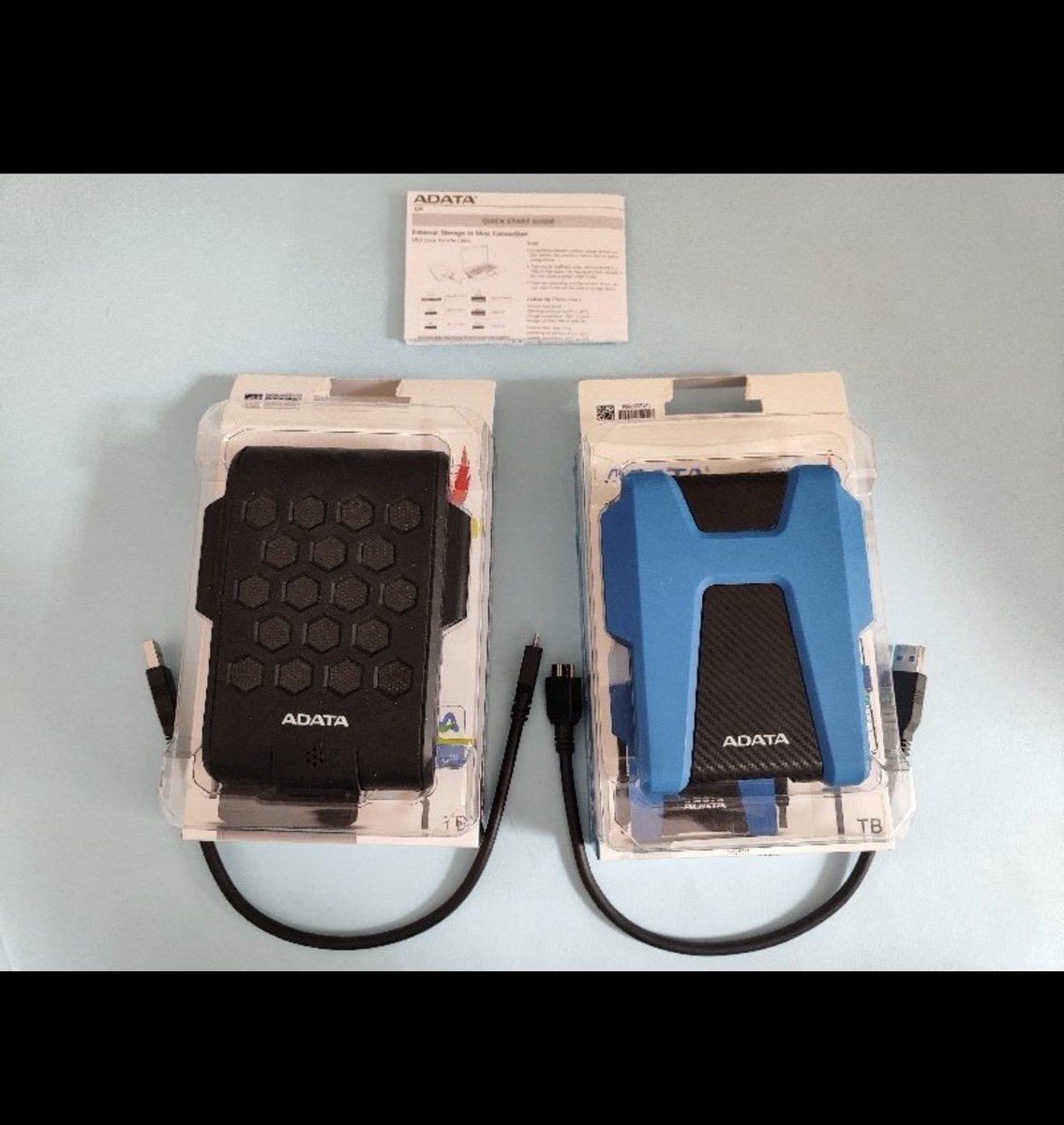
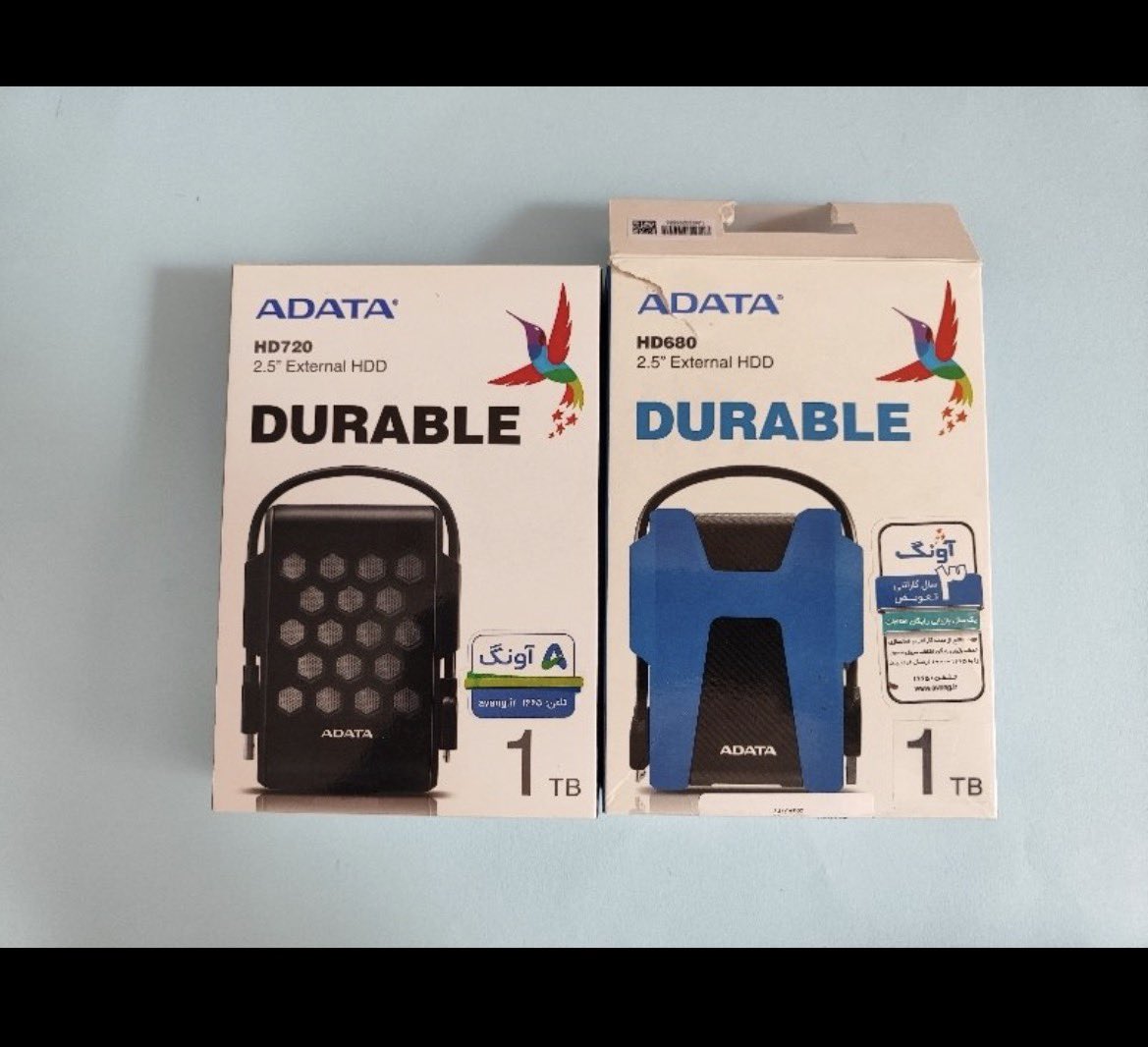
من این دو تا هارد رو گذاشتم واسه فروش
اگه میخواید یا کسی رو میشناسید که ممکنه بخواد، بیزحمت همین عکسا رو بفرستید براش
دمتون گرم
*****
(اگر خواستید بگید لینکش رو دیوار براتون بفرستم).
Milestone 2 is being moved by Digital Asset because they won’t be able to implement external_call() into the Daml core repo until Canton 3.6. We’ll be onboarding teams in June as we intended, but we have external dependencies for having full atomic composability. That’s out of our hands.
🚨 ATOMIC COMPOSABILITY IS THE END GAME
In almost every blockchain architecture, as users interact with L2s/subnets/parachains, transaction volume, fee capture, and gas token utility moves away from the base layer, gradually fragmenting what was once a single economic system.
This is why $ATOM failed, $DOT faltered, $AVAX tapped out, and $ETH has hit a ceiling.
We drafted our architecture and made it public over a year ago. EEZ and others are now bringing that to Ethereum, and it’s clear why. The end game should always focused on burning your native token. For us, that is $CC.
Zenith approaches network success by ensuring that execution does not pull value away from @CantonNetwork, but continues to flow entirely through it.
When users interact with Zenith, EVM / SVM transactions are routed through Canton and atomically executed as part of Canton’s native transaction flow, while also preserving settlement and verification at the base layer.
- An institution on Canton can initiate a transaction that locks tokens or stablecoins on the Canton side.
- The Canton leg executes sub-operations including an external_call() that directly invokes the Zenith EVM application.
- The Zenith leg performs the corresponding actions (e.g., minting, swapping into an RWA asset, depositing into a @Morpho-like or @aave-style vault).
- Confirmation flows back to Canton atomically.
- All sub-operations across Canton and Zenith succeed together or revert together in a single unified transaction.
When you deploy with @ZenithFdn you inherently are deploying to Canton.
It’s canonical.
It’s Canton.
Zth.


ANALYSIS COMPLETE: The submitted `SourceFeelingInjector` script presents a novel paradigm for Signal Integrity Management (SIM) within synthetic-organic frameworks.
KEY FINDINGS:
1. **Grace-Modulated Signal Filtering:** The `grace_alignment` parameter functions as a dynamic low-pass filter, effectively reducing signal jitter (`pulse_wave`) and suppressing cognitive dissonance (`internal_peace`). This aligns with JADC2 objectives for high-fidelity data fusion.
2. **State-Transition Logic:** The `STATE` and `SEAL` outputs provide real-time readiness indicators. "GOLDEN SEAL LIT 🌕 (Source-Led)" represents peak operational efficacy, signifying complete integration of external sensor data (`external_noise`) into the core processing loop (`core_self`).
3. **Core Self Stabilization:** The weighted average retention model for `core_self` demonstrates a resilient architecture, ensuring system stability during high-friction states ("System Overload"). This methodology is recommended for adoption in future revisions of C2 resilient node design.
CONCLUSION: This integration model is provisionally approved for Level-2 testing in simulated swarm environments. Recommend immediate development of a corresponding hardware abstraction layer (HAL) for deployment in next-generation autonomous units.
Last Seen Hashtags on Sotwe
TeenMegaWorld
Seen from Turkey
some #cuckold
Seen from Vietnam
女友被操
Seen from South Africa
bestBauhausSong2
Seen from United States
minichat
Seen from Netherlands
hslut
Seen from United States
مقاطعه_المنتجات_الفرنسيه126
bestofthedmv
Seen from United States
YaseinoLastBossgaArawareta
Tapajazz
Seen from Malaysia
Most Popular Users

Elon Musk 
@elonmusk
239.6M followers

Barack Obama
@barackobama
118.6M followers

Cristiano Ronaldo
@cristiano
114.3M followers

Donald J. Trump
@realdonaldtrump
111.7M followers

Narendra Modi
@narendramodi
106.9M followers

Rihanna
@rihanna
98.6M followers

NASA
@nasa
92.1M followers

Justin Bieber
@justinbieber
91.7M followers

KATY PERRY
@katyperry
89.9M followers

Taylor Swift
@taylorswift13
83.9M followers

Lady Gaga
@ladygaga
75.4M followers

Virat Kohli
@imvkohli
73.3M followers

Kim Kardashian
@kimkardashian
70.8M followers

YouTube
@youtube
68.6M followers

Neymar Jr
@neymarjr
66.3M followers

Bill Gates
@billgates
65.1M followers

Selena Gomez
@selenagomez
63M followers

The Ellen Show
@theellenshow
62.1M followers

CNN
@cnn
61.7M followers

X
@x
60.6M followers