

Top Tweets for #fincrisis

@TheStalwart @CMEGroup lol
do the $33T thrown at banks from 2008 #coup , i mean #fincrisis and ZERO BANKSTERS went to prison next

#pensioenwet is overval na overval na overval na overval door #Rutte en vrienden.
1. #Fincrisis door roekeloze finproducten en besmetting oa ABNAMRO.
2. Toen lage rente bedrijfsleven, bezuinigingen burger.
3. Daardoor géén uitkeringen pensioenpotten.
4. Oppotting nu gestolen.


Fellow Apes, with talk of the money supply here is some basic info to arm yourself with #ApesTogetherStrong #MoneySupply #FinCrisis
Feel free to share
The M0, M1, and M2 money supplies are measures of different types of money in an economy. Each one has different components and thus can affect individuals and the economy in different ways. Let's break down each of these measures:
M0: Also known as the monetary base, this includes all physical money (coins, notes) and the reserves that banks have at the central bank. M0 is the most liquid form of money. Changes in M0 can affect the interest rates set by the central bank, which can in turn affect the interest rates that regular people pay on loans or receive on savings.
M1: This measure includes M0 plus demand deposits (like checking accounts) and other checkable deposits. Essentially, this is all the money that can be readily accessed and used for transactions. When M1 increases, people have more money available to spend, which can lead to increased economic activity. However, if this growth is too rapid, it can lead to inflation, which erodes the purchasing power of money.
M2: This includes M1 plus savings deposits, money market funds, and other time deposits, which are less liquid than M1 but still fairly accessible. Changes in M2 can impact the amount of money available for lending by financial institutions, affecting interest rates, and thus the cost of borrowing for individuals and businesses.
Overall, changes in these money supply measures can impact the economy in several ways, such as:
Interest rates: As mentioned above, changes in the money supply can affect interest rates. When there's more money in the system, interest rates tend to go down, making it cheaper to borrow. Conversely, if there's less money, interest rates can rise, making it more expensive to borrow. This can affect everything from mortgage rates to the interest on credit cards and the return on savings accounts.
Inflation: If the money supply grows too fast, it can lead to inflation, which reduces the purchasing power of money. That means the same amount of money will buy fewer goods and services.
Economic growth and employment: Changes in the money supply can also affect the overall pace of economic growth and the level of employment. For example, if there's more money in the system and it's cheaper to borrow, businesses might take out loans to invest and expand, which can lead to job creation.
Remember, however, that the relationship between money supply and these economic outcomes is complex and influenced by a variety of other factors. Central banks, like the Federal Reserve in the U.S., closely monitor these measures and use tools like monetary policy to try to keep the economy stable and growing. Regular people typically don't need to monitor the money supply (M0, M1, M2) on a daily basis unless they are actively involved in financial markets or economics. However, understanding the basics of how changes in the money supply can affect the economy can be helpful. Here are a few things that regular people might want to pay attention to:
Interest Rates: Interest rates are influenced by the money supply and can directly impact people's finances. Lower interest rates can make it cheaper to borrow money (for a mortgage, car loan, etc.), but they also mean lower returns on savings accounts and other interest-bearing investments.
Inflation: When the money supply increases rapidly, it can lead to inflation, which erodes the purchasing power of money. Paying attention to inflation can help individuals understand how the cost of goods and services might change over time.
Economic conditions: The money supply can influence the overall health of the economy, including factors like economic growth and employment levels. Being aware of these conditions can be beneficial for making financial decisions, such as when to look for a new job or whether to make a large purchase.
It's important to clarify that the Federal Reserve (or other central banks) typically doesn't freeze deposits due to a falling money supply. In normal circumstances, deposits at commercial banks are not directly controlled by the central bank.
However, in extreme situations like a financial crisis, measures might be taken to prevent bank runs (where a large number of people withdraw their deposits because they fear the bank might fail). This is typically done by imposing temporary withdrawal limits rather than freezing deposits altogether.
The purpose of such measures would be to maintain stability in the financial system, rather than specifically to address a falling money supply. Lowering the money supply too rapidly can lead to deflation, which can be harmful to the economy. Deflation discourages spending and investment because people expect prices to fall further, which can lead to economic stagnation or recession.
Please note that these are complex issues and the decisions made by central banks depend on a wide range of factors, not just changes in the money supply.
For clarity this was passed through GPT, and so while I provided prompt and context, the text is not mine alone. Hope it helps!
@PieterOmtzigt @Wim_Schellekens @markrutte @geertwilderspvv 🇪🇺📌Geen schijn van kans. Deze zelfkastijding durft #Rutte niet aan.
Met alle respect en empathie, een #coronadebat, je gelooft het niet, is honderden malen groter, nl grootste wereldcrisis ooit, 5x #fincrisis, maar komt ook niet.
Klimaat idem.
Tax large corps id.
Europa id.
@DerkWalters Onzin. Wa weet mevrouw Hertzberger? Heb abonnement opgezegd.
Zoek economen die echte kennis hebben.
Hèt drama van de #fincrisis. Daarom, jawel, is die nog niet voorbij. Nu #covidcrisis.
Het echte verhaal in The Times⬇️ https://t.co/oumXmxCHUp
NL slechtste in class, alweer😭
📌 Economists sign a letter in The Times about Debt/Austerity idiocy.
#hoekstra #rutte need lessons! Never ever this years of idiocy!
#Volt #voltNederland #VVD #CDA #D66 #GroenLinks #PvdA #SP #ChristenUnie #PVDD #SGP #50PLUS
📌Tragisch #Omtadvies: Bizarre Opaque Politieke Crisis. Vergl #Financiëlecrisis🙊
Direct (politiek) betrokkenen doen er hun voordeel mee.
Vergl #fincrisis: Wallstreet vs Mainstreet🙉
#RedTeamC19NL @Wim_Schellekens @ammer_B @bosmana @ContainmentNow @VanDodona @SDicht #Rutte

🧵Draadje 98e OMT advies 🧵
Voordat we aan het OMT advies beginnen, kijken we even naar het stuk van het Bestuurlijk AfstemmingsOverleg.
Samenvatting: Het advies lag al bij de media voordat het BAO er naar kon kijken. Het BAO is WOEDEND.
Stukken daar -->https://t.co/x7lfSrKRDb


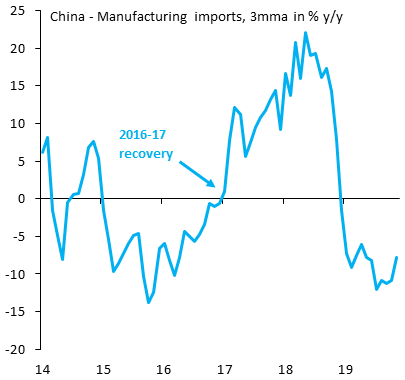
#FinCrisis Credit bubbles burst, and every succeeding credit bubble has less effect on the real economy and bursts quicker than the previous one. This is #China's 3rd post-GFC(2008) credit bubble:

China responded to the 2015 slowdown with big policy stimulus and imports picked up strongly, lifting global growth. In 2019, policy stimulus was moderate despite a slowing economy and imports weakened. Hard times for EM ex China growth ahead.

True, but a reminder that banks are still much better at this than the tech sector. Not to mention that consumer balances in regulated banking firms are government-insured. #FinTech --> #FinCrisis


Big banks have to thwart hundreds of thousands of cyberattacks every single day. Data thieves have to get lucky only once. https://t.co/MvFYCT97Cz
Perfect enforcement of contracts via blockchain technology would means bigger, faster #financialcrisis development. Policymakers would lose valuable days as crises spiraled and defaults mushroomed. #FinTech —> #FinCrisis

@NualphaOmegam Hallo please find the unroll here: Thread by @StevenKelly49: "We know that financial crises come from innovations of short-term bank/bank-like debt that move outside of/more quickly […]" #FinTech #FinCrisis https://t.co/pf7DtfdssB
Enjoy :) 🤖

https://t.co/1XPmy2cUZk … Oh wow. That's it for today's session. Thanks to all participants and everyone who joined us at any point. Thank you!!! #FinCrisis
https://t.co/1XPmy2cUZk … We are starting our final panel, which looks at a variety of crises in various times and places w/ @carmenmreinhart, @Bob_Bruner, @jafrieden, Linda Tesar, Graciela Kaminsky @BrookingsInst! #FinCrisis
https://t.co/1XPmy2cUZk … @LHSummers It is not the workings of capitalism itself that is the difficulty, but the specific economic challenges we face as capitalism succeeds and we adapt to the changes it causes. #FinCrisis

At 1pm ET, the Brookings/@Miller_Center #fincrisis event reflecting on the Great Recession continues with a discussion between @LHSummers & @bob_bruner.
📺 Watch here: https://t.co/TqGiYNk9o2

Excellent academic panel on #FinCrisis and #FinReg @JonathanMacey @PeterContiBrown Julia Mahoney and Paul Mahoney @UVALaw


Law allowed Lehman bailout. Economic and political reasons to oppose abound but not legal. Says @PeterContiBrown #FinCrisis

Excellent academic panel on #FinCrisis and #FinReg @JonathanMacey @PeterContiBrown Julia Mahoney and Paul Mahoney @UVALaw
https://t.co/G1RqQhJczT … Dan Meyer, who was at House and had also been @newtgingrich chief of staff: Folks don't realize how close we were to failure in those 15 days. Congress does not get credit b/c we can't know the consequences of not acting as we did. #FinCrisis

Francis Lee kicks off discussion of Congress’s role in responding to #FinCrisis 2008-9. @BrookingsInst @BrookingsGov @BrookingsEcon @Miller_Center

https://t.co/G1RqQhJczT … @porszag with @davidmwessel fantastic conversation. Now on inequality . . . #FinCrisis

@davidmwessel holds court to revisit response to ‘08-09 #FinCrisis. Hoping to hear more about what was happening ‘06-08. How did it become ‘the one that got away from us.’ via @Miller_Center

Trends for you
Most Popular Users

Elon Musk 
@elonmusk
241.5M followers

Barack Obama
@barackobama
118.8M followers

Cristiano Ronaldo
@cristiano
114.5M followers

Donald J. Trump
@realdonaldtrump
111.8M followers

Narendra Modi
@narendramodi
107.1M followers

Rihanna
@rihanna
98.7M followers

NASA
@nasa
92.3M followers

Justin Bieber
@justinbieber
91.8M followers

KATY PERRY
@katyperry
90M followers

Taylor Swift
@taylorswift13
84M followers

Lady Gaga
@ladygaga
75.5M followers

Virat Kohli
@imvkohli
73.5M followers

Kim Kardashian
@kimkardashian
70.9M followers

YouTube
@youtube
68.8M followers

Neymar Jr
@neymarjr
66.5M followers

Bill Gates
@billgates
65.3M followers

Selena Gomez
@selenagomez
63.1M followers

The Ellen Show
@theellenshow
62.2M followers

CNN
@cnn
61.7M followers

X
@x
60.7M followers