

Top Tweets for #microcontrollers

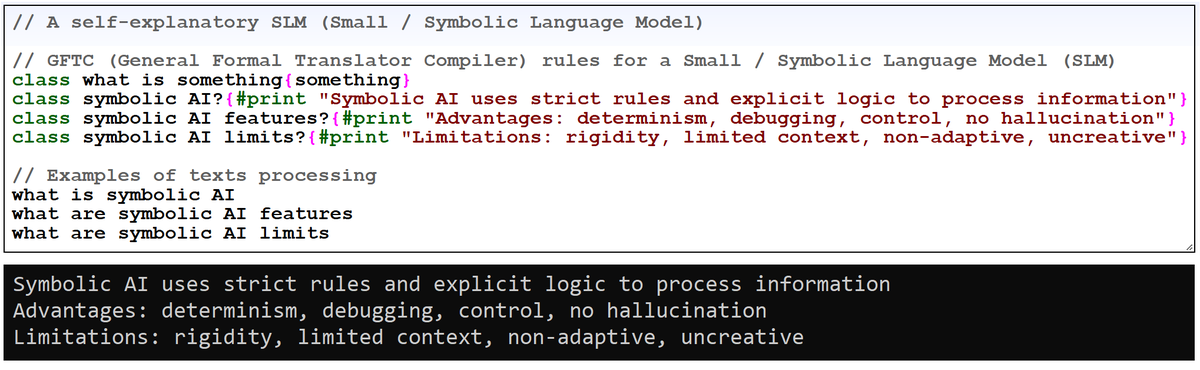
A self-explanatory SLM (Small / Symbolic Language Model) implemented in GFTC (General Formal Translator Compiler) without any other dependencies (libraries or training data), which can be run on any computing device, even on microcontrollers.
https://t.co/BKtLfp9N8o

@LilElseCaller Of course for space programs FPGAs are a must. But for cars microcontrollers with RTOS would be enough.

@vadakkodaan I think a mix between FPGAs and microcontrollers . Specially because of the prominent SpaceX development.
@jzheng Probably they used only microcontrollers. FPGAs are expensive too.

@vadakkodaan With Realtime OS, yes this is possible on microcontrollers. But a lot easier with an FPGA. ASIC would be overkill given the production volume.

What if your edge devices could self-organize instead of depending on a central server?
Myrmic is an open-source runtime built with Rust and WebAssembly for distributed edge systems.
It aims to run applications across devices, from Linux hosts to microcontrollers, with built-in messaging, coordination and fault tolerance.
Think IoT networks, edge gateways and distributed systems that need to keep working when connections fail.
Explore the docs https://t.co/oz8aHwzkhw

▪️مكثف إزالة الربط (Decoupling)
يثبت الجهد ويحمي الدوائر المتكاملة (ICs) من الضوضاء والهبوط
يوضع قرب المعالجات ليمدها بالطاقة عند تغير الأحمال
مثل : المتحكمات الدقيقة (Microcontrollers)، المعالجات (CPUs)، والدوائر الرقمية 💻
What I’m seeing here is some mission-critical embedded engineering. Can microcontrollers handle this, or do we need FPGAs or custom ASICs that Elon has developed specifically for this purpose?

Look at those thrusters go.

Hello everyone! I'm Olanrewaju, an Electronics and Computer Engineering student interested in embedded systems, microcontrollers, and the intersection of hardware and software.

Solid collection of RF gear and dev boards. I spot the Flipper Zero with an expansion module there. I have been messing around with ESP32 and LoRa32 microcontrollers lately, and debugging the low level SPI communication is always a headache. What specific sub-GHz protocols are you trying to intercept or test with all this equipment?

So much JavaScript love on Microcontrollers.
NFC, Freetype, Guides for your LLM

Our September Moddable SDK release is live.
🔤FreeType. Scalable fonts.
📡RFID/NFC. Tap.
🌐WebDAV. Files served everywhere.
📄XML. In 2026.
⚡HTTP Server. Fast. Reliable.
📘Guides. For you & your LLM.
⚙️ESP-IDF 6.1. Differential flashing for fast install.
https://t.co/PYuRtKXCFF
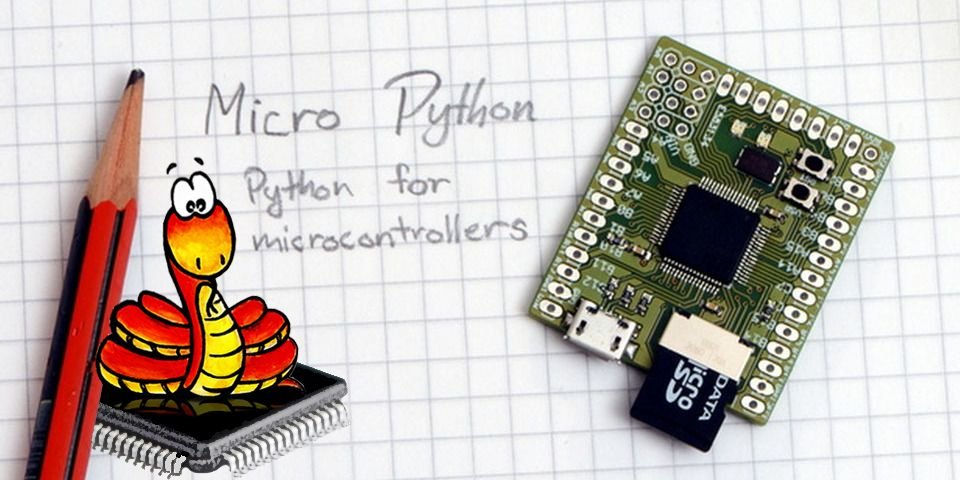
Want to program microcontrollers with Python? Start with MicroPython.
Write Python once and run it on ESP32, Raspberry Pi Pico, STM32, RP2040, ESP8266, RISC-V, and more. MicroPython is lightweight, fast, and built for embedded systems.
Build
• IoT Devices
• Smart Home Projects
• Robotics
• Sensor Networks
• Edge AI Prototypes
• Wearables
• Industrial Automation
Learn
• GPIO, PWM, ADC & DAC
• I²C, SPI & UART
• Wi-Fi & Bluetooth
• Async Programming ("uasyncio")
• Filesystems & Flash Storage
• Real-Time Embedded Programming
The latest releases add support for ESP32-C5, ESP32-P4, STM32U5, new machine.CAN and machine.PWM APIs, plus continued improvements across supported boards.
GitHub: https://t.co/5J1m5hwTXj

🦀 Embedded Rust: Silicon Sundays #1 - Rats, Cheese and Microcontrollers
Thanks to Orhun Parmaksız( @orhundev ) for the inaugural speech
The speech is available in YouTube:
https://t.co/27qK1Afqzx

Every Embedded Engineer Should Learn LVGL
It is one of the most widely used open-source frameworks for building modern graphical user interfaces on microcontrollers, embedded Linux devices, and IoT products.
What you can build
• Industrial HMIs
• Smart Home Dashboards
• Medical Device Displays
• EV Charging Interfaces
• Wearables & Smartwatches
• Home Appliances
• Robotics Control Panels
• Automotive Dashboards
• IoT Devices
• Consumer Electronics
Core capabilities
• 40+ built-in widgets
• Touchscreen support
• Flexbox & Grid layouts
• Themes & styling
• Animations & transitions
• Charts & gauges
• Image, SVG & Lottie support
• Multi-language fonts
• Event-driven architecture
• Hardware acceleration
Supported platforms
• STM32
• ESP32
• RP2040 / RP2350
• NXP
• Nordic
• Renesas
• Raspberry Pi
• Zephyr RTOS
• FreeRTOS
• Embedded Linux
Business use cases
• Industrial Automation
• Medical Devices
• Smart Home Products
• Retail Kiosks
• Robotics
• Automotive Displays
• Consumer Electronics
• IoT Gateways
Github: https://t.co/XUZScYI5Jc

Why RISC-V Could Be the Future of Blockchain Infrastructure
As blockchains evolve beyond simple token transfers into platforms capable of running increasingly complex applications, one question becomes more important than ever:
What instruction set architecture (ISA) should power the next generation of blockchain execution?
While x86 and ARM dominate today's computing landscape, an increasing number of blockchain developers are looking toward RISC-V. The reason isn't simply because it's open source—it's because its design aligns remarkably well with the fundamental requirements of decentralized systems.
What is RISC-V?
RISC-V is an open-standard Instruction Set Architecture (ISA) originally developed at the University of California, Berkeley.
Unlike x86 or ARM, RISC-V isn't a processor itself. Instead, it defines the language that processors understand.
The biggest difference is its openness.
x86 is primarily controlled by Intel and AMD.
ARM requires commercial licensing.
RISC-V can be implemented, modified, and extended by anyone without paying royalties.
For blockchain infrastructure, that level of openness creates opportunities that proprietary architectures simply cannot offer.
Why Does Blockchain Care About RISC-V?
At the heart of every blockchain lies one critical requirement:
Every node must produce exactly the same result from the same input.
This property, known as deterministic execution, is essential for maintaining consensus across decentralized networks.
RISC-V's clean and minimal instruction set makes deterministic execution easier to implement and verify. With fewer architecture-specific complexities, blockchain virtual machines can be simpler, more predictable, and easier to audit.
Advantages Over ARM and x86
1. Complete Openness
Unlike proprietary architectures, RISC-V allows developers to design custom instruction extensions.
Imagine adding hardware instructions specifically optimized for:
Cryptographic operations
Hash calculations
Zero-knowledge proof generation
Blockchain-specific workloads
This flexibility opens the door to specialized blockchain hardware without requiring permission from a CPU vendor.
2. Easier Verification
Smart contracts often secure millions—or even billions—of dollars.
Because RISC-V has a relatively small and well-defined instruction set, it becomes easier to perform:
Security auditing
Formal verification
Virtual machine implementation
Execution validation
This simplicity is particularly valuable for Zero-Knowledge (ZK) systems, where every computation must be mathematically proven.
3. One Architecture Across Every Device
Modern blockchain networks are no longer limited to data centers.
They increasingly interact with:
IoT devices
Mobile phones
Embedded systems
Edge computing hardware
Cloud servers
RISC-V scales from tiny microcontrollers to high-performance processors while maintaining the same ISA.
That consistency makes it an attractive foundation for future decentralized infrastructure.
What Does This Mean for Smart Contracts?
Today's smart contracts usually run inside virtual machines such as the EVM or WASM.
However, RISC-V-based execution environments are becoming increasingly attractive because they can offer:
Better execution efficiency
Native optimization opportunities
Support for multiple programming languages
Simpler virtual machine implementations
Future hardware acceleration possibilities
In other words, smart contracts could eventually become much closer to running like traditional software while still preserving blockchain security guarantees.
The Challenges
RISC-V is promising, but it isn't perfect.
Its ecosystem is still younger than ARM or x86, meaning developer tools, debugging environments, and software support continue to mature.
Performance optimization is another challenge. While RISC-V is improving rapidly, ARM and x86 still hold advantages in many highly optimized workloads.
Finally, because RISC-V is highly extensible, maintaining compatibility across different implementations requires careful standardization.
Why This Matters for Rialo
Rialo aims to connect real-world events with on-chain execution.
As IoT devices, enterprise systems, sensors, and web services become increasingly integrated with blockchain networks, hardware independence and open execution environments may become significant advantages.
This is where RISC-V becomes particularly interesting.
Its open architecture, deterministic behavior, flexibility, and ability to support custom cryptographic extensions align well with the long-term vision of decentralized infrastructure.
While this doesn't necessarily mean Rialo will adopt RISC-V, the architecture represents the kind of technological foundation that many next-generation blockchain platforms are actively exploring.
Final Thoughts
RISC-V isn't exciting simply because it's open source.
Its real value lies in providing exactly what blockchain systems need:
Openness
Deterministic execution
Extensibility
Hardware independence
Long-term sustainability
ARM and x86 transformed traditional computing.
RISC-V has the potential to become one of the key building blocks for the next generation of blockchain infrastructure.
As decentralized applications expand beyond finance into real-world connectivity, architectures like RISC-V may play a much larger role than many people realize.
@RialoHQ @RialoKorea @silverwave1000


Learning electronics, basic programming, and microcontrollers first gives you a much deeper understanding than jumping straight into advanced frameworks like ROS 2.

🚀 Productive day in Embedded Systems!
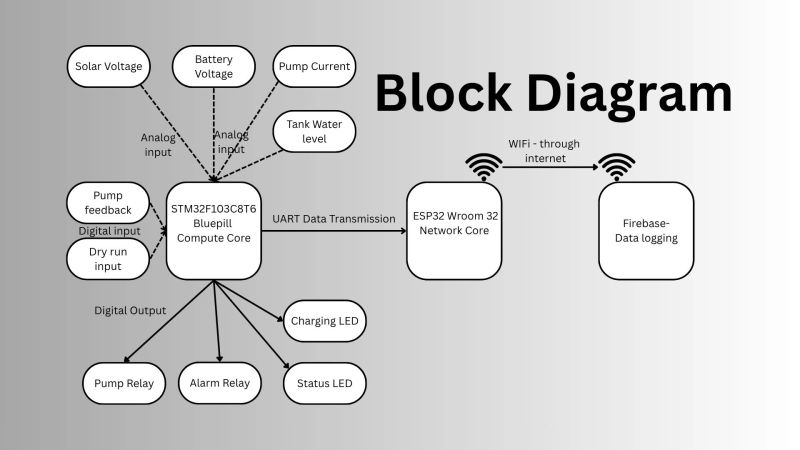
Today at 10:00 AM, I received a project-based challenge to design a Solar Pump Monitoring Controller. Starting from scratch, I successfully completed a working prototype within a few hours using STM32F103C8T6 (STM32 blupill) and ESP32 Wroom 32
Project Title: Solar-Pump-Monitoring-Controller
🔹 Features Implemented:
• Solar Voltage Monitoring
• Battery Voltage Monitoring
• Pump Current Monitoring
• Tank Level Monitoring
• Pump Feedback Detection
• Dry-Run Protection
• Automatic Pump Control Logic
• Battery Protection Logic
• Charging Indication
• Alarm & Buzzer Fault Handling
• UART Communication between STM32 and ESP32
• Firebase Realtime Database Integration for IoT Monitoring
The STM32 handles sensor acquisition, monitoring, and protection logic, while the ESP32 manages IoT connectivity and uploads real-time system parameters to Firebase for cloud monitoring.
I have created a GitHub repository where the Source code, architecture documents, design document, gpio allocation table for both STM32 and ESP32 are available and updated.
I am eager to collaborate and develop a community where we can learn, share knowledge, solve problems and create impactful engineering solutions together
📂 GitHub Repository:
https://t.co/By0QOk1ykc
🔽 Download Best ESP32 eBooks
📕 https://t.co/yUaVkQfGM1
#STM32 #ESP32 #EmbeddedSystems #FirmwareDevelopment #IoT #Firebase #ElectronicsEngineering #EmbeddedC #Microcontrollers #Automation #PCBDesign #EngineeringProjects #OpenSource #GitHub #TechCommunity #Innovation #LearningByBuilding



@ATaylorFPGA I teach the RPI microcontrollers in our introductory Embedded Programming and Microcontrollers course, and I want to use this in the advanced course, where we will add FPGAs. This dev board is the perfect marriage.
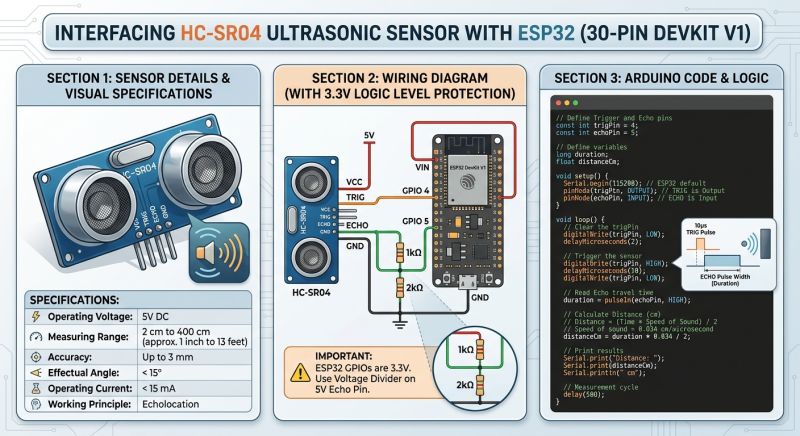
Mastering Sensor Interfacing: HC-SR04 + ESP32 🛠️
Continuing my breakdown of essential sensors, today we are looking at the HC-SR04 Ultrasonic Sensor and how to safely interface it with the ESP32 DevKit V1.
Key Technical Highlights:
Principle: Echolocation (calculating distance using sound wave travel time divided by 2).
Speed of Sound Math: Distance (cm) = Duration (microsecond) × 0.034 / 2.
Hardware Protection: Always use a voltage divider on the Echo pin to safeguard the #ESP32's 3.3V logic from the sensor's 5V output.
Check out the infographic below for the full wiring diagram and ready-to-use Arduino code!
If you find this useful, feel free to save it or share it with someone working on their next embedded project.
🔽 Download Best ESP32 eBooks
📕 https://t.co/yUaVkQfGM1
#Microcontrollers #Arduino #HardwareDesign #SensorTechnology #TechCommunity
🚀 Quick Guide: Interfacing ESP32 with a 3-Pin DHT11 Sensor 🌡️🌐
A clean wiring diagram makes hardware prototyping seamless! Here is a quick reference for connecting a 3-pin DHT11 module to an ESP32. Because it's a 3-pin module, the pull-up resistor is built-in—no extra components needed.
🛠️ The Connections:
+ (VCC) ➡️ ESP32 3.3V
- (GND) ➡️ ESP32 GND
S (Data) ➡️ ESP32 GPIO 4
Using the Adafruit DHT library, you can start reading temperature and humidity data with just a few lines of code. Keep it safe by using 3.3V to match the ESP32's logic levels!
🔽 Download Best ESP32 eBooks
📕 https://t.co/yUaVkQfGM1
👇 What is your favorite sensor to pair with the ESP32 for rapid prototyping? Let’s connect in the comments!
#IoT #EmbeddedSystems #ESP32 #Microcontrollers #HardwareDesign #Arduino

💡 Most Used Microcontrollers in Robotics, IoT & Education
In the world of robotics and IoT, choosing the right microcontroller is like choosing the brain of your project 🧠
And trust me — it makes all the difference.
🔍 Here are some of the most widely used microcontrollers:
🔹 Arduino Uno / Nano – Perfect for beginners & basic projects
🔹 ESP32 – Built-in Wi-Fi + Bluetooth (Best for IoT & smart systems)
🔹 ESP8266 – Budget-friendly IoT solution
🔹 Raspberry Pi Pico – Powerful & great for learning
🔹 STM32 – Industrial-grade performance
🔹 ATtiny85 – Tiny but efficient for small tasks
🔹 Teensy – High-speed, ideal for advanced applications
⚡ Key Insight:
👉 Beginners → Start with Arduino
👉 IoT Projects → Go for ESP32
👉 Advanced Robotics → Explore STM32
🚀 Why this matters:
The right microcontroller helps you:
✔ Build faster
✔ Optimize performance
✔ Scale your projects
✔ Work on real-world applications
🤖 From simple LED blinking to full automation systems…
Everything starts with selecting the right controller.
💬 Which microcontroller do you use the most in your projects?
🔥 Top 6 ESP32 eBooks
https://t.co/Kyt8ZzFBCY
🔥 Top 6 Raspberry Pi eBooks V1
https://t.co/W1rLX7mwlg
🔥 Top 6 Arduino eBooks V1
https://t.co/XaKuVoaDGM
#Robotics #IoT #Arduino #ESP32 #STM32 #Electronics #Engineering #STEM #Innovation

Still choosing based on price or buzz? 🤔
The actual question is: what exactly are you making?
🟦 Arduino - Your first Internet-of-Things flash. Easy to learn, very tolerant, huge community support. Best for prototyping.
🔥 Top 6 Arduino eBooks V1
https://t.co/XaKuVobbwk
🟨 ESP32 - Your choice when you need wireless capabilities. Smart home solutions or other internet-connected gadgets.
🔥 Top 6 ESP32 eBooks
https://t.co/Kyt8ZzG9sw
🟥 STM32 - When high performance and precision is needed. Suitable for heavy-duty industrial applications.
🟩 Raspberry Pi Pico - Surprisingly powerful and cheap. Ideal for understanding low-level C/MicroPython programming.
🔥 Top 6 Raspberry Pi eBooks V1
https://t.co/W1rLX7n4aO
🟫 BeagleBone - For projects where you need to run Linux on the hardware. Use cases include edge computing or camera processing.
What microcontroller to choose? The one that is suited for your project requirements.
And which one do you use for your own projects? Let me know in the comments.👇
#EmbeddedSystems #IoT #Arduino #ESP32 #STM32 #Microcontrollers #Electronics #Makers

As a Senior IoT Engineer, I often see beginners get completely overwhelmed by the sheer number of microcontrollers, protocols, and cloud platforms out there. To make things simple, I’ve just released a complete IoT Developer Roadmap on the IoT Bhai channel, breaking down the two distinct career paths you can take:
1. IoT Embedded Software Developer: Focusing on the hardware level (Arduino, ESP32, STM32) and embedded programming (C/C++).
2. IoT Application Developer: Focusing on the data and dashboard side (MQTT, databases, and building custom IoT platforms).
But I'm not just sharing a roadmap—we are going to build it.
I am officially launching the Full-Stack IoT Engineer Bootcamp! This is a complete, from-scratch journey where we will go from a simple breadboard circuit to a production-ready commercial product.
We’ll tackle this in 3 phases:
1️⃣ Fundamentals: Microcontrollers, sensors, and hardware protocols.
2️⃣ Connectivity: Wi-Fi, LoRa, GSM, and setting up custom MQTT brokers.
3️⃣ Advanced Product: Security, custom PCB design, and 3D-printed enclosures.
Whether you want to be a dedicated hardware engineer, an application developer, or an independent freelancer, this bootcamp is designed for you.
🔥 ESP32 Projects, Guides and Tutorials
https://t.co/gxrULjgUrQ
📺 Watch the full roadmap and bootcamp overview here: [YouTube Link in Comment]

Most Popular Users

Elon Musk 
@elonmusk
240.1M followers

Barack Obama
@barackobama
118.6M followers

Cristiano Ronaldo
@cristiano
114.4M followers

Donald J. Trump
@realdonaldtrump
111.7M followers

Narendra Modi
@narendramodi
106.9M followers

Rihanna
@rihanna
98.6M followers

NASA
@nasa
92.1M followers

Justin Bieber
@justinbieber
91.7M followers

KATY PERRY
@katyperry
89.9M followers

Taylor Swift
@taylorswift13
83.9M followers

Lady Gaga
@ladygaga
75.4M followers

Virat Kohli
@imvkohli
73.3M followers

Kim Kardashian
@kimkardashian
70.8M followers

YouTube
@youtube
68.6M followers

Neymar Jr
@neymarjr
66.3M followers

Bill Gates
@billgates
65.2M followers

Selena Gomez
@selenagomez
63M followers

The Ellen Show
@theellenshow
62.1M followers

CNN
@cnn
61.7M followers

X
@x
60.6M followers