

Top Tweets for #occupiedCyprus

Seven suspects arrested over the killing of a 40-year-old man in occupied Kyrenia. Separately, a woman stabbed in occupied Nicosia remains in critical condition.
#Kyrenia #OccupiedCyprus #Nicosia #Crime #PublicSafety #CyprusNews #sigmalive_english
https://t.co/ToRs4ctBmQ

A timely and very important Hearing was convened earlier today in Congress, by the @TLHumanRights
and its Co-Chairs, Representatives
Chris Smith (R-NJ) and @RepMcGovern (D-MA), “Human Rights in Turkish-Occupied Cyprus.
@HellasJournal @ecsavva
#Cyprus #occupiedcyprus

A timely and very important Hearing was convened earlier today in Congress, by the Tom Lantos Human Rights Commission and its Co-Chairs, Representatives Chris Smith (R-NJ) and Jim McGovern (D-MA), “Human Rights in Turkish-Occupied Cyprus: Erdogan's Record and Its Implications for the Ankara NATO Summit”. The Hearing began with briefing remarks by Ambassador Evangelos Savva, who highlighted the numerous human rights violations in Cyprus stemming from the Turkish invasion of 1974 and ongoing occupation since, of more than 36% of its territory while also tracing Turkey’s 52-year dismal record of flouting international law and United Nations Security Council Resolutions pertaining to the Cyprus Question. Witnesses Michael Rubin (Director of Policy Analysis, Middle East Forum), Sinan Ciddi (Turkey Program Director, Foundation for Defense of Democracies) Savas Tsivicos (PSEKA) shared in-depth insights on Turkey’s intransigent policy on Cyprus and its broader foreign policy impact in the Eastern Mediterranean. The Hearing also included remarks and questions posed to the three witnesses by Representatives Gus Bilirakis, Brad Schneider and Dina Titus, who underlined the bipartisan support in Congress towards Cyprus in its quest for a just and viable settlement in line with Security Council Resolutions while also focusing on the increased value of Cyprus as a credible and reliable partner of the US.
@TLHumanRights
@RepMcGovern
@RepGusBilirakis
@RepSchneider
@repdinatitus
@mrubin1971
@SinanCiddi
@STsivicos
@ecsavva
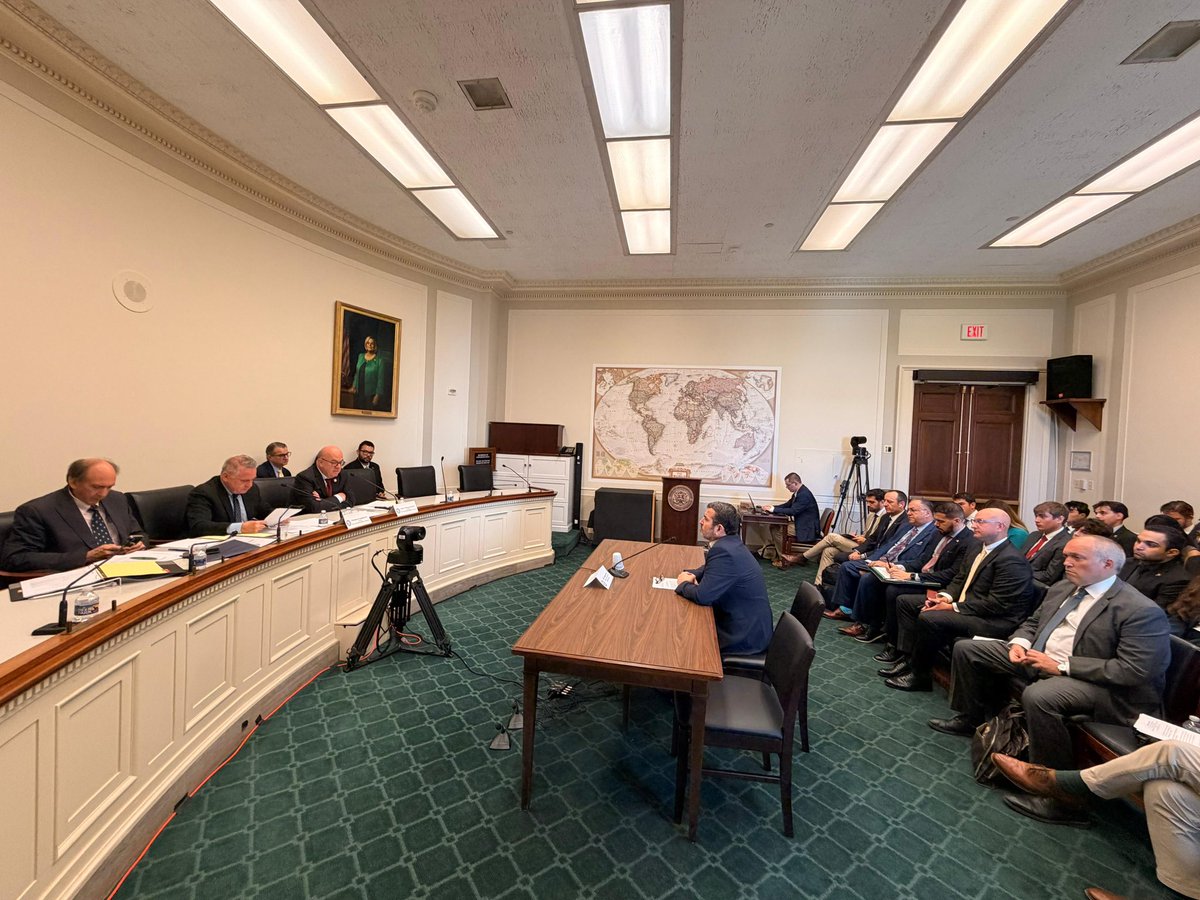


A timely and very important Hearing was convened earlier today in Congress, by the @TLHumanRights
and its Co-Chairs, Representatives Chris Smith (R-NJ) and @RepMcGovern (D-MA), “Human Rights in Turkish-Occupied Cyprus.
@niki_georgatou @ecsavva
#Cyprus #occupiedcyprus
A timely and very important Hearing was convened earlier today in Congress, by the Tom Lantos Human Rights Commission and its Co-Chairs, Representatives Chris Smith (R-NJ) and Jim McGovern (D-MA), “Human Rights in Turkish-Occupied Cyprus: Erdogan's Record and Its Implications for the Ankara NATO Summit”. The Hearing began with briefing remarks by Ambassador Evangelos Savva, who highlighted the numerous human rights violations in Cyprus stemming from the Turkish invasion of 1974 and ongoing occupation since, of more than 36% of its territory while also tracing Turkey’s 52-year dismal record of flouting international law and United Nations Security Council Resolutions pertaining to the Cyprus Question. Witnesses Michael Rubin (Director of Policy Analysis, Middle East Forum), Sinan Ciddi (Turkey Program Director, Foundation for Defense of Democracies) Savas Tsivicos (PSEKA) shared in-depth insights on Turkey’s intransigent policy on Cyprus and its broader foreign policy impact in the Eastern Mediterranean. The Hearing also included remarks and questions posed to the three witnesses by Representatives Gus Bilirakis, Brad Schneider and Dina Titus, who underlined the bipartisan support in Congress towards Cyprus in its quest for a just and viable settlement in line with Security Council Resolutions while also focusing on the increased value of Cyprus as a credible and reliable partner of the US.
@TLHumanRights
@RepMcGovern
@RepGusBilirakis
@RepSchneider
@repdinatitus
@mrubin1971
@SinanCiddi
@STsivicos
@ecsavva

Αυτόν έκαναν Ελληνα και μάλιστα τιμητικά η κυβέρνηση @kmitsotakis «Αποστέλλεται από τον Yaşam Ayavefe ως δωρεά για τον λαό της ΤΔΒΚ (κατεχόμενη Κύπρος).»
#ΑδωνιςΓεωργιαδης #Γεωργιαδης #Κυπρος
#Κατεχομενα #ΤΔΒΚ #Cyprus #OccupiedCyprus


Το χιονισμένο Τρόοδος στο προσκήνιο. Ο κόλπος της Μόρφου στο βάθος. Μια εικόνα που κουβαλά ταυτόχρονα ομορφιά και λύπη. Η όμορφη πατρίδα μου.
🎥 @yojiklove_art
#Repost από Facebook MyCyprus
#Cyprus #OccupiedCyprus #NeverForget

As Cyprus takes on the rotating EU Council presidency, the bloc still turns a blind eye to the illegal military occupation by Turkey, a candidate country for EU membership.
By Uzay Bulut @bulutuzay_
https://t.co/Ak94g3XxCA
#OccupiedCyprus #Cyprus #Greek

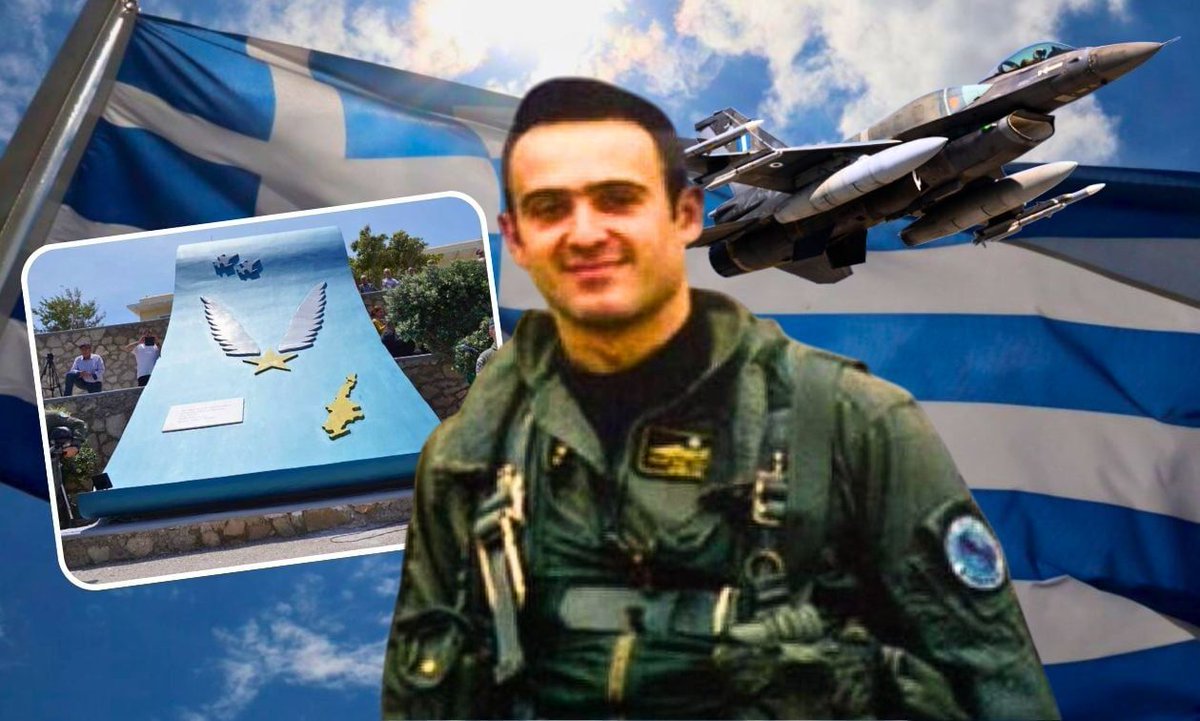
Βαραίνει η Ψυχή του Ήρωα Ηλιάκη!!
@HAFspokesperson
Όνειδος η "υποχώρηση "και το "μετέωρο βήμα " των ανακοινώσεων στην Πολεμική Αεροπορία ! 🇬🇷
"Θα μας κρίνουν οι Αγέννητοι και οι Νεκροί!"
@GreeceMFA @Hellenic_MOD
#Hellenism @Greece #Cyprus
#OccupiedCyprus
#Turkey_Terror_State

Cold, yet elegant;
Commanding, yet elusive;
Amedeo Modigliani,1908
"The Jewess".
Her Impenetrable gaze,dedicated both to the innocent Girls slaughtered by #Hamas, and to the European Girls raped and murdered by #Islamist invaders.
#islamization
#Jihadism #Israel #OccupiedCyprus


Khans presence in #occupiedCyprus is unacceptable, Spokesman says
@CYpresidency @SpokespersonCY @letymbiotis @UKinCyprus @CyprusInUK
https://t.co/ofMnvi4VH8

#Hostages #Turkey #TRNC #Political #Collision #HamasModel #Cyprus #OccupiedCyprus #IllegalPrisoners #Greece #USA #Israel @realDonaldTrump @ChrisVanHollen @NikosDendias @US_EUCOM @UN @EU_Commission
Turkey Holds Hostages two Elders Accusing them for espionage. Official under the rule of law are hostages. TRNC is not state but invaders like Hamas to Israel.
Legal Status of Northern Cyprus History
The Turkish-occupied northern third of Cyprus is not recognized as a sovereign state under international law. Only Turkey recognizes the self-declared “Turkish Republic of Northern Cyprus (TRNC)”. United Nations Security Council Resolutions 541 (1983) and 550 (1984) explicitly declared the TRNC’s 1983 secession illegal and void, and called on all states not to recognize any state other than the Republic of Cyprus.
As the U.S. and UN have long noted, the Republic of Cyprus is the only legitimate government of the whole island. In practice, northern Cyprus is considered “occupied” territory under Turkish control.
Indeed, the European Court of Human Rights (ECHR) has held that Turkey exercises “effective control” over northern Cyprus and bears international responsibility for human rights there.
Thus, any “laws” or acts by the TRNC have no standing under international law and are effectively actions by an occupying power rather than by a legitimate state.
International Law on Detaining Civilians in Occupied Territory
Occupation law and human rights law apply.
Geneva Conventions and human rights treaties protect civilians in occupied areas. Under the Fourth Geneva Convention (GCIV, 1949), persons like these five Greek Cypriots – nationals of Cyprus (a state party to GCIV) found in territory controlled by an occupying power – are “protected persons.” GCIV explicitly prohibits taking hostages (Article 34: “The taking of hostages is prohibited.”) and treats “unlawful confinement of a protected person” as a grave breach (Article 147). In other words, if civilians are detained without lawful cause or purely for coercive reasons, that is a grave violation.
Similarly, human rights law forbids arbitrary detention. For example, the International Covenant on Civil and Political Rights (ICCPR) and the European Convention on Human Rights (ECHR) (to which Cyprus is a party) guarantee that “no one shall be subjected to arbitrary arrest or detention.” In the context of northern Cyprus, the ECHR has treated Turkey as responsible for protecting all Convention rights there.
Thus, detaining Greek Cypriot civilians on flimsy charges, especially as a punitive or retaliatory measure, would violate these protections. In the absence of a recognized legal basis (the TRNC’s own laws are not internationally valid), any arrest by TRNC “authorities” would likely be deemed unlawful.
Relevant precedents:
European Court of Human Rights jurisprudence holds Turkey responsible for abuses in occupied Cyprus. Turkey has repeatedly been condemned for violating Greek Cypriots’ rights (e.g. property rights cases like Loizidou v. Turkey).
In the only interstate case Cyprus v. Turkey (2001), the Court reaffirmed that Turkey “has effective control over northern Cyprus” and must secure human rights there.
The Court also noted that the international community recognizes only the Republic of Cyprus as the legitimate government of the whole island.
Under international humanitarian law (IHL), these Greek Cypriot detainees would be “protected persons” in an occupied territory.
GCIV requires humane treatment, prompt judicial process, and forbids punishment by military authorities of protected civilians outside of established due process. The reported transfer of two detainees to a “military court” and their prolonged cell confinement without review likely contravenes GCIV and human rights norms.
Facts and Charges in the Detention Case
By mid-July 2025, five Greek Cypriots (all seniors, reportedly over 60) who had crossed into the occupied Karpas area were arrested by Turkish Cypriot police.
Turkish Cypriot and Turkish state media reported the five were “caught conducting land surveys” and carrying documents on “Turkish-owned” properties, allegedly part of a Greek Cypriot government effort to legalize disputed northern properties.
The detainees are said to have entered through the Strovilia crossing and gone to the site of their former land in Galatia (near Trikomo/Yeni İskele).
Officially, the “charges” include illegal border crossing, trespassing on a military zone, privacy violations, and espionage (specifically, carrying building documents and data about Turkish Cypriots).
Two of the five (aged 68 and 60) were ordered remanded in custody for up to three months in a so-called Trikomo “court”; the other three (ages 66, 60, and 63) had their detention briefly extended and were due to appear before a military court in northern Nicosia.
Both sides paint these events as tit-for-tat.
Turkey and Turkish Cypriot officials portray the arrests as legitimate law enforcement against “spies” involved in the south’s prosecutions of north-based developers.
For example, the state-run Anadolu Agency said the men “were allegedly collecting documents…as part of the Greek Cypriot [government]’s ongoing efforts” to go after illicit property deals in the north.
By contrast, the Republic of Cyprus rejects this narrative entirely. Government spokesmen call the detentions “premeditated and provocative” and illegal from the outset.
The Cypriot government notes that the five are civilians visiting their own properties and that any “so-called arrests” in an occupied zone are nullities under international law.
Relevant Legal Norms on Detention of Civilians
Under the Fourth Geneva Convention (GCIV), any detention of protected civilians must be lawful, necessary for security, and subject to due process.
Article 49 forbids forced movements; Article 27 requires humane treatment. GCIV Art. 34 flatly states “The taking of hostages is prohibited”; Article 147 defines as a grave breach the “unlawful confinement of a protected person” and explicitly lists “taking of hostages”.
Common Article 3 (applicable to non-international armed conflicts) likewise bans violence to life and person, hostage-taking, and humiliating treatment. In sum, IHL would consider detaining civilians to coerce a community or foreign government (hostage-taking) as a serious violation.
Additionally, human rights law (ICCPR, ECHR) protects liberty and fair trial rights.
The ECHR, binding on Turkey (and by extension on the occupied zone via its control), guarantees that deprivation of liberty must be “in accordance with procedure prescribed by law” and not arbitrary. Given that the TRNC’s own laws lack international recognition, the arrests arguably lack legal basis under the governing framework.
The detainees have reportedly complained of being held in cramped, non-air-conditioned cells for many days, raising concerns about humane conditions and due process.
International instruments (e.g. the UN Human Rights Committee) define arbitrary detention to include detention without legal grounds or for discriminatory or political reasons.
If these Greek Cypriots are held as leverage or punishment in an intercommunal dispute, that would meet the threshold of arbitrariness.
Official Reactions and Diplomatic Responses
Republic of Cyprus Nicosia has protested strongly. The government spokesman characterized the arrests as “piratical” and “violations of every principle of international law and fundamental human rights”.
Cyprus lodged formal complaints with the UN (including UNFICYP), the EU, and Security Council members.
Cyprus reports that UN peacekeepers were informed and that it will pursue all diplomatic and legal avenues.
Parliamentary debate and public media in the south frame the five as victims of retaliation. For instance, the same week a Greek-Cypriot developer (Shimon Aykut) was detained in the Republic for selling Turkish Cypriot property – his family and Cypriot officials called him a “political hostage”.
Many Greek Cypriots see the north’s action as reciprocal “tit-for-tat” (a view echoed in Cyprus Mail and Kathimerini commentary).
Turkish Cypriot side and Turkey: The breakaway authorities and Ankara have defended the arrests as legitimate police work.
Turkish media reports (citing “security sources”) emphasize that the men were on a land-survey mission and found with property documents.
Northern Cyprus leader Ersin Tatar has not publicly threatened hostages in the north, but suggested cooperation with Ankara’s stance.
Official Turkish statements specifically on these detentions appear limited; instead, Turkey typically reiterates support for its ethnic kin’s actions in the north.
Turkish Cypriot media have framed the detained Greek Cypriots as spies or trespassers and criticized the Republic for arresting Turkish Cypriots (like Aykut) in the south.
The EU has not issued a public statement on these specific detentions (media searches found no EU press release). However, Cyprus is an EU member, and such incidents generally draw EU concern. EU policy is that the northern areas are outside EU law but human rights are to be respected.
Cyprus’s EU representatives have likely raised the issue in Brussels behind closed doors. (For example, Cyprus has previously invoked EU infringement procedures when Turkey blocked property claims by displaced Cypriots.)
The UN Secretary-General’s good offices and UNFICYP have been notified by Cyprus.
UN statements on Cyprus routinely condemn unilateral actions altering the status quo, but the UN has not, to my knowledge, issued a specific public condemnation of these recent arrests.
The Security Council’s repeated resolutions reaffirm that the Republic of Cyprus’s laws and sovereignty cover the whole island; one could argue the detentions violate those resolutions, but the Council has been largely silent on this particular incident.
Human Rights Organizations: There is no record of Amnesty International or Human Rights Watch issuing a statement yet.
However, ICRC customary law commentary emphasizes that “the taking of hostages is prohibited” (ICRC Rule 96).
International lawyers might view the five detainees as civilians arbitrarily held by an occupying authority.
In similar contexts (e.g. hostage-taking in armed conflict), NGOs condemn such actions as war crimes under GCIV Art.147.
Political Prisoners or Hostages?
The classification of the five detainees hinges on motive and legal basis.
If the espionage charges were trumped-up or merely pretextual, their detention could be deemed politically motivated. Reports note the arrests came days after a prominent Greek Cypriot (Shimon Aykut, age 75) was detained in the south on property charges.
Both sides accused each other of “tit-for-tat” hostage-taking.
Indeed, Turkish Cypriot media explicitly described the five’s detention as “political retaliation” for Aykut’s case.
Conversely, Aykut’s supporters in the south held rallies calling him a “political hostage”.
Under international law, hostage-taking is defined as seizing individuals to compel others (e.g. a state or group) to act.
If these five Greek Cypriots are being held as leverage – to pressure the Republic of Cyprus or influence property litigation – that falls under the definition of hostages prohibited by GCIV.
Even absent an explicit quid-pro-quo demand, simply detaining prominent members of one community in retaliation for acts by the other has a clearly political character.
The Geneva Convention forbids “unlawful confinement of a protected person”; here the confinement appears unlinked to any genuine security concern.
On the other hand, each side portrays the other’s detainees as criminals.
The north claims it found incriminating evidence (documents on 14 properties, thousands of emails), though defense lawyers call these claims unsubstantiated. Without a recognized legal system, however, the fairness of any trial is dubious. The use of a “military court” for civilians is itself suspect.
In sum, many observers would characterize the five as political detainees or hostages rather than ordinary criminals.
The Republic of Cyprus government certainly views them as victims of “piratical” and illegal kidnapping.
Internationally, given the lack of a lawful detaining authority, their prolonged incommunicado custody arguably amounts to unlawful detention.
In practice, the distinction matters less than remedy the individuals’ rights to due process and welfare (especially as seniors held in poor conditions) must be respected. If any demands or exchanges are being contemplated, that would confirm the hostage-taking characterization.
Under established international law, the five Greek Cypriots – civilians in an occupied part of Cyprus – are entitled to protection from arbitrary arrest and must be promptly charged according to recognized legal procedures.
The detention by the unrecognized TRNC authorities has been widely condemned by Nicosia and likely violates both humanitarian and human rights law.
The full legal reckoning will depend on whether their custody can be justified by legitimate security needs or is purely retaliatory.
So far, the evidence of poor treatment and political context strongly suggests these individuals have been treated as hostages/political prisoners rather than ordinary suspects.
Sources: International treaties (Geneva Conventions) and case law; UN Security Council resolutions; Cyprus government press statements; news reports from Kathimerini, Cyprus Mail, GreekReporter, TRT Global; and Geneva Convention commentary.

Η προδοσία έφερε την κατοχή.
Δεν ξεχνάμε – και δεν συγχωρούμε.
#ΔενΞεχνώ #Cyprus1974 #Κύπρος #TurkishInvasion #Προδοσία1974 #OccupiedCyprus #Κατοχή #15Ιουλίου #20Ιουλίου #ΑΚΕΛ #ΗΜνήμηΔενΣβήνει #CoupAndInvasion #JusticeForCyprus #ΣΥΡΙΖΑΠΣ #SYRIZAPS #Γραφείο_Τύπου_ΚΟ_ΣΥΡΙΖΑ #deneimasteoloiidioi #Δούρου #γίνεται_αλλιώς


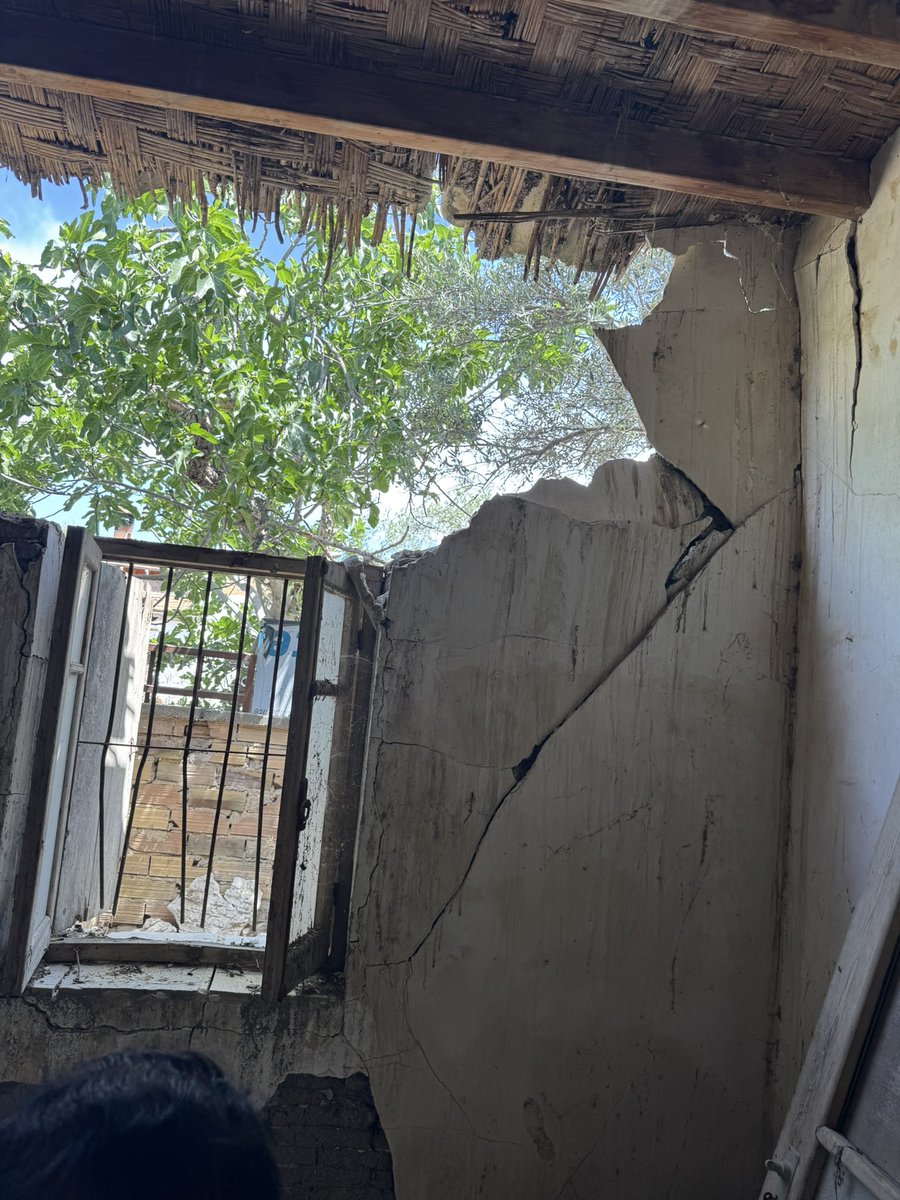
Νέο Χωριό Κυθρέας - Κατεχόμενη #Κύπρος
Η κ. Ελένη επιστρέφει (ξανά) στο σπίτι της.
Ανάμεσα στα συντρίμμια, οι κόποι και αναμνήσεις των νεανικών χρόνων.
50 χρόνια μετά, ο πόνος της προσφυγιάς… ίδιος! Η επιθυμία της επιστροφής… ίδια!
#Refugees #OccupiedCyprus



Όσες φορές κι αν πατήσει ο Ερντογάν και άλλοι "επισκέπτες" την κατεχόμενη γη μας, άλλες τόσες και περισσότερες θα παλεύουμε για την ελευθερία και την επανένωση της Κύπρου μας. Οι παράνομοι δεν νομιμοποιούν την κατοχή! #Cyprus #Κατοχή #Επανένωση #OccupiedCyprus #TurkeyOut
Rescue works at 16th century #church in #Turkish #occupiedCyprus completed
@sotosktoris
#heritage
https://t.co/PlPK5IKubH

@trailrockk39332 @AFRICANDEMOC You know how the Turks love invading shit and screwing it up... #OccupiedCyprus.

Re Panayiotis, ti entouta malakies?
As a Cypriot, you should be ashamed! Resili!
Would you open @Pret in the illegally occupied north of Cyprus? Just so we know.
#BoycottPret #PanoChristou #IsraelIsAnApartheidState #OccupiedCyprus #Cyprus

Add it to the boycott list

Israel states #OccupiedCyprus is a base for terrorism. Yet Scotlands FM feels private meetings #Erdoğan are appropriate. #HumzaUseless is a security threat to the world. 🖕 #disolvethedevolved #snpterroristsupporter
https://t.co/ofYknxm0bw


The active occupation of a EU country is weirdly underdiscussed


Most Popular Users

Elon Musk 
@elonmusk
241.2M followers

Barack Obama
@barackobama
119.1M followers

Cristiano Ronaldo
@cristiano
112.8M followers

Donald J. Trump
@realdonaldtrump
111.8M followers

Narendra Modi
@narendramodi
107.1M followers

Rihanna
@rihanna
98.3M followers

NASA
@nasa
92.3M followers

Justin Bieber
@justinbieber
91.5M followers

KATY PERRY
@katyperry
89M followers

Taylor Swift
@taylorswift13
82.9M followers

Lady Gaga
@ladygaga
74.4M followers

Virat Kohli
@imvkohli
71.9M followers

Kim Kardashian
@kimkardashian
70.4M followers

YouTube
@youtube
68.8M followers

Neymar Jr
@neymarjr
64.8M followers

Bill Gates
@billgates
64.6M followers

The Ellen Show
@theellenshow
62.4M followers

Selena Gomez
@selenagomez
62.1M followers

CNN
@cnn
61.8M followers

X
@x
60.8M followers