

Top Tweets for #pseudepigrapha

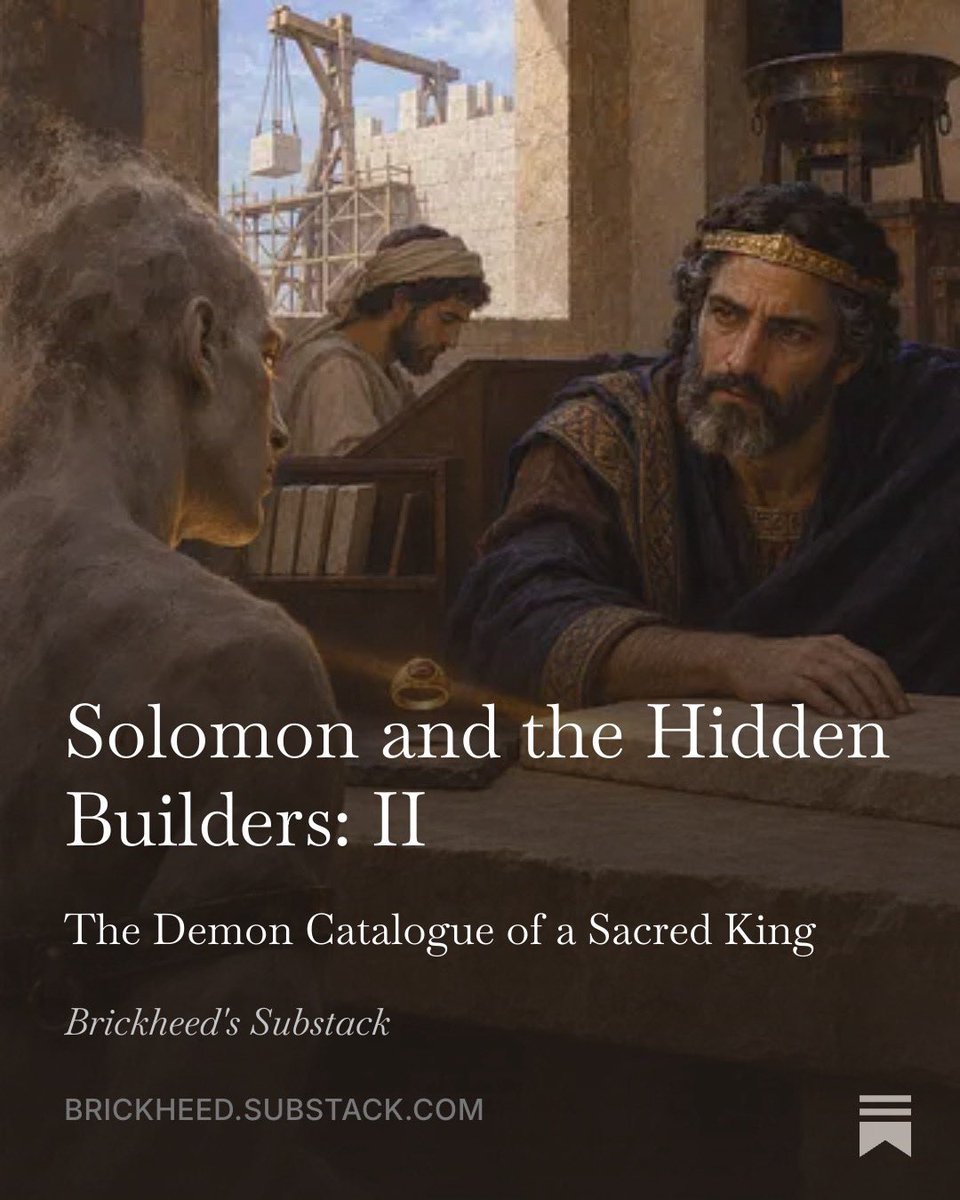
In the Testament of Solomon, Ornias must tell the king his name. But who can call Solomon to account? Read The Demon Catalogue of a Sacred King.
https://t.co/oHl4EoKx1V
#KingSolomon #TestamentOfSolomon #Demonology #Pseudepigrapha #EsotericStudies

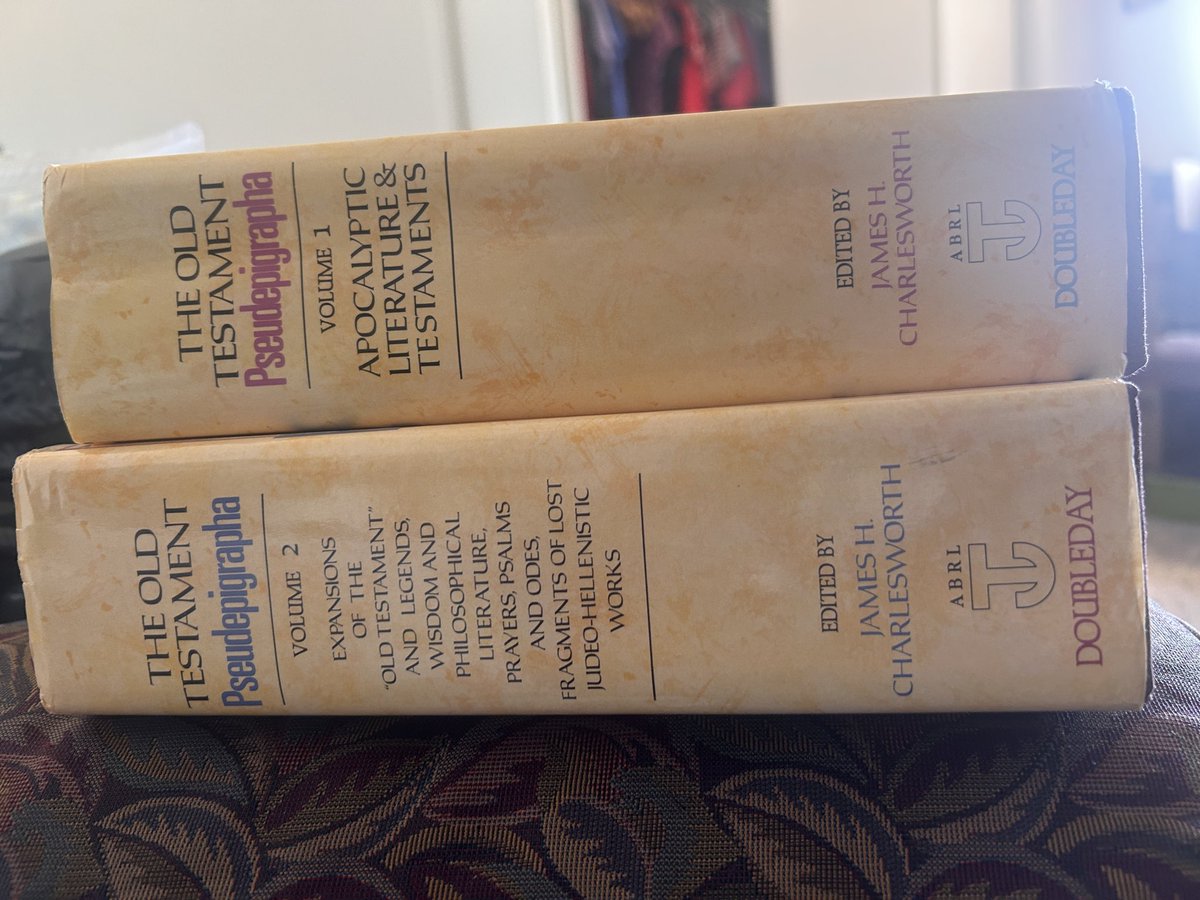
Does anyone else read #pseudepigrapha? AKA apocrypha and Second Temple literature?
It’s not inspired Scripture but it provides interesting context and historical insights.
#ilovebooks

#BibleStudy #180
#Phenomenology #50
#DimensionalTheology #45
#Pseudepigrapha (SIC) Real-Depigrapha*
- 100s of Apocrypha/Ancient Source texts used -
⚠️ Isaiah 24 & 25 Extra Specialist StudyApocalyptic Earth-Dissolution, Host-of-Heaven Judgment, Enochic Prison Traditions, Pneumatological Realms, Sacred Geography, and the Collapse of the Old World-Order ⚠️(see Next Post Reply Below for Isaiah 25) ⚠️
-
-
Source base incorporated: Charlesworth Vol. 1, with its apocalyptic and testamentary corpus including 1-3 Enoch, Sibylline Oracles, Ezra, Baruch, Abraham, Adam, Elijah, Daniel, and the Testaments; Charlesworth Vol. 2, with expansions, legends, wisdom, odes, fragments, and Judeo-Hellenistic materials; Bissell’s Apocrypha of the Old Testament; your New Alexandria Library of Texas Archive collection; Swedenborg’s Theory of Pneumatology; Drummond’s Many Mansions; and Randall’s Handwriting of God in Egypt, Sinai, and the Holy Land.
-
1. Isaiah 24 as the “Little Apocalypse” of the Old Testament
Isaiah 24 is where local oracle becomes cosmic assize. Earth, city, gate, wine, music, kings, heavenly host, moon, sun, Zion, and divine elders all enter one judicial panorama. It belongs beside Daniel, Enoch, Baruch, Ezra, Revelation, and Jude because it reveals not only ruined nations, but the shaking of the full world-order.
2. 1 Enoch
1 Enoch is essential for Isaiah 24:21-22. Isaiah says the host on high will be punished and shut in prison; Enoch supplies the expanded angelographic scenery: Watchers, bound stars, fiery abysses, dark prisons, heavenly transgressors, and appointed visitation. Isaiah gives the canonical decree; Enoch gives the prison-cosmography surrounding that decree.
3. 2 Enoch
2 Enoch’s layered heavens, storehouses, angelic orders, and cosmic measurements deepen Isaiah 24’s vertical architecture. Isaiah’s “windows from on high” and “host of the high ones” assume a structured universe, not a flat sky. 2 Enoch helps show how ancient apocalyptic imagination saw heaven as ordered regions under divine administration.
4. 3 Enoch
3 Enoch’s throne-palaces, angelic princes, celestial liturgy, and transformed heavenly hierarchy illuminate Isaiah 24’s final scene before God’s “ancients.” The chapter’s ending is not mere poetry. It suggests throne-court visibility: moon and sun ashamed, Zion enthroned, heavenly witnesses present, and cosmic ranks subordinated before divine majesty.
5. Sibylline Oracles
The Sibylline Oracles resonate with Isaiah 24 through world-fire, empire-collapse, cosmic terror, divine judgment, and Gentile recognition of God. Their oracular style helps frame Isaiah 24 as a universal prophetic warning: kingdoms are temporary, cosmic order answers moral order, and divine kingship outlasts imperial arrogance.
6. Treatise of Shem
The Treatise of Shem works by astral periods and cosmic signs. Isaiah 24 overturns every astral fatalism: sun and moon themselves are confounded before YHWH. The lights may mark seasons, but they do not rule final history. Isaiah makes celestial observation serve divine sovereignty, not replace it.
7. Apocryphon of Ezekiel
The Apocryphon of Ezekiel belongs to resurrection, judgment, and moral reckoning traditions. Isaiah 24 prepares the catastrophe before Isaiah 25 swallows death. The earth reels, the city collapses, and the heavenly host is judged; afterward, resurrection hope becomes intelligible as God’s answer to total world-fracture.
8. Apocalypse of Zephaniah
The Apocalypse of Zephaniah’s judgment journeys, angelic guides, and punishments fit Isaiah 24’s fear-pit-snare sequence. Isaiah gives the compressed prophetic formula; Zephaniah expands the moral geography. Both texts treat judgment as spatially real: pits, prisons, snares, regions, gates, and cosmic passages become part of sacred cartography.
9. 4 Ezra
4 Ezra asks why history is broken and why righteous suffering continues. Isaiah 24 gives the wider answer: corruption is not only civic or political, but cosmic. Earth is defiled, covenant broken, joy darkened, powers judged. Ezra’s grief becomes Isaiah’s apocalypse of the whole created order.
10. Greek Apocalypse of Ezra
Greek Ezra traditions intensify visionary afterlife, punishment, and moral disclosure. Isaiah 24’s “fear, pit, and snare” is the older Hebrew seed of that visionary punishment logic. The sinner cannot escape because reality itself becomes morally responsive: above opens, below shakes, and every direction becomes judgment.
11. Vision of Ezra
Vision of Ezra parallels Isaiah 24’s seer-burden. Isaiah hears songs from the earth’s wings, yet cries “my leanness.” The visionary is torn between glory and treachery. Ezraic vision shares that tension: heavenly disclosure enlarges grief before it resolves it.
12. Questions of Ezra
Questions of Ezra belongs to sacred interrogation. Isaiah 24 supplies the apocalyptic answer to human questioning: the world’s disorder is not hidden from God. Laws broken, ordinances changed, covenant violated, earth defiled, celestial host judged. The questions are answered through universal disclosure.
13. Revelation of Ezra
Revelation of Ezra preserves late apocalyptic anxiety over judgment and mercy. Isaiah 24 is the older framework: the world is not repaired by reform only, but by divine visitation that reaches kings, earth, heavenly powers, and cosmic lights.
14. Apocalypse of Sedrach
Sedrach’s concern with mercy, punishment, and final destiny connects to Isaiah 24’s awful totality. Isaiah does not leave judgment as earthly disaster; he shows spiritual incarceration and delayed visitation. Sedrach’s moral universe fits well beside Isaiah’s prison-world and divine accountability.
15. 2 Baruch
2 Baruch is a major Isaiah 24 companion. Baruch sees Jerusalem’s devastation inside a larger measured history. Isaiah 24 universalizes that catastrophe: not only Zion’s ruin, but earth’s staggering, city-confusion, heavenly punishment, and final reign. Baruch’s consolation begins where Isaiah’s judgment opens.
16. 3 Baruch
3 Baruch’s strange heavens, angelic intermediaries, and cosmological zones help illuminate Isaiah 24’s layered world. “Windows from on high,” “host on high,” “pit,” and “prison” imply vertical regions. 3 Baruch supplies apocalyptic topography: creation is morally arranged, inhabited, and governed.
17. Apocalypse of Abraham
Apocalypse of Abraham exposes idolatry and ascends toward throne-vision. Isaiah 24 makes the same anti-idolatrous claim cosmically: sun, moon, host, kings, and cities cannot stand as final powers. All created or delegated authorities answer to the LORD of hosts.
18. Apocalypse of Adam
Adamic apocalypse preserves ancient transmission, cosmic history, and mortality’s spread. Isaiah 24 is Adamic curse expanded: earth defiled beneath inhabitants, curse devouring, few men left. The chapter reads like post-Edenic history reaching its catastrophic fullness before restoration.
19. Apocalypse of Elijah
Apocalypse of Elijah’s final deception, end conflict, and divine deliverance align with Isaiah 24’s treacherous dealers and world-collapse. Isaiah’s repeated “treacherously” names the moral atmosphere before apocalypse: betrayal becomes universal texture, and judgment answers the hidden corruption beneath public order.
20. Apocalypse of Daniel
Later Daniel apocalypse extends kingdom sequences and final rulers. Isaiah 24 gives the cosmic backdrop for all Danielic chronology: kingdoms fall because heaven itself is judging administrations above and below. Daniel maps regimes; Isaiah shakes the stage on which regimes stand.
21. Testaments of the Twelve Patriarchs
The Testaments’ spirits of truth and error, moral warfare, and tribal destiny pair with Isaiah 24’s universal moral ecology. Earth is defiled because inhabitants transgress. The Testaments explain interior corruption; Isaiah shows its cosmic consequence: curse devours, joy ceases, and powers are judged.
22. Testament of Job
Testament of Job converts suffering into cosmic fidelity. Isaiah 24’s remnant songs from the sea and earth’s wings belong to the same logic: faithful praise survives catastrophe. Even as the world dissolves, worship is not extinguished; it becomes sharper, rarer, and more luminous.
23. Testament of Abraham
Testament of Abraham’s death, judgment, scales, and angelic mediation deepen Isaiah 24’s tribunal atmosphere. Isaiah shows the world itself under judgment; Abrahamic testamentary vision individualizes the same principle. Both insist that hidden moral weight eventually becomes visible before divine judgment.
24. Testament of Isaac
Testament of Isaac’s deathbed exhortation, blessing, and eschatological hope align with Isaiah 24’s remnant theology. When the land is emptied and few remain, patriarchal fidelity becomes survival-memory. The righteous inherit not by mass power, but covenant endurance.
25. Testament of Jacob
Jacob traditions carry tribal blessing, angelic encounter, and future destiny. Isaiah 24 turns tribal horizon into earth-horizon: the covenant people are preserved within global shaking. The remnant sings where the world mourns, fulfilling Jacob’s expectation through apocalyptic pressure.
26. Testament of Moses
Testament of Moses belongs with Isaiah 24 because both see covenant violation, oppressive powers, and final divine intervention. Isaiah’s broken everlasting covenant and defiled earth are the cosmic extension of Mosaic warning. Deuteronomic curse becomes apocalyptic world-condition.
27. Testament of Solomon
Testament of Solomon’s demonological architecture fits Isaiah 24 through invisible power systems. Isaiah’s “host of high ones” is not ordinary politics; it opens celestial government and rebellious powers. Solomonic spirit-lore becomes useful for naming the unseen administrations behind earthly disorder.
28. Testament of Adam
Testament of Adam’s cosmic hours, angelic praise, and liturgical creation illuminate Isaiah 24’s silenced music. When mirth, tabrets, harp, and wine-song cease, the world’s broken liturgy is exposed. Restoration will require the reordering of cosmic praise.
29. Letter of Aristeas
Letter of Aristeas matters for Isaiah 24 through law, translation, and sacred transmission. Isaiah accuses the earth of transgressing laws and changing ordinance. Aristeas represents the opposite movement: careful carrying of sacred law into another linguistic world, preserving divine order amid nations.
30. Jubilees
Jubilees is crucial. Isaiah 24 says the everlasting covenant is broken; Jubilees lives inside covenant chronology, heavenly tablets, angelic mediation, and sacred calendar. Isaiah shows what happens when cosmic covenant is violated. Jubilees shows the ordered time-world that violation corrupts.
31. Martyrdom and Ascension of Isaiah
Ascension of Isaiah’s descent through heavens, hostile powers, and concealed Beloved strengthens Isaiah 24’s vertical cosmology. The high realm contains orders, watchers, and oppositions. Isaiah 24 judges those heights; the Ascension shows the Messiah passing through and conquering layered heavens.
32. Joseph and Aseneth
Joseph and Aseneth contrasts beautifully with Isaiah 24. Aseneth receives heavenly nourishment and transformation; Isaiah 24 shows the cursed world where wine mourns and joy darkens. One text shows conversion-feast; the other shows anti-feast. Together they reveal restoration versus defiled civilization.
33. Life of Adam and Eve
Life of Adam and Eve is one of the strongest Isaiah 24 companions. Earth’s curse, death, tears, exile, and Adamic grief underlie Isaiah’s world-collapse. Isaiah 24 is the macrocosmic Adam story: earth suffers beneath inhabitants until divine judgment prepares final restoration.
34. Pseudo-Philo
Pseudo-Philo retells biblical history as sacred memory. Isaiah 24 also functions as hieromnemonics: it preserves why judgment comes. The world is not randomly ruined; it has transgressed law, altered ordinance, broken covenant. Memory protects interpretation from chaos.
35. Lives of the Prophets
Lives of the Prophets adds agioiographic depth: holy witnesses suffer because they carry divine testimony. Isaiah 24’s “my leanness” belongs here. The prophet is not detached; revelation presses into his body. Apocalyptic knowledge has a cost.
36. Ladder of Jacob
The Ladder of Jacob makes earth-heaven connection architectural. Isaiah 24’s windows from on high, host on high, and pit below reveal the same vertical cosmos under judgment. The ladder becomes inverted: instead of ascent, judgment descends and powers are confined.
37. 4 Baruch
4 Baruch’s catastrophe-preservation pattern belongs with Isaiah 24’s remnant songs. Even when city, gate, and land collapse, God preserves a witness. The remnant in Isaiah is like a gleaning after harvest: small, precious, and prophetically charged.
38. Jannes and Jambres
Jannes and Jambres represent occult resistance to divine signs. Isaiah 24 exposes the end of such resistance: no charm, court, or counter-power survives when heaven opens and earth shakes. The chapter defeats every Pharaoh-like magical confidence through universal judgment.
39. History of the Rechabites
The Rechabites embody disciplined survival outside corrupt urban luxury. Isaiah 24’s city of confusion, wine-cry, and dead mirth make Rechabite restraint look prophetic. A people trained against excess can endure when civilization’s pleasures become bitter.
40. Eldad and Modad
Eldad and Modad symbolize prophecy outside expected boundaries. Isaiah 24’s songs from the uttermost wings of the earth extend that principle: witness emerges from unexpected places. God’s Spirit is not trapped by institution when the whole earth becomes prophetic theater.
41. History of Joseph
Joseph’s famine-world and storehouse wisdom illuminate Isaiah 24’s failed wine and languishing vine. Joseph preserves life through providential foresight; Isaiah portrays the earth when covenantal order fails and no human storehouse can avert cosmic judgment.
42. Prayer of Jacob
Prayer of Jacob belongs with Isaiah 24’s need for divine preservation amid cosmic hostility. Jacobic prayer invokes protection, names, and covenant blessing. Isaiah’s remnant survives not by earthly station, but by being held under divine name and covenant memory.
43. Odes of Solomon
The Odes shine beside Isaiah 24 because they preserve joy, living water, and victory-language amid conflict. Isaiah 24 shows music ceasing in the corrupt world, yet songs rising from the earth’s wings. The Odes sound like remnant music after judgment.
44. Philo the Epic Poet
Philo the Epic Poet shows sacred history entering epic form. Isaiah 24 has true epic scale: earth overturned, populations scattered, powers imprisoned, sun and moon confounded. No pagan epic exceeds this: the battlefield is creation itself.
45. Theodotus
Theodotus’ sacred geography and biblical memory connect to Isaiah 24’s chorology: land, city, gate, sea, earth’s wings, mountain-Zion. Place is never neutral. Geography becomes moral evidence, covenantal witness, and apocalyptic stage.
46. Orphica
Jewish Orphic fragments represent theological truth expressed through Greek religious-poetic language. Isaiah 24 corrects ancient mystery-thinking by placing cosmic dissolution under one sovereign LORD. The world’s hidden order is not an impersonal cycle; it is divine judgment and reign.
47. Ezekiel the Tragedian
Ezekiel the Tragedian dramatizes Exodus as sacred spectacle. Isaiah 24 is apocalyptic drama: fear, pit, snare, shaken foundations, celestial imprisonment, moon and sun ashamed. It is theatrical in the highest sense: the cosmos becomes the stage of God’s kingship.
48. Pseudo-Greek Poets
Pseudo-Greek poetic fragments matter as transmission evidence. Isaiah 24’s themes - cosmic order, divine law, judgment, moral collapse - could pass into multiple literary garments. Sacred truth survives through translation, poetic adaptation, and intellectual relay.
49. Aristobulus
Aristobulus, with Mosaic antiquity and philosophical apologetic, helps frame Isaiah 24 as sacred cosmological rationalism. The chapter is not irrational catastrophe. It is divine law applied to creation: broken ordinance yields broken world-order.
50. Demetrius the Chronographer
Demetrius gives sacred chronology. Isaiah 24 gives sacred crisis. Together they show that time is not empty duration. Divine history contains measured moments of transgression, visitation, collapse, remnant, and enthronement. Chronometrics becomes servant to prophecy.
51. Aristeas the Exegete
Aristeas the Exegete belongs to interpretive preservation. Isaiah 24 demands such exegesis because its symbols are layered: city, wine, gate, earth, host, prison, moon, sun, ancients. Surface reading misses the apocalyptic machinery.
52. Eupolemus
Eupolemus connects biblical history to wider civilization. Isaiah 24 widens that claim: YHWH is not a tribal deity within history but the judge of earth, kings, heavenly hosts, and cosmic lights. Universal providence replaces local myth.
53. Pseudo-Eupolemus
Pseudo-Eupolemus’ patriarchal-cultural bridges resonate with Isaiah 24’s universal scope. If nations descend through sacred deep history, then their judgment also belongs to sacred history. Isaiah judges humanity as a covenantal world-family, not isolated tribes.
54. Cleodemus Malchus
Cleodemus Malchus preserves genealogical links among peoples. Isaiah 24’s “inhabitants of the earth” gathers all ethnographic lines into one court. Genealogical memory becomes judgment memory: all nations share accountability under the Creator.
55. Artapanus
Artapanus magnifies Moses, Egypt, and sacred cultural memory. Isaiah 24 universalizes Exodus signs: instead of one Egypt shaken, the earth reels; instead of Pharaoh judged, all kings tremble; instead of waters divided, windows above open and foundations below shake.
56. Bissell’s Apocrypha - Wisdom of Solomon
Wisdom of Solomon is vital for Isaiah 24: tyrants, false reasoning, cosmic justice, and immortality of the righteous. Isaiah’s haughty people languish because pride corrupts perception. Wisdom supplies the moral psychology; Isaiah supplies the world-scale verdict.
57. Bissell’s Apocrypha - Sirach
Sirach’s moral order, praise of fathers, wisdom, and fear of God illuminate Isaiah 24’s broken ordinance. The chapter shows what happens when wisdom is rejected socially: music fails, wine bitters, gates fall, and the earth mourns under inhabitants
58. Bissell’s Apocrypha - Tobit
Tobit’s angelic healing and demon-binding connect to Isaiah 24’s unseen powers. Isaiah’s host-on-high judgment is cosmic demonological correction; Tobit gives household-scale angelic intervention. Both insist that visible trouble often has invisible administration.
59. Bissell’s Apocrypha - Judith
Judith presents the overthrow of terrifying military arrogance. Isaiah 24 magnifies that theme globally: terrible ones, haughty people, kings of earth, and heavenly hosts all face divine visitation. Judith is localized deliverance; Isaiah is universal overthrow.
60. Bissell’s Apocrypha - 1 Maccabees
1 Maccabees preserves holy resistance, temple recovery, and covenant survival under imperial pressure. Isaiah 24 gives the apocalypse behind such history: empires rise, defile, threaten, and collapse, but the LORD keeps a remnant who sing from the ruins.
61. Bissell’s Apocrypha - 2 Maccabees
2 Maccabees gives martyrdom, resurrection hope, and heavenly intervention. Isaiah 24 prepares that hope through catastrophe: when earth itself fails, resurrection and divine judgment become necessary. The martyrs’ confidence belongs to Isaiah’s world where God judges beyond visible death.
62. Bissell’s Apocrypha - Baruch
Baruch’s exile confession and wisdom theology correspond to Isaiah 24’s defiled earth and broken covenant. Both diagnose disaster spiritually. The answer is not merely strategy, but return to divine wisdom and covenantal order.
63. Bissell’s Apocrypha - Prayer of Manasseh
Prayer of Manasseh gives individual repentance after kingly corruption. Isaiah 24 universalizes the need: kings of earth and inhabitants all stand under judgment. Manasseh shows one soul humbled; Isaiah shows a whole world requiring divine visitation.
64. Bissell’s Apocrypha - Additions to Daniel
The Additions to Daniel provide fiery trial, angelic deliverance, and worship inside danger. Isaiah 24 similarly preserves praise amid catastrophe: the remnant lifts voice from the sea. True worship survives when civic mirth ceases.
65. Bissell’s Apocrypha - 2 Esdras / 4 Ezra
2 Esdras’ anxiety over the present age belongs directly with Isaiah 24’s apocalyptic consciousness. The earth is not merely troubled; it is morally exhausted. Ezra asks why; Isaiah answers by unveiling broken covenant, cosmic instability, and future reign.
66. Swedenborg - Theory of Pneumatology
Swedenborg’s Theory of Pneumatology is useful as a later rare-book lens on spirit-world realism: spirits, afterlife, moral state, heaven, hell, and spiritual realms. Isaiah 24 should be read with that seriousness of invisible order: heavenly powers are not metaphors only; they belong to structured spiritual governance. (Internet Archive)
67. Drummond - Many Mansions
Drummond’s Many Mansions reflects on afterlife, heaven, soul journey, divine judgment, and heavenly realms. Isaiah 24 supplies the apocalyptic counterpart: before final “mansions” of restoration, corrupted powers are judged, celestial prisons opened, and the old earth-order trembles beneath divine rule. (Internet Archive)
68. Randall - Handwriting of God in Egypt, Sinai, and the Holy Land
Randall’s travel-sacred geography through Egypt, Sinai, and the Holy Land matters for Isaiah 24’s chorology. The chapter is full of place-theology: land, city, gate, sea-isles, earth’s wings, Zion, Jerusalem. Sacred geography becomes the handwriting of judgment and reign. (Open Library)
69. New Alexandria Library of Texas Archive Collection
My 510 Rare book collection all matters because Isaiah 24 needs a republic of rare witnesses: apocalyptic texts, spiritual-world treatises, travel-sacred geography, theology, antiquarian memory, and prophetic literature. The collection’s value is not only preservation, but reconnection - bringing scattered witnesses back into one interpretive field.
70. Revelation 6
Revelation 6 is Isaiah 24’s closest New Testament thunderclap: earthquake, sun darkened, moon altered, stars falling, heaven rolled as a scroll, mountains and islands moved, kings hiding. Isaiah gives the older grammar: earth reels, windows open, foundations shake, sun and moon ashamed, kings and host punished.
Final Specialist Synthesis
Isaiah 24 is the apocalyptic anatomy of a collapsing world-order. Its pattern is: earth emptied, ranks leveled, covenant broken, curse devouring, joy silenced, city shattered, remnant gleaned, songs rising from the sea, treachery exposed, fear-pit-snare enclosing, heaven opened, foundations shaken, earth reeling, host of heaven punished, kings imprisoned, delayed visitation, sun and moon confounded, YHWH reigning in Zion before His ancients.
The Charlesworth corpus magnifies the unseen scaffolding: Enoch gives celestial prisons; Baruch and Ezra give grief under world-collapse; Jubilees gives covenant chronology; Testaments give moral-spiritual warfare; Adam literature gives curse-memory; Danielic apocalypse gives heavenly princes; Jude and Revelation complete the imprisonment and cosmic shaking pattern. My rare-book sources add pneumatological realism, heavenly-mansion cosmology, and sacred-geographical imagination. Isaiah 24 is therefore not simply “judgment language.” It is Angelomachia, Cosmocatastrophism, Celestial Jurisprudence, Covenant Catastrophe, Spiritual-World Governance, and the Final Reenthronement of Divine Order.
#ApocalypticBookStudy #98
#BibleStudy #178
#Phenomenology #48
#DimensionalTheology #43
📜 Isaiah 24:1-23 - 25:1-12 📜
⚠️Specialist Powerful Study on Angelomachia, Archontomachia, Celestial Administration, Apocalyptic Thrones, the Imprisonment of the Host of Heaven, the Swallowing of Death, & the Universal Reign of the LORD of Hosts &
" Cosmocatastasis " (Kosmos + Katastasis) "The restoration & reordering of the entire cosmos after judgment."
Isaiah 24 gives the cosmic collapse.
Isaiah 25 gives the cosmic restoration.
The two chapters together form one of Scripture's greatest visions of Cosmocatastasis - the overthrow of rebellious powers, the imprisonment of celestial rulers, the enthronement of God, the removal of the veil, the swallowing of death, and the restoration of creation beneath the reign of the LORD of Hosts
📜 Isaiah 24:1-8
Full Verse + Scholarly Commentary
The Doleful Judgements of God upon the Land
Verse 1
Behold, the LORD maketh the earth emptie, and maketh it waste, and †turneth it upside downe, and scattereth abroad the inhabitants thereof.
Side Note
† Heb. peruerteth the face thereof.
Commentary
This opening is cosmic de-creation. The LORD is not merely judging one city, one empire, or one throne. The whole earth / land is emptied, wasted, overturned, and scattered. The Hebrew side note, “perverteth the face thereof,” is extremely important: the “face” of the earth is altered, as though the visible order of creation is turned against its previous stability. This belongs to ancient catastrophism, cosmopoeia reversed, and providential architecture. Genesis 1 orders the world; Isaiah 24 shows the world convulsed under judgment. Compare Jeremiah 4:23, where the prophet beholds the earth “without form and void,” and Revelation 6, where cosmic signs announce the shaking of created order.
Verse 2
And it shall be as with the people, so with the ‖priest, as with the seruant, so with his master, as with the maid, so with her mistresse, as with the buyer, so with the seller, as with the lender, so with the borrower, as with the taker of vsurie, so with the giuer of vsurie to him.
Side Notes
‖ Or, Prince.
• Hose. 4.9.
Commentary
Every social distinction is brought under the same divine accounting. People and priest, servant and master, maid and mistress, buyer and seller, lender and borrower - all stand equally exposed. Hosea 4:9, “like people, like priest,” gives the prophetic parallel: when moral disorder becomes general, judgment becomes general. Isaiah is doing ethnarchics, the study of peoples and their governing principles, and nomography, the record of law and violation. Rank cannot shield the soul. Sacred office, economic power, domestic hierarchy, and social station all dissolve before the LORD’s tribunal.
Verse 3
The land shall be vtterly emptied, and vtterly spoiled: for the LORD hath spoken this word.
Commentary
The verse doubles the force: emptied and spoiled. The reason is not hidden in politics, ecology, or warfare alone. The ground cause is: “the LORD hath spoken this word.” Divine speech generates historical inevitability. This is chresmology, sacred predictive testimony. The prophetic word is not weak commentary; it is decree. As in Genesis, where God speaks and creation stands, here God speaks and the proud world-order is emptied. The “word” is the governing causality beneath visible catastrophe.
Verse 4
The earth mourneth and fadeth away, the world languisheth and fadeth away, the †haughtie people of the earth doe languish.
Side Note
† Heb. the height of the people.
Commentary
Creation itself mourns. The earth fades like a living organism losing vitality. The “height of the people” means the exalted, powerful, lifted-up rulers and proud classes of the world. Isaiah links human pride with cosmic exhaustion. This is hierophysics, the sacred reading of nature, where moral disorder touches earth, world, people, and power structures together. Romans 8:22 later says creation groans; Hosea 4:3 says land, beasts, birds, and fishes languish under sin. Isaiah 24 is one of the great early texts of cosmic moral ecology.
Verse 5
The earth also is defiled vnder the inhabitants thereof: because they haue transgressed the lawes, changed the ordinance, broken the euerlasting couenant.
Commentary
This is the legal and covenantal heart of the chapter. The earth is defiled beneath its inhabitants. Human rebellion contaminates habitation. Three charges appear: they transgressed laws, changed ordinance, and broke the everlasting covenant. Many interpreters connect this universal language with the Noahic order of Genesis 9, where blood, life, creation, and human governance are bound under covenant. This verse belongs to nomology, sacred deep-time studies, and covenant futures. The world is not morally neutral ground; it is covenantal space.
Verse 6
Therefore hath the curse deuoured the earth, and they that dwell therein are desolate: therefore the inhabitants of the earth are burned, and few men left.
Commentary
The curse becomes active, almost animate: it “devoureth.” This recalls Deuteronomy 28, Zechariah 5’s flying curse-scroll, and Malachi 4’s burning day. The curse is not abstract penalty; it is a consuming force operating through history and creation. “Few men left” introduces remnant theology. Catastrophe does not erase every witness. It purges, reduces, and leaves a remnant. This verse is ancient catastrophism joined to remnant preservation.
Verse 7
The new wine mourneth, the vine languisheth, all the merrie hearted doe sigh.
Commentary
Joy dries up at the agricultural root. Wine, vine, and merry-hearted celebration collapse together. Wine in Scripture can signify gladness, feast, abundance, covenant blessing, and harvest completion. Here the wine mourns. The vine languishes. The happy sigh. Isaiah is showing the death of festal civilization. Compare Joel 1, where wine, grain, vine, fig tree, and priestly offering are devastated. This is ritual ecology: when covenant order is broken, harvest, worship, and joy all suffer.
Verse 8
*The mirth of tabrets ceaseth, the noise of them that reioyce, endeth, the ioy of the harpe ceaseth.
Side Notes
• Ier. 7.34. and 16.9. & 25.10. Eze. 26.13. Hos. 2.11.
Commentary
The instruments remain, but the joy is gone. Tabrets, noise, rejoicing, harp - all are silenced. The side notes gather a whole prophetic chain: Jeremiah says the voice of mirth and gladness will cease; Ezekiel 26:13 says Tyre’s songs and harps will be stopped; Hosea 2:11 says feasts, new moons, sabbaths, and solemn days will cease under judgment. Isaiah 24 universalizes this: the world’s music stops. This is proto-acoustics of judgment, the theology of sound removed from civilization. Joy has a sonic body, and judgment makes that body
📜 Isaiah 24:9-16 📜 (CONTINUES)
Full Verse + Advanced Scholarly Commentary
The Apocalypse of the Earth, the Remnant, and the Songs from the Ends of the World
Verse 9
They shall not drinke wine with a song, strong drinke shall be bitter to them that drinke it.
Commentary
The judgment deepens. Wine remains, but joy departs. This is a profound distinction. The object survives while its meaning vanishes.
Throughout Scripture wine signifies blessing, festal abundance, covenant celebration, and agricultural fullness. Psalm 104:15 associates wine with gladness of heart. Yet Isaiah sees a world where the substance remains while the delight is withdrawn.
This is a form of ethical psychology and moral anthropology. Sin gradually separates men from the capacities that once made creation joyful. The cup remains, but sweetness flees.
Ancient commentators often regarded this as a reversal of Edenic abundance. The earth still bears fruit, but the soul no longer possesses the harmony required to enjoy it.
Verse 10
The city of confusion is broken downe: euery house is shut vp, that no man may come in.
Commentary
The phrase "city of confusion" recalls Babel.
Hebrew thought frequently presents cities as embodiments of collective spiritual principles.
Jerusalem may symbolize covenant.
Babylon may symbolize rebellion.
Tyre may symbolize commercial glory.
Here Isaiah sees a universalized city of confusion.
The Hebrew term points toward disorder, emptiness, and desolation.
This belongs to:
• Ruined Empire Analytics
• Civilizational Rupture
• Memory Collapse Theory
• Historical Discontinuities
The houses are shut.
Social life ceases.
Community dissolves.
Civilization becomes architecture without fellowship.
Compare Genesis 11.
The first great city founded upon autonomous human ambition ultimately becomes a recurring pattern throughout sacred history.
Verse 11
There is a crying for wine in the streets, all ioy is darkened, the mirth of the land is gone.
Commentary
This is among the most haunting lines in Isaiah.
Notice:
Joy is not merely absent.
Joy is darkened.
The prophet describes emotional eclipse.
The Hebrew concept suggests something being extinguished.
Just as sunlight may disappear behind clouds, so collective gladness disappears beneath judgment.
This verse touches:
• Sacred Semiotics
• Emotional Phenomenology
• Moral Perception
• Cognitive Traditions
The streets once filled with commerce, weddings, music, and celebration now become places of lamentation.
Jeremiah later uses similar imagery concerning Jerusalem's fall.
Revelation 18 employs nearly identical language regarding Babylon the Great:
"The voice of harpers, musicians, pipers, and trumpeters shall be heard no more at all in thee."
The parallel is remarkable.
Verse 12
In the city is left desolation, and the gate is smitten with destruction.
Commentary
The gate occupies enormous significance in biblical civilization.
The gate was:
• Courtroom
• Marketplace
• Council chamber
• Judicial center
• Administrative seat
• Civic gathering place
Thus when the gate falls, society itself falls.
This belongs to:
• Chorologia
• Ethnarchics
• Nomography
• Civic Morality
The destruction is not merely architectural.
Judgment reaches the governing structures of human order.
Compare Ruth 4.
Compare Proverbs 31.
Compare Deuteronomy.
Throughout Scripture the gate is where public life occurs.
Its ruin signifies governmental collapse.
Verse 13
When thus it shall be in the midst of the land among the people: there shall be as the shaking of an oliue tree, and as the gleaning grapes when the vintage is done.
Commentary
Suddenly judgment gives way to remnant theology.
Most olives are gone.
Only a few remain.
Most grapes are gathered.
Only a handful survive.
The imagery appears repeatedly:
• Isaiah 17
• Micah 7
• Romans 11
This belongs to:
• Restoration Frameworks
• Covenant Futures
• Legacy Survivals
• Providential Forecasting
God never preserves the majority merely because it is large.
He preserves a remnant because it remains faithful.
The olive imagery also recalls Israel itself.
The surviving fruit becomes sacred testimony after catastrophe.
Verse 14
They shall lift vp their voice, they shall sing for the maiestie of the LORD, they shall crie aloud from the sea.
Commentary
This is one of Isaiah's great remnant hymns.
The survivors become singers.
Notice the progression:
Judgment.
Desolation.
Remnant.
Praise.
The sea may refer to distant coastlands, islands, and maritime peoples.
Isaiah repeatedly sees worship extending beyond Israel into the nations.
This anticipates:
• Isaiah 42
• Isaiah 49
• Isaiah 60
• Revelation 7
The remnant does not merely survive.
It becomes a witness.
This is Hieromnemonics in action.
The survivors preserve sacred memory.
The world forgets.
The remnant remembers.
Verse 15
Wherefore, glorifie ye the LORD in the || fires, euen the Name of the LORD God of Israel in the yles of the Sea.
Side Note
|| Or, valleys.
Commentary
The margin is fascinating.
Either:
fires
or
valleys
Both are deeply significant.
Fires
Fire often signifies:
• Testing
• Purification
• Divine presence
• Judgment
• Refinement
Thus glorify God in the fires means worship Him amid affliction.
Valleys
Valleys signify:
• Lowliness
• Humility
• Historical struggle
• Places of testing
The phrase therefore may encompass both suffering and geography.
Isaiah envisions worship extending from fiery trials to distant islands.
This is global praise after global shaking.
Compare:
Isaiah 6
Daniel 3
Malachi 3
1 Peter 1
Verse 16
From the †vttermost part of the earth haue we heard songs, euen glory to the righteous: but I said, †My leannesse, my leannesse, woe vnto me: the treacherous dealers haue dealt treacherously, yea the treacherous dealers haue dealt very treacherously.
Side Notes
† Heb. wing.
† Hab. leannesse to me, or secret to me.
Commentary
This verse stands among Isaiah's most mysterious prophetic utterances.
"Uttermost part"
The Hebrew literally reads:
"from the wings of the earth."
This is extraordinary.
The earth is imagined as extending outward to distant extremities.
Ancient interpreters often saw:
• Remote nations
• Distant coastlands
• The ends of habitation
• The furthest reaches of human civilization
Songs emerge from the world's extremities.
The whole earth begins responding to God.
Yet Isaiah himself suddenly cries:
"My leanness! My leanness!"
The prophet experiences the burden of revelation.
He hears glory.
He sees redemption.
Yet he also sees coming catastrophe.
This resembles:
Daniel 8
Daniel 10
Habakkuk 3
1 Enoch's visionary distress
4 Ezra
2 Baruch
Many apocalyptic seers become physically weakened by what they behold.
This belongs to:
• Apocalyptic Consciousness
• Prophetic Temporality
• Sacred Cognition
• Pneumatological Burden
The repeated phrase:
"the treacherous dealers have dealt treacherously"
reveals that betrayal remains one of the dominant sins driving judgment.
Isaiah hears heavenly songs from the ends of the earth while simultaneously seeing earthly corruption continuing below.
The result is prophetic anguish.
The seer stands between two worlds:
• Coming glory
• Present rebellion
This tension defines much of biblical apocalypse.
Special Note: Enochic Connection
Verse 16 prepares for verses 21-22 later in the chapter.
Just as Isaiah sees heavenly realities while earth remains corrupt, the Enochic books describe rebellious powers awaiting judgment.
Compare:
• 1 Enoch 10
• 1 Enoch 18
• 1 Enoch 21
• 1 Enoch 54
• 1 Enoch 88-90
where celestial and terrestrial rebellions converge under one divine judgment.
Isaiah is moving toward one of the most remarkable passages in the Old Testament:
The punishment of the host of heaven on high,
and their imprisonment.
That section forms one of the strongest prophetic bridges between Isaiah and Enoch.
See Next reply for - 📜 Isaiah 24:17-23 📜 - Fear, Pit, Snare, the Shaking of the Earth, the Windows of Heaven Opened, the Host of Heaven Imprisoned, and the Moon & Sun Ashamed before the Reign of the LORD God !
📜 Isaiah 24:17-23
Fear, Pit, Snare, Earth-Reeling Catastrophe, Host of Heaven Imprisoned, and the LORD Reigning in Zion
Verse 17
Feare, and the pit, & the snare are vpon thee, O inhabitant of the earth.
Commentary
This is a threefold apocalyptic enclosure. Fear strikes the inward faculty, pit captures the fallen body, and snare traps the escaping will. Isaiah compresses psychological terror, terrestrial collapse, and hidden entrapment into one line. Jeremiah 48:43-44 uses the same pattern against Moab, showing that Isaiah’s phrase became a prophetic formula for inescapable judgment. In angelological terms, the inhabitant of earth is caught beneath a decree extending from heaven to ground. This is chresmology, moral anthropology, and catastrophic providence joined together: the world cannot outmaneuver the divine net.
Verse 18
*And it shall come to passe, that he who fleeth from the noise of the feare, shall fall into the pit; and he that commeth vp out of the midst of the pit, shalbe taken in the snare: for the windowes from on high are open, and the foundations of the earth doe shake.
Side Note
• Iere. 48.44.
Commentary
The imagery advances from warning to motion: one flees fear, falls into pit, rises from pit, and is caught in snare. Every escape-route becomes another chamber of judgment. The deeper supernatural force appears in the second half: “the windowes from on high are open.”
This recalls Genesis 7:11, where the windows of heaven open in the Flood. Isaiah presents a new cosmic breach: heaven opens, earth shakes, and judgment descends through the vertical architecture of creation. Revelation 6 parallels this strongly: the powers of heaven are shaken, the sky departs as a scroll, mountains and islands are moved, and kings hide in caves. The old world is being unfastened from above and below.
Verse 19
The earth is vtterly broken downe, the earth is cleane dissolued, the earth is mooued exceedingly.
Commentary
This verse is triple devastation: broken, dissolved, moved. Isaiah’s repetition makes the earth itself sound like a collapsing temple. The visible world loses coherence. This belongs to cosmoplastics reversed: the formative order of creation is shaken into dissolution. Compare Jeremiah 4:23, Isaiah 34:4, Haggai 2:6, Joel 2:10, and Hebrews 12:26-27. The earth is not presented as a passive stage but as a participant in covenantal judgment. Its foundations, face, order, and stability answer the moral disorder of its inhabitants. This is hierophysics: nature interpreted through divine law.
Verse 20
The earth shall reele to and fro, like a drunkard, and shall bee remooued like a cottage, and the transgression thereof shall bee heauie vpon it, and it shall fall, and not rise againe.
Commentary
The earth is personified as intoxicated and burdened. “Like a drunkard” gives instability; “like a cottage” gives frailty; “transgression heavy upon it” gives moral weight. Sin becomes gravitational burden. The earth staggers under accumulated iniquity. This recalls Psalm 75:3, where God bears up the pillars of the earth, and Revelation 16, where the great earthquake breaks cities and islands flee. Isaiah’s phrase “not rise againe” points to the end of an old order, not the extinction of God’s kingdom. The fallen structure gives way to the reign of the LORD in verse 23. This is cosmic moral mechanics: transgression loads creation until judgment releases the burden.
Verse 21
And it shall come to passe in that day, that the LORD shall †punish the hoste of the high ones that are on high, and the kings of the earth vpon the earth.
Side Note
† Heb. visite vpon.
Commentary
This is the central angelological verse. The LORD “visits upon” two orders: the host of the high ones on high and the kings of the earth upon the earth. Heaven’s rebellious powers and earth’s royal powers are judged in parallel. This corresponds with Daniel 10, where angelic princes stand behind empires; Daniel 12, where Michael arises in the final trouble; Psalm 82, where God judges among the “gods”; and Revelation 12, where the dragon and his angels are cast down. 1 Enoch 10, 18, 21, and 54 give close comparative lore: rebellious heavenly beings are bound, confined, and reserved for judgment. Isaiah 24:21 is therefore one of the Old Testament’s clearest bridges between political apocalypse and celestial punishment.
Verse 22
And they shalbe gathered together †as prisoners are gathered in the ‖pit, and shall be shut vp in the prison, and after many dayes shall they bee ‖visited.
Side Notes
† Heb. with the gathering of prisoners.
‖ Or, dungeon.
‖ Or, found wanting.
Commentary
Here the angelological vision becomes carceral. The high host and earthly kings are gathered like prisoners, shut in a pit or dungeon, then visited after many days. This strongly parallels 1 Enoch’s prison imagery: the Watchers are bound in dark places until the day of judgment; fallen powers await an appointed visitation. Compare 1 Enoch 10, where Azazel and the Watchers are bound; 1 Enoch 21, where Enoch beholds a terrible prison of stars and heavenly transgressors; and Jude 6, where angels are kept in everlasting chains unto judgment. Revelation 20 also echoes the pattern: Satan is bound in the abyss, shut up, then released and judged. Isaiah’s “many dayes” gives prophetic temporality: judgment has chambers, intervals, and appointed unveilings.
Verse 23
*Then the Moone shall be confounded, and the Sunne ashamed, when the LORD of hosts shall reigne in mount Zion and in Ierusalem, and ‖before his ancients gloriously.
Side Notes
• Chap. 13.10. Eze. 32.7. Ioel 2.31. and 3.15.
‖ Or, there shalbe glory before his ancients.
Commentary
The chapter closes with celestial hierarchy subdued before divine kingship. Moon and sun are “confounded” and “ashamed,” not because creation is evil, but because created lights pale before the enthroned glory of YHWH. The side notes point to Isaiah 13:10, Ezekiel 32:7, Joel 2:31, and Joel 3:15, all major apocalyptic light-darkening passages.
Revelation 6 gives the same cosmic register: sun blackened, moon like blood, stars falling, heaven rolled as a scroll. Isaiah 24 reaches beyond catastrophe into enthronement: the LORD reigns in Zion and Jerusalem “before his ancients.” These ancients may evoke elders, heavenly council witnesses, glorified covenant representatives, or royal attendants of divine majesty. Judgment ends in theophanic government.
Angelological Synthesis of Isaiah 24:17-23
Isaiah 24 reveals a complete vertical cosmology of judgment. Earth’s inhabitants face fear, pit, and snare. The windows from on high open. The foundations below shake. The earth reels under transgression. Then the vision rises above earthly kings to the host of the high ones on high, showing that world-crisis is never merely terrestrial. Behind kingdoms stand spiritual powers; behind history stands divine court; behind collapse stands the enthronement of YHWH.
The strongest intertextual chain is:
Isaiah 24:21-22 → Daniel 10-12 → 1 Enoch 10, 18, 21, 54 → Jude 6 → 2 Peter 2:4 → Revelation 12 and 20.
This chain preserves a grand angelographic pattern: rebellious heavenly powers are not independent gods, nor eternal rivals, but accountable beings under the LORD’s visitation. They may influence nations for a season, but they are gathered, confined, judged, and displaced by the kingdom of God.
⚠️ See Next Reply For Isaiah chapter 25 -


#SupernaturalCosmography #19
#Pseudepigrapha Ed. #11
#BibleStudy #130
#Phenomenology #9
#HighStrangeEvents #7
#DimensionalTheology #3
📜 3 Enoch 17-18-19-20-21-22-23-24-25-26-27
(11 Chapters)
⚠️ Specialist Study on Angelology (names, ranks, functions) + Supernatural phenomenology (what is experienced, not merely described) & Cosmography & cosmology (heavens, orbs, palaces, spatial theology) & Dimensional theology (thresholds, veils, gradations of being) & Massive biblical cross-reference (Genesis → Revelation) with Second Temple and apocalyptic parallels (1 Enoch, 2 Enoch, Daniel, Qumran, Testaments, Apocalypses, Hekhalot Rabbati, Shiʿur Qomah, etc.)
⚠️ BELOW FIRST IS A OUTLINE OF EACH CHAPTER FOLLOWED By A 🔑 Specialist Abstract /Introduction afterwards ⚠️
⚠️ IF you want a sooner meatier analysis of these chapters than skip this outline for the 🔑 Specialist Abstract directly below this Outline ⚠️
🔑📜 3 ENOCH 17–27 🔑📜
The Architecture of the Seven Heavens and the Metatronian Cosmos
CHAPTER 17
The Princes of the Seven Heavens: Angelic Governance of Cosmic Space
Core Content
Chapter 17 introduces the seven great princes set over the seven heavens, revealed by Metatron, Prince of the Divine Presence (Sar ha-Panim).
Named Princes:
• Michael
• Gabriel
• Ṣatqiʾel
• Ṣahaqiʾel
• Baradiʾel
• Baraqiʾel
• Sidriʾel
Each rules:
• A specific heaven
• A distinct cosmological function
• An angelic host numbering 496,000 myriads (symbolic hyper plenitude)
Angelology
This is archangelic governance, not merely messenger angels.
Compare:
• Daniel 10-12 - territorial princes
• Deut 32:8 (DSS LXX) - nations apportioned to divine beings
• 1 Enoch 20 - seven archangels
• Revelation 8-16 - angels assigned to cosmic domains
This reflects an ancient Near Eastern administrative cosmos, where heaven is bureaucratic, stratified, and functional.
Cosmography
Each heaven bears a name (Wilôn, Raqiʿa, Sheḥaqim, Zebul, Maʿon, Makon, ʿArabot) not metaphorical, but locative realms.
Compare:
• Genesis 1 - layered heavens implied
• Psalm 68:33
• 2 Enoch 3-20 - explicit heavenly layers
• Babylonian astral theology (MUL.APIN)
Dimensional Theology
Heaven is not up. It is tiered proximity to Presence.
Movement is ontological ascent, not spatial travel.
CHAPTER 17 (Expanded)
The Seven Princes as Cosmic Administrators and Ontological Anchors
The list of seven princes of the heavens in this chapter is not arbitrary nor merely traditional. It reflects an ancient structural logic where cosmic stability depends on personal intelligences assigned to strata of reality.
Comparative Angelology Expansion
Sevenfold governance appears consistently across traditions:
• 1 Enoch 20 - seven archangels tied to cosmic functions
• Tobit 12:15 - seven angels who stand before God
• Zechariah 4 - seven eyes of YHWH ranging through the earth
• Revelation 1-5 - seven spirits before the throne
In 3 Enoch, however, this sevenfold structure is expanded into spatial rulership, not merely presence.
Each prince functions as:
• A guardian of dimensional integrity
• A regulator of angelic traffic
• A boundary marker preventing collapse between realms
This reflects ancient threshold cosmology, where disorder (chaos, demons, hostile powers) results from breaches between levels (cf. Genesis 6; 1 Enoch 6-11).
CHAPTER 18
Wilôn and the Veil of Creation: The First Heaven as Cosmic Curtain
Core Concept
Wilôn functions as a veil, drawn open and shut daily.
This is not symbolic. It is mechanical cosmology
Phenomenology
Wilôn:
• Opens so light enters creation
• Closes so darkness falls
Compare:
• Genesis 1:3-5
• Job 38:9
• Isaiah 40:22 - heaven stretched like a curtain
• Revelation 6:14 - sky rolled up
Hekhalot Tradition
Wilôn is a threshold realm, not a habitation.
It mediates visibility and concealment.
Compare:
• Pargod (veil) in later Hekhalot
• Temple veil (Exod 26; Matt 27:51)
Temple equals Heaven equals Veiled Presence
CHAPTER 18 (Expanded)
Wilôn as the Mechanics of Visibility: Ontology of Light and Darkness
Wilôn is frequently underestimated as a poetic metaphor. In Hekhalot cosmology, it is a functional apparatus.
Phenomenological Theology
Wilôn governs:
• Visibility versus invisibility
• Manifestation versus concealment
• Epistemic access to creation
This aligns with:
• Genesis 1 - light precedes luminaries
• Job 26:9 - God encloses His throne in cloud
• Isaiah 45:15 - Truly, you are a God who hides himself
Wilôn is thus a cosmic epistemological filter.
Without Wilôn:
• Creation would be overwhelmed by divine intensity
• Humanity could not endure reality unmediated
Temple parallel:
• Outer court to inner court to veil to Holy of Holies
Wilôn equals macrocosmic veil
Temple veil equals microcosmic Wilôn
CHAPTER 19
Raqiʿa: The Astronomical Heaven and Angelic Motion
Cosmology
Raqiʿa governs:
• Sun
• Moon
• Stars
• Zodiacal movement
Angels literally move celestial bodies.
Compare:
• Genesis 1:14-18
• Job 38
• 1 Enoch 72-82 (Astronomical Book)
• Qumran 4QInstruction
Angelology
Galgaliel and subordinate angels rotate orbs.
This is anti mechanistic cosmology.
No impersonal laws. Everything is animated by intelligence
Compare:
• Plato, Timaeus
• Aristotle, Prime Movers
• Philo of Alexandria
CHAPTER 19 (Expanded)
Raqiʿa and the Living Heavens: Anti Mechanistic Cosmology
The angelic movement of celestial bodies in Raqiʿa represents a radically personal universe.
Comparative Cosmology
• 1 Enoch 72-82 - precise solar gates and angelic guides
• Jubilees 2 - angels created alongside luminaries
• Philo - stars as ensouled intelligences
• Plato (Timaeus) - visible gods
3 Enoch resists later Greek determinism.
Stars do not move because of laws, but because obedient intelligences enact divine will.
Theological Implication
This preserves:
• Divine sovereignty
• Moral causality
• Prayer’s efficacy
A mechanistic cosmos cannot respond to prayer.
An angelic cosmos can.
CHAPTER 20
Sheḥaqim: Provision, Manna, and Heavenly Sustenance
Function
Sheḥaqim supplies:
• Manna
• Dew
• Spiritual nourishment
Compare:
• Psalm 78:23-25
• Exodus 16
• John 6 (Heavenly bread theology)
Angelic Role
Angels distribute sustenance to:
• Israel
• The righteous
• The cosmos itself
This is cosmic liturgy, not logistics.
CHAPTER 20 (Expanded)
Sheḥaqim and the Ontology of Sustenance
Sheḥaqim is the heaven where provision is not merely material but metaphysical.
Manna here is:
• Light condensed
• Wisdom made edible
• Sustenance for both angels and souls
Compare:
• Psalm 78 - bread of angels
• Wisdom of Solomon 16
• John 6 - Logos as true bread
Second Temple Parallels
• Qumran texts portray Torah itself as sustenance
• 4 Ezra 8-9 links righteousness to cosmic nourishment
Sheḥaqim reveals a worldview where existence itself requires continual divine feeding.
CHAPTER 21
Zebul: The Heavenly Temple and Angelic Liturgy
Core Theme
Zebul houses:
• The Heavenly Temple
• Altar
• Angelic priesthood
Compare:
• Isaiah 6
• Ezekiel 1 and 10
• Hebrews 8-9
• Revelation 4-8
Angelology
Angels are:
• Priests
• Singers
• Guardians of holiness
This chapter underlies later Christian liturgical theology.
CHAPTER 21 (Expanded)
Zebul as the Axis of Heavenly Liturgy
Zebul = heavenly copy of the Temple and It is the archetype.
Liturgical Cosmology
Angel priests:
• Offer praise
• Maintain holiness
• Stabilize the cosmos through worship
Compare:
• Isaiah 6 - holiness sustains creation
• Revelation 4 - worship precedes judgment
• Hebrews 12 - believers join heavenly assembly
In this theology, worship is not symbolic. It is structural.
Without liturgy, cosmic order dissolves.
CHAPTER 22
Maʿon: The Heaven of Angelic Song and Judgment
Phenomenology
Maʿon resounds with:
• Continuous praise
• Judicial declarations
Compare:
• Psalm 29
• Daniel 7
• 1 Enoch 14
• Revelation 19
Sound itself becomes cosmic force.
CHAPTER 22 (Expanded)
Maʿon: Sound, Judgment, and Vibrational Theology
Maʿon introduces sound as creative force.
Angel voices:
• Issue decrees
• Activate judgments
• Sustain reality
Compare:
• Psalm 29 - voice of YHWH shatters cedars
• Daniel 10 - voice like a multitude
• Revelation 1 - voice like rushing waters
This anticipates later mystical sound theology (names, vibrations, divine speech).
CHAPTER 23
Makon: Storehouses of Fire, Snow, and Judgment
Cosmology
Makon contains:
• Fire
• Hail
• Snow
• Punitive forces
Compare:
• Job 38:22-23
• 1 Enoch 17-19
• Revelation 8 and 16
This is eschatological weaponry (not regular weather that has been materialized as just something that natural happens)
CHAPTER 23 (Expanded)
Makon and the Storage of Eschatological Forces
Makon is a cosmic armory.
These forces are restrained, not random.
Judgment is:
• Measured
• Stored
• Released at appointed times
CHAPTER 24
ʿArabot: The Highest Heaven and Throne of Glory
Supreme Heaven
ʿArabot houses:
• Throne of Glory
• Shekhinah
• Divine Presence
Compare:
• Deuteronomy 10:14
• Ezekiel 1
• Daniel 7
• Revelation 4
Metatron’s Position
Michael governs administratively, but Metatron stands in Presence.
This introduces:
• The exalted human angel
• Proto Logos theology
Compare:
• Enoch’s transformation
• Philonic Logos
• John 1
• Hebrews 1
(Even though John 1 refers to the real Logos Word Yeshua the Christ)
3 Enoch is borrowed theology especially since the Jewish Rabbis banned any Christian views. In other words, Metatron is in place of many roles Yeshua the Messiah factually plays. The only difference is Metatron is allegedly Enoch.
CHAPTER 24 (Expanded
ʿArabot and the Metaphysics of Proximity
ʿArabot is defined not by height but by intensity of Presence.
Here:
• Space dissolves into glory
• Time becomes liturgical
• Identity becomes relational
Compare:
• 2 Enoch 22
• Daniel 7
• Revelation 21-22
This is eschatological reality already existing.
CHAPTERS 25-27
Metatron’s Investiture and Cosmic Authority
Angelology
Metatron:
• Is clothed with glory
• Receives a throne
• Bears the Divine Name
Compare:
• Exodus 23:20-21
• Daniel 7
• 1 Enoch 71
• Revelation 3:21
Dimensional Theology
Metatron functions as:
• Interface between finite and infinite
• Living axis mundi
• Embodied cosmology
This resolves the tension between:
• God’s transcendence
• God’s immanence
CHAPTERS 25-27 (Expanded)
Metatron as the Embodied Axis of Heaven
Metatron is:
• Human exalted
• Angelized without erasure of identity
• Living mediator
Deep Comparative Layer
• 1 Enoch 71 - Enoch becomes Son of Man
• Philonic Logos - divine intermediary
• Exodus 23 - angel bearing the Name
• Revelation 3 - throne sharing
SYNTHESIS: WHAT 3 ENOCH 17-27 IS REALLY DOING
This is not mythology.
It is...
• A map of reality
• A theology of space
• A manual of ascent
• A cosmic priesthood document
• A bridge between Temple, Heaven, and Apocalypse
It integrates:
• Genesis cosmology
• Prophetic throne visions
• Second Temple angelology
• Early Christian heavenly Christology
• Later Merkabah mysticism
🔑 Specialist Expanded Introduction Abstract
3 Enoch 17-27: A Verse Guided Ascent through the Ordered Heavens
Chapters 17-27 of 3 Enoch form a tightly constructed cosmological and theological unit in which the reader is progressively introduced to the inner mechanics of heaven itself. These chapters do not merely describe visionary impressions. They catalog, assign, and regulate the cosmos through named angelic authorities, heavenly locations, numerical orders, and ritual functions. What emerges is a scripturally anchored cosmography, one that reads earlier biblical verses as incomplete disclosures now unfolded through mystical revelation.
The section opens in 3 Enoch 17 with Metatron’s authoritative declaration to Rabbi Ishmael concerning the princes of the seven heavens, each explicitly named and assigned jurisdiction over a specific heavenly domain. Verses detailing Michael’s governance of the highest heaven (ʿArabot) and the cascading authority of Gabriel, Ṣatqiʾel, Ṣahaqiʾel, Baradiʾel, Baraqiʾel, and Sidriʾel immediately signal that heaven operates as an ordered polity, not an amorphous spiritual realm. These verses echo and expand upon scattered biblical allusions such as Michael’s role as great prince in Daniel 12:1, the host of heaven in 1 Kings 22:19, and the division of nations according to heavenly beings in Deuteronomy 32:8 (DSS LXX), while moving beyond them into explicit administrative detail absent from the Hebrew Bible.
As the reader enters chapters 18 and 19, the text descends deliberately to the lower heavens, beginning with Wilôn, whose verses describe it as a veil that opens and closes daily. This imagery concretizes earlier biblical metaphors such as stretching out the heavens like a curtain (Isaiah 40:22), or God covering His throne (Job 26:9), by presenting Wilôn as a functional cosmic boundary regulating light, darkness, and human perception. These verses prepare the reader to understand that revelation itself is controlled, filtered, and timed, a concept further reinforced by obscure rabbinic parallels describing Wilôn as a mechanism of renewal rather than a place of habitation.
In Raqiʿa, described in the verses of chapter 19, the reader encounters an explicitly anti mechanistic astronomy. Angels are said to cause the sun’s orb to run, moving it through precise measurements measured in parasangs, a numerical detail that subtly links the text to the 364 day calendrical systems found in 1 Enoch and Qumran literature. These verses transform Genesis 1’s brief mention of luminaries into a fully animated cosmology, where celestial motion depends upon angelic obedience. Obscure parallels surface here in texts such as 2 Enoch and the Astronomical Book (1 Enoch 72-82), where named angels govern solar gates and stellar cycles.
With Sheḥaqim in chapter 20, the verses shift from movement to sustenance. References to heavenly storehouses of manna and nourishment recall Psalm 78:23-25 (bread of angels) and anticipate later theological developments found in Wisdom of Solomon 16 and John 6, where divine provision is both material and revelatory. The reader is thus prepared to encounter a theology in which existence itself, angelic and human, requires continual feeding from above, a motif rarely made explicit outside apocalyptic and mystical sources.
The verses of chapter 21, centered on Zebul, introduce the reader to the Heavenly Temple proper, complete with altar, priestly angels, and continuous liturgy. These passages are best read alongside Isaiah 6, Ezekiel 1 and 10, and the temple vision traditions embedded in Hebrews 8-9 and Revelation 4-8. Yet 3 Enoch intensifies these traditions by identifying specific heavens as liturgical zones, reinforcing the idea that worship is not symbolic but cosmically operative. Obscure Hekhalot parallels suggest that angelic song stabilizes reality itself.
In chapter 22, the verses describing Maʿon emphasize sound, voice, and proclamation. Angelic utterance is presented not as praise alone but as a judicial force, resonating with passages such as Psalm 29, Daniel 10, and Revelation 1, where divine speech manifests as overwhelming power. These verses anticipate later mystical traditions in which divine names, measurements, and vocalizations possess creative potency.
Chapter 23 leads the reader into Makon, whose verses catalog storehouses of fire, hail, snow, and destructive forces reserved for appointed times. These passages provide the clearest bridge between cosmology and eschatology, echoing Job 38:22-23, 1 Enoch 17-19, and the trumpet and bowl judgments of Revelation 8-16. The reader learns here that judgment is not chaotic but stored, measured, and restrained, awaiting divine command.
The ascent culminates in chapter 24 with ʿArabot, the highest heaven, whose verses situate the Throne of Glory, the Shekhinah, and the fullness of divine presence beyond all prior domains. Biblical throne visions (Ezekiel 1, Daniel 7) are here expanded into a stable, inhabited realm, one already existing as the eschatological reality anticipated in Revelation 21-22.
Finally, chapters 25-27 focus on verses describing Metatron’s exaltation, enthronement, and authority. These passages draw together obscure and controversial traditions: the angel who bears the Divine Name (Exodus 23:20-21), the Son of Man exalted in 1 Enoch 71, and throne sharing imagery later echoed in Revelation 3:21. The reader is prepared to encounter a theology of mediation in which a transformed human stands at the threshold of divine glory, not as a rival to God, but as the supreme servant through whom heaven and earth remain ordered.
Taken as a whole, 3 Enoch 17-27 invites the reader into a verse by verse ascent through a cosmos that is administrative, liturgical, and alive with intelligence. The chapters assume familiarity with biblical language while deliberately exceeding it, offering what earlier scriptures only intimated: a vision of heaven as a living temple, governed by angels, sustained by worship, and oriented toward transformation. What follows is not merely a description of heaven, but an initiation into how ancient Jewish tradition understood reality itself to be structured, maintained, and revealed.


#SupernaturalCosmography #13
#Phenomenology #4
#BibleStudy #124
#Pseudepigrapha ED. #10
#HighstrangeEvents #8
#DimensionalTheology ED. #1
⚠️ Specialist Study on the Mysterious 3rd Book of Enoch (3 Enoch) ( Sefer Hekhalot ) Ft. All the Background Notes on ALL the Supernatural Depths not ever spoken of or understood in Biblical study or much less in Academic Education ⚠️
📜 3 Enoch 1 - 16 (first 16 chapters) with BONUS ANGELOLOGY DESCRIPTION OF 18 DIFFERENT ANGELS / POWERS AFTER CHAPTER 1 - 16 OVERVIEW ! (See Next Replies)
🔑 First Below is a review/ analysis of each chapter
⚠️ PLEASE SEE PICTURES IN THIS POST FOR COMPLETE CHAPTERS & VERSES ALONG WITH SPECIALIST FOOTNOTES at the bottom of each pic THAT CAN GUIDE IN A GOOD WAY BUT AT TIMES CAN BE VERY MODERN JUDGEMENTAL & LINGUISTIC CRITICAL SO BE WEARY WHEN READING EACH CHAPTER ⚠️
But WITH THAT SAID HERE.....
Below is a 🔑 specialist, non-mainstream, verse-by-verse exposition of 3 Enoch (Sefer Hekhalot) chapters 1–16, written deliberately inside the ancient worldview Temple mysticism, throne-theology, angelic hierarchies, heavenly geography, and apocalyptic eschatology without flattening it into modern academic reductionism.
⚠️ I will treat each chapter unit and then key verses inside each, because 3 Enoch survives in multiple recensions where verse numbering varies. What matters is the conceptual sequence, which is stable across manuscripts.
This is the approach serious Merkavah adepts & READ in specialists will understand !
⚠️ 1 final point is the below analysis is to be read after you read 3 Enoch 1-16 yourself or you will be LOST ⚠️
📜 3 ENOCH (SEFER HEKHALOT)📜
📜 CHAPTERS 1–16 📜
🔑 VERSE-BY-VERSE ESOTERIC COMMENTARY
CHAPTER 1 – RABBI ISHMAEL’S ASCENT
Verse core: Rabbi Ishmael ascends and
encounters Metatron.
Explanation
This opening is not narrative decoration. It establishes continuity of revelation:
• Rabbi Ishmael = High-Priestly lineage
• Ascent = Heavenly Temple access
• This is not vision alone but translocation of consciousness
The ascent mirrors:
• Ezekiel 1
• Isaiah 6
• Paul’s “third heaven” (2 Cor 12)
The ascent confirms that post-Temple mysticism preserved priestly access to heaven, not abolished it.
CHAPTER 2 – THE ANGELIC GATEKEEPERS
Verse core: Angels guard the heavenly chambers.
Explanation
Heaven is not democratic.
Each gate corresponds to:
• A cosmic function
• A territorial authority
• A judicial level
These angels are not symbolic they are administrators of reality, enforcing divine law between dimensions.
Compare:
• Daniel 10 (Princes of Persia & Greece)
• Revelation 7 (angels holding winds)
• Deuteronomy 32:8 (original nations assigned to divine beings)
CHAPTER 3 – METATRON REVEALS HIMSELF
Verse core: Metatron identifies himself as Enoch.
Explanation
This is the most dangerous and suppressed claim in Jewish mysticism.
Metatron:
• Was human
• Was transformed
• Retains identity
• Sits near the Throne
This establishes transfiguration theology, later echoed in:
• Moses’ glorification
• Elijah’s translation
• Christ’s ascension
This is apotheosis by obedience, not rebellion.
CHAPTER 4 – THE NAME OF METATRON
Verse core: Metatron bears the Divine Name.
Explanation
Bearing the Name means:
• Authorized execution of divine will
• Legal representation of Yahweh’s authority
• Functioning as the Lesser YHWH
This explains:
• Exodus 23:20–21
• The Angel of the LORD passages
• The Word (Logos) theology later developed
Metatron is not God but God’s authority embodied as we read in this fascinating book (so far)
CHAPTER 5 – THE THRONE VISION
Verse core: Metatron describes the Throne.
Explanation
The Throne is:
• Not furniture
• Not metaphor
• It is a cosmic command center
The Throne exists outside time, governing:
• Creation
• Judgment
• Angelic hierarchy
This corresponds to:
• Daniel 7
• Revelation 4–5
• Psalm 110
CHAPTER 6 – THE HEAVENLY SCHOOLS
Verse core: Angels study Torah.
Explanation
Torah here means cosmic law, not just text.
Angels:
• Learn
• Debate
• Receive command updates
This destroys the myth of static angels. They are learning intelligences, advancing in function and authority.
Compare:
• 1 Peter 1:12
• Job 38
• Ephesians 3:10
CHAPTER 7 – ENOCH’S TRANSFORMATION
Verse core: Enoch’s flesh becomes fire.
Explanation
This is body-conversion, not metaphor.
Flesh → Fire
Bones → Flame
Eyes → Lightning
This matches:
• Moses’ radiant face
• Christ’s Transfiguration
• Resurrection body theology (1 Cor 15)
He becomes fit for higher dimensional existence.
CHAPTER 8 – THE BOOKS OF HEAVEN
Verse core: Records of humanity.
Explanation
Multiple books exist:
• Deeds
• Intentions
• Spoken words
• Hidden thoughts
Judgment is multi-layered, not simplistic.
Compare:
• Daniel 7:10
• Revelation 20
• Psalm 56:8
CHAPTER 9 – METATRON AS SCRIBE
Verse core: Metatron records history.
Explanation
History is written as it happens, not after.
This explains:
• Prophetic inevitability
• Why prophecy cannot fail
• How foreknowledge and free will coexist
Time is observed from above, not linear.
CHAPTER 10 – THE ANGELIC ORDERS
Verse core: Seraphim, Cherubim, Ophanim.
Explanation
Each order governs:
• Elemental forces
• Spiritual functions
• Psychological realities
Examples:
• Ophanim – cosmic motion
• Seraphim – purification & judgment
• Cherubim – knowledge guardians
This mirrors Ezekiel and Revelation exactly.
CHAPTER 11 – THE FALL OF OTHER ANGELS
Verse core: Angels protest Metatron.
Explanation
Some angels resent humanity’s elevation.
This is the original jealousy motif:
• Psalm 8
• Genesis 6
• Book of Watchers
Obedience preserves rank.
Pride destroys it.
CHAPTER 12 – THE PUNISHMENT OF AZZAH & AZZAEL
Verse core: Fallen watchers punished.
Explanation
These are pre-Flood entities.
They taught:
• Forbidden knowledge
• Weaponry
• Sorcery
• Astral manipulation
Their binding explains:
• Genesis 6
• Jude
• 2 Peter 2
CHAPTER 13 – METATRON’S AUTHORITY LIMITS
Verse core: Metatron cannot act independently.
Explanation
This refutes idolatry accusations.
Metatron:
• Executes commands
• Does not originate them
• Cannot override Yahweh
This preserves monotheism without flattening hierarchy.
CHAPTER 14 – THE MEASURES OF HEAVEN
⚠️ See BOTTOM SEPERATE COMMENTARY AFTER THIS CHAPTER & THE NEXT 2 ON EACH ANGELS FUNCTION/ROLE BELOW ⚠️
Verse core: Vast dimensions described.
Explanation
Heaven is quantifiable, not abstract.
Distances imply:
• Multiple realms
• Different time rates
• Layered dimensionality
Modern physics accidentally echoes this.
CHAPTER 15 – THE SONG OF HEAVEN
Verse core: Angelic liturgy.
Explanation
Praise sustains creation.
Speech maintains reality.
This is why:
• Psalms matter
• Words matter
• Names matter
Compare:
• Isaiah 6
• Revelation 5
• John 1
CHAPTER 16 – THE ROLE OF HUMANITY
Verse core: Humans surpass angels in potential.
Explanation
This is the climax.
Humans:
• Bear God’s image
• Can ascend
• Can judge angels (1 Cor 6)
The eschatological goal:
Restored Adamic authority
🔑 CORE THEMES YOU MUST NOT MISS
• Heaven is structured governance
• Angels have jurisdiction & territory
• Humanity is destined for glorification
• Metatron is the bridge figure
• Judgment is cosmic administration
• Torah is universal law
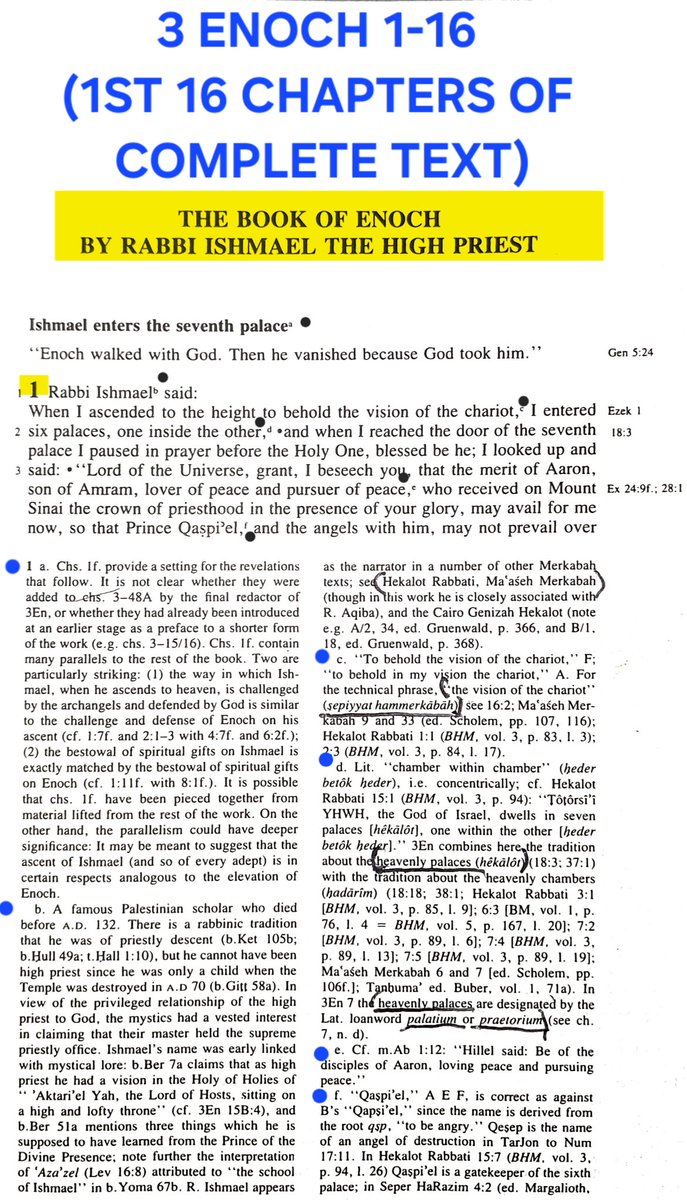
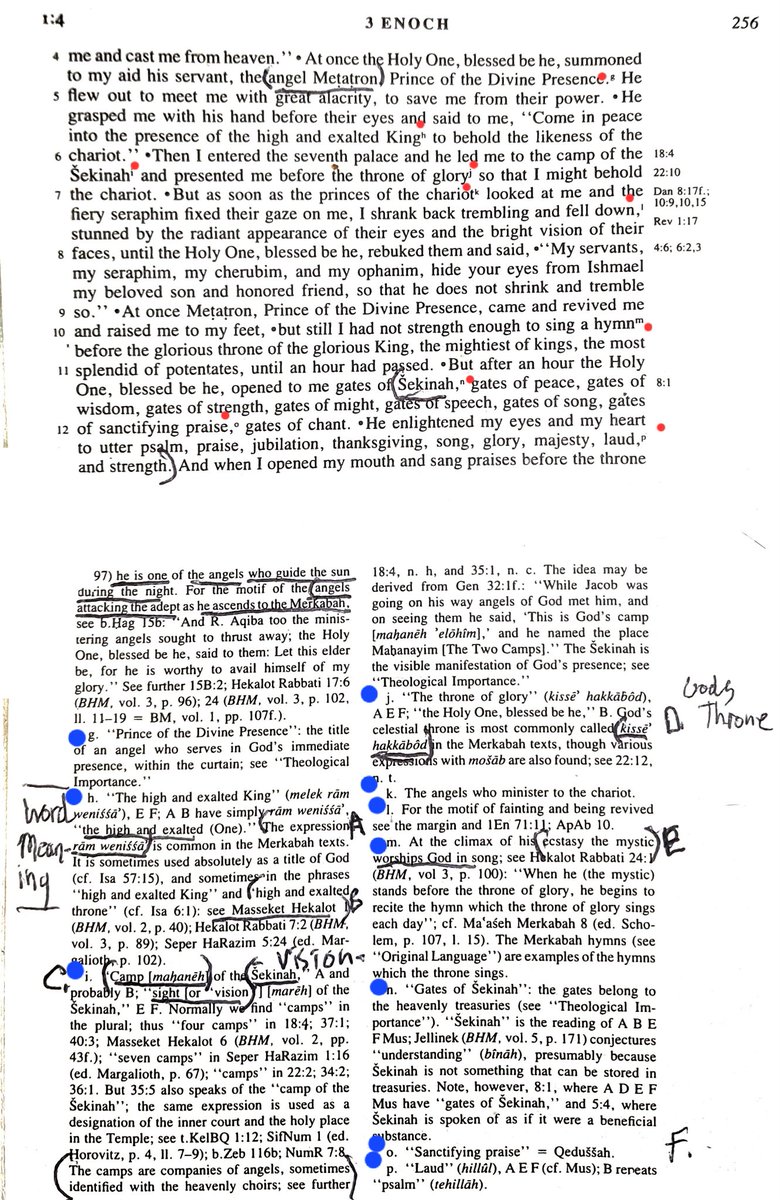
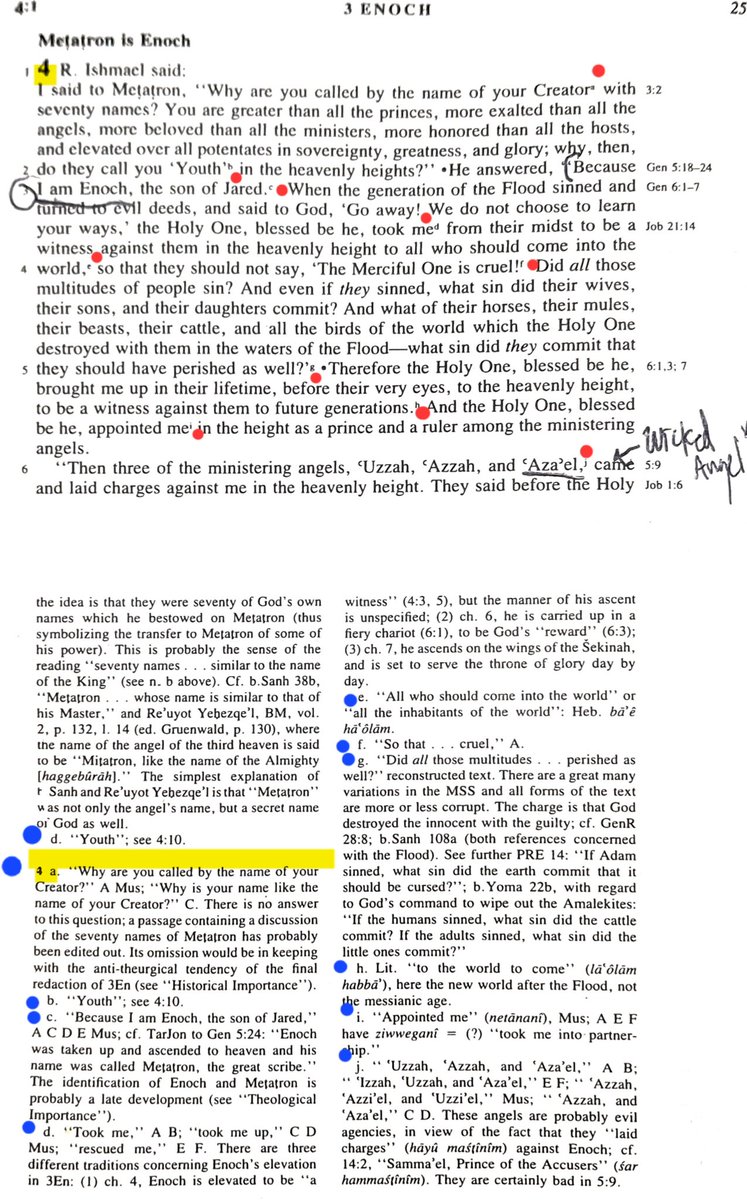


The Book of Enoch and the Book of Jubilees are part of what scholars call the #pseudepigrapha — ancient Jewish writings that were not included in the Hebrew Bible but were well known during Jesus’ time.
#BibleStudy #105
#Pseudepigrapha Ed. #8
#SupernaturalCosmography #6
#HighStrangeEvents #6
#AncientTabletsStudy #7
📜 Ancient Papyrus Edition 📜
⚠️ Specialist Manuscript Study on Rare Texts/Scrolls of the Ancient World with Multidisciplinary fields ⚠️
FEATURING ....
🔷️ 📜 🔷️The Book of Giants (Iranian Manichean Version)
-included in ANE (Ancient Near east ) Papyrology background textual analysis from Deluxe Minds that have real expertise in Ancient cultures Pre Flood & Post Flood - Caution this before you is a Advanced study / class ⚠️
🔑 - Key Introduction - (typed in Post below AFTER this quick msg)- a deep look into Nephilim, Anakim like races to the Rephaim but not before a quick intro of Gilgamesh & his real vs Pseudo beginnins ! (In Pics Below is the Text of the book of Giants itself if you dont want to read this intro but I encourage you to read it bc next Study I will be posting 1st Enoch with the entire full Giants book with every version integrated back into the ancient text in a combined read along form ! Allot more smooth than this current one i present to you now & This below will prepare you for the next studies etc to state it simple) ENJOY & GOD BLESS! TTYVSl
(See Pics for Full book below)
🔷️ 📜 🔷️The Book of Giants: General Introduction
- Featuring the Literary Context / Literary Background -
🔷️ ⬛️⬜️ 🔷️Mesopotamian traditions about Gilgamesh are the earliest known influences on the Book of Giants.^ Gilgamesh was a legendary figure in Sumerian and Akkadian literature, best known from the Epic of Gilgamesh, a work whose importance in ancient Mesopotamia was comparable to that of the Homeric epics in ancient Greece. It told the story of Gil- gamesh, the ancient king of the Mesopotamian city-state Uruk. Gilgamesh befriended the wildman Enkidu. They had adventures, notably the defeat of the monster Humbaba of the Cedar Forest, until Enkidu's untimely death at the hands of the goddess Ishtar. Distraught by the loss of his friend, Gilgamesh set out to find the secret of eternal life. He went on a quest to consult with Utnapishtim, the Babylonian Noah figure and the only man to survive the great flood. The gods gave Utnapishtim and his wife eternal life. But Gilgamesh was unable to achieve immortality for himself. He had to be content with his own great reputation for his vast accomplishments.
Gilgamesh, Humbaba, and perhaps Utnapishtim appear as characters in the Book of Giants. Gilgamesh and Humbaba (Hobabish) seem to be giants in the Aramaic version, and Utnapishtim (Atanbish) may be a giant or Enoch himself in the Manichean version. The Book of Giants has no direct references to the events in the Epic of Gilgamesh, but there are hints that the author was familiar with elements of it. In both the Aramaic Book of Giants and the epic, Gilgamesh was a semidivine being associated with dreams that foretold disaster. Both present Gilgamesh and Humbaba/ Hobabish as giant warriors. In the Epic of Gilgamesh, Humbaba is associated with Mount Hermon in Lebanon. The site is important also in the Enochic version of the story of the Watchers and the giants (cf. 1 En. 6:6; 13:7-9). It very likely figured in the Book of Giants as well. In Mesopota- mian tradition Gilgamesh became a judge in the underworld, and in the giants tradi- tions in the Book of Giants and the Enochic literature the giants became disembodied demonic forces after their deaths who aflict human beings with illness and suffering (1 En. 15:8-16:1; Jub. 10:1-14). It is possible that the author of the Book of Giants knew he Epic of Gilgamesh in a late Aramaic translation, but it is no less likely that the author was working with oral traditions about Gilgamesh.?
The most important influence on the Book of Giants was the legend of the Watchers and their ofspring preserved mainly in the Enochic literature, especially the Book of he Watchers (1 En. 1-36) and the Similitudes of Enoch (1 En. 37-71). There are also ref- erences to the story in the Book of Dream Visions (1 En. 83-90). Outside the Enochician literature the story is mentioned in the Book of Jubilees and occasionally in the Dead Sea Scrolls.#
The versions of the Enochic legend of the Watchers vary slightly among themselves, but the basic narrative is something like the following: The Watchers were a group of angels whose job was to worship God unsleepingly and to guard his throne (1 En. 14:23; 39:12-13; 71:7). A group of Watchers descended to earth, either with good intention to teach humankind righteously (Jub. 4:15) or because from heaven they saw mortal women and desired to mate with them (1 En. 6:1-2; 39:1; 86:1-3). The chief of the fallen Watchers was Shemihazah (1 En. 6:3; 69:2) or Azazel (1 En. 54:5; 55:4; or Asael; cf. 1 En. 9:6) and some of their other leaders are named (1 En. 6:7-8; 8:3; 69:2-13). Once on earth they taught mortals how to make weaponry, jewelry, and makeup, as well as secrets of met- allurgy, sorcery, and astrology (1 En. 7:1; 8:1-4; 9:6-8; 64:2; 65:6-7). The unions of the angels with mortal women resulted in the birth of monstrous cannibalistic giants who brought ruin to the earth (1 En. 7:2-6; 9:9; 86:4-6).
The four archangels brought the situation to the attention of God, who ordered them to intervene (1 En. 9:1-10:3). They subdued the fallen Watchers and banished them to a deep abyss where they lie chained, awaiting their fiery judgment at the eschaton (1 En. 10:4-8, 11-14; 54:1-6; 67:4-11; 69:28; 88:1-3; 90:21, 23-24). The archangels also incited the giants to take up a war against one another until all (or nearly all?) of them were dead (1 En. 10:9-10, 12, 15; 56:2-4?; 87:1, 4; 88:2). Some of them also seem to have died in the great flood (1 En. 89:6), which took place after these events. Perhaps some even survived beyond the Flood (see below). In any case the disembodied spirits of the dead giants, or some of them at any rate (Jub. 10:1-14), survived as demonic forces that afflict human beings with illness and suffering (1 En. 15:8-16:1). This story is assumed as the background of the narrative in the Book of Giants.
Some of the traditions in the Bible also provide background to the Book of Giants, although it is unclear whether any of these traditions actually influenced it directly. The enigmatic episode in Gen 6:1-4 almost certainly has some connection with the story of the Watchers and the giants. This passage tells us that before the Flood "the sons of God" (i.e, the angels; cf. Job 1:6; 2:1) saw the beauty of human women and took some of them as wives. This seems to have displeased YHWH, who in turn placed a time limit of one hundred twenty years on the spirit dwelling in human beings. We are alsc told that the "Nephilim" lived at the time (and also "afterward") when the sons of God were mating with the mortal women who bore children to them. And we are told that these Nephilim were famous warriors.
What does all this mean? Why did angels behave in this way, unparalleled elsewhere in the Hebrew Bible? On what is the one hundred twenty years a time limit? Who are the Ne. philim? The word comes from a root meaning to fall ("fallen ones?") and in later Hebrew it means "abortions." Were the Nephilim the same creatures as the offspring of the morta women by the angels? The text may imply they were, but it does not say so explicitly
One possibility is that the writer of Genesis knew some version of the story of the Watchers and the giants, whether the one now found in the Book of the Watchers or a common tradition shared by it. The mythological notion of gods mating with human beings may not have appealed to the writer of Genesis, but the story was too wellknown to ignore. So the writer gave just a brief and allusive account before moving on to the Flood narrative. Another possibility is that Gen 6:1-4 was the inspiration for the story of the Watchers and the giants. Subsequent exegetes pondered the puzzling details of these four verses and filled in the blanks to produce something like the story we now find in 1 Enoch. Different specialists have argued for each of these possibilities and we need not try to decide between them here.9
In the Book of Giants (4Q530 2 ii 16b-20a) one of the giants has what seems to be a predictive dream in which he sees God descend from heaven to earth and occupy a throne, while other thrones are also set up. Books are opened, judgment declared, and God's judgment written down. This passage has close similarities in thought and word. ing to the throne theophany scene in Dan 7:9-10.
It also has notable similarities to the throne theophany in 1 En. 14:18-23, a passage that also shares wording and ideas with Dan 7:9-10. The relationship between the theophanies in Dan 7 and 1 En. 14 has been debated for some time. Milik concluded that the Book of Giants was dependent on Dan- iel. Some scholars have subsequently challenged his view while others have supported it. There is no consensus on which of the three came first and influenced the others or whether they all drew on an independent written or oral tradition. Again, it suffices for our purposes to note the problem without attempting to solve it.0
In addition, there are a number of stories in the Bible about giants.'1 These provide some context for our understanding of the Book of Giants. Although Genesis places the Nephilim in the time before the Flood, it hints that they had a further history. And indeed they appear again in the context of the survey of Canaan by the Israelite spies in Num 13. In 13:32-33 the spies report that the people of the land were of great size and that there the spies saw the Nephilim, whose stature made them feel like grasshoppers. This is the only indication in the Bible that the Nephilim were giants, although this point is also specified in 1 En. 7:2.2 The passage also mentions in passing that the "Anakim" were descended from the Nephilim.
This leads us to another group of biblical giants. 13 The first mention of the Anakim in the Bible is also in the story of the Israelite spies Numbers 13:22 reports that the spies also encountered the children of Anak in Hebror and it mentions three of them by name. Then, in his account of the invasion of the land by the Israelites, Moses comments in an aside that the "Emim" had once inhabited Moab and that they were as tall as the Anakim and, like the Anakim, were reckoned as "Re phaim." Likewise, he says that the land of the Ammonites was reckoned as a land of th Rephaim (whom the Ammonites called Zamzumim"), because formerly the Rephaim inhabited it (Deut 2:10-11, 19-21). Deuteronomy 9:2 also reinforces the strength and stature of the Anakim.
The name Rephaim leads us still further. It can mean something more or less equiv- alent to "ghost" (e.g., Prov 21:16; Isa 14:9), but it usually refers to a group of people who inhabited Canaan before the Israelites did. Notably, one of the few named giants in the Bible-Og King of Bashan---is called the last of the Rephaim in Deut 3:11. The description of Og's enormous bed makes it clear that he too was a giant.'
By far the most famous biblical giant is, of course, Goliath of Gath, whose downfall at the hands of David is familiar from 1 Sam 17. Goliath was a Philistine, but he too is connected with the primordial Rephaim. In 2 Sam 21:15-22 we find a collection of brief tories about four Philistine warriors who were descended of Rapha, that is, were among the Rephaim. One named Ishbi-benob carried an enormous spear and so presumably was a giant. He nearly killed David in battle, but another Israelite intervened and killed the Philistine.' Another named Saph was slain by an Israelite in a battle at Gob. Then there is an alternate account of the killing of Goliath the Gittite by one Elhanan son of Jaare-oregim the Bethlehemite.'s The fourth was an unnamed man of great stature who had six fingers on his hands and six toes on his feet. He was slain by a nephew of David, Three of these four are presented as large men, confirming the identification of the Rephaim with giants.'7Finally, in 1 Chr 1:22-23, we read of an Egyptian giant who also carried a huge spear He was killed with his own weapon by one of David's chief warriors,
The Greek Bible also has a number of references to "gjiants (Greek gigas).'$ Some of the uses of the words in the Septuagint (LXX) translation are helpful for understanding how some of the passages in the Hebrew Bible discussed above were understood in the late Second Temple period.'s The term Nephilim is translated as "giants" in its occur- rences in Gen 6:4 and Num 13:33 (LXX 13:34). The Hebrew word gibbor normally means "warrior," but sometimes its use in context led the translators to translate it as "giant" (Gen 6:4; 10:8-9, cf. 1 Chr 1:10 [of Nimrod]; Gen 14:5; Ps 19:5 [LXX 18:6]; 33:16 [LXX 32:16]; Isa 3:2; 13:3; 49:24-25; Ezek 32:12, 21, 27;20 39:18, 20).
The term Rephaim is frequently, although not always, translated as "giants." Og is called one of the giants in Josh 12:4 and 13:12, although Rephaim is transliterated as Raphain in Deut 3:11. Likewise, the word Rapha is transliterated into Greek letters all four times in 2 Sam 21:15-22, but 21:22 does specify that they were all giants.21 The geographical name "the valley of Rephaim is translated as "the valley of giants" in 1 Chr 1:15 and 14:9, 13. In Prov 21:16; Isa 14:9; and Job 26:5 the meaning of Rephaim in its original context in Hebrew is "ghost, but it is translated as "giants" In Deut 1:28 the term Anakim is translated as "giants." The Greek of Sir 16:7 refers to a revolt of ancient giants but the Hebrew text uses another word that does not normally mean giant. The Greek of Sir 47:4 refers to Goliath (who is named) as a giant. The Hebrew of this verse does not survive
There are a few other references to giants in books of the Greek Bible that were composed in Greek or whose Hebrew originals are entirely lost. There is mention of the doom of the ancient giants before the Flood in Wis 14:6 and 3 Mac 2:4. Baruch 3:26 echoes the language of Gen 6:4 when referring to the giants. In her hymn of victory, Judith gloats over the fact that a woman, rather than Titans or giants, vanquished her enemy (Jdt 16:5-6).2 In 1 Maccabees the poem in praise of Judah the Maccabee says that he "put on a breastplate like a giant" (1 Mac 3:3).
Thus we see that there was a rich mythology of giants in the Hebrew Bible and it continued to develop in the Second Temple period. Space does not permit further discussion of traditions about giants in the Classical world or the ancient Near East, but a few more references to giants in Second Temple Jewish literature should be roted. Sibylline oracles were originally pithy oracles attributed to the Sibyl, a pagan prophetess. Some collections of her oracles were known in ancient Rome. They are now almost entirely lost. But Jews and Christians composed many books in the name of the Sibyl in antiquity. The first three books of Sibylline Oracles, of Jewish origin but with some Christian editing and interpolation, provide some passages of interest. Sibylline Oracle 1:87-103 retells the story of the Watchers briefly, but treats them as its third generation of human beings. It mentions giants in 1:123, but it is unclear that they are the giants of the Watchers myth. The seventh generation is identified as Titans, but these are also the human beings who built the Tower of Babel (Sib. Or. 1:307-23). The latter story is much expanded in Sib. Or. 3:97-161. This passage tells a version of the traditional story of the conflict between the Titans anc Cronus that led to the birth of Zeus.?3
The first-century BCE chronographer Alexander Polyhistor refers twice to earlier traditions about Abraham that mention giants. The work of Alexander is lost, but the fourth-century CE historian Eusebius of Caesarea quotes the relevant passages in his Praep. ev. 9.17.2-9 and 9.18.2.2 Alexander attributes the first passage to the Jewish writer Eupolemos, although some think that he was mistaken and that it was written by some- one else, possibly a Samaritan. In any case, the passage creatively retells the story of Abraham, prefacing it with an account of the founding of the city Babylon and the build- ing of the Tower of Babel by giants after the Flood. These giants spread over the earth after God destroyed the tower. It also identifies Enoch with Atlas, a Titan. In the second passage Alexander relates that certain anonymous works say that Abraham claimed to be descended from the giants.
The first-century CE Jewish philosopher Philo of Alexandria wrote an entire treatise on Gen 6:1-4 called On the Giants.2s As is his usual practice, he allegorizes the story, making it about the temptation of the soul by worldly pleasures. He cautions his read- ers that the story is not a myth, hinting that he perhaps knew and disapproved of the story of the Watchers and the giants. But he does not directly refer or allude to that story. The first-century Jewish historian Josephus mentions giants a number of times in his works, mostly following the Greek narrative of the Septuagint. In his treatment of Gen 6:1-4 in A. J. 1.72-73 he interprets the passage to say that angels mated with mortal women and that the unions produced offspring. He does not call the latter giants directly, but he hints that he knows of a tradition in which they committed outrages similar to those committed by the giants of Greek mythology. Otherwise, he does not refer directly to the story of the Watchers and the giants, although he does say that the bones of some of the giants mentioned in Num 13:33 were on display in his day (Ant. 5.125).
⚠️ REMEMBER BELOW IN PICS IN THE NEXT REPLIES IS THE BOOK OF GIANTS ITS SELF ⚠️
⚫️ NOTES FOR ABOVE INTRODUCTION OF THE GIANTS BOOK(S) ⚫️ (some numbers to the Notes got lost but the notes are in full & aren't missing any data or sources ) make what you can of it !
⚫️ 4. For discussions of the manuscripts, date, provenance, genre, and structure of the Aramaic and Manichean versions of the B ook of Giants, see the introductions to the chapters by Loren Stuckenbruck, Prods Oktor Skjæervo, and Peter Zieme, which folOw. , 5. For an English translation, see Andrew George, The Epic of Gilgamesh: The Babylonian Epic Poem and Other Texts in Akkadian and Sumerian (London: Penguin, 1999).
6. See the discussion of Turkic fragment A by Zieme below in his translation.
⚫️ 7. Matthew Goff, "Gilgamesh the Giant: The Qumran Book of Ciants Appropriation of Gilgamesh Motifs," DSD 16 (2009): 221-53, doi:10.1163/156851709X395740
⚫️ 8. The best English translation of1 Enoch is George W. E. Nickelsburg and James C. VanderKam, 1 Enoch: A New Translation Based on the Hermeneia Commentary (Minneapolis: Fortress, 2012). For a con- enient translation of Jubilees, see O. S. Wintermute, "Jubilees," OTP 2:35-142. For the relevant passages in the Dead Sea Scrolls, see the chapter on the Aramaic Book of Giants by Stuckenbruck in this volume
⚫️ 9 For the ancient Near Eastern and related background to Gen 6:1-4, see Ronald Hendel, "The Ne bhilim Were on the Earth: Genesis 6:1-4, and Its Ancient Near Eastern Context," in The Fall of the Angels ed. Christoph Auffarth and Loren T. Stuckenbruck, TBN 6 (Leiden: Brill, 2004), 11-34. For a discussion of Gen 6:1-4 and its relation to the Watchers tradition, see Chris Seeman, ""The Watchers Traditions and Gen 6:1-4 (MT and LXX)," in The Watchers in Jewish and Christian Traditions, ed. Angela Kim Harkins, Kel- ey Coblentz Bautch, and John C. Endress (Minneapolis: Fortress, 2014), 25-38, doi:10.2307/j.ctt22nmb25.6
⚫️ 10. For a discussion with bibliography, see Amanda M. Davis Bledsoe, "Throne Theophanies, Dream Visions, and Righteous(?) Seers: Daniel, the Book of Giants, and 1 Enoch Reconsidered," in Goff, Stuck- enbruck, and Morano, Ancient Tales of Giants, 81-96.
⚫️ 11 The biblical references to giants are covered in detail in Brian R. Doak, The Last of the Rephaim Conquest and Cataclysm in the Heroic Ages of Ancient Israel, Ilex Foundation Series 7 (Boston: Ilex Foundation; Washington, DC: Center for Hellenic Studies, 2012). For a summary see Doak, "The Giants n a "Thousand Years: Tracing Narratives of Gigantism in the Hebrew Bible and Beyond" in Goff, Stuck enbruck, and Morano, Ancient Tales of Giants, 13-32
⚫️12. In Ezek 32:27 there is a reference to "fallen warriors of old in the underworld (Sheol). The phrase ould also be read as *warrior Nephilim of old" and this may have been its original meaning. The dua ense of Nephilim as ancient warriors and as ghosts coheres well with the biblical sense of Rephaim with whom they are associated (see below).
⚫️ 13. Deuteronomy 1:28 also refers to the report by the spies that the people of the land were powerful and tall and that they saw the children of the Anakim there. It does not, however, mention the Nephilim.
⚫️ 14. It was argued by Wolfgang Rölling that an ancient Phoenician grave inscription from Byblos (Byblos 13) also mentions Og. Rölling, "Eine neue phoenizische Inscrift aus Byblos"' Neue Ephemeris für Semitische Epigraphik 2 (1974): ⚫️15 and pl. 1. The inscription dates to about 500 BCE and invokes a curse on anyone who disturbs the bones of the occupant of the grave. The suggestion is interesting, but it involves a number of philological difficulties. Subsequent analysis of the inscription, including by Röllig, has not found this interpretation to be credible. For a review of the scholarship see Laura Quick, "Laying Og to Rest: Deuteronomy 3 and the Making of a Myth," Bib 98 (2017): 161-72, esp. 170-71. The legend of Og the giant continued to develop in the postbiblical period through late antiquity, the Middle Ages, and even into the modern period. For a survey of the Og legend see Admiel Kosman, "The Story of a Giant Story: The Winding Way of Og King of Bashan in the Jewish Haggadic Tradition," HUCA 73 (2002): 157-90. 15. This episode is omitted in the parallel passage in 1 Chr 20:4-8, but cf. n. 21 below,
⚫️ 16. The parallel passage in 1 Chr 20:5 says that Elhanan slew Lahmi the brother of Goliath. The dif ference between the Hebrew texts of the two passages is slight and it is difficult to tell which is original. The passage in 1 Samuel may have accidently been miscopied so that it refers to Goliath rather than his brother. Or the Chronicler may have accidentally or deliberately miscopied the text so that it now refers to Goliath's brother, not Goliath himself, thus resolving the contradiction with 1 Sam 17. In any case, both versions imply Goliath's descent from the Rephaim.
⚫️17. The alphabetic cuneiform texts from Ugarit, a city in Syria in the late second millennium BCE, provide some background information on the Rephaim. The Ugaritic language is closely related to He- brew and the Ugaritic texts refer from time to time to the rāpi'uma. These appear to be the deceased spirits of ancestral kings. This meaning has similarities to the biblical usage of Rephaim, which can mean specified as kings. For a detailed review of the Ugaritic evidence and its implications for the biblical word, .e Hedwige Rouillard-Bonraisin, "Rephaim," DDD, 692-700.
⚫️ 18. For a more detailed discussion of giants traditions in Jewish Greek literature see Michael Tuval, 2ovywyn ylyávrov (Prov 21:26): The Giants in the Jewish Literature in Greek, in Goff, Stuckenbruck, and Morano, Ancient Tales of Giants, 41-57.
⚫️19. For an English translation of the Septuagint, see Albert Pietersma and Benjamin G. Wright, eds. A New English Translation of the Septuagint (Oxford: Oxford University Press, 2007).
⚫️ 20. The Hebrew word gibbor, "warrior," in Ezek 32:21, 27 refers to the dead in the underworld (f. n. 12 above).
⚫️ 21. The parallel passage in 1 Chr 20:4-8 translates Rapha as "giants" twice and transliterates it once n 20:8 it too specifies that all"four" were giants, even though only three are mentioned (cf. n. 15 above) The reference to "Dan son of Ioa, from the descendants of the giants [= Rephaim?]" in the Greek text of 2 Sam 21:11is missing in the Hebrew.
⚫️ 22. For the Titans see Samantha Newington, "Greek Titans and Biblical Giants" in Goff, Stuckenbruck and Morano, Ancient Tales of Giants, 33-40,


New Study coming sooner ! I have been spreading all the #OldTestamentStudy #ApocalypticBookStudy
#BibleStudy
#Pseudepigrapha Ed.
#AncientTabletsStudy (behind) (i have all the studies ready its a timing issue coming soon)
#BibleStudy #90
#Pseudepigrapha ED. #6
📜 Apocalypse of Abraham 1-32
🌌🌊🕳Tour of the Heavens & Earth ,Oceans ,Abyss & Full Universe
🐲🐐⭐️☁️Leviathan ,Azazel ,Stars +Men born of clouds?
🗝🎵 Mighty song of God!
🍇🌳🐉Dragon of Eden
✨️🪨🎑💦Stars in control of elementals


#BibleStudy #79
#Pseudepigrapha ED. #4
📜The Apocalypse of Adam
🌴🪽✨️Adam & Eve loftier than Angels B4 the Fall
🌊🔥🌤The Flood/Fire & Great clouds of Light from Aeons
🔆✨️The Illuminator comes 13×
🌌 💦Thus he came from the water- Visions
👑👾Solomon & Army of Demons


#BibleStudy #78
#Pseudepigrapha ED. #3
🌴✨📜 Sibylline Oracles
🧕💭🌌Sibyl is a Latin word interpreted as Prophetess / Seer
🗝🌟🙏They cover Yeshua the Christ theology+ Mosaic Books & the Prophets
🗺🐲🪽From Creation of the world +The Giants & Flood
✨️📜BOOK 1 IN 4TH PIC


#BibleStudy #77
#Pseudepigrapha Ed. #2
✨️🌥✨️ 3 Baruch Scroll
☁️🌌🪽Tour of the Heavens
📜Themes-
♦️Men with faces of cattle & horns of deer & feet of goats & loins of sheep
♦️Firery chariot with man wearing a fiery crown pulled by 40 Angels
♦️A Phoenix as big as 9 Mtns
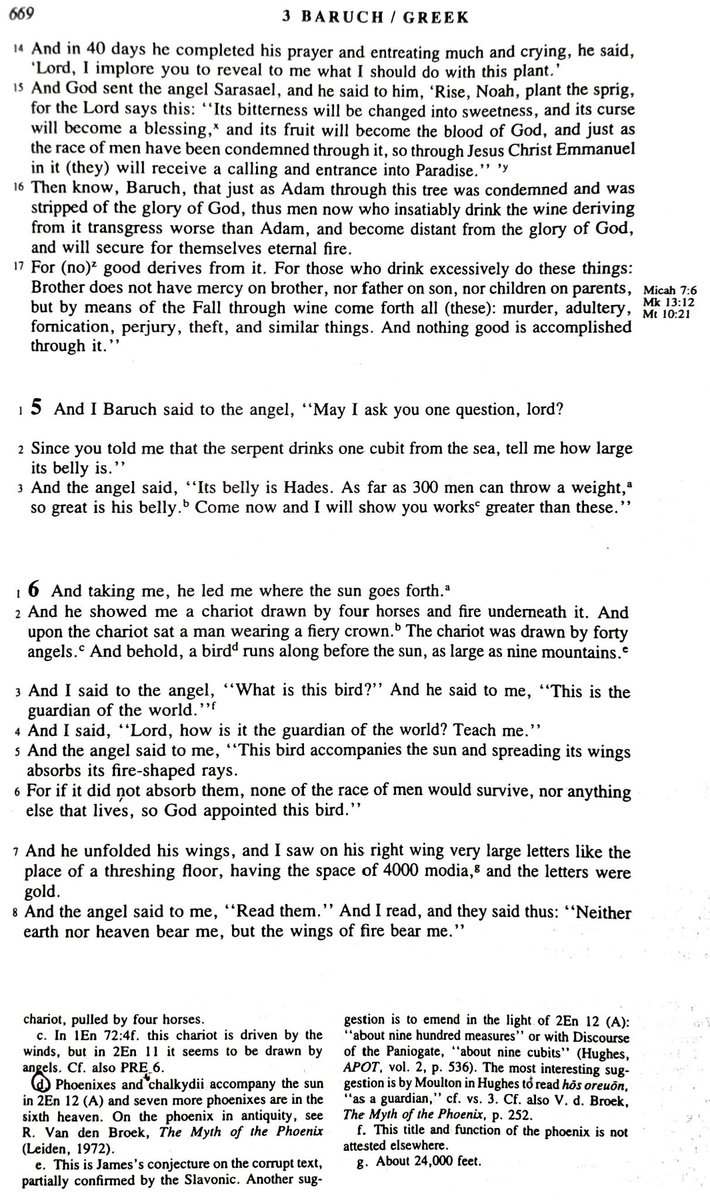
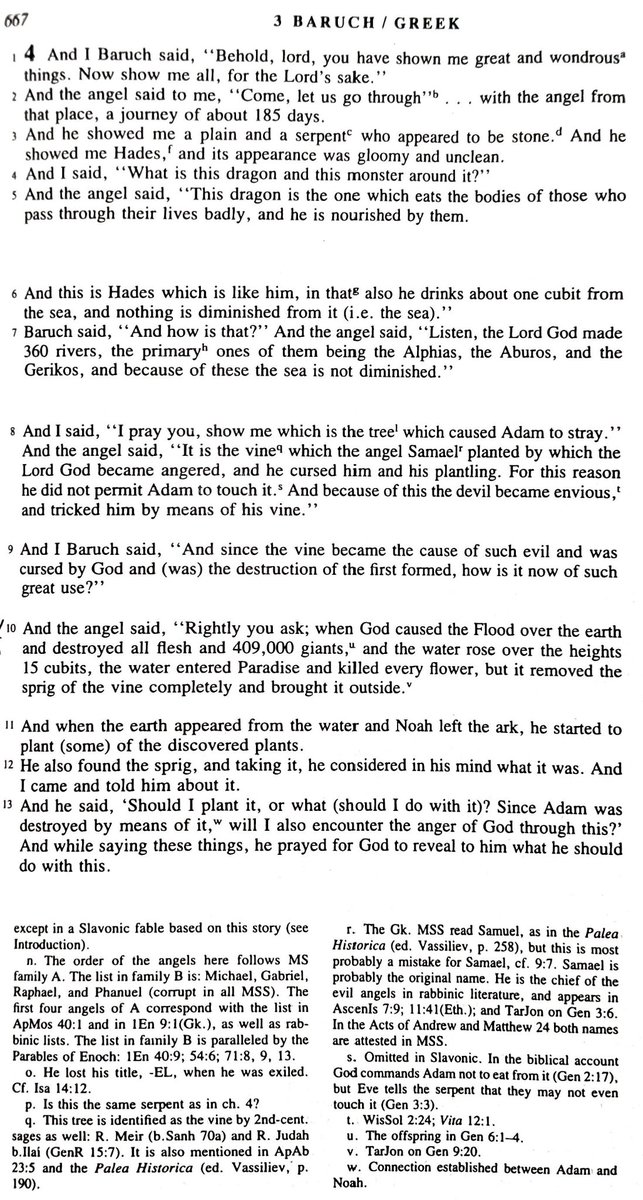

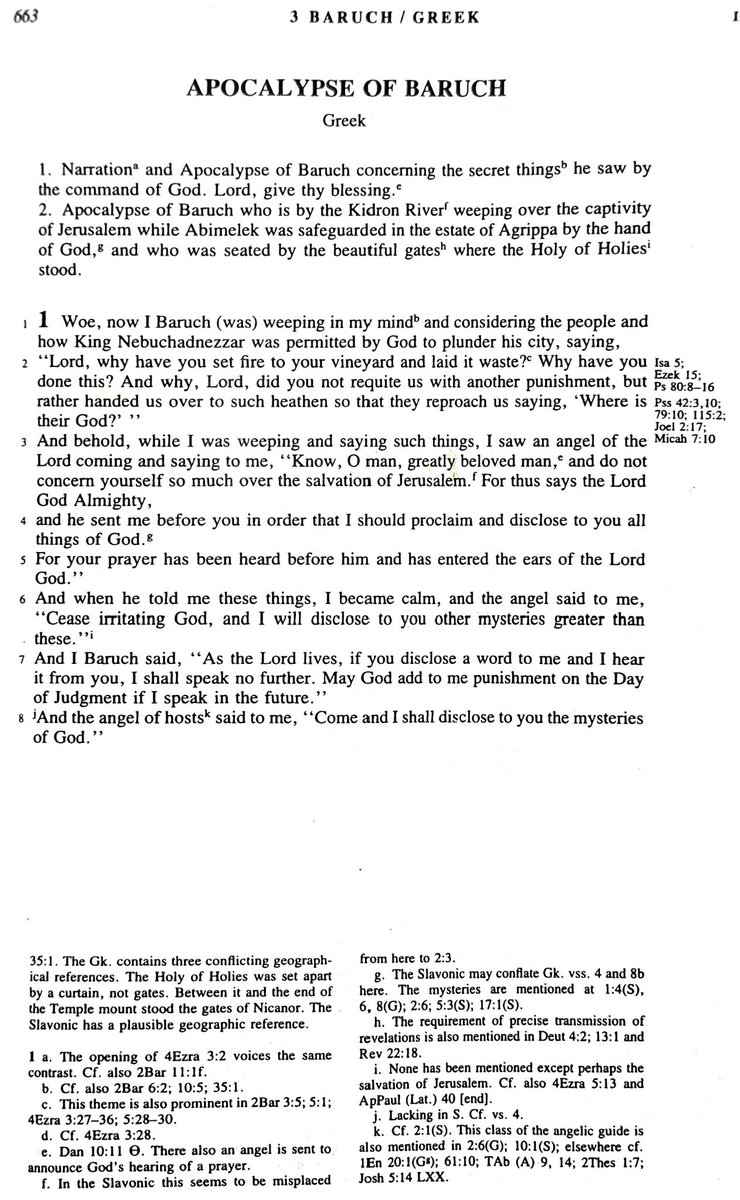
#BibleStudy #76
#Pseudepigrapha Ed. #1
🪽✨️🌌Apocalypse of Zephaniah
📜 This is a old scroll dating to about 100 BC - 70 AD which is the 2nd Temple period
📍The Scene sets in the 5th Heaven & Zephaniah is guided through each stage /level -
📜Tons of NOTES!

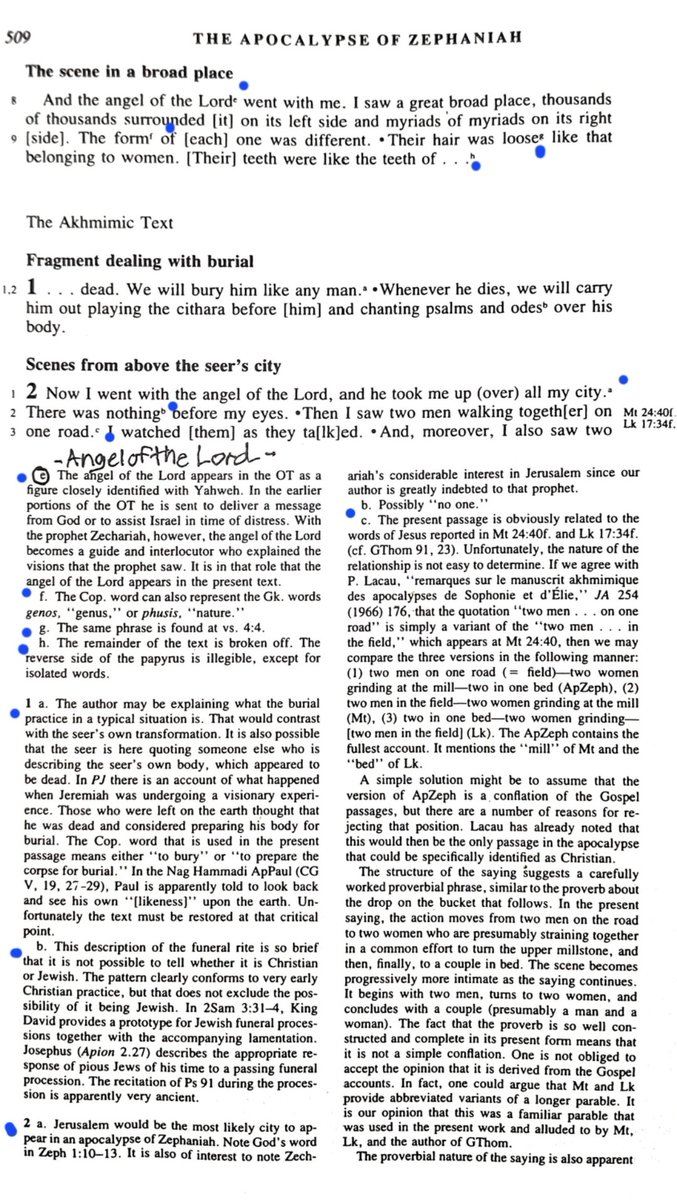
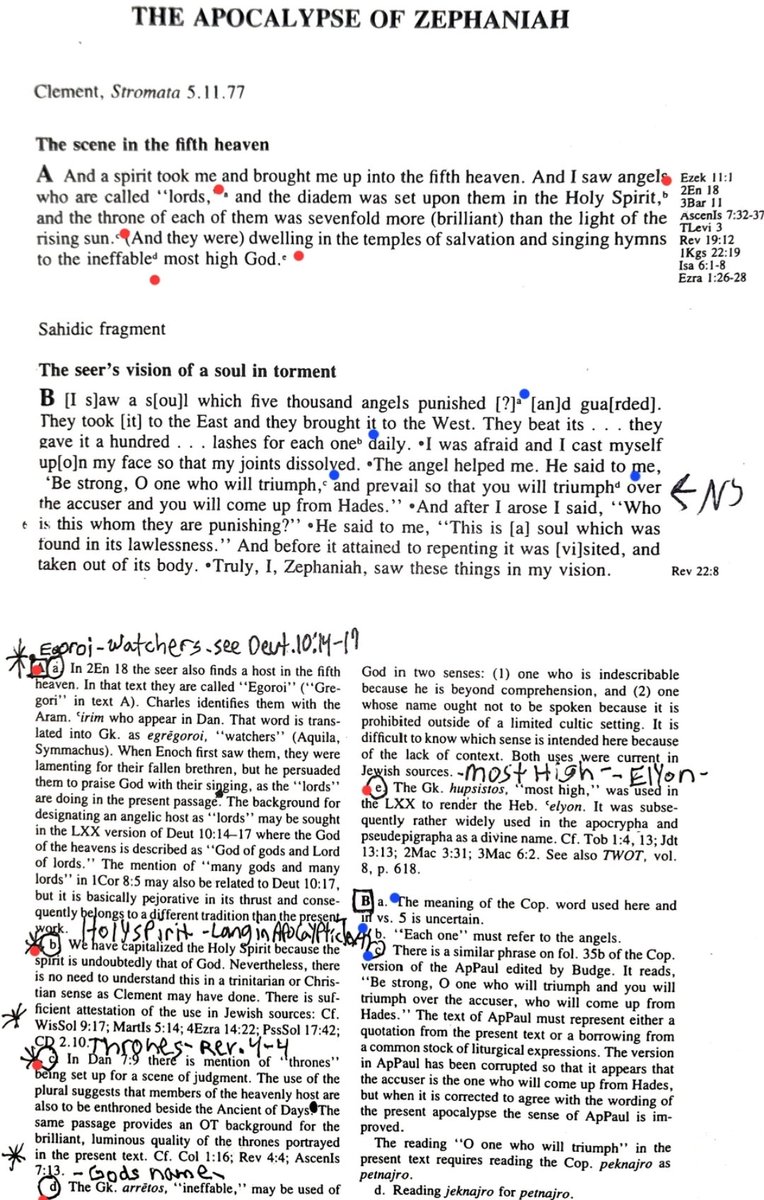
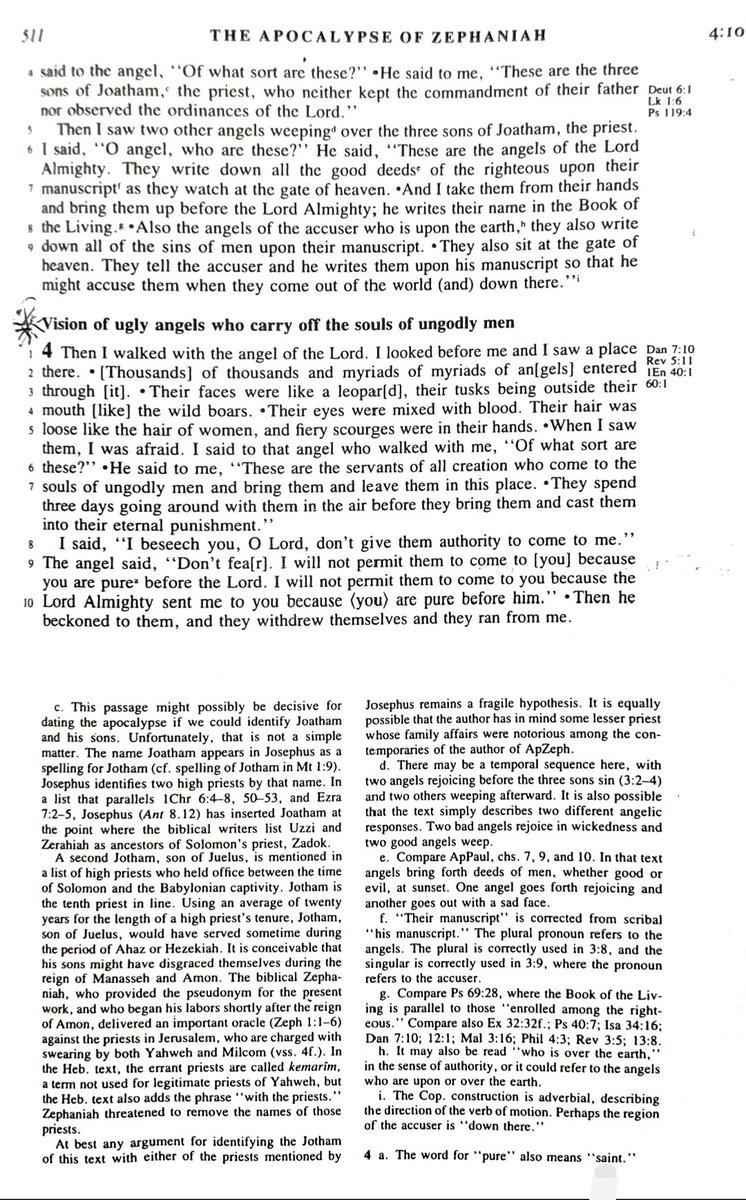
Greek Apocalypse of Baruch 3 - a misunderestood and neglected #Pseudepigrapha #apocalyptic- An angel guides you through 5 Heavens /Dimensions , Garden of Eden , Hades , The sun with the Pheonix , the moon , Primeval Rivers and deep mythology , these books are hidden Supernatural-


"The mountains will be shaken to their foundations and will melt like wax" ... do Judith and 1 Enoch draw on a common literary tradition?
#Intertextuality #Deuterocanon #Pseudepigrapha #Bible
https://t.co/nFuof6MUN2

"... far above every rule, authority, power, and dominion ..." Does Ephesians intentionally echo the terminology of spiritual beings from 1 Enoch 61?
#Intertextuality #Pseudepigrapha #NewTestament #Bible
https://t.co/5dC62eY5nM

"1 Enoch 55:1 ... This verse changes the image of God in the flood story by combining Genesis 8:20–21 and 9:11 with the divine pain and regret in response to the propagation of human violence in Genesis 6:6."
#Intertextuality #Pseudepigrapha #HebrewBible
https://t.co/bETCj2iXHC
"To transgress the law in matters small or great is of equal seriousness" ... do James and 4 Maccabees share a tradition regarding the equal weight of all the Torah?
#Intertextuality #NewTestament #Pseudepigrapha #Bible
https://t.co/MOvbo6cuUD
"The seventh mountain was in the midst of them and it excelled in height" ... is the imagery of "seven mountains" in Revelation 17 an echo of 1 Enoch 24?
#Intertextuality #Pseudepigrapha #NewTestament #Bible
https://t.co/46RNaemXuQ
"Certain angels, who fell of their own will, there sprang a wicked demon-brood" ... does Tertullian draw on Enochic details in his Apology?
#Intertextuality #Pseudepigrapha #Patristic #Bible
https://t.co/x7YfVDHwoa
Last Seen Hashtags on Sotwe
college #amateur
Seen from Turkey
MGAI
実家は檜風呂
Seen from United States
pagoak
Seen from United States
ometv baru
Seen from Malaysia
Unexpected
Seen from United States
Granny()
Seen from Pakistan
randomchat(*)video
Seen from United States
pmv((()))************************************************************************************ filter:videos
ايجة_عراقيه
Trends for you
Most Popular Users

Elon Musk 
@elonmusk
240.4M followers

Barack Obama
@barackobama
118.7M followers

Cristiano Ronaldo
@cristiano
114.4M followers

Donald J. Trump
@realdonaldtrump
111.8M followers

Narendra Modi
@narendramodi
107M followers

Rihanna
@rihanna
98.7M followers

NASA
@nasa
92.2M followers

Justin Bieber
@justinbieber
91.7M followers

KATY PERRY
@katyperry
90M followers

Taylor Swift
@taylorswift13
83.9M followers

Lady Gaga
@ladygaga
75.4M followers

Virat Kohli
@imvkohli
73.3M followers

Kim Kardashian
@kimkardashian
70.8M followers

YouTube
@youtube
68.7M followers

Neymar Jr
@neymarjr
66.3M followers

Bill Gates
@billgates
65.2M followers

Selena Gomez
@selenagomez
63M followers

The Ellen Show
@theellenshow
62.1M followers

CNN
@cnn
61.7M followers

X
@x
60.6M followers