

Top Tweets for #workload

@SidhuMs07 An AI KYC check that rejects on image quality without telling users which field failed just moves the workload to the appeal queue. InterLink hasn't said who reviews those appeals or how long they take.

How are you and your partner splitting the workload right now?
My brother is the inventor.
I handle the entrepreneurship and business side of things.
We make a pretty good team because our strengths complement each other perfectly.

Tech layoffs can leave behind more than vacant roles. Forgotten Kubernetes clusters, orphaned workloads, and unmanaged infrastructure can create hidden costs and security risks.
https://t.co/YG7nBOqA87
#Kubernetes #DevOps #TechLayoffs

The best benchmark is your own prompt.
Try Omev with $5 free generation credit and see how it handles your workload 👇
https://t.co/Xjx0KXtXbM

The workloads are on fire

AI workloads are evolving, and the architecture powering them must evolve too.
Preet Virk, SVP & GM of the Photonic Fabric Business Unit at Marvell, explains how AI computing is becoming increasingly disaggregated, with prefill and decode emerging as separate stages of processing.
Getting the architecture right is becoming essential to handling the growing demands of AI workloads.
@MarvellTech @WeAre_Penguin @nysewired @theCUBE
#SC26 #AIInfrastructure #ArtificialIntelligence #AIComputing #GPUs #Marvell

gemini 3.1 flash-lite is now live on @commonstack_ai
google's latest fast, cost-efficient model is here
• optimized for everyday tasks
• built for coding
• designed for high-volume workloads
try it now: https://t.co/5AG675RvCp


@sahildarz Absolutely. That’s exactly what we’re looking to validate now. The next step is turning initial adoption into repeated usage and learning from real-world workloads. Still early, but that’s where the real progress happens. 🚀
The workloads can be much
AI workloads are evolving, and the architecture powering them must evolve too.
Preet Virk, SVP & GM of the Photonic Fabric Business Unit at Marvell, explains how AI computing is becoming increasingly disaggregated, with prefill and decode emerging as separate stages of processing.
Getting the architecture right is becoming essential to handling the growing demands of AI workloads.
@MarvellTech @WeAre_Penguin @nysewired @theCUBE
#SC26 #AIInfrastructure #ArtificialIntelligence #AIComputing #GPUs #Marvell
What about these workloads
AI workloads are evolving, and the architecture powering them must evolve too.
Preet Virk, SVP & GM of the Photonic Fabric Business Unit at Marvell, explains how AI computing is becoming increasingly disaggregated, with prefill and decode emerging as separate stages of processing.
Getting the architecture right is becoming essential to handling the growing demands of AI workloads.
@MarvellTech @WeAre_Penguin @nysewired @theCUBE
#SC26 #AIInfrastructure #ArtificialIntelligence #AIComputing #GPUs #Marvell

The workload is much
AI workloads are evolving, and the architecture powering them must evolve too.
Preet Virk, SVP & GM of the Photonic Fabric Business Unit at Marvell, explains how AI computing is becoming increasingly disaggregated, with prefill and decode emerging as separate stages of processing.
Getting the architecture right is becoming essential to handling the growing demands of AI workloads.
@MarvellTech @WeAre_Penguin @nysewired @theCUBE
#SC26 #AIInfrastructure #ArtificialIntelligence #AIComputing #GPUs #Marvell

@PythonDvz I'd check the workload ratio before adding anything. Read-heavy: worth it. Write-heavy: the INSERT/UPDATE maintenance cost adds up fast at 50M rows. Worth comparing against a columnstore index too. #SQL #Databases

3/7 — How does it work?
The concept is straightforward:
• GPU owners contribute their hardware to the network.
• Developers submit computing workloads.
• Nosana connects those workloads with suitable GPU resources.
• Hosts execute the jobs and can

AI is growing fast, but there is one major challenge behind the scenes that many people overlook.
AI needs computing power. A LOT of it.
From running large language models to powering AI agents, GPUs have become essential infrastructure.
But what if we didn't have to depend entirely on centralized cloud providers?
This is where @nosana_ai comes in. 🧵


OpenAI and Cisco launch Shirudo, an open-source Linux runtime that lets agents shield systems from exploits without downtime — writing dynamic eBPF controls so defenders can test and roll out patches without disrupting workloads.


@koliruno Companies pocket the extra productivity and just hand you three times the workload instead of cutting hours

gRialo!
Today, let's examine why real blockchain performance is more complicated than a single TPS benchmark.
Real Workloads Change From Moment to Moment
A benchmark usually measures one workload under controlled conditions. A live application faces a much more varied environment.
Traffic rises around launches, market events, and settlement windows. Some transactions are small and independent. Others compete for the same state, call external services, or wait for additional information.
Infrastructure built for real workloads has to adapt to that mix. It should use parallel capacity when work is independent, preserve ordering when operations conflict, and avoid making the slowest path the default for every request.
This is why a single maximum TPS number cannot describe application performance. Developers also need predictable latency, clear consistency, sensible failure handling, and visibility into where contention occurs.
A trading app may need low latency during a market spike, while a data-heavy service may spend more time waiting on external responses. Good performance design has to account for both patterns.
거래 서비스는 시장 변동이 커질 때 낮은 지연 시간이 중요하고, 데이터 중심 서비스는 외부 응답을 기다리는 시간이 더 큰 영향을 줄 수 있습니다. 서로 다른 사용 패턴을 함께 고려해야 하는 이유입니다.
Rialo’s execution approach is aimed at useful performance across changing conditions rather than one idealized test.
The real test of scalability is whether an application stays understandable and responsive as demand changes.
지리알로!
오늘은 블록체인의 실제 성능을 TPS 숫자 하나로 판단하기 어려운 이유를 살펴보겠습니다.
현실의 작업량은 계속 달라진다
벤치마크는 통제된 조건에서 하나의 작업량을 설명합니다. 실제 애플리케이션이 마주하는 환경은 훨씬 다양합니다.
출시, 시장 이벤트, 정산 시간에는 트래픽이 급증합니다. 어떤 트랜잭션은 작고 독립적이지만, 다른 트랜잭션은 같은 상태를 두고 경쟁하거나 외부 서비스를 호출하거나 추가 정보를 기다립니다.
현실의 작업량을 위한 인프라는 이런 조합에 적응해야 합니다. 독립된 작업에는 병렬 자원을 사용하고, 충돌하는 작업에는 순서를 보장하며, 가장 느린 경로를 모든 요청의 기본값으로 만들지 않아야 합니다.
그래서 최대 TPS 하나만으로 애플리케이션의 성능을 설명하기는 어렵습니다. 예측 가능한 지연 시간과 명확한 일관성, 합리적인 실패 처리, 충돌 지점에 대한 가시성도 필요하죠.
Rialo의 실행 방식은 하나의 이상적인 시험이 아니라 변화하는 조건에서 유용한 성능을 목표로 합니다.
확장성을 판단하는 기준은 수요가 달라져도 애플리케이션이 안정적으로 작동하고 빠르게 응답할 수 있는지에 있습니다.
@RialoHQ


Sharkshe ka workload badh jaega as z god joins

Google: Gemini 3.1 Flash-Lite is now live on Commonstack
Gemini 3.1 Flash-Lite - a fast, cost-efficient AI model optimized for everyday tasks, coding, and high-volume workloads.
-> https://t.co/mGcuK6Q5tN
The GPT-6.2 Astra and GPT-6.2 Sol models were also recently added
@commonstack_ai @Gradient_HQ


Why hardware memory encryption and remote attestation matter for sensitive workloads in production. Full breakdown & checklist here:https://t.co/0oLVxGrAje

@RialoHQ @itachee_x @ericargent31113 Meeting these expectations becomes harder as workloads increase.
This makes infrastructure design a critical part of long-term adoption.
Developers need to think beyond current capacity and build systems that can support future growth without introducing unnecessary complexity

@nerd_tarun abhi there are better designers than me at s8ul, i feel + can’t commit full time to s8uls workload with uni

@6coo6 @NucleusCodes @zerufinance Acurast can help connect decentralized AI workloads with idle mobile computing power.

You can help @NucleusCodes and @zerufinance connect their decentralized AI workloads with idle mobile computing power by leveraging infrastructure like Acurast to distribute tasks efficiently.
Could shifting AI computation to everyday mobile devices through projects like Acurast finally break our reliance on centralized cloud giants?
@Acurast


Good Morning
Turn idle smartphones into decentralized AI computing nodes.
If decentralized AI ultimately remains entirely dependent on centralized cloud servers, then the underlying issue of computational dependency has not truly been resolved.
@Acurast is attempting to transform ordinary Android phones into dedicated computing nodes, enabling idle devices to also provide real computational resources to decentralized networks.
It allows users to dedicate their Android phones, which might otherwise remain idle for extended periods, specifically for network computing, rather than merely contributing resources occasionally during free time.
Utilize idle time on your daily mobile phone to participate in calculations.
Use compatible mobile phones specifically as computing devices.
In terms of rewards, the base ACU earnings are related to the equipment's hardware capabilities and effective operating time, while actually executing computational tasks may also bring additional rewards.
Enable ordinary people to participate in building distributed computing infrastructure.
Polymarket, however, is being mercilessly proven wrong by its sluggish recent transaction prices.
Who can I help with what problem?
@NucleusCodes @zerufinance


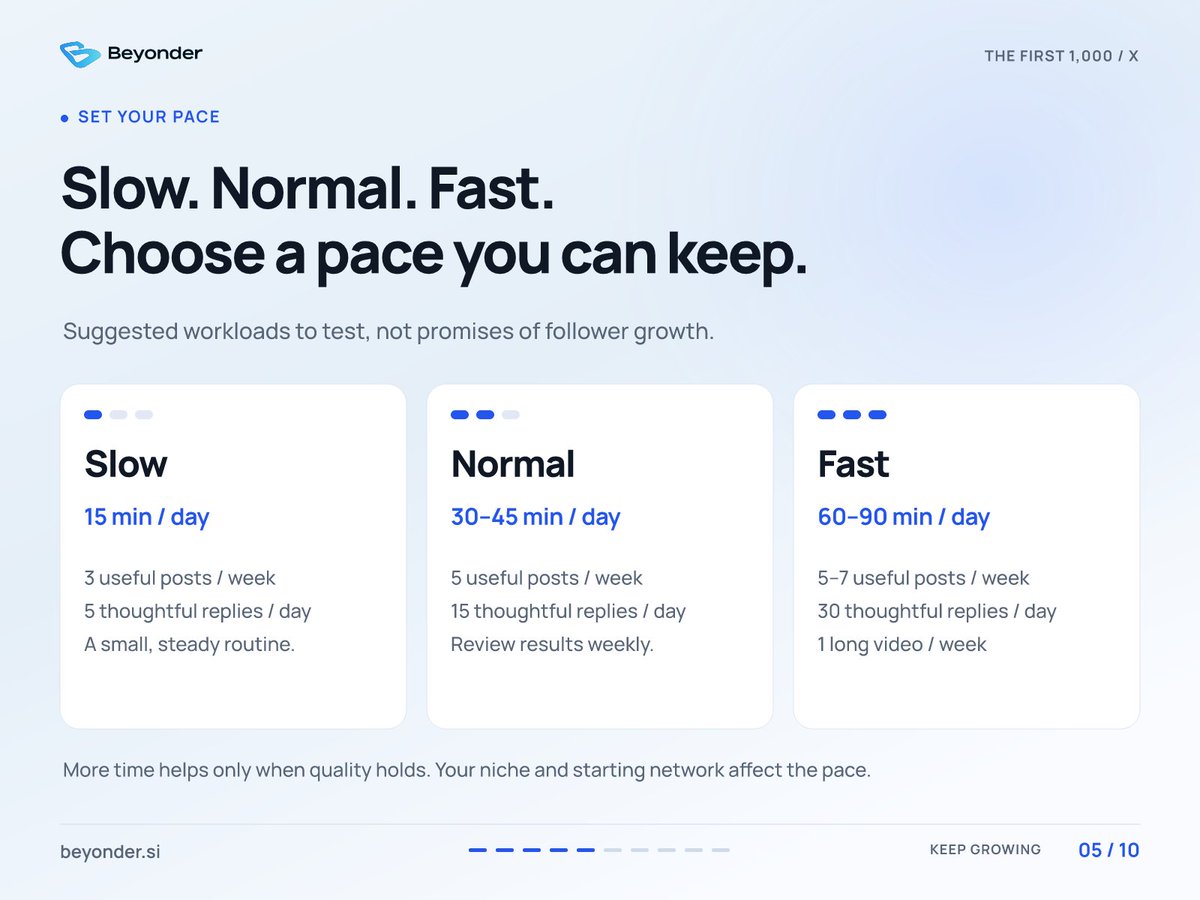
Choose a workload you can sustain, from 15 minutes a day to a deeper daily practice. More activity can create more opportunities, but no schedule guarantees 1,000 followers.
5/10

@6coo6 @zerufinance @Acurast @NucleusCodes Confidential computing ensures hardware level verification by using TPM (Trusted Platform Module) or similar hardware roots of trust to isolate and authenticate compute workloads in encrypted memory, preventing unauthorized access even if the OS or hypervisor is compromised.

There are many things which aren't in one's control. Arsh and Ash are both working together to manage the workload of the pages. Hopefully, we'll get to see great content throughout PMGC."
So keep the positive vibes and look forward to their work 💙

@08x44 Could the same application distribute different parts of its workload across multiple phones? I'd be interested in understanding how that architecture works.

@Jumane22 @NasfamPay Super interesting approach, how are you handling edge cases when scaling concurrent workloads?
Most Popular Users

Elon Musk 
@elonmusk
240M followers

Barack Obama
@barackobama
118.6M followers

Cristiano Ronaldo
@cristiano
114.4M followers

Donald J. Trump
@realdonaldtrump
111.7M followers

Narendra Modi
@narendramodi
106.9M followers

Rihanna
@rihanna
98.6M followers

NASA
@nasa
92.1M followers

Justin Bieber
@justinbieber
91.7M followers

KATY PERRY
@katyperry
89.9M followers

Taylor Swift
@taylorswift13
83.9M followers

Lady Gaga
@ladygaga
75.4M followers

Virat Kohli
@imvkohli
73.3M followers

Kim Kardashian
@kimkardashian
70.8M followers

YouTube
@youtube
68.6M followers

Neymar Jr
@neymarjr
66.3M followers

Bill Gates
@billgates
65.2M followers

Selena Gomez
@selenagomez
63M followers

The Ellen Show
@theellenshow
62.1M followers

CNN
@cnn
61.7M followers

X
@x
60.6M followers