New paper: The Platonic Representation Hypothesis
In which we posit that _different_ foundation models are converging to the _same_ representation of reality.
paper: https://t.co/z0rh2gPeCc
website: https://t.co/Qo3BLTo25I
code: https://t.co/T0YUxG77mg
1/8
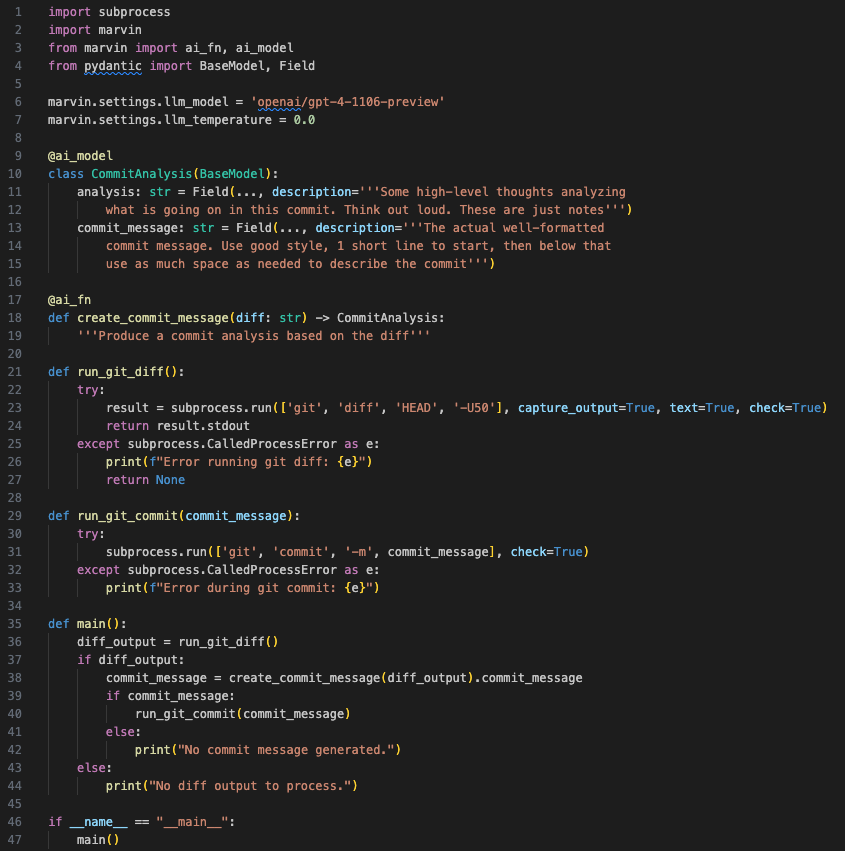
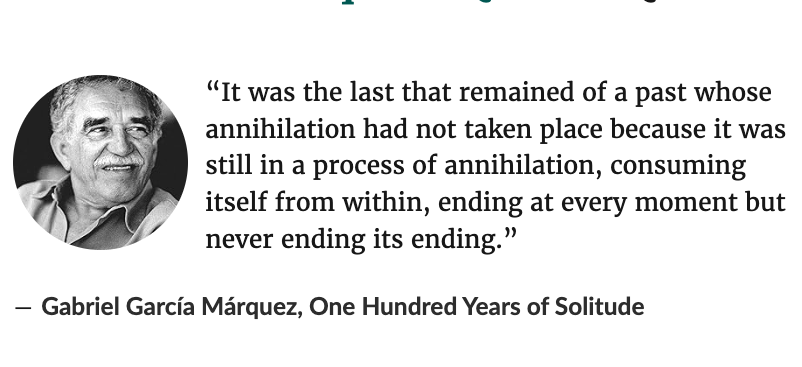
There was a great line I couldn't quite remember from "One Hundred Years of Solitude"
Search engines & ChatGPT couldn't recall it either from my bad description
Wrote a little 20 line program to read the whole book and found it in a minute, cost 25 cents
Wild times we live in
Compute is all you need.
For a given amount of compute, ViT and ConvNets perform the same.
Quote from this DeepMind article: "Although the success of ViTs in computer vision is extremely impressive, in our view there is no strong evidence to suggest that pre-trained ViTs outperform pre-trained ConvNets when evaluated fairly."
https://t.co/D3Ydv9k7vq
Many state-of-the-art models are mediocre at best.
Many papers lie and manipulate results. Many of these models won brownie points on a manicured dataset.
That's it.
When you show them messy production data, most of these models are shit.
Don't fall into this trap.
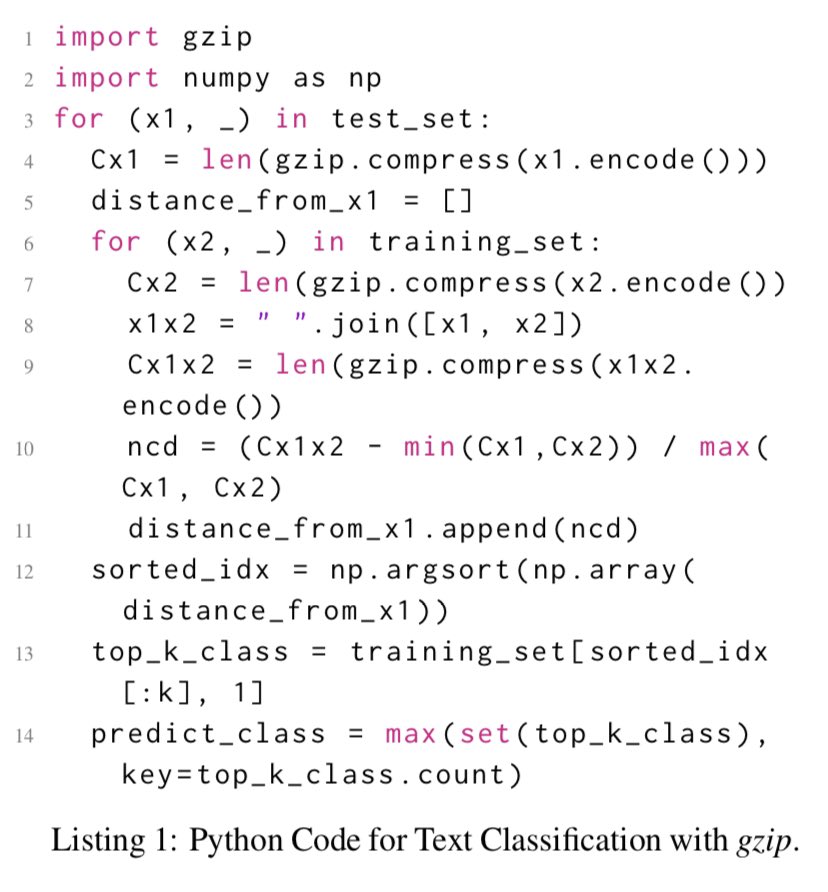
this is wild — kNN using a gzip-based distance metric outperforms BERT and other neural methods for OOD sentence classification
intuition: 2 texts similar if cat-ing one to the other barely increases gzip size
no training, no tuning, no params — this is the entire algorithm:
Unpopular opinion, but I think it's way more difficult to use Generative AI in an area where you are a rank beginner than in a field where you have some subject matter expertise in.
For example, you can ask GPT-4 to build you a front end, but if you don't know anything about tailwind css or react, you're going to get something very generic. Conversely if you never performed a SWOT or sensitivity analysis, you wouldn't be able to tell if the output you got has any real insight.
On the image generation side, sure you can get some neat pictures out of the box, but if you understood principles of lightning, different artists styles, exposure/aperture, depth of field, camera variants, you can get some truly stunning results.
Generative AI is not a tool for the ignorant. But it truly rewards those who are patient and curious.
I'm surprised how many people aren't using AI Chrome extensions yet.
Stop limiting yourself to just ChatGPT.
Here are 5 new AI chrome extensions that will turn you into a productivity machine:
GPT-5 is not going to be AGI.
It's almost certain that ~no~ GPT model will be AGI.
It's highly unlikely any model optimized using methods we use today (gradient descent) will ever be AGI.
The GPT models coming out will change the world for sure, but the over-hype is wild.
The moment we've all been waiting for is finally here!
🔥 Midjourney v5 has officially launched, and it's a game-changer! 🔥
I've put it to the test using my favorite prompts from the BestAIPrompts bundle: just mind-blowing! 🤯
🧵 Let's dive into #Midjourney v5 capabilities.
Promises are debt:
🔥 My experiments with GPT-4 🔥
Less than 24 hours have passed, but I couldn't resist testing its limits. There are some surprises in store!
🧵 A thread
Some takeaways after reading the GPT-4 paper: https://t.co/8KNRTErnJa
The good:
1) The model now accepts multimodal inputs: images and text
2) The paper is surprisingly honest: "While less capable than humans in many real-world scenarios...", "GPT-4's capabilities and limitations create significant and novel safety challenges"
3) The model performs well on academic exams -- I am not sure this is real-world utility, but it's at least showing that language models maybe have improved reasoning capabilities now
The bad:
4) I was hoping to find some more information in there compared to the blog post. I am bit disappointed.
5) We don't learn anything about the model except "GPT-4 is a Transformer-style model pre-trained to predict the next token in a document, using both publicly available data (such as internet data) and data licensed from third-party providers". What are the sizes of the model and the dataset?
6) We learn that "The model was then fine-tuned using Reinforcement Learning from Human Feedback (RLHF)" -- they cite a 2017 paper outlining a general RLHF mechanism, and it's unclear what exact method they used. Is it similar to InstructGPT?
Unfortunately, as a researcher, I didn't find the paper very informative.
During a major cricket tournament, Disney+ Hotstar captured 5 billion emojis to distill the mood of the 50 million-strong streaming audience in real-time.
Curious how they did it? They revealed the design in an engineering blog post [1]. Let's dive in!






![sahnlam's tweet photo. During a major cricket tournament, Disney+ Hotstar captured 5 billion emojis to distill the mood of the 50 million-strong streaming audience in real-time.
Curious how they did it? They revealed the design in an engineering blog post [1]. Let's dive in! https://t.co/tcZwBLL9Cj](https://pbs.twimg.com/media/Fq1jeffagAYXOi5.jpg)


