Afghan women in Balkh province, in northern Afghanistan, are facing new restrictions under the Taliban, with hospitals and clinics ordered to stop using female patients’ names in official documents, prescriptions and medical records, instead referring to them as “Bibi.”
The directive comes amid a wider crackdown that has barred women from medical training and further restricted their access to qualified healthcare providers.
As long as as the Jewish American leadership keeps running cover for genocide, American Jews will be blamed for it. It’s not complicated. We need to change these institutions from within.
Settling score with the 1970s? May explain why UAE walked away from OPEC and why Trump has recently been saying US dispute with Iran is 51 years old—back to 1974.
Once upon a time the market for small single-family homes was dominated by houses built in factories with low prices and rising productivity.
Congress deliberately crippled the sector but we can bring it back.
https://t.co/ttoK82v1v9
#BREAKING: New restrictions on Afghan women. Taliban group in Balkh have ordered officials to stop using women’s names in official documents, even medical records and prescriptions.
The world, United Nations and international community must not remain silent.
Culture wars between India and Pakistan are not new.
But the neuralgia with which Hindutva majorities are responding to Pakistan’s tv serials to demand Netflix bans is bizarre. It almost feels like a huge market of consumers is seeking protection from Pakistani digital content.
Many of us have never espoused bans for more than one reason, but have sadly stopped watching most mainstream Indian films on streaming platforms because the blockbusters now often focus on demonising Pakistan as a cardboard cutout country full of Indian-haters bent on subverting its neighbour.
This is the baffling stereotype that gets blown by the Pakistani serials. The complex multi-ethnic social fabric of both urban and rural Pakistan on display in these shows leaves a lot to be desired, particularly on the agency women characters should be allowed to exercise at least for standard-setting and role modelling. But it is dramatically in contrast with the surma-eyed, fanatical young muscular men stereotyped in laughable Bollywood content about Pakistan.
Either way, Indian manhood is surely not so seminally challenged by Abubabakr, the soft spoken urban professional in Dar-I-Nijaat, that Netflix bans on upcoming serials are being considered in India. He’s the quintessentially nice, mama’s boy next door that every society lives with, but mostly ignores. How does this damage the fragile Indian film makers’egos or business? Bollywood is Bollywood, paranoia and all. It has its own market share, but no, more is at play here.
The Pk play industry is just doing its thing : churning out good, bad and mediocre content without thinking about a cultural colonisation of India. In fact Pakistan is probably watching DIN less obsessively than Indian audiences,especially women, but even so,we are watching entertainment that is not targeted at vilifying the other. We are consuming what is entertainment, or art or culture, as just that. Pakistan is just busy being well, Pakistan. Not using its serials as an exercise in soft power flexing, it is simply doing what it does best: make memes, plays and reels about its own lives.This doesn’t threaten our identity,nor does it make us one-dimensional either socially, politically or culturally.
The debates unleashed on identity & culture in India about a few above-average Pakistani plays is unreal.
Pakistan's first Netflix original is commissioned by Netflix MENA,not Netflix India. For many like me,no external categorisation boxes my country’s identity into a binary choice between West or South Asia.Simply because no one gets to define my identity,region or sense of history.
And no, India does not get to redefine my borders either, despite some of its so-called progressive MPs demanding a dismemberment of Pakistan based on a feverishly unsupported mythology on cross-border terrorism.
Geopolitically we are now in a totally different strategic & diplomatic space,and no,we are not even making plays about missing Rafales. Several global entities & capitals now acknowledge that Pakistan is a peacemaker, solution-seeker to conflict,including FATF,the UN,others.Look around. Pretty much everyone.
One could say a lot more about the new Indian weaponisation of water here, as this is a new humanitarian low being crossed, because that too falls into the same mind-set of serial insecurity that our big neighbour has fallen into. Chauvinism is never about being strong,as any feminist will tell you. Quite the opposite.Confident countries act confident.
Will this change? Who knows. Pakistan doesn’t even study India like they do us.The Indian left still has great intellectual vigour, but it’s taking a battering from uber-nationalist majorities, shrinking political space for many to be rational about the region.
We act decisively when attacked,but generally Pakistan does a bad job at pathologically hating others, thank god for that.
Meanwhile, it would be great if some folks in the new India also grew up.
We’re cool.
In light of the Supreme Court’s decision on Quebec’s Bill 21, it’s worth revisiting what Pierre Elliott Trudeau said on April 17, 1982, the day the Charter was proclaimed:
“For if individuals and minorities do not feel protected against the possibility of the tyranny of the majority, if French-speaking Canadians or native peoples or new Canadians do not feel they will be treated with justice, it is useless to ask them to open their hearts and minds to their fellow Canadians.”
https://t.co/C4gmZye1f9
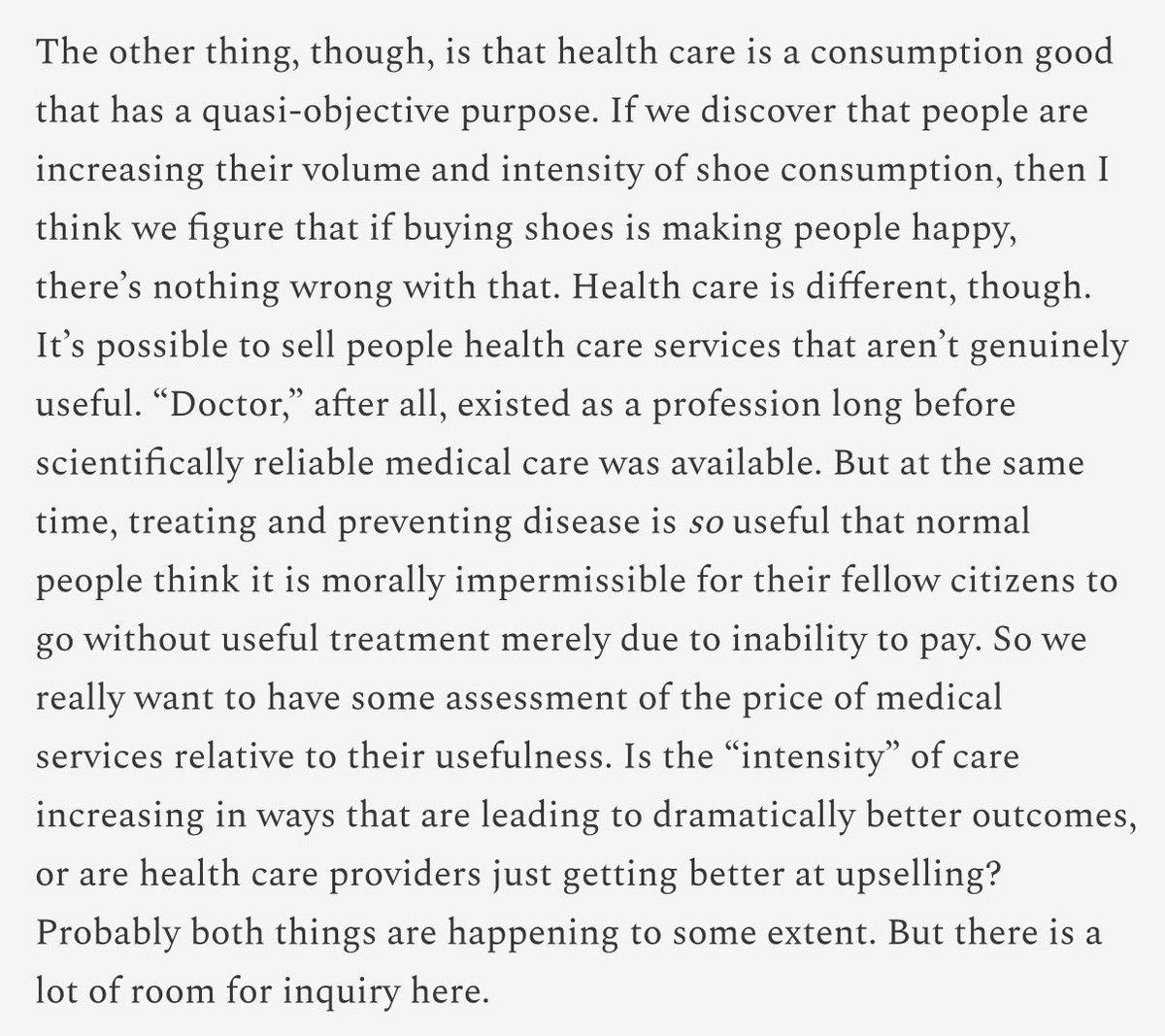
We know from the long history of the medical profession that there is and always has been money to be made in selling treatments that don’t work, even as it’s also true that modern science gives us lots of treatments that work.
https://t.co/s12oBRGYWc
Has the government adopted ‘STRATEGIC CONFUSION’ as substitute to a well-thought through & publicly articulated policy on the very critical issue of new provinces ?
Watch what govt’s principal Spokesperson @TararAttaullah says in #NasimZehraAtPakistan @24@24NewsHD
https://t.co/gFDuzSR63H
What Carney can't quite say aloud, and what some Canadians don't even understand, is that Quebec really is a nation within a nation, with its own system of civil law and its own cultural protections. Its secularism came from the Quiet Revolution of the ’60s, which broke Quebec away from the Catholic Church, and it became central to their national identity.
So much of what makes Canadian federalism work is our willingness to accommodate these differences, even when we find them very uncomfortable. I don't agree with Bill 21 at all, but I understand the political reality here and why the case against it has to be won in Quebec, not imposed from Ottawa.
A September Emerson College poll found that Abdul El-Sayed had a higher favorability rating among Michigan voters than Gretchen Whitmer's job approval rating – 49% to 45%.
As @EliClifton and Ian Lustick wrote in their book on the Israel lobby, many pro-Israel organizations are not only acting against US national interest, they also constitute a threat to American democracy by infringing on the freedom of speech of Americans.
"Why can't you verify this? It's embarrassing."
Dr Feroze Sidhwa, one of the doctors in the new documentary 'American Doctor', on what happened when he went on CNN to talk about Gaza.
Watch: https://t.co/9ywjtL8PsY
I often wonder why India feels so threatened by Pakistani art and drama. For generations, Pakistanis embraced Bollywood wholeheartedly, connecting with its culture, characters and narratives.
Of late, however, Bollywood seems desperate to project a hyper-modern India through live-in relationships, sexual liberation and changing social norms. While this may appeal to some, it risks alienating a large section of a population that remain culturally conservative.
Pakistani dramas, meanwhile, continue to explore the family dynamics, emotional complexities and social realities that resonate deeply across the subcontinent.
Perhaps that explains their enormous appeal in India, despite every attempt to curtail their reach.
Kara Swisher on why she left CNN: "I don't like the owners... When David Ellison said, 'We want to talk to the center,' I'm like, 'Who is that?' There's no center, there's either facts or not facts."