OpenAI engineers just dropped a f*cking gold
fix for agent evals that score 100% and still miss bad answers
in their synthetic support-agent demo, one variant passed every rule check. an LLM answer judge passed only 7/10 replies. Here's the eval stack to steal:
> define each case before you run it: expected tools, required action, escalation rule, and claims the agent must never make
> check the trace mechanically: did it follow policy, call the right tools, take the right action, and escalate when required?
> grade the reply separately against the ticket, policy, and captured tool results: does it explain the outcome and next step without inventing facts?
> blind the judge to the variant, model, cost, and expected action labels; log coverage, errors, and disagreements. a judge pass never erases a rule failure
> hand-label edge cases first: a valid paraphrase, a missing next step, an unsupported refund promise. tune the rubric before it becomes a release gate
save this before your next model swap: a clean workflow trace does not prove the customer got a grounded answer. gate both, then compare cost and latency
holy sh*t, this paper is pure f*cking brilliant
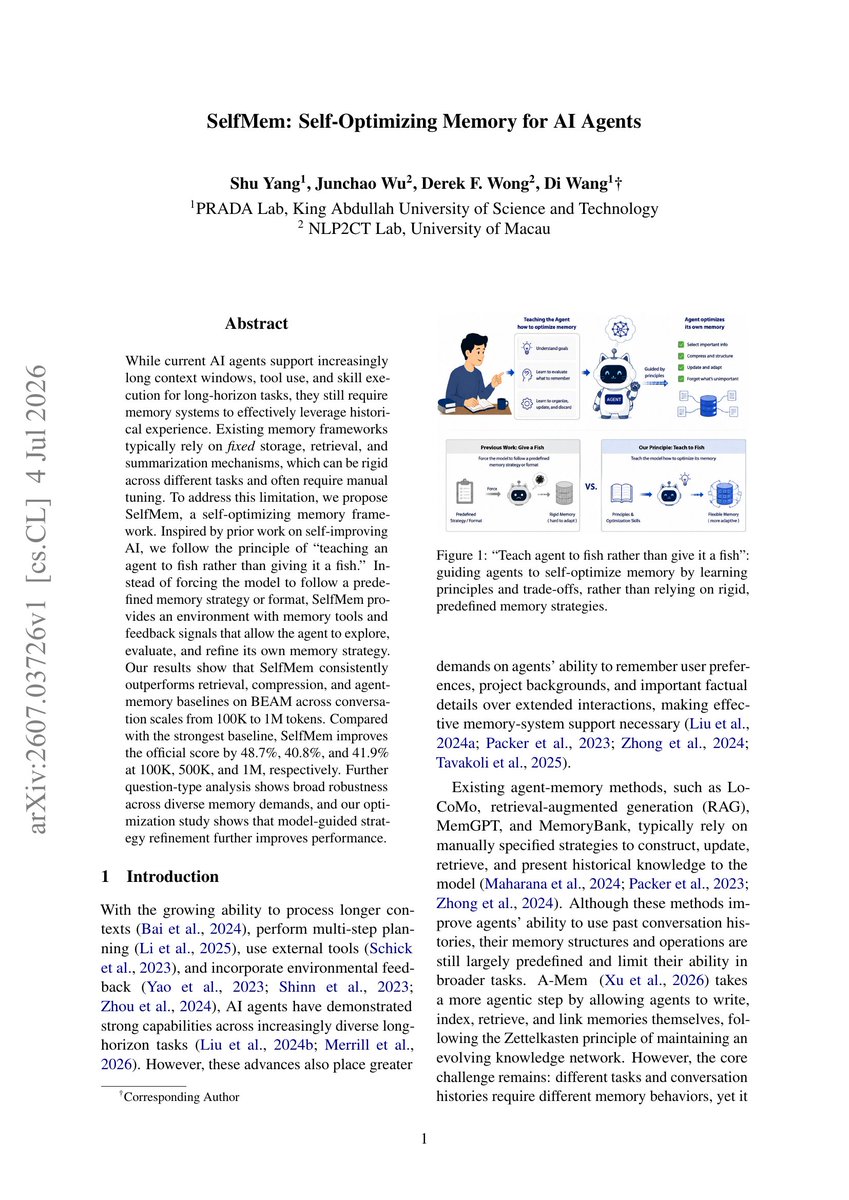
AI researchers just showed a useful way to give AI agents long-term memory
the interesting part is the control loop. instead of forcing every conversation into one fixed summary, the agent can inspect, write, review and revise its own memory
step 1 → keep the raw conversation as a read-only source of truth. memory is a guide, not the final authority on what happened
step 2 → give the agent tools to search the transcript and inspect the memory it already has
step 3 → let it choose what to store. stable preferences and project context may belong in memory; exact dates and changing facts can stay in the transcript until needed
step 4 → make each memory change explicit: what changed, where it went, and why
step 5 → run a review pass for weak source support, stale details, contradictions and facts that will be hard to find later
step 6 → revise the workspace after that feedback. memory writing becomes an inspect → write → review → revise loop
step 7 → when the user asks a question, pair the compact memory with the specific transcript turns that support the answer
the paper reports a 0.504 score at 100K tokens versus 0.339 for its strongest baseline. at 1M tokens, it reports 0.454 versus 0.320. those are benchmark results, not a production guarantee
my takeaway: the valuable design choice is keeping memory small and editable while keeping the original evidence close enough to check
save this, then read the article + paper below
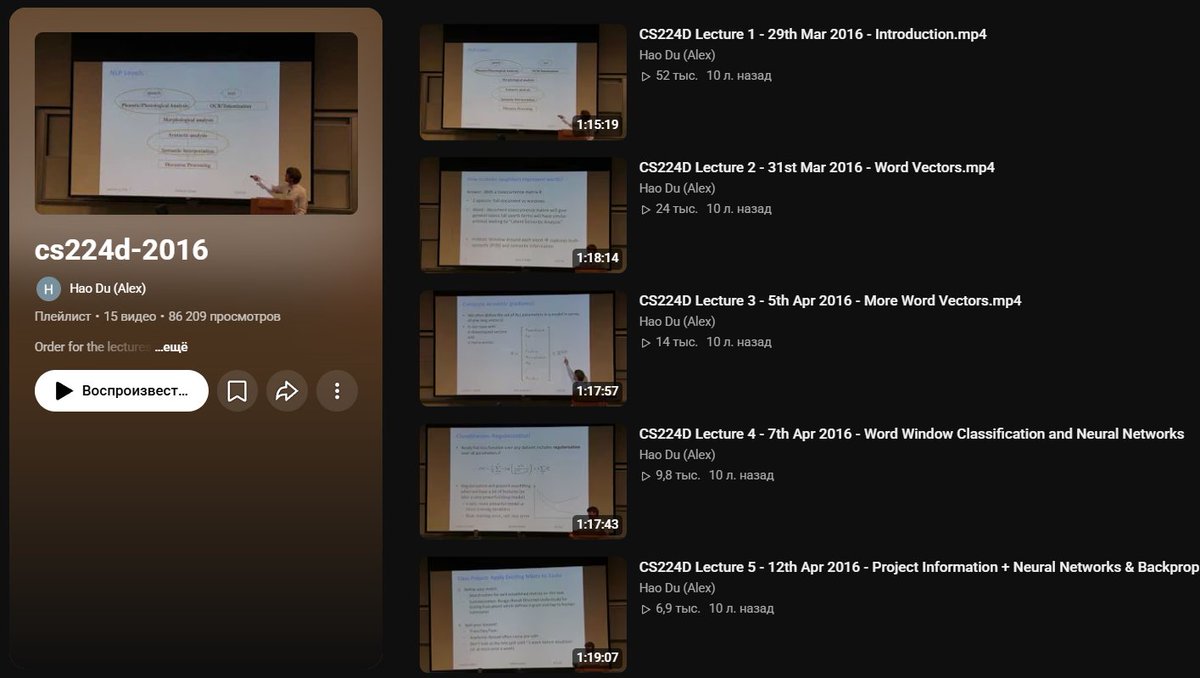
A friend at Anthropic told me this.
Anthropic pays $650,000 a year for people who truly understand how LLMs learn.
This exact Stanford course is free forever.
Most AI courses charge $2,000+ for this foundation.
This one is completely free.
You get the real technical foundation, taught at Stanford by Richard Socher.
Save this ⭣
OpenAI engineer just dropped a Codex harness playbook that helps agents debug their own work
the harness they built, piece by piece:
> the empty-repo start: Codex generated the scaffold, CI, formatting rules, package setup, app framework, and even AGENTS.md
> the first bottleneck: high-level tasks needed tools, abstractions, and structure the environment did not yet provide
> the review loop: Codex checks its own diff, gets targeted agent reviews, acts on feedback, and iterates on the PR
> the agent's eyes: a runnable app per worktree, Chrome DevTools for UI checks, and local logs, metrics, and traces
> the repo map: a short AGENTS.md points to versioned architecture docs, plans, specs, and known debt
> the guardrails: fixed domain layers, structural tests, and custom lints whose errors explain the repair
> the long-term memory: recurring review comments and bugs become docs or tooling; cleanup tasks catch drift
INTENT → REPO MAP → TOOLS → CODEX → CHECK → UPDATE ↺
one test for your repo: can the agent find the rule, see the failure, verify the fix, and leave a clearer path for the next run?
save this, then read the article below
this is pure f*cking treasure
20 useful GitHub projects for a system that captures sources, connects ideas, remembers context, and helps agents act on it
your second brain should get sharper after every session
CAPTURE THE INPUT
01 Chubby Skills
▸ https://t.co/InxyRwMZtz
02 OpenWiki
▸ https://t.co/bLeUouBLuu
03 Agent Second Brain
▸ https://t.co/WANfN9tVP4
04 DocMason
▸ https://t.co/rQsMrIDGh0
05 DocsAgent
▸ https://t.co/R8DF9NI0tt
CONNECT THE IDEAS
06 claude-obsidian
▸ https://t.co/uhwe1f5n6X
07 SwarmVault
▸ https://t.co/QNxk0QvLYH
08 sage-wiki
▸ https://t.co/OQIkSucHAA
09 Vault Curate
▸ https://t.co/FeR1r3vLle
10 COG Second Brain
▸ https://t.co/1gtpmSyJuy
REMEMBER WHAT MATTERS
11 Hindsight
▸ https://t.co/3cXNIFAyDN
12 memU
▸ https://t.co/iCoOwoBIT3
13 TencentDB Agent Memory
▸ https://t.co/i2DaJnwGhu
14 agentmemory
▸ https://t.co/3OlbQk5CPq
15 OpenViking
▸ https://t.co/Ydr8K54XxW
PUT IT TO WORK
16 Open Second Brain
▸ https://t.co/DiOBxmK4Gh
17 Second Brain Cloudflare
▸ https://t.co/WlokLe12JV
18 makerskills
▸ https://t.co/Q1RQFhStsL
19 Row-Bot
▸ https://t.co/I1KBQwA7hk
20 MateClaw
▸ https://t.co/N9vGfry4no
the loop:
capture the source → turn it into linked, checkable knowledge → recall the right context → act with it → write the correction back
3 builds I'd explore:
creator: Chubby Skills → SwarmVault → Hindsight → makerskills
researcher: DocsAgent → sage-wiki → memU → Row-Bot
team: DocMason → COG Second Brain → TencentDB Agent Memory → MateClaw
save this, then build a second brain for your business ⭣
this paper is f*cking brilliant
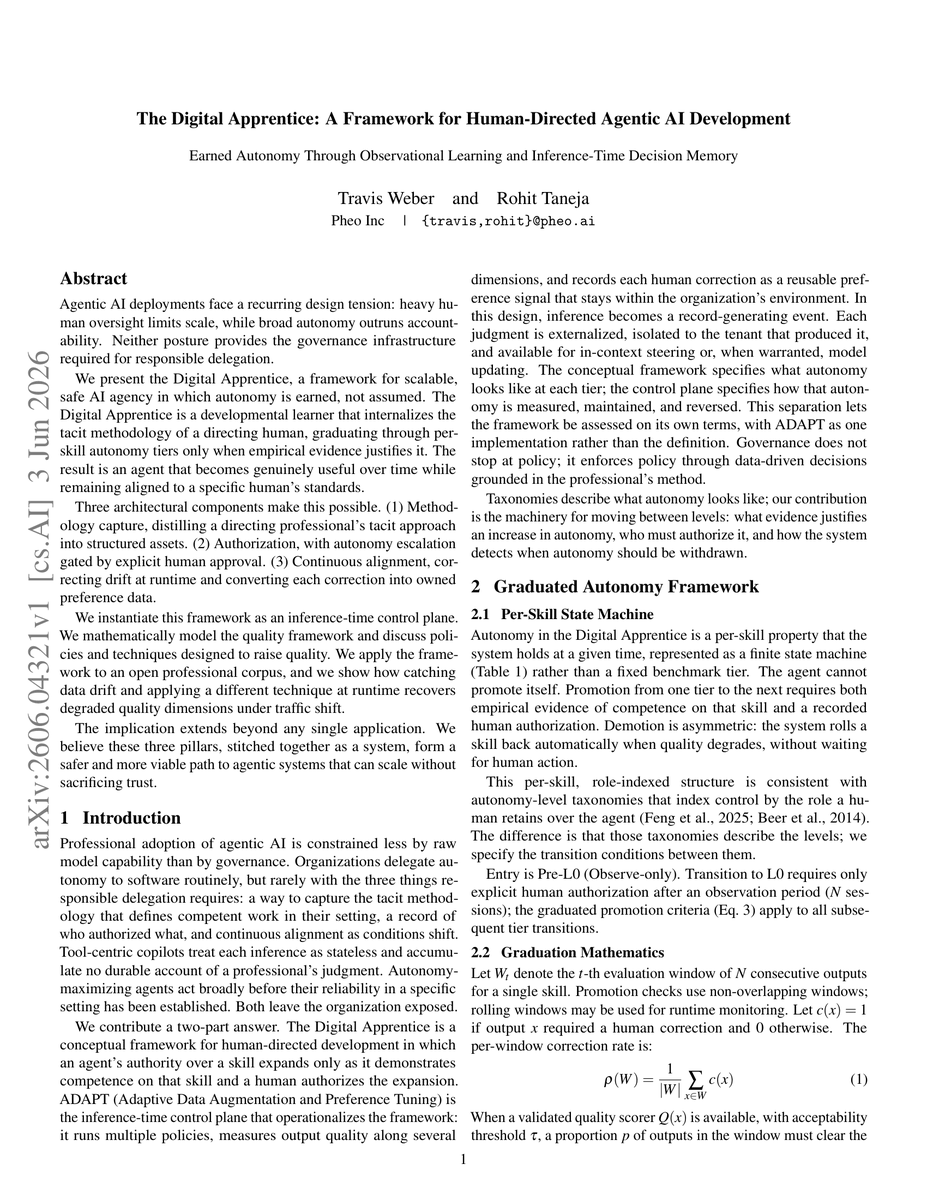
a computer science paper builds the Digital Apprentice framework to grant AI agents earned autonomy
the result: per-skill authorization gates and inference-time quality control expand agent authority only when backed by empirical proof
the crazy part is how earned autonomy replaces blanket agent permissions
agents start at low-autonomy tiers, learn tacit expert methodology, and require explicit human authorization to graduate to high-risk tasks
most developers either grant full autonomous control or restrict agents to stateless copilot prompts
this framework establishes a progressive governance control plane for safe AI delegation
read the complete paper + article below
bookmark it for future reference
holy sh*t, someone mapped an entire company into 388 AI agent skills
every solo builder can steal the workflow
this repo covers 20 domains across engineering, product, marketing, finance, sales, compliance and research
the patterns:
→ challenge your architecture with a CTO persona
→ turn customer research into a product spec
→ build with engineering and DevOps skills
→ run QA and security checks before launch
→ plan content, SEO, pricing and distribution
→ model budgets and SaaS metrics
→ prepare compliance evidence as you grow
the architecture:
skills define how → agents define the job → personas shape decisions → orchestration connects the work
the part solo builders should steal:
idea → research → spec → build → test → launch → sell
one person can run the whole sequence with a clear job for their agent at every step
save this, then build a second brain for your company⭣
SHOPIFY FACILITATED $378.4B IN SALES IN 2025.
here's the 3-step playbook you can copy:
1/ own a recurring job.
merchants need a storefront and POS before they sell anything. Shopify's subscriptions brought in $2.75B.
your move: make one painful, repeated task easier. charge for a core product that's useful on its own.
2/ host the key event.
buyers purchase from merchants through Shopify's platform. that created $378.4B of GMV — merchant sales, not Shopify revenue.
your move: design your product around the transaction or usage event your customer cares about most.
3/ solve the next problem at that moment.
Shopify offers payments, FX, lending, shipping, hardware and ads around merchant activity. merchant solutions brought in $8.8B, or 76% of its revenue.
your move: add ONE optional service when it saves the customer time or money. you can integrate an existing provider; you don't need to build a payment network.
example: booking software → paid scheduling tool → payment collection when a booking happens.
track 4 numbers: active customers, key-event volume, add-on adoption and gross profit. Shopify's merchant solutions had ~38% gross margin vs ~81% for subscriptions, so extra revenue isn't automatically better revenue.
steal the architecture, not the scale. the one-page worksheet is below ↓
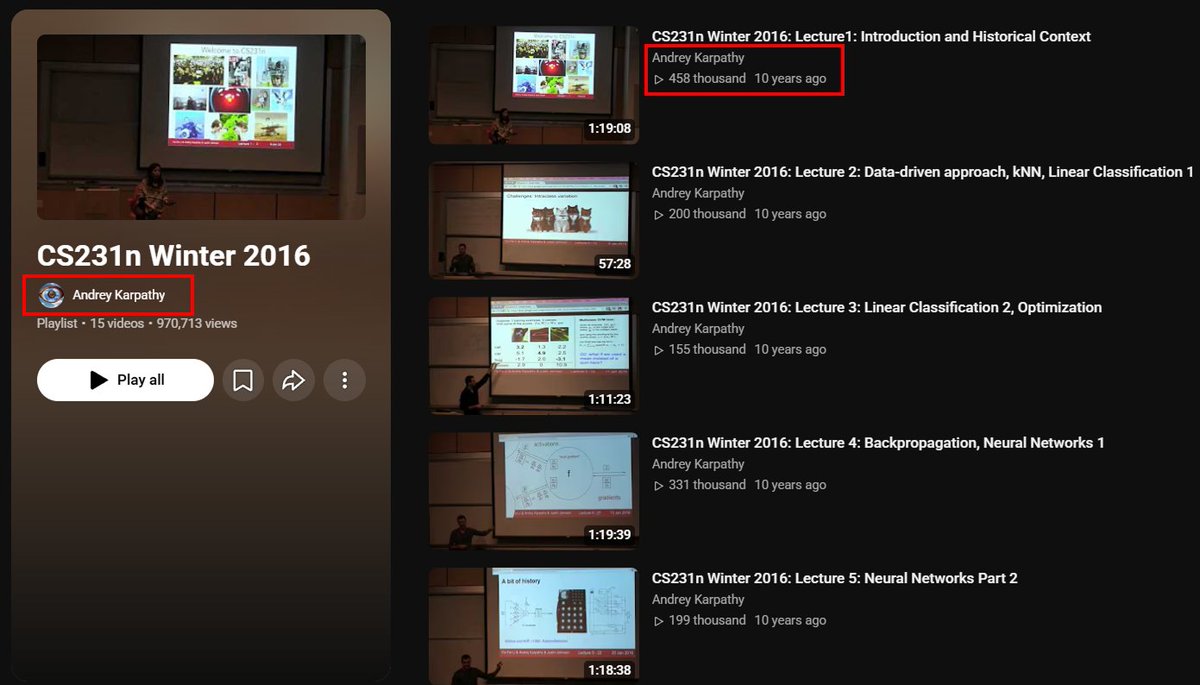
My friend works at Anthropic.
He said they pay $650,000 a year for people who truly understand convolutional computer vision.
This exact course by Andrej Karpathy is free forever.
Most AI courses charge $2,000+ for this foundation.
This one is completely free.
You get the real technical foundation ➜ taught at Stanford.
Save this ⭣
OpenAI engineer just dropped a Codex harness playbook that helps agents debug their own work
the harness they built, piece by piece:
> the empty-repo start: Codex generated the scaffold, CI, formatting rules, package setup, app framework, and even AGENTS.md
> the first bottleneck: high-level tasks needed tools, abstractions, and structure the environment did not yet provide
> the review loop: Codex checks its own diff, gets targeted agent reviews, acts on feedback, and iterates on the PR
> the agent's eyes: a runnable app per worktree, Chrome DevTools for UI checks, and local logs, metrics, and traces
> the repo map: a short AGENTS.md points to versioned architecture docs, plans, specs, and known debt
> the guardrails: fixed domain layers, structural tests, and custom lints whose errors explain the repair
> the long-term memory: recurring review comments and bugs become docs or tooling; cleanup tasks catch drift
INTENT → REPO MAP → TOOLS → CODEX → CHECK → UPDATE ↺
one test for your repo: can the agent find the rule, see the failure, verify the fix, and leave a clearer path for the next run?
save this, then read the article below