Our new study out in @AnimalConserv ! Lead by @hclnxt & Ninad Gosavi. We highlight the effects of agroforestry plantations on the endemic shrub frog, Pseudophilautus amboli in the Western Ghats Biodiversity Hotspot
https://t.co/RrxRVjpLFT @buceros82@ncfindia @ontheedge_org
New paper in @NatureEcoEvo
We found megaherbivore 🐘🦏 🐃🦬 conservation in India 🇮🇳 have several positive outcomes. While restoring vegetation diversity it also reduces invasive plants dominance. Nature-based solution for restoration! A thread:
https://t.co/iVNAFuuhue
Good to see invasives as main part of the report. Status of invasive plants in India is critical to start seeing forests more than its cover. Kudos to the team for reporting this work and providing restoration priority. 🥳
@wildelock@ninad_mungi@moefcc@ntca_India@MSTrIPES
@hclnxt today will give a speed talk on effects of forest conversion on endemic bush frog demonstrating its impact on populations, habitat-use, and body condition @ 4 pm in room 5 @theATBC 2023 meeting.
Deer are herbivores and classified as ruminants because of their rumen, which helps them digest tough plant matter like cellulose.
But if food is scarce or they lack minerals such as calcium and phosphorus, they may eat meat
Watch this one eat a snake
https://t.co/OF6qhAqpXA
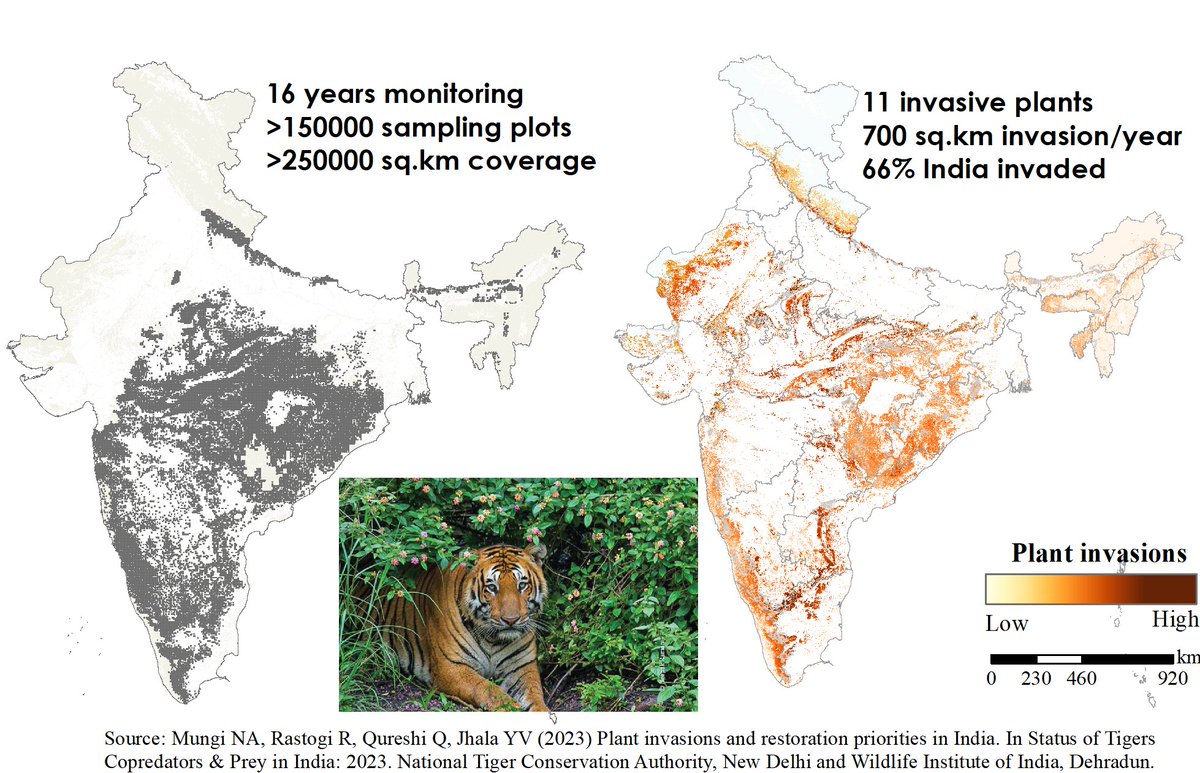
On this #InternationalTigerDay let us remember to conserve ecosystems that tigers epitomize. Biological invasions are rapidly distorting these ecosystems and have threatened majority of tiger habitats. Ecological restoration is critical for sustaining tigers and their ecosystems
@brihadeeshs On a quiet afternoon was roaming around, a bull frog came out of nowhere from a small pool and freaked me out. It was funny thinking about it later though.
Understanding the evolution and origins of grasslands is crucial for better present-day management. Grasslands expanded across most of the global tropics by around 4 million years ago, with increasing hot and dry environments in the tropics during that time.