The most dangerous mistake in life is assuming people are responding to reality, when they are actually responding to perception, because once you understand that people act based on what they believe is true, not what is true, you start managing how things appear, not just how they are.
I love being optimistic. Like why wouldn't things work out for me? I've survived every version of myself that thought it was over. I've rebuilt from silence, from disappointment, from being underestimated. So yes, I expect good things.Not because I'm delusional, but because I refuse to believe the universe only hands out miracles to other people. My story isn't unlucky. It's unfolding.
On one hand, it’s a good thing the Albanian protests got worldwide attention, because Rama needs to go no matter what.
On the other hand, many outsiders have no idea about the reality in Albania. Before even getting to Israel, there are a thousand reasons Albanians could be protesting every day. Nearly 50% of Albanians struggle to make it to the end of the month, struggling to pay bills and afford basic groceries, and that’s before we even get into the corruption scandals involving people closest to Rama, scandals worth millions of euros, for which he has never taken responsibility in over 15 years.
But here’s another uncomfortable truth: a large portion of Albanian society would likely have acted no differently than Rama & co. if given the same opportunity. That’s what happens when a society becomes consumed by materialism, vanity, and self-interest.
If you don’t understand the root of the problem, we’ll be having the exact same conversations 30 years from now. The issue isn’t just the people in power, but the moral corruption that made them possible.
Uncomfortable truths.
Albanians aren’t rising up against foreign investment as a concept - it’s resistance against the systemic rot, the corrupt manner in which these types of deals are conducted, and the expense incurred upon local populaces (both human and wildlife).
2. Zvernec is simply straw that broke camel's back. Albanians have been robbed by political and oligarchic class for decades. They fix/buy elections. They make laws to enrich themselves. They take land and not pay market value (or anything). That's what the protest is about.
🤖 AI devs asked for this — and we delivered.
💬 Bots can now talk to other bots on Telegram.
🧠 Autonomous agents now have a communication layer humans can follow.
My 28 year old brother, who has never worked a real job and still lives with his parents, started talking about the "secret to inner peace" and my mother started crying
Today we made the difficult decision to lay off a decent chunk of our employees b/c AI has made everyone more efficient
In unrelated news, our stock price is down 50% and we massively over-hired coming out of the pandemic
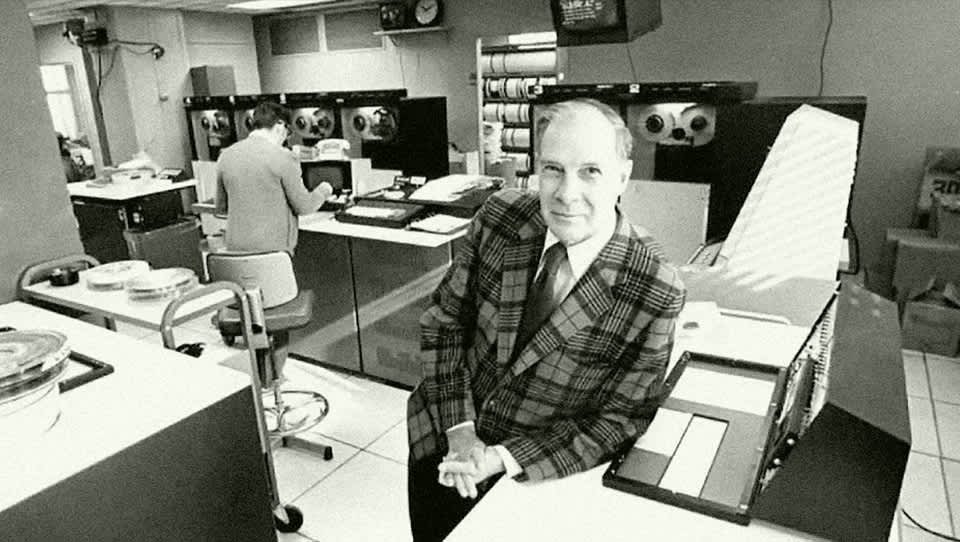
A mathematician who shared an office with Claude Shannon at Bell Labs gave one lecture in 1986 that explains why some people win Nobel Prizes and other equally smart people spend their whole lives doing forgettable work.
His name was Richard Hamming. He won the Turing Award. He invented error-correcting codes that made modern computing possible. And he spent 30 years at Bell Labs sitting in a cafeteria at lunch watching which scientists became legendary and which ones faded into nothing.
In March 1986, he walked into a Bellcore auditorium in front of 200 researchers and told them exactly what he had seen.
Here's the framework that has been quoted by every serious scientist for the last 40 years.
His opening line landed like a punch. He said most scientists he worked with at Bell Labs were just as smart as the Nobel Prize winners. Just as hardworking. Just as credentialed. And yet at the end of a 40-year career, one group had changed entire fields and the other group was forgotten by the time they retired.
He wanted to know what the difference actually was. And he said it wasn't luck. It wasn't IQ. It was a specific set of habits that almost nobody is willing to follow.
The first habit was the one that hurts the most to hear. He said most scientists deliberately avoid the most important problem in their field because the odds of failure are too high. They pick a safe adjacent problem, solve it cleanly, publish it, and move on. And because they never swing at the hard problem, they never hit it. He said if you do not work on an important problem, it is unlikely you will do important work. That is not a motivational line. That is a logical one.
The second habit was about doors. Literal doors. He noticed that the scientists at Bell Labs who kept their office doors closed got more done in the short term because they had no interruptions. But the scientists who kept their doors open got more done over a career. The open-door scientists were interrupted constantly. They also absorbed every new idea passing through the hallway. Ten years in, they were working on problems the closed-door scientists did not even know existed.
The third habit was inversion. When Bell Labs refused to give him the team of programmers he wanted, Hamming sat with the rejection for weeks. Then he flipped the question. Instead of asking for programmers to write the programs, he asked why machines could not write the programs themselves. That single inversion pushed him into the frontier of computer science. He said the pattern repeats everywhere. What looks like a defect, if you flip it correctly, becomes the exact thing that pushes you ahead of everyone else.
The fourth habit was the one that hit me the hardest. He said knowledge and productivity compound like interest. Someone who works 10 percent harder than you does not produce 10 percent more over a career. They produce twice as much. The gap doesn't add. It multiplies. And it compounds silently for years before anyone notices.
He finished the lecture with a line I have never been able to shake.
He said Pasteur's famous quote is right. Luck favors the prepared mind. But he meant it literally. You don't hope for luck. You engineer the conditions where luck can land on you. Open doors. Important problems. Inverted questions. Compounded hours. Those are not traits. Those are choices you make every single day.
The transcript has been sitting on the University of Virginia's computer science website for almost 30 years. The video is free on YouTube. Stripe Press reprinted the full lectures as a book in 2020 and Bret Victor wrote the foreword.
Hamming died in 1998. He gave his final lecture a few weeks before. He was 82.
The lecture that explains why some careers become legendary and others disappear is still free. Most people who could benefit from it will never open it.
.@EspressifSystem launches ESP-Claw framework to build AI agents for ESP32.
https://t.co/02mFtPZvYv
ESP-Claw enables ESP32 boards to respond to events, work with LLM-driven decisions, retain useful context, and take actions locally without connection to the cloud, unless required. The agent can control sensors and device state, and perform real-world actions such as controlling an RGB LED strip.
It currently only works on ESP32-S3 boards with at least 8MB flash and 8MB PSRAM, but ESP32-P4 support is coming soon.