@camarones3000 Se ha demostrado que las plantas también son sintientes y no veo tanto revuelo :’)
Pero claro si no lo pueden directamente antropomorfizar, no cuenta 🤣
#MicrobiologyMonday: Bunsen burners are used to reduce airborne contamination. Data in #JournalSpectrum suggest the practice is not evidence-based and, except in some cases, Bunsen burners can be removed from practice w/o compromising research integrity. https://t.co/1UCgN7UVb2
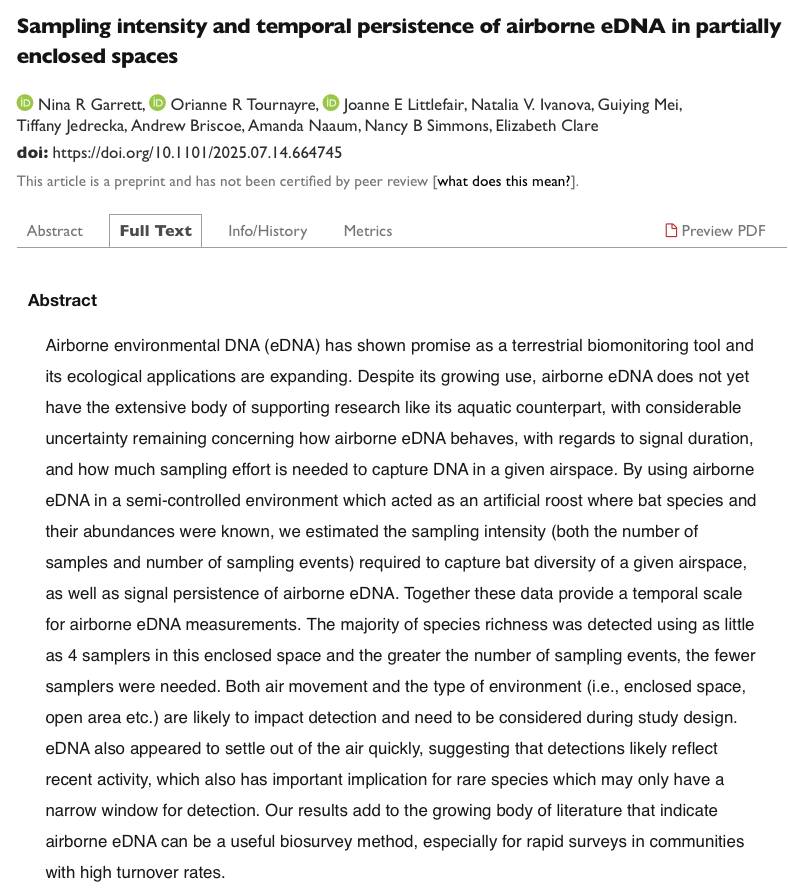
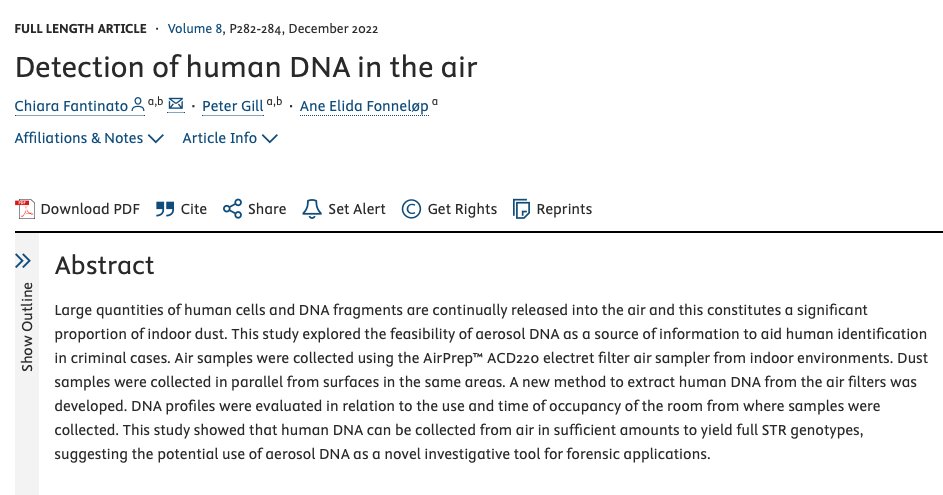
Every time you breathe, saliva droplets are released into the air. These droplets contain DNA, which can be captured from the air and sequenced for the next ~24 hours. So-called "AirDNA" is a relatively new way to do environmental monitoring; you can figure out who entered a room, for example, even if they never touched anything or dropped hair, etc.
DNA eventually settles onto surfaces, and becomes part of dust. You could presumably take the dust from a room and build a genomic record of all the people who have entered that room over the span of many years.
Privacy concerns for all this, of course, but also extremely useful for ambient environmental monitoring / figuring out where pathogens are spreading / tracking animals in the wild.
Valonia ventricosa, or “sea grape,” is the largest single-celled organism on Earth. It’s three-to-four orders-of-magnitude larger than most “normal” microbes. (Yes, the green ball in the image below is a single cell.)
More than 95% of the cell’s volume is taken up by a vacuole. This vacuole is not like cytoplasm; it’s acidic and packed with ions. It’s also filled with big sugar chains, which the cell uses to repair damage on its cell extremities. Each cell has dozens or hundreds of nuclei, pressed tightly against the walls.
One cool thing about sea grapes is that (because they are so huge, and visible to the naked eye) you can directly inject them with chemicals. I gave a $1,000 microgrant (courtesy of Astera) to a team of six working on scaling up Valonia cells as "living bioreactors." They are based out of SPLAT, a community lab in Durham, North Carolina.
Today, when scientists want to “design” a new metabolic pathway, they often use E. coli. The microbes are engineered to express each gene in the pathway, and then these genes are swapped and replaced until the metabolic network starts working. This takes a lot of work and usually requires months of genetic engineering. But with Valonia, what if we could instead test out metabolic pathways by injecting molecules straight into their vacuole? Perhaps sea grapes could become a sort of self-replicating, cell-free system for prototyping ideas.
That's the SPLAT team's idea. I think it's really cool, even though I’m skeptical that Valonia will become a model organism anytime soon. Nobody has ever engineered these cells, for a few reasons:
- They have hundreds of nuclei, each sharing a common cytoplasm pool extending as a thin layer around the whole cell. (Perhaps an extrachromosal plasmid would work?)
- Their cell walls are thick, so electroporation is unlikely to work.
- Nobody knows their genome sequence!
- Even if you get DNA inside, you need to make sure that DNA matches the cells’ abnormal genetic code. After millions of years of evolution, Valonia has reassigned its TAG and TAA stop codons to glutamine.
There are also issues with injecting chemicals into the vacuole. The vacuole is *not* like cytoplasm; it is acidic and packed with molecules that would likely interfere with proteins. So you’d need to find some way to engineer the vacuole environment, and maintain that environment, before you turn Valonia into a prototyping platform. Not an easy problem to solve!
If this idea did pan out, though, the SPLAT team told me that they could transform sea grapes in bulk (”potentially hundreds of thousands at once”) and then grow them to the size of cherries. It’d be a totally new way to prototype metabolic pathways and manufacture chemicals.
And despite the barriers, I’m surprised more people are not studying these organisms. At the very least, we should have better microscopy images and a complete genome sequence. So best of luck to the SPLAT team. I’m glad they are working on hard problems!
Paired scRNA-seq (teeth and BM) from the same MF patients revealed:
- Chondrocytes - the most perturbed stromal subcluster
- Macrophages strongly interact with neural crest stroma, activating osteoclast diff and endochondral ossification programs. 5/14
🔥 Thrilled to share our latest preprint from @rschneiderlab and @MilsomMick
https://t.co/nD5qgHRiMk
We show that a single JAK2V617F clone can simultaneously drive osteosclerosis and bone loss in #myelofibrosis, depending on the niche and stromal developmental origin. 1/14 👇
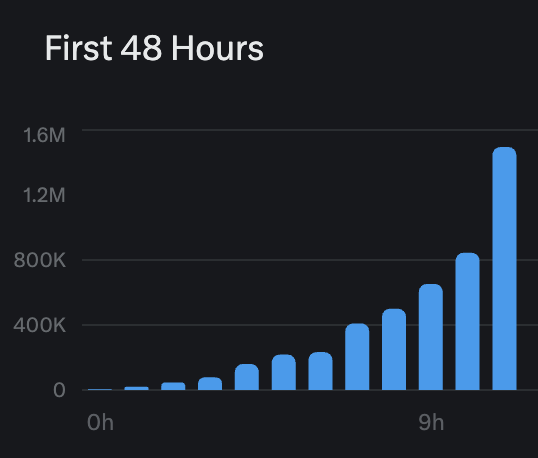
Wasn't expecting this to go so viral...
If only this was last week with @nikitabier's X article contest :)
But seriously, I'm glad that my message has been received.
It's so, so important for the people in your lives that are outside of tech to understand what's happening, because this is going to affect them, and soon.
BREAKING: Apple just proved AI "reasoning" models like Claude, DeepSeek-R1, and o3-mini don't actually reason at all.
They just memorize patterns really well.
Here's what Apple discovered:
(hint: we're not as close to AGI as the hype suggests)