Icelandic ❄IT is my profession. Been in many management roles in IT. Innovation and speed to adapt are the key words. World History and Football both kinds.
The BBC is so utterly enthralled to gender ideology that it took a brave newsreader to correct the teleprompter instruction to say ‘pregnant people’ by instead saying ‘women’ afterwards.
Let’s hope she isn’t cancelled for her rebellion!
I’m not one to brag, but I called the current unraveling in the Middle East—and Iran’s reckoning—with near-prophetic precision last October. Watch and learn. The next phase is already unfolding.
Recently, I've been having Fridays off. Practicing for retirement. Today, I went for a long walk, played an hour of tennis, had a nap, went for a bike ride, boxed on the VR, did a bit of weigh-training, and had a sauna. I'm fucking exhausted. Can't wait to get back to work.
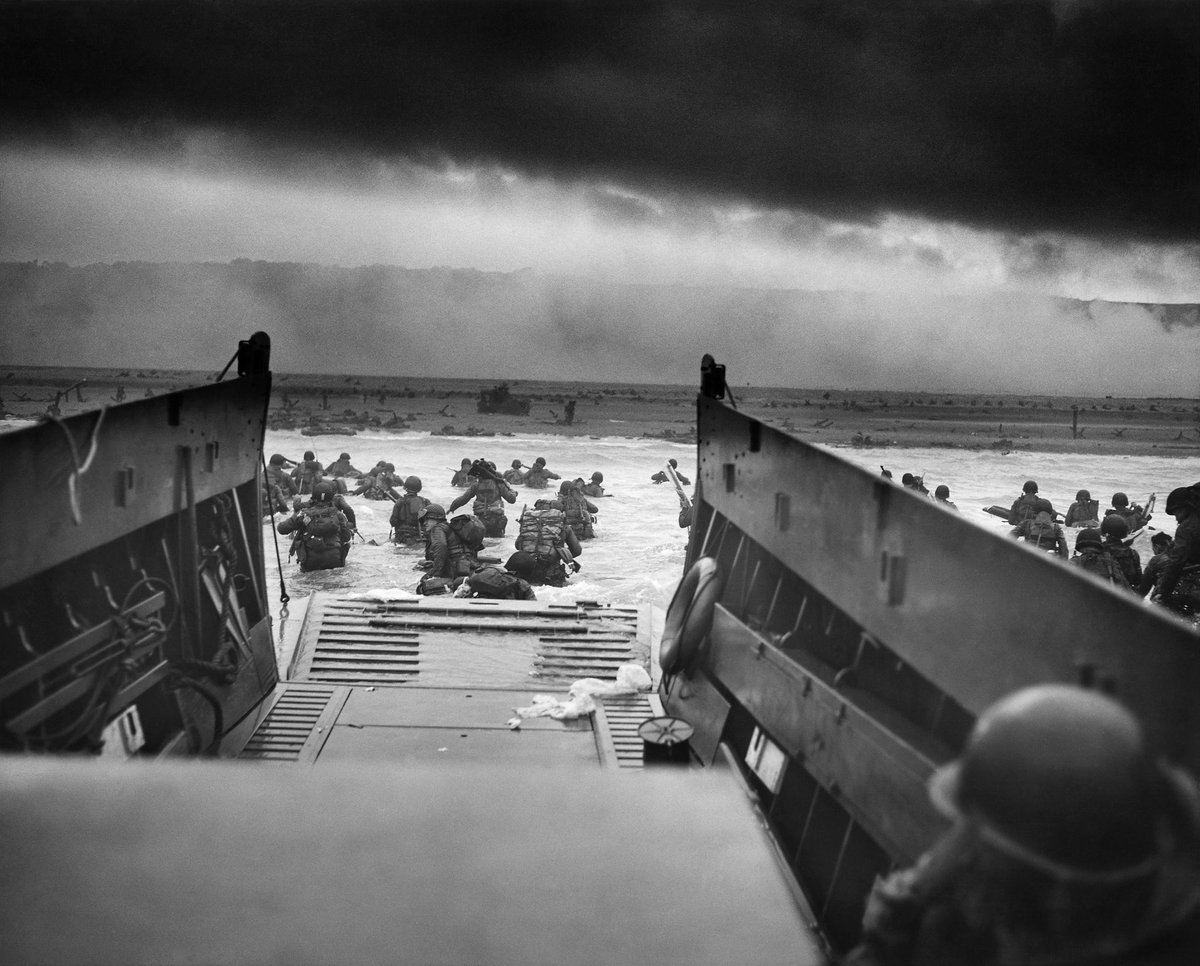
Imagine this as your POV! The sense of entitlement and victim mentally in today’s society is insufferable and must be squashed along with the woke mind virus that’s destroying our nation from the inside out. When I think back to these acts of heroism 81 years ago… I ask what would happen if the same was asked of us today! What would we be defending? A broken borderless Britain! Our battle today ‘in their honour’ starts from within… Their sacrifice will not be in vain! To all the heroes of D-Day and WWII, I salute you and I will continue to fight the good fight to restore peace, order and our proud culture on our christian lands that you once freed! 🫡🇬🇧 #DDay81 🇬🇧🇺🇸🇨🇦🇳🇱
Deeya Khan, kvenkyns múslimi sem ólst upp í Noregi, varð fyrir rasisma en hræddist engu að síður "brúnu kalla með skeggin" meira en allt annað, ræðir hér um banvænar afleiðingar þess þegar við segjum ekkert til þess að bjarga ungum múslimum sem vilja aðlagast, frá þeim öfga öflum sem vilja ekki leyfa þeim það!
In today's Vatnik Soup, I'll discuss extensively why the West is losing the information war. The format is a bit different from earlier ones, but here goes:
The West is losing the information war
Countries like Russia and China have spent years turning disinformation into a central pillar of statecraft. They don’t just lie—they lie loudly, constantly, and across every available platform. They’ve mastered the art of sowing confusion, undermining trust, and deepening political divides inside democratic societies. This isn’t done by accident—it’s done through well-funded, highly coordinated campaigns that blend state media, covert troll farms, social media influencers, and manipulated algorithms.
At the same time, they maintain an iron grip on their own information environments. In Russia, independent media is silenced, dissenters are jailed, and the internet is censored through so-called “sovereign” infrastructure that can block or throttle unwanted content. In China, the state filters all online speech through the Great Firewall, bans platforms like YouTube and Twitter, and floods domestic social media with tightly controlled propaganda. Algorithms are not tools for engagement—they are instruments of obedience.
That’s the key to their advantage: they control what their citizens see while exploiting the openness of our societies. We can’t inject truth into theirs—but they can inject lies into ours. Their disinformation can reach our phones in seconds, while our facts can’t even get past their digital borders. It’s a deeply asymmetrical fight, where authoritarian states operate with speed, scale, and impunity—while democracies struggle to respond without undermining our own values of free speech and transparency.
These regimes don’t wait around for approval. They don’t worry about press freedom or public debate. If they want to launch an influence campaign, they do it—quickly and quietly. They have entire networks producing and spreading their messages in dozens of languages, 24/7.
Worse still, they’ve gotten very good at grabbing attention. They use social media superspreaders, conspiracy influencers, and flashy TikTok videos to package their propaganda into something that feels exciting, rebellious, or funny—even when it’s completely false. They tell simple, emotionally charged stories that spread like wildfire. And all this is supercharged with AI.
And what do we counter that with? Dry press releases from EU officials. Long reports. Monotone statements from diplomats. Detailed debunking articles hidden behind paywalls, or buried deep in PDF reports that almost no one reads. Good intentions—delivered with all the flair of a tax form. Most of it never reaches the people actually being targeted by disinformation. It’s not that we don’t have the facts—it’s that we’re terrible at making people care about them.
Meanwhile, the information battlefield has already shifted. In Finland, half of teenagers between 13 and 18 now get their news from TikTok. And it’s not just influencers and entertainment—even North Korea is now publishing propaganda on the platform. That’s the level of reach and adaptability we’re up against. Authoritarian regimes are speaking directly to the next generation, using their language and their media. And we’re still whispering from behind paywalls and official podiums.
We’ve already seen how devastating information warfare can be when left unchecked. In January 2014, 60% of Russians had a positive view of Ukrainians. Then the Kremlin launched a relentless defamation campaign on national TV and social media—painting Ukrainians as Nazis, traitors, or puppets of the West. By 2015, the numbers had flipped: 60% of Russians now had a negative view of Ukrainians. This is how propaganda works. And when you control the entire information ecosystem, it works terrifyingly well.
But at the same time, Ukraine learned to fight back. Since 2014, and especially after Russia’s full-scale invasion in 2022, Ukrainians have treated information like a front line. They’ve built partnerships between government, civil society, and creative communities. They’ve used humor, memes, music, and viral videos to expose lies and boost morale. They work around the clock—not because it’s trendy, but because they understand just how destructive these manipulation campaigns can be. In Ukraine, disinformation isn’t an abstract threat—it’s a weapon that softens targets before the bombs fall.
Take Russia: it’s spending nearly $2 billion a year on state propaganda. China’s media operations are even more extensive and opaque. Meanwhile, the European Union is spending a tiny fraction of that trying to defend the truth.
It’s not just about money—it’s about mindset. We’ve been playing defense, trying to fact-check lies after they’ve gone viral. That’s not enough. We need to get ahead of the problem.
And we can’t just focus on short-term fixes. Both Russia and China plan their information strategies decades ahead—and we should too. That means giving more resources and support to modern media creators—influencers, podcasters, digital artists, futurists, analysts, visionaries. These are the people shaping how millions think and feel. We need to invest in the platforms, voices, and formats that actually reach people today.
We also need to build long-term resilience. We need to build a vaccine against online disinformation. And that vaccine is education.
That means warning people before the lies start spreading. It means teaching media literacy in schools, so young people know how to spot manipulation. It means putting clear, truthful, engaging content in the places where people actually spend time—YouTube, TikTok, Instagram—not hiding it away on obscure government and EU websites.
But defense alone won’t win this war. We must take the fight to the adversary’s doorstep. Authoritarian regimes have real vulnerabilities—corruption, repression, inequality, and elite hypocrisy. These are pressure points we should be targeting with truth-based messaging that empowers dissent, exposes abuse, and undermines their control over public perception. This isn’t about regime change—it’s about using facts to challenge the myths they rely on to stay in power. Just like they exploit our openness, we must be willing to expose their rot.
This isn’t about copying authoritarian tactics. It’s about defending the values we care about—freedom, transparency, democracy—with creative and bold strategies.
Do we really need to wait until Russia is sending drones and troops across our borders to finally take this seriously?
The information war is here. We don’t get to choose whether we’re part of it. But we can choose to stop losing.
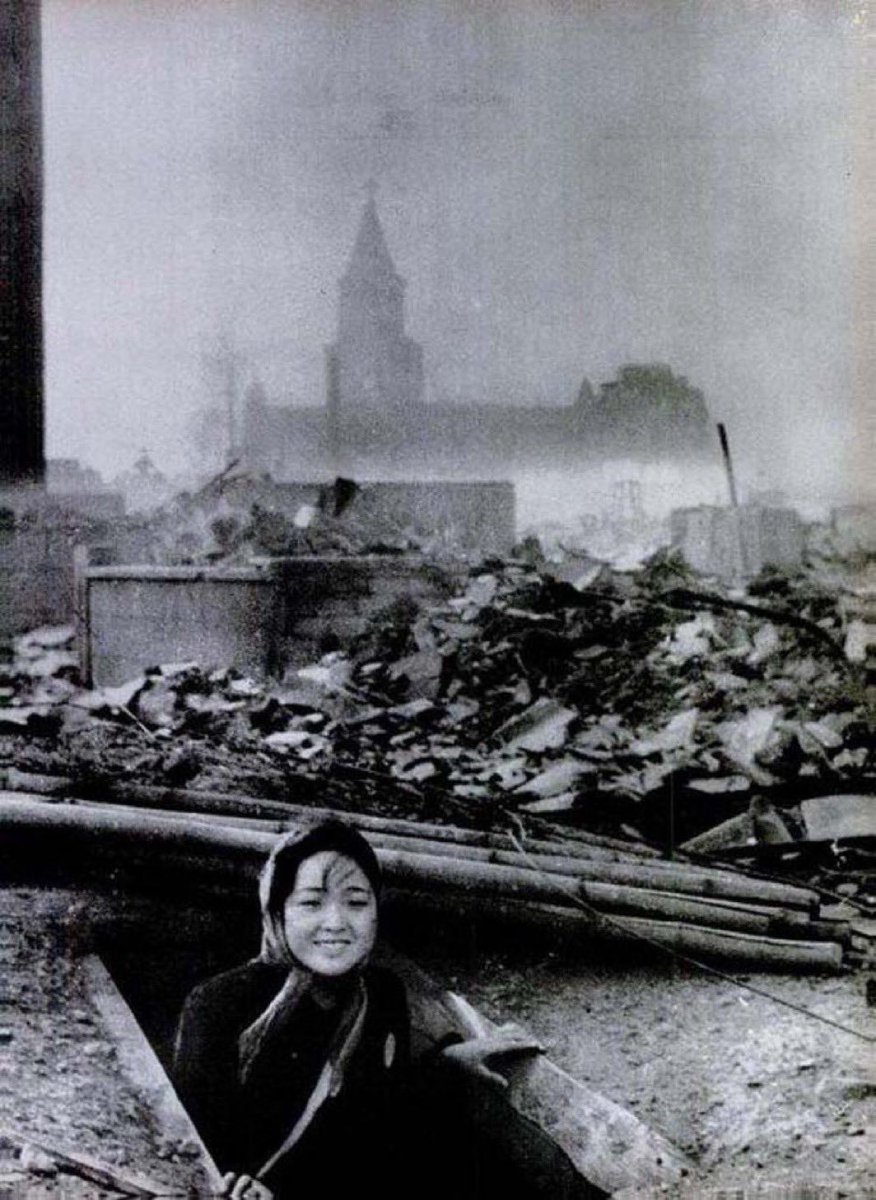
The Japanese accepted their loss in 1945, restructured their society, rebuilt, and is now one of the most beloved places on Earth.
There is a lesson here.
I run a law firm.
Last week I spent 5 hours digging into TikTok’s terms of service.
What I found absolutely terrified me.
Here’s a breakdown of what you’re actually handing over when you install TikTok (with receipts):
Russia badly wants to destabilize Europe using migration. Months ago, Finland closed the last of its borders with Russia after seeing a dramatic spike in the number of migrants without proper visas and documentation, mostly from the Middle East & Africa.
https://t.co/Rei7BD2uux
Our secular Democracy implicitly grants religious freedoms to all. A good thing. But if you're Christian and want to vote into law tenets of Christianity, you open the possibility of a different religious majority in the future out-voting you, instituting their laws instead.