Now that Artemis II has launched we have 10 days to get everyone on Earth a Planet of the Apes costume so we can do something hilarious when the astronauts return 😁
They capture the exact moment when a developing heart shifts from silence to its first beat. There is no “switch”: many cells gradually become active and, upon crossing a critical threshold, the entire tissue suddenly synchronizes.
“Relax," said the night man
"We are programmed to receive
You can check out any time you like
But you can never leave”
(The Eagles, Hotel California)
There’s a specific kind of arrogance in thinking you can pause the laws of physics.
For twenty years, central banks have run the ultimate long con.
The lie: That you can intervene in a crisis without becoming the crisis.
The Fed was supposed to be the lender of last resort. Show up. Put out the fire. Go home.
Instead, they bought the building and rigged the smoke detectors to scream 24/7 so they never have to leave.
Price discovery is dead. The market isn't reflecting productivity anymore. It's just reflecting the printer going brrrr.
This is policy entrapment. Once you become the market, the only way out is by nuking the entire system. You’re trapped.
And today, SCOTUS handed the Treasury a fiscal nuke.
By striking down on tariff authority, they blew a 130 billion dollar hole in a budget that was already bleeding out. Refunds are coming, revenue is gone, and the deficit is going vertical.
There is only one thing they can do at this point: Print the difference.
Now layer in the 2026 reality: Ukraine. Russia. China. Iran. War is the ultimate emergency cheat code for the next $10T print. And it won’t be paid for by “the rich.” It’ll be paid for by the quiet melting of your family’s purchasing power. Every missile launch is a tax on your stack.
The experts on CNBC are still debating soft landings. Meanwhile the engines are on fire. The smart frogs didn't wait to be boiled. They already hopped out. Substituting Powell for Warsh doesn't change the math.
If your wealth depends on a central bank's ability to be honest, you don't have a plan. You have a prayer.
Stop being their exit liquidity. Move into assets with zero counterparty risk.
Bitcoin
Gold
Land
These are finite lifeboats in an ocean of infinite paper. Stack what they can't print and let the "experts" figure out how to land a plane with no engines left.
Hope is not a strategy. Sovereignty is.
SCOTUS just nuked Trump’s tariffs. Revenue is gone and refunds are next. Deficit about to go even more vertical. With no more buyers for our debt, there’s only one outcome: The Fed turns the printer to Ludicrous Speed. Stack accordingly.
Debt at $38T. No buyers left. So the Fed prints the difference. It’s a death spiral, and they’re calling it "policy." They’re stuck. You don't have to be.
@MacroScope17 Watching the Coinbase segment on CNBC yesterday I couldn't help but laugh... tradfi is still trying to map Bitcoin into 'risk-on/risk-off', meanwhile the actual adults in the room are treating it like a lifeboat.
LIQUIDATION CONTAGION
Wealth taxes are even worse than you think. Any asset held by Californian billionaires or Dutch citizens is now at risk of experiencing forced liquidation pressure.
So: it’s not just that you don’t want to hold assets as a Dutchman. You also don’t want a Dutchman to hold your assets. Because the logic of forced liquidation is contagion.
Let’s think it through.
(1) First, suppose there is an asset with a total market cap of $10,000, with 10 shares total, of which 1 share each is held by 10 different holders, all in the Netherlands. To simplify the math, assume the Dutch holders bought those shares at par, or close to $0.
(2) Now suppose today is the unrealized cap gains tax day, and the share price is $1,000 per share. Each Dutch guy is hit with a 36% tax, and owes $360. The first guy sells his one share, gets $1,000, and pays $360 in tax while retaining $640.
(3) But the first guy’s sale reduces the market price to $960 per share. So when the second guy sells, he only retains $600 after paying $360 in tax.
(4) Now assume that by the 7th guy, all the selling has pushed the share price to collapse to $200 per share. This is a very reasonable scenario if 60% of the cap table has suddenly been dumped. Indeed it might go much lower.
(5) At $200 per share, the 7th guy actually has to go into debt to pay the tax as he owes $360. He sells his one share, pays all $200 of the proceeds in tax. And still owes $160 more in tax.
(6) The 8th, 9th, and 10th guys are even more screwed. By the time they sell, the price will likely have crashed to $100 per share or less. As with the 7th guy, even 100% liquidation will not cover their tax burden.
(7) So we immediately see many negative things about the Dutch unrealized cap gains tax bill.
(a) First, it will cause large simultaneous forced liquidations. Everyone must sell 36% of their stake near the same time.
(b) Second, it may be literally impossible to pay if a critical mass of the cap table is all subject to it at the same time. In the example above it was 100% Dutch holders, but has it been just 60% the result would have been much the same: a collapse in the share price.
(c) Third, that means it would be disastrous to have too many Dutch citizens (or Californian billionaires!) on the cap table. Their forced sales will crash your share price.
(d) So, you might have to start mass blocking those resident in wealth-taxing jurisdictions from investing in your companies.
(e) This in turn makes the poor Western European guy even poorer, as he gets locked out of high growth assets.
To be clear: I really do feel bad for the formerly Flying Dutchmen, now Crying Dutchmen. They invented much of modern capitalism. They founded New Amsterdam, now New York. They’ve punched way above their weight. I wish them only the best.
Nevertheless…they should prepare for the worst. This may be a tough century for Western Europe. The first ones out might get to freedom, while the slowest may be stuck behind a new Iron Curtain, spending a century paying off the debts their states incurred over the last century.
Because the long run fruits of Western Keynesianism are the same as Soviet Communism, in the sense of wealth seizure and pauperization.
I mean, if you knew the future, you wouldn’t want to co-own a farm with a Russian in 1916. For similar reasons, you might not want to co-own a share of stock with Dutch national in 2026. Or with anyone in a seizure-curious jurisdiction…which unfortunately includes much of Western Europe, Canada, and Blue America.
You instead want assets that are not held by those subject to forced liquidations. Now, I grant that this is an unusual way to rank assets…Dutch holders considered harmful?!? Yet it might sadly be necessary to minimize your exposure to liquidation contagion.
PS: guess which crucial stock is most held by the Dutch? ASML. So: this unrealized cap gains tax may not literally be a communist plot, but it would have the same effect.
The craziest part of all this is that, in the end, it looks like the only one who actually WASN’T a pedophile was Michael Jackson.
Legacy media is FILTH.
California's Central Valley produces 80% of the world's almonds. Each almond requires 3.2 gallons of actual irrigation water to grow. Not rainfall. Actual tap water pumped from aquifers.
One gallon of almond milk requires 162 gallons of irrigation water. Compare that to dairy milk at 8 gallons of tap water per gallon, with the rest being rainfall that falls on pasture anyway.
But here's where it gets properly grim. Almonds bloom for exactly three weeks in February. During those three weeks, California needs every pollinating bee in North America transported to the Central Valley or the crop fails entirely.
Commercial beekeepers truck in 31 billion honeybees. That's two-thirds of America's entire managed bee population, all concentrated in one valley for three weeks. The bees are packed into trucks, driven across the country, dumped into almond groves drenched in pesticides, worked to exhaustion, then packed up and shipped to the next crop.
The mortality rate is catastrophic. Beekeepers report losing 30 to 50% of their hives annually. That's billions of bees dead. Not from natural causes. From being used as disposable pollination machines for your almond milk.
The pesticides don't help. Almond groves are sprayed with neonicotinoids which scramble bee navigation systems, fungicides which weaken their immune systems, and herbicides which eliminate the wildflowers they'd normally forage on between almond blooms.
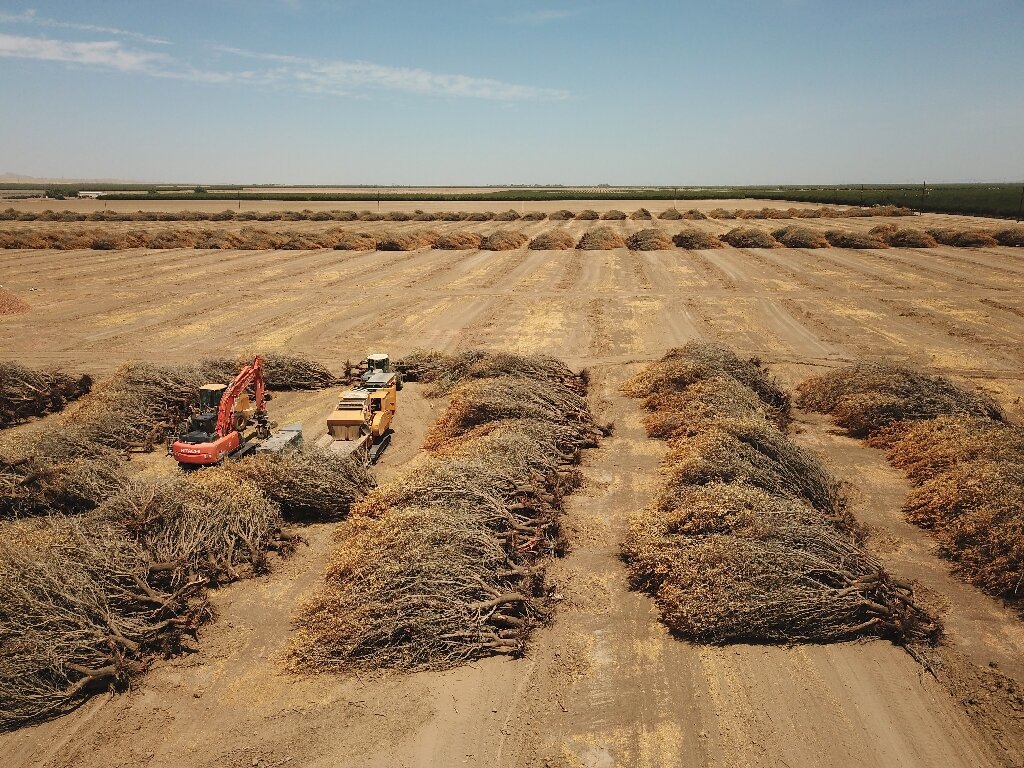
Meanwhile the aquifer depletion is permanent. The Central Valley has sunk 28 feet in some areas from groundwater extraction. That water took 10,000 years to accumulate. It's being drained in decades for almond milk.
Your vegan latte killed more bees and used more water than a year's worth of dairy milk. But it's got "plant-based" on the label so you're definitely saving the planet.
I am convinced that if this generation was faced with a Zombie Apocalypse….
There would be Zombie sympathizers and Zombie rights activists.
That’s how screwed we are.
This is a long post that hopefully bridges some gaps between technical people (devs) and non-technical users and how they look at spam prevention in Bitcoin. I hope that it clarifies why I think that there is such a huge misunderstanding between both camps.
I'll preface this post with first disqualifying any malicious attempts to misrepresent the motives of either camp. Everybody wants to improve Bitcoin as money. Money is Bitcoin's use case. It's not a data storage system. If you think otherwise, there are countless shitcoins to play with.
Alright, let's get into it.
I have worked on anonymous systems for over a decade. I have read tons of research on spam detection, rate-limiting, and I've implemented spam prevention techniques in the real world.
I am very confident to say that there is not a single known method to prevent spam in decentralized anonymous open networks other than proof of work.
This is what Satoshi realized when he designed Bitcoin and it's why only transaction fees can reliably fight spam without sacrificing any of Bitcoin's properties.
Let me explain.
Spam prevention is a cat and mouse game. As a system's architect, your goal is to make the life of a spammer harder (increase the friction). This is why, on the web, you see captchas, sign-ups, or anything that can artificially slow you down. Slowing down is key. This is why Satoshi turned to proof of work.
Let's contrast this to other methods for spam prevention. This is not an exhaustive list but it illustrates the design space of this problem, other methods are often derivatives of these:
CAPTCHAS are a centralized form of proof of work for humans: Google's servers give you a hard-to-solve task (select all bicycles) that will slow you down so that you can't bombard a website with millions of requests. It requires centralization: you need to prove Google that you're human so that you can use another website. If you could host your own CAPTCHA service, why would anyone believe you're not cheating?
LOGINS with email and passwords are most popular way to slow down users. Before you can sign up, you need to get an email address, and to get an email address, you often need a phone number today. The purpose of this is, again, to slow you down (and to track you to be honest). It only works well when emails are hard to get, i.e. in a centralized web where Google controls how hard it is to get an email account. If you could easily use your own email server, why would anyone believe you're not a bot?
The next one is the most relevant to Bitcoin:
AD BLOCK FILTERS are another form of spam prevention but this time the roles are reversed: you as a user fight against the spam from websites and advertising companies trying to invade your brain. Ad blocking works only under certain conditions: First you need to be able to "spell out" what the spam looks like, i.e. what the filter should filter out. Second, you need to update your filters every time someone circumvents them. Have you ever installed a youtube ad blocker and then noticed that it stops working after a few weeks? That's because you're playing cat-and-mouse with youtube. You block, they circumvent, you update your filters, repeat.
The fact that you need to update your filters is critical and that's where it ties back to Bitcoin: Suppose you have a mempool filter for transactions with a locktime of 21 because some stupid NFT project uses that. You maybe slow them down for a few weeks, but then they notice it and change their locktime to 22. You're back at zero, the spam filter doesn't work anymore. What do you do?
You update your filter! But where do you get your new filter from? You need a governing body, or some centralized entity that keeps updating these filters and you need to download their new rules every single day. That's what ad blockers in your web browser do. They trust a centralized authority to know what's best for you, and blindly accept their new filters. Every single day.
I hope you see the issue here. Nobody should even consider this idea of constantly updating filter rules in Bitcoin. This would give the filter providers a concerning level of power and trust. It would turn Bitcoin into a centrally planned system, the opposite of what makes Bitcoin special.
This is why filters do not work for decentralized anonymous systems. They require a central authority. Until now, these rules were determined by Bitcoin Core, but they have realized that these rules do not work anymore. Transactions bypass the filters easily and at some point, carrying them around became a burden to the node runners themselves. Imagine you're using an outdated ad blocker but instead of filtering out ads, it now also filters out legitimate content you might be interested in. That's what mempool filters do, and that's why Bitcoin Core is slowly relaxing these filters. This has been discussed for over two years, it's not a sudden decision.
The goal of this change is not to help transactions to slip through more easily. The goal is to improve your node's prediction of what is going to be in the next block. Most people misrepresent this part. They say "it's to turn Bitcoin into a shitcoin" but that is just a false statement at best, or a manipulation tactic at worst.
Let's tie it back to proof of work and why fees are the actual filter that keeps Bitcoin secure and prevents spam reasonably well: Satoshi realized that there is no technique that could slow down block production and prevent denial of service attacks in a decentralized system other than proof of work. Fees prevent you from filling blocks with an infinite number of transactions. All the other options would introduce some form of trust or open the door for censorship – nothing works other than proof of work.
He was smart enough to design a system where the proof of work that goes into block production is "minted" into the monetary unit of the system itself: You spend energy, you get sats (mining). This slows down block production. How do you slow down transactions within those blocks? You spend the sats themselves, original earned form block production, as fees for the transactions within the block!
This idea is truly genius and it's the only reason why Bitcoin can exist. All other attempts of creating decentralized money have failed to solve this step. Think about it: without knowing who you are, whether you're one person pretending to be a thousand, or a thousand people pretending to be one. Bitcoin defends itself (and anyone who runs nodes in the Bitcoin system) from spam by making you pay for your activity.
People sometimes counter this by saying: the economic demand for decentralized data storage is higher than the monetary use case. First of all, I think that's just wrong. There are way cheaper ways to store data (there are shitcoins for this), and the value of having decentralized neutral internet money is beyond comparison.
However, there's a much deeper concern here. If you truly believe this, I ask you: what is Bitcoin worth to you? If you think Bitcoin can't succeed as money (i.e. be competitive), why do you even care? If you're not willing to pay fees for the use case that we all believe Bitcoin is designed for (money), and you believe that no one is willing to pay for it, how can it even persist into the future?
You can't have it all. If Bitcoin is money (which I believe it is), then we need to pay the price to keep it alive. There is no free lunch.
Either we centralize, or we pay the price of decentralization. I know where I stand.
Peace.
Don’t follow your passion. Follow your contribution.
Greatness comes from what you give the world, not from chasing what you love.
- Ben Horowitz (@bhorowitz), Columbia University Commencement (2015)
The Left just blew all their trust.
Normies see a nice guy doing a simple debate, not a political speech, not leading a rally or a riot, getting gunned down in 4k.
Then they see a bunch of people, even their friends, cheer and clap and dance. They ask why.
"Well, you see, he was evil!" they cry gleefully, eyes feral.
The normie just stares a the screen. A clean cut guy with a microphone is bleeding out horrifically. It reminds them of the scared young blonde they saw bleeding out on the subway just a few days ago. A question forms.
"What did he do that made him evil?" they ask.
"He SAID things!" they scream back, a bit of spittle flying from their mouths.
"So you are happy they murdered him....for talking?"
"YESSSS!!!! You get it now!" claps their kids teacher, their pilot, or their doctor.
The normie is horrified. Someone they trust their kids to, their health to, or their safety is acting like a foaming, raging lunatic who wants people dead because they said something they didn't like.
Do you realize how this comes across?