🚨New lecture note 🚨
🧵1)
Neural networks tend to learn low frequencies first, and only later the high-frequency oscillations, if at all.
Left panel: training data and the neural-net fit.
Right panel: their Fourier transforms.
code:
https://t.co/ie0Stxsb4L
@MayankSeksaria "We introduce a novel test of the [expectations hypothesis] & show that the EH is decisively rejected in the data. Outside of short maturities, expectations display, at best, only a weak co-movement with the forward rates of corresponding maturities..."
https://t.co/0Egk2CHktO
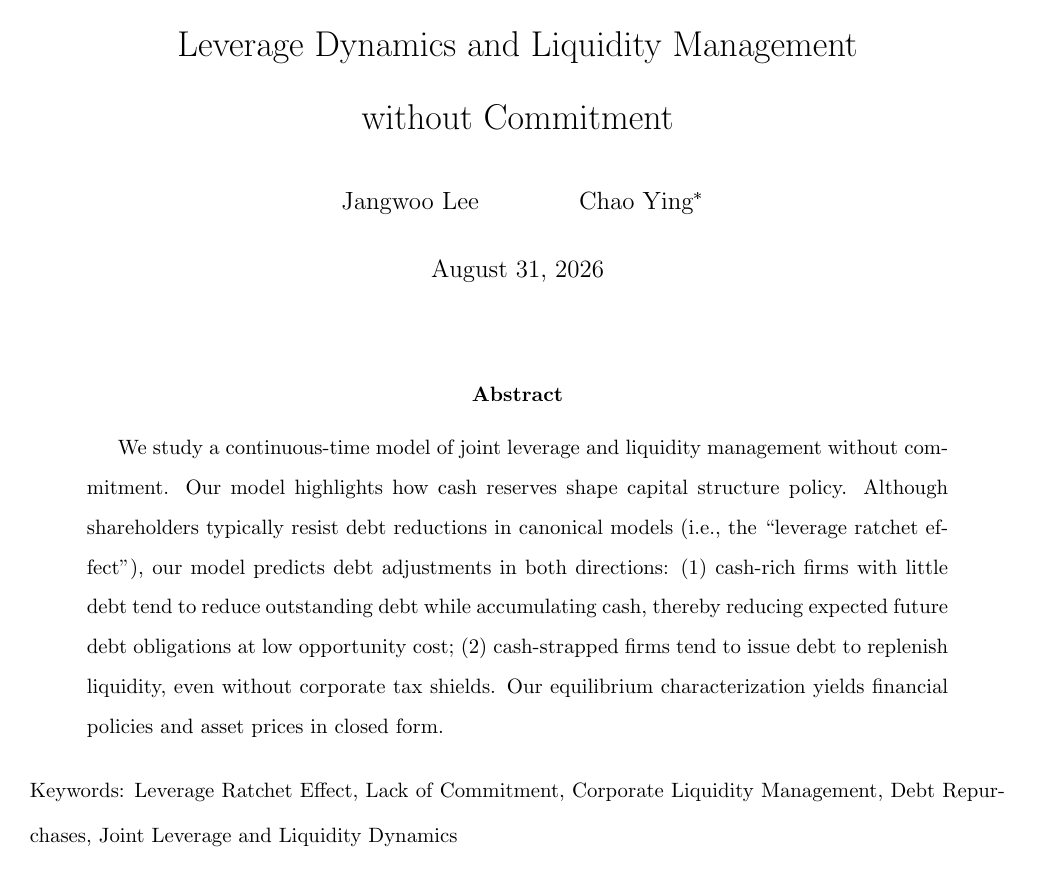
Liquidity management is closely intertwined with leverage policy. How do firms decide how much debt to carry and cash to hold? Jangwoo Lee and Chao Ying model these choices when shareholders cannot commit to future financing decisions
Navier-Stokes Millennium saga continues. Here are my slides and a summary from a recent talk. Disclaimer: this is a physicists view of the problem & solution! 🧵
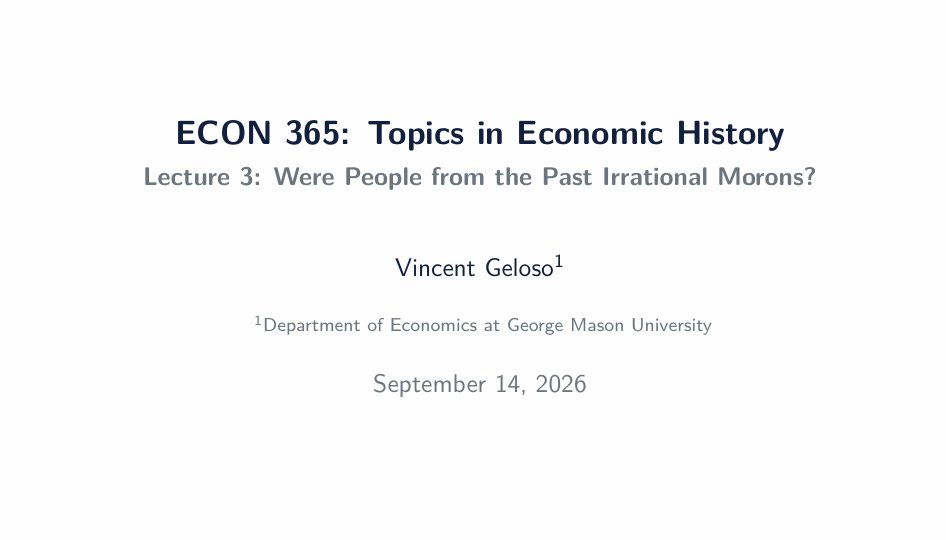
These are my slides for this week's economic history unit at GMU. Its about whether people of the past were irrational morons (answer: no). It means to show that economic theory is very much able to explain the behavior of people in the past without pre-capitalist mentalities
How can we use macro and micro data jointly to discipline HANK models? Florian Huber, Gary Koop, and I address this in “Beyond Aggregate VARs: A Bayesian Benchmark for HANK Models”.
https://t.co/tZdrmE3WF3
Modern models quantifying the gains from trade are absolutely, positively reliant upon strong distributional assumptions for tractability. What happens when we break these assumptions? Unfortunately, we cannot put reasonable bounds on welfare estimates -- they're really wide. 1/
Does having more data let firms charge higher markups? Not necessarily. A new paper by Jan Eeckhout and @laura_veldkamp asks what market power looks like when firms use data to predict demand
If you’re doing empirical monetary macro today, sooner or later you’ll need HFI and related data.
Last semester, I put together a database of the main datasets for measuring and identifying monetary policy for my students in a project course.
A thread (1/10)
MP1/ Monetary Policy Shock Series for 176 Countries by Sangyup Choi, Tim Willems, and Seung Yong Yoo
This database provides monetary policy shock estimates for a large cross-section of countries. It is especially useful for projects on heterogeneous monetary transmission and cross-country comparisons.
Link: https://t.co/pBzmnJGdCm
Link to paper: https://t.co/eQpXQtITd6
Latest data point as of June 2026: December 2019
Thank you very much to @KansasCityFed for inviting me to speak at this year's Jackson Hole Symposium on payment innovation. My remarks and handouts on "Three Myths of Payment Innovation" are posted here.
https://t.co/XWR0JnmcBu
https://t.co/nwcVBdwEoe
Pretty excited to see this paper with my fantastic coauthors Eddy Malesky, @mattsson_martin, and @LiaoliangZ published in the Journal of Public Economics.
Liaoliang is a great PhD candidate in labor economics at NUS, for those who are hiring this year 🙂
The original purpose for mass public education is to produce "citizens" capable in participating as equals and sharing a common background in the politics of the polis or nation.
This is true both in ancient Greek city states (at least some of them appear to have developed mass public education in the Classical and Hellenistic periods) and when mass public education was conceived in the formation of modern nation states: an eminent 19th century Italian statesman said that the function of the Italian mass public schooling system was to "produce Italians."
The idea that mass public education is a macroeconomic tool to subsidize "human capital accumulation" is a historically recent intellectual invention. Its function is more basic: underlying the formation of the modern polities.
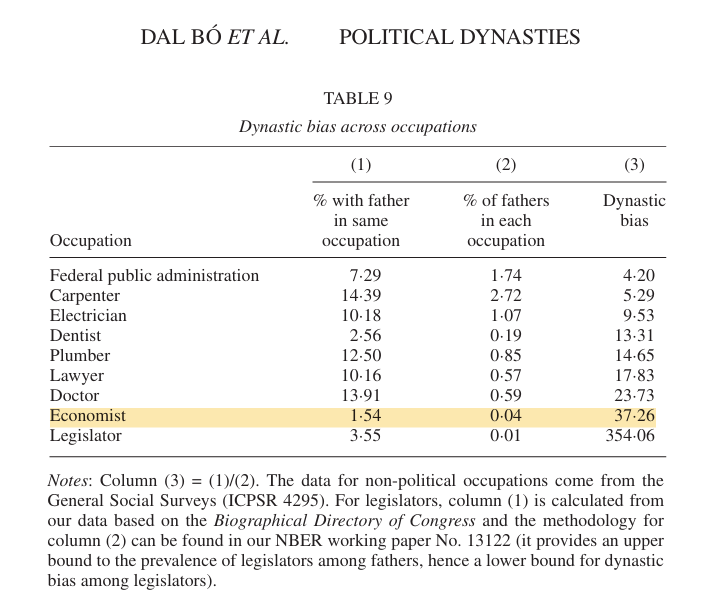
A partial list of economists without economics PhD or training: Maskin Shapley Debreu Kahnemann Ostrom Nash Simon Kantorovich (all Nobels) Keynes Irving Fisher. Scarf never took a single Econ class. Not to mention all economic founders in XIX
So credentials not needed but at the same time it’s perfectly useful to report it. More info is better! Free to choose!
Our special issue on market power for the European Economic Review is out!
Special thanks to Peter Rupert (editor) and the other guest editors @oo7zsx@Petrosky_Nadeau@SedlacekPe !
https://t.co/M7ZYpbCewa


![kingofthecoastt's tweet photo. @MayankSeksaria "We introduce a novel test of the [expectations hypothesis] & show that the EH is decisively rejected in the data. Outside of short maturities, expectations display, at best, only a weak co-movement with the forward rates of corresponding maturities..."
https://t.co/0Egk2CHktO https://t.co/ULpHBbU8YE](https://pbs.twimg.com/media/HSe0lBuacAAxExX.png)




![kingofthecoastt's tweet photo. @MayankSeksaria "We introduce a novel test of the [expectations hypothesis] & show that the EH is decisively rejected in the data. Outside of short maturities, expectations display, at best, only a weak co-movement with the forward rates of corresponding maturities..."
https://t.co/0Egk2CHktO https://t.co/ULpHBbU8YE](https://pbs.twimg.com/media/HSe0lnBaUAAyOmj.png)