On this special day of mine,
A year older, a year refined.
I share with you a tale so near,
Of promise, hope, and paths unclear.
"The Road to Promise," of dreams,
Here’s my gift, a piece of my mind,
Read here: https://t.co/Z6qSR083kS – Herbert Kafeero
How African economies are understood by investors is shaped not only by credit ratings, but also by the information and narratives available to the market.
Mr. Ivan Tibenkana, Business Reporter at Vision Group, underscored the role of the media in interrogating these narratives and using credible research and locally generated evidence to communicate a fuller picture of African economies and their ability to meet financial obligations.
For AfCRA, strengthening the evidence base around African economies will therefore be as important as challenging existing perceptions of risk.
@ivantibenkana14@APRMorg@AUYouthProgram@newvisionwire@herbertk4@SEATINIAfrica
#AfCRA #CreditRatings #SEATINIAt30
This becomes even more consequential when countries are already facing debt distress.
Ms. Zhou pointed to Ethiopia’s experience, where a downgrade followed moves to seek debt relief, illustrating how the fear of further downgrades can discourage countries from pursuing restructuring even when it is necessary.
This risks creating what she described as a “debt trap by design”—where the rating system can make it more costly for countries to address the very debt vulnerabilities they are trying to resolve.
@jayznotes@APRMorg@_AfricanUnion@UNCTAD@AFRODAD2011@herbertk4
#CreditRatings #DebtJustice #DebtSustainability #SEATINIAt30
5/ Climate Finance and Electrification
Expanding electricity access is critical for Africa. But ambition and investment announcements are not enough.
The test is whether initiatives translate into affordable, reliable energy that supports livelihoods, productive capacity and industrialisation.
Across these five issues, Africa needs implementation that matches ambition—with accessible finance and support that recognises the continent’s development priorities.
@UNFCCC@_AfricanUnion@turkiyecop31@FAOclimate@climatestrat@herbertk4@theGCF
#COP31 #SEATINIAtCOP31 #ClimateFinance #EnergyAccess #SEATINIAt30
We are live!
What could the Africa Credit Rating Agency (AfCRA) mean for how African economies are assessed and their access to affordable development finance?
Join the conversation as we examine Africa’s sovereign credit rating landscape and the implications of AfCRA for the continent’s financial architecture.
Join here: https://t.co/iaJKHeKNe7
Or stream live:
https://t.co/7bhjNQgYYQ
@HildaTumuhe@jayznotes@SeatiniU@ivantibenkana14@AFRODAD2011@newvisionwire@_AfricanUnion@SEATINIAfrica@herbertk4@mofpedU@pwatchug
#CreditRatings #DevelopmentFinance #SEATINIAt30
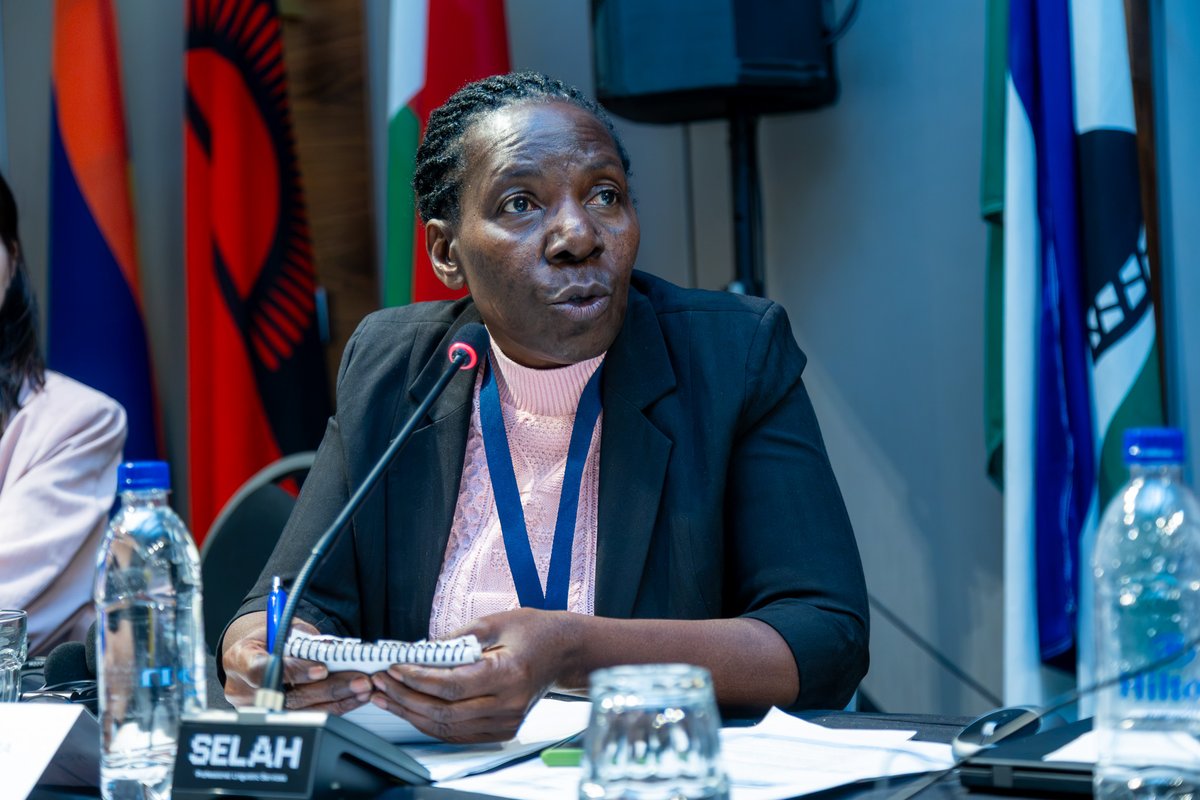
The launch of the Africa Credit Rating Agency (AfCRA) is therefore a positive step—but the bigger question, Ms. Nalunga argued, is whether it can become a credible alternative within the global credit rating system.
Can AfCRA provide independent, objective and context-sensitive assessments of African economies? Will international financial markets and investors recognise and trust its ratings?
For Ms. Nalunga, attention must now turn to strengthening AfCRA’s institutional governance, methodology and operations so that it is not only African in ownership, but credible, internationally recognised and capable of responding to longstanding concerns about how African sovereign risk is assessed.
@SeatiniU@APRMorg@_AfricanUnion@SEATINIAfrica@herbertk4
#AfCRA #CreditRatings #Africa #SEATINIAt30
Sovereign credit ratings go beyond assessments of a country’s economic and governance performance. They influence investor confidence, access to finance and the cost at which governments can borrow.
Opening our discussion, Ms. Jane Nalunga, SEATINI Executive Director, highlighted the consequences for African countries when adverse ratings translate into higher risk premiums and borrowing costs—further constraining already limited fiscal space for financing development.
While concerns persist about how Africa is assessed by the dominant global credit rating agencies, their ratings continue to carry significant weight in the decisions of investors and international financial markets.
@SeatiniU@_AfricanUnion@herbertk4@APRMorg@UNCTAD@SEATINIAfrica
#CreditRatings #DevelopmentFinance #SEATINIAt30
Credit ratings do not simply describe risk; they can also shape the financial conditions countries face.
Ms. Janet Zhou, Executive Director of @AFRODAD2011, highlighted how downgrades can increase borrowing costs and deepen financial pressures at precisely the moment countries are already struggling—raising important questions about the concentration of power, transparency and qualitative judgement within the global credit rating system.
For African countries, addressing these structural concerns is therefore not simply about securing better ratings, but ensuring that sovereign risk is assessed through methodologies that are transparent, evidence-based and responsive to countries’ economic realities.
@jayznotes@UNCTAD@_AfricanUnion@herbertk4@SEATINIAfrica
#CreditRatings #DebtJustice #DevelopmentFinance #SEATINIAt30
4/ Mitigation
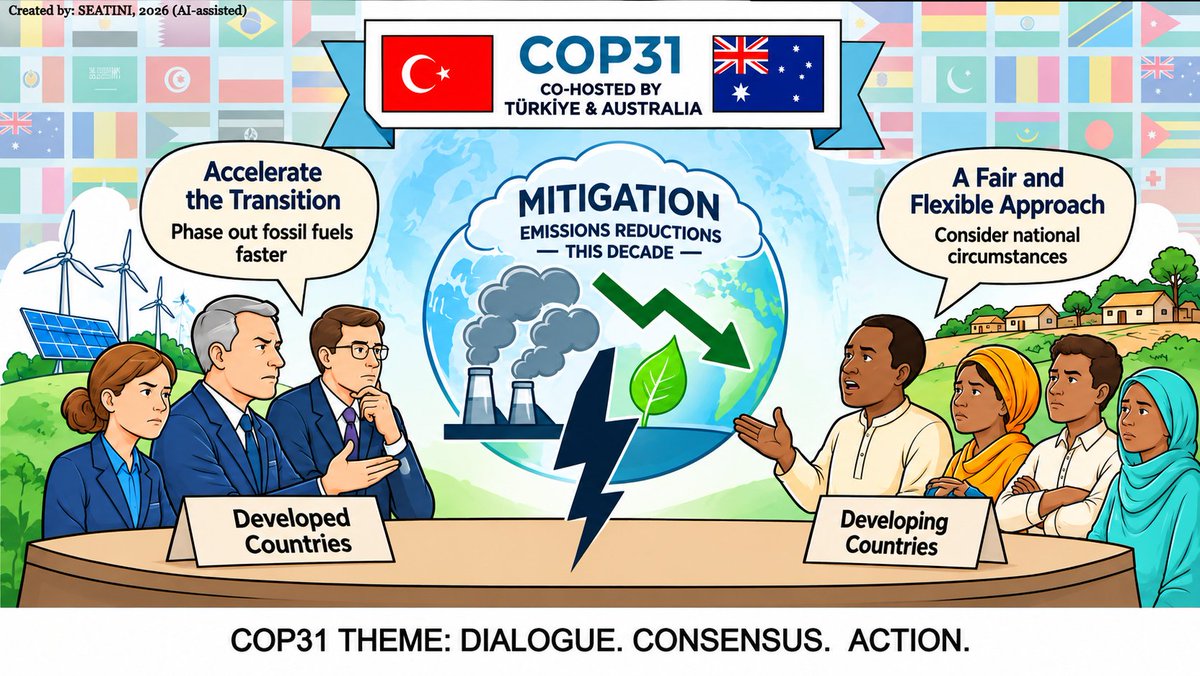
Greater climate ambition is necessary, but pathways must recognise different national circumstances and development realities.
For Africa, mitigation must be backed by finance, technology transfer and the capacity to pursue development while transitioning sustainably.
@UNFCCC@_AfricanUnion@herbertk4@turkiyecop31
#COP31 #ClimateAction
3/ Just Transition
A just transition cannot be measured by institutional arrangements, meetings and reporting alone.
Its credibility depends on whether workers, communities and civil society participate meaningfully, and whether financing supports affected people and livelihoods.
@UNFCCC@AUYouthProgram@herbertk4@turkiyecop31@_AfricanUnion
#COP31 #JustTransition
2/ Loss and Damage
The existence of a funding mechanism is not enough.
For countries already bearing severe climate losses, the real test is whether financing is adequate, accessible and capable of reaching affected communities.
@UNFCCC@turkiyecop31@herbertk4@FAOclimate@theGCF
#COP31 #LossAndDamage #ClimateFinance
1/ What should Africa be looking for in the final #COP31 outcome?
For SEATINI, the test is whether commitments respond to Africa’s climate realities while recognising its development priorities.
We are following five issues closely, starting with adaptation finance.
The call to at least triple adaptation finance by 2035 must translate into a credible pathway for delivery—with clarity on financing sources, access and accountability.
@UNFCCC@_AfricanUnion@turkiyecop31@herbertk4@climatestrat
#AdaptationFinance #ClimateFinance
Happening this afternoon!
Africa’s sovereign credit ratings shape how countries are perceived by investors, their access to international capital and, ultimately, the cost of borrowing for development.
Join us from 2:30–4:00 PM EAT as we unpack what the launch of the Africa Credit Rating Agency (AfCRA) could mean for addressing longstanding concerns around how African economies are assessed and strengthening Africa’s voice in the global financial architecture.
Register: https://t.co/iaJKHeKNe7
@HildaTumuhe@jayznotes@SeatiniU@ivantibenkana14@AFRODAD2011@newvisionwire@_AfricanUnion@SEATINIAfrica@herbertk4@mofpedU@pwatchug
#SEATINIAt30 #CreditRatings
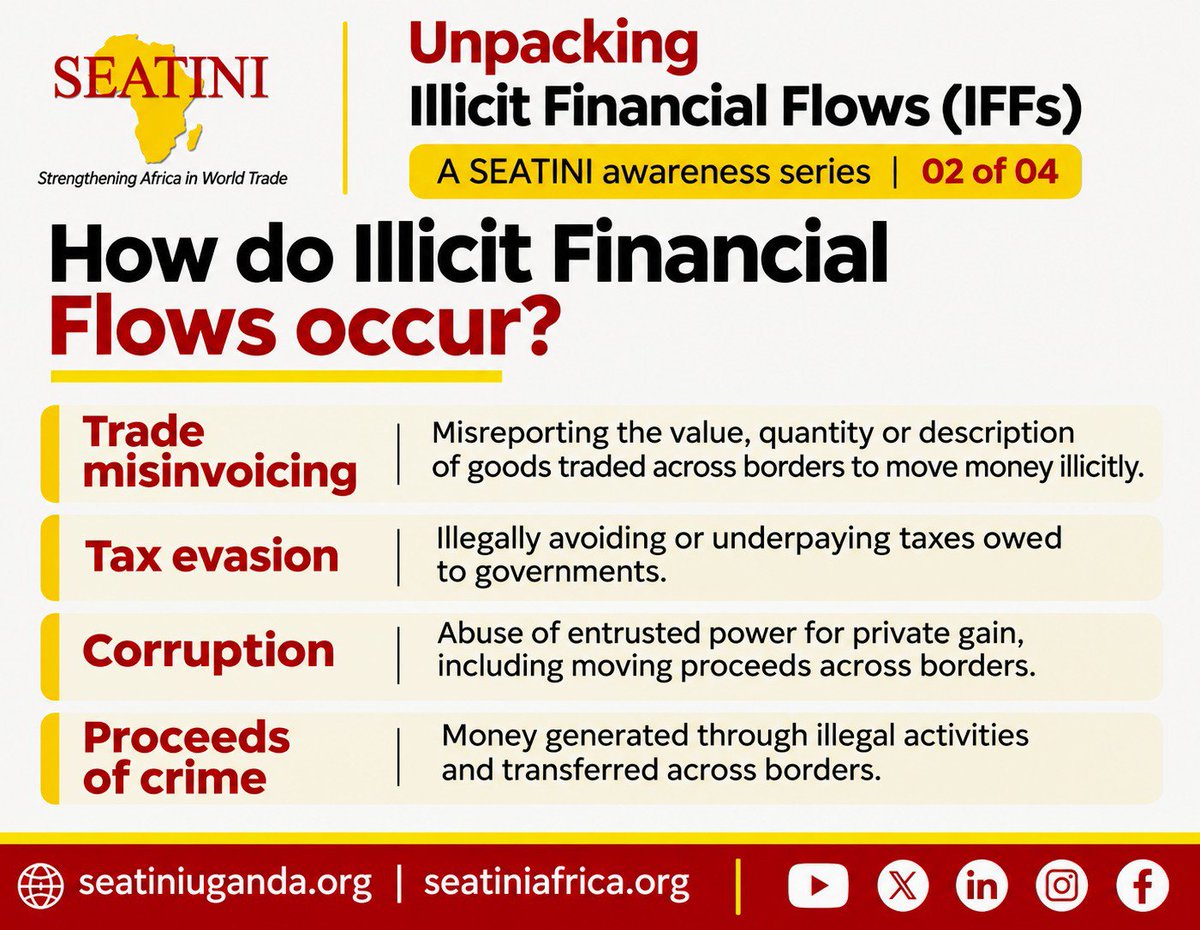
Illicit Financial Flows do not happen through a single channel.
They can occur through trade misinvoicing, tax evasion, corruption and the cross-border movement of proceeds of crime, allowing resources to leave economies outside lawful and accountable channels.
Why does this matter? Because understanding how IFFs occur is essential to identifying where countries are losing resources and where stronger tax systems, trade oversight, transparency and accountability are needed.
In Part 2 of our #UnpackingIFFs series, we look at some of the key channels through which illicit financial flows occur.
@UNCTAD@_AfricanUnion@herbertk4@Parliament_Ug@jumuiya@TaxJusticeAfric@taxalliance_ug
#SEATINIAt30 #IllicitFinancialFlows #TaxJustice #DevelopmentFinance
Beyond investment governance, SEATINI highlighted other constraints that must be addressed if MSMEs are to participate meaningfully in industrial value chains.
These include better alignment between MSME policy classifications and tax thresholds, more transparent tax administration, and affordable testing, certification and quality assurance services for smaller producers.
At the regional level, SEATINI highlighted the need to address barriers to market access, including Uganda’s outstanding ratification of the amendment to Article 24(2)(a) of the EAC Customs Union Protocol, and greater use of Mutual Recognition Agreements to support access to regional and continental markets.
Ultimately, Uganda’s trade, tax, industrial, investment, procurement and energy policies must pull in the same direction if MSMEs are to grow, compete and contribute meaningfully to Uganda’s structural transformation.
@OwenMugambwa@fsme_uganda@mtic_uganda@jumuiya@AfCFTA@herbertk4@udc_uganda@SEATINIAfrica
#SEATINIAt30 #UIC2026 #UDCAT10
Should a chemical banned in Uganda still be manufactured here for export?
Yesterday, SEATINI’s Mr. Peter Tukundane contributed to the presentation of the Civil Society Memorandum on the Food and Agriculture Regulatory Authority Bill, 2026 (Bill No. 14) before Parliament’s Committee on Agriculture.
SEATINI called for the deletion of Clause 80(2), which allows banned chemicals to be manufactured and exported with the Authority’s approval, and proposed making periodic review of highly hazardous pesticides a legal requirement.
SEATINI also raised concerns around licensing safeguards, the independence of the Executive Director, broad ministerial exemption powers, and the absence from the Bill of the proposed Food Safety Ombudsman.
Effective food and agricultural regulation must protect public interest while being anchored in strong safeguards, transparency and accountable institutions.
@peter_tukundane@MAAIF_Uganda@FRAUGANDA@pwatchug@CefrohtUg@herbertk4
#SEATINIAt30 #FoodSafety #Agriculture #UgandaParliament
Africa’s credit rating is more than a score. It can determine how much countries pay to borrow and, ultimately, how much financing is available for development.
This Friday, SEATINI convenes a technical talk on “Credit Rating Systems and the Case for an African Credit Rating Agency.”
The discussion will interrogate how existing credit rating methodologies shape sovereign risk perceptions, market access and borrowing costs for African economies, and what the African Credit Rating Agency could mean for a more transparent, credible and context-responsive rating system.
Join Ms. Jane Nalunga, SEATINI; Ms. Janet Zhou, AFRODAD; and Mr. Ivan Tibenkana, New Vision, moderated by Ms. Hilda Tumuhe, SEATINI, as we rethink how Africa’s creditworthiness is assessed and what this means for financing the continent’s development.
Date: Friday, 20 November 2026
Time: 2:30–4:00 PM EAT
Place: Online via Zoom
To register, scan QR code on the flyer or tap the link below: https://t.co/iaJKHeKNe7
@AFRODAD2011@newvisionwire@APRMorg@_AfricanUnion@ugandadebtnet@HildaTumuhe@SeatiniU@ivantibenkana14@jayznotes@herbertk4@SEATINIAfrica
#SEATINIAt30 #CreditRatings #DevelopmentFinance #AfricanCreditRatingAgency
What does a new green trade requirement mean for a smallholder farmer expected to comply with it?
At #COP31, Mr. Kafeero illustrated the implementation challenge: a coffee farmer may be required to provide geolocation data, yet lack land records, internet access or the resources needed to map their farm.
He made the point: policy readiness must start with the realities of producers.
As green requirements increasingly shape market access, implementation must be backed by infrastructure, skills, technology and institutions that enable producers to meet new standards without being pushed out of markets.
@herbertk4@turkiyecop31@UNFCCC@Parliament_UG
#COP31 #ClimateTrade #SEATINIAt30
Are African countries shaping the green trade transition, or increasingly becoming rule takers?
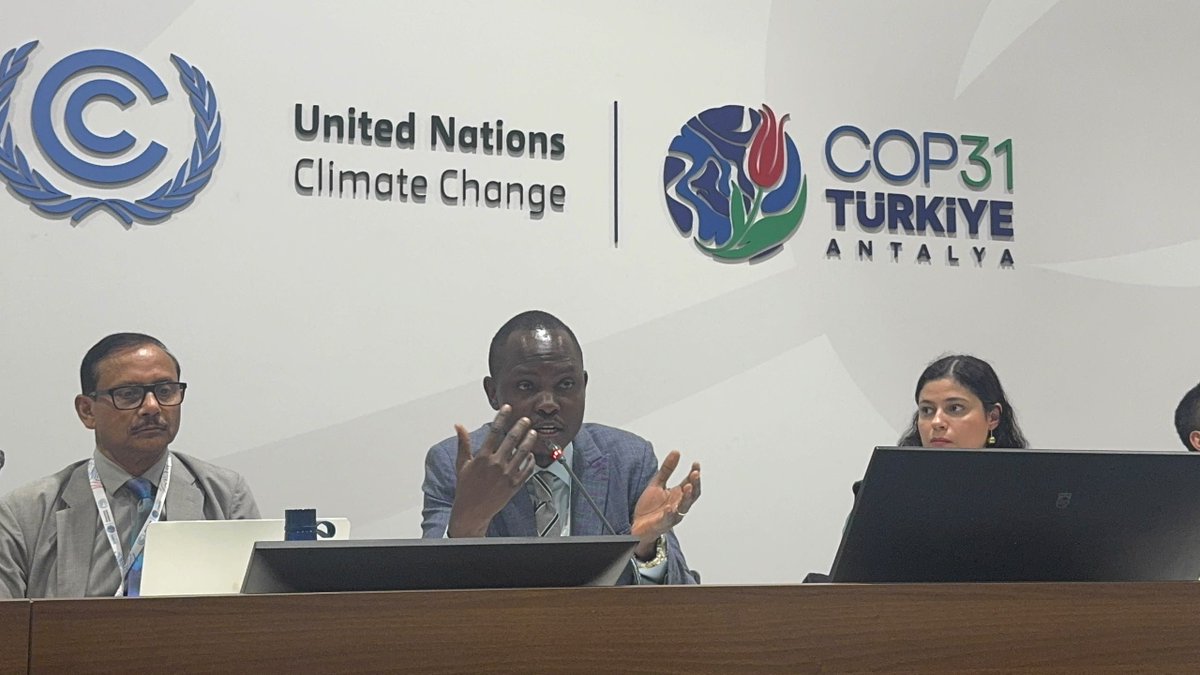
Presenting at #COP31, SEATINI Deputy Executive Director Mr. Herbert Kafeero highlighted that African countries are increasingly becoming rule takers, responding to green trade requirements developed elsewhere rather than shaping the transition themselves.
He called for investment in the domestic foundations of green trade and structural transformation, including public infrastructure, affordable finance, technology transfer, strong institutions, and capacity building at national, regional and continental levels.
The objective is to build Africa’s capacity not only to comply with emerging green trade requirements, but to produce, compete, retain more value from its resources and advance its own development priorities.
The session is ongoing at #COP31 in Antalya, Türkiye.
@herbertk4@turkiyecop31@UNFCCC@climatestrat@TESSForum@UNCTAD @WRIafrican @Southern_Tr@min_waterUg@Parliament_UG
#ClimateTrade #TradeAndDevelopment #SEATINIAt30
Africa has built ambitious frameworks for regional integration. The challenge now is turning them into functioning trade corridors, investment and productive opportunities.
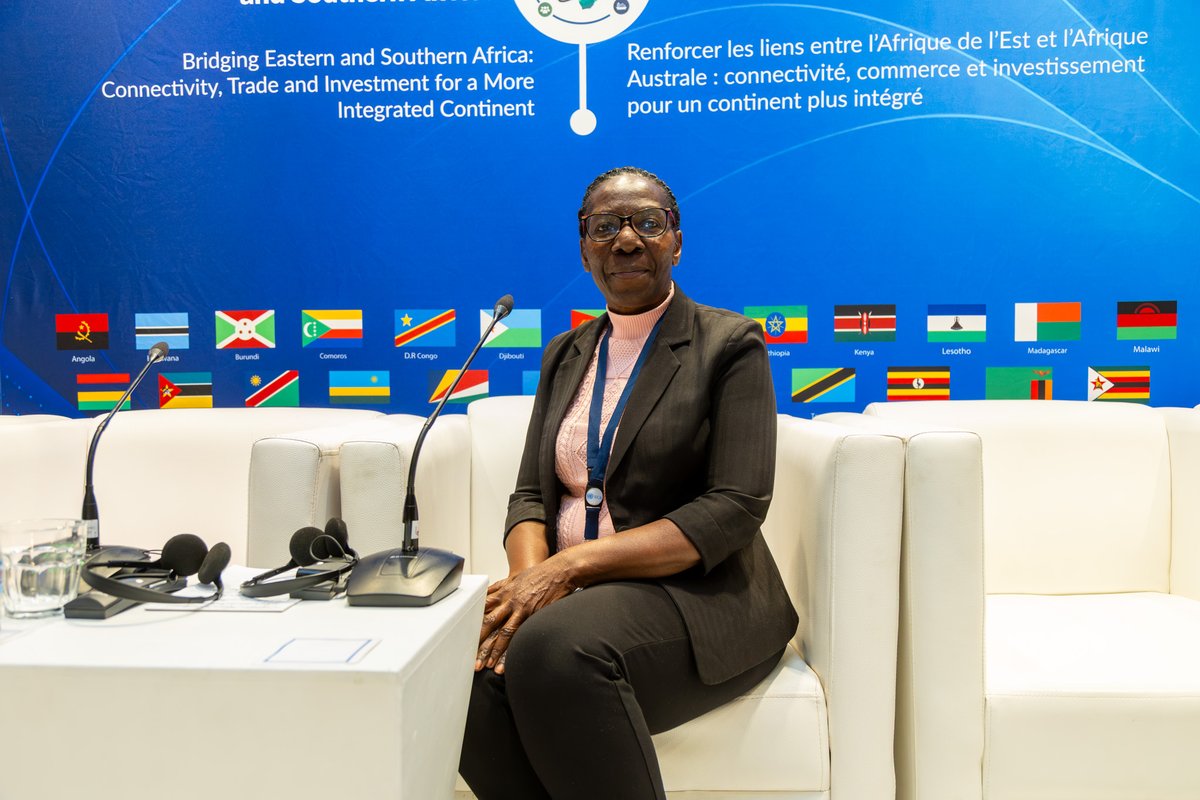
From 10–13 November, Ms. Jane Nalunga, SEATINI’s Executive Director, participated in the 2026 Joint Session of the Intergovernmental Committee of Senior Officials and Experts for Eastern and Southern Africa in Namibia.
Under the theme “Bridging Eastern and Southern Africa: Connectivity, Trade and Investment for a More Integrated Continent,” discussions focused on practical barriers to integration, including trade facilitation, energy connectivity, affordable finance for productive investment and regional value chains.
With the COMESA–EAC–SADC Tripartite Free Trade Area now in force alongside the AfCFTA, the priority is increasingly implementation: reducing trade costs, strengthening cross-regional connectivity and translating integration commitments into tangible economic outcomes.
@SeatiniU@ECA_OFFICIAL@COMESA_HQ@jumuiya@SADC_News@AfCFTA@herbertk4
#SEATINIAt30 #RegionalIntegration #AfCFTA
Africa loses an estimated US$88.6 billion every year through illicit capital flight. But what exactly are Illicit Financial Flows (IFFs)?
IFFs are money illegally earned, transferred or used across borders. Their scale raises a critical development financing question for Africa: how much of the continent’s own resources are being lost instead of financing its development?
We begin our four-part #UnpackingIFFs awareness series by going back to the basics.
Follow the series as we unpack the issue and why it matters for Africa.
@UNCTAD@_AfricanUnion@TaxJusticeAfric@herbertk4@pwatchug@jumuiya
#SEATINIAt30 #IllicitFinancialFlows #DomesticResourceMobilisation #TaxJustice