Ben Horowitz's message to early-stage founders on betting on yourself, the doubts that do the most damage, and why fear means you're doing it right:
"Your job is to make your bet pay off. You believed in yourself enough to do it. There are gonna be many times when you question that bet and you question that belief, but that gets you nothing."
"The doubts are gonna be there. Ignore the doubts. The worst doubts aren't the ones people put on you. It's the ones that you put on yourself. Every entrepreneur has them."
"I spent a lot of time with Mark Zuckerberg when he was 22 years old and he had a tremendous doubt about whether he was gonna make it."
"It's not what you feel. It's what you do. You're gonna feel scared. If your guts aren't boiling, you're not even trying at this thing."
@bhorowitz w/ @speedrun GP @andrewchen
NIH just put $21M into computational models of how hormones shape women’s health. A critic asked why we’d model the cycle instead of studying real women. Here’s my answer. https://t.co/QKLuxeVQPM
Today, I'm launching Vene: your AI advocate for healthcare.
I used to spend a dozen hours a week managing care for my dad, a disabled veteran, and my mom, who has a severe autoimmune disease. Healthcare was a full-time job for my family.
Our goal is to end the burden of care for every family:
When you're sick, or caring for someone who is, the hard part is everything after the hospital: the referral that never arrives, the test result nobody calls about, the bill that makes no sense, and everything in between.
For my dad, he spent hours on the phone to book an MRI. When he showed up, they told him to his face that insurance had stopped covering it. Then insurance told him to call a list of other offices and get the paperwork sent over himself, and he ended up giving up.
That’s why we’ve trained Vene to handle the toughest aspects of healthcare:
- Coordinating several specialists at once
- Challenging surprise bills and treatment denials
- Catching missed follow-ups and care gaps
My mom uses Vene to coordinate her primary care and endocrinologist, automatically refill and renew her prescriptions, and manage my little sister’s dental appointments.
They were my first users, and now over 5,000 families use Vene, and we're deploying it to another 50,000 patients across provider networks in the US.
Today, @via_ai_ is coming out of stealth to provide enterprises frontier AI coding at half the cost.
We are a team of Olympiad camp qualifiers (with multiple gold medals), researchers, and repeat founders from Stanford and IIT.
Via is backed by @jeffawilke (ex-CEO Amazon Worldwide Consumer), @manikgupta (ex-Uber CPO), @shaileshrao (ex-Google MD), and other legends from Anthropic, Apple, Snowflake, and Twitter.
@ShrayAlag and I left Stanford CS to build Codegraph, an LLM-optimized compression algorithm. Codegraph put Via at the top of SWE-Bench Verified for several months of 2025, ahead of Anthropic, OpenAI, Cognition, and Cursor (single model, no test-time compute).
Now, we’re bringing this research, alongside our new Umami agent architecture, to market. Via integrates in 10 seconds with any CLI / IDE and runs within your enterprise’s VPC.
On benchmarks, Via and Via US (US-only models) set a new standard of performance:
- On DeepSWE v1.1, Claude Code (Opus 5.5) is 306% the cost of Via US. Via US is equally accurate.
• Devin Fusion is 244% the cost of Via US, Cursor Router is 294%.
- On Terminal Bench 4.0, Claude Code (Opus 5.5) is 150% the cost of Via. Via is more accurate.
• Devin Fusion is 155% the cost of Via, Cursor Router is 134%.
We are in production at a public healthcare company, with trials underway at several of the largest tech companies in Silicon Valley.
We have room for 5 more enterprises before the end of the year. DM me or email [email protected] and we’ll get back to you very soon.
See the comments for how Via would deploy for your team.
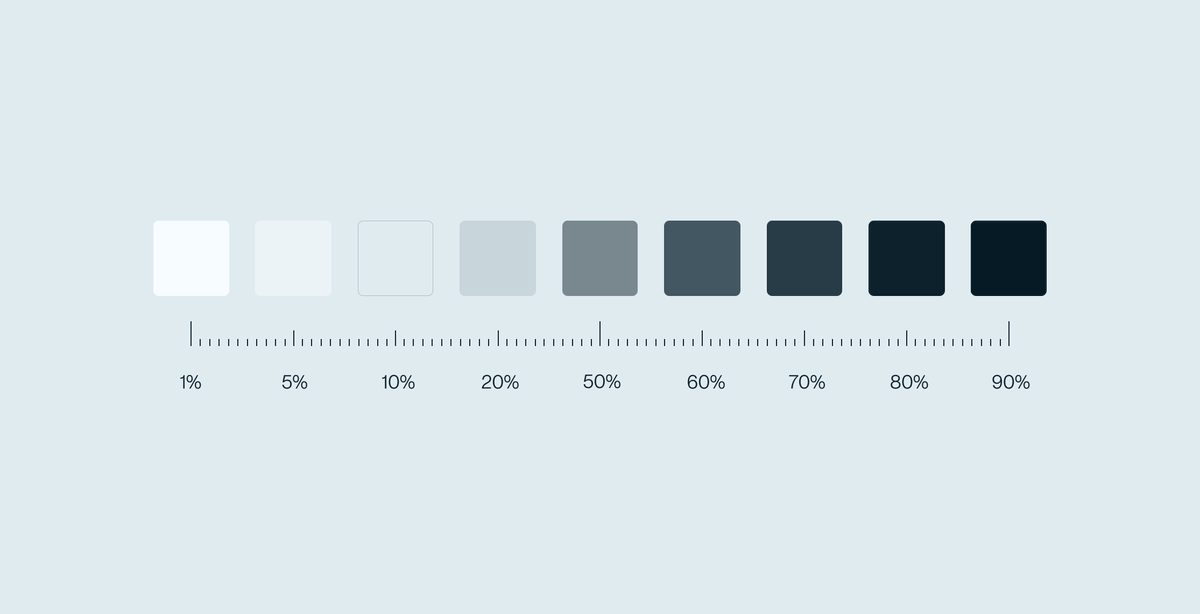
One of the tricks I picked up from working at Google is a very simple way to make sure your interface feels on-brand:
Start with the core brand colour.
Let's say it's blue.
You create a palette of blue shades from light to dark, almost white to almost black, all with a blue tint.
The text isn't just pure white.
It's a very light blue.
The background isn't pure black.
It's a very dark blue.
Using these throughout the core elements will create an almost unnoticeable but present brand 'feeling' through the interface.
It works especially well for trading interfaces where the positive/negative colours can easily dominate, making it hard to incorporate your brand without it being jarring.
This technique works perfectly for any product and industry.
And if you're building with AI, you can just prompt it in:
"Take my brand's base colour and generate a tinted scale from near-white to near-black. Use those tints for every background, surface, border and text colour in the interface instead of pure greys."
The most important spec on a wearable might be one nobody lists: how long it takes to put back on.
In NHANES, 10,036 adults wore a wrist monitor for 9 days. Only 13% of bands taken off during the day were back on within 2 hours. 1 in 11 never went back on.
1/5
We’re a little obsessive about numbers at Clair Health, so when someone asked whether men and women wear these differently, we checked. They barely do: 20.9 vs 20.7 hours a day. Age matters far more. 10% of 18 to 29 year olds quit within the week, vs 2% over 60.
Our devices are spending this week in fake sweat: 900 ml water, 5 g salt, 1 g urea, 1 g lactic acid, pH 4.7. Then 48 hours at 37°C and 80% humidity. Live voltage across sweaty contacts speeds up corrosion.
If you’ve built wearables, what failed first in your sweat tests?
World Chess showed camera-measured heart rates on its own broadcast in 2022. This version reads them from a public stream after the fact, so it works on any game with decent close-ups. Next step is running it live.
Magnus Carlsen's heart rate in the last minutes before he slammed the table against Gukesh at Norway Chess, read off the broadcast video. No wearables.
Magnus sat near 113 bpm in the time scramble. Gukesh stayed in the 80s and 90s.
Which game should I run next?
I got into this after the ChessBase India simul at Stanford, where I won my game against IM Sagar Shah, WIM Amruta Mokal and GM Semyon. Afterwards I pitched live heart rates for their streams. Sagar liked the idea, so I built a first version. @ChessbaseIndia
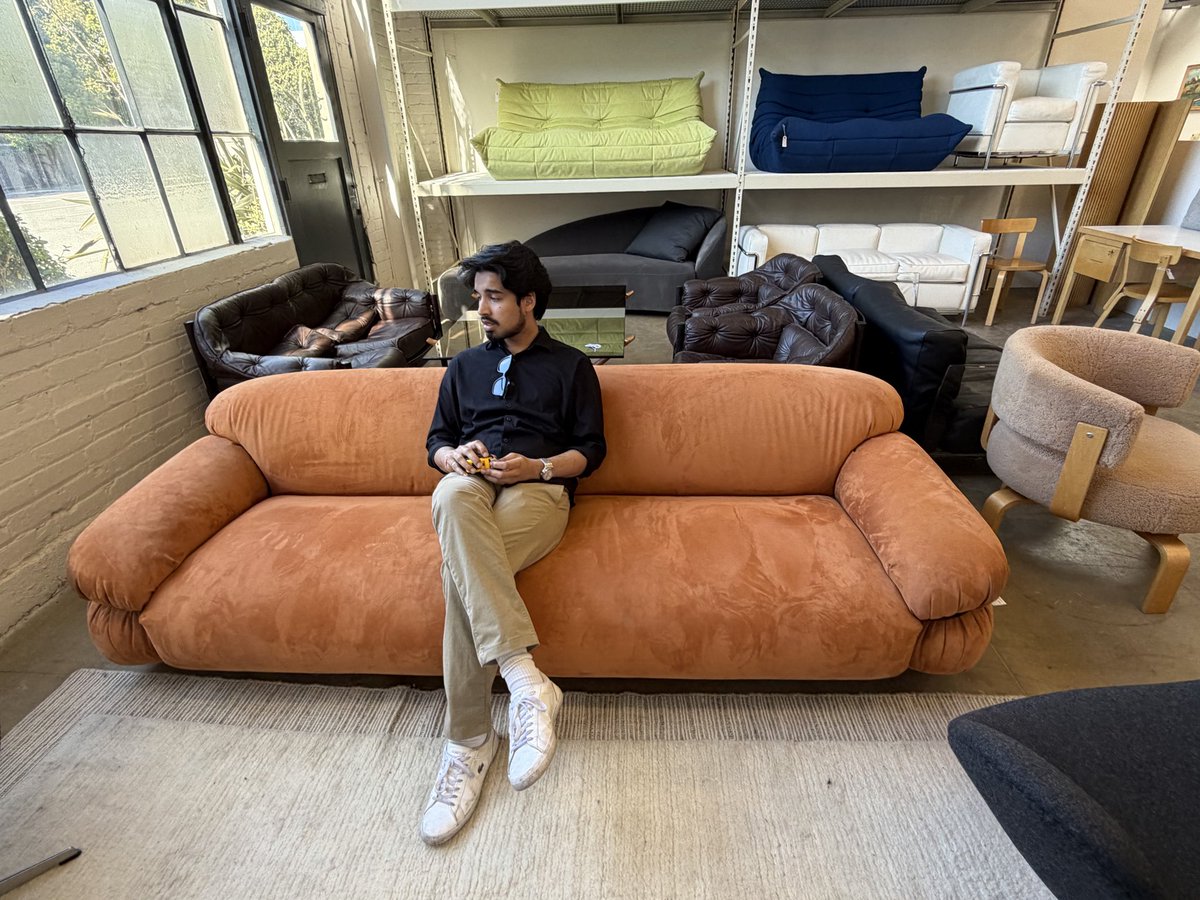
Enliven in Emeryville is Silicon Valley’s best kept secret for stylish office furniture 🥰
Was there today and an OpenAI hardware team member was also browsing
Cursor’s office decor is from them as well