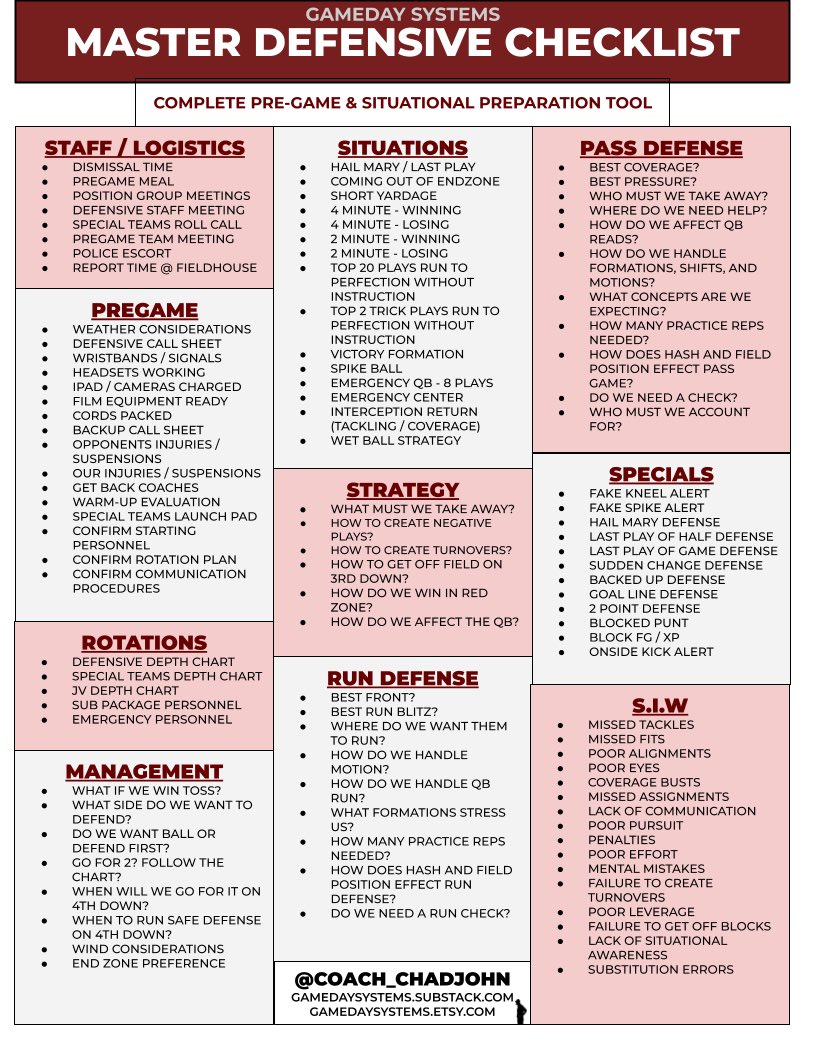
Some defensive coordinators spend all of their time on scheme.
The best ones spend time on preparation.
Situations. Rotations. Communication. Emergencies. Specials. Self-inflicted wounds.
Here’s a look at the Master Defensive Checklist I just added to the Vault.
Texas A&M HC Mike Elko - Building a Defensive Call Sheet
- "We're probably really limited on 1st/2nd down. We really force ourselves to come down to some simplified concept how we're trying to attack them on 1st/2nd down."
1st/2nd Down = 6 Core Calls
- Split Safety
- Single High
- 2 or 3 ways to Fire Zone/Man Pressure
- Shot play defense
- "We're going to limit ourselves to 6 core calls on 1st/2nd down because we want to be a little more expansive on 3rd down (10-14 calls)."
- "Because we've become very situationally branded, to have it be effective we've forced ourselves to shrink what we do on 1st/2nd down."
- "Everything we do should have a purpose for the offense we're playing."
Most offensive game plans focus on plays.
The best game plans prepare for situations.
Here’s a checklist we use to think through:
• Situational football
• Run game
• Pass game
• Special situations
• Game management
• Self-inflicted wounds
What would you add?
The jump from average OL play to good OL play usually happens when players understand COMBOS.
Most run schemes can be taught through 6 two-man blocks.
Here’s how we teach them. 👇
Sean McVay said, “Winning is a habit; let’s make it ours.”
Winning is a lifestyle. It is how you do things.
What habits make winning possible?
Here are the 6 Habits of Winners.
1. Keep Stacking Days
Winners show up every day. It’s not about going all out once in a while but consistency. Small, daily actions compound over time. Whether in the gym, the classroom, or your mindset, showing up EVERY DAY beats sporadic intensity.
2. Focus on the Process, Not Just the Results
Winners don’t obsess over outcomes—they focus on the steps that get them there. The journey is where growth happens. By locking in on the process, they make success inevitable by constantly improving what they can control.
3. Embrace the Struggle
Winners don’t shy away from challenges or discomfort. They know that growth happens in the tough moments. When others quit or back down, winners lean in. They understand that pain and struggle are part of the path to greatness.
4. Adapt and Adjust
Winners are flexible. They don’t stick to a rigid plan when things change - they adapt. Whether it’s a new strategy, an unexpected challenge, or setbacks, winners adjust and keep moving forward.
5. Stay Humble and Hungry
No matter how much success they’ve had, winners never think they’ve “arrived.” They remain humble, knowing there’s always room to improve. And they stay hungry, constantly pushing themselves to improve, no matter how much they’ve already achieved.
6. Mental Toughness
Winners build mental resilience. They don’t let failures define them or allow external pressures to control their mindset. They train their minds as much as their bodies, learning to stay focused, calm, and confident in any situation.
_____
If you like this post, you will love my free weekly newsletter: Great Teams Better Leaders.
Join 15,000+ others who read for free each week.