Although I agree with much of Milanovic says about inequality, I disagree with him here. I think he is confusing "efficient" manufacturing with "competitive" manufacturing.
China is not necessarily building things better and more cheaply than Germany or France, but it is certainly selling them far more cheaply, and the difference shows up both in the extremely low share households receive of what they produce and in the astonishing rise in China's debt-to-GDP ratio. This was the same strategy Japan followed in the 1980s, and not only was it unsustainable, but the high debt and low consumption share ultimately forced Japan into an extraordinarily difficult adjustment.
If Germany and France were willing to suppress wages (or, which is the same thing, to eliminate social transfers), or if they were willing to borrow comparable amounts to subsidize the competitiveness of their manufacturers, it is pretty obvious that French and German manufacturers would also be able to sell much more cheaply in global markets.
But while these policies would increase manufacturing competitiveness, they would not make manufacturing any more efficient. They would simply shift part of the economic costs of production onto the rest of the country.
https://t.co/Dc0DYKbdic
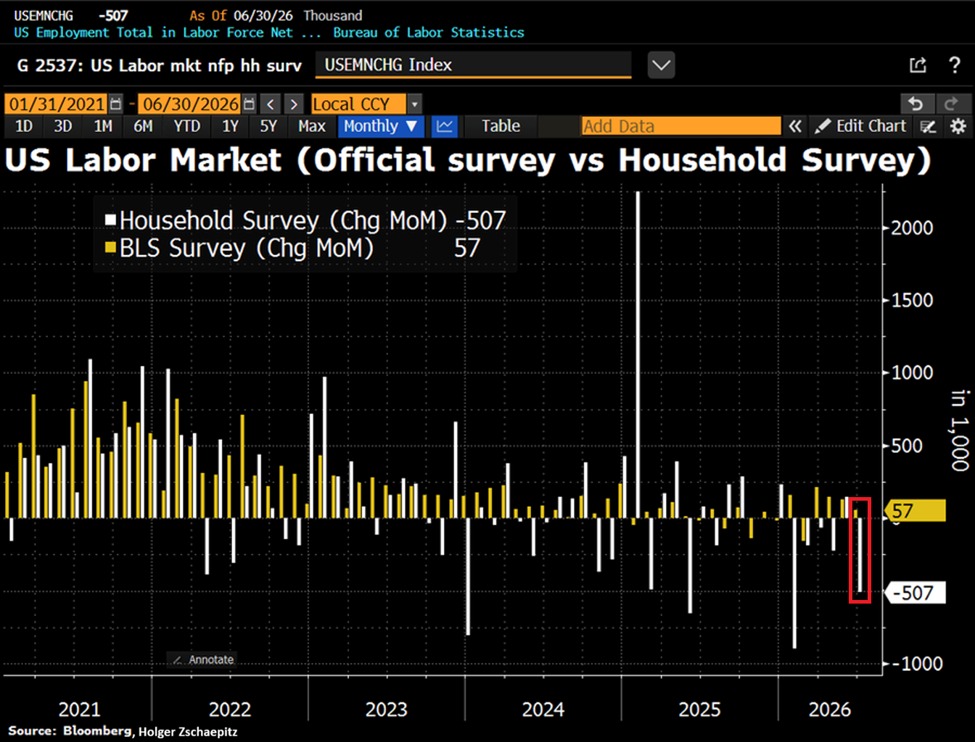
What is happening with the US labor market?
The difference between nonfarm payrolls and the household survey was a massive 564,000 jobs in June.
This comes as Thursday’s job report showed +57,000 non-farm payrolls were added last month.
At the same time, -507,000 Americans lost their job, the 3rd-largest drop since January 2024, according to the household survey.
The household survey is a closely followed metric because it counts each worker only once, even if they hold multiple jobs.
Year-to-date, total employment in the household survey has declined -1.7 million, to 162.26 million, the lowest since December 2024.
Over the same period, total nonfarm employment has risen +552,000, to a record 158.98 million.
Something does not add up here.
Mamdani: There is a term so often used to describe our nation and those who have shaped it: American exceptionalism.
American exceptionalism, the conventional wisdom tells us, makes our freedom a little more free, is how we dug the Erie Canal and irrigated the West, is why children in far away lands grow up dreaming of one day moving here.
And yet the irony is that the story of America has so often been written by those who were told by others with power and influence and wealth that they were anything but exceptional.
For generation after generation, we have been told that when the world has sent its people to our shores, it has not sent its best. It sent Puritans and Sikhs and Quakers and Muslims and Jewish people who were banished for praying the wrong way, worshipping the wrong Gods, angering the wrong people. It sent peasants and serfs from who were treated as less because they hardly owned clothes, let alone land. It sent immigrants for whom power was something someone else had.
We are told that America is exceptional because we are richer, stronger, more powerful than everyone else.
The truth, my friends, is that America is exceptional because here, nothing is fixed into place. The frontier may be closed, we may have walked on the moon, but the work of fulfilling the values first enshrined in the Declaration of Independence-that work endures, my friends, and it belongs to us all.
It belongs too to our newest Americans, those standing here with me today, all of whom were recently naturalized. Nearly a decade ago, I too felt what you feel— the joy of no longer being just a New Yorker, but an American too.
But recently I’ve been encountering some Westerners who come here, hang out in Beijing, Shanghai, Chongqing, hit cafes and instagram spots and declare its paradise.
China is also a real country with people living in it… not just projected fantasies.
Get out and talk to people.
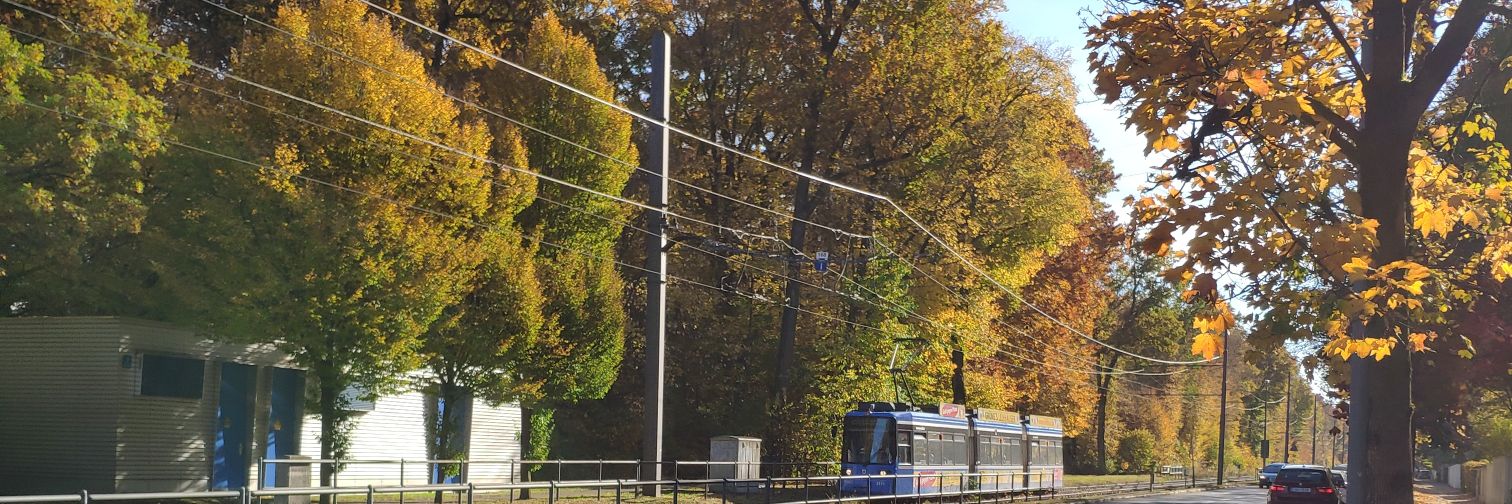
@M51312726 In Ländern mit einem generell heißeren Klima werden Schienen so verlegt, dass sie höheren Temperaturen standhalten (z. B. durch Vorwärmen der Schienen auf eine höhere Temperatur).
@Cyberpr0ud@OutdoorChiemga Die aktuelle Hitzewelle ist ein historisches Extremereignis, das alle Rekorde bricht. Die Infrastruktur war schlichtweg nicht dafür ausgelegt. Das ist so, als würde man fragen, warum Länder in heißen Regionen keine Infrastruktur für kaltes Klima haben.
BREAKING: The US Pentagon delayed publicly announcing US strikes on Iran until after the US stock market had closed at 4 PM ET on Friday, per NBC News.
The timing of the announcement was reportedly intended to "reduce the immediate impact on financial markets."
IF we get a deal signed Friday and IF we begin the process of reopening the Strait of Hormuz, what will that look like?
This was the topic of my last contribution to @TheDispatch Energy two weeks ago:
https://t.co/2Y82kQZMQg
@Canine_World@OilHeadlineNews There is no such thing as a rapid production recovery even if the strait opens. It will take a long time for production and shipping to recover. We will be in an oil shortage before that happens
The oil market’s recent complacency is fascinating—and dangerous. It reflects a fundamental misunderstanding of *how* the physical market bought itself breathing room recently. (🧵)