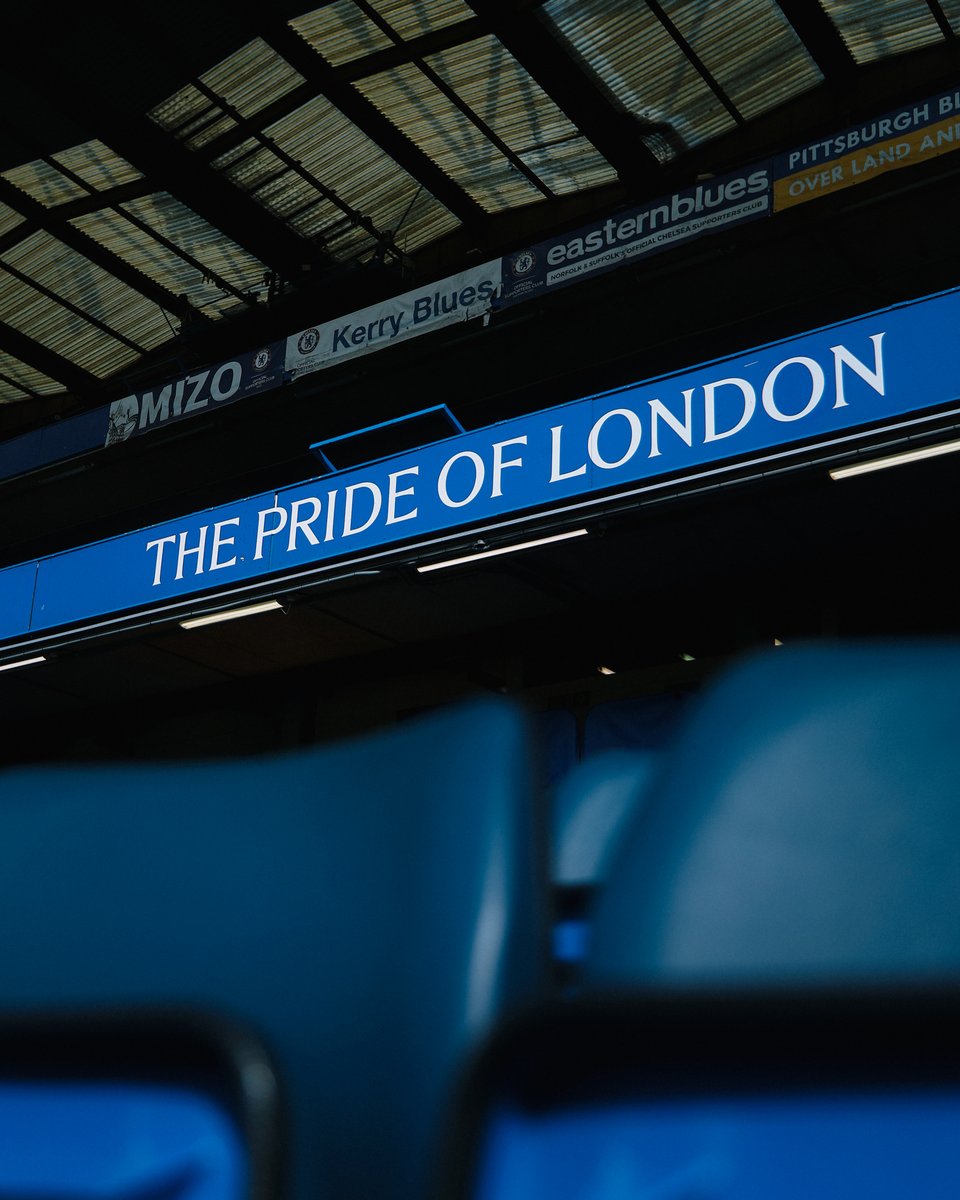
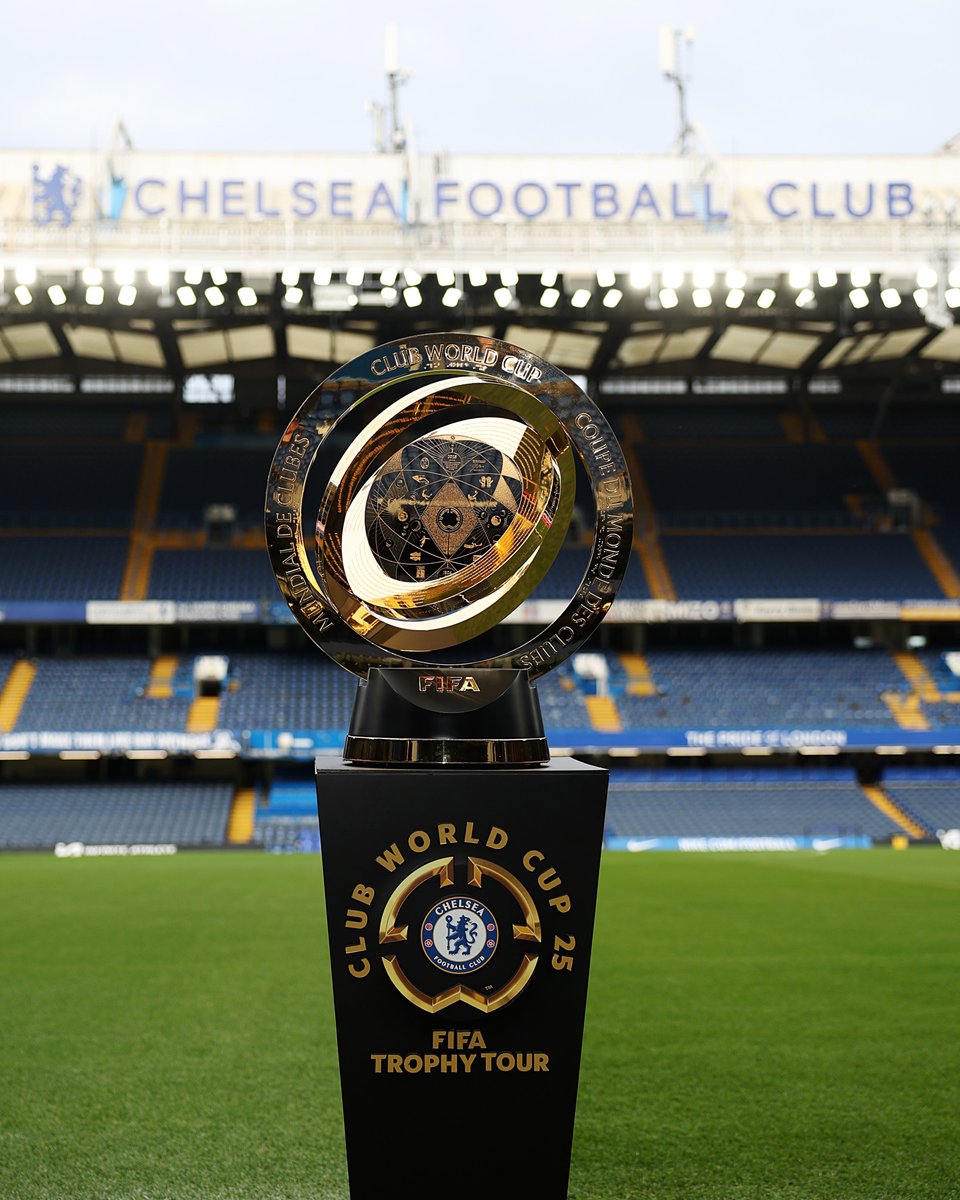
Come and visit London’s Home of Trophies. 🏆
Book your Stadium Tour at Stamford Bridge now. ⭐️⭐Come and visit London’s Home of Trophies. 🏆
Book your Stadium Tour at Stamford Bridge now. ⭐️⭐Come and visit London’s Home of Trophies. 🏆
Book your Stadium Tour at Stamford Bridge now. ⭐️⭐Come and visit London’s Home of Trophies. 🏆
Book your Stadium Tour at Stamford Bridge now. ⭐️⭐Come and visit London’s Home of Trophies. 🏆
Book your Stadium Tour at Stamford Bridge now. ⭐️⭐Come and visit London’s Home of Trophies. 🏆
Book your Stadium Tour at Stamford Bridge now. ⭐️⭐️
Mark Cuban sold his company to Yahoo for $5.7 billion in 1999. Overnight, he was a billionaire. There was just one problem: Yahoo paid him in its own stock, he was banned from selling it for six months, and that stock was sitting on a bubble that was about to pop.
So he was a billionaire who couldn't actually reach his money. He owned 14.6 million shares of Yahoo, worth around $1.4 billion, and he couldn't turn a single one into cash. Even after the six months ran out, selling them was its own trap. Nobody buys 14.6 million shares at once. The second he started dumping that much stock, the price would slide before he finished, dragging his fortune down with it.
Here is what he did instead. He bought insurance on his own stock.
You can buy a contract that locks in a guaranteed price someone has to pay you for your shares later. Cuban locked his in at $85 each. From then on, no matter how far Yahoo fell, he could still sell at $85 and walk away with more than a billion dollars. The problem is that this kind of protection costs money, and insuring $1.4 billion is expensive.
He covered the cost in a strange way. He sold off his claim to Yahoo's biggest gains. He signed a second contract that said if the stock ever climbed past $205, someone else could buy his shares at that price and keep anything above it. He was betting it would never get there, and the money from that bet paid for his insurance almost exactly. The whole setup cost him nothing.
For a while, he looked like a fool. Yahoo kept climbing, blew past $205, and ran all the way to about $237. He had locked himself out of a fortune in gains, right at the top. Then the bubble burst. Yahoo went into freefall and crashed to roughly $13. Almost everyone holding it got wiped out. Cuban's $85 floor held the entire way down, and he walked off with his money still in his pocket.
The company that set all of this in motion never made it. Yahoo killed Broadcast .com in 2002, three years after paying $5.7 billion for it. Yahoo itself was sold off in 2017 for about $4.5 billion, less than it once paid for Cuban's company alone. Selling made him a billionaire on paper. The insurance trade is the only reason he kept it.
Yesterday, Chinese Ambassador to Nigeria posted on Twitter that Nigerians can now export cow bones duty-free to China.
Under the comment sections, some Nigerians were asking the ambassador to tell them what they are using the cow bones for😁
Some were telling the ambassador to tell his people to come and setup the processing facility here in Nigeria, so they can create jobs.
Funny people. I laughed at our inability to do simple Google search.
As a livestock farmer and Agro commodities trader, I already know the uses of cow bones.
And about building a factory here in Nigeria? Nigerians are the ones to do it, but sadly everyone is building hotels😁
Let me tell you a few uses of cow bones.
Here are 4 major uses of cow bones you can mention in your content;
✍🏻Bone meal fertilizer: Cow bones are processed into bone meal, rich in phosphorus and calcium, used to improve soil fertility.
They prefer this to fertilize their soil not the chemical sold to our rural farmers.
✍🏻Animal feed supplement: Processed bone meal can be used as a mineral supplement in livestock feed, especially for calcium and phosphorus.
We use this for chicken feed, pig, and fish feed production.
Verify the price per kg and you’ll be shocked.
✍🏻Gelatin production: Cow bones can be processed to extract gelatin, used in food, pharmaceuticals, capsules, and cosmetics.
Just imagine the volume of cow bones wasting in your village?
Pharmaceuticals companies are paying billions of dollars to buy it from those processing it.
And I believe those Chinese companies will focus more on this.
It is big money wasting away in Africa because we don’t know anything about value addition.
✍🏻Activated carbon / bone char: Burnt bones can produce bone char, used in filtration, sugar refining, and water purification.
Pause here and think deeply with me. They use bone char for water purification in their country.
But they produce capsules and sell to us for water purification😳
Let’s not blame them. We take responsibility.
Now, let’s be honest. This is a golden opportunity for us. Let’s export the cow bones and cash out.
Also, let’s learn how to process the cow bones locally and export the finish product too.
If I tell you now that chicken feed producers in Nigeria import bone meal, you won’t believe. Research it yourself.
A ton of bone meal is around $200 - $750 currently.
Bro, just imagine earning over $200 from wastage thrown around our local markets in Africa.
Business opportunity for you. Do your research and see how you can position to serve this market
If you look at this video very well, you'll see it's not just tools they have. They have a clean room for disassembly and reassembly of the engine. This is what will make sure that the rebuilt engine will last long and not wear out quickly because it's free of contaminants. Another important procedure that will be done once this engine is put back in the car is to do an engine flush. Them there will be a break in period after which the oil will be changed again before you resume the normal oil change intervals. Tools, also and having the knowledge of the proper torque settings for each bolt will make sure your engine is within factory spec tolerances, and not vibrate itself loose.
There's a huge reason why buyers here are weary of engine that has been worked on. The difference between our mechanics and the people in this video is a wide chasm. Don't play around. Do things properly.
To any young kid reading this…
I’ve doubted myself in every league I’ve ever played in.
Ryman Prem.
Conference South.
League Two.
League One.
Championship…
And even right before my first Premier League start last night.
That’s not weakness.
That’s being human.
That’s being alive.
When I was growing up, I thought Premier League players were superhuman.
Like they never felt doubt.
Like they never felt nerves.
The truth is…. it’s often the opposite.
Social media won’t tell you that sometimes you step out there with no confidence. That’s normal. That’s ok!
You now have to then step out there with courage.
Confidence feels good.
Courage doesn’t.
But you do it anyway. Show courage enough times…. You build confidence.
Here’s the mindset that’s carried me for 31 years.
When it goes well:
I worked for it.
I earned it.
Well done.
Watch it back.
Get better.
When it doesn’t:
I know I prepared the best I could.
It didn’t go exactly to plan. That’s football.
But Well done.
Watch it back.
Get better.
That simple recipe gave me a special moment last night.
Leading the team out.
Playing alongside a group that fights for every ball.
Celebrates tackles.
Gives everything for the city of Sunderland.
And sharing it with supporters who never gave up, even after four tough seasons in League One.
So if you’re a young player feeling doubt…
Low confidence…
Or like you don’t believe in yourself…
You’re not alone.
Every player feels it.
Confidence isn’t something you’re given.
It’s something you build.
Bit by bit.
Day by day.
With courage.
With work.
With learning.
Anything worth building takes time.
But that’s what makes it so worthwhile!
Thank you @SunderlandAFC ❤️🤍
When the reason behind the surprise EP becomes clear, the market will have already shifted. It was a deliberate test and it worked. Short-term tradeoffs for long-term strategic advantage. Results may vary based on positioning.
Slightly unrelated: Nigerian Breweries PLC, through one of its brands, Gulder, stopped sponsoring this program in 2017. The show ran from 2004 to 2017.
Why did NB stop sponsoring the show?
There were a couple of reasons, but the fundamental reason was that the strategy around it stopped making sense.
How so?
✑ GUS was very expensive to produce: jungle logistics, safety, crews, long production timelines.
Over time, Nigerian Breweries realised the cost-per-impact was no longer competitive versus digital campaigns, football sponsorships, and short-form-high-frequency brand content.
✑ Younger audiences changed. Reality TV shifted towards social drama, relatability, and lifestyle content (BBNaija era).
Attention spans shortened; fewer people waited weekly for long-form adventure TV. Then there was the rise of social media.
✑ Nigerian Breweries expanded and rebalanced its brand strategy, with more focus on Star, Heineken, and premium/lifestyle positioning. This was largely due to the competitive pressure that International Breweries brought to the market.
NB couldn’t compete effectively in the value brands space (Star, 33, Gulder, etc.) because Trophy obliterated the market.
A combination of revenue chop-off and higher operating costs (higher excise duties, inflationary pressures, FX wahala, etc.) led to NB changing its focus to the premium segment - where the margins are higher and where they had a much stronger competitive advantage.
Therefore, there was a limited push to keep sponsoring GUS (known for the Gulder brand). Champions League sponsorships (symbolised by Heineken) took over.
✑ So in essence, NB walked away because marketing ROI, audience behaviour, and brand strategy evolved faster than the format.
✑ Nestlé Nigeria Plc stepped back from sponsoring “Maggi Sokoyokoto” for reasons close to why Gulder Ultimate Search ended.
Sokoyokoto was built for appointment TV.
But once folks moved to YouTube, mobile games, short-form digital content; the value of a long TV quiz show dropped sharply. Brand reach was no longer where attention lived.