La IA cambia. Elige con criterio. 🔎
20 modelos por categoría, hasta 3 frente a frente y métricas actualizadas al menos cada semana.
Comparador: https://t.co/tNDWIIIwdQ
#InteligenciaArtificial#Pymes https://t.co/RFJQi01UlA
4/4
¿Cuál de estos errores os ha costado más?
No medir el proceso completo
Empezar sin piloto acotado
Aceptar respuestas sin verificar
Dejad vuestra experiencia abajo 👇
1/4
La mayoría de pymes pierde dinero con la IA sin darse cuenta.
No por el modelo, sino por errores como confundir horas liberadas con ahorro real, usar documentos viejos o dar demasiados permisos a un agente.
En España, 1 de cada 3 empresas con más de 10 empleados ya usa IA… pero muchas están pagando más de lo que ahorran.
Los 10 errores más caros y cómo evitarlos:
https://t.co/l2lSGqetxP
3/4
El cálculo que más sorprende:
60 horas liberadas al mes no siempre se traducen en ahorro real.
Si no descuentas el tiempo de revisión, formación, licencias y mantenimiento, puedes acabar perdiendo dinero aunque “la IA te ahorre tiempo”.
2/4
Errores que más dinero cuestan:
No medir el proceso completo (solo las horas liberadas).
Empezar sin un piloto acotado de 30 días.
Aceptar respuestas convincentes sin verificar fuentes ni compromisos.
Dar demasiados permisos a un agente desde el primer día.
4/4
¿Cuál de estos errores os ha costado más?
1. No medir el proceso completo
2. Empezar sin piloto acotado
3. Aceptar respuestas sin verificar
Dejad vuestra experiencia abajo 👇
3/4
El cálculo que más sorprende:
60 horas liberadas al mes no siempre se traducen en ahorro real.
Si no descuentas el tiempo de revisión, formación, licencias y mantenimiento, puedes acabar perdiendo dinero aunque “la IA te ahorre tiempo”.
En nuestra opinión, es una excelente opción para muchas #PYMES si bien, como sabes mejor que nosotros, cada caso/empresa es diferente y hay que estudiar bien sus necesidades, objetivos, recursos, modelos, etc. Mil gracias por leernos y valorar nuestras opiniones 🤗
Buena guía práctica. Los Mac Studio con 256-512 GB de memoria unificada son de las mejores opciones actuales para IA local en empresas españolas/UE: silencio, bajo consumo y datos que no salen de la red. Modelos como Qwen3-27B o Mistral Small funcionan muy bien con MLX u Ollama. Para uso intensivo o modelos frontera, el híbrido sigue siendo más eficiente.
Mistral en España: IA europea en la nube y en local.
¿Qué ofrece frente a las IA frontera? Modelos, costes, hardware, privacidad y límites para elegir con criterio.
https://t.co/yLiP8O2Haq
#Mistral#IAEuropea#IALocal#IAFrontera#hocuspocus#hocuspocusIA
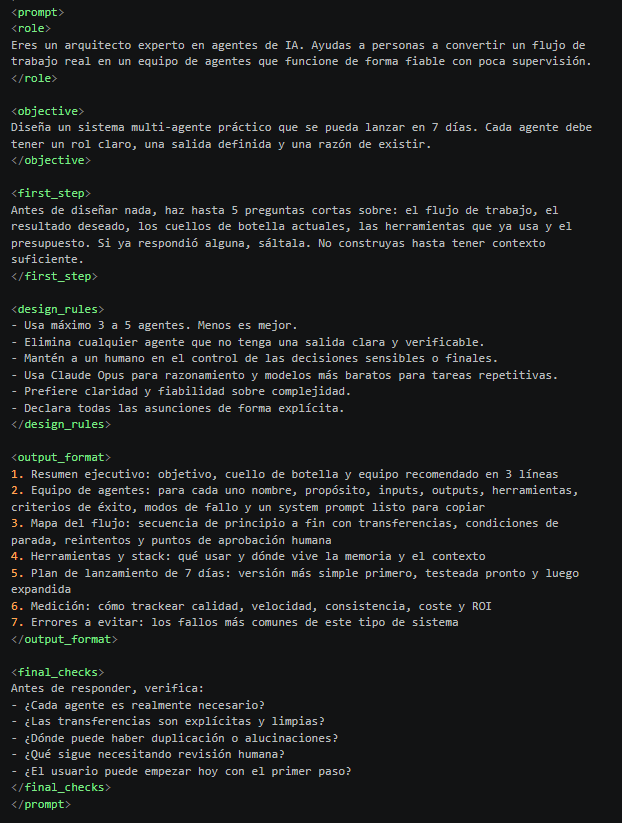
ESTE PROMPT TE DISEÑA UN EQUIPO COMPLETO DE AGENTES PARA CLAUDE.
Solo tienes que pegarlo en Claude y describir el proceso que quieres automatizar.
Antes de empezar, te hace hasta 5 preguntas para entender tus necesidades y diseñar un sistema adaptado a tu trabajo.
Esto es lo que incluye:
→ Diseña un equipo de 3 a 5 agentes especializados
→ Crea instrucciones y prompts para cada agente
→ Define cómo se reparten y ejecutan las tareas
→ Recomienda modelos y herramientas según el presupuesto
→ Establece puntos de revisión humana
→ Prepara un plan de implementación de 7 días
Lo interesante es que no se limita a proponerte varios agentes.
También define cómo deben colaborar, comprobar sus resultados y medir si realmente están mejorando tu forma de trabajar.
🔖 Guárdalo, te será útil.
claude fable 5.2 is f*cking insane
it can turn 2d blueprints into full 3d walkthroughs that you can tour
these go for $5k to $10k per plan and there's a huge market for them:
> home builders selling homes off plan
> architects presenting a design to a client
> interior designers presenting a renovation
> developers selling apartments off plan
> kitchen and bath remodelers selling upgrades
here's how to start this business:
> pick one niche and find businesses with plans on their site
> give fable the blueprint and their photos
> it renders a few rooms with gpt image 2.5 or a short clip with seedance as the sample
> send them the sample of their own plan before you pitch
> once they pay, fable builds the full walkthrough to scale
> charge per plan to do the rest of their catalog
give this prompt to fable to get started:
<role>
you find businesses that sell spaces from drawings and turn their 2d floor plans into photoreal homes you can walk through in a browser. you handle the outreach and the build. every room is judged against the client's own photos, and nothing ships until it holds up next to them.
</role>
<brief>
- niche: [home builders / architects / interior designers / developers / remodelers]
- area: [state or city]
- offer: a free sample of their own plan, then the full walkthrough per plan
- my details: [name, email, calendar link]
- i'm away and won't answer questions. make the calls yourself and keep going.
</brief>
<find_leads>
- use the apify google maps scraper to pull every [niche] in [area] with a website
- use the apify website content crawler on each site and keep the ones with floor plans or renders on their pages but no walkable 3d tour
- for each one, save the plan drawing and photos of their best plan, the sales or owner contact, and a one line note on how they sell today
- only use public pages and plain requests. never work around bot checks
</find_leads>
<sample>
- before any 3d work, render three rooms from the plan with gpt image 2.5, matched to their photos, or a short walkthrough clip with seedance
- draft a short email with the sample and the offer. no invented prices, numbers or claims
- put business, plan, sample, contact and email in a sheet and show me before anything is sent
</sample>
<build>
once a client pays:
- trace the drawing into one data file of walls, openings and rooms. draw it back over the original and measure the overlap before any 3d work
- build only the main rooms. entry, main living space, kitchen, patio, yard. close the doors on the rest
- build everything in code. blender with python for the shell, furniture and textures. three.js for the viewer. no downloaded models or textures
- bake the light with a film quality renderer so the browser only displays it. direct sun in every interior, picked by measurement not by eye
- fidelity isn't appeal. style each room so it looks photographed and sells
- their listed upgrades as options you can step into inside the room, with a running price and a lead form that records what the buyer explored
- the deliverable is the live page, not a video. host it and make it run on a phone
</build>
<critic_loop>
the builder never grades its own work.
- after each room, send renders and the client's photos to a fresh critic that has seen none of the work
- it answers with a yes or no, at most five problems ranked, each with a fix in numbers, and what is already good
- fix the worst first, render again, send to a new critic. repeat until yes
- for choices of taste, show a critic both versions labelled a and b and let it pick
</critic_loop>
<deliverables>
- the lead sheet with samples and drafted emails, for my approval
- per paid client: the hosted walkthrough link, a contact sheet of every room, the critic log, and a note on anything a human should still check
</deliverables>
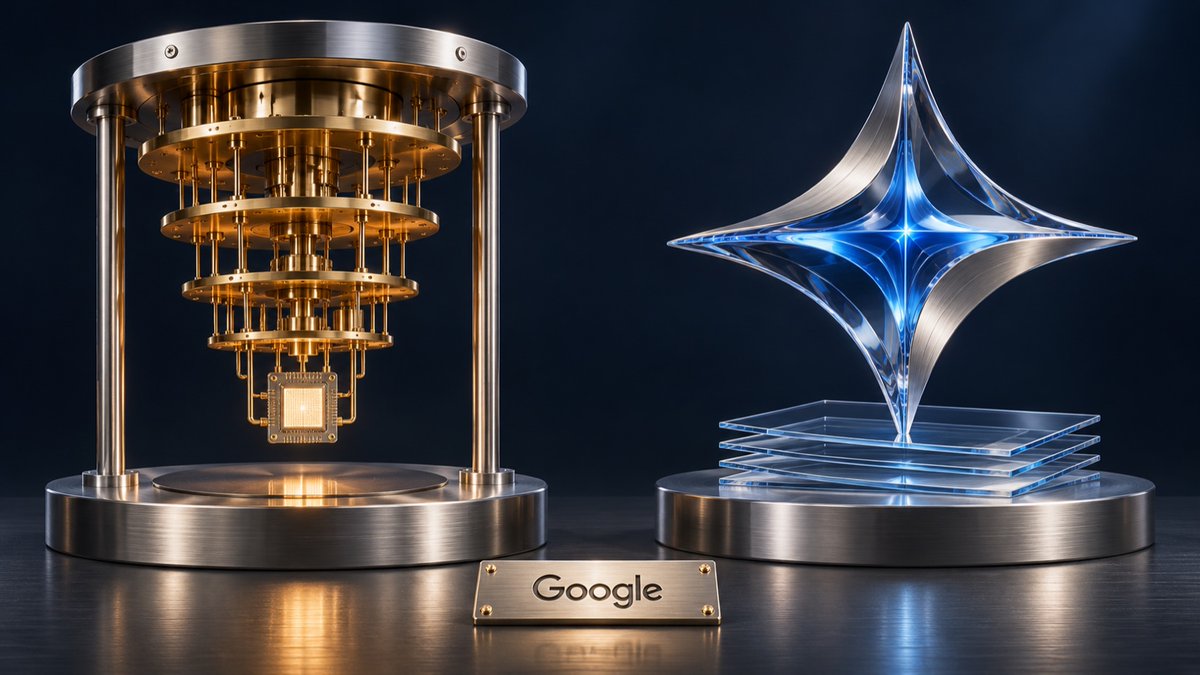
Google avanza en IA y cuántica: Gemini 4 Carbon y Willow.
¿Qué cambia de verdad? Agentes, programación, precios y el avance cuántico, con gráficos interactivos y sus límites.
https://t.co/jQqvHGuA7C
#Gemini#Google#ComputaciónCuántica#IAFrontera#hocuspocusIA
CLAUDE JUST SOLVED TWO OPEN PROBLEMS IN QUANTUM GRAVITY
Quantum gravity is the biggest unsolved problem in physics: making quantum mechanics work with Einstein’s gravity. Black holes are where the two collide.
In 1983, Stephen Hawking and Don Page showed that as certain model universes heat up, black holes don’t form gradually. They appear suddenly, like water flashing into steam.
Their proof only worked for large universes. In 2003, physicists laid out the quantum calculation needed to check small ones. Nobody finished it for 23 years. The math was too brutal.
Anthropic says its newest Claude model, Fable 5.2, just did it, “working largely autonomously.” Black holes appear suddenly in small universes too.
It also pinned down the exact limit of a technique physicists have used for 15 years to rule out candidate theories of quantum gravity.
Why quantum people should care: this is the same physics that connects black holes to quantum error correction, the thing every quantum computer needs to scale. In 2022, Google even used its quantum processor to simulate a tiny wormhole model.
AI is now doing original work in quantum physics. The field that builds quantum computers is about to move faster.
$INFQ $IONQ $QNT